The Da Vinci Code, a popular suspense novel by Dan Brown, generated a great deal of criticism and controversy after its publication in 2003. Additional criticisms were directed towards the book’s inaccurate descriptions of European art, history, architecture, and geography. The Author, in the opening pages of the book, claims that, aside from the modern characters, the book is completely factual. This is a list of the biggest errors in the book.
1. Da Vinci’s The Last Supper
The contention that Mary Magdalene is depicted sitting next to Jesus in Leonardo’s famous The Last Supper is disputed by virtually all art historians. Since there are twelve disciples (including Judas), one would have to be missing for Mary to be present. The figure to the right of Christ, also wearing blue and red, is usually identified as John the Apostle, who was customarily depicted in the Renaissance period as a beardless, often “effeminate” youth with very long hair. The “femininity” of the figure can be attributed to Leonardo’s artistic training in a workshop of the Florentine School, which had a long tradition of often depicting young males as sweet, pretty, rather “effeminate” persons.
2. Priory of Sion
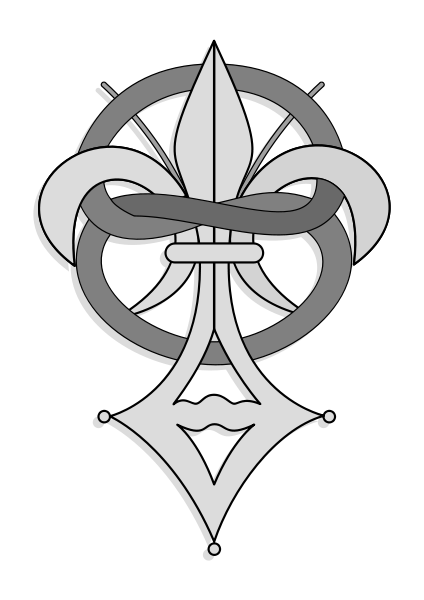
The portrayal of the Priory of Sion as an ancient organization connected to goddess-worship is incorrect: The actual “Priory of Sion” was founded in 1956 by Pierre Plantard, Andre Bonhomme and others, not in 1099 as claimed in the book, and it was named after a mountain in France, not the biblical Mount Zion. Les Dossiers Secrets was a forgery created by Philippe de Cherisey for Plantard. Plantard, under oath, eventually admitted that the whole thing was fabricated.
3. Opus Dei
The depiction of Opus Dei as a monastic order which is the Pope’s “personal prelature” is inaccurate. In fact, there are no monks in Opus Dei, which has primarily lay membership and whose celibate lay members are called numeraries. Moreover, Opus Dei encourages its lay members to avoid practices that are perceived as fundamentalist to the outside world. Silas, the murderous “Opus Dei monk”, uses a cilice and flagellates himself. Some members of Opus Dei do practice voluntary mortification of the flesh, as has been a Christian tradition since at least St. Anthony in the 3rd century and has also been practised by Mother Teresa, Padre Pio and slain archbishop Óscar Romero. Critics charge Brown of greatly sensationalizing the practice of such mortifications and exaggerating the extent of their practice. It is impossible to gain the kind of wounds Silas is described as having from a normal cilice.
4. Rosslyn Chapel

The Chapel is a major feature in the last part of the novel, though many incorrect assertions were made about the structure. For example, Brown’s book states that the Chapel was built by the Knights Templar, and contains a six-pointed Star of David worn into the stone floor although such star has ever been seen in the floor. Many sources say that Dan Brown never visited the Chapel till after the publication of his Da Vinci Code book, and most of his material came from previously published material. Another claim is that the name “Rosslyn” is a form of the phrase “Rose line”, and that a line starting in France also runs through the Chapel. In fact, the name “Rosslyn” comes from two Celtic words: “ros,” meaning promontory or point, and “lyn”, meaning waterfall. As far as the “secret code” that Brown claims exists in the chapel, most recently father and son team, Thomas and Stuart Mitchell, have shown that it is most likely a piece of music. They have decoded the music and you can hear it here. I wonder if Dan Brown plans to give them the reward he offered for its decoding.
5. Problems with Paris
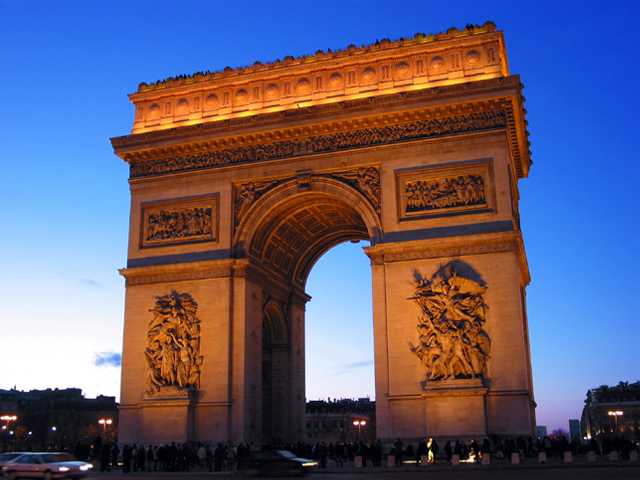
Several claims about the Church of Saint-Sulpice in Paris are disputed. While there is a brass line running north-south through the church, it is not a part of the Paris Meridian, which passes about 100 meters east of it. The line is instead more of a gnomon or sundial/calendar, meant to mark the solstice and equinoxes. Further, there is no evidence that there was ever a temple of Isis on the site. The reference to Paris having been founded by the Merovingians (Chapter 55) is false; in fact, the city was settled by Gauls by the 3rd Century BC. The Romans, who knew it as Lutetia, captured it in 52 BC under Julius Caesar, and left substantial ruins in the city, including an amphitheater and public baths. The Merovingians did not rule in France until the 6th century AD, by which time Paris was at least 800 years old. The novel claims that the top of the Centre Pompidou can be seen from the Arc du Carrousel (chapter 3). This is incorrect. The book erroneously places Versailles to the north-west of Paris, when actually it is approximately 25 kilometers west-south-west of Paris city centre.
6. The Vatican
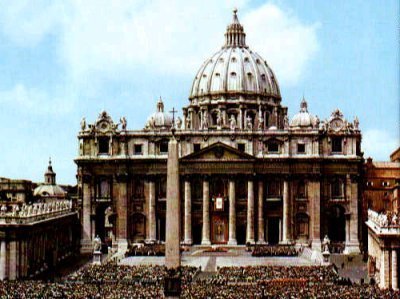
In the story, it is repeatedly said that the Vatican was the center of power in the early Catholic Church, including reference to “the Vatican” suppressing Gnostic writings in the 4th century. Until the early Renaissance, the papal palace was in different locations, ranging from the cathedral of St. John Lateran, to Anagni, to Avignon. It was not until the 15th century that there was anything like official power in the vicinity of the Vatican Hill in Rome. In the 4th century, the Vatican was little more than a church and cemetery by the side of the road. Also, St. Peter’s is referred to as a cathedral; it is technically a church. St Peter’s is the second largest church in the world, and covers 5.7 acres
7. Mary Magdalene
Historians have disputed the claim that Mary Magdalene was of the tribe of Benjamin. There is no mention of this in the Bible or in other ancient sources. The fact that Magdala was located in northern Israel, whereas the tribe of Benjamin resided in the south, weighs against it. Furthermore, Paul was a Benjamite but makes no mention of this supposed heritage. Mary Magdalene is revered as a saint in France; a cave in the Sainte-Baume mountains of Provence, where she is believed to have lived, is a popular pilgrimage site. It is believed that she died and is buried there.
8. Gnosticism
The book claims that the Gnostic Gospels (e.g. the Gospels of Thomas, Philip, Mary Magdalene, and the recently rediscovered Judas) are far older, less corrupted, and more accurate than the four included in the Bible. With the possible exception of Thomas, the other Gospels date from the 2nd Century through the 4th Century, while the canonical four are thought by most scholars to date from the 1st Century or early 2nd Century. In the story, a character claims that the label “heretic” was used only after the Nicene Council (325 AD), in order to persecute Gnostics. In fact, St Irenaeus used the term “heresy” to label Gnostic teachings in the second century, long before the Church had any political power to persecute anyone.
9. Geography
The book’s storyline that the “Albino Monk” was arrested in France, imprisoned in Andorra and escaped to Spain, demonstrates the lack of basic research that would be gleaned from a quick glance at a map or tourist guide. It is improbable that someone arrested along the French coast would be imprisoned in another country (in this case Andorra which is a different jurisdiction and several hundred kilometers away up in the Pyrenean mountains). After the scene in the Temple Church, London, the heroes of the story take the tube from Temple Station to King’s College. In fact King’s College is nearer to the Temple Church than to Temple Station, and any tube journey would have carried them further away from King’s College. At the start of chapter 104, (Rosslyn Chapel), Brown states “The chapel’s geographic coordinates fall precisely on the north-south meridian that runs through Glastonbury”. This statement is incorrect: Rosslyn Chapel lies on longitude 3:07:13 west and Glastonbury Tor 2:42:05 west. Brown appears to have confused geographic north with magnetic north.
10. Assorted errors
Albinos typically have very poor vision; in fact, many are legally blind. It is therefore highly unlikely that the albino Silas could ever become an expert marksman, or even that he could drive.
It is stated that the Dead Sea Scrolls were found in “the 1950s,” when in fact the initial discovery was made in 1947, with additional documents being located up to 1956.
In his lecture on the Divine Proportion, Langdon states that the proportion of male to female bees in a hive is always in this ratio. This is false, as the ratio can vary widely and is nonetheless usually greater than the Divine Proportion.
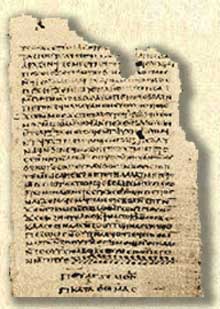
In the novel, Brown says the gnostic gospels found in Nag Hammadi, Egypt, in 1945, were “scrolls.” They were actually codices- individual pages bound together as books.
Note: Obviously I would not recommend reading this book – you will be less intelligent after having done so. However, if you want to read an excellent book that covers all of the subjects in the Da Vinci Code as well as others, and does so in an extremely well researched way, I strongly recommend you read Foucault’s Pendulum by Umberto Eco, author of Name of the Rose. You can buy it here.
I will let the New York Times have the last word on this list: “[The Da Vinci Code is] Dan Brown’s best-selling primer on how not to write an English sentence”.
Technorati Tags: Books, da vanci code


I always had this doubt about Da Vinci Code. Its supporters claim that the effeminate figure besides Jesus in Da Vinci was Magdalene while the Historians and others claim that it was John the Apostle….. but why should something painted in 15th century be considered an accurate description of an event that happened almost 500 yrs ago??? remember we did not have much documented evidence of that time…why should we assume that Da Vinci knew what he was painting about….does this mean that in another 400 yrs ppl will say that Jesus married Mary because a couple of ppl famous in this century, ppl like Dan Brown and Michael Baigent, said so [Forgive me for comparing these mediocre sensation seeking authors to Da Vinci...but am considering the creative dumbing down over the centuries
]
JFrater could you pls explain this to me….
monkey nuts: what is wrong with Dr. Seuss:>
we all know wockets arent real
I know the Brown’s books suck and he lies about nearly everything however I can’t help but read them. They’re like my guilty pleasure.
Yeah, I like Brown’s novels too, but the factual inaccuracy sucks.
Mark: Quite true, all of the people I knew (myself included) believed in a lot of the things he claimed. Thankfully I picked up a book about those claims and most of them proved to be wrong.
Oh well.
Cool. I have a book with a name like “101 Questions about Catholic Tradition and the Da Vinci Code” the title is something like that, and it is a good read. I personally would enjoy any book into refuting the Duh Vinci Code.
Read any of his other titles? I have only recently began reading books other than harry potter and such so I haven’t read any “good” books yet. But I’m trying though:P
Ah, yes, I’ve read Digital Fortress, made an attempt at reading Deception Point (didn’t like it) and I intend to get around to reading Angels and Demons soon (I’ve been trying to for years XD). I hear he’s coming out with a new novel this year. That’s what I hear, anyway. It better be good.
I’m trying to read Deception Point, you’re right it isnt that “good”.
Yeah I think its going to be called Solomon Key, another Langdon novel. It will be a masterpiece full of lies and it will probably creat a lot of controversy.
Cant wait.
Deception Point is a little more “out there” than Dan Brown’s other books. Angels and Demons is pretty good
i read somewhere that his new book”Solomon’s key”has something to do with Freemasons and past presidents of United States. I guess he is all set to kick p another ***** storm…..
Is it true that a couple of earlier presidents were free masons?
can someone tell me?
Geronimo: Yes I think a few of them were, just google it you’ll find out
Green: I agree Angels and demons is the best one.
Seeing the Last Supper reminds me of a joke…
What were the last words uttered before the painting was done?
“Everyone who wants to be in the picture get one this side of the table.”
The above should have read “on” instead of “one”
Another interesting list. I made the mistake of reading The Da Vinci Code a few years ago. It wasn’t very memorable. I can’t even remember if I noticed any of the errors on the list. But then I never thought that any of the facts in the book were actually facts – I regared them as being on the same level of fiction as the characters and the plot. It was just a book.
Kudos to Dan Brown though for getting more people interested in history even though his writing style wasn’t that great.
regarded*
This was the worst book I had ever read, and I don’t care in the slightest about whether or not the facts presented were true or not. I’m not a religious person nor an atheist, so the controversy surrounding this book did not affect me. What offended me however was the quality of the writing. It seemed like it was written by a second-grader. It just made me angry that he would actually think he was writing a good book. I read through three-quarters of it just to give it the benefit of the doubt, and then I could stand it no more and threw it away.
The Paris Meridian mentioned in The Da Vinci Code is an art project (dated 1994) by the Dutch artist Jan Dibbets, called The Arago Medallions, see:
http://en.wikipedia.org/wiki/Paris_Meridian#The_Arago_medallions
the thing that i wanted to see most in this list was the whole “lion king” thing. is that true or not?
Lame. The entire time I read the book, all I could think was, “Dan Brown just wants to be famous with his contraversy.” Kudos for a great list.
I haven’t read the book nor seen the movie (fell asleep 10 minutes into the movie. I have zero interest in it). But even if the author Dan Brown says ‘based on historical fact’ etc.
That doesn’t make this a work of non-fiction ANMORE than a hollywood blockbuster with the words ‘based on a true story’ in the opening credits make it a fact based documentary.
It’s a work of fiction, and apparently a good book according to everyone i’ve talked to that’s actually read it (again I have no interest as i’m not the slightest bit religious so i dont care.)
infact, a really cheap novel, I’ve read years befor this novel a historical book, facts proven by documents, that gave a result and lately by ‘carbon testing’ that turned everything arround…, with no certain ending explanation then just this, revealing facts and letting the reader think about that.
I was very dissapointed with the book, the movie after that, but…it achieved it’s point, right? We are talking about it…very much, not to talk about milions of copyes sold! And yes, Dan has become a millionaire, but if he didn’t, we wouldn’t take those…’right books’ into our hands..
Thanks for the list; I’ve noticed just two of those errors by myself.
regards, m.
I actually enjoyed The Da Vinci Code because I took it as fiction and an enjoyable one at that. On the other side, I find Foucault’s Pendulum to be extremely pretentious. I say find because I am in the middle of reading. I used to be a bit of a literary snob but was told by other literary snobs (via a book club) that my selection of a Stephen King novel was, essentially, not good enough for the book club.
So nowadays I look at books for what they are, fun to read. I still read the classics but I enjoy books like the Da Vinci Code. It’s an interesting list but I have to wonder if anybody was really taking anything from this book as fact. Those are the people I’d be a tad worried about. We read fiction to be entertained to be schooled in history.
what made it a top seller is because it is controversial..
what made it controversial is that it states thing about the life of Jesus or Mary Magdalen, Christianity as a whole.
People tend to get interested when it comes to controversies in religion..
Personally, I like the story itself, the drama, the suspense and the twist of the story,..but believing it?. It would be so foolish.
The thing is, if it’s true that Jesus has a wife or kids, I wouldn’t care.. Does it affect his teachings on Love and Peace.?
If that fictional book changes your faith…well it’s up to you..
what can I say? your faith is weak.!
If we argue about religion, it would be a never ending argument.
Religion is one of the biggest business in the world, second to war,.
It’s better to be more spiritual than being more religious,..
Who cares… It is a great book, I picked it up and finished the whole book in 6 hours because I couldnt out it down. It makes you think, regardless of whether it is real or not and the end result is satisfaction and enjoyment. I have actually read it seven times to date and I would read it again!!!
I actually really liked the book too. I read the entire thing in one flight and I have to say that it entertained me the whole way. It also opened my eyes to a debate I had no idea was going on. I ended up buying a lot more books on the subject just because I thought it was fascinating. Even IF Jesus actually married and had children, it really wouldnt affect my faith though I admit I find the possibility fascinating.
The Last Supper – let’s say it isn’t Mary Magdelene. Why are the others obviously shocked, pointing and whispering? Also, as it says in the book, Why the extra hand holding the knife? Count the hands, and see for yourself. I actually suggest everyone reads the chapter concerning the painting [I can't remember what chapter it is, though!] and see for themselves all the interesting points.
It may not all be ‘true’ but it is a good book. In my opinion, anyway. Also, everything does seem to fit. I was 14 when i read this and I was deeply intrigued. I’m only 15 now and it is definately in my top 5 books. Obviously, Dan Brown would say anything to get people to buy his book. More publicity and controversy = more money.
Fruckert: Lion King
People are so ignorant. It’s a work of fiction! Of course there are things that won’t stand up to fact. Can’t you see the author just manipulated facts to make an interesting story? honestly, it’s fiction people! it’s not even historical fiction. it’s plan old fiction – a made up story.
This is true, but it is fiction (even if the author says its not). it is a good book, at least i think so, and I liked it. It didn’t make me dumber (at least I don’t think:p)
it was not a good book, but it was still more entertaining than the boring ass bible lol.
Came across another list I haven’t read. I like finding these!
Ok. I liked the book, hated the movie. I actually got the video game. Try running from Silas at 2:00 am! Scared the pants off me!
I knew it couldn’t have been real no matter if Dan Brown said it was, but it was interesting enough to think about it. I don’t believe in god so it was fun to read.
also…89. Gina: I saw the picture and could only count 25 hands. There should be 26, but I couldn’t find the other 2…the missing one and the extra.
I don’t know…I file most of that under “creative license” which is why it’s a thriller/fiction novel. Anyone who thinks that it’s fact shouldn’t be allowed in public. I think if someone is looking for a page turner with overtones of conspiracty, it’s a good book. Also, it’s a good way to introduce some famous pieces of art to people. A lot of people bought the illustrated version and a lot more people spent some time Googling the paintings Brown talks about.
Most stuff published lately is junk anyway (but junk I rather enjoy). That being said, though, Angels and Demons was a better book.
Dan’s comment on awakening readers’ interest reveals that he still has his own strong motive to make his readers believe the claims and ideas he presents in the book. Dan also reveals to be a spiritual seeker for the rest of his life. It seems that his book The Da Vinci Code shows the guidelines along which Dan is proceeding spiritually. I am very much in doubt that a person whom one of the strongest motivations for life is a lifetime spiritual search, would write something in his book that is meaningless or insignificant to him. The fact is that a person interested in spiritual matters wants to share his spiritual findings and beliefs to others too. This is how I believe that also Dan Brown did when he wrote his book The Da Vinci Code.
http://koti.phnet.fi/petripaavola/DaVinciCode.html
Many syncretistic religions formed gnosticism. Gnosticism was rivaling against Christianity and gnosticism held itself better religion as Christianity was. Word gnosticism comes from Greek word gnosis, which means knowledge. Gnosticism was various effects, for instance, some Gnostics taught that divinity can be achieved through unity of the man and woman. This thought led some Gnostics to reach for divinity through *****ual intercourse between the man and woman. There existed also some Gnostics, who abstained from *****ual intercourse. When we know the fact that Gnostics held Christians as their enemies and that Gnostics held themselves better as Christians and that Gnostics wanted to show in every way that Gnosticism was better as Christianity, so Gnostics made so called gnostic gospels were they twisted, slandered and misrepresented the real gospels. Gnostics went so far in this misrepresent that they wrote “new gospels” by faking the real gospels. In these faked gospels Gnostics wrote that Jesus Christ was an ordinary man who has a *****ual relationship with Mary Magdalene.
http://koti.phnet.fi/elohim/marymagdalene.html
@jfrater “Oh – and by the way – your faith WAS effected because you believe that Christ married and had a child – according to the Catholic Church that is heresy and excludes you from the Church. So your faith (if unaffected) is not the Catholic faith which teaches that Christ did not marry, and had no children. There is irony in saying you are Catholic and that your faith is unaffected when you espouse Brown’s views in place of your religion’s.”
Catholicism is not faith. There is no such thing as catholic faith. It’s a religion. While the guy’s view on his religion may be altered, there is no irony in him saying his faith is unaffected.
faith is something divine. religion–catholic or otherwise–is just architecture.
I agree absolutely that “Foucault’s Pendulum” is the more intelligent older brother to Dan Brown’s idiot child. Other than some quaint and/or erroneous concepts about computing (almost certainly due to the fact that Eco wrote before the use of personal computers became common), FP is essentially error-free, and far, far superior, whether as a work of literature (I know – it’s ludicrous to use the word with regard to TDC) or a treatise on the Templars.
And another thing. I don’t object to Brown’s book on religious reasons, but rather on grounds of accuracy and truthfulness. His “scholarship” is so faulty that it raises questions of his intellectual honesty – which I think must be answered against him. Brown was lazy about facts, snipped and cropped the truth to fit his story, and simply lied about some very basic historical facts and doctrinal points.
Maybe I missed something because I couldn’t finish the book, but it seems to me the worst is the illogic of the internal contradiction of Brown’s story: if Christ was merely human, the resurrection a sham, and the Church the product of two millenia of fraud…then what is the point of the Templars keeping secret and safe the bloodline of a single man?
im going to add that comment of, its a tale of fiction Sherlok, although the truth to [some] of the things mentioned are quite interesting, that doesnt mark it as unworthy of reading. In fact i think its a really interesting and noteble read. and im sure the thousands of others who loved it- to the point two of his novels have been made into movies- begs to differ.
It’s been 2 years since you wrote this list jfrater and like DB’s books, it’s still causing a stir. I say, good on you for having the balls to write the list but once you got told to ***** off by someone, you went decidedly quiet. What a shame.
At the end of the day, all propaganda is bull*****. Whether it’s written by old dudes from hundreds of years ago, from a b-grade author who wants money or from some guy that wants to have a popular website. I think I’ve had enough of your ‘lists’ my friend. But at least I’ve bought YOUR book!
Its just a good story and who care if its not all correct i could care less still entertained me and as for his English sentences well i don’t know either and i bet a lot of people don’t give a *****. I highly doubt reading it will effect your intelligence levels unless your stupid enough to take on bord fictional novels as fact which i don’t otherwise id be dreaming about growing up to marry a drop dead gorgeous elf. In saying that Foucault’s Pendulum does actually appeal to me more because i like facts especially if they help me in my many arguments with Christians and my poor RE teacher who has had a hard time of it after i read Letter to a Christian Nation. I am definitely going to read Foucault’s Pendulum and thank you for the recomendation.
in dvc, brown never eveen for once, claims that everything written in this book is a fact, he only states that “all descreption oof artwork, architecture, documents, and secret rituals in this novel are accurate” which more or less is. it does not mean that his interpretation of them are also a fact. Just like two people can argue over a picture showing sun on a horizon, one saying its sunrise and other saying its sunset… so can brown and jfater brown saying it’s mary in the last supper and jfater saying its jhon…. the only guy who knows the truth,is da vinci or the guy who took picture o sun-rise/set. So guys, take it easy, all brown writes is an alternate history of christ, which may or may not be possible. And you would have to be too naive or too close minded accept or refute his point of view.
we should also remember that brown wrote it as a novel, not a textbook or religeous text…. so just enjoy it and move ahead.
you christians are so angry just cause someone is proving your religion to be based on a lot of falsehood.maybe youll should open your minds and see the truth….
damn you suck
I call troll. Obviously, Islam borrows a good deal from Christianity.
Add the fact that an old man with a GUNSHOT WOUND TO THE STOMACH was able to run around the Lourve and fabricate all those clues. He should have been dead in mere minutes.
Foucault's Pendulum was quite exhausting to read. It took me three start-overs to finally finish the book but nevertheless, it is infinitely leagues better than the Da Vinci Code.
who cares how factually incorrect it is? I still read the book in 2 sittings and it blew me away!
@Joe the egg: I heard that it takes a long excruciating amount of time to die from a gun shot wound to the stomach, but I'm not a Dr, so you could be right.
Anyway, I enjoyed the book and thought it was exciting with all the action and puzzles, but I didn't take it seriously. I'd also like to point out the in the very beginning of The Texas Chainsaw Massacre (original awesome one), it states that the movie is fact, not based on a true story, but fact. You can put that on anything.
I did also enjoy the list and the facts that were provided, it was very interesting.
Apart from issues of land and traditional beliefs, Religious issues are some of the most volatile in Africa and im sure around the world (Isreal & Palestine). The Davinci Code no matter what abybody says is a fantastic work of fiction and research by i consider a genius.
I know I'm late to the party, but there are some other points I want to make –
One thing worth remembering is that even if Jesus and Mary Magdalene did have a child, the scenario that there could be two remaining descendants (Sophie and her brother) left is incredibly unlikely. Think about it – even if they did only have the one daughter, Sarah, she would have to have so many descendants that by now there would be people all over the world from that line. And if you're suggesting that this would all prove that Jesus was NOT the son of God, then we can consider all the descendants of his brothers and the people from the families of his parents (Mary and Joseph) to be related to Jesus too. Futhermore, if Jesus wasn't the son of God, then does it really matter that much who does and doesn't carry his blood? He would be another prophet just like, say, Mohammad. Mohammad still has living descendants and nobody cares about them.
It seems to me that Dan Brown read Holy Blood, Holy Grail, decided it was a good story, and wrote about it without doing any further research. If he had even done a quick google search he would have realized that anybody with the slightest idea of religious history considered HBHG to be essentially expensive toilet paper. Plantard and his son had already said outright that the dossiers secrets were made up, the authors of HBHG already had egg on their faces. Nothing Dan Brown says deviates from any of their ideas, which leads me to believe that either he knowingly published something incorrect but presented it as fact to up the sensationalism, or just was too lazy to fact-check
To people who say that nobody considers the book to be anything other than fiction, I disagree. I teach religious studies, any every time I get onto the Christianity unit of the course I have to explain to students that Dan Brown's words are not really gospel.
I do agree with others though that Angels and Demons is a great book, and one that manages to be quite accurate. The illuminati stuff is a little over the top, but the vatican customs and history presented in the book are generally pretty accurate.
How many films begin with the term 'This is based on a true story'.
It's a ploy used in many industries to create excitement. This book is no different and it is ludicrous to target it for such.
Who cares ?
its a movie made to entertain
I just wanted to add that I agree with you, fully. I have a shelf full of Eco's work and it never disappoints. (As to the arguments that his scholarship is somehow pretentious, I tend to think that's laziness and anti-intellectualism speaking. Your brain is designed to be challenged by its environment, books included. Which isn't even going on to clarify that Eco's fiction is quintessentially rooted in Italian narration; Italo Svevo's a good comparison for that. That's almost like finding Borges pretentious because he liked to lavish his readers with interesting concepts and things.)
Will everyone stop fighting over a book. The book was made fir entertainment and, in my opinion, it was a great reader. I did not read anywhere in that book that Dan Brown said that his facts where real. Ajr has a point she didnt say at all that she beilived that Christ was married and had a child. Even tho historical facts say that he did, they could of been wrong 'cuz historians have been wrong b4.
You forgot the biggest, most glaring error of them all: Dan Brown is a tremendously crappy writer. I have read better prose by 7th graders. Seriously.
I think ts a good read if you’re looking for suspense and nothing more, anyone that takes any of Dan Browns “facts” literally is an idiot. If you read this for factual evidence, you should be stomped.
Great list… but… there is another error that he made which is not mentioned here: The biblical canon was NOT settled at the Council of Nicaea. It was settled somewhat officially at the Councils/Synods of Hippo and Carthage, which happened in 393, 397, and 419(?). The Council of Trent just upheld those decisions.
The Council of Nicaea was mostly called to address other issues, like when Easter should be held, whether Jesus was God in the flesh or just like God (the Arian controversy), and whether or not a person who fell away during persecution could be re-baptized into the fold. There was also an issue as to whether or not those who came back unofficially could still act in a priestly capacity, and if baptisms performed by them were still valid. It’s interesting to note, for the record, that Constantine sided with Arius, whose views were deemed heretical at the Nicene Council.
I’m really into church history… obviously…
Pointing out the sordid errors of this book is one thing but rendering any person who have read it as “less intelligent after having done so [that is, reading and finishing the book]” is another.
Agreed. I read the book and enjoyed it, then went out and started doing lots of research. So really, I’d say that Dan Brown did one thing right: He inspired a lot of people, who otherwise would not have, go out and do research. I’d say that makes his book… well… at least interesting.
I don’t think I’m less intelligent after reading it. There are so many more mindless books out there. Don’t get me started on Nora Roberts or Patricia Cornwell.
look guys…..its just a fiction book!!!!!!!no need 2 make such a fuss…..n y the *****ing hell is john considered 2 b “feminish”??
I totally support brown……
“The holy grail is said 2 carry the bloodline of jesus christ”….hw can a cup do that???
not 2 mention…….y is the holy grail not present in the last supper???
now tell me john had a hint of a bosom too…
Wow, nice list. I really believed some of the “facts” in the book ’til I read this. But is Mary Magdalene as the Holy Grail true? Oh, well. It is a book of fiction if I’m correct unless that; first page referring Brown’s statement that the stories are true. He’s damn dumb thats why.
Absolutely agree with the list author on this. DB is clearly pandering to the lowest common denominator with his work – try finding an adjective over 3 syllables in the whole text; I dare you. He is the Ronald McDonald of the literary world: popular and convenient but ultimately full of lies, additives and deadly in large doses. On some of the other comments: Yes its fiction but it’s not Lord of The Rings if you are setting a story in the real world it helps to get the facts right. John Stover: Seriously you hate bad grammar I counted 5 mistakes in the 7 sentences that make up your entry, I don’t wish to pick on you but perhaps reading Umberto Eco instead of DB would improve your English, Queens or otherwise.