
 Movies and TV
Movies and TV
Movies and TV  Technology
 10 Historical Inventions That Changed War Forever
 Humans
 10 Everyday Concepts That Are Shockingly Modern
 Animals
 10 Animals Everyone Gets Wrong
 Weird Stuff
 10 Bizarre Superstitions That Drive the Stock Market
 Movies and TV
 10 Films That Were Praised but Got History Wrong
 Our World
 10 Major Cities Being Swallowed by the Earth
 History
 10 Times Saying the Wrong Thing Became a Death Sentence
 Music
Music 10 Stars Who Secretly Wrote Hit Songs for Other Singers
 Weird Stuff
 10 Daredevils Who Treated Death Like a Suggestion
Movies and TV 10 Characters Who Never Forgot a Grudge
Technology 10 Historical Inventions That Changed War Forever
Humans 10 Everyday Concepts That Are Shockingly Modern
Who's Behind Listverse?

Jamie Frater
Head Editor
Jamie founded Listverse due to an insatiable desire to share fascinating, obscure, and bizarre facts. He has been a guest speaker on numerous national radio and television stations and is a five time published author.
More About Us
Animals 10 Animals Everyone Gets Wrong
Weird Stuff 10 Bizarre Superstitions That Drive the Stock Market
Movies and TV 10 Films That Were Praised but Got History Wrong
Our World 10 Major Cities Being Swallowed by the Earth
History 10 Times Saying the Wrong Thing Became a Death Sentence
Music 10 Stars Who Secretly Wrote Hit Songs for Other Singers
Weird Stuff 10 Daredevils Who Treated Death Like a Suggestion
20 Amazing Optical Illusions
An optical illusion is always characterized by visually perceived images that, at least in common sense terms, are deceptive or misleading. Therefore, the information gathered by the eye is processed by the brain to give, on the face of it, a percept that does not tally with a physical measurement of the stimulus source. This is a list of twenty amazing illusions.
20 Blivet
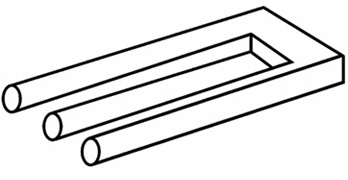
A blivet, also known as a poiuyt, is an undecipherable figure, an optical illusion and an impossible object. It appears to have three cylindrical prongs at one end which then mysteriously transform into two rectangular prongs at the other end.
Deceive your mind with a Girl in a Mirror and Skull Optical Illusion 11″ X 14″ Sepia Poster at Amazon.com!
19Bezold Effect
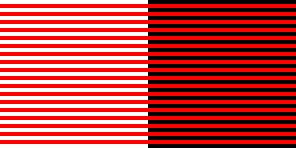
The Bezold Effect is an optical illusion, named after a German professor of meteorology, Wilhelm von Bezold (1837-1907), who discovered that a color may appear different depending on its relation to adjacent colors. In the above example, the red seems lighter combined with the white, and darker combined with the black.
18Café Wall Illusion
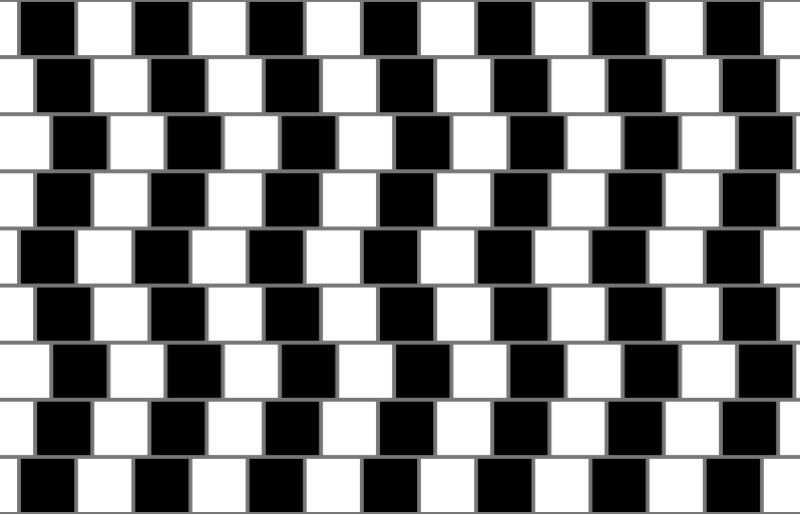
The café wall illusion is an optical illusion, first described by Doctor Richard Gregory. He observed this curious effect in the tiles of the wall of a café at the bottom of St Michael’s Hill, Bristol. This optical illusion makes the parallel straight horizontal lines appear to be bent. To construct the illusion, alternating light and dark “bricks” are laid in staggered rows. It is essential for the illusion that each “brick” is surrounded by a layer of “mortar” (the grey in the image). This should ideally be of a color in between the dark and light color of the “bricks”.
17 The Chubb Illusion
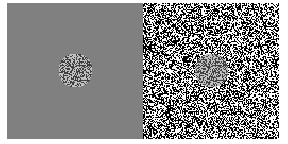
The Chubb illusion is an optical illusion wherein the apparent contrast of an object varies dramatically, depending on the context of the presentation. Low-contrast texture surrounded by a uniform field appears to have higher contrast than when it is surrounded by high-contrast texture. This was observed and documented by Chubb and colleagues in 1989.
16 Ebbinghaus Illusion
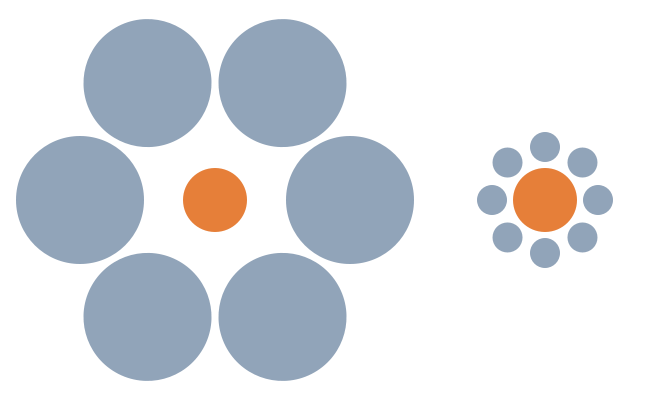
The Ebbinghaus illusion is an optical illusion of relative size perception. In the best-known version of the illusion, two circles of identical size are placed near to each other and one is surrounded by large circles while the other is surrounded by small circles; the first central circle then appears smaller than the second central circle.
15Fraser Spiral Illusion
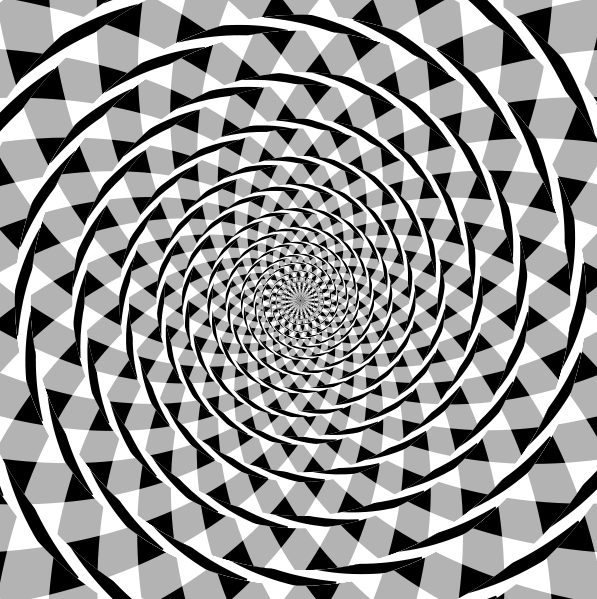
The illusion is also known as the false spiral, or by its original name, the twisted cord illusion. The overlapping black arc segments appear to form a spiral; however, the arcs are a series of concentric circles.
14 Hermann Grid Illusion

The Hermann grid illusion is an optical illusion reported by Ludimar Hermann in 1870 while, incidentally, reading John Tyndall’s Sound. The illusion is characterised by “ghostlike” grey blobs perceived at the intersections of a white (or light-colored) grid on a black background. The grey blobs disappear when looking directly at an intersection.
13 Hering Illusion
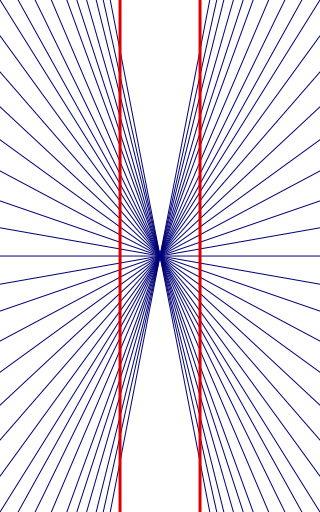
The Hering illusion is an optical illusion discovered by the German physiologist Ewald Hering in 1861. The two vertical lines are both straight, but they look as if they were bowed outwards. The distortion is produced by the lined pattern on the background, that simulates a perspective design, and creates a false impression of depth.
12Impossible Cube Illusion

The impossible cube or irrational cube is an impossible object that draws upon the ambiguity present in a Necker cube illustration. An impossible cube is usually rendered as a Necker cube in which the edges are apparently solid beams. This apparent solidity gives the impossible cube greater visual ambiguity than the Necker cube, which is less likely to be perceived as an impossible object. The illusion plays on the human eye’s interpretation of two-dimensional pictures as three-dimensional objects.
11 Isometric Illusion

An isometric illusion (also called an ambiguous figure or inside/outside illusion) is a type of optical illusion, specifically one due to multistable perception. In the image above, the shape can be perceived as either an inside or an outside corner.
Jump into the real game of mind-melting optical trickery with Masters of Deception: Escher, Dalí & the Artists of Optical Illusion at Amazon.com!
10 Jastrow Illusion

The Jastrow illusion is an optical illusion discovered by the American psychologist Joseph Jastrow in 1889. In this illustration, the two figures are identical, although the lower one appears to be larger.
9Kanizsa Triangle

The Kanizsa triangle is an optical illusion first described by the Italian psychologist Gaetano Kanizsa in 1955. In the image above, a white equilateral triangle is perceived, but in fact none is drawn.
8Lilac Chaser
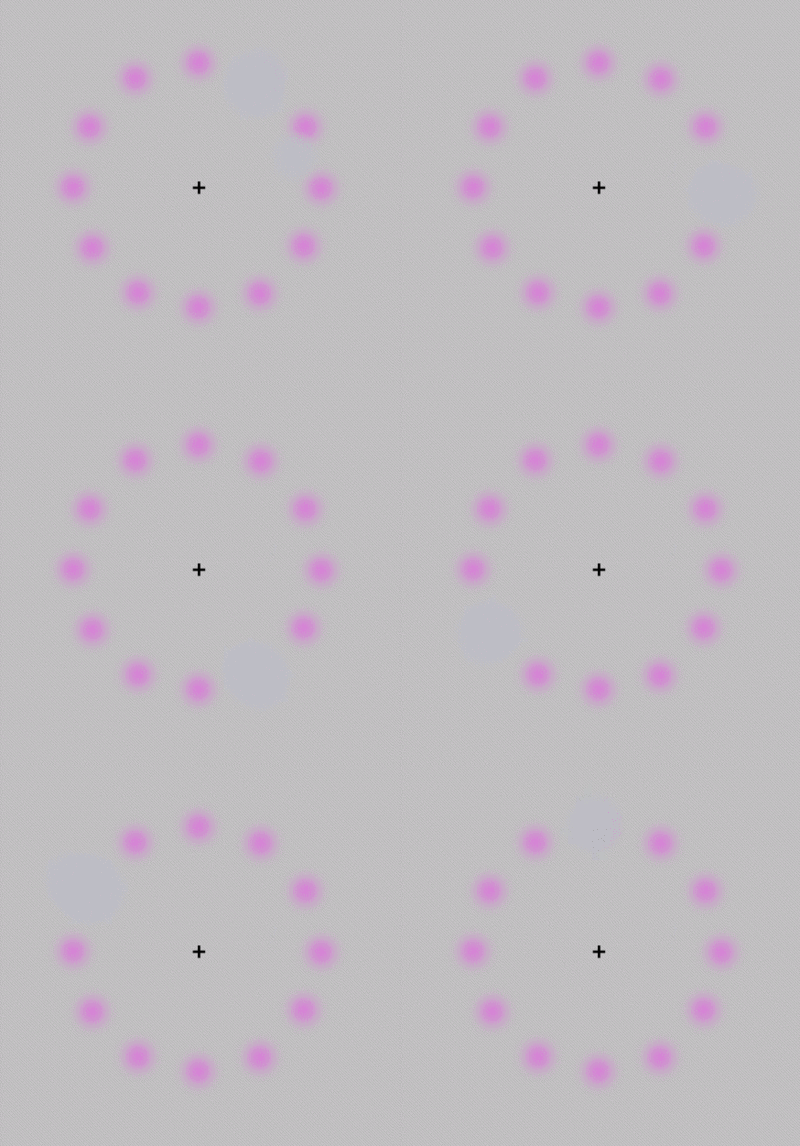
Lilac chaser is a visual illusion, also known as the Pac-Man illusion. It consists of 12 lilac (or pink or magenta-like), blurred disks arranged in a circle (like the numbers on a clock), around a small, black, central cross on a grey background. One of the disks disappears briefly (for about 0.1 second), then the next (about 0.125 second later), and the next, and so on, in a clockwise direction. When one stares at the cross for about 20 seconds or so, one first sees a gap running around the circle of lilac disks, then a green disk running around the circle of lilac disks, then a green disk running around on the grey background, the lilac disks appearing to have disappeared or to have been erased by the green disk.
7 Motion Illusion
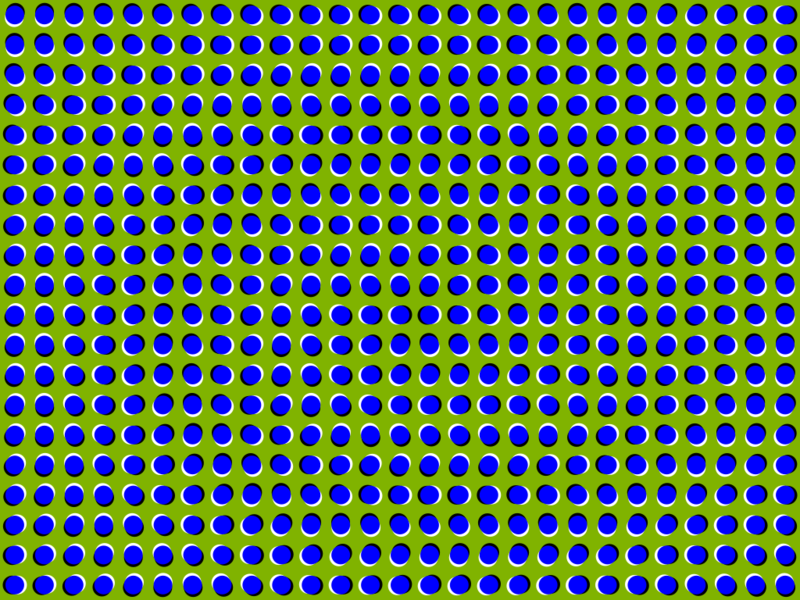
One type of motion illusion is a type of optical illusion in which a static image appears to be moving due to the cognitive effects of interacting color contrasts and shape position. To properly view this effect, click the image above to see the full sized version.
6 Necker Cube

The Necker cube is an ambiguous line drawing. It is a wire-frame drawing of a cube in isometric perspective, which means that parallel edges of the cube are drawn as parallel lines in the picture. When two lines cross, the picture does not show which is in front and which is behind. This makes the picture ambiguous; it can be interpreted two different ways. When a person stares at the picture, it will often seem to flip back and forth between the two valid interpretations (so-called multistable perception).
5Orbison Illusion
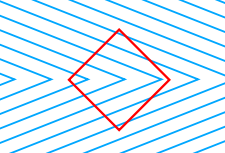
The Orbison illusion is an optical illusion that was first described by the psychologist William Orbison in 1939. The bounding rectangle and inner square both appear distorted in the presence of the radiating lines. The background gives us the impression there is some sort of perspective. As a result, our brain sees the shape distorted. This is a variant of the Hering and Wundt illusions.
4 Poggendorff Illusion
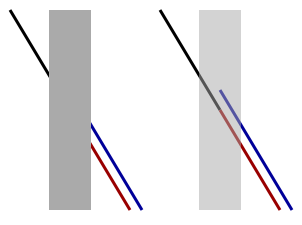
The Poggendorff Illusion is an optical illusion that involves the brain’s perception of the interaction between diagonal lines and horizontal and vertical edges. It is named after Johann Poggendorff (1796-1877), a German physicist who first described it in 1860. In the image above, a straight black and red line is obscured by a grey rectangle. The blue line appears, instead of the red line, to be the same as the black one, which is clearly shown not to be the case in the second picture.
3 Adelson’s Checker Shadow Illusion

The image shows what appears to be a black and white checker-board with a green cylinder resting on it that casts a shadow diagonally across the middle of the board. The black and white squares are actually different shades of gray. The image has been constructed so that “white” squares in the shadow, one of which is labeled “B,” are actually the exact same gray value as “black” squares outside the shadow, one of which is labeled “A.” The two squares A and B appear very different as a result of the illusion.
2 White Illusion
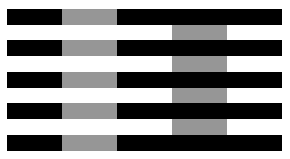
White’s illusion is an optical illusion illustrating the fact that the same target luminance can elicit different perceptions of brightness in different contexts. Note, that although the gray rectangles are all of equal luminance, the ones seen in the context with the dark stripes appear brighter than the ones seen in the context with the bright stripes. Note that this effect is opposite to what would be expected from a simple physiological explanation on the basis of simultaneous contrast (in that case the rectangles sharing the long borders with the dark stripes should appear brighter).
1Zöllner Illusion

In this figure the black lines seem to be unparallel, but in reality they are parallel. The shorter lines are on an angle to the longer lines. This angle helps to create the impression that one end of the longer lines is nearer to us than the other end. This is very similar to the way the Wundt illusion appears. It may be that the Zöllner illusion is caused by this impression of depth.
More Great Lists
 Top 10 Unbelievable Types Of Illusions And Hallucinations
 Top 10 Amazing Feats And Facts About Glass
 10 Amazing Animal Organs That Would Give You Superpowers
 10 Amazing Women You've Never Heard Of
 10 Amazing Ancient Versions Of Household Items
 Top 10 Amazing Discoveries About Ancient Authors And Books
 10 Lesser-Known Wartime Nurses Who Displayed Amazing Heroism
 Top 10 Amazing Recent Revelations About Neanderthals
 10 Amazing New Techniques Used To Reveal Scientific…
fact checked by
dickensgirl
More Great Lists