There are tons of awesome inventions in sci fi movies and books. Things like faster than light travel, force fields and bionic implants. There are also some things that, on the surface, seem like they would make life easier and simpler. This is a list of sci fi inventions that seem great, but are really more trouble then they are worth.
10. Flying Cars
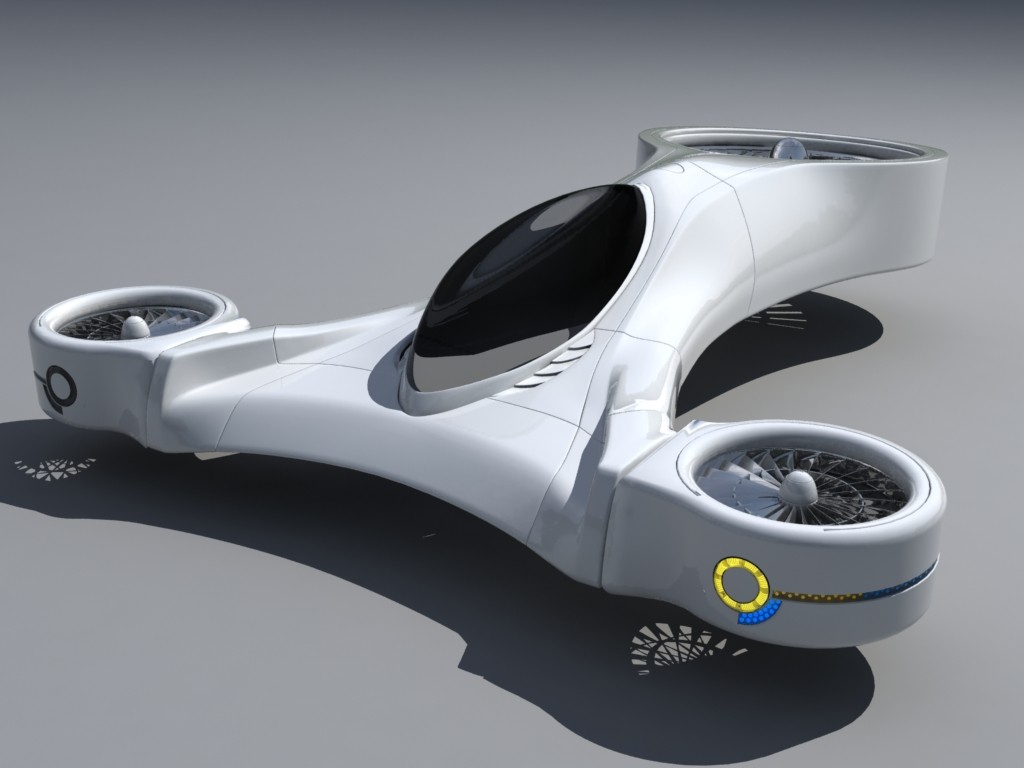
Imagine being stuck in traffic. It sucks right? Now imagine that you could flip a switch, and suddenly your car would begin to rise into the air. You fly over all those suckers stuck in traffic, gloating. Now that you’re flying, imagine running into a tree. Next, imagine getting into a fender bender with another flying car and plummeting toward your death in a flaming heap of twisted metal.
Flying cars would undoubtedly solve a number of problems. The only thing is, they would create a whole new world of problems. To keep from running into every single power line and radio tower we would need to create laws dictating where you could drive. Kind of like creating flying roads. Of course, as soon as you get enough flying cars, you get a traffic jam on the skyways, thus negating the purpose of having a flying car.
9. Cryogenic freezing

Cryogenic freezing actually exists today. Every year, dozens of people elect to be frozen in the hope that medical advances will progress to the point where they can be thawed and cured of their diseases. Despite obvious risks and expenses, this process has been around for decades.
Now, let’s assume that medical science advances to the point where it is possible to thaw the frozen bodies and heal any diseases which might have occurred. Suddenly, you can just go freeze yourself and thaw yourself at some point in the future. The question is then, what happens to the population when people who would have otherwise died, are brought to life in the future? Talk about overpopulation.
8. Artificial Intelligence

Movies and literature are chock full of robots. It’s quite possibly one of the most cliché objects in sci fi media. Despite this, robots are very real today and AI is not far off. Wouldn’t it be great though, to have a servant who will do anything you ask? Or perhaps a lover who never ages? What about a machine that completely supplants all menial laborers?
The answer is no, it would not be great. AI is a common theme in sci fi and usually it causes more problems than solutions. If you don’t believe me, think about the facts. The current trend is that every two years processors double in speed, halve in size and halve in price. Assuming this trend continues, in 20 years you’ll be able to purchase a computer the size of a postage stamp that’s smarter than the human brain, for about $1. Now who’s the superior species?
7. Prediction of the future
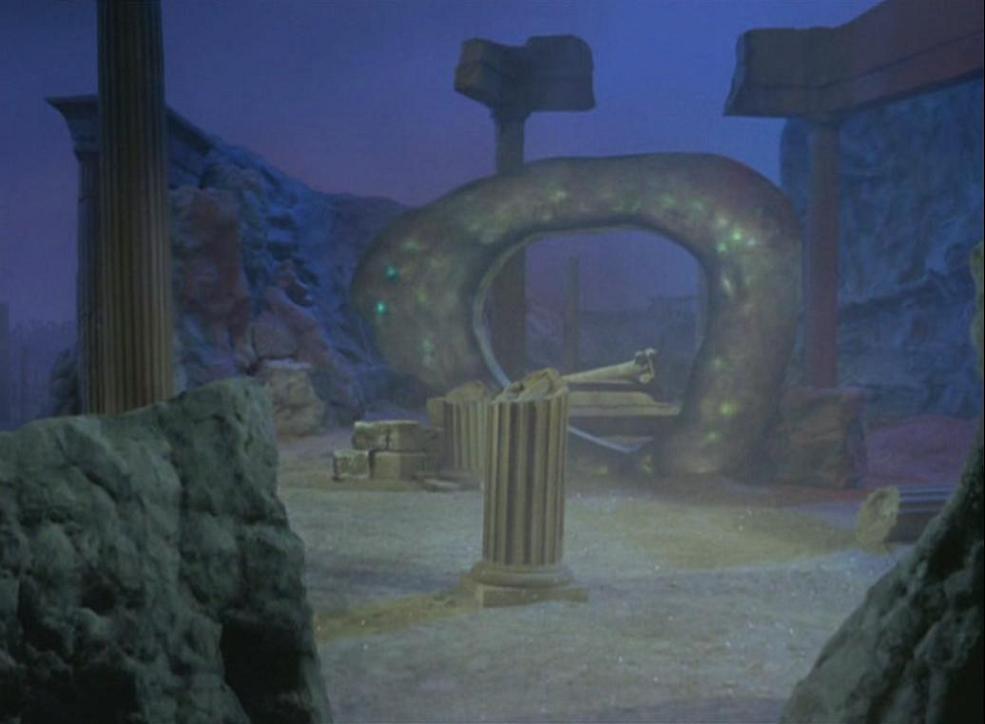
Wouldn’t it be great to stop murders before they happened? How about wars? What about knowing next week’s lotto numbers? Worthwhile goals, all of them. And entirely within reach with a time viewing machine. Imagine how many problems would be solved. No more war, famine or pestilence. The complete utilitarian society, right?
Wrong. So let’s say, hypothetically speaking, that the US has a time viewing machine; this machine then predicts that China is going to attack Los Angeles. To prevent this from happening, the US issues a preemptive strike, thus starting a war in which China launches a missile headed straight for California. Thus becoming a self-fulfilling prophecy. This is true of any major man made catastrophe.
6. Teleportation Device

Imagine a world where you can travel to New Zealand on Saturday, then stop over in Denmark for quick visit on Sunday, before you have to be to work on Monday. No longer do we have to use precious fossil fuel to travel. Terrorism in travel is a thing of the past. Until a terrorist teleports a bomb into the White House.
First, let’s assume that there is some sort of safety protocol in place to prevent things like that from happening. Technically, a teleporter breaks down all of the atoms in your body and sends them to the destination, where they are then reconstructed. The only problem with this is the actual transmission of the atoms. That’s where information age comes in. It makes far more sense to just transmit the blueprints of your atomic structure to a reconstruction device. Essentially, a teleporter is just a fax machine. The problem arises in the early use of such devices. Have you ever made a copy of a copy of a copy? Even using the highest quality copy machine, the quality degenerates rapidly. At first, it might not be noticeable. What are a few atoms from a hair? Or a fingernail? Or your heart? We’re not sure what even the smallest change in your atomic structure would do.
5. Nanobots

Cancer has been cured! The human lifespan numbers in the centuries. All degenerative diseases have ceased to exist. Major injuries heal within seconds. Recreational drug use no longer has any negative effects. Hangovers are a thing of the past.
Nanobots have cured the world. These self replicating robots are now injected into everyone as a natural immunization. To describe the horrors of these machines, here’s a quote from Eric Drexler’s book Engines of Creation:
Imagine such a replicator floating in a bottle of chemicals, making copies of itself….the first replicator assembles a copy in one thousand seconds, the two replicators then build two more in the next thousand seconds, the four build another four, and the eight build another eight. At the end of ten hours, there are not thirty-six new replicators, but over 68 billion. In less than a day, they would weigh a ton; in less than two days, they would outweigh the Earth; in another four hours, they would exceed the mass of the Sun and all the planets combined – if the bottle of chemicals hadn’t run dry long before.
Part of the appeal of nanobots is that only a few need be injected and they can replicate in the human body. This also describes the danger. To put it succinctly: We are the Borg. Lower your shields. Your biological and technological distinctiveness will be added to our own. Resistance if futile!
4. Weather Control

Welcome to the future. Global hunger has been solved. The world community lives in utopian tranquility without hurricanes, tornadoes or floods. The human race can now turn its gaze to more worthwhile things like space travel and beer.
The problem with weather control arises when we unleash specific weather on delicate ecosystems which cannot exist except under certain conditions. If this hurdle is overcome there is no reason we shouldn’t have a weather control device. Until it breaks. Then a world lulled into complacency by good weather is suddenly thrown into a natural disaster. Or, in a worst case scenario, a hostile foreign power takes over our weather control devices and unleashes storms of unimaginable power and magnitude against us.
3. Genetic Engineering

Perfect humans. Engineered from before birth to be the best of the best. What could be better than having the perfect child, with no possible risk of inherited flaws? All without the use of those messy nanobots. I think the movie Gattaca (1997) says it best:
We want to give your child the best possible start. Believe me, we have enough imperfection built in already. Your child doesn’t need any more additional burdens. Keep in mind, this child is still you. Simply, the best, of you. You could conceive naturally a thousand times and never get such a result.
The danger arises not from any physical aspect of genetic engineering, but rather the social aspects. When you begin to breed perfect humans, you create an entirely new social class. Bringing discrimination to new levels, the class you belong to will not be determined by social status, income or the color of your skin, rather, the build of your genes.
2. Holodecks
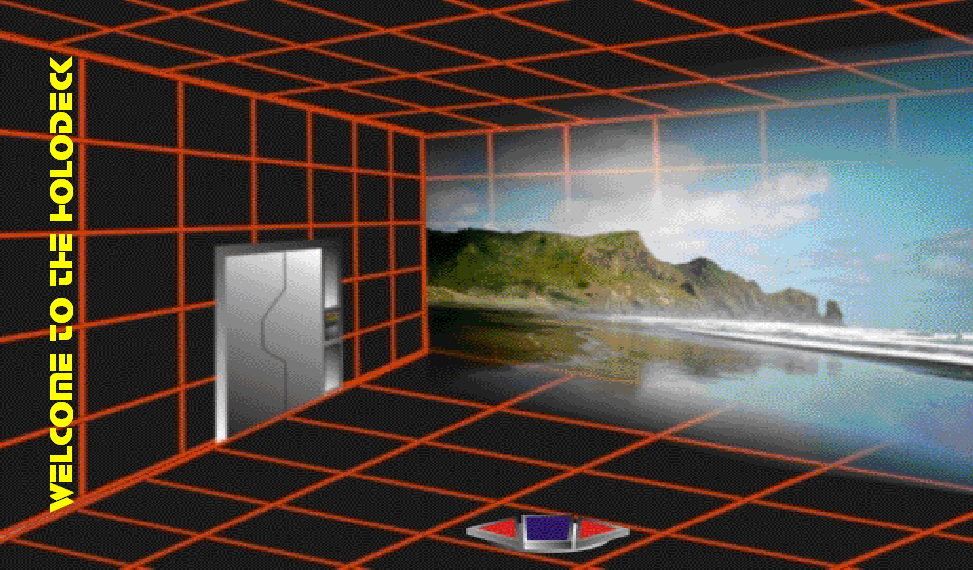
After a stressful day at work, what could be more relaxing than coming home and relaxing in a nice peaceful meadow? Perhaps going for a relaxing drive in your flying car? With a holodeck, you can go anywhere, be anyone, or do anything. With the way videogames are heading, holodecks are not too far off. Imagine that you can have anything you want. Any fantasy you have is possible. And there is the danger.
It’s the perfect drug. Why would anyone bother going dealing with their crappy wife and kids when they have the perfect life in the holodeck? Why would anyone bother dealing with reality? You want to be Emperor of Rome? Sure! You want to be Blackbeard the Pirate? Why not? You want to have sex with Marilyn Monroe? Whatever you want is possible with the holodeck. It’s been jokingly put forth that the holodeck would be the world’s last invention. The thing is; it would be. Why bother inventing anything else when you’ve already invented the perfect world?
1. Replicators
Replicators are the solution to nearly every problem the world has. Imagine no more world hunger. No longer is there any energy crisis. Never again will there be a shortage of medical supplies. The perfect world where you can have anything you want.
Until the complete and utter collapse of society. You see, the replicator would make work obsolete. There would be no need for money. As a matter of fact, you would only need one large replicator and you could replicate another one. You could make anything from fresh pizza to a molecule-for-molecule exact reproduction of the Hope Diamond. The last day of the world will come when anybody can make anything.
Bonus: Time Travel
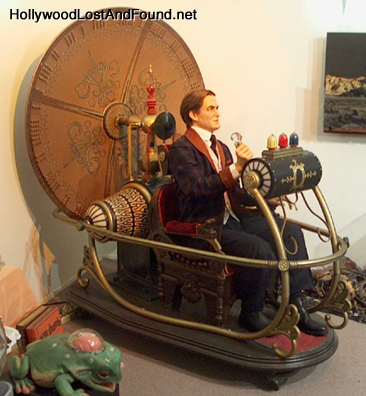
Though not actually possible, time travel would create incalculable problems. Imagine going back in time and you meet a nice girl and take her out and things happen and you go back to your time and nine months later, she gives birth to your father. You kind of have to ask yourself, “What?”
The slightest change in the past would create ripples into the future. Only you would know about those ripples, because to everyone else, that’s just the way history turned out. Then let’s say you go into the future and copy the blueprints for some fantastic machine like a replicator. You bring it back to your time and invent it and somewhere along the line some knave steals your blueprints. Oh wait! That knave was you! It just doesn’t work.
Contributor: Mystern


here’s a couple i was expecting to see:
Interstellar travel: basically flying cars taken to the next step. i know we have the shuttle, etc. but i’m talking millenium falcon travel. sci-fi uses it all the time as a fact that civilizations on different planets across a galaxy or universe ALL developed space travel at roughly the same time.
How soon in real-life? as soon as someone invents a cheaper way to escape earth’s gravity. propulsion in space is as easy as letting air out of a balloon.
Laser swords/guns: Lasers exist now, but how soon till we can shoot a short laser pulse rapidly? or limit its length into a solid, viewable stick? hopefully soon, but they would probably face the same weapons-restriction laws we have now…only worse.
Copperdragon: Wait, you want to see those on the list of things that should not be invented? I was thinking those things might be on the list of things that should be invented.
mystern: i was just hoping they’d be on the list for discussion. personally, i’m in favor of space travel (lets see whats out there), but not laser weapons (you think gangs are a problem NOW.)
Copperdragon: Ah. Well I’ll write a follow up list over the weekend and be sure to include them on the list. Thanks.
Wow I thought comments were supposed to COMMENT the list and are supposed to be a SHORT sentence. I find it amazing yet really stupid when people spam info from wikipedia. Idiots.
i know i indicated that i hope laser weapons would happen soon. i’m changing my mind.
here’s why i think laser weapons would be bad…
imagine an easily concealed knife with a 3 foot blade thats as hot as the sun. by Sony.
Or
a sawed-off shotgun sized pistol that shoots 2-foot long hi-energy sun-hot plasma blasts. unlike in the movies, the beam would not stop because it hit a piece of metal or plastic. it would go right through, and through what was behind it, and behind it, until it ran out of energy. by Glock.
SD666: anyone in particular? or are you just jealous someone else might have beat you to it.
The plagerism on this site has gotten so out of control. Like others have mentioned, this is the exact same list on cracked.com. If you copy a list from another website at least cite the source where you’ve taken it from.
SlickWilly:
Name me three… JUST THREE technological advancements that came out of WWII that wouldn’t have come out within 10 years of 1940 *anyway.*
That’s the point I was making—it isn’t that war doesn’t sometimes bring advancements—but it’s influence on technology is way over-exaggerated.
Almost all of the technologies brought to us out of WWII were in fact already in development *before* the war, and would have been achieved, no doubt, by 1950, if not earlier, anyway. I invite you to refute this with at least three examples.
copper*****: Dude, I type on what I feel or think about the list, that is my definition of a comment, ok?
I don’t do this:
BLAH BLAH BLAH BLAH BLAH BLAH BLAH BLAH BLAH BLAH BLAH BLAH BLAH BLAH BLAH BLAH BLAH BLAH
It says so here in wikipedia:
*Random Wikipedia Info Random Wikipedia Info Random Wikipedia Info Random Wikipedia Info Random Wikipedia Info Random Wikipedia Info Random Wikipedia Info Random Wikipedia Info Random Wikipedia Info Random Wikipedia Info Random Wikipedia Info Random Wikipedia Info Random Wikipedia Info Random Wikipedia Info Random Wikipedia Info Random Wikipedia Info Random Wikipedia Info Random Wikipedia Info Random Wikipedia Info Random Wikipedia Info Random Wikipedia Info Random Wikipedia Info Random Wikipedia Info Random Wikipedia Info Random Wikipedia Info Random Wikipedia Info Random Wikipedia Info Random Wikipedia Info Random Wikipedia Info Random Wikipedia Info Random Wikipedia Info Random Wikipedia Info Random Wikipedia Info Random Wikipedia Info Random Wikipedia Info Random Wikipedia Info Random Wikipedia Info Random Wikipedia Info Random Wikipedia Info Random Wikipedia Info Random Wikipedia Info Random Wikipedia Info Random Wikipedia Info Random Wikipedia Info Random Wikipedia Info Random Wikipedia Info Random Wikipedia Info Random Wikipedia Info Random Wikipedia Info Random Wikipedia Info Random Wikipedia Info Random Wikipedia Info Random Wikipedia Info Random Wikipedia Info Random Wikipedia Info Random Wikipedia Info Random Wikipedia Info Random Wikipedia Info Random Wikipedia Info Random Wikipedia Info Random Wikipedia Info Random Wikipedia Info*
BLAH BLAH BLAH BLAH BLAH BLAH BLAH BLAH BLAH BLAH BLAH BLAH BLAH BLAH BLAH BLAH BLAH BLAH BLAH BLAH BLAH BLAH BLAH BLAH BLAH BLAH BLAH BLAH BLAH
P.S. Why would I be jealous of some idiot spamming the comments with their worthless information!? Dumbass.
excogitate:what?
He’s making fun of Sherri Sheperd who made a stupid mistake of not knowing whether the Earth is flat or not. If you ask me she probably still doesn’t know! lol! How can you not know if the Earth is flat or not!?
Anyone else thinking this is getting entirely too far out of control?
StewWriter: Absolutely…how about people just keeping their gobs shut if they haven’t anything constructive to say!
Kind of reminds me when I was in 4th grade and we had a substitute teacher for a month.
Actually I take that back the 4th graders acted more mature than what I see here.
NoName + Blogball: You guys are so far on the money with this mess I must commend you on your collective genius. Look guys -everyone here- Jamie was away, we all understand that. Everyone needs and deserves a vacation and none as much as Jamie who has, more or less for the most part, been running this sight on his own. Sure, he relies on the kindness and submissions from users and viewers, me being one who has done many, but he still has to go over each and every list, convert it to the code he uses for this site, and post it: it TAKES TIME. All you guys need is some patience and some understanding and to all just take a collective breath and ease up on the poor guy. He’ll be back in a matter of days and things will return to normal. Yes, for a few days things haven’t updated here, and there may have been a better way to handle things in his absence, but he chose his own way and we all, as readers, need to respect that. In my humble opinion, if those of you who insist on *****ing and clogging up the comments with your *****ty attitudes can’t find a more constructive place to vent your issues, you need to turn off your computers and find something else to do. If one list irritates you, find another that doesn’t and move on with it. Okay, I feel marginally better. Now let’s just chill and be a Listverse Family once again. I feel like i just ended a Brady Bunch Episode… criminy!
One of the things that I have enjoyed over the past month or so since I found this site is the interaction between Jamie and the members/commenters on this site. That is the great thing that sets this one apart from other sites. This is in fact the first and only place I have ever commented on. I don’t understand why people can’t be a little more understanding and let the man enjoy his holiday with his family without complaining that they are not being entertained enough.
Wow, so JF is away for personal vacation and he’ll come back to this mess…
Anyway, about the list;
My first thoughts were, “Haven’t I seen a similar list somewhere else?” and when I saw the comment about Cracked I remembered. I do like how Mystern fleshed out what Cracked created as purely humor/entertainment into a thoughtful (yet sometimes disagreeable
) list.
Ever since I saw Back to the Future, I dreamed of having my very own hoverboard! Make sure that’s on the list of things that should be invented!
I apologize if someones said this before me, i skipped ahead. First, the idea of nanorobots really isn’t an end-of-the-world armageddon after all, because chances are by the time we get nanobots to the point where they can be used we will have means of programming or simply preventing them from multiplying. The nonobots would probably work much the same way our cells work. If you left bacteria in a perfect environment with food and absolutely positively no predators, that bacteria could take over the earth easily. But thats never happened, has it? As for the idea of timetravel, dismissing it as irrational based on physics is also wrong. Theres a theory, don’t remember its name, saying the universe we live in is one of countless alternate ones. Every decision ever posed to every person, ever, creates a new branch of an alternate world. Time travel could exist, just not in the branch of the dimensions we live in. That said, it is a far out idea. Finally ill take a poke at someone who said teleportation couldnt exist. Well, we’ve done it. Not with people, not even with multicellular organisms, but we have teleported a strand of 36 carbon atoms 45 feet across a labratory.
I can’t see what would be wrong with the Replicator device.
ben:
Where did you find the 45 carbon atom deal? Not in a “prove it” sense but I want to read about that. I had read about 1 atom being teleported but not a chain. That is pretty cool.
Randall:
I’ll grant you that most of these significant technologies were already being developed. However, when you realize that these technologies were developed, tested, and commisssioned BEFORE 1944, how can you say that war does not have a tremendous influence on technology? According to your stipulations, technologies that would not have existed until 1950 were being developed and put into practical use in half that time.
And it’s not just the major significant technologies either. Each of the ones you mentioned gave rise to many different kinds of technology to adapt those three major ones to many different useful situations.
And let’s not forget, just because the technology was being developed before the war doesnt mean that it would have made it to fruition without the massive war spending. Many good ideas with the potential for major technological change are never realized because there just arn’t enough private companies that are interested in it.
Sure, they may not have been invented throughout the course of the war. But without WWII, many may not have made it off the drawing board, and those that did might have taken decades at the pace they were going to be fully available for practical use.
War has a TREMENDOUS impact on the advent of technology. No exaggeration needed.
I am guessing JustinW has a site that is not particularly popular and he is annoyed that this one is. Unfortunately for him he can no longer access the site – just as I am about to revert to our old system of regular updates! BTW: I am back from holiday and will resume working on the site tomorrow (I have jetlag to deal with today!)
jf; hah, hah, hah,
Teleporters topics always assume people will be moved.
First, the military would move weapons, then FedEx and UPS would open teleportation centers to move packages, then Microsoft would donate teleporters to move medicine/food to third-world countries.
Moving people would probably be LAST on the list. Whatever, it’s ALL cool!
i wish i could take the time to argue and set your title article on the right path. forgive me.
Slickwilly:
Go back and re-read what I wrote. I did *not* say that war has no influence over technology. Rather, I was saying that it is a myth that war is the best way or even one of the best ways of spurring technological advancement. The technology most advanced by war is *the technology of war*–i.e., weapons technology and so on. Some applications for war technology do indeed find their way into civilian life, but this not the rule, it is the exception. In fact, peaceful development of technology, driven by the market, the desires of the public, and often the far-sightedness of private and government researchers and investors, brings us far more in the way of advancements. The Space Race, for example, did far more for modern technology than WWII ever did.
The mistake you and others make is thinking that because there was an outgrowth of technology in the wake of WWII, that war itself is responsible. In fact, what brought us the myriad advancements of that period was a revitalized *economy*—not the war.
I disagree with all of your statements, therefore, that WWII itself and war in general has some “tremendous impact” on technological advancement. *You* cannot say how technology might have advanced had there been a world at peace during that entire period, which could have devoted resources to the very kind of advancement we’re speaking of, instead of wasting them on war.
To prove my point, look at this way—post WWII, we had, certainly, some advancements in technology. But the FAR more complex and advanced technological world around you is largely the development of the last 30 years or so, which has been (with the exception of relatively minor scrapes like the Gulf War, and so on) a period of PEACE. This period has seen the development of advanced computer technology (as a result of the invention of the microprocessor chip), cell-phone technology, advancements in ultra-light materials, aviation, etc. etc. etc. None of these things were off-shoots of war technology—they were the developments of a peaceful period when markets and economies were strong.
So THIS is what Michael Crichton has been doing lately…
Technophobia has seriously gotten out of hand.
“Don’t ever invent anything again! What if something bad happens??”
Randall:
*sigh* Look, you seem to be overlooking the fact that technological development is the direct result of the concentration of money into research. War technology is the most advanced during war time, for obvious reasons. But there are so many other needs that need to be met during wartime outside of weapons technology, needs that are more effective and less costly when supported by modern technology (i.e. transportation, living necessities in strained environments, communications technology, issues of hygene and cleanliness in often deplorable conditions, medical technology, etc. etc.). It takes money to develop this technology and during wartime, the U.S. spends more money every year on developing said technology that many countries have in their entire national budget. You use the Space Race as an example of the development of techology during peace time. This is blatantly incorrect and given how well-argued your points are, it kind of shocks me. The Space Race was a direct consequence of the Cold War, which happened directly following WWII and lasted until the early 1990′s, and which IS considered, in fact, wartime and not peacetime.
The mistake YOU make is not seeing beyond the little scope of technological proliferation you have constructed for yourself. “In fact, what brought us the myriad advancements of that period was a revitalized *economy*—not the war.” — You. Hmm, interesting point. Are you aware that before WWII, this county’s economy was suffering from a little thing called the Great Depression? The most economically dismal period in this country’s history? WWII created a demand for jobs, production of goods, essential government services and not only pulled the U.S. out of the depression but launched us as the pre-emininent superpower of the world, which was a direct result of the wealth that the was acquired as a direct result of WWII. You are looking at the argument backwards. The economy may have spurred technological proliferation, but at that point in our history, the economy was entirely the responsibility of the war.
And the last 30 years, sir, have NOT been a period of peace, as you claim. Overlooking the Cold War, for a moment (which, again, lasted from the end of the 40′s until the early 90′s; and which also rapidly sped up in the last 30 years, the obvious effect that had on technology, not withstanding), you still have: Under Reagan: the Lebanese conflict of 1983, the invasion of Grenada in 1984, Iran-Contra scandal of 1986; Under Bush: the invasion of Panama of 1989, the first Gulf War between 1990 and 1992; Under Clinton: Operation Desert Fox of 1998, Operation Allied Force and the invasion of Yugoslavia of 1999; Under Bush Jr.: the War in Afghanistan of 2001 to the present, the War in Iraq 2002 to the present.
“This period has seen the development of advanced computer technology (as a result of the invention of the microprocessor chip), cell-phone technology, advancements in ultra-light materials, aviation, etc. etc. etc. None of these things were off-shoots of war technology—they were the developments of a peaceful period when markets and economies were strong.” — You
What?!! Are you daft or can you not read the writing on the wall?! The invention of the micro-processor chip was influenced by many things, not the least of which was a need for compact computer technology that is portable and effective for use on the battlefield in active combat situations. Cell-phone technology arose both from space exploration technology and satellite-phone technology that was first used explicitly for military communications. Advancements in ultra-light technology arose, again, for a need for durable, portable and effective materials that aided in quick-mobile combat operations under duress. Aviation speaks for itself, I shouldn’t have to explain how that fits into the combat landscape.
Randall, I appreciate what you are trying to do, but it appears to me that you have a narrow scope of the way these different aspects interact with one another. Therefore, I disagree with your opinions, as they do not seem to be supported by the facts.
this is a rip off of Cracked.com’s (more funny) post on Scifi inventions o-o
Slickwilly:
I overlook nothing, pal. I’m well aware of the importance of research money in developing new technologies. You, however, seem to be blowing off the great importance that the market plays in these matters.
Your statement about the Space Race is asinine. Yes, it was an outgrowth of the Cold War in the sense that it was a competition between the US and the USSR, but the Space Race was hardly akin to war or combat itself, butthead. And excuse me—how was the period you’re talking about there considered “wartime” and not peacetime? Are you referring to the Cold War? Be more precise. Because sure, I’ll grant you, the Cold War brought more military technological advancement. But if I’m getting you correctly (which isn’t easy to do) I take it you’re using this to support YOUR belief that war technology is the ultimate source for civilian technology. And again, I’d say, prove it, buster.
And don’t try to “prove” it by lecturing ME on how the period from 1950 – 1990s was actually “wartime.” I was there, “slick.” I’ll grant that the Cold War had its own terrors and nastiness—but actual war it was not. That’s why we called it the COLD war.
AND yes, “sir,” in fact the last 50 years (not JUST the last 30) HAS been a period of peace. Do you think I’m not aware of the minor conflicts you list? Or of Viet Nam? We’re talking about GLOBAL peace here, not minor bush wars and small regional scrapes. There is a HUGE world of difference between wars like WWI and WWII and conflicts like Iraq and little Grenada. Come now. You know this. We all know it. Or are you trying to tell me that our technology today hinges on conflicts like the invasion of Panama? By your logic, that’s what you’re saying.
And yes, “slick,” I’m well aware of the Great Depression and the role WWII had in pulling our economy out of it. But again, you fail to make a coherent point—or in fact any point at all–though you think you’ve made one. So I’ll turn the question around on you–yes, we’ve all heard of the Great Depression, smartass. We’re all aware it was a terrible period, economically and otherwise. Are YOU aware that PRIOR to the Great Depression, prior, indeed, to WWI, that there was an economic boom in America? That the period around the turn of the century and just before (except for a brief economic turn-down in the 1890s) was an economically strong one? And that aside from the very brief and relatively minor Spanish/American war, it was a time of nearly unbroken peace for this country? And that during that time, technological advancements came along at a huge pace?
YOU, you see, are confused by the rather unique situation offered to America after WWII. Yes, war spending had helped bring the economy out of the Great Depression. But *more importantly*–MUCH more importantly—the US was, at that time, the only great nation on earth that had not suffered materially or physically in ANY way. Japan was wrecked, Europe was in a shambles. The US was untouched. It’s no surprise, then, that economically we came out of it tremendously strong, and that we dominated the markets of the world for decades after. Note the uniqueness of that situation. You’re arguing, in essence, that war brings economic strength, and that technology issues from that. Well, wrong again chump—because I hasten to point out to you that Viet Nam did the economy no good—it can largely be blamed for the terrible economic malaise of the 1970s (along with the increase in the price of oil and some bad monetary policies) and we are certainly seeing, now, that the idiotic mess in Iraq is doing our economy no good.
And now you’re telling me that we have a need for portable computers in battlefield settings to thank for the microprocessor chip? And you’re calling ME daft, moron? And the military to thank for cell phones? Go smoke some more of that stuff, “slick.” We have Motorola to thank for cell phones—because they saw a niche in the market that wanted portable phone technology. They developed it and marketed it, and here we are. Go tell the engineers and researchers responsible that they have the military to thank for their wisdom. They’ll laugh you clear out of here.
And don’t start with me on aviation, either. You have no idea who you’re talking to. Just for starters I’m the son of a career pilot who flew bombers in WWII. Aviation goes back in my family over 80 years. *Military* aviation in WWII owed, in fact, a GREAT deal to PRIVATE, peacetime aviation experimentation and racing competitions BEFORE the war–in fact, the airplane wasn’t even recognized as a viable weapon UNTIL the private, peacetime guys, between the two world wars, developed aviation technology to a point where the military had to sit up and take notice. It was PRIVATE, peaceful investment in overwhelming numbers that brought about the development, also, of the airliner–the most famous of which being the DC3—and that had nothing, absolutely nothing, to do with military technology. It was a market opportunity that visionary men saw, and they took it.
In closing, “slick,” be careful of accusing me of arguing sans facts. In all your rant I saw not ONE supportable “fact” that supports your view of this topic.
Randall:
Excuse me, but what did I do to personally insult you? Several times in your last post your reverted to calling me names. Why? I was simply pointing out the common sense of my argument that you seemed to be overlooking. I am open to your point of view, as I am to intelligent debate, so why do you feel the need to attack me personally?
That being said, let me point out the things I saw as incorrect in your last post.
First of all, yes, the Space Race came from the Cold War. Meaning that the attitudes in our country at that point in history (mostly the 60’s) reflected that the country THOUGHT IT WAS AT WAR. (Vietnam not withstanding.) Whether or not any actual shots are fired in this situation makes no difference. When the Soviets launched Sputnick, a wave of fear washed over America. “Oh no! Our enemy is getting the upper hand! We must do something about this!” Hence, the billions of dollars poured into space exploration, in a bid to outdo the Soviets and prove that we had the upper hand. This mission raised many technological challenges that had to be solved through innovation. You seem to be missing the point here. We WERE at war with the Soviets, if a mental once and not a physical one. Both countries trying to outdo the other in terms of military technology and power. That was why it is called the Cold WAR. (That’s also why the Soviets lost by the way; they threw so much money into military innovation that they bankrupted the nation.)
Since you seem to have a tough time grasping my point, I’ll simplify it for you:
Technology needs a reason to exist and resources to bring it about. When we are at war, there is both a reason and the government is willing to spend more money. The gov’t puts a lot of pressure on researchers to develop technology quickly so it can be adapted to the battlefield as soon as possible. So research and development of technology speeds up when the U.S. is at war. It’s as simple as that. And you seem to be twisting my words to suit your own purposes. I NEVER said war is the ultimate boon of technology. I am arguing that it has a much bigger impact on technological development than you believe.
“AND yes, “sir,” in fact the last 50 years (not JUST the last 30) HAS been a period of peace. Do you think I’m not aware of the minor conflicts you list? Or of Viet Nam? We’re talking about GLOBAL peace here, not minor bush wars and small regional scrapes. There is a HUGE world of difference between wars like WWI and WWII and conflicts like Iraq and little Grenada. Come now. You know this. We all know it. Or are you trying to tell me that our technology today hinges on conflicts like the invasion of Panama? By your logic, that’s what you’re saying.” – You
I’M not talking about global war and peace. I am talking about national war and peace. You think just because the world at large isn’t at war that our forces aren’t somewhere, doing something related to military combat? Combat that requires technology? Again, here you are, twisting my words. Our technology doesn’t hinge on these small conflicts (small to us, perhaps not to the victimized countries), but it does create a situation where new technology is needed to fight more effective combat and the government is willing to spend more money on it.
“And yes, “slick,” I’m well aware of the Great Depression and the role WWII had in pulling our economy out of it. But again, you fail to make a coherent point—or in fact any point at all–though you think you’ve made one. So I’ll turn the question around on you–yes, we’ve all heard of the Great Depression, smartass. We’re all aware it was a terrible period, economically and otherwise. Are YOU aware that PRIOR to the Great Depression, prior, indeed, to WWI, that there was an economic boom in America? That the period around the turn of the century and just before (except for a brief economic turn-down in the 1890s) was an economically strong one? And that aside from the very brief and relatively minor Spanish/American war, it was a time of nearly unbroken peace for this country? And that during that time, technological advancements came along at a huge pace?” – You
I’m going to overlook how you keep trying to bully me by using derogative terms against me, as I was under the impression that we could have an intelligent discussion. Just because you fail or refuse to see my point doesn’t mean I didn’t make one. My point is, you say that a strong economy is the foundation for technology development. I will agree that it is essential that a country must have a lot of resources to produce new technology. But the country didn’t HAVE a lot of money during the Great Depression. WWII created the necessary economical situation that spurred the boost in technological innovation that has lasted, for various other reasons, from WWII onward.
And….you seem to keep making the point: “Yes, well, except for this war here and this combat situation there, we were at peace.” That, I feel is asinine. You keep overlooking my exact point, saying that except for the point I’m making, you’re point is the right one. That is not sound, valid, or even logical.
As far as your point about Vietnam and Iraq is concerned. There is a much different social situation that exists (existed) with those wars than WWII. Whether or not they were a boon to economic growth, the U.S. had already AMASSED a supply of resources to fund technology, even when the economy began to fall to ***** again.
“And now you’re telling me that we have a need for portable computers in battlefield settings to thank for the microprocessor chip? And you’re calling ME daft, moron? And the military to thank for cell phones? Go smoke some more of that stuff, “slick.” We have Motorola to thank for cell phones—because they saw a niche in the market that wanted portable phone technology. They developed it and marketed it, and here we are. Go tell the engineers and researchers responsible that they have the military to thank for their wisdom. They’ll laugh you clear out of here.” – You
Yes, you have the military to thank, partially, for the development of the micro-processor. Yes, Motorola saw a niche in the market and a technology, now listen close, that *already existed thanks to military funding*. The technology of satellite phones (and that’s essentially what cellular phones are; they use an antenna to relay signals to a satellite, which relays to another antenna and finally to your phone) was originally created…all together now: for the military. And…I mean, if you really can’t see that then you ARE daft.
“And don’t start with me on aviation, either. You have no idea who you’re talking to. Just for starters I’m the son of a career pilot who flew bombers in WWII. Aviation goes back in my family over 80 years. *Military* aviation in WWII owed, in fact, a GREAT deal to PRIVATE, peacetime aviation experimentation and racing competitions BEFORE the war–in fact, the airplane wasn’t even recognized as a viable weapon UNTIL the private, peacetime guys, between the two world wars, developed aviation technology to a point where the military had to sit up and take notice. It was PRIVATE, peaceful investment in overwhelming numbers that brought about the development, also, of the airliner–the most famous of which being the DC3—and that had nothing, absolutely nothing, to do with military technology. It was a market opportunity that visionary men saw, and they took it.”
The son of a brain surgeon does not a brain surgeon make, and the son of a pilot is not an expert on aviation technology. (As long as we are on the topic, my grandfather flew cargo planes for the air force during WWII, and my father was a fighter pilot during Vietnam.) I’m not saying that aviation does not have much to owe from private experimentation, but the vast majority of the funding into aviation technology at the time came from the defense budget of the U.S. gov’t. As far as the plane not being considered a viable weapon until between the wars, that’s ignorant. WWI was HUGELY responsible for the airplane being viewed as en effective weapon.
THE POINT IS: War and military operation requires technology, technology requires money, the U.S. has money and has many wars and military operations; when the country undertakes a war or a military operation, the gov’t uses money to fund private research into development of technology, and puts pressure on the researchers to do so in a timely manner. Thus, war speeds up technological development, and does so in a big way.
Randall, I don’t appreciate you calling me names. It’s childish and immature, and if you respond to this post in kind, I will cease further discussions with you. If, however, you would like to keep it civil, then we can continue this interesting debate.
If you want some outside information that speaks to BOTH of our points, try this:
http://en.wikipedia.org/wiki/Military_funding_of_science
I’m not saying that the market doesn’t drive technology. Absolutely it does, and in a big way. I’m saying that it would be wrong to discount the effect that war has on technology. As I said, technology comes from two things: resources and necessity. War creates both of these things.
Let’s put it this way.
This list sucks.
Yeah, I’m bookmarking it, yeah I read it.
No, I don’t like it. It’s stupid.
Why would flying cars get into traffic? How the hell would that be possible? I mean, we all know the sky is SUPER SMALL RIGHT? Wrong. It’s huge. There would be a *****load of space, and who would be stupid enough to crash into a tree? The guy who crashes into a tree today. Why would robots be wrong? Remove their feelings, and bam, we win. Teleporting would obviously be made for military ***** and what not, but it of course wouldn’t be made after their are still glitches in it. Why are nanobots wrong? Are you telling me scientists who created it would be stupid enough to leave a bug that replicates itself rapidly without stopping? I mean, even if it DOES get big enough, it’ll blow up the body it’s in and simply using water against these ELECTRICAL beings would be efficient enough. With weather control, we would make it password protected, and it’s users would surely put the right weather in the right places. Building humans ground up…the problem is where again? I highly doubt we would make the social attributes of these…..creations in a non-sensemaking way. It would be the perfect world. You know….I’ve never…nah, I’ll post it on MySpace later, it’ll be like 3 pages long anways. But getting back to the holo-crap, why would it be wrong? Obviously it can be abused, but like cell phones, I’m sure the government or it’s inventors would allow a lock for it given to a mom or something. Talk about a nerd attempting to get a social life, LMAO. Your replicating viewpoint is the only one I sorta agree with. Talk about Bush creating the apocalypse.
why is everyone getting so *****y about science FICTION? geez
Emily: I had no idea that this list would cause so much discussion. I kind of think that it gives people a vent to rave about something that cannot be proven either way. Like religion or politics.
Snowkid: . . . I’m not even going to take the effort.
Slickwilly:
I will answer your lengthy missive in due course.
But I just had to say one thing real quick.
I am damn sick of people taking some snide tone with me and then acting all shocked and offended when I answer them in kind. Your last post dripped of sarcasm and was swimming in a syrup of “My Opinions Are Oh So Superior.”
I DON’T mind someone taking that tone, if they have the grey matter cojones to back it up (and I will grant you, you’re clearly not a dolt) but what I DO mind is when they THEN turn around and act like they’re freakin’ Pollyanna and I just pushed them into the mud puddle when they weren’t looking.
You took some swings at me, I smacked you back, “Slick.” That’s the way it works with me.
One other thing. I’m sick of people taking me so damn seriously when I call them names like “butthead,” which is CLEARLY A FREAKIN’ JOKE. FOR CHRISSAKES… are you a guy, or not? If you are, don’t you and your male friends spend your time insulting and busting on each other? In my world, MEN DO. And you know why? Because it’s a tough freakin’ world and you have to have a thick hide to deal with it. AND ALSO BECAUSE IT’S FUN. It sharpens the wit, keeps you on your toes, and offers opportunities for MIRTH.
If this was a goddamned presidential debate, you can betchyerass we’d be on a higher plane. But this is a WEB SITE for cryin’ out loud! If you’re gonna toss your opinions around in this open setting, then you damn well better be prepared to take a few on the chin and deal with it.
Sheesh.
Randall and SlickWilly: I considered asking asking you two to play nice but after more consideration I think this is more fun. You both make excellent points and I also considered suggesting a more formal debate but that’s just because I love rules in debates. It makes things more challenging.
I’d just like to applaud your arguments and willingness to post your opinions.
Randall:
Fair enough, I concede that sometimes I let myself get carried away, so I apologize. I also apologize for any of the sarcastic bits in my last post; I often type some of those glancing comments without a thought as to how it might sound and I admit that is boorish of me. So, Randall, to you I personally apologize. I’m sure you have a lot of good points to share on this topic.
As I feel that I have already stated my case, whether you feel it is weak or not, I’ll let you have the last word on the topic. I think I’ve hijacked this thread long enough trying to argue a point that, honestly, has little to with the thread itself.
SlickWilly:
Save your apologies for the women.
Now, I have to start with your comments on aviation, as they *really* burned me up.
QUOTE: “The son of a brain surgeon does not a brain surgeon make, and the son of a pilot is not an expert on aviation technology. (As long as we are on the topic, my grandfather flew cargo planes for the air force during WWII, and my father was a fighter pilot during Vietnam.)”
SO… you begin by arguing that when I cited my family’s history with aviation, it is in fact irrelevant, as said history does not make me an expert. AND THEN you turn around and cite your OWN family’s involvement with aviation—for… what reason? Clearly to counter me, but if your original point is that it means nothing, then YOUR citation means nothing also.
For crying out loud, “Slick,” you’re not stupid, but you make some dumb mistakes, I’ll tell you that.
In fact, I had originally said that JUST FOR STARTERS I am the son of a career pilot, etc. etc. This meant that there was more to the story, but you glossed over that.
I’m not going to impugn your father or grandfather’s war effort. I will say “good for them.” I will, however, impugn YOU and what you’ve had to say, as you clearly haven’t learned anything from either of them.
I never claimed to be an “expert on aviation technology,” but I know a good bit about it, and, as I said, my family has been *steeped* in aviation for 80 years or more. And you can damn well bet I know a few things about history.
This comment of yours particularly irks me:
“As far as the plane not being considered a viable weapon until between the wars, that’s ignorant. WWI was HUGELY responsible for the airplane being viewed as en effective weapon.”
“Slick,” don’t ever call me ignorant, because I can guarantee you that that great WHOOSHING and SLAPPING sound is you falling flat on your face. And then I’ll be gleefully kicking you while you’re down.
Now… YES YES YES, Captain Obvious, I am WELL aware that the airplane was used as a weapon during WWI. Duh. But an *effective* weapon? No, Slick, there you’re far closer to wrong than right. The most effective role the airplane played in WWI was in aerial reconnaissance. The fighter plane was little better than a romantic waste of time and resource, and the bomber was, to say to the least, ineffective as hell. The airplane in any guise and on both sides was relegated to an almost strictly tactical role, and treated with disdain even then. (I’m not talking about how PILOTS viewed their own efforts and their machines–I’m talking about how the military hierarchy viewed them). There was scarcely any thought of the airplane’s possible value as a strategic weapon that could actually turn the course of a war. It was often treated as little better than a gun with wings–simply a different way for men to shoot at each other or fling explosives at each other (literally–for a large part of the war, the “bomber” required pilot or copilot to actually hand-drop bombs from the plane).
SOME (very, very few) prescient military minds saw the potential of the airplane, but they were voices in the wilderness until well after the close of the war. Ever hear of Billy Mitchell and his court-martial? I’m sure you have, but it doesn’t seem to have stuck in your head as relevant here. Unfortunately for you, it is. Mitchell was not alone in being treated with disdain and even official censure, either. Whenever aviators in the military tried to make the case for the airplane as a greater strategic weapon, they were at best ignored and at worst were made to suffer for their ideas. It wasn’t until evidence piled up over the course of the next 10+ years AFTER WWI that the thick heads in the militaries of the world grudgingly, and gradually, began to accept that the airplane could be more than just a tactical novelty.
But the airplane’s record of service in WWI had nigh-on ZILCH to do with that eventual acceptance. During WWI the airplane accomplished little of value to the war effort despite all the romantic dog-fights and (ineffective) bombing runs made.
And even when the airplane became accepted as a viable weapon, it still wasn’t allowed its full measure. Neither France nor Germany–for all its vaunted Luftwaffe–thought of the airplane as a truly strategic weapon. Its role was largely kept tactical—as support for what was going on on the ground. One of the reasons the Luftwaffe failed in the Battle of Britain, in fact, was because Germany had never developed a true 4-engine heavy bomber–they instead relied on light and medium 2-engine bombers that were not well-suited to a strategic bombardment role.
The increase in civilian aviation between the wars came almost solely from private investment, fed by market demand. The great Douglas DC-3, for example (later picked up by the army as the C-47—probably what your grandfather flew—my dad flew a B-25 Mitchell bomber, by the way) was not developed as a war weapon originally. It was instead the invention of men who wanted to build the greatest airliner/cargo transport of their day–and they succeeded… and they owed very little to WWI in this venture, Slick.
You’re right about this point. I was shooting my mouth off, guilty as charged. As far as your comment about being the son of a career pilot, from the way you went about saying that, it seemed as if you were arguing that since you are the son of a pilot that you knew all about aviation techology. I know next to nothing about aviation technology, other than the bits and pieces I’ve read about and seen on the history channel and when I’ve actually been interested enough to ask my dad (which is why I was pointing out that I, also, come from a line of military pilots; not to try to prove that I know more about the subject than you.)
Two things:
1. The whole point of my posts in general was stated under “The Point Is” in the last long post. I’m NOT saying you’re WRONG about the effect the market and the economy has on technology. I’m saying that war funding did a lot for technological development, particulary in years since WWII.
2. I was trying to genuinely apologize to you. Knowing myself, I can say (/type) things that can seem pretentious, unknowingly ignorant, and condescending. It’s a personal flaw, but at least I recognize it. I love intellectual debates, and I beat myself up when I realize in hindsight that I contributed to a general lower level of dialogue. So whatever, you can tell me essentially to shove my apology up my ass but it doesn’t mean that I’m not sorry for *****ing you off. Do I like to be *****ed off? No. Do I like *****ing other people off? No. Do whatever you like with my apology, but the point is, I took the time to try to extend my hand to you. You are obviously an intelligent person, so I know you can’t be that bitter about online arguments with strangers about trivial matters that don’t even mean anything, anyway. So what if you don’t convince me? I’m certinaly not going to convince you, so the worst thing that can happen is that we consider each other somehow dumber than the other in one regard. Doesn’t mean we are.
“Snowkid: . . . I’m not even going to take the effort.”
Why because you’re putting up posts that pretty much make no sense? How the hell can you tell me flying cars would be a problem? I suppose we should stop the research AT ONCE! Call me Captain Obvious, but seriously….we would crash into eachother? Wow.
Slick:
I never told you to shove your apology up your ass. I said to save “apologizing” for women. Another joke, Slick.
Honestly, you need a sense of humor. Or the one you have needs a good workout. It’s flabby and weak… your sense of humor is a girly-man. Get it into the gym and make it pump some iron for chrissakes.
I have more to say, but must keep this brief now. Just a couple other things: A) Much as it’s neat and all, don’t rely on the History Channel (or television in general) for education. I realize you also said you’ve read up a bit on aviation, but if you’re interested in the subject, read more. Because of the family thing, I read voraciously about aviation, particularly WWII aviation, when I was a kid, and on up to today (though not as much anymore). Now, years later, when I see things on TV, be it the History Channel or the Military Channel or what have you, I’m conscious of small gaps in the material they present–rarely actual errors–but gaps that, in aggregate, tend to compromise the full story. Nothing can substitute for good books. Head and shoulders above all the books I’ve ever read about military aviation during WWII, for example, is “Airwar” by Edward Jablonski. Just to make a recommendation.
I’m not picking on you specifically on this, but I also hear all the time, particularly on this site, how people rely overly much on Wikipedia. I stay away from Wikipedia as much as possible, myself. It’s more like entertainment to me.
The other thing is—the origin of this argument was not that war can speed up technological development in some areas. Of course I know that it can. But that wasn’t the argument. The original argument was whether war is BETTER at encouraging and sustaining technological development overall—better, that is, than peacetime–and with that belief I cannot hold. I feel it’s a myth that many people have bought into because they simply don’t know all the facts.
Mystern began this by implying, in essence, that we might have some of these really cool technologies in short order if we just had another big war. That’s what got me started.
Alright Snowkid, here are the first things that came to mind when I read your post:
1. Vehicle collisions are far more common than they need to be. You are correct that the people who would get into accidents on the road would be the main people getting into accidents in the sky. That’s my point. People are stupid. Think of how many people talk on their cell phone while eating and driving. Guess which takes priority in their mind? I’ll give you a hint, it’s not the driving.
2. Removing feelings of robots would not work after they have already rebelled. Sure we could stop production of the robots. But that would do nothing to correct our mistake Now if you want to talk about never giving them feelings or self awareness in the first place, that is a viable option.
3. Okay, first of all, the only danger represented in the programming is if someone screws it up. I agree that nanobots would not continue to replicate if they were not programmed to, by the same token though, all it takes is one wrong keystroke out of millions to cause a problem. Imagine if they accidentally programmed the bots to use carbon to replicate. The world would be gone in a matter of days. Secondly, how can you possibly think that using water against a nanobot would be effective? Considering nanobots are designed to enter the blood stream. This argument make far more sense against AI, and even then, it’s shaky.
4. Yes, let’s password protect the weather control device. That way, we never have to worry about terrorists hacking into it or dismantling it to use for themselves. And of course the designers would only put weather where it is needed. Except that people are inherently stupid and would not know where it was needed.
5. So you’re saying that just because we would be able to design the genes of a human, we would be able to design the personality? Even if this argument made sense, who do you think the older generation (the ones without genetic modification) would choose first for any job? Certainly not you.
6. Holodecks. Okay, let’s say that your mom puts a lock on it. I’ll give you that. Once you move out though, you’re on your own. You can spend as much time in there as you want. And why wouldn’t you? If you could have the perfect world, why would you bother coming back to the *****ty one? For that matter, why wouldn’t your mom spend all of her time in there with her perfect kids rather than you, the trouble causing one?
it wouldn’t be the end of the worldhumans are very adaptale creatures
Dude, Mystern, this article was fantastic! you made several amazing points, like that of genetic engineering. Dude, you are so on! Technology will be the downfall of man as i see it!
Hey Snowkid32, first of all, i don’t think you of all people should be criticizing this list, i mean what type of screen-name is Snowkid?! It’s the dumbest thing i have ever heard of! Anyway Snowkid, getting back to my point,yes, there would WOULD be traffic if everyone had a flying car. This is due to the fact that these vehicles would be buzzing the skies at random patterns, assuming that the government doesn’t create “highways in the skies” and accidents are bound to happen. I am only fifteen years old, but i already have my pilots licence and fly small Cessna 172 planes, and i am also getting driving lessons. I can tell you this from personal expirience that flying is much more complicated than it look. If you think drivings complicated, then take a flying lesson. In a car, there is only left and right on the steering wheel. However, on a plane there is left, right, up, and down and many people do not realize how easy it is to forget. Let me draw up on a very bad expirience i had when i was fourteen and flying with my instructor. We were flying at about 800 feet above sea level. My instructor told me to pull up and level off slightly. When i went to pull the nose up, i absent mindedly pushed the yoke in and the plane began to nose down. At first, neither my instructor or me realized what was happening until we broke into a spin. Thankfully, my instructor who’s an ex-USAF pilot was able to come out of the spin and level off. If it weren’t for my instructor that day and if i were flying solo, you can pretty well imagine what would’ve happened to me. So Snowkid32, as you can very well see, its very simple to make a mistake like that and if cars begin to fly, people will fly just like they drive…shaving in the car, eating a burger, reading the sports page…so Mystern has a point with saying flying cars are not exactly a very safe invention. Oh, by the way change the screen-name. Its pretty retarded!
I have to add that Gattaca was an awesome movie.
Anyway, I think some of these things are possible. Like Time Travel. I think Time Travel could be possible.
Also, my friend recently wrote a short story about Genetically Altered humans. Very interesting.
Maybe time travel isn’t possible using science that is centered around the combustion engine and perverted and marginalized by corporations, but when science and spirituality unite as one, anything will be possible. I mean there was a nuclear war 100,000 years ago(see hindu vedic scriptures) and it left sheets of glass miles and miles long, as well as assisting in creating the modern deserts of the world.
worst list ever
1) The thing about a teleporter making a copy of you like that is would it really be you coming out the other side. It seems it would just be someone who thought he was you and was exactly like you in every way. Meanwhile you’d be dead.
2) the comic guy “Worst.(insert joke here).Ever” line is the dumbest most overdone joke in the world. Seriously, it makes “I’m Rick James *****” seem like comedic gold in comparison.
Good Debate to Both Randall and Slick,
Wannae chip my two cents in, There are many fears that always relate to the suppositions created when viewing a future application into a current setting.
Unfortunately this is like trying to predict Human Nature, all though we can use case studies and examples and cross referencing we can not know to full extent what any out comes could ever be. Which points back to suppostion 7 by the Opening Poster.
Background Info: I actually do R&D for Technological Advancements, so thats my brief stand point, and no, i can’t say more than that, sorry.
Looking past the Manish Boystering around, Randall, comes up top on this one I hold sway to Civil over Military.
I’m gonna look this at the Third Angle, Economically.
War does in part raise Funds for the betterment of existing technology to combat the would be enemy of that state/nation/power of the time, However there is always an opportunity cost; with war the cost goes beyond Deaths, Economys must reallocate current funds for future benefit, thus common people have their socio-advantagous merits removed.
i.e. The Economy must use $100billion for War and $60 billion to sustain the Civil Sector, though the economy has only $80 billion, there will be heavy sacrifices to a civil and peacful society.
Society will actually better itself without the driving factor of Wars, through the Good Willed Nature of the Few that have the Strength within; to combat existing situations to try and create an inheritally different future.
Without this motivator You both would not be o out spoken with your views and oppinons, of which people would read and to see that actually they themselves may be apart of a betterment of society.
When it comes to Civil Technological advancements, it takes many preople to come together to do so little to actually create and develop products, inventions and ideas.
However I’m gonna try and keep context and go back to Opening Poster. I believe your incorrect my friend or haven’t been exposed to the some of the literature or knowledge to see the unfolding consequences of your actions. I aighn’t trying to knock you about.
Here’s the way I see it from my perspective.
Human Kind has unique Supra-problems engendered into our current climate, Over population is already taking its strain.
http://www.poodwaddle.com/worldclock.swf
Go watch it for a minute and have a look at oil consumption
Transporation Devices and Replicators are the key to remodelling our whole existence, imagine the success of the internet because of a free-market climate of information. Now imagine a Free-Market of Matter.
Where creation of goods and equipment is almost instantneous, Transportation costs are infinetly decreased and the usage of scarce resources diminsh.
The use of replicators is already on the way and has a two fold effect, what you effectively assemble in micro-space to create a computer, you can use for the same reverse process to de-manufacture, the solution to enviromentalism, using existing ‘waste’ to create new matter for re-replication.
Big Pro for Replicators.
Flying Cars? Think we already have Helicopter, personally i see not much use for the whole driving populus to be in the sky, when you can use existing advancements in Telephony and Internet to effectively complete service/information based services 100% remotely with out the need for cars. the Technological Echilon can do far more work with less effort with far less relience on Cars and Transportation.
the List you have created that you are opposed to is actually the key recipe to Mankinds eventually expansion of this planet to explore other planets, systems for more resources, there growing our economic boundarys.
First Law of Economics: Unlimited wants, Limited Reources.
Effective Utilisation of Current and Future Technology will allow us to Expand our Resources.
Nano-Bots are highly advantagous for numerous reasons for spacial/high tech engineering. A complete Win/win.
Weather Control understanding is completely needed to understand how to use Geo-Natural systems for Terra-Forming.
I think I’ve highlighted my points, but I would ask that the Opening Poster perhaps redefine their out looks for our comments have little exposure to the masses then the article above that 99% will read then continue on their way.
I hope this was helpful.
Peace.
the editor of this post is committing Appeal to Consequences fallacy and not learned about futurism..Please read this book THE SINGULARITY IS NEAR by Ray Kurzweil or the shorter version one http://sysopmind.com/singularity.html
Can’t see how you’re thinking with the replicator. The whole point of it is to make money unnecessary. Money exist because we ain’t got unlimited resources and need to trade with are wares.
I can’t help but completely agree with why we shouldn’t have any of these things…..but another part of me knows that those great-grandparents we had telling us what things/life was like when they were young….that will be us one day. I am constantly amazed at how things have advanced the older I get (and I am still very young) and I am speechless when I think of the world my children and grandchildren will live in just as my grandparents never imagined the world I live in.
there is no stopping what is ahead…..kind of a scary thought
Response 165, Mystern:
1.So in any sense this matter has been taken care of. On to the next one.
2.Robots cannot have feelings. To give a robot feelings is to give a robot LIFE. The “feelings” they would have would be nothing but a simple response or pre-programmed response. Dismantle that and turn it off. Unless a robot can think[the ***** is this, I, robot?]as in being able to remove and/or make it impossible to acces an automatic shutdown. OR emergency shutdown would be accesible by a remote, or possibly even voice.
3.I will agree the water comment was retarded
but who would make such a mistake? Plus would they not be revised? And even if it were to slip through, could we not dismantle and/or shut it down by some means of remote as in the robot argument?
4.Terrorists? You mean CYBER terrorists bud? Quite a difference indeed. Anyways, I still think that such a thing wouldn’t happen. Mainly because of the odds working in our favor. But in all honesty, this is wiitarded. One, I doubt we will “control” the weather, and if WE WERE TO, do you really think that stupid people would be hired to do the job? In all honesty, I highly doubt it.
5.I see. Do you normally insult people in debates? Idiomatic swearing. Happens so much nowadays. *sigh* But back to the point, do you really think brain cells couldn’t be modified? Or CAN’T be? Or especially WILL BE!? I mean, how stupid would a person be to change the genetics of ANY creation of there’s human or not, without a change of personality? Other than the fact that cloning is illegal here in the USA, how can you put down the ability to modify a clones personality? Feelings? Thoughts? Actions? Really? For christs sake, you’re reading a SCI-FI list. FICTION in other words.
6.Well, homesickness. Go watch the giver or read Lord Of The Flies. A utopian society is bound to fail and always does. Look at the many african societys that reject certain infants. A minor utopia, but they fail in so many ways. Lack of resources, constant war, and countless other things present in any african country. And at the same time, go back to your previous comment, why would you? I agree. Think about it. If you can live in the perfect world and enjoy life to the fullest why would you live in this world? This world full of murder, faimne, war, depression. Tell me. Life is to be enjoyed. As Walter Hagen said:
““You’re only here for a short visit. Don’t hurry, don’t worry. And be sure to smell the flowers along the way.””
TO JOSEPH!!!!!!!!!!!!!!!!!!!!!!!!!!!!!!!!!!!:
I’ve used this eName since I was 7. I’ll use this eName till I’m 70. I can see your point, and, from what I’ve observed, thank the lord you’re alive. But that’s my point. We will be trained. People said driving would be impossible and present WAY too many problems. It was easily accomplished. Who knows? This might be the same. I doubt it, but a possibility nonetheless.
I don’t care, I still want a holodeck.
@ BBandC (comment i.d/number: 176) :
I have too agree with you! As I am still very young as well. And I expect that one day I will properly be the same as my grand parents, Whining on about how they have it so much better than we did! But I expect that yes, One day mankind (or what ever higher being exist on earth) will push and push until we (they) invent something so… so… smart and futuristic it will end the need for money and jobs and robots (AI) will make and do everything. But I am talking in 40,000 years from now!
@ Everyone else:
Why worry just smile at everything that makes living that little bit more easy and fun. For we are far from world disasters like that at this day and age; And our memories will be longgggg gone.
i can’t believe people are dumb enough to believe John Titor was a real guy from the future