Nothing is better than finishing a brilliant science fiction novel knowing that it is only the first in a series. Some of the greatest minds in sci-fi have used the series format to create complex and thrilling universes for their story characters to exist in, while others have created dystopian (and utopian) future environments on earth. This list takes the best of the science fiction series genre and attempts to rank them – a difficult (and obviously subjective) task. For your reading pleasure, here are the 15 greatest science fiction book series.

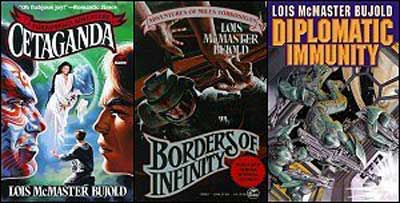
The bulk of the Vorkosigan Saga concerns Miles Vorkosigan, a disabled aristocrat from the planet Barrayar whose entire life is a challenge to the prejudices of his native planet against “mutants”. The novels The Vor Game, Barrayar, and Mirror Dance each won the Hugo Award for Best Novel, while Falling Free, Memory, and A Civil Campaign were nominated but did not win. The series makes travel between star systems possible through the use of wormholes (spatial anomalies that exist in five spatial dimensions) – enabling instantaneous travel. The inhabited systems are known collectively as the Wormhole Nexus.

Written by Gene Wolfe, this four-part novel is about Serverian, a journeyman torturer who shows mercy to his victim by allowing her to commit suicide to avoid further suffering. As a result of this act he is exiled from the torturers guild Seekers for Truth and Penitence. The series belongs to the Dying Earth subgenre – a type of science fiction or fantasy set in a far distant future in which the Sun is dying. Wolfe uses a lot of allegory in his series, with Severian being identified as a Christ/Apollo figure. It is his destiny to revive the sun and, thereby, save the earth.

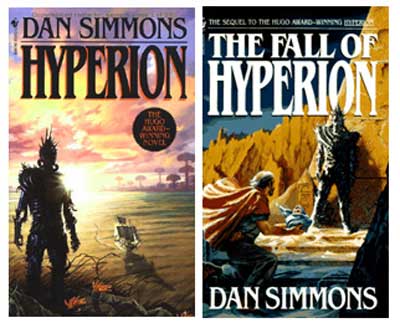
Simmons’ Cantos is one of the most well known science fiction series of the last two decades. It is set in the far future and focuses heavily on plot and story development, giving a much lesser role to technical detail. It would be considered soft science fiction and is often described as “space opera”. Of the four novels in the series, Hyperion received the Hugo Award for best Novel and The Fall of Hyperion was nominated for the Nebula Award for best novel. Hyperion is home to the Time Tombs, large artifacts that allow people to travel back and forth in time. The region where the tombs are found is also the home of the Shrike, a menacing being that appears throughout the series.

This is, perhaps, the most well known of the series on this list due to the commercial success of the film 2001, a Space Odyssey. The whole series was originally sparked off by a short story by Clarke, which he later evolved in to a full length novel in conjunction with the production of the movie by Stanley Kubrick. The series combines science fiction and metaphysics. Because the stories and settings of the various books and films diverge, Clarke stated that the continuity of the series represents occurrences in a set of parallel universes.

The Culture is an anarchistic, socialistic, and utopian society set in the future. It is a “post-scarcity” society – meaning that it is is set in a time in which man has overcome all of the problems of poverty and need in the world – as well as eradicating death and disease. It is a totally egalitarian state, requiring no use of force or compulsion except when necessary for the protection of others. The novels deal mostly with people living on the fringes of this society – diplomats, spies, and mercenaries – those who do the dirty work of the culture.

Rendezvous with Rama (the first in the Rama series) was published in 1972. It is set in the 22nd century when a thirty mile long cylindrical object passes through the solar system of Earth. It is revealed to be an alien starship and man decides to intercept it in order to unlock its mysteries. This is a brilliant book and it was accordingly given both the Hugo and Nebula awards upon its release. It is considered to be one of the cornerstones of Clarke’s total output and is seen as a science fiction classic. Under pressure to produce a sequel, Clarke teamed up with Gentry Lee to write the remainder of the series. Lee did the majority of the work and Clarke merely looked over and edited the writing.

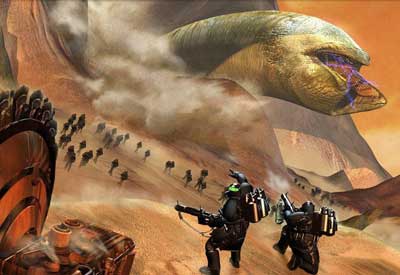
The Dune universe (Duniverse) is the political, scientific, and social setting of this six book series of science fiction meets fantasy books. The first book (Dune) was extremely popular and was ultimately adapted in to a film by David Lynch. It was also televised as a miniseries in 2000, and in 2003, its first two sequels also appeared as miniseries. The universe is set in the distant future of man and it has a history stretching some 16,000 years, covering considerable changes in political, social, and religious structures.

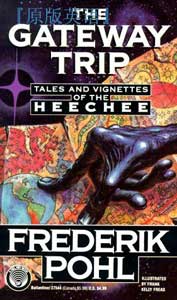
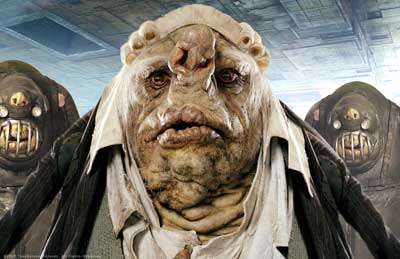
Frederik Pohl’s HeeChee are an extremely advanced star traveling race that explored Earth’s solar system millennia ago, disappearing without a trace before man began space exploration. They originated as a plot device to allow Pohl to give a plausible reason for humans to make the effort of colonizing the inhospitable planet Venus. In the book of the series “The Merchants of Venus”, the Heechee are nowhere to be found, but the discovery of tunnels beneath the surface of the planet proves that they were there.

The Hitchhiker’s Guide to the Galaxy is a comedy in science fiction form. It was originally a radio broadcast on BBC Radio 4 which was later adapted in to various other formats. The first series was six self-contained episodes each ending with the planet earth being destroyed in a different way. When Adams was writing the first episode he realized that he needed an alien on the planet to provide context – he settled on making the alien a roving researcher seeking the book “The Hitchhiker’s Guide to the Galaxy”.

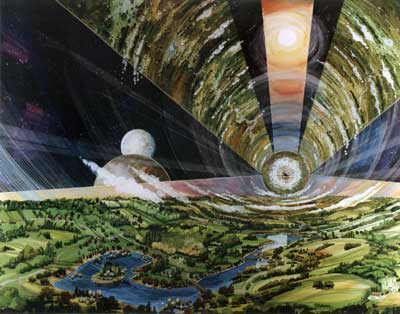
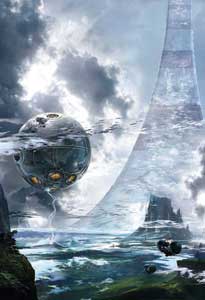
Ringworld was a the 1970 winner of both the Hugo and Nebula awards. It is considered to be one of the classics of Science Fiction literature. The book was followed by three sequels. The series is set around the year 2855. Two humans and two aliens explore a mysterious “ringworld” – a large artificial ring shaped structure surrounding a star. It is set in a very technologically advanced universe which allows for instant teleportation. The ring has a habitable flat inner surface of an area equal to roughly 3 million earth-sized planets.

This series started with a small novel “Ender’s Game” which was later expanded in to a full sized novel of the same name. It now consists of nine novels, 10 short stories, and two yet to be published books. The first two novels in the series both won the Hugo and the Nebula awards and are considered to be among the most influential science fiction books of the 1980s. The main character, Andrew “Ender” Wiggin, is a child soldier trained in a battle school to be a future leader of Earth.

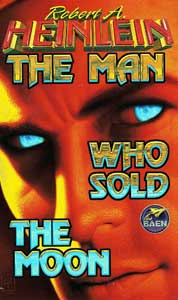
Heinlein’s Future History described the future of the human race from the middle of the 20th century to the early 23rd century. He wrote most of the stories early in his career (between 1939 and 1941, and 1945-1950). The series primarily defines a core group of stories, but Heinlein scholars now agree that some books not included by Heinlein also belong in the series. Two of the better known books included in the series are The Man Who Sold the Moon, and Time Enough for Love. A complete list of the included books can be found on Wikipedia.

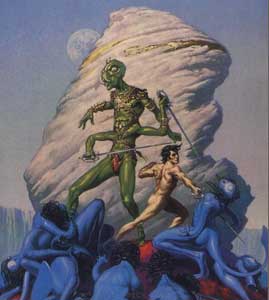
Barsoom is a fictional version of the planet Mars invented by Burroughs for his series of stories. In 1911 he began his career as a writer with A Princess of Mars. Several sequels followed, developing the planet in much greater detailer. A Princess of Mars was probably the first 20th century fictional work to feature a constructed language. Its influence can be clearly seen in both the Star Trek and Farscape franchises. While many of the tales appear to be rather dated today, they were extremely innovative in their time and they helped to inspire serious interest in Mars and space exploration.

The Lensman series by E E Smith introduced many innovative concepts in to the science fiction genre. It was also a runner up for the Hugo All Time Best Series award. The series begins with Triplanetary two billion years before the present day and it is based in a universe with few life forms. The peaceful Arisian race understand life and life-forces in a way that no other race does, and as a result they create the lens – an object which gives its wearer a variety of special mental capabilities including those needed to enforce the law on alien planets and to bridge the communication gap between different life forms.

The Foundation Series is an epic series of books written over a span of 44 years. It contains 7 volumes all closely linked (though they can be read separately). The term “foundation series” is also sometimes used to include the Robot Series and the Empire Series, all of which are set in the same fictional universe (though in earlier times). Including these other series, there are a total of 15 novels and dozens of short stories. The Foundation Series won the 1965 All Time Best Series Hugo award. The premise of the series is that a scientist (Hari Seldon) develops a branch of mathematics known as psychohistory in which the future can be predicted due to mass behavior of humans.


Since you’re arguing with Hugo Awards and such Cherryh is definetly missing here. IF its about recognition in the non SF community, Asimov and Frank Herbert should be on the top.
You made a top 15 and didn’t get Peter F. Hamilton in there??? =(
Commonwealth Saga
Night’s Dawn Trilogy
Greg Mandel Trilogy
Also, he’s working on book two of the Void Trilogy which is set 1500 years after the Commonwealth Saga, and the first book, The Dreaming Void, seems very promising.
Good list, some reading material. I have read some of the books on the list and there is one series that is lacking. Julian May’s “Saga of Pliocene Exile”. This is in my opinion the best Sci-Fi series I’ve ever read. Granted it is in some aspects very close to the fantasy genre which I prefer. But I can wholeheartedly recommend it to sci-fi loves as well.
RE: 75
Hear hear! I’m all for the well of souls series by jack l chalker being higher on the list, thought they were truly weird and great. Big fan of Ian M. Banks too, one of my all time favs is the Player of Games, though Use of Weapons was also excellent. And though I understand why EE Smiths books should be on the list, they’re bloody awful to read. Groundbreaking, but awful.
another good one is Rudy Rucker’s *ware series (software, hardware, freeware).
i agree with ‘foundation’ being crap. asimov’s fiction never did it for me. his non-fic could hardly be beat.
hitchhikers was great for the first couple books.
I agree with “Foundation” being included here, though I also agree it should not be number one; though in the top five certainly. Dune should have ranked a LOT higher, as well as the “Ender’s Game” and companion books, and The Hitchiker’s Guide to the Galaxy”. But hey, these are my opinions.
If you ever make another list, check out these books too please. They’re just plain awesome and I love them, even though my heart belongs to horror, I’d cheat on it with these books!
http://en.wikipedia.org/wiki/Xeelee_Sequence
Xeelee Sequence – Wikipedia, the free encyclopedia
http://en.wikipedia.org/wiki/The_Time_Ships
The Time Ships – Wikipedia, the free encyclopedia
Though not an sf Top 15, I greatly enjoyed the Sten series by Allan Cole and Chris Bunch–a fun mix of pulp action and galactic empire scope.
Phillip Jose Farmer’s Riverworld series is really good — especially if you are fan of history.
David Farland’s books are great works of art as well.
The Runelords is a current series of his and its up to book 6 right now with 7 on its way in Sept.
I’m with everyone here who wanted the Uplift series by David Brin. It’s definitely pure hardcore science fiction.
However, in the rush for English SF, we’re ignoring the somewhat oddball but incredibly funny and insightful Stanislaw Lem books. If humour alone doesn’t exclude (e.g. HHGTTG), then Ijon Tichy stories from Lem are unquestionably brilliant SF.
I’ve always been amazed at the quality of the translations. I’d almost want to study Polish to see if I’m missing humour elements.
Yikes, I’m catching hell here for poo-poohing “The Book of the New Sun”. Personally, I thought it was boring in parts and nearly nonsensical in other parts. Could barely finish it. I realize some people on here consider it a classic but I personally don’t. Also, as far as King’s “Dark Tower” series goes, I LOVED The Gunslinger and The Drawing of the Three. And then King did what he always does, by going off on some bizarre tangent and taking the series in a ridiculous direction. I stopped reading it because I had no idea what he was doing, which is a common complaint of King. I would rather read “The Long Walk”, one of his brilliant Bachman books, a thousand times than read one of his “epics”.
I understand the concept of Asimov, Clarke and Heinlein being the “Big Three” and having constructed works of art in the science fiction genre, but the average person can barely understand their novels and even the best of us have to peel away layers of dullness and plodding language to get to the heart of their stories. I know they were geniuses but I defy anyone to convince me that a single moment of 2001 was EXCITING. Give me Alan Dean Foster and Harry Harrison, who could all spin a ripping good yarn while making you feel as if you were there.
No Sprawl-era Gibson, no Neal Stephenson, no Richard K. Morgan? Eek.
I’m glad to see Heinlein get his due. Too many people start shrieking uncontrollably whenever Starship Troopers, or Heinlein in general, gets some positive mentions.
I’ll also put up the pinata and give Tim Zahn props for his Heir to the Empire series for Star Wars. Smack away, folks.
How about this obscure one-off by Steve Perry – The Man Who Never Missed?
I’m glad that Nine Princes in Amber got mentioned in the comments, at least.
The Rendezvous with Rama series I think should be mentioned with fond regard.
I supose the Thomas Covenant White Gold Wielder is too far over the fantasy line for this list, but it’s good.
I agree with most of these but there is a notable exception of no Spider Robinson’s Callahan’s Cross Time Saloon. That whole series is up to the cannon of books on this list, and should be given as honourable mention.
What about:
The Shockwave Rider
Author John Brunner
The Shockwave Rider is a science fiction novel by John Brunner, originally published in 1975. It is notable for its hero’s use of computer cracking skills to escape pursuit in a dystopian future, and for the coining of the word “worm” to describe a program that propagates itself through a computer network. It also introduces the concept of a Delphi pool [1], perhaps derived from the RAND Corporations’ Delphi method – a futures market on world events which bears close resemblance to DARPA’s controversial and cancelled Policy *****ysis Market.
“Series” duh… Nevermind….
I love King’s work too folks. But I have to agree with its exclusion here because it isn’t true SF, it’s Drama with elements of other genres included.
I’ll confine my other comments regarding King’s work to some other list more appropriate for such things. Heh, I have to be careful though, one day soon my name’s probably going to be on a list like this! (lol)
Well, I’ve read just about all of these series. And I must admit that I was a big fan of Barsoom and the Lensmen series in my youth. On the other hand, I’m not sure I’d put them so high on the list, above some of the fantastic series listed below. For example, given the number of significant awards it has won, I’m not sure if I’d put the Vorkosigan books at the bottom of the list.
Also a big fan of Doc Savage in my teens, I agree with the commentator who would put it up beside Barsoom (also pulp fiction). There was a lot of technology in Doc Savage that was ahead of its time. I’m not sure if the stories about the author receiving visits during the second world war from Army intelligence of how he had found out about their secret technology project are apocryphal or not.
There have been a lot of suggestions in these comments for series that I’d consider fantasy rather than science fiction (for example, Amber). I’m not sure if marion Zimmer Bradley’s Darkover series falls into the fantasy category or not. It is very fantasy-like, but it (like Pern) tries to fit it within the veneer of science fiction. If it is science science fiction, I might suggest it. There’s a fair amount of good stuff in there.
People have suggested Retief, The Stainless Steel Rat and others like them. I’ve loved these books but they may be a little light for the list (although, admittedly, there are some comedy and light books already on the list). Also in the light vein, I’ve really enjoyed Mike Resnick’s books in the Santiago universe (especially Santiago). It’s a greeat example of the “science fiction western” genre that Joss Whedon has recently been having fun with.
Dune is outstanding, although there have been ups and downs in the series (common to most, I guess). Honourable mention should also be made another of Herbert’s universes, that found in WHipping Star and the Dosadi Experiment. I think Dosadi Experiment stands up well against Dune, and Whipping Star has, I think, the most alien alien I’ve come across in literature.
Of all of the suggestions for additions to the list, I think I’d throw my support most strongly in favour of the Uplift series (twice winer of the Hugo for best novel).
You could do a Top 15 Sci Fi series of Titles that were left off of this Top 15 list.
I do see a lot of titles mentioned that wouldn’t really qualify as Sci Fi. Heck, Wild Cards just barely qualifies. Things like Fafhrd and the Grey Mouser would be Fantasy, a completely different list, right?
A lot of good suggestions on here. I completely agree with David Brin’s Uplift series, Vernor Vinge’s A Fire Upon the Deep / A Deepness in the Sky and David Weber’s Honor Harrington series.
One fairly recent series I highly recommend is The League of Peoples series by James Alan Gardner.
Yeah! David Brin!
And everything by Samuel Delaney
Thanks for this list. More reading to do! I would also rate the Chung Kuo Series by David Wingrove. Great near future Sci-Fi.
Interesting list.
I’ve read 1, 2, 3, 9 and the 1st books of Ringworld and Rama. I just finished revisiting Princess of Mars (the 1st book in the Barsoom series and intend to re-read all 13). It’s amazing that this was written in 1911.
I also have the whole Lensman series but haven’t read that in like 40 years or so.
A couple of other series I would highly recommend include:
- Dragon’s Egg and the sequel Starquake by Robert L. Forward
- Radix, In Other Worlds, Arc of the Dream & The Last Legends of Earth by A.A. Attanasio (these 4 books are a loosely knit series).
Excellent list…and some new books for me to read!!! Thank you thank you thank you.
My favourite made #1 !!
I am just finishing the series now (have about 100 pages left in the last book) and it is amazing.
So the Star Wars novelizations don’t count?
Great list, seems like I’ve read 75% of the list over the last 40n years. I also agree with a lot of the comments from others about other series of books that maybe should have also made the list. How about some consideration for L. Ron Hubbards 10 book “Mission Earth” series? Now that was a SF series!!
As mentioned by others i miss Farmer’s Riverworld in this list
This is a great list. My only change would be to move the Ender series up from 5th to 2nd.
Hal: Even in all of my first edition Enders Game craze, I have to disagree. 5th is probably as good as it will ever get. Compared to others on this list, he’s just some young buck trying to get his flame started. A.C. Clarke RIP.
I’m glad to finally see FOUNDATION series in this list.
I agree with David Utter on all of his points. I know there wasn’t a chance of getting Steve Perry or Timothy Zahn on a top 15 list, but I’d probably put Zahn’s Conqueror trilogy up against Dan Simmons any day. The Heir to the Empire trilogy was, in my opinion, the ONLY Star Wars spin off books worth classifying within normal sci fi. Really he’s only written a few stinkers (Stay away from Triplet).
Steve Perry’s little trilogy is an extremely fast read and really really fun, but it’s a bit soft for sci fi (as it doesn’t really hinge on any tech). However it is well worth reading for a quick and satisfying series.
I would like to add Nick Sagan with “Idlewild” and it’s following books. Fun new series.
I’m surprised only one person has mentioned Tad Williams and his “Otherland” series. It’s epic.
Great list, I am desperately trying to remember an author or series name, all I can remember is that it took place on an alien world that was broke into seperate cells or nations. Upon first arrival on the planet you were sent through a machine and came out on one of the cells in a different body form. Your body form would be fine for your immediate environment but if you crossed borders you had new enemies or reactions to the new environment. Its been a long time since I read the series, does it ring a bell with anyone?
As with any list plenty of disagreement about the contents. From my perspective the biggest ‘problem’is that for a SERIES to be on this list it needs far more than a strong opening novel or two before descending to excessive vebiage in the name of profit or lack of further ideas.
Thus by my reckoning No Ender (Only EG and SFTD are really worth reading), No Dune, No Lensman.
Can’t believe not one of C J Cherryh’s series made the list Chanur has to be one of the Geat Series from start to finish.
Agree with the Honorverse. Another favourite of mine is David Feintuchs Seafort Saga. David Brin would also feature on my list, also whilst not being a fan of either of the New Sun books I have read I really enjoyed The Long Sun, stunning writing.
Niven’s Ringworld novels are part of his Known Space series, as are the (shared) “Man-Kzin Wars” tales.
eric (post #153) – I think that’s Jack Chalker’s “Well World,” but can’t say for sure because I haven’t read that series.
I don’t know if anyone mentioned the Gap Series by Stephen R. Donaldson, but it is the *****. It’s where I got my other screen name (Tranquil Hegemony)
If you like scifi and you like books, read these five books. You will not regret it. In fact, you will regret it if you do not read them. You already should.
I cannot stress enough what badass books these are.
I would like to add to the list…
I have added a 16th to the list on my science fiction blog at
http://webmac.com/blog
I believe that Jack L. Chalker is a unsung hero of science fiction as well with “The Four Lords of Diamond”, “The G.O.D. Inc” and “The Wonderland Gambit”, and many others, all great science fiction series. Check him out on wikipedia.
My final and 17th would have to be Philip K. Dick, who didn’t write series, but wrote a series of independent books which Hollywood has been mining for movie material for quite a while now. That would be the one that inspired Blade Runner (Do Androids Dream of Electric Sheep?), Minority Report, Total Recall, Paycheck, Next, A Scanner Darkly to mention a few…
David Weber’s ‘Honor Harrington’ series deserves some sort of nod for this category. Never before have I picked up a book just on the merits of the cover blurb (‘On Basilisk Station’) and been so completely rewarded with a thoroughly thought-out future universe and storytelling that in my opinion few have been able to match. You may label it ‘space opera’, but it is among the best – if THE best – in that genre. Extremely recommended!
I haven’t read C.S. Lewis’ Space Trilogy, but from what I heard about it, shouldn’t it be on the list?
The Ender Series are so good!
Hey anyone here read Hyperion? I’m wondering if I should pick it up…
By the way this site needs a top 15 Fantasy Series list too.
Edmond Hamilton’s “Captain Future” didn’t make the list? For shame, for shame!
The follow-up books to Rendezvous with Rama were so bad, in my opinion, that I forbade one of my friends from reading them as I worried they would poison his view of Arthur C. Clarke. Rama was vitually perfect, as are many of Clarke’s stories, but the sequels were devoid of the master’s touch and read as if they had been written by a well intentioned, but hasty teenager. So bad in fact, that rather than give them away, I use the books as a doorstop for fear they may pollute impressionable minds if let loose. If ever we fall into the distopian world as depicted in 451, they will be first on the pyre.
The Saga of Seven Suns by kevin J. Anderson is fantastic. Also on the early discussion on Mass Effect (which has a couple of interesting novels for a before and after of the game) mainly directed towards dangorironhide, one of the themes of the story of Mass Effect talks a bit about evolution, namely when races evolve in certainly similar environments will have similar characteristics, such as being bipeds, etc.
WHAT??!?!?! No Peter F. Hamilton? and where the hell is A. E. Van Vogt? Read “The Silkie” and Aldous Huxley’s “Brave New World”?
thank god someone at least mentioned alastair reynolds, i have no idea how his series could not be on this list. and the mars series. but definatily correct about putting foundation at number one.
Re 106: “how bout David Gerrold’s War against the Chtorr series? (4 books so far, more supposedly to come)”
I avidly read those at least a decade ago, and he hasn’t written the end yet. In fact, he hasn’t written much since, that I can find.
I had to read enders game for school. I didnt think i would like it but it is now one of my favorit books.
Joan Vinge had an incredible series with the Snow Queen, World’s End and the Summer Queen. The Snow Queen won the Hugo Award in 1981, and the long-awaited follow-up the Summer Queen was nominated in 1992. World’s End is a short, but intense interlude that reminded me of Heart of Darkness in a sci-fi setting. Worlds and cultures as lush and richly developed as the Dune books (But colder and wetter!
) Highly recommended to all!
This is a good list in my opinion, and I loved reading the Foundation series as a teen. I also liked the Tripod series (White Mountains, City of Gold and Lead, Pool of Fire) by John Christopher when I was younger, around 6th grade. Those books spurred me into reading the longer, more complex sci-fi novels.
Dune was only #9? Dune was THE best ever written. No other sci-fi book reached higher acclaim, though Foundation got very close to being as good as Dune. Very, VERY close.
The rest of this stuff doesn’t even come CLOSE to Dune or Foundation, though, not even HHGTTG.
I’m now halfway through the fourth and last book in the Ender Quartet. Fantastic series. I’m going to check out some of the other series mentioned here, I’m prioritizing Dune.
Spam Master: EG, A War of Gifts, Ender in Exile, SftD, Xeno, CotM, I think you may need to read some of the time lines on the covers.
The Hyperion is so hot and *****y and original. i like it cause it isn’t so packed with action and bombs…..like that nerdful, incredibly boring Star Wars, *****!
Nobody ever mentions the tripod trilogy by John Christopher.
Help me out here. Trying to remember a series I read as a kid where the hero used a ship to travel across parallel universes chasing a ‘bad’ species. The difference between one universe and the universe immediately parallel might be that one person in the entire history of that universe spelled his/her name differently than its counterpart in the parallel universe. But if you travelled across enough ‘lines’ you will start to fine drastic differences. The most prominent aspect I remember is that these aliens had three ‘brains’: if you shot them in their primary brain, they kept coming, and even with just the third brain they could live if only in a reflexive (barely above comatose)state. Any ideas?
Came to mention Uplift series and Xeelee Sequence and was soundly beaten. So here’s the end of one of the Xeelee Sequence books:
C.A.D. 500,000,000
“Time passed.
After a certain point measurement of time became meaningless. For Paul this point arrived when there was no hydrogen left to burn anywhere, and the last star flickered and died.
Already the Universe was a hundred times its age when the Xeelee left.
Somberly Paul watched the dimmed galaxies subside like the chests of old men.
At last there was little free baryonic matter outside the vast black holes which gathered in the cores of galaxies. Then, as the long night of the cosmos deepened, even protons collapsed, and the remaining star-corpses began to evaporate.
Paul wearied of puzzling over the huge, slow projects of the photino birds. He sought out what had once been a neutron star. The carbon-coated sphere floating between the huge black holes was so dense that proton decay was actually warming it, keeping it a few degrees above the near-absolute zero of its surroundings; Paul, as if seeking comfort, clustered his attention foci close to this shadow of baryonic glory.
After some time he became aware that he was not alone: the last of the Qax had come sliding through the interstices of space and now hovered with him over the frigid surface of the star.
Human and Qax, huddled around the chill proton star, did not attempt to communicate. There was nothing more to say.
The river of time flowed, unmarked, towards the endless seas of timelike infinity.”
Everyone has left out mentioning Anne McCaffrey’s Talent, Pern, Brainship, Krystal Singer’s, Acorna, and Freedom series, Or Christpher Stasheff’s Warlock series. Either Author is clearly better then Frank Herbert and his neo-mystical, long winded, and trite Dune Series. (though the orignal movie was awsome.) But Heinlein, the grandmaster of modern scifi, Deserves the top spot.
Orson Scott Card is the only author listed above that deserves, not only a mere notation in this list, but the winning spot, for his creativity which DEMANDS a separate category to include numerous authors, who are sadly not noted here.
Eeek! James… Anne McCaffrey is a gothic drama formula writer and nowhere near as good a writer as Frank Herbert. I agree about Bob Heinlein as a writer; tho I can’t see where he qualifies for “series” accolades.
“The Amtrak Wars”- Patrick Tilley
“The Saga of the Pliocene Exile”- Julian May
“The Rampart Worlds”- also by Julian May
Wow, wow, and WOW!
“De gustibus non est disputandum” – Anon
Dune by far is way overrated in my humble opinion. It’s to slow with not enough incentive early on to keep me reading and wondering. I was 156 pages in before I finally set the book down and looked for something more exciting. That is the problem I find with most sci-fi books. I may be committing a form of blasphemy here but it needs to be said.
The same could be said for a lot of Asimov works. While the foundation series is a good read, it is only so on the first read through. The characters aren’t engaging, and the ideas (the fact that society movements can be predicted through a mathematical formula) are absurd.
Hard Sci-Fi (is that the right term? I consider myself a sci-fi fan, but don’t keep up with the terms. I only learned there was a difference a few days ago.) Is overly dependent on the science elements it portrays in great and boring detail. Ringworld would have been as good leaving out the needlessly added details of how big it was. Saying it’s as big as earth’s orbit is good enough, adding precise numbers was pointless.
Or how FTL works. (I mean we are buying the fact that in some of theses books FTL is possible, why bother explaining it?). Did Star Wars explain it? Did Star Trek? No, and it didn’t hurt either franchises. (I know we’re talking books, not shows but they are good examples and more well known then some of the books I could use.) Endless techno babble hurts more then helps. You spend thirty pages explaining how something works it takes away from the main plot, and unless you are technically minded is flat boring. Someone brought up Mass Effect, and it’s a very good example. The technical briefs were there for those who cared, but not added to the main story. And it would have slowed the pace down considerably if we had to deal with it. Again different medium, but I personally don’t see much distinction between mediums aside from format. A good story is a good story despite how it’s presented.
As for a good Sci-fi series that was left out, and not even mentioned once in the 179 previous posts would be the Animorph series. I know I know, it’s a kid’s sci-fi series. But look past that and you will see a well thought out universe. Excellent characters. And themes that make you question morality and what is truly justified in the name of self defense.
Also while not quite finished is Dean Koontz’s Moonlight Bay Series (hopefully the third one will be coming soon.)