Modern poets tend to avoid the epic style poetry of the past – but there can be no doubt that many of them were influenced greatly by these poems. This is a selection of the most well known epic poems from before the 20th century. While it is tempting to add the likes of Howl by Ginsberg and modernize the list, it would mean removing at least one of the great epics listed here – so 20th century poetry will be left for another list.
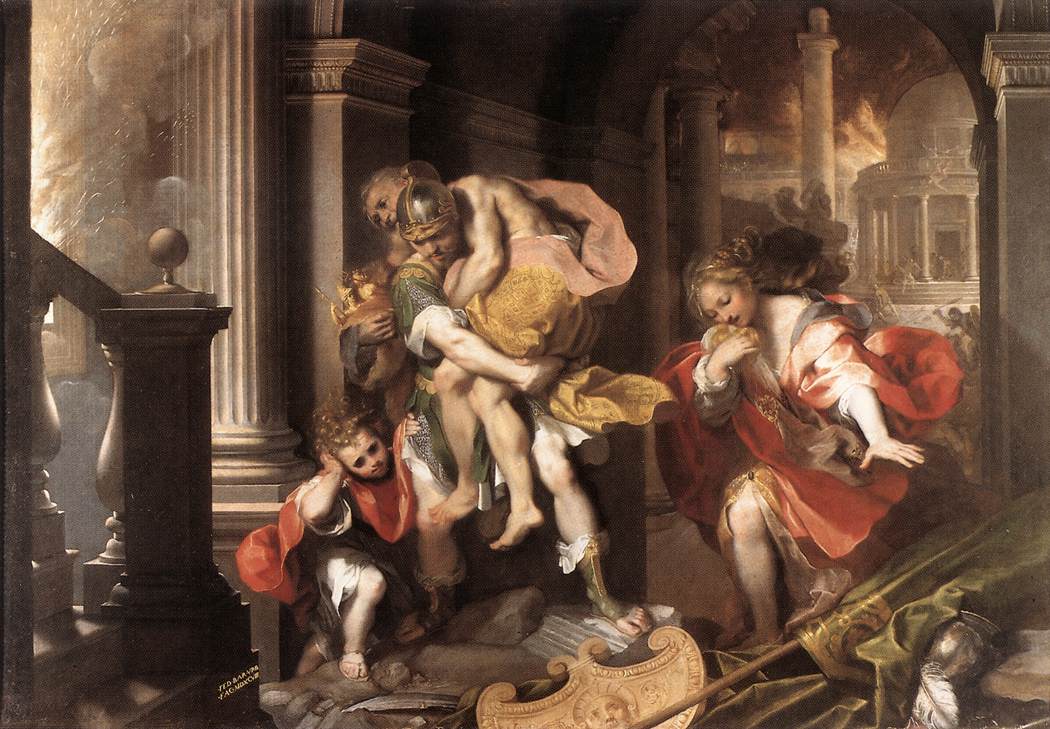
The Aeneid is a Latin epic poem written by Virgil in the 1st century BC (between 29 and 19 BC) that tells the legendary story of Aeneas, a Trojan who traveled to Italy, where he became the ancestor of the Romans. It is written in dactylic hexameter (considered to be the Grand Style of classical poetry). The first six of the poem’s twelve books tell the story of Aeneas’ wanderings from Troy to Italy, and the poem’s second half treats the Trojans’ ultimately victorious war upon the Latins, under whose name Aeneas and his Trojan followers are destined to be subsumed.
This is a long, digressive satiric poem, based on the legend of Don Juan, which Byron reverses, portraying Juan not as a womaniser but someone easily seduced by women. It is a variation on the epic form. Unlike the more tortured early romantic works by Byron, exemplified by Childe Harold’s Pilgrimage, Don Juan has a more humorous, satirical bent. Modern critics generally consider it to be Byron’s masterpiece. The poem was not finished by his death in 1824. Byron managed to complete 16 cantos leaving an unfinished 17th canto before his death. Byron claims that he had no ideas in his mind as to what would happen in subsequent cantos as he wrote his work. When the first two cantos were published anonymously in 1819, the poem was criticised for its “immoral content,” though it was also immensely popular.
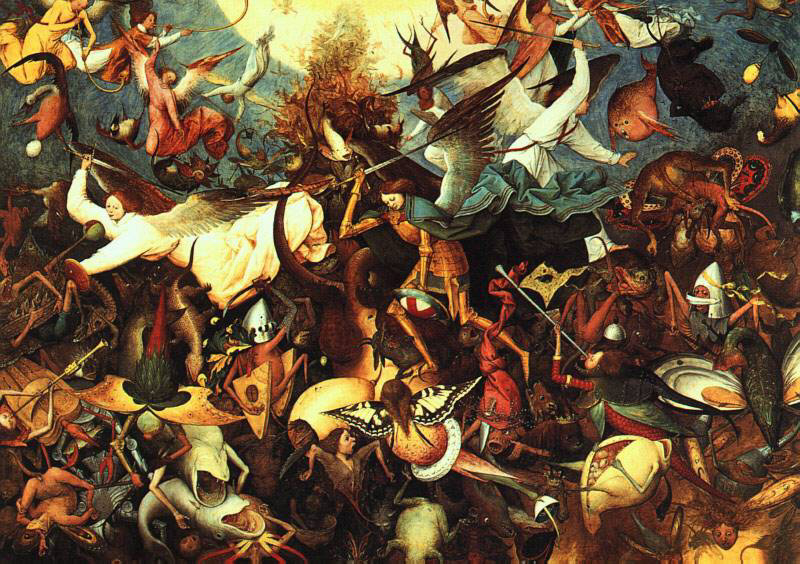
This is an epic poem in blank verse by the 17th-century English poet John Milton. It was originally published in 1667 in ten books; a second edition followed in 1674, redivided into twelve books (in the manner of the division of Virgil’s Aeneid) with minor revisions throughout and a note on the versification. The poem concerns the Judeo-Christian story of the Fall of Man: the temptation of Adam and Eve by Satan and their expulsion from the Garden of Eden. Milton’s purpose, stated in Book I, is “justify the ways of God to men” (Milton 1674, 4:26) and elucidate the conflict between God’s eternal foresight and free will. Milton incorporates Paganism, classical Greek references and Christianity within the story. The poem grapples with many difficult theological issues, including fate, predestination and the Trinity.
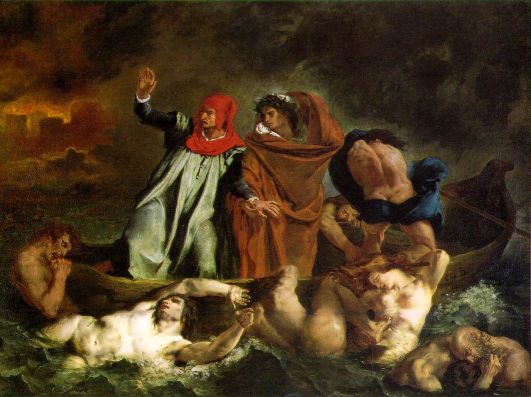
This is widely considered the central epic poem of Italian literature and is seen as one of the greatest works of world literature. The poem’s imaginative and allegorical vision of the Christian afterlife is a culmination of the medieval world-view as it had developed in the Western Church. The poem is written in the first person, and tells of Dante’s journey through the three realms of the dead, lasting during the Easter Triduum in the spring of 1300. The Roman poet Virgil guides him through Hell and Purgatory; Beatrice, Dante’s ideal woman, guides him through Heaven.
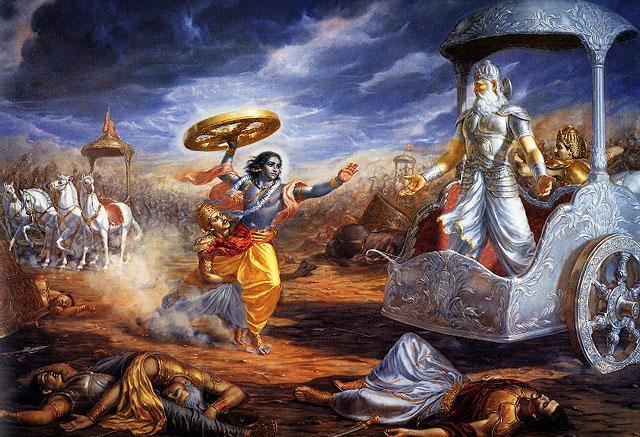
With more than 74,000 verses, long prose passages, and about 1.8 million words in total, the Mahābhārata is one of the longest epic poems in the world. Including the HarivaM’sa the Mahabharata has a total length of more than 90,000 verses. It is of immense importance to the culture of the Indian subcontinent and is a major text of Hinduism. Its discussion of human goals (artha or purpose, kama or pleasure, dharma or duty and moksha or liberation) takes place in a long-standing tradition, attempting to explain the relationship of the individual to society and the world (the nature of the ‘Self’) and the workings of karma.
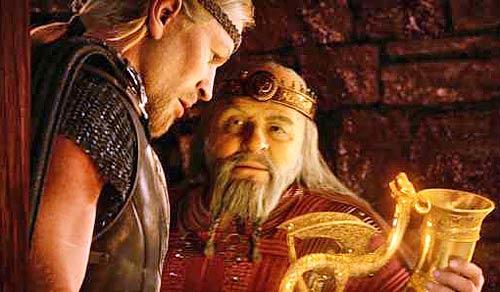
This is an Old English language heroic epic poem of anonymous authorship, dating as recorded in the Nowell Codex manuscript from between the 8th to the 11th century and relates events described as having occurred in what is now Denmark and Sweden. Commonly cited as one of the most important works of Anglo-Saxon Literature, Beowulf has been the subject of much scholarly study, theory, speculation, discourse and, at 3183 lines, it has been noted for its length. In the poem, Beowulf, a hero of the Geats, battles three antagonists: Grendel, who has been attacking the mead hall in Denmark called Heorot and its inhabitants; Grendel’s mother and, later in life after returning to Geatland (modern southern Sweden) and becoming a king, he fights an unnamed dragon. Beowulf is fatally wounded in the final battle, and after his death he is buried in a barrow in Geatland by his retainers.
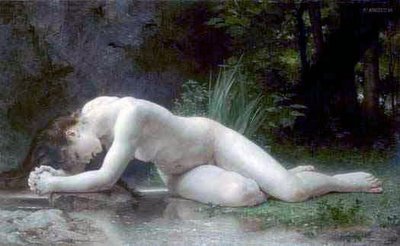
This is a narrative poem in fifteen books that describes the creation and history of the world. Completed in 8 AD, it has remained one of the most popular works of mythology, being the classical work best known to medieval writers and thus having a great deal of influence on medieval poetry.
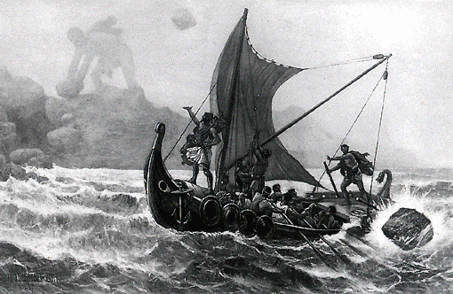
This is one of two major ancient Greek epic poems attributed to Homer. The poem was probably written near the end of the eighth century BC, somewhere along the Greek-controlled western Turkey seaside Ionia. The poem is, in part, a sequel to Homer’s Iliad and mainly centers on the Greek hero Odysseus and his long journey home to Ithaca following the fall of Troy.
It takes Odysseus ten years to reach his kingdom of Ithica after the ten-year Trojan War. During this absence, his son Telemachus and wife Penelope must deal with a group of unruly suitors, called Proci, to compete for Penelope’s hand in marriage, since most have assumed that Odysseus has died.
This is an epic poem from Ancient Mesopotamia and is among the earliest known works of literary fiction. Scholars surmise that a series of Sumerian legends and poems about the mythological hero-king Gilgamesh, who might have been a real ruler in the late Early Dynastic II period (ca. 27th century BCE), were gathered into a longer Akkadian poem long afterward, with the most complete version existing today preserved on twelve clay tablets in the library collection of the 7th century BC Assyrian king Ashurbanipal. The essential story revolves around the relationship between Gilgamesh, a king who has become distracted and disheartened by his rule, and a friend, Enkidu, who is half-wild and who undertakes dangerous quests with Gilgamesh. Much of the epic focuses on Gilgamesh’s thoughts of loss following Enkidu’s death. It is about their becoming human together, and has a high emphasis on immortality. A large portion of the book shows Gilgamesh’s search for immortality after Enkidu’s death. It is often credited by historians as being one of the first literary works. The epic is widely read in translation, and the hero, Gilgamesh, has become an icon of popular culture.
This, together with the Odyssey, is one of two ancient Greek epic poems attributed to Homer. The poem is commonly dated to the late 9th or to the 8th century BC and many scholars believe it is the oldest extant work of literature in the ancient Greek language, making it the first work of European literature. The poem concerns events during the tenth and final year in the siege of the city of Ilion or Troy, by the Greeks.
This article is licensed under the GFDL because it contains quotations from Wikipedia.
Contributor: Heroajax


#117 segue, I wasn’t making a personal attack save in jest, which is pretty darned obvious from my post. Also, as far as referencing the number of the post to which I was replying, that post was immediately above my post, so I hardly think I need to reference the number, but I will if it makes it easier for everybody.
Whoever said anything about *comparing* Milton and Byron? Not I. I was mocking (in jest, as I said) anybody who would PREFER Byron to Milton.
And I think I know how to spell “Arian,” though you obviously don’t. Of course, that’s because you mistakenly thought I was referring to a geneological classification, whereas I was referring (as should be obvious by the reference to Milton’s Protestantism, and really should be obvious to anybody who knows anything about Milton) to the Christian heresy of Arianism, which holds that Christ is a created being and not eternally existent as a member of the Godhead.
#118 ciunas, you also have no clue about Milton’s Arianism, so I don’t see how your opinion of the poem (cold? nonsense, go have your picaresque dullard if you like, though) is worth listening to.
Anyway, I trust Randall knows what an Arian is, so he gets the joke, I’m sure.
Bob: Fair enough. I apologise for misinterpreting or failing to understand your remark about Arianism. I had quite a strict Catholic upbringing; & I learned about & have since more or less forgotten about any number of heresies & the like. I now have no interest in doctrine or doctrinal contention, & Arianism & the rest aren’t things I’ve brought to mind for years. There are more important, more immediate things to think about.
‘PL’ is THE central English poem but I don’t find it fully engaging. I’m not alone in that.
#125 ciunas: Hey, no worries. I just see that I came off pretty assholish (is that a word?). Sorry about that.
****
124. Bob
#117 segue, I wasn’t making a personal attack save in jest, which is pretty darned obvious from my post. Also, as far as referencing the number of the post to which I was replying, that post was immediately above my post, so I hardly think I need to reference the number, but I will if it makes it easier for everybody…
****
Bob, my humblest apologies.
I will make no excuses save mental exhaustion ( something which, sad to say, is an ongoing problem for me. I’ve explained why in the past, but I’ll just leave it at that).
Once I reread the post, as a bit of leg-pulling, I found it very funny! I’m embarrassed I missed it the first go’round.
And yes, even if the post you are ref’ing is directly above, a number at the head is a good way to insure everyone knows exactly what you’re posting about.
****
122. Randall
Please note that I did NOT *compare* Milton and Byron. In running down the list, I simply came upon those two and expressed a preference for one.
****
Yes, Randall, now that I have a ref # I know.
They wrote such completely different poetic forms, though, and at such different times, I had a difficult time understanding the statement at all. I can understand a preference for one, of course, but I think it would have made a more sensible statement to say, for example, ” I prefer Dante to Milton”…though your knowledge of literature is as least as broad and deep as mine, if not more so. So for me to lecture you is a waste of both our times.
You can say you prefer Porky Pig to Milton and I’ll say, o.k., Randall.
I may not agree ( I happen to love Milton though Dante is, to me, far superior), but it’s absurd to argue taste.
As far as I can see this post makes only the barest sense, but it’s been a rough day and I’m not going to try and pretty it up. I got the most important points covered ( barely ), and was lucky to do that.
****
#121. Spanner in the works
segue 116,
The idea that the songs we have recorded by cetaceans might be stories or ‘poems’ is mind-blowing…….Perhaps then, whales enliven the boredom of the long sea journies with Chaucerian-type (Canterbury) tales.
****
I’ve read some pretty mind-blowing information re: whale songs. Some Humpbacks have been recorded singing their own, particular song, time after time, without change…if the whale got interrupted in the midst of it’s song, and could not get back to it for several months, it would pick up again at the *EXACT NOTE* which would have followed, had it not been interrupted! This is phenomenal in itself, but to compound the mystery, the whale will suddenly add to it’s song, and not just at the end (though this quite often happens, but it seems to add lines in the midst of the song.
Other whales, listening, appear to reply, including brief snatches of the first whale’s song.
This sounds, to me, like conversation. Or something approaching it.
I’ve mulled over the notion of the whales songs being akin to the oral family histories of the ancients; or if they were relaying information about good feeding grounds; or that they were, in fact, composing epic poems or songs; or that they were just expressing the pure joy of life.
The brains of the cetaceans are large and convoluted. In fact, pound for pound, their brains are larger and more complex than ours. In the most simplistic of if-so’s, it should then follow that they are more intelligent than we are.
An obvious fallacy. But.
It’s the “But” that intrigues me.
*Do they understand their mortality?
*Do they love? ( Watch a pod gather together to protect the young and the weak. Watch a mother and calf and love is there, no doubt.)
*Do they feel emotions? (Anecdotally, living as I do at the edge of the Pacific, in the path of the whale migration, I would have to say they appear to experience joy, as do the dolphins, who leap out of and into the ocean in what can only be described as playful joy)
The deeper questions, the ones for the scientists, may never be answered in our lifetime, but I have no doubt they will be answered.
I hope the answer is that yes, they are another sentient member of planet earth.
126, Bob,
You could try assholy, or arseholy, as we Brits would say. (We’re a bit leery about ‘coverting thy neighbour’s ass’, if you see what I mean). That’s my favoured rendering
segue,
Very nicely put about whales. Although they are inevitably different, it’s possible that quite a bit of your posting could be applied to elephants as well, and probably to other ‘higher’ creatures.
The brain thing worries me though. I have a friend who looks with despair at some of the idiocies of individual and collective human behaviour and attitudes and sighs, “Surely we MUST have been endowed with these big brains for something?” I can never escape from paradoxes such as: the brain of a surgeon who is performing a miraculous and delicate operation to save a life is identical in size to that of yobs who are knifing someone to death outside the hospital at the same moment. Brain-size alone therefore seems to me to be a doubtful criterion.
My 129,
The usual missed spelling cock-up. It’s coveting, not coverting, don’t tell me. If the verb ‘to covert’ existed, it would either be a technical term involving pheasant or partridge shooting, or a description of hiding something away, the two clearly being related.
Bob:
Yes, I knew what arianism was, and so yes, I got the joke. Such as it was. (sorry). But what relevance Milton’s beliefs should have had on ME, joke or no joke, I dunno. I was raised Presbyterian, Bob. The kind and gentle version of the Episcopalian church, we always thought (at least MY church was).
But sorry, pal… I still say Milton, while great, is a thumping bore. Some years ago, a poll of readers agreed with me (appeared in one of the original Book of Lists). Milton was voted the most boring writer of all time.
But I’m no joiner or bandwagon-jumper. I had to read Milton in college and he, like Spenser with his freakin’ Fairie Queene, put me to sleep. I tried very hard, and failed, to love Milton. But I respect him a lot.
Byron on the other hand–well, he wrote a LOT of crap. Byron was two men in one body, let’s face it. But when he was writing good, he was writing great. And for some reason he never bored me.
Randall: Er, aren’t you a Roman Catholic? I could have sworn. . .
No offense, but have you ever considered that the problem isn’t Milton but his (modern) readers? Same goes for Spenser. The opinion of the vast majority of modern “readers” means exactly nil, I’m afraid. It’s like asking a five-year-old how they like a nice Cabernet. (And for the record, you’re not the five-year-old there, since I’ve seen enough of you to know that you tend to have good literary taste, present concerns excepted.)
Ah, but there are other lists and other discussions, so I’ll leave it at that, but feel free to have the last response.
Oh wait. . .it’s jfrater that’s the Roman Catholic, isn’t it? I’m such a moron. . .
I had to read Milton in college and he, like Spenser with his freakin’ Fairie Queene, put me to sleep. I tried very hard, and failed, to love Milton. But I respect him a lot.
Randall – this surprises me a little; I’d have guessed you would be a fan of both Milton and Spenser.
I started off not wanting to study the works of either of these guys at university (the works in question being Para Lost and FQ BookII)..and ended up getting hooked for a time! I can certainly appreciate the point of those critics who argue that Milton’s genius is arguably second only to that of Shakespeare (in the context of English Lit., of course).
Oh wait. . .it’s jfrater that’s the Roman Catholic, isn’t it?
bob – that might have been before he became an Operating Thetan Level II
Bob:
Let’s face it, the modern people reading Milton are few and far between. They’re not your average shmoe on the street, they’re people who love literature and make an effort at reading the classics. I am such a person, as are you. So sure, you’re right–modern reading tastes are low-rent, but the people who have actually read Milton aren’t in that larger group. They’re a more sophisticated subset, I’d say.
kiwiboi:
It’s not that I hate Milton or Spenser. I do pick them up again from time to time, but I have more fun with Rabelais, for instance.
*Sigh* I wish I could get into the classics. I suppose it depends largly on the quality of the translation, but by and large, I find these books to be quite boring and tedious. I rarely slog through a book I don’t enjoy simply because it will somehow qualify me as one of the literary elite. There are a few classics I did enjoy, the Odyssey being one, Faust being another (if that can even qualify). My favorite was of course, the Divine Comedy, but that should be considered required reading. However, I feel that a quality translation of these works would help immensely. Can anyone recommend a decent version of any of the pieces listed above?
SlickWilly:
The Richard Lattimore or Fagles translations of the Iliad and the Odyssey are the best, I think. I have translations of the Indian epics and Beowulf at home somewhere that are okay, but in large part I kind of agree with you–they can be tedious reads.
Concur with the Feagles translation.
Let’s face it Randall, you really have to have your ***** together to appreciate Milton. I might even go so far as to say it might take a healthy college education to approach that dude. Enjoying it is, well, akin to enjoying a barium enema. It’s got to be done, sure, but if you enjoy it you might have other issues.
bucslim:
Well, I DID have a very healthy college education, and so, yes, I approached him… but yeah, I was wary the whole time. Milton bobs and weaves, and he fights dirty. If you let your guard down, he sucker punches you. Then he sits on your chest and *recites.* Oh good lord… the humiliation of it all!
But yeah, seriously… my feeling is, it would be stupid for someone to come out and say “Milton sucks!” or some ignorant thing like that (like that idiot over in the Shakespeare list who “couldn’t understand the popularity of Hamlet” and felt it wasn’t that great a play because the plot and ending are so contrived, etc…. sheesh. The morons walking amongst us in this scary world! The mind reels) because clearly Milton does NOT “suck.” He’s one of the great heavyweights of English poetry (even though he was a Scot, though in point of fact many non-Anglos have written the best of English literature). But I see no problem with someone finding Milton less agreeable a read than, say, Byron or Joyce or Andrew Marvell or whatnot. English poetry of that era–the heavy guns–sometimes has a certain textual density and opacity that we moderns have to really train our ears to really enjoy. There’s nothing wrong, therefore, in admitting this and saying you prefer things a little more concise.
It’s why I love the ancient Greeks, in the original (or at worst, in modern–that is, contemporary–translations, as opposed to translations from the 19th century or early 20th, etc.). They were concise, clear, and unadorned.
Randall – Sign ‘O The Times dude! Milton barely registers on the sloped foreheads of some of the geniuses coming out of school today. Not to be a hypocrite or anything – I’ve read some things in Penthouse Forum that has given me pause. . .
But like a lot of other people I was forced to read Milton, it really wasn’t until later that the *****ing light popped on and I suddenly realized that this kind of thing was important. I was much more into historical texts and *****ysis that I ever was into poetry. It wasn’t until I read some of this stuff on my own without the teacher bearing down on me or the Cliffs vault beside me that I actually started to understand.
I really really REALLY hate to cite Robin Williams but in effect he was right – poetry shouldn’t be rated or blathered on about in a classroom – but enjoyed and mused upon in your own particular fasion.
bucslim:
Hey! I find that patently offensive!
The slope in my forehead isn’t *that* pronounced.
Is it?
Slick – it depends upon the lighting or time of day. You really can’t notice it much unless . . er, ah, . . . I wasn’t talking about you?
Milton does NOT “suck.” He’s one of the great heavyweights of English poetry (even though he was a Scot, though in point of fact many non-Anglos have written the best of English literature).
Randall – a very minor point of order. Milton wasn’t a Scot; he was born near St Paul’s Cathedral, in the City of London.
I really really REALLY hate to cite Robin Williams
buc – me too; besides, how do you choose between “Na-Nu Na-Nu” and “shazbot”…??
kiwiboi:
What the f**k? He wasn’t a Scot? Who the hell am I thinking of? Am I confusing him with Swift? Or was he Irish?
God, the alzheimers is settling in… I can feel it….
Swift was (Anglo-)Irish. So was Joyce (minus the ‘Anglo’). As was Behan. Ao was Shaw. As was Wilde. As was Beckett (Sam, not Thomas a’), As is McCourt.
Oh, what a nasty, patronising sod I am. And a show-off, to boot. But hee, hee, hee, my paternal grandfather was from Tipperary. Straight up, no kidding, folks. You might have guessed that’s where all my Blarney comes from.
Sorry Randall. Truth is, unlike you, dear boy, I now actually have to PROVE at regular intervals that I’m alzheimers-free.
Spanner – Dean Swift was a genius..a very clever and funny guy. Whilst Gulliver’s Travels, was his masterpiece, Swift was a man of his times, and a wonderful satirist; some of his minor works are eminently deserving of a broader audience.
However, the most under-rated Irish writer (and one of my favourites) is Frank O’Connor. Not the greatest of the literary men…but a master story-teller, and a scholar to boot.
Also, I see your roots are in Tipperary; my own (through my mother’s side) are in County Kerry. Saol fada chugat!
What the f**k? He wasn’t a Scot? Who the hell am I thinking of?
Randall – you’re probably thinking of Hamish MacMilton, his Scottish cousin; he wrote Paradise Lost Laddie
Seriously though…I’m glad I’m not the only one who does that
kiwiboi,
Och aye, the noo.
I can’t rival or even touch your Gaelic, but at least I can manage that. And I don’t render it either as:
Okeye the gnu, who lived in the zoo.
I only came back here to say I must have been more bushed than Iraq last night. I should have written my MATERNAL grandfather’s side. So SNAP! If my sweet old Dad were still around he’d kill me. “Bejaybbers boyo, it’s callin’ me a bleedin’ Mick you are now, is it?”
Too idle to look it up for sure, but I believe Swift was related to Dryden, and of course both were favourites of Pope, in turn a favourite of mine. More than once I’ve vilely plagiarised his barbed satire to attack Mine Enemyes.
Pope was an acquaintance of schooldays, where most of my posh reading took place. Curious how, for me anyway, being obliged to study or take up anything then either drove me lovingly into its arms, or running screaming from it. There seem to be no half measures.
but I believe Swift was related to Dryden
Spanner – you are correct; it was such an intriguing possibility that I had to check! Apparently Swift’s father was a 2nd cousin of Dryden…
I never knew that – thanks for mentioning it!
And, as for my Gaelic..I only know about 3 simple phrases; you were on the receiving end of one of them
The Poetic Edda by Snorri Sturlurson (13th century?) should be here more than Beowulf. Without the Edda we probably wouldn’t know or comprehend half of what we do now about Norse Mythology.
I’ve plowed through the Iliad, Odyssey, Aeneid (in that order, the Iliad being the superior poem), Gilgamesh, and Beowulf. I missed Orlando Furioso (which I’m reading right now), and of course the Kalevala. On my to-do list are the Mahabarata, The Divine Comedy, and the Kalevala.
Great list, Heroajax.
Enjoyed this list muchly, props to you Heroajax. Read a few and intend to read some of the others. Still fighting with an awful translation of the Aeneid, I should probably get a new one.
Please – no more postings suggesting “Rime of The Ancient Mariner” – I love it, but it’s not an ‘epic’ poem. It is fairly (but not very)long but that doesn’t mean it is an epic. The canvas is not very broad, even if aguably the issues were weighty enough. Neither is “The Canterbury Tales” an epic, nor ‘The Dunciad’, nor ‘Rape of The Lock’, nor ‘Jabberwocky’ (god forbid!). I better say sonnets, limericks and haikus don’t qualify either, before someone suggests one of them!
Beowulf may be great, but i agree with Metalwrath that the Eddas should be here as well. Sturulson was the only person to write the down the sagas which were normally passed down by word of mouth through bards. This was actually considered heresy in his time and had he not written them in prose, he would have been executed (which he was later executed but for a different reason). Now, since Double is dead set against ‘Rime of the Ancient Mariner’ being suggested, let’s make a compromise and say that while it may not be an ‘epic’ poem, it’s still an ‘epic’ song by Iron Maiden.
I found your site on technorati and read a few of your other posts. Keep up the good work. I just added your RSS feed to my Google News Reader. Looking forward to reading more from you down the road!
pinaumang hahaha tae bi si frank
I love it! and you have the Mahabharata! how wonderful you have done an excellent job. A few quotes would be interesting and encouraging. The pictures are great, more illustrations, please and thank you.
Canterbury tales needs to be in that list.
Ummm… Where’s Hiawatha???
The Five Epic Poems were:
Beowulf
The Iliad
The Odyssey
Paradise Lost
and HIAWATHA!
I certainly like the additions, but to leave out an essential is blasphemy!
good list…except,
The Metamophoses isn’t an epic at all.
And it doesn’t tell about the creation of the world either.
It teaches lessons through 15 separate stories about change, i.e. Metamorphoses.
I know because we’re translating it in AP Latin. Just thought you should know.
i think dis a good website for kids an their work or homework it’s got good infomation for were an where it was made.
A little music would be nice. Some sort of motion would be alluring. How about an essay contest? Prize would be the satisfaction of praise by ones peers. I was thinking of El Cid because of my Spanish ancesters then I felt guilty and thought how about a Third World, Developing World, Epics…yiy know Native American?
How about a Native American Epic? Is there such a thing? How about an essay contest on some epic topic? A little music would be cool. Thank you.
Your modern day c. 2007/8 epic poem “Elijah the Tishbite” can be found at:
elijahthetishbite.blogspot.com
Mahabharata not in top place???
Mahabharata is the largest and one of the oldest epics of world. It has a complex storyline which speaks of Karma, bravery, dharma(religion) and human relationships…
Once you read it you are unlikely to encounter anything more magnificent in your lifetime…
(p.s. it has a 18 day, battle taking almost one third of storyline, it is better then one`s wildest imagination)
i think the ramayanam should be on there
its the best
and the cooliest
I think the Aeneid and the Divine Comedy are better than Don Juan and Beowulf, but I also think The Song of Roland by an anonymous French poet should be on there. It may not be an epic but a chanson de geste but it has every characteristic of an epic
THE POEMS R SOO KOOL
io
BEOWULF!!!!
Great list. Yet I also wonder about another kind of (arguably) epic, not so “narrative,” that includes some terrific poems, e.g. The Prelude by William Wordsworth, The Cantos of Ezra Pound, Helen in Egypt and Trilogy by H.D., “A” by Louis Zukofsky, The Maximus Poems of Charles Olson, and Passages by Robert Duncan. And what about comic epic, or even mock epic, such as MacFlecknoe by John Dryden, The Dunciad by Alexander Pope, or, in the 20th Century, Gunslinger, by Ed Dorn. I’m just offering alternatives here, though, and I think everything on your list is great — and I love The Faerie Queene, too!
some of these poems were not “written” as many think. in fact they were composed, and the bard would recite it. it cases such as Lliad, Odyssey, and Beowulf- mnay became part of the oral tradition and were passes down orally. though with homer, we know the author.
Technically, Don Juan, Paradise Lost & The Divine Comedy are not epics. I consider the Aenead the national epic of both Rome & Italy. But it’s nice to see one of my favorite books, the Divine Comedy, on the list.
Where’s “The Rape of the Lock” by Alexander Pope?
Pope wrote it in heroic couplets and it’s such a satire. Pope makes fun of two feuding families who are feuding over a member of one family cutting a lock of hair from another.
Pope over blows making and drinking coffee. It’s amazing.
e Camões crl?
I won’t say that this modern epic belongs on the same page as the above classics, but you might like to look up the rhapsodic epic poem called “The Common Weal: A fictitious Australian tragedy” published in 2009.
It is about the rise and fall of Australia as an industrial power. It was written by the Australian poet-author Kundan Misra.
The book is here:
http://www.amazon.com/common-weal-fictitious-Australian-tragedy/dp/0980532035
His author page is here:
http://www.amazon.com/Kundan-Misra/e/B001K84KNE
With best wishes,
Sean
–
From Sister In Christ Mrs morris Barry.
My Address 1002 Triech Town Lot 27
San Pedro, Ivory Coast.
Dearest In Christ Greetings in the name of our Lord Jesus Christ,
I am the Sister morris Barry from Kuwait. I am married to Mr. Joseph barry who worked with Kuwait embassy in Ivory Coast for nine years before he died in the year 2005.We were married for thirteen years without a child. He died after a brief illness that lasted for only four days.
Before his death we were both born again Christian. Since his death I decided not to remarry or get a child outside my matrimonial home which the Bible is against. When my late husband was alive he deposited the sum of ( $ 9.Million inside one trunk box) in the Safety Security company in Abidjan Ivory Coast .
I am contacting to hand you over this fund as a donation because, Recently, my Doctor told me that I would not last for the next Nine months due to cancer problem. Having known my condition I decided to donate this fund to a church that will utilize this money the way I am going to instruct herein. I want a church that will use this fund for orphanages, widows, propagating the word of God and to endeavor that the house of God is maintained.
The Bible made us to understand that “Blessed is the hand that giveth”. I took this decision because I don’t have any child that will inherit this money and my husband relatives are not Christians and I don’t want my husband’s efforts to be used by unbelievers.
I don’t want a situation where this money will be used in an ungodly way. This is why I am taking this decision.
I am not afraid of death hence I know where I am going. I know that I am going to be in the bosom of the Lord. Exodus 14 VS 14 says that “the lord will fight my case and I shall hold my peace”. I don’t need any telephone communication in this regard because of my health hence the presence of my husband’s relatives around me always. I don’t want them to know about this development.
With God all things are possible. As soon as I receive your reply I shall give you the contact of the Security company in Abidjan in Ivory Coast. I will also issue you an authorisation letter that will prove you the present beneficiary of this fund. I want you and the church to always pray for me because the lord is my shephard. My happiness is that I lived a life of a worthy Christian. Whoever that Wants to serve the Lord must serve him in spirit and Truth.
Please always be prayerful all through your life.Contact me on my email any delay in your reply will give me room in sourcing another church for this same purpose. Please assure me that you will act accordingly as I Stated herein. Hoping to receive your reply.
PLease Contact at my home email Address.
Remain blessed in the Lord.
From Your Sister In Christ Mrs.morris Barry.
THE LUSIADS
You’ve made a great list with the epics of the world. However, you did not include another great epic of the 16th century – “The Lusiads”, written by a Portuguese Poet Luis Vaz Camoes.
The epic describes has hero the famous navigator Vasco da Gama who in 1498 discovered the sea way to India.
Please in reading this masterpiece you have to take into consideration what happened at the time of the discoveries, namely that just before that the Iberian Peninsula, and the crusaders were fighting the Moorish as the Christian Church was encouraging that fight to expand the Christian faith.
Of course those religious views have been changed from those times and today the world wide intention is to live together with all faiths and certainly during his time, Pope John Paul II did a great job pursuing that avenue.
Here is a review of the poem at this link – http://www.shvoong.com/books/472287-lusiads/
“An epic poem, written after the classic greek epic poems. “The Lusiads” (which had its first edition published in 1572) is a literary outcome of the Renaissance and of the period of the portuguese discovery expeditions of the 16th century. It is structured according to the canonics (eights in decasyllables bound to the fixed ryhme scheme ABABABCC, structured in ten chants), a historical image of portuguese culture, placing the voyage that Vasco da Gama made to the indis as a central theme. During the voyage, among the setbacks and the conquests, episodes of portuguese history are narrated in flashback, since the early days of Lusitania. Associated to a certain literaly mastery only worthy of a genius poet, the plot is enriched with two parallel stories: The royal voyage of the portuguese and a mythological plan, in which the olympic gods will take their stand regarding the voyage, some of them conspiring for its success while other conspire for its fail.Both plans interact precisely in the end, in the episode at the Love Island (Ilha dos Amores) – the only one where the story is not bound by historical facts -, working as a prize to the voyagers and, in its erotic intensity, it’s also a fulcrum in Camões’s writing.”
So here is the link to a website where you can read the epic and from where you can see the picture which I believe you can put on your list to illustrate the poem:
http://www.sacred-texts.com/neu/lus/index.htm
And another link with a summary and some chapter of that epic poem and you can buy the book.
http://books.google.ca/books?id=wba1CdOTRgQC&dq=the+lusiads&printsec=frontcover&source=bn&hl=en&ei=P1m9SovkJYzp8QazttDBAQ&sa=X&oi=book_result&ct=result&resnum=4#v=onepage&q=the%20lusiads&f=false
I believe you can find a copy at a public library.
How come Shahnameh is not listed?
It is one of the oldest epics written and by far one of the finest.
http://en.wikipedia.org/wiki/Shahnameh