There is no doubt that Mr Shakespeare is the greatest writer of modern English to date – his plays have been made into movies, his sonnets have appeared in books and music, and his works translated in to hundreds of different languages. His contribution to the English language is probably larger than that of anyone else. If you have not read all of the plays below, you should certainly try – I definitely will be [JFrater].
This tragedy is believed to have been written in approximately 1603. The work revolves around four central characters: Othello, his wife Desdemona, his lieutenant Cassio and his trusted advisor Iago. Attesting to its enduring popularity, the play appeared in seven editions between 1622 and 1705. Because of its varied themes — racism, love, jealousy and betrayal — it remains relevant to the present day and is often performed in professional and community theatres alike. The play has also been the basis for numerous operatic, film and literary adaptations.
This comedy is believed to have been written between 1590 and 1594. The play begins with a framing device in which a drunkard is deceived into thinking he is a nobleman who then watches the “play” itself, which depicts a nobleman, Petruchio, who marries an outspoken, intelligent and bad-tempered shrew named Katherine. Petruchio manipulates and “tames” her until she is obedient to his will. The main subplot features the courting of Katherine’s more conventional sister Bianca by numerous suitors. The content has become the subject of considerable controversy. The play has been adapted numerous times for opera, stage, screen and musical theatre.
This play is named after the Twelfth Night holiday of the Christmas season. It was written around 1601 and first published in the First Folio in 1623. Like many of Shakespeare’s comedies, this one centers on mistaken identity. The leading character, Viola, is shipwrecked on the shores of Illyria during the opening scenes. She loses contact with her twin brother, Sebastian, whom she believes dead. Posing as a man and masquerading as a young page under the name Cesario, she enters the service of Duke Orsino. Orsino is in love with the bereaved Lady Olivia, whose brother has recently died and decides to use “Cesario” as an intermediary. Olivia, believing Viola to be a man, falls in love with this handsome and eloquent messenger. Viola, in turn, has fallen in love with the Duke, who also believes Viola is a man and who regards her as his confidant.
This tragedy is believed to have been written in 1599. It portrays the conspiracy against the Roman dictator of the same name, his assassination and its aftermath. It is one of several Roman plays that Shakespeare wrote, based on true events from Roman history, which also include “Coriolanus” and “Anthony and Cleopatra.” Although the title of the play is “Julius Caesar,” Caesar is not the central character in its action; he appears in only three scenes and is killed at the beginning of the third act. The protagonist of the play is Marcus Brutus and the central psychological drama is his struggle between the conflicting demands of honor, patriotism and friendship. The play reflected the general anxiety of England over succession of leadership. At the time of its creation and first performance, Queen Elizabeth, a strong ruler, was elderly and had refused to name a successor, leading to worries that a civil war similar to that of Rome might break out after her death.
The play is an unflattering depiction of the short reign of Richard III of England and is believed to have been written in approximately 1591. The play is sometimes classified as a tragedy (as in the earliest quarto); but it more correctly belongs to the histories, as classified in the First Folio. It picks up the story from Henry VI, Part III and concludes the historical series that stretches back to Richard II. After Hamlet it is Shakespeare’s second longest play and is the longest of the First Folio, whose version of Hamlet is shorter than the Quarto version. The length is generally seen as a drawback, for which reason it is rarely performed unabridged. It is often shortened by cutting peripheral characters.
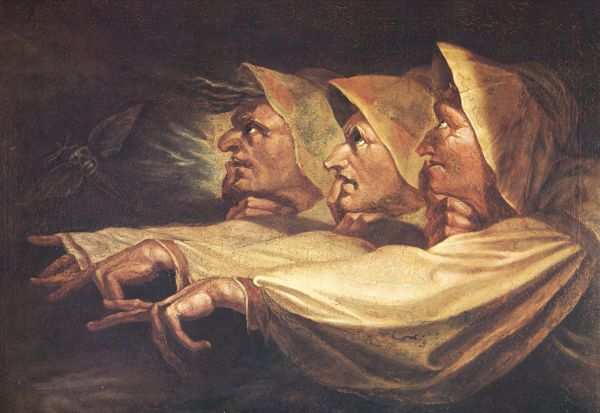
This is among the best-known of Shakespeare’s plays and is his shortest tragedy, believed to have been written between 1603 and 1606. It is frequently performed at both amateur and professional levels and has been adapted for opera, film, books, stage and screen. Often regarded as archetypal, the play tells of the dangers of the lust for power and the betrayal of friends. For the plot Shakespeare drew loosely on the historical account of “King Macbeth of Scotland” by Raphael Holinshed and that by the Scottish philosopher Hector Boece. There are many superstitions centred on the belief the play is somehow “cursed” and many actors will not mention the name of the play aloud, referring to it instead as “The Scottish Play.”
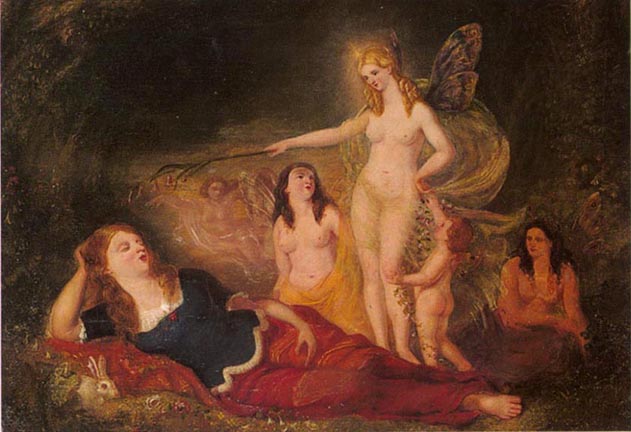
This romantic comedy was written sometime in the 1590′s and portrays the adventures of four young Athenian lovers; a group of amateur actors; their interactions with the Duke and Duchess of Athens, Theseus and Hippolyta; and with the fairies who inhabit a moonlit forest. The play is one of Shakespeare’s most popular works for the stage and is widely performed across the world.
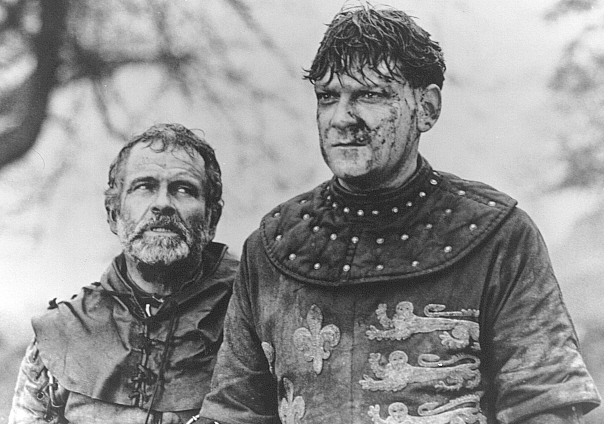
Believed to be written in 1599, it’s based on the life of King Henry V of England and focuses on events immediately before and after the Battle of Agincourt during the Hundred Year’s War. The play is the final part of a tetralogy, preceded by “Richard II,” “Henry IV, Part 1″ and “Henry IV, Part 2.” The original audiences would thus have already been familiar with the title character, who was depicted in the “Henry IV” plays as a wild, undisciplined lad known as “Prince Hal.” In “Henry V,” the young prince has become a mature man and embarks on an attempted conquest of France.
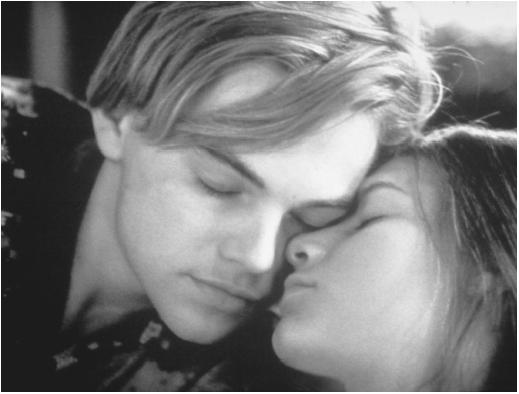
This play is an early tragedy (and likely Shakespeare’s first) about two teenage “star-cross’d lovers” whose “untimely deaths” ultimately unite their feuding households. The play has been highly praised by literary critics for its language and dramatic effect. It was among Shakespeare’s most popular plays during his lifetime and, along with “Hamlet” is one of his most frequently performed plays. Its influence is still seen today, with the two main characters being widely represented as archetypal young lovers. This is the singularly greatest romance ever written and has been continuously adapted to each generation in musicals, cinema and the theatre.
Written between 1599 and 1601, this play is set in Denmark and recounts how Prince Hamlet exacts revenge on his uncle Claudius, who murdered the King, takes the throne and marries Hamlet’s mother. The play vividly charts the course of real and feigned madness — from overwhelming grief to seething rage — and explores themes of treachery, revenge, incest and moral corruption. “Hamlet” is Shakespeare’s longest play and among the most powerful and influential tragedies in the English language. During his lifetime the play was one of Shakespeare’s most popular works and it still ranks high among his most-performed, topping, for example, the Royal Shakespeare Company’s list since 1879. It has inspired writers from Goethe and Dickens to Joyce and Murdoch and has been described as “the world’s most filmed story after ‘Cinderella.’” The title role was almost certainly created for Richard Burbage, the leading tragedian of Shakespeare’s time. It’s arguably the greatest drama ever written and in the four hundred years since, it has been played by the greatest actors and sometimes actresses, of each successive age.
This article is licensed under the GFDL because it contains quotations from Wikipedia.
Contributor: Heroajax


(*Sigh* well, since I already stuck my nose where it don’t belong, I might as well get it all the way in…)
kris: The list was posted in the site not so long ago, and then it was taken down because someone found a site (that I can’t find myself to link to it here) which had several of the list items in verbatim (or however you use that word). In other words (oh boy)… your list got taken down because it plagiarized that other site.
Now, may I please go take cover under a table? k thx.
Oh right, this very issue was discussed in the forums: http://listverse.com/forums/viewtopic.php?t=1037
Waitaminute, did you say you FOUND the list????
I hate to say it but, I didn’t like Hamlet as much as I liked Macbeth. And I thought King Lear was better than both (this could be because of quality of performances though)
Has any one else seen/read the RSC’s Complete Works? funny stuff, especially the footnotes
I’d have loved to have seen the Tempst on this list. Its my favourite
Another excellent list, Heroajax – thank you.
Yes, ‘Hamlet’ has to be #1. Surprised ‘Othello’ isn’t nearer the top, & even more surprised ‘Lear’ isn’t there at all. But that’s just going by the critical consensus, perhaps, & as numerous people have said it’s a matter of taste ultimately. The plays I like the best — Cymbeline’, ‘The Winter’s Tale’, ‘The Tempest’: the late romances — don’t appear at all. But there you go.
Personally I prefer reading the plays to watching them performed. You can enjoy Shakespeare’s unique verbal dexterity & his extraordinary ‘negative capability’ at your own pace, without being bothered by the restrictions imposed by the stage or by actors’ OTT performances & directors’ capricious interpretations. (One of my favourite characters from the plays is Malvolio in ‘Twelfth Night’. He always seems to be rendered by actors as nothing more than a pompous prig, & the chilling dignity conferred on him by his response to his mistreatment is lost. Something similar happens with Polonius; just because Hamlet thinks he’s a fool doesn’t mean actor playing him & audiences have to.) Shakespeare, in a sense, just happens to be a dramatist. It’s the words that matter.
Jfrater: ‘Howl’, I have to say, is quite something but generally the Beats produced very little of substance, in my view. When I was at uni, however, I had the opportunity to see Ginsberg, accompanied by Orlovsky, performing Blake’s ‘Songs’ & other stuff. He gave the poems a sort of incantatory power. Unforgettable.
I hate Shakesspear, but I do not understand him, so I go on Sparknotes.com and read the info. Personally, I think the man is a pervert.
ciunas: wow – you are very lucky! I have an mp3 of Ginsberg singing Spring by Blake – you can download it online in fact by going here
There’s a lot of discussion about reading the plays here but nothing can compare to seeing a production by a world class theatre company. I am lucky enough to live near Stratford ON and do get to see a least one production a year.
Check it out people it’s worth it.
jfrater:
Cheers, I just had a listen.
He looked almost comically eccentric when I saw him in the mid 80s — bald pate, wild frizzy mane, enormous beard — but I’m sure this added to his considerable stage presence. I’ve always been glad that I had the chance to see him.
ciunas: I own a first edition signed book by Ginsberg – I just wish it was a copy of Howl – that would be worth a pretty penny now!
jake ryder: I will definitely try that next time I go to England.
Shakespeare reminds me of sitting at home many years ago with my brother reading it out aloud – I wish I could remember the reason why!!
WOW!
There is not one, single, iota of a difference of opinion between Heroajax’s list and my own opinion of Shakespeare’s plays…though I love every one of them.
I love his sonnets too.
**Randall, your description of the book your Mother gave you sounds very like one I still have, got at around the same time. Mine includes all of Shakespeare’s work, not just the plays ..may be a different edition of the same book?
**jfrater, when I was a Uni student I would travel up to San Francisco on weekends just to hang out at City Lights Book Store in case I might run into Ginsberg or Kerouac one of that crowd.
I am surprised “Much Ado About Nothing” did not crack the Top 10! Beatrice and Benedick are surely two of Shakespeare’s most memorable characters. It is also perhaps the best romantic comedy ever produced!
TDavis(115) I for one don’t believe Bill penned all of these. Too much, too little time (it’s not like he had a computer), and too many varied styles of writing, among other things.
115. TDavis
Check posts 45 & 103.
Oh I love Shakespeare so much!!! Richard III is such a good play. We did it last season, and man it was so much fun to put on!
Pineapple-
I’m not gonna give my opinion on Hamlet, but I will say this. One of the reasons the play was so amazing at the time it was written is because Shakespeare included new medical information. ((Spoiler)) Hamlet’s Uncle kills the king by dribbling poison into the ear. It was a brand spanking new discovery that the ear c***** connected at some point to the throat and the rest of the digestive system. Ignoring the rest of the play, that is what I found most interesting.
And if anyone wants to see a fun, musical, animated version of Hamlet…
Go rent The Lion King. =)
oh my god this is a horrible list – king lear doesn’t even make the top ten?? henry V and Richard III are placed above othello? did you just pick ten names at random ? here should be the top 5 (the bottom 5 are negotiable)
1. Hamlet
2. King Lear
3. Othello
4. Romeo and Juliet
5. Macbeth
I for one don’t believe Bill penned all of these. Too much, too little time (it’s not like he had a computer), and too many varied styles of writing, among other things.
Black Missile – Honore de Balzac’s output was threefold that of Shakespeare. Also, check out Georges Simenon…or Edgar Wallace (who could author a novel in 2 or 3 days). Even John Steinbeck managed in excess of 30 novels. There are many, many more.
Anyways, and notwithstanding the vast chasm in terms of actual talent, at least this shows that Shakespeare’s portfolio of less than 40 plays is hardly prodigious..of course he had time to write them. In fact he, in all likelihood, wrote a bunch more that – like at least one known example – have been lost.
As for “too many varied styles of writing”…the man’s literary genius is unparalled; why should he be incapable of adopting different styles? The collators of the First Folio (who *knew* the Bard personally) wrote : “His mind and hand went together, and what he thought he uttered with an easiness, that we have scarce received from him a blot in his papers.”
These conspiracy theories about the “true authorship” of Shakespeare’s works strike me as being ridiculous.
you MUST watch plays. Plays aren’t meant to be read. The only purpose of reading a play is perhaps to study it for the prose, writing or clarify something you missed the actor saying. That’s it.
Heroajax – I fully agree that plays are written for the purpose of dramatic performance…but to say that “plays aren’t meant to be read” seems a little excessive (though I note that you end with a smiley).
Hero – sorry…notwithstanding my very minor criticism above (#142) I meant to add that this is an interesting list..thanks!
As for Shakespeare’s “greatest” play, opinion amongst literary critics is typically split between King Lear and Hamlet, and this is difficult to challenge; I’d opt for Lear (which is an intriguing omission from your list).
But I would say Coriolanus is my alltime favourite.
I can’t do my work anymore ‘…out damn listverse, out!’
I was told by someone once that he never liked reading Shakespeare, that he just hated it. That Shakespeare is not meant to be read, it is meant to be played.
I’m sick of how kids these days will spit and plays, we had to
study romeo and Juliet for school and everyone was a *****ing mess. Seriously plays aint that bad
I loooove Shakespeare’s works! I totally agree with Heroajax … you should watch the plays rather than just read them. Or, even better, act them out! They’re wonderful.
As for favourite characters, I’d have to say Dogberry fom Much Ado About Nothing… he’s just so random. I got to play a female version of that character two years ago and it was lots of fun. Also, I have to admit that I love Juliet’s character. But that’s probably because I got to play that part last summer. At first, I wasn’t particularly thrilled to play her, but after a while she really grew on me. Playing this part was the most intense acting experience I’ve ever had… it started messing with my mind. After a week of perfomances I was in a really bad state… physically and mentally… and I loved every second of it… you go through so many emotions. Well, I think it’s hard to grasp that from only reading the play, but still, you have to realize what a genius Shakespeare was.
@kiwiboi. Read my whole comment. It’s only necessary to read the play if you want to study it. If you are just casual about your Shakespeare, then only watch them. It makes it much more enjoyable.
@Toolhead. Yeah, I remember that while in school too. It’s unfortunate kids come into Shakespeare like that. A ton of that comes from parents and teachers forcing kids to read what should be watched. Banning Cliff’s Notes and other study guides which would help greatly. Too many teachers are just morons when it comes to HOW they teach Shakespeare. Most certainly know their stuff, but it’s how they teach him that’s the problem.
I just came from shopping bought a book called : A complete work of William Shakespeare by Wordsworth edition (spent my entire month’s pocket money) it includes all the poems and Plays. I must mention As you like it is a good Play too!
=====
All: M sorry for talking something not related this list…
and thanx a million Kreacher: I found means Patrick-my cousin gave it to me…coz I keep talking about things of this site during B’fast, lunch and dinner…. Well I didn’t know that was a stolen list…or may be it was forwarded one… if i have to write a list personally about India I wouldn’t know anything…and about my town Isle of Wight of then YES!!! and oh yes i can write 15 weird things or customs I have seen in India (oops if my cousin’s wife comes to know this she wouldn’t take me out)
but i have doubt again-hmmm! we do copy things or take help from Wikipedia don’t we? is that come under plagiarized…
Jfrater: R u angry with me? Its me Evelyn aka Kris
n m sorry if u felt bad; but i would be glad if you respond… thanq
At a shakespeare festival in NJ our school took parts from Romeo and Juliet and Taming of the Shrew and set them both in a truck stop bar. It was so awesome, and so much fun! Our teacher always said ‘If you hate Shakespeare, you weren’t taught it right.’ and Shakespeare was my favourite class.
Read my whole comment. It’s only necessary to read the play if you want to study it. If you are just casual about your Shakespeare, then only watch them. It makes it much more enjoyable.
Heroajax – I did read your comment, and I stand by my response to it. You did not originally say that “It’s only necessary to read the play if you want to study it”; you said “The only purpose of reading a play is perhaps to study it for the prose, writing or clarify something you missed the actor saying. That’s it.”
Which is an entirely different issue.
I, for one, occasionally read Shakespeare for the pure pleasure of it.
there’s no new list today!!!
but i have doubt again-hmmm! we do copy things or take help from Wikipedia don’t we? is that come under plagiarized
kris – plagiarism, whilst actually difficult to define precisely, is basically about using somebody else’s work without acknowledging the fact. It gets worse when you *deliberately* pass the work off as your own. There are various degrees of “severity”.
Wikipedia, to which you refer, for the most part has no problem with you using its material – so long as you acknowledge it in accordance with their requirements. Listverse lists almost always make this declaration (at the bottom of the list, before the comments). That not only avoids charges of plagiarism, but is the fair and proper thing to do.
It seems, reading your comment, that you did not realise you were doing anything wrong. Fair enough…but it *is* still *wrong*.
However, I am guessing that you are relatively young? I’m sure that if you appeal to jfrater’s sense of compassion, he will likely forgive you
Though he might ask to you provide that list about the Isle of Wight as a suitable “punishment”
You include Shrew but leave off King Lear? Yikes. Why not substitute Two Gentlemen of Verona for Hamlet while you’re at it? Or just call the list “Top 10 Shakespeare Plays The Author Has Heard Of”?
http://www.shakespearegeek.com
Kiwiboi: Thanq and Thanq u so much. Oh yes I am just out of school lot to learn… as I mentioned earlier this list was given by my cousin Pat… and i told him that he misled me…I didn’t have a clue if it was copied… I would do that again tho!:)
I have apologized to Jfrater hopefully he must forgive me coz i didn’t do that intentionally I didn’t even know that there was a website for that list until Kreachure told me. Its just been a few month I came India.
Oh yes about Isle of Wight I will write it for sure I won’t copy from any one… now
I write poetry and when I was in school I was one of the editors for the school magazine and I would really feel bad if someone copies my work and don’t thank me.
Jfrater: you may remove the list I posted again… Plz plz plz don’t be mad at me. I haven’t done anything intentionally
Oh Jesus.. I meant I wouldn’t
Kiwiboi: Thanq and Thanq u so much. Oh yes I am just out of school lot to learn… as I mentioned earlier this list was given by my cousin Pat… and i told him that he misled me…I didn’t have a clue if it was copied… I wouldn’t do that again tho!:)
I have apologized to Jfrater hopefully he must forgive me coz i didn’t do that intentionally I didn’t even know that there was a website for that list until Kreachure told me. Its just been a few month I came India.
Oh yes about Isle of Wight I will write it for sure I won’t copy from any one… now
I write poetry and when I was in school I was one of the editors for the school magazine and I would really feel bad if someone copies my work and don’t thank me.
Jfrater: you may remove the list I posted again… Plz plz plz don’t be mad at me. I haven’t done anything intentionally
Can someone plz plz delete comment # 155
love the list. Love shakespeare. I have done lots of shakespeare in my life time (being an actor, I even have done “Complete Works of William Shakespeare (Abridged)!” but i would have to say one of his most underappreciated works (and one i would have loved to see on this list) is Titus Andronicus. Richard the third is great, albeit incredebly incredebly long!! (as you pointed out). Titus Andronicus, i recommend it. later
@Duane. Or perhaps we could change the list to “Top 10 Shakespeare Plays That People Have Any Opinion On Whatsoever No Matter How Far Off Base It Is?” :-p
King Lear and Two Gentlemen don’t belong on this list. Period. It’s nice you have an opinion, but you also need to be realistic. If we’re going by your method, why not add on “Timon of Athens” or “Alls Well That Ends Well” while you’re at it? These are the top 10 plays in terms of … well, everything. Writing, performances, translatability, popularity, etc. The plays on my list have been performed continuously, adapted continuously, had entire movies and quotes repeated continuously since they were written. They contain all the plot variations other than man v. machine. When was the last time Lear or Gentlemen was made into a movie? How often are they performed in your town or mine for that matter? Almost never. Good plays? Yes, of course. Top 10. No way. 1987 was the last time for Lear. It appears there’s one coming up for the end of this year, but 21 years between productions? That’s not a blip on a radar IMO. 1983 was the last time for Gentlemen and it was on TV. 1999 was the last time for Shrew and it came in two forms in that same year.
I stand by my top 10 for a reason. These are the top 10 of Bill’s plays and almost 150 other commenters tend to agree. Regardless of whether or not you like it, they simply are the top 10. Sorry.
I thought Comedy of Errors was Good
kris: Looking forward to your Isle of Wight list. As Shakespeare once wrote:
“Pray you now, forget and forgive…”
(King Lear — Act IV, Sc. V)
Sure Kreachure will do that soon
I am good girl; I am!
n thnq so much…My cousin Patrick also said sorry… if not I was not going to doc with him tomorrow!
M still waiting to here from Jfrater…
Well can anyone tell me is there a set of rules to write a Sonnet?
kris: You’re welcome!
As for the rules for writing a sonnet, it depends on what kind of sonnet you’re referring to, since there are many types; see this page for a couple of types:
http://en.wikipedia.org/wiki/Category:Sonnet_studies
It also depends on the language, but guessing you are referring to English sonnets, Wikipedia says:
“This is the proper rhyme scheme for an English Sonnet (/ represents a new stanza): a-b-a-b / c-d-c-d / e-f-e-f / g-g“. For more info check out the full article:
http://en.wikipedia.org/wiki/Sonnet
Thanq so much again Kreachure…
I will go thru it tomorrow ( its 3 30 AM and I must go to sleep ASAP)… I usually get confused about Sonnets ( English of course)
I aspire to become a poet and writer someday so I have to learn all i could before i want to print my book… and as my dad won’t send me to college coz of my health reasons… I am trying to learn thru internet.
Heroajax: I don’t get you. I thought that this list was compiled & ordered according to your own judgment of the plays’ quality, which was fine by me. You seem to be saying in #159, however, that you used objective criteria. But I don’t understand, from your explanation, what these criteria are. When you refer to the frequency, or infrequency, with which plays are produced, for instance, you don’t explain how you’re measuring this. Do you mean performed by particular companies &/or at particular theatres? I’m sure that as I write most of Shakespeare’s plays will be being performed somewhere on the planet. Also, who are these other commenters you mention, almost 150 of them?
Assuming popularity or majority opinion can be measured for Shakespeare — a very large assumption — then doesn’t it follow that all literary lists should be compiled on the same basis? Wouldn’t that mean that composing a list of, say, the 10 greatest Victorian novels, would simply involve checking with Barnes & Noble or Waterstone’s to see whether ‘Bleak House’, as it might be, has been outselling ‘Middlemarch’ over a given period?
I find it amusing that my post on an earlier list, describing my daughter’s weekly Shakespeare play group, would be followed so swiftly by a list of Shakespearean Plays!
Had I known, I might have saved the story for now!
Kris: ah – I finally see – sorry for that. The list was removed because it was on another site. And there are no hard feelings
Also interesting is watching foreign versions of Shakespeare to see what the other cultures take away from it. An excellent example of this is “Throne of Blood” by the renowned Akira Kurosawa and starring Toshiro Mifune. It’s a retelling of Macbeth from the Japanese point of view. Definately worth the time to watch it.
Heroajax – the reason Lear isn’t performed more often is because it’s tooo beautiful, it’s tooo complex and heartbreaking. The fool speaks in a scatterbrained poetry and that itself would be nigh impossible to act. Lear’s role would stress and actor and audience.
King Lear the best written work in the english cannon next to Hamlet. If you would =READ= the damn play you would know that of which you speak. Start with act IV.6 or maybe read Harold Blooms *****ysis in his book called “Shakespeare the Invention of the Human”. For you to equate Lear and Two Gentlemen is ridiculous.
and the idea that you only have to watch Shakespeare… how could you ever comprehend the depths of a play like Hamlet or Lear when *****ogies fly like bullets from a machine gun without reading the text? and what about people who want to get into Shakespeare, should they sit on there thumbs until a theater group comes to town ?
What? No Merchant of Venice?? I want my pound of flesh…!!
Shakes was such a great storyteller. Hamlet, Macbeth and Merchant of Venice are my favorites. Sadly, I’ve never had the fortune of seeing a theatrical version. I wish I could.
It’s a good list, but it would have been nice to have some kind of reason for the plays’ inclusions instead of dates and simple plot summaries. The historicals especially have interesting reasons for their writing and for the ‘sides’ that Shakespeare took. I hesitate to make my second criticism as well, but: this is rather more of a list of the most popular plays, the ones everyone is familiar with, and I don’t quite think that that’s the same as “greatest”.
“Regardless of whether or not you like it, they simply are the top 10.”
That’s not really how top ten lists work. Unless you’re talking about something mathematically provable (like in the Guiness Book), it’s got to be subjective. Just admit that they are the top ten in your opinion (or else tell us how you mathematically calculated frequency, popularity, and quality into a numerical ratng), and that others may agree.
No ‘Much Ado About Nothing’?
Can any one tell me where can buy or download Shakespeare’s Plays?
JFrater: thank you!!!
Can I still write about my town I mean (Isle of Wight)?
I really spend most of my time going thru your site and never get tired talking about it. sometimes my dad has to give a hardlook at me to make my mouth shut!!! eheheh!
and also can i put my poems list too?
I’m just glad Romeo and Juliet wasn’t number one. It’s way overrated just because most people have only read R & J out of all the Shakespeare plays and always think it’s the best.
::shakes head::
Hamlet deserves the top spot, though I’m more a fan of Macbeth myself.
Good list, though I would have put Macbeth first. When we had to read Shakespeare plays in high school, Macbeth was the only one I liked.
Hamlet deffinately good choice for number one. I’d have bumped Taming of the Shrew up a little. I like Much ado about nothing personally =D
A list like this without King Lear cannot be taken seriously.
@Ciunis and Helen. I absolutely was not comparing Two Gentlemen to King Lear by any stretch of imagination. If you’re getting that out of my posts, then you’re either not reading completely or you’re interpreting way too much into what I’m saying.
I’m not in any way shape or form debating the merits of King Lear. It’s great, but it’s not better than the ones I’ve listed here. Popularity is a large factor in the top 10. I disagree with the two of your assessments/desire as to some other way of gauging which 10 are the greatest. I’ve pretty clearly stated my criteria in previous posts. Writing, popularity, translatability into modern times, frequency of performances … etc. Popular is popular for a reason. These plays, which are the 10 greatest happen to also be some of the most popular as well. They’ve stood the test of time; 400+ years to be exact. I think that’s pretty clear which of Bill’s plays are the greatest. There is no mathematical formula to use, although I’m certain someone could come up with one, so, yes much is subjective, but over time, sometimes the subjective becomes the objective.
So, although at one point in time all of Bill’s plays were performed, which are still performed most often today? Ask yourselves why? Because they’re good, because they’re well written, because we as patrons love the characters, the drama, the passion, the hatred, the lust, the ambition … these 10 plays contain everything we love about Bill’s observations of the human condition. There’s a reason these 10 plays are performed more often than the others, they’re simply better than the others. If I were to do a top 15, Lear, Titus, Merchant and others would be absolutely be on the list, but not for a top 10 spot. Great plays, but IMO, they don’t make the cut.
Saying that there hasn’t been a major movie of Lear since 1987 is a bit misleading, given that:
1. There are two currently planned, and
2. Kenneth Branagh wasn’t old enough to play Lear in the ’90s.
Overall, IMDB lists more movie versions of Lear than of Taming of the Shrew.
The rather rough-and-ready quantification of performance frequencies I put together (using data from the RSC, the Canadian Stratford festival, Ashland, and IMDB) suggests that Lear is the 10th-most performed Shakespeare play, ahead of Othello, Richard III, and Henry V on your list. I would claim that, if anything, looking at performance frequency will give an underestimate the “importance” (whatever that means) of tragedies and of Lear in particular: they’re a lot harder to cast than the comedies are, and people care more when you mess them up.
Heroajax – Lear is widely acknowledged as being one of Shakespeare’s greatest dramatic works (along with Othello and Hamlet).
I think the issue here is perhaps the incongruity between the title of the list (“Greatest Plays”) and what you seem to be actually describing (“Most Popular Plays”)…which, as it happens, is also debatable, as it depends on how you gauge popularity.