It’s a classic theme of science fiction: something really, really bad happens, and mankind is knocked back to the Stone Age. Of course, with the dropping of atomic bombs by the U.S. to end World War II, people came to realize that for the first time Man himself possessed the power to bring about a global cataclysm. And science fiction wasted no time in examining the possible effects (there were speculative stories in print well before the Manhattan Project was even conceived).
But nuclear holocaust isn’t the only way Man’s thin veneer of civilization can be stripped by catastrophe. It may have even already happened in our past (the vast majority of cultures have a Great Flood in their mythos). Regardless, what is perhaps amazing is that within the time frame of verifiable history, to include more than 60 years of nuclear capability, no such calamity has occurred.
Shouldn’t stop us from thinking about the possibilities, however. Here then are 10 science fiction novels dealing with humanity’s response to overwhelming devastation. They are in no particular order. The list is not at all a “top ten” nor does it even remotely presume to be comprehensive. If your favorite isn’t represented, by all means comment on that fact. This is simply a list bound by a common theme.
This best-selling 1997 novel details the approach and aftermath of a comet striking earth with disastrous results. A large number of disparate characters are well-drawn and the book essentially focuses on the changes in their lives. In fact, much of the novel takes place before the comet actually strikes. But when the “Hammer” falls, civilization as we know it crumbles and the very survival of the characters is certainly in doubt. New social mores are developed through necessity, as humans are put in the catch-22 of having to band together while being able to trust no one. The book is noteworthy for making us actually care about the characters we come to know, even though there are dozens of them.
Buy the book at Amazon: Lucifer’s Hammer
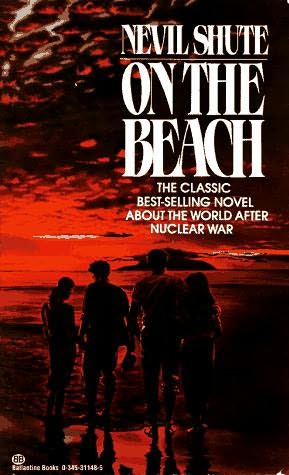
Probably the earliest (1957) post-apocalyptic science fiction novel to truly achieve mass distribution. The mechanism of destruction is atomic war. Though widely taught in high schools around the world during the 1960s and 70s, when concerns about the Cold War were as rampant as they were in the 50′s, the book is not a treatise on the triumph of the human spirit. In fact, stoic acceptance and even government-sponsored euthanasia figure prominently. But the characters, for the most part, do not wallow in self-pity… they just go about their business. The main story is that of a United States submarine being placed under the command of Australian authorities (the northern latitudes become uninhabitable first). Although it certainly made an impression on millions of young adult readers back in the day, and is widely considered a classic, the list author views it as the weakest science fiction novel on the list.
Buy the book at Amazon: On the Beach
Published before On The Beach in 1949, what is posited here is a global epidemic that makes the Black Death look like last year’s winter cold. One gets the feeling that 99.9%+ of the entire human race is wiped out. The novel did win some awards, and has never been truly unavailable, but it never got the “buzz” of On The Beach. And although it can be powerful on first reading, it really doesn’t hold up. You see, our protagonist is essentially alone for a god-awful number of pages. He was up in the mountains and got bit by a rattlesnake, almost dying, so he “missed” the huge turmoil that mass death imposed on society. A lot of that part is very interesting, in detailing why and where power either stays on or fails, what happens to critters and plants, that sort of stuff. But it does tend to drag, and when the protagonist finally hooks up with a woman, that part starts to drag as well. It all builds towards what sort of society the progeny of the few survivors will create.
Buy the book at Amazon: Earth Abides
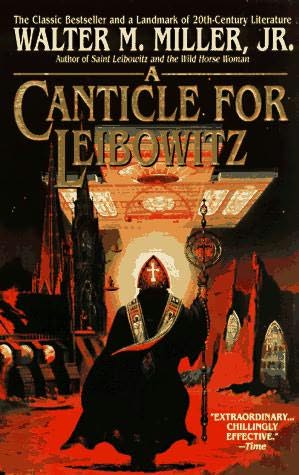
This novel won the 1961 Hugo award and is widely considered an outright classic, even outside the science fiction genre. That said, for anyone who is not Catholic or interested in that religion, it can be an extremely difficult read. Centuries after your standard nuclear holocaust, we have a monastery in the U.S. dedicated to preserving scientific knowledge until the time comes to rebuild a technology-based civilization. It was founded by one Leibowitz, who had converted from Judaism (this is an extremely religious-themed novel). Anyway, the book’s nominal main character comes across a cache of writings and stuff that appears to have belonged to Leibowitz himself. Enter the Church for verification. There’s a long section on whether Leibowitz will be canonized or not. Then, we have another Renaissance and the rise of a new technological age. All with the usual politics and backstabbing you would expect in such a cycle involving the Church, of course. The novel could be considered an allegory of the role of the Church from the Dark Ages to the Industrial Revolution.
Buy the book at Amazon: A Canticle for Leibowitz
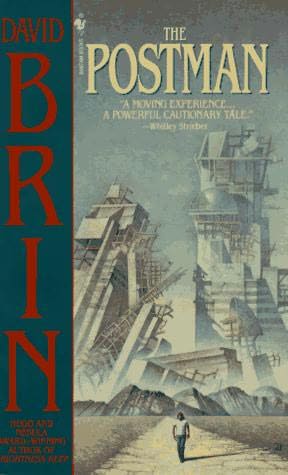
Huge numbers of people were disappointed with the movie starring Kevin Costner. And no wonder, for the movie failed to emotionally capture the central theme of the novel: that people, faced with a holocaust, will cling to anything that strikes of normalcy. In the movie, Costner’s character was presented pretty much as a standard cinematic hero, whereas in the book he is extremely uncomfortable with his “role” and becomes amazed at the trust people place in him just because he is wearing the clothing of a postman. So he “becomes” one, agreeing to try and deliver mail — at first with no real intention of doing so. What makes this book excellent is that the protagonist gradually morphs into a real version of the facade he adopts. This in turn serves as the foreground of humanity in very trying times desperately attempting to rebuild communication and a sense of community. Of course, there are those who opt to go in the other direction and take what they can — and the Postman becomes a critical player in that essentially good-vs-evil conflict.
Buy the book at Amazon: The Postman (Bantam Classics)
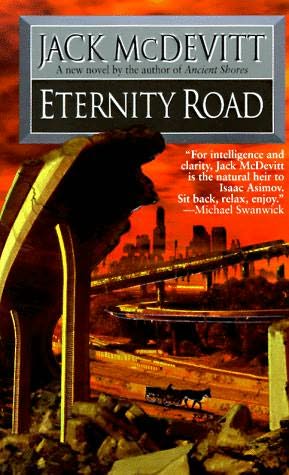
This is the only “quest” novel on the list. About a thousand years from now, after a huge plague, humanity exists in isolated pockets with essentially Amish-type technology (and a concurrent insular social structure). However, ruins and trashed roads remain — the Roadmakers, as the ancients are called, have plenty of visible reminders of their existence. Many believe that there is a place known as Haven where the secrets of their technology remain to be discovered. But as we get started, one previous expedition to find Haven has been wiped out — to all but the very last man. There’s a lot of stuff about how rare and valued actual books of the Roadmakers are esteemed, but eventually a new quest sets out on the path of the one that met with disaster. Adventures along the way, as you might expect. Very craftsman-like in its construction, with believable characters. The ending tends to leave some people wanting something different, but that was no problem for this list author.
Buy the book at Amazon: Eternity Road
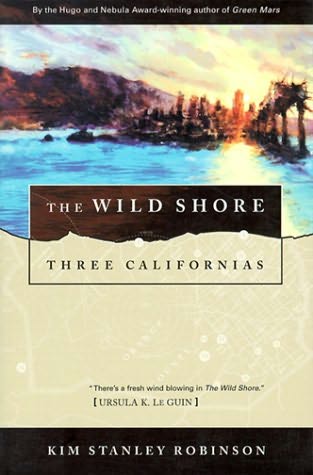
We start with nuclear war in the recent past, but this novel is quite different from most such. It is set on the coast of California. A passable existence is being eked out by a small community. Some farm and some run nets for fish. A group of teenagers do their work, but also take jaunts to places they probably should not go. There is a very fascinating depiction of folks from various lifestyles and communities coming together for a combination of trade and carnival. But the crux of the book is that the Japanese are the world’s foremost power now, not the U.S. — but they are leaving the state pretty much to its own, as long as rebuilding does not occur. Folks try to rebuild bridges and railroads, but those keep getting hit from the sky. Ultimately, this novel is about relationships. One particularly cantankerous relationship is between our protagonist and his father, a cold, stern man of importance to the community who oversees the fishing operation. This ambitious book represents a truly unique take on the post-apocalyptic theme. And then the author went ahead and wrote two more books of two completely different possible futures of Orange County.
Buy the book at Amazon: The Wild Shore: Three Californias (Wild Shore Triptych)
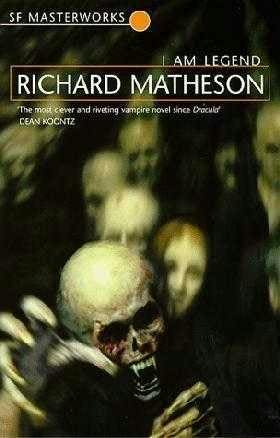
Here we have to talk movies and television as well as books. Taking care of the movies first, the best adaptation of this 1954 novel was 1971′s The Omega Man. Lesser films were The Last Man on Earth (1964) and I Am Legend (2007). As for TV, well, chances are that every single Twilight Zone episode you ever loved was written either by Richard Matheson or Rod Serling himself — with Matheson getting the nod most often. It would be fair to say that Matheson’s foremost work was in his insanely extensive television credits. But he could write for print, as well — his short story “Born Of Man And Woman” is twice as freaky as Shirley Jackson’s “The Lottery.” As far as I Am Legend goes, it is the opinion of the list author that the ending of The Omega Man is superior to the ending in the novel… something that is quite rare. Anyway, we have another plague-story (biological weapons rather than nature, this time around). Our hero has an experimental vaccine, and injects himself just in time. Well, there are also naturally-resistant folks, but who can’t stand light as a result, and they form a cult. So every day, the protagonist goes out for supplies and what-not, but must return before dark for his daily battles with these weird “vampires” who are out to get him. Subplots which actually help (for once!) get woven in, and we end up with a fine example of the absolute mastery that was cranked out continually by Matheson over a long and storied career.
Buy the book at Amazon: I Am Legend
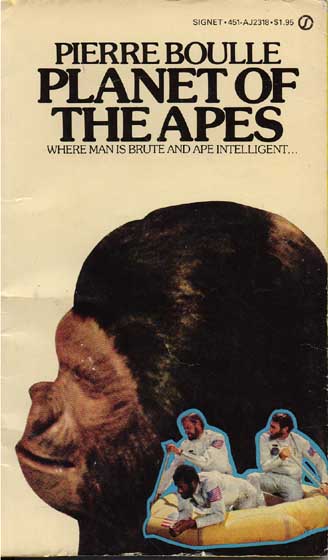
Who doesn’t know this classic story? It’s as pop-culture as it comes. But while the movies maintained many of the core concepts of the novel (time-dilation, division of ape culture into military, judiciary and science based on race, degradation of humans, etc), most folks will be surprised that the book is quite different from what we normally think of as the Planet of the Apes saga. In fact, an argument could be made that this book does not fit within the title of the list at all! That’s all that will be said about that so as not to spoil it. Ultimately, fudging had to occur to include POTA, because otherwise the comments would have been overwhelming regarding its absence.
Buy the book at Amazon: Planet of the Apes
Sadly, this once-popular 1959 novel has been fading into obscurity for a long time. It is without doubt one of the best-imagined depictions of the aftermath of nuclear war for a small community that gets somewhat lucky regarding the fallout pattern. It is set in Florida. The protagonist gets a little bit of warning, due to the fact that his brother works for SAC. Then folks start figuring out what to do. It becomes almost a treatise on surviving once everything we accept as normal fails. Of particular interest is how race relations are treated… the reader must understand that this was written in the late 50′s, right before the civil rights movement, and many of today’s readers will come away with Malachai as their favorite character. Alas, Babylon must have been quite an eye-opener when it first hit the stands. Depictions such as a little girl figuring out out how to put fish on the table when they aren’t biting due to oppressive heat, and folks realizing that an actual expedition to find salt (of all things!) is critical to survival, combined with superb characterizations, make this one the best of all. An utter classic, and worth putting in your bomb shelter should you ever build one.
Buy the book at Amazon: Alas, Babylon
Contributor: grubthrower


I’ve read several of these, but I noticed an omission of sorts. I would have placed Sailor Song (1992) by Ken Kesey on this list as it is set in the 2020′s after environmental problems have really started to get out of hand but it deals more with disaffection than with actual “coping”.
I was suprised not to see Z for Zachariah. Spectacular novel of abandonment after nuclear holocaust and the desperation of those left alive.
Kudos on the rest though.
OK, time to respond to a few things.
First, hat-tip to Lo for getting the point… I wanted folks to bring up other books, maybe even get folks to read things people are suggesting.
Which brings us to the The Road. Sad to say I have never even heard of it, and since I own 6,000 or so boks, it’s gonna have to become 6,000 plus 1 so I can decide for myself.
Next, The Stand. I didn’t like that book, but I didn’t like some that made the list, either. The reason The Stand was not included is because I consider it an apocalyptic novel, NOT a post-apocalyptic novel… it takes place, mainly, while the bad ju-ju is happening.
Sorry about the simple typo on LF’s publication year. At least that shows people actually read these lists.
The again, it was stated in the description that Planet of the Apes may not fit the category at all, so it is at best redundant to comment to that effect.
As for Z fo Zachariah, I own the book, have read it, and do not have anything against the author. I just do not consider that novel to be a seminal exemplar of the theme.
Finally, thanx to all who enjoyed the list and were kind enough to post a kudo or two. Feedback is what makes list writing fun. So, submit one of your own!
“Swan Song” by Robert McCammon is fantastic. Check it out.
LOL. I remember Canticle Leibowitz. I bought it for 25 cents when our high school’s library was selling old paperbacks to make room for new books. This was back in 1995. I tried reading the darn book but I just couldn’t get into it. Plus I must have wasted like 5 bucks on books that I never had the time to read. I even had the Wuthering Heights novel and Hound of the Baskervilles. I threw two cardboxes full of those old books that I bought from the schools library
Nice list, but I couldn’t help to notice one glaring omission.
The Hitchhiker’s Guide To The Galaxy? No? Is it not a book that deals specifically with one mans attempts to survive after the Earth is demolished to make way for a new Hyperspace Bypass?
No biggie. I suppose my personal favourites can’t always make it on the list… Maybe next time…
Late O’Day: That’s a good point. I never really thought about that. But they really should make another “I am Legend” to honour the book. The movie WAS good, but it wasn’t faithful to the book.
Did you even read I Am Legend?- your plot description is the plot from The Omega Man movie, which was complete garbage compared to the book. Even the Will Smith version was better. Your omission of The Stand, Swan Song, and The Day of the Triffids is dissapointing. And Planet of the Apes #1? You must have a thing for books turned into mediocre Charlton Heston movies.
Re: Will Smith’s “I Am Legend”: There was originally a different ending to the movie that was more true to the intent of the book (not quite to the same effect, but much more so than the ending the film eventually got). Apparently, this ending tested very poorly with audiences so it was changed to the one we saw.
This is the original ending, where we see Smith’s character realize that HE was the monster:
I was surprised that the same person who wrote Planet of the Apes also wrote Bridge on the River Kwai…
This has been said already, and more politely, but – HAY YOUZE BLUIDY IDIOTS, Lucifer’s Hammer was published in 1977, not 97.
@34 Arnold: A hearty second for Malevil. Terrific book.
Maybe it is too recent a novel to go head to head with the classics, but Dies the Fire by S. M. Sterling is the only (fiction) book in the last ten years to truly scare me. It really drives home the fragility of the world around us, and the lengths people will go to when their backs are to the wall. Interestingly, Sterling’s apocalypse is not itself directly lethal.
I’m a big fan of this genre & have read all the books on this list, some numerous times. It’s not a bad selection, but certainly in the wrong order. If the list was turned upside down, so that 1 became 10 & vice versa…..much closer. I see your comment that perhaps Planet of the Apes doesn’t quite fit the genre, but personally I wouldn’t have included it purely because it’s not very good. Perhaps replace it with “Some will not Die” by Algis Budrys?
You might note that Pierre Boulle, author of POTA, also authored “The Bridge on the River Kwai.”
Nice list, you missed Swan Song, otherwise all goos stuff.
dude, the chrysalids, hello i know it was pretty dry but … so good, man at least an honarable mention,
If you like survival stories which i feel is the more acceptable title for this genre, you have to read “Down to a Sunless Sea” by David Graham. In the first few pages a man boards a plane at Kennedy in NYC headed for Hethro air port in London. At just past the point of no return in the trip (which means not enough gas to turn around and go back) London disappears. At any given minute of any given day, over 3 million people, are up there, in the sky, above the Bad Air of Nuclear War. And if you just happen to be on a plane the day World War III erupts, you are powerless, homeless, and even without a direction, at the mercy of a pilot who is at the mercy of the fuel left in the plane. And another great survival book of a different sort is “Testament” by David Morrell, which he wrote right after “First Blood” (you all know Rambo) in which a pencil pushing suburbanite who’s greatest tragedy he ever faced was a traffic jam in the city, is forced into total survival at its ultimate within the first 3 pages. You can’t put it down and I don’t know why its not a movie.
Malevil… that’s what it was. i was trying think of a book by a French author that uses this theme and couldn’t for the life of me remember what his name was or the title of the book. i picked it up at a used bookstore somewhere and have since lost it or donated it to my local library. i remembered liking it a lot though. I agree that Planet Of The Apes doesn’t really fit in this list, but it IS a great book. quite a few of these books are going on my Amazon wish list now.
thanks for this list. definitely more engaging than the list of pool scenes
I really have to disagree with you about the end of the Omega Man versus the end of the novel, I Am Legend. The novel’s last line is truly chilling note, full of the sort of moral complexity that is not at all present in the Charlton Heston film.
My pet novel in this genre is Keith Roberts “Pavane.” I also like Edgar Pangborn”s “Davy.”
On the “what is science fiction?” question: Everything is science fiction. Contemporary fiction is just the special case of Spacial displacement 0, Temporal displacement 0, Technological displacement 0. SF= elsewhere, elsewhen, elsehow.
Surprised no one’s mentioned a superb novel by Russell Hoban, “Ridley Walker,” published around 1980. Another excellent one is “The City Not Long After” by Pat Murphy.
It’s worth noting that many Nevil Shute fans don’t rate “On the Beach” all that high; his other books like “Round the Bend” and “Trustee from the Toolroom” are far more enjoyable reads. Shute himself hated the movie.
Regarding all the people who bemoan the non listing of The Stand. I’m a little puzzeled about listing it has a Science Fiction novel. While it does contain Science Fiction elements it is not primarily a Science Fiction novel. The book is a retelling of the prophecys in the Book of Revelations of the New Testament. The chief vilian Flagg is obviously the devil and he has supernatural powers. The leader of the good guys talks to God, who intervenes quite spectacularily at the end. In fact the novel is filled with religious, supernatural and horror elements. (Demons, ghosts etc). The novel is deffinetly post-apocalyptic but it is judeo-christian post-apocalyptic. Although it is a good read large sections of it drag and the extended version contains massive amounts of padding. The Stand is a horror novel mainly. The conflict after the apocalypse, in which the implication is that Satan / Flagg helped it along massively by unleashing the virus if not creating it. To the final contest which is between God and Satan are not by any stretch “Science Fiction”. So I would not personally list it in any list of “Science Fiction” books.
Childhood’s End.
I think the reason that the Stand does not appear on the list is because this list should be for 10 Great apocolyptic novels. I received the extended Stand as a gift years ago. I gave it the college try but found it unreadable.
It was one of the few books, I outright just stopped reading. I could barely pay attention to the story, the actual writing was so poor, and as previously mentioned, padded beyond believe. Whole pages could be excised without making a bit of difference to the story. My experience was so bad I stopped reading Stephen King altogether. (I had enjoyed his short stories.)
I suppose it is a matter of taste, but there are many other books (scifi, horror, or other) I would rather be reading.
“The Stand” Stephen King
Did I miss any mention of ‘The Memoirs of a Survivor’ (Doris Lessing)?
Can I suggest a notable mention for “The Crysalids” or “The Day of the Triffids”?
54 Lark sez: “ugh! enough with the science fiction lists already. not EVERYONE likes it. Most people don’t”
I have to assume from that comment that Lark knows most people and what they like and don’t like. That sounds like sci-fi to me.
It’s presumptuous to speak for anyone but yourself. And use your delete key.
One book that isn’t on this list that I thought should be there is. Swan Song by Robert McCammon Once I picked this book up, I could not put it down until I was done. Loved it!!
purple cloud or the stand should be included!
Z for Zachariah!!!
Its so scary and real, one of my childhood favourites.
I may have missed it in all the comments, but lemme recommend Riddley Walker by Russell Hoban. It takes place in Inland (England)some years in the dingy, retrograde future. The language is hard to understand at first, but becomes very entertaining. The book is an excellent and very rewarding read. It was nominated for the Nebula award for best novel in 1981, and won the John Campbell award for best science fiction in 1982.
well done for speaking up for Riddley Walker. Without doubt one of the best of this genre, and the only book I’ve ever read that had the power to make my hair stand on end with its powerful narration.
Nobody mentioned Farnham’s Freehold by Robert Heinlein. It’s definitely one of the best, and not so depressing as On the Beach or Canticle.
Why does your plot summary for I Am Legend consist of the Will Smith film version’s plot? There is no antibody injection that the protagonist takes, and the disease is natural in the book, not manmade!
Good point, Mona. Farnham’s Freehold truly does belong on the list. Although it works brilliantly on a number of levels, for our purposes here it shows (as is common to Heinlein works) that the human spirit is essentially indomitable.
I wonder what happens if anything of this happens, say if they talk about a third world war or a nucluer holocaust, it’s going to be fiction, ofcourse, because it’s not real, hasn’t happened; but what happens when they come true? Will the books become science fact, will they change the genre of the book? Been plaguing me ( nice pun
) ever since i read this and thought of the above question.
Though, if anything did happen like in the books, would we have a society enough so we could change the genre of a book?
Ironic that is.
Anyway, from this i read I Am Legend and found it amazing, read it 2 days and wish i read it slower
.
The Shore of Women by Pamela Sargent should be in this list.
Alas Babylon is not only my favorite book of the genre but one of my favorite books of all time! I am a big fan of post-apocalyptic novels and will eagerly be checking out the books on this list that I have missed.
Since reading the list, I have started working my way thru it. I listened to The Road. I’m glad I did, but it doesn’t offer much hope for the future of mankind. I have almost finished reading Swan Song by Robert McCammon. Surprisingly, it is very good. McCammon’s books are usually a bit out there for my taste. But it is very, very similar to the Stand.
And I agree with Kat. Alas Babylon is one of my all-time favorites too.
Ummm…sorry, but 1971’s “The Omega Man” is the WORST adaptation of the novel “I Am Legend.” The only way it can be considered “good” is if you’re talking about the category of “so awful that it’s good.”
The film rendering truest to the novel was “The Last Man on Earth,” though I think Vincent Price was the wrong choice for the main character.
The Will Smith adaptation of “I am Legend” departs from the book, but I thinks it’s the most enjoyable of the three movies.
I was hoping someone could come up with a title and author for me.
The book is at least a decade old, I think–likely more.
The premise was part scifi, part occult, containing genetically modified bacteria that healed and revived the dead (though people had to become vegetarians, because meat would revive and grow in their bellies), coupled with an engineered creature called the Beast or something like that, though the creature proved to be peaceful.
There was something at the end of a fight between good and evil in a caldera created by a nuclear explosion.
The title MIGHT be something like “Fire” but I can’t find a book with that name (is there any way to search for an exact book title, and not just “beginning with…”?). Of course, I might be wrong about the name.
I could have sworn that Pierre Boulle’s book was originally titled “Monkey Planet”. He also wrote “Bridge over the River Kwai” – talk about diverse!
Well,
This list made the Book, so thanx everyone for the comments and interest.
I would only ask that everyone please read *something* before crashing tonight.
(And I can’t recall ever seeing so many notifications of a single-digit publication date typo — scrutiny rocks!)
i am looking for a post apocalyptivc novel, in which the survivors must travel to a power plant, where another group of survivors have set up a society, or kingdom if you will, and there is a clash to get the power they need. I loved the lists, I have read many of them, and have gotten many from all your comments, Thanks everyone, and if anyone knows which book I am trying to remeber, thanks.
you may be thinking of lucifer’s hammer, which does have a situation like that. funny, what i remembered about that book, before re-reading it recently, was the “ice cream sundae, which falls on a tuesdae this week”. it’s definitely worth another reading.
The novel that saoirset is looking for does sound like “Lucifer’s Hammer”. It’s only been about a quarter of a century since I read it, but I do remember the fight over the power station.
Must read that again, thanks for the memory jog, mona.
I was shocked to see you say that Omega man was the best film adaptation of I Am Legend. Of all the films that one was the least faithful and the ending was idiotic.
Wow, I really enjoyed reading the list and all the comments. What an amazing list, will do my best to read some more of these.
John Christopher wrote “The death of grass” and it is sometimes also called “No blade of grass”. I haven’t read it, but his tripods and prince in waiting series I have, and they are post-apocalyptic too.
Its interesting to me whenever some people get hung up on definitions (discussion of science fiction etc in the posts). Truth is that anything you can name is a bit grey when you try to classify things. Here we have overlapping and complementary themes covering the “method of destruction” disease, comets, nuclear, economic, alien invasion, social, and the “type of story” survival, re-building, quest, and other themes denial, love, horror. Its just complex, deal with it and enjoy it. Its not unique to this group, talk to a taxonomist, a psychologist, a storeman or a triage nurse if you want some examples…
Good list, and iv read a few from here. But i happened to notice a good moot point, in which science fiction is involved.
It was about what happens when the story which the book/novel is describing comes true? Like WW3? Or a nuclear apocalypse?
Does the genre for that particular book/novel change? From science fiction to science fact? It sounds interesting and would like to hear from anyone who might have already discussed this.
Thanks
Oh and maybe for an alien invasion or the like?
Lol, i dont want a debate on if they exist, it was only another example
Mongoose, save yourself time and read Stephen King’s /The Stand/ instead of /Alas, Babylon/. A *much* better post-Apoc novel, and much more timely considering today’s H1N1 pandemic.
The Stand should have made the list somewhere.
Personally, I think the stand is a terrible book.
It has boring poorly-realized religious overtones, and the ‘moral’ seems to be that everyone who is working class is ignorant and easily corrupted and those with college educations are mostly moral and good.
Anyway, I would definitely call it a ‘fantasy’ book since it is full of magic etc.
Did you really read the book? Where is the "magic" in the story except for the magical brilliance of the story?
over the past several months, i’ve read or re-read The Postman, Lucifer’s Hammer, The Road, Eternity Road, Swan Song, Parable of the Talents, Parable of the Sower, Memoirs of a Survivor, and Life as We Knew It & The Dead and the Gone, both by Susan Beth Pfeffer. in my opinion, the Stand, Lucifer’s Hammer, Farnham’s Freehold, and Alas, Babylon are the best of the genre. but they’re all definitely worth the read. bring on the apocalaypse!!
I really enjoyed reading the list and comments, it’s given me a great resource for exploring my interest in post-apocalyptic novels.
The first book somewhat in/near the genre I read was The Stand, and it blew me away. I loved the depth and scale of it, and even though I’m not a fan of religious themes, I happily finished it multiple times. Most Stephen King books I enjoy, yet strangely most of his endings I get really annoyed by because they usually end up being some fantastical monster or magic power, completely contrasting the vivid and realistic terror and suspense the characters suffer. To me it always seems sort of a copout when the climax/reveal isn’t something scientifically explainable. But then I guess that may be what he’s going for, to get the connection of realism to a fantastical event or being. Anyway, I’m rambling.
I did see the Will Smith I Am Legend, and loved it. Then I read the book and was disappointed that it was not closely related to the movie. I wish I’d read the book first, as although I loved Matheson’s depth and *****yzing of the ‘vampires’, the horror and despair in the movie really hit me hard. And that dog scene, jesus.
Anyway, be grabbing most if not all these books to read, although I’m preparing more for the zombie apocalypse than anything nuclear. Shopping mall for me a la Dawn of the Dead ftw.
I Am Legend i thought was a success book wise, but as for all book-turned-film problems, there is always some form of uncanon between the original book and film. Enough of being pedantic. The book is excellent, the film is good, and would read the book again if i had a copy
.
Btw, the description for I Am Legend is wrong, isnt it? In the story it says that robert was bitten by a bat before the plague got worldwise and nearly died from it, but recovered, and because he recovered he was immune to it. But here it says he injected himself with some experimental vaccine, and i cant remember that happening. Can anyone clarify this for me?
Thanks a bunch
The first half of Stephen King’s “The Stand”. The first half is richly detailed with plausible post-apocalyptic circumstances. The second half however delves into a tacky supernatural conflict between heaven and hell. But you know, it’s a long enough book that you can read the first half and that’d be enough.