It is no secret that I love language and all things related it to. Also, being a bit of a pedant, I love to share titbits of information about words, phrases, and language in general. Therefore, I have put together a list of misconceptions (one of my favorite types of list) about common sayings. Some involve spelling errors, while others involve conception or comprehension errors. Be sure to tell us your favorite (and by that I mean most hated) common errors in the comments.
Common Saying: To get off scot free
Many people think that this saying refers to Scottish people being tight with money – hence something being free, but in fact the word “scot” is an old Norse word which means “payment” – specifically a payment made to a landlord or sheriff. So this phrase – while meaning what most people think it means, has no connection to the Scottish people – it just means to get off without having to pay.
Common Saying: As fit as a fiddle
This is another phrase where a single word has confused people – “fit” in the context of this saying does not mean “healthy” which is a 19th century definition. Its original meaning was “suitable” – and it is still used in that context in the sentence “fit for a king”. As fit as a fiddle means “as appropriate as can be” – not “in excellent health”. The first use of the phrase, incidentally, was in the 16th century and it was originally “as right as a fiddle”.
Common Saying: If you think that, you have another thing coming
This is a complete aberration of the original phrase because of the sound of English. The correct phrase is “if you think that, you have another think coming” – in other words, “what you think is wrong so think again”. Because the “k” in “think” often ends up silent when saying “think coming” people have changed the phrase over time. Of course, “another thing coming” makes no sense at all. To illustrate how global this error is, when you google “another thing coming” it returns 139,000 results; when you google “another think coming” it returns a mere 39,000 results.
Common Saying: Eat humble pie
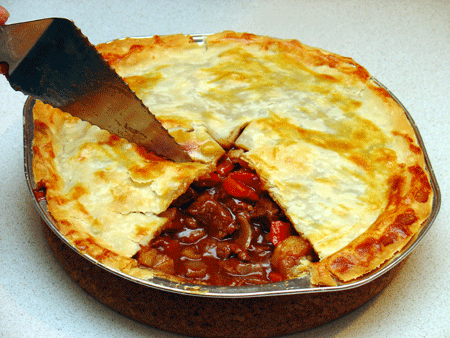
This phrase means “to be humble in apologizing for something.” I was slightly reluctant to put it on the list because it actually does mean what people think it means, but there is still a misconception here; people think that this phrase means to eat a pie made of humbleness but it actually means to eat a pie made with umble (pictured above). Umble is an old English word for offal – the bits of the animal seldom eaten today (sadly). It was a pie that was normally eaten by the poor as the finer cuts of meat were left for the rich only. “To eat a humble pie” is an example of metanalysis (words being broken down into parts or meanings that differ from the original) as it sounds just like “to eat an umble pie”. Other examples of this in English are “an apron” which used to be “a napron”.
Common Saying: Rule of thumb
People commonly think that this saying is a reference to a law allowing a man to beat his wife as long as he uses a rod no thicker than his thumb. It is, of course, completely untrue. There is no record of any judge in Britain ever making a ruling like this – or any lawmaker passing a law. The phrase actually refers to doing something by estimates – rather than using an exact measure.
Common Saying: On tender hooks
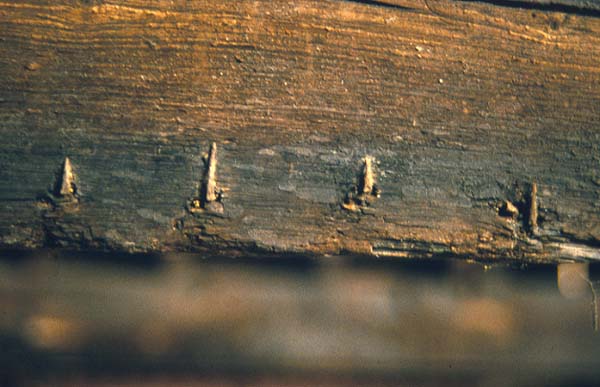
This phrase is very commonly misspelt. First off, what exactly is a tender hook? It doesn’t seem logical does it? Well – that is because it isn’t. The phrase is actually “on tenterhooks”. A tenter was a medieval tool used for making cloth – the tenterhooks (pictured above) were small hooks to which the fabric would be stretched in the manufacturing process. To be on tenterhooks means to be left hanging – or to be in a state of suspense.
Common Saying: I’ll take a raincheck
This phrase is usually meant to mean “I won’t do it now but I will later”. This is the commonly accepted meaning (and has been for a long time) so it is now considered to be correct. It is included here merely out of interest because its original meaning was slightly different. Initially, a raincheck was offered to people who had tickets to a baseball game that was rained out – they would offered a “raincheck” which was a ticket for a game at a later date to make up for the missed game. This eventually found its way into shopping jargon in general where a raincheck was an offer to sell an out-of-stock good when it arrived back in stock. The meaning has eventually broadened to a point that it is not an offer any longer but a response.
Common Saying: To give someone free reign
This is a spelling error that leads to a misunderstanding – though the meanings remain the same fundamentally. Many people presume this phrase to mean that a person given free reign, has the “royal” power to do anything they want. In fact, the correct phrase is “free rein” and it comes from the days before cars when horses were used as our main mode of transport. When navigating a steep or winding path, one would relax the reins so that the horse could pick the safest path as he was more likely to do a better job than the rider.
Common Saying: To wreck havoc
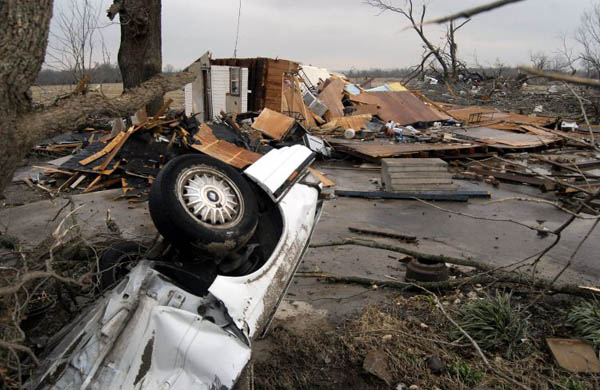
Havoc means chaos – and to wreck something is to put it into a state of chaos. So why would you make chaos out of chaos? You wouldn’t. What you might do is wreak havoc though – because “to wreak” means “to cause to happen”. The two words are pronounced differently – wreck sounds like “rek” while “wreak” sounds like “reek”. It is a small – but common, error.
Common Saying: To beg the question
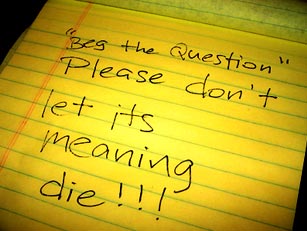
Let’s face it – 99% of people reading this list will not know the correct meaning of “beg the question”, but that implies that the mistaken meaning should really be considered correct through common usage – so let us not fight about right or wrong – I will just state the facts: “to beg the question” does not mean “to raise the question”. Originally the phrase was “to begge the question” and it appeared in English around the 1580s. It is a reference to a question (or phrase) which implies the truth of the thing it is trying to prove. Confusing? Okay – here is an example: “why does England have fewer trees per acre than any other country in Europe?” This is a “begged question” – the person asking is implying that England has fewer trees – when in fact, it may not. Another example is “he must be telling the truth because he never lies”. Decartes was begging the question when he said “I think, therefore I am”. Oh – and for those of you who are used to using the term in the wrong way, consider using “prompt the question” as a correct alternative.
Contributor: JFrater


I have always thought “You got another thing coming” came from the Judas Priest song.
excellent. once again I am smarter for reading these. I have had many arguments with the “rule of thumb” comment with numerous women. Hey has anyone else ever seen “for all intensive purposes”, written?
randall – thank you for the history lesson. i agree with what you say. i am grateful for the life i have now, but i never personally knew anyone who fought in the war to give me this life. i am thankful to them people, but not the people who didnt fight in the war. i know how that sounds, what i mean is people who werent born havent given me this life. i’m sorry, very tired and not making much sense.
the war is over and done with, there is no point in shouting about *you did/didn’t do this/that/the other* or *we did this/that/the other* seems a bit pointless.
I think your second sentence is incorrect. It should say “tidbit” instead of “titbit.”
kool list man but i really think its pretty damn hard to go back to speaking proper english. i dont know if anyone has ever been down in south texas but proper english isn’t even in our vocabulary. its more like tex-mex bro. but great list never the less.
I really thought the rule of thumb was about beating your wife…one of those things that seems odd enough to be true.
The one what always bothers me is people saying “I could care less” I’ve also heard “scotch free” as in the tape.
99. I thought it was “splitting image”. i could be wrong though.
#84–I was referring more of how the French joined the war on the(North) Americans side after their unsuccessful attempt at the Seven Years War against the British. Having been defeated against the British, and financially crippled, the French joined with the Americans–and only did so after the Americans beat the British (I forget the Battles name).
Randall: I don’t disagree with your assessment (i.e., the counter to signe), but let us give credit where credit is due. It is a little silly for present-day Americans to take credit for the sacrifices of past heroes, now long gone. However, I hope the passion for that history remains so that those sacrifices may not be forgotten, and I commend you for that.
In regards to this list, another great success – very interesting. I would mention, though, that “begging the question” certainly has its place, regardless of its supposed bastardization. When an assumed conclusion is embedded in a claim, I beg to ask on what such an assumption is based. Begging the question is commonly used in philosophical inquiry to refer to the fallacious nature of circular reasoning.
6twistedbiscuits,
Though all gratitude goes to those who fought and lost their lives for others, you can’t dismiss others who through working and taxpaying, helped support the war effort as well. America spent upwards of 40% of its GDP for WWII at the sacrifice of the American taxpayer.
always thought it was wreak havoc, not wreck.
too far, randall, too far
Actually, I think 2 and 5 are pretty well known. I knew it was tenterhooks, and who says wrecks havoc?
Raj,
There are still many WWII vets still alive. I wouldn’t discount them as “long since gone” so quickly. Additionally, us present day Americans also kept most of Europe free from the Soviets, at little to no cost to the Europeans. So I think we still have some rights to point out such facts.
steelman – apologies for not making myself clear, i meant those who, like me, had nothing to do with the war. like people who werent born at that time
I’m not sure if this fits the topic exactly, but how about “Walking on eggshells?” I beleive the correct expression is “Walking on eggs.” If the eggs are already broken as in “eggshells”, then one doesn’t need to be carefull. Sir John Harington, translating Ariosto’s ‘Orlando Furioso’ from Italian in 1591, wrote: “So soft he treds. As though to tread on eggs he were afraid.” From “Dictionary of Cliches” by James Rogers (Wings Books, Originally New York: Facts on File Publications, 1985).
“I beg to differ” would have been another one for the list.
Interesting though JFrater. Thanks!
Actually, Decartes was NOT begging the question in “je pense, donc je suis” (or the more popular but never actually used in his orginial writings of Meditations on First Philosophy, of which you are quoting, “Cogito ergo sum”). but he does later in Meditations on First Philosophy (in the Third Meditation) in the form what is now known as the “Cartesian Circle” (i.e. whatever one clearly & distinctly perceives as true is true).
Raj:
I was, also, referring directly to my family. My father and my uncles—all combat soldiers/airmen/sailors in WWII. Dead, all of them… but not forgotten to me or my family.
I am from Texas and I have certainly heard Wreck Havoc, though I have never heard of Tender Hooks.
I have now though!
Randall – thank you
My father was Army Corp of Engineers, pulled out of college 1943, transport ship to England pre-Normandy, then on to France and up to Germany.
He would agree with you with all of his heart, and by the way, had a beer with him last weekend – looking pretty good for a dead man.
moonbeam – how did it become walking on eggshells?
OH *****!
Mom was a riveter in a B-25 Mitchell bomber factory, she would kick my ass if I left that out. Or her cousin who was a B-25 pilot, who was always joking with her about the rivets popping out when they were on a mission.
She had a margarita by the way.
“Wreck havoc” is one of my pet peeves actually, I always tell people off for saying wreck instead of wreak. -_-
Does anybody know where “chip on your shoulder” comes from?
6twistedbiscuits – I’m not sure why people say “walking on eggshells”, but I hear it said that way all the time. (Also sorry about the typo: “beleive” should be “believe”.)
By the way I’m from the US and I have heard people say “wreck havoc.” I’m not offended by Tinydancer’s comments about how Americans basterdised English. The word ‘basterdised’ or (bastardized) is often defined as: “a degradation of a language caused by the passage of time or geographical remoteness.” We do use the English language very diffently here. Sometimes when I watch movies or television filmed in the UK I can’t understand what’s being said. I need subtitles!
english language chanes over time whatever the country. i dont think it is bastardised, i think it is just changing. i mean, we dont talk the same way now as we did hundreds of years ago
I just wanted to mention that some of the items you guys are saying should be on the list are on previous lists
How many of you folks from the south (U.S) use the term Chesterdrawers instead of Chest of Drawers ?
Nice history lesson Randall. How we got from misconceptions about common sayings to saving Europe in WWII befuddles me.
ADPRO8 – http://www.phrases.org.uk/meanings/chip-on-your-shoulder.html
147. 6twistedbiscuits: I agree. Just like my post above, it’s like an elaborate game of telephone.
Also, I thought that although Britain didn’t have a “rule of thumb”, Texas did?
i don’t think there are any misconceptions about them but i’ve always wondered how “piece of cake” and “easy as pie” came about
Can someone please use “on tenterhooks” in a sentence? I’ve never heard that term before and haven’t a clue how it’s used.
I would like to get my tenterhooks around Anglina Jolie.
hilarious
Further annoyances;
Pacific/pacifically instead of specific/specifically.
This may be a UK thing as I haven’t heard it elsewhere.
Reach instead of retch – again may be a local mispronunciation.
i wonder about *you want to have your cake and eat it too*. of course i want to eat the cake if i’ve got it
i dont understand that saying at all.
1) Nice list. But I disagree with “another thing coming” making no sense. It certainly makes more sense than “another ‘think’ coming” if you ask me! If you “think” something, but you’re wrong, then you simply should “think again”. But, if you are expecting something, and you’re wrong, then you certainly have “another thing coming”! Makes sense to me!
2) I think Wikipedia explains “Begging the question waaaaay better than you: http://en.wikipedia.org/wiki/Beg_the_question
3) “Chip on your shoulder” comes from a 19th century US practice of carrying a chip of wood on one’s shoulder when you wanted to fight someone, daring others to knock it off if they wanted to fight you. http://en.wikipedia.org/wiki/Chip_on_your_shoulder
4) “I’m on tenterhooks right now. I can’t wait for the concert to begin!”
#135 moonbeam – really? I always thought it meant something to do with eggshells being sharp and if you didn’t tread carefully you’d cut your feet.
#153 em – “I was told I’d hear back about the job yesterday, but they didn’t call and now I’m waiting on tenterhooks.”
I think. The comments on this list have made me doubt a few things
I have some vague random thoughts about English Colonies/former colonies and the ‘bastardization’ of language, but it’s way too early to even attempt to make it clear for other people. I’ll just have another coffee I think.
#6: Nice mullet!
Lark (137): “je pense donc je suis” and “Cogito ergo sum” both mean the same thing: “I think therefore I am”. I am not sure why you think I am quoting the Latin but not the French. And for the record, while “je pense…” was the first use of the phrase by Descartes, he uses a Latin variant very similar to his French (which had already been hijacked into the Latin form we know today) in Principles of Philosophy (1644), Part 1, article 7: “Ac proinde hæc cognitio, ego cogito, ergo sum, est omnium prima & certissima, quæ cuilibet ordine philosophanti occurrat.”
The only difference is the “ego” which is obviously unnecessary in Latin and is used as a type of exclamation – as in the other famous phrase “ego sum lux mundi” (I am the light of the world” when “sum lux mundi” or “lux mundi sum” would have been quite sufficient to get the point across.
Anyway – back to the initial argument: it is begging the question because by saying “I think” he is implying that he exists – which begs the question.
ChickyBee is right – here is another example em: “Waiting for the results of my biopsy has left me on tenterhooks”. (ie, has left me agitated and expectant).
Randall (120): I thoroughly enjoyed that little history lesson – thanks.
TEX:
My dad flew a B-25, in fact. In the Pacific.
jfrater:
Anytime, pal.
re parrot: I would like to retract my seemly stupid comment. It was explained to me as that as a child = and as children do, I took it as fact. Thanks for clearing it up for me… she says as she blushes profusely. I am sick as a parrot for having had my childhood story debunked.. thank god for people more educated that me!
Thanks all
Thanks 6twistedbiscuits
I always thought #6 originated from Roman times when emperors were looked towards as the deciding factor to either spare the gladiators or have them killed. He would signal this by using a thumbs up or a thumbs down, hence rule of thumb.
Interestingly, in Dutch and German, Rule of thumb is called rule of fist
Yo sweet list. Is it just me or does anyone else hate it when people say “irregardless?”
Randall: Thanks for setting the record straight! Truly awesome!
I know it’s a word and not a saying, but it drives me to distraction when someone says “Expresso” instead of “Espresso”. I don’t know if it is a Brooklyn thing or if it is more wide spread but it is horrid.
@ Della & anyone else who thought otherwise -
i did Google ‘titbit’ while proofing & it is a variation of ‘tidbit’.
Correction, as this is a common mistake that really annoys me:
“if you think that, you have another think coming”
It’s actually:
“if you think that, you have another thought coming”
If you’re going to correct phrases, please do it properly.
the thing is now all the incorrect sayings are now correct and the original ones are never used and now meaningless/archaic. Which begs the question: does any one really care?
Wow. A bit of hate seems to be floating about.x
We all use the word “moot” incorrectly. (Myself included) It actually means “open for debate,” but for some reason we all use it to mean that something is not even worth debating.
I cannot stand people who say “think” instead “thing”, eg ‘Let me grab somethink’ (wtf?)
What is the world coming to? And end? Soon I hope.
lol – and then i type And instead of an.
shoot me now.
lol tinydancer.
Yeah, hate tends to “float about” when you hate on the USA.
If you didn’t notice, quite a few of us are from there.