The industrial revolutions and the years following them produced some of the greatest inventions known to man – and certainly the most complex. Because this has been a part of our history for so long now we tend to presume that much of our modern conveniences have come from then. What is surprising is how many of the things that we use every day have been in use by humans for thousands of years. This list of ten things all predate the birth of Christ and they are all things that we are familiar with if not regular users of.
Plywood has been made for thousands of years; the earliest known occurrence of plywood was in Ancient Egypt around 3500 BC when wooden articles were made from sawn veneers glued together crosswise. This was originally done due to a shortage of fine wood. Thin sheets of high quality wood were glued over a substrate of lower quality wood for cosmetic effect, with incidental structural benefits. This manner of inventing plywood has occurred repeatedly throughout history.
Standardized earthenware plumbing pipes with broad flanges making use of asphalt for preventing leakages appeared in the urban settlements of the Indus Valley Civilization by 2700 BC. Plumbing originated during the ancient civilizations such as the Greek, Roman, Persian, Indian, and Chinese civilizations as they developed public baths and needed to provide potable water, and drainage of wastes. Improvement in plumbing systems was very slow, with virtually no progress made from the time of the Roman system of aqueducts and lead pipes until the 19th century. Eventually the development of separate, underground water and sewage systems eliminated open sewage ditches and cesspools.
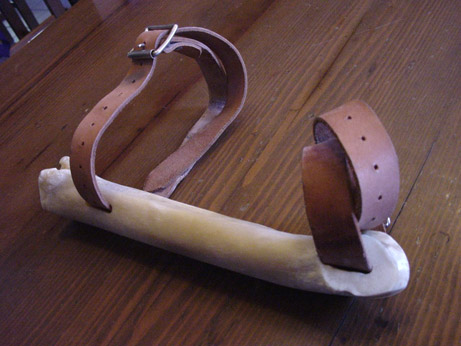
According to a study done by Federico Formenti, University of Oxford, and Alberto Minetti, University of Milan, Finns were the first to develop ice skates some 5,000 years ago from animal bones. This was important for the Finnish populations to save energy in harsh winter conditions when hunting in Finnish Lakeland. The first skate to use a metal blade was found in Scandinavia and was dated to 200 AD and was fitted with a thin strip of copper folded and attached to the underside of a leather shoe.
The world’s first recorded chemist is considered to be a woman named Tapputi, a perfume maker who was mentioned in a cuneiform tablet from the second millennium BC in Mesopotamia. She distilled flowers, oil, and calamus with other aromatics then filtered and put them back in the still several times. Recently, archaeologists have uncovered what are believed to be the world’s oldest perfumes in Pyrgos, Cyprus. The perfumes date back more than 4,000 years. The perfumes were discovered in an ancient perfumery. At least 60 stills, mixing bowls, funnels and perfume bottles were found in the 43,000-square-foot (4,000 m2) factory. Four of the perfumes have been re-created from residues found at the site.
The inhabitants of the Indus Valley Civilization (c. 3000–1500 BC, Mature period 2600–1900 BC) developed a sophisticated system of standardization, using weights and measures, evident by the excavations made at the Indus valley sites. This technical standardization enabled gauging devices to be effectively used in angular measurement and measurement for construction. Calibration was also found in measuring devices along with multiple subdivisions in case of some devices. Metrology has existed in some form or another since antiquity. The earliest forms of metrology were simply arbitrary standards set up by regional or local authorities, often based on practical measures such as the length of an arm. The earliest examples of these standardized measures are length, time, and weight.
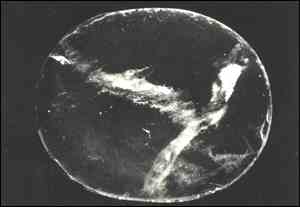
The Nimrud lens is a 3000 year old piece of rock crystal, which was unearthed by Austen Henry Layard at the Assyrian palace of Nimrud. It may have been used as a magnifying glass, or as a burning-glass to start fires by concentrating sunlight. Assyrian craftsmen made intricate engravings, and could have used such a lens in their work. Italian scientist Giovanni Pettinato of the University of Rome has proposed that the lens was used by the ancient Assyrians as part of a telescope; this would explain why the ancient Assyrians knew so much about astronomy.
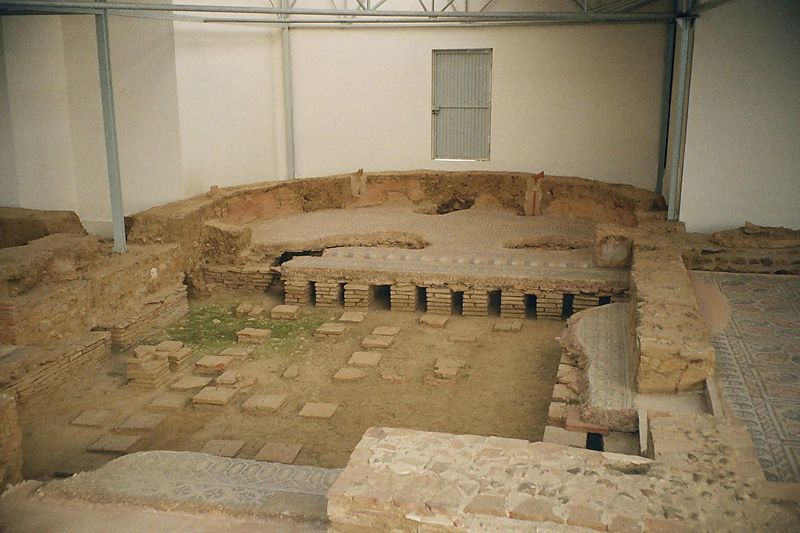
Cities in the northern Ancient Roman civilization used central heating systems from around 1,000 BC, conducting air heated by furnaces through empty spaces under the floors and out of pipes in the walls — a system known as a hypocaust. Hypocausts were used for heating public baths and private houses. The floor was raised above the ground by pillars, called pilae stacks, and spaces were left inside the walls so that hot air and smoke from the furnace (praefurnium) would pass through these enclosed areas and out of flues in the roof, thereby heating but not polluting the interior of the room. Ceramic box tiles were placed inside the walls to both remove the hot burned air, and also to heat the walls. A similar system of central heating was used in ancient Korea, where it is known as ondol. In the image above you can see the sections beneath the floor where the heated air would flow.
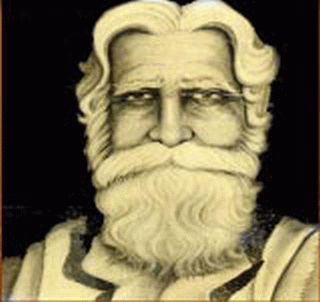
The earliest records of cataract surgery are from the Bible as well as early Hindu records. Cataract surgery was known to the Indian physician Sushruta (6th century BC – pictured above). In India, cataract surgery was performed with a special tool called the Jabamukhi Salaka, a curved needle used to loosen the lens and push the cataract out of the field of vision. The eye would later be soaked with warm butter and then bandaged. Though this method was successful, Susruta cautioned that cataract surgery should only be performed when absolutely necessary.
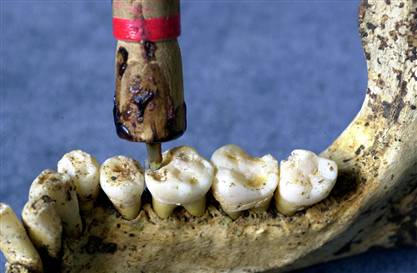
The Indus Valley Civilization has yielded evidence of dentistry being practiced as far back as 7000 BC. This earliest form of dentistry involved curing tooth related disorders with bow drills operated, perhaps, by skilled bead craftsmen. The reconstruction of this ancient form of dentistry showed that the methods used were reliable and effective. Cavities of 3.5 mm depth with concentric grooves indicate use of a drill tool. The age of the teeth has been estimated at 9000 years.
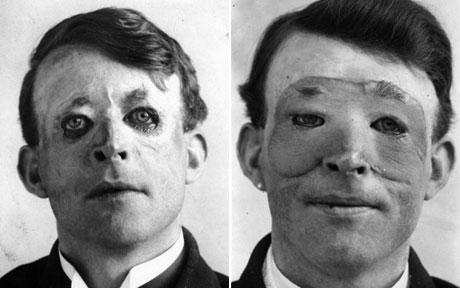
Plastic surgery is one of the oldest forms of surgery practiced. Nose-reconstruction operations were probably performed in ancient India as early as 2000 BC, when amputation of the nose was a form of punishment; the caste of potters eventually devised a method for rebuilding the nose by using a portion of the forehead, a technique still employed today. Some discussion of such surgery also appears in ancient Greek and Roman tracts. Pictured above is Walter Yeo, the first man to benefit from modern plastic surgery. The image on the right was taken after Yeo received a skin graft.
This article is licensed under the GFDL because it contains quotations from Wikipedia.
“Plastic Surgery,” Microsoft® Encarta® Online Encyclopedia 2008 © 1997-2008 Microsoft Corporation. All Rights Reserved.


hey pyschosurfer i think i’ll just stick to adult video much easier!!!!!!!!! dont u think so
The drill (and the thought of it being used) gives me goose bumps! I hate modern drills – I can’t imagine what those things were like! Pretty cool that they had them, though…
Nice list, JFrater. Alot of surprises I, too, would not want to have my teeth drilled by that guy. As far as the ice skates, I cannot stand on the modern ones, so I would have no hope of using the ones made of bone.
I suspect this topic could run and run. I myself am fascinated by the idea of ancient ‘batteries’ and technology that has been lost. Am I wrong in recalling that the ancient Egyptions had street lighting? Did they also have batteries made from barrels (and/or crystals). I suppose a keen researcher could dig up a lot from Egypt (pun). Randall, do you know any more?
@Randall (#58)
Well said, which, BTW, was kind of my point. Most of the items on the list have a proven function, it’s just that the function of the jars isn’t quite provable (at least that I’ve ever come across). I mean, really, it could have been included on the list as a battery, but a battery for what purpose? I know it won’t fit even into my giant Mag Light. ;P
And yes, you have a good point about wiki, as well. User generated encyclopedic content is somewhat hard to trust completely. I pointed out the scroll container idea because I had never heard that one before. I treat wiki like a super-concentrated internet – super-concentrated because it’s all on one main URL, and internet because, just like the internet on the whole, there’s no telling if the person who wrote the article even knows what they’re talking about. I’ll use it as a source, but… I assume that the reader assumes the same as I – that the source is “take it at your own risk”.
You also raise a good point about the Greeks. I hadn’t thought a lot about that, and I don’t even know who the Parthians were. I will have to admit, I am more of a trivialist that a historian. I knew immediately from the discription in comment #41 from Whoopee that he/she meant the Baghdad Battery, and what it is believed to have been used for, but I had to look it up on wiki to get the dates/alternate uses. I read a LOT of Uncle John’s Bathroom Reader, and pick up a lot of trivia (sitting in the john is about the only quiet a man can get in a house with a wife and three pre-pubescent daughters), and had read about the battery in that publication.
Anyway, I do tend to go off on a tangent an ramble for days, and this was originally meant to say “Good point, Randall.”
Lifeschool:
The stuff about the ancient Egyptians having “lighting” is based on a bas relief from…. the Temple of Hathor, I think it is (if I recall correctly) which shows a Pharoah or a god or other holding a sort of elongated object that looks a bit like an old vacuum tube. The supposition is that this is representative of some kind of electric lamp. But this is of course a wildly unsupportable notion. There’s not the slightest shred of evidence that I’m aware of that the ancients knew anything about electric lighting or how to harness electricty (the Baghdad Battery aside—which if truly a “battery” was probably another example of ancient Greek ingenuity in being able to recognize the ESSENCE of certain forces and facts of nature without understanding how they work in the slightest. And let’s face facts—there’s a HUGE leap from being able to generate a rudimentary–and very weak–electric current and being able to actually make a sustainable, efficient light. There’s a long gap from Volta to Edison, and there’s no reason to think the ancients managed it any better—and while it’s easy to believe that a mysterious little novelty like weak, primitive battery technology could be forgotten, it’s hard to believe that the secret to electric lighting, and *sustained current to support it,* once discovered, could be totally forgotten).
Not to knock the Egyptians—they were of course fantastic mathematicians and builders/engineers, no doubt. They were good at practical (but not theoretical) medicine. But they were hardly the most imaginative and inventive of peoples when it came to overall science. We have a hyper-inflated view of their capabilities because of course they managed such immense feats of architecture—but this doesn’t translate to a great understanding of the workings of nature and the universe. For that we would expect to go to the Greeks, but then THEY had the flaw of only delving into such matters in THEORY much of the time–and viewed practical applications of science as in some way unseemly.
And forget about Egyptian flight—those stories are based on misread hieroglyphs which, superimposed upon another, appear to show aircraft and even a UFO shape. Sorry, wrong. Just one hieroglyph imposed upon another.
On the other hand, did the ancients know stuff that was later forgotten? Sure, that appears to be the case. They weren’t stupid, our ancestors. They understood more than we realize probably, or at least they were aware of certain forces and aspects of nature which they could occasionally harness. “Understood” is probably too strong a word.
Unfortunately, however, there’s just little or no evidence to suggest that they were able to manage electricty on a grand scale—certainly not to the extent of making electric light possible.
MisterSir:
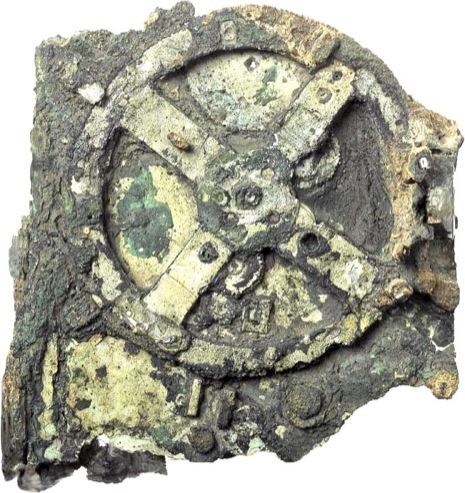
Right; the lack of a clear PURPOSE for the Baghdad Battery hints, to me, that it might be Greek in origin (thought it’s perfectly possible that some Parthian actually MADE it) because the Greeks are known for “toying” with science without actually delving more deeply into it to fully realize its applications. The famous Antikythera Mechanism, for instance, is a fantastic display of engineering ingenuity–here we have a working gear system–and a hugely complex one at that!—over a thousand years before it was “rediscovered” in the West. But what was the mechanism for? Well, it’s apparent that it was meant to predict and measure the movements of the planets and other heavenly bodies—but for what actual, practical purpose? Surely there may have been one, but not necessarily—and if there was, it needn’t have been terribly vital. Nor did the Greeks ever really exploit their gear technology knowledge for greater purposes, or combine it with their other technological abilities (such as their grasp of steam power) to make, say, such things as trains. They were content to play around with technology. The Battery fits in with this. It MAY have been for anodizing or electroplating small statues, yes—or it may just as easily have been a novelty for entertaining some royal personage…. to perhaps cause a tiny jolt of electricity to the skin or some such thing (some have theorized a medical application for this, but I’ve never read any solid support for this). Just as the Antikythera Mechanism MAY have been no more than a fancy, highly impressive “objet d’art” meant for some high muck-a-muck’s collection of novel toys. (Like the collection of novelty mechanisms owned by the Sultan in Alexander Korda’s “The Thief of Baghdad”). It’s hard to say.
The Parthians, by the way, were the tribe who succeeded to roughly the same original lands once ruled by the Persians (though without reaching westward into Anatolia, Egypt, the Levant and Europe). Of course they didn’t DIRECTLY succeed the Persians, who were defeated by the Greeks under Alexander the Great and were then ruled by them for some centuries. But the Partians basically came to rule what we today know as Iran and various surrounding territories. They were a source of nuisance to the Romans, who never managed to conquer them.
The Baghdad battery has been dated to a time when the Parthians ruled that region. But to my way of thinking, this doesn’t necessarily make it THEIR invention.
Item #2
My dentists have never left a drilled cavity empty, as the cure to the problem lies in filling the offending hole in the tooth.
Is there any evidence of applied fillings being used after the drilling out of cavities in these ancient surgeries?
Jackie (31): the Mail got it wrong, my descriptions are correct. You can see that on the Telegraph here.
sam-sam zingaling: Ondol is mentioned in the text of the central heating item
oouchan (38): that is amazing – where did that happen?
lo (46): If you check the link I posted to the telegraph you will see that it is correct here and wrong on the Mail.
For those of you wanting to see the Baghdad Battery here – it has been on an earlier list – hence its exclusion
okay, jamie, you’re right.
anyone who wants to see more pics/info for this case can look here
and here
70. jfrater: It was on the discovery channel about a tribe in the jungle (don’t know where for certain, but I got to say it was in Africa). They did trepanning…an ancient form of brain surgery. They scrape away the skin and use a rock to bash the skull and remove the bone fragments. Then they perform the surgery removing the damaged part of the brain with a sharpened rock. In almost all of the cases documented, the patient survives and is just fine after surgery. Most of them are awake during it as well (having not passed out) and there are no pain killers given.
Think of that the next time you stub your toe.
lo: thanks for those links!
oouchan: that is just terrible! I can’t believe they all survive!
#37. KDR – March 30th, 2009 at 6:48 am
Speaking of Assyrians, tomorrow (1st April) is the Assyrian new year… year 6759.
Happy Assyrian new year for everyone out there
—
Not sure what calendar you use but I think you may be wrong here…
I apologize, but i just dont see the Joke in list item 1. Would someone mind explaining it to me?
Yo maybe they shouldnt have invented plastic surgery. That looks disgusting
JB: I removed the joke because I felt it was in poor taste. Rather than repeat it I will just say that it was related to the batman and robin movies.
78: JFrater – Or the Green Hornet??
66: Randall – An absolute pleasure reading your reply today – very much an open, frank, and honest stream of thought.
Everybody seems to be in a nice mode of theory today, and I love it!
, makes a change from ‘I know this…and you know nothing..’ bla-de bla. Its moments like this that the LV comes alive with the buzz of pure insight.
74. jfrater: They do. I saw another more powerful video of it again on one of the those Faces of Death shows. It shows what Discovery didn’t. Wow! I still have nightmares from that. But I found it absolutely fascinating that they survived at all! Let alone, stayed awake during it!
oouchan: I could never manage to make myself watch those faces of death videos – bleurgh!
Lifeschool: naughty! We must be nice
79. Lifeschool: bwhahahaha! That was funny…(sorry jfrater!) I tried not to laugh but it was an epic fail!
#32 Paro: A dildo made of something edible like bread? That’s put some ideas in my head. Bad Shifty!
Excellent list today and wonderful informative comments.
I think that an entire list could be made about the Indus Valley Civilization. Fascinating and mysterious. Or maybe one about the Ancient Greeks? I do believe we have a wine list coming first, although I have been waiting quite a while for that one.
having looked up the green hornet I know understand the main gist of the joke…very humourous jFrater, even if in poor taste.
73. oouchan – “they did trepanning…an ancient form of brain surgery”
I don’t know of any African tribes but these surgeries were common in Pre-Columbian Mesoamerica. Oaxaca comes to mind but I think that’s more of a location than a tribe (I had to spend the bulk of my time simply learning to spell the words rather than learn about the cultures. I’ll admit Oaxaca was one of my favorite words to learn so that might not even have anything to do with the surgeries!). I was privileged enough to have gotten to handle a very realistic replica molded (or at the very least amazingly reproduced) from the skull of someone who had this surgery TWICE! I know it was a fake skull but it still gave me the heeby jeebies to poke my finger through these two empty spaces and feel the smoothed edge. One clarification (the squeamish need not read on) is that the skulls weren’t bashed in; I might have to double check but I think the scalp was cut away and then a rock was used to scrape away the bone bit by bit until they entered the cavity.
basically the whole world used to use trepanation, wiki has a good article and here’s one a bit more in depth:
http://scienceblogs.com/neurophilosophy/2008/01/an_illustrated_history_of_trep.php
but what’s really crazy is that there is still a movement to practice it as a form of new age spiritual enrichment, there’s a group at trepan.com dedicated to it. and it’s still used in parts of africa to treat otherwise incurable migraines.
if you’re not squeamish, you should really check out this modern, western body-modification enthusiast who did one on himself in 2000:
http://www.bmezine.com/news/people/A10101/trepan/
gabi319: I read about the trepanning after I saw the video. In the discovery version it was as you described but they told of the other version that “bashes” instead of “scraping”. The same people were filmed doing the ‘quicker?’ version, but Discovery didn’t use that. Faces of Death did. I have only seen 2 of the many films that Faces of Death has done and I didn’t see all of it. Very gruesome! Even though, it was very interesting to see. I was very amazed that hours later, the guy who had it done was walking around and showing off the hole in his head.
It does give a new outlook on pain and recovery…at least to me it does.
66. Randall – Lifeschool:
The stuff about the ancient Egyptians having “lighting” is based on a bas relief from…. the Temple of Hathor, I think it is (if I recall correctly) which shows a Pharoah or a god or other holding a sort of elongated object that looks a bit like an old vacuum tube.
You are correct, sir. It is commonly called the Dendera Lights from the Temple of Hathor. It does look reminiscent of gigantic lightbulbs and miniscule men but many of the Ancient Egyptian reliefs are symbolic rather than true representations of images and to understand the story, the entire relief must be considered rather than taking a bit from here or there. I’ll have to peer into my books again later (the internet fails me again. There are too many different sites saying too many different things) but I do remember the base of the “lightbulb” is actually a lotus flower and the “filament” within was a snake likening Hathor as a god being born in similar fashion to…here’s where my mind draws a blank but the story was essentially created to encourage the layman to believe their pharaoh was either chosen from or descended directly from the gods.
I’m delving deeper into art history in this list than in any of the art lists!
I feel smart… i knew everything on the list!
#75. andbehold – March 30th, 2009 at 2:29 pm
Not sure what calendar you use but I think you may be wrong here…
can’t be wrong buddy, we’ve been doing it for way too long to be wrong.
http://en.wikipedia.org/wiki/Kha_b-Nisan
Have to say, I never thought any of those were modern. Some nice factoids though. Keep up the good work.
Skates with animal bones as blades? Gotta give those Finns a plus one for creativity but a minus one for fail.
I am guessing, but I think he meant wrong as far as tomorrow being April 1st. However, for you tomorrow might be April 1st because of what area of the world you live in and your time zone. I could be wrong though.
Awesome list! I was expecting something about birth control methods of the ancients… I think they used things like crocodile dung- how did they ever figure that one out?! I was surprised to see plywood and ice skates… seems like they weren’t really much different than we are now… too bad they had to live without listverse!!
Plastic surgery!!!!
Here’s a fact for all of you non-chemists out there… The scientific name for lead is “plumbum”. Plumbum… Plumming… See the connection? Not to mention that plumbum is fun to say
It’s a great list, but I’ve known for many years NONE of these are modern. Probably taught some one else something though
nice to see Sushruta on the list.
So, he goes from looking like a zombie to looking like The Lone Ranger…
that picture of Yeo will come back in my nightmares me thinks! Those eyes are horrible!
Mom:
I have the suspicion you were tossing hints my way.
“I think that an entire list could be made about the Indus Valley Civilization.”
Perhaps, yes, but the Harappans were never my favorites. Clearly an advanced, inventive people… but by all accounts also somewhat dull and unimaginative–though they ARE very mysterious (largely because we’ve never been able to decipher their language). *HOWEVER* you’ve sparked an idea in my mind… how about a list on VERY ancient cultures? Hmmmmmmmmmm…. the Harappans… Dilmun… the Danube culture… the ancient finds in Turkey… the sites on Malta… ahhhh…. I’m getting an idea.
See, I’ve long wanted to do a list on ancient history and ancient civlizations… but I could never come up with an interesting ANGLE. I THINK you’ve just given me one. THANKS MOM! Can I have a popsicle now?
“Fascinating and mysterious. Or maybe one about the Ancient Greeks?”
Well as you know, the ancient Greeks are by far my personal faves. Being part Greek myself, I have a close affinity. But again—I could never come up with a good angle, though I’ve had some ideas here and there. I will ponder on this further.
(Frankly I’d feel indignant if anyone else did a list on the Greeks… but that’s just my ego).
“I do believe we have a wine list coming first, although I have been waiting quite a while for that one.”
THIS, of course, is why I thought you were addressing me. Yes, I was the one working on the wine list. And I have most of it done. But it became very LARGE and ungainly and I wasn’t sure how to cut it down. However, you’ve now shamed me into thinking about it again… so I will do so.
Randall: Good catch. And thank-you, I’m looking forward to it.
yeah, me too Randall.
Jamie: good call using a picture of the Antikythera mechanism.
Have you seen http://www.china.org.cn/english/scitech/131762.htm ???
Sweet stuff. Good list.
I knew most of these except for the cataract surgery and the central heating. The heating thing was really neat.
107. Mabel : You might be interested in another fascinating ancient factoid, too; the ancient Egyptians could make ice.
They couldn’t make a lot of it, and what they made was mostly used to air-condition bedrooms, which were located on the outside rims of the houses.
They’d place shallow trays of water in the door ways. The constant breeze would flow over the trays of water. Even though the temperature in Egypt and the temperature of the breeze is almost always high, whatever cold air there is flows downward. Over a period of 8 hours or so, as the cold air would produce a small amount of ice, the small amount of ice would, in turn, cool the air coming across it, thus making more ice. By morning, it might have made only a crust of ice on the tray, but the temperature in the bedroom would have dropped several degrees lower than the surrounding rooms.
Dont’t mean to lower the tone…..just saying.
Another ancient “necessity” that some folk today take for granted and many believe is a modern “invention” is of course, *****ography.
Sadly, we don’t get to see what tickled the fancy of our ancestors on visits to the museum. It’s locked away to protect us innocents; which is rather a shame if you are striving to completely understand ancient peoples and their customs.
Human sacrifice and cannibalism is ok but *****-toys, images and literature is a no-no!
ah, the sand of time covers and reveals. Lost and found. Like discovering grandma’s secret love letters. Or as Salvador Dali discussed the recipe as never written down, The Vermeer beyond the camera obscura.
If there is no thread connection, are we destined to twine it anyway? Like that God saying. blah
Documented discoveries have been known to occur simultaneously by different discoverers.blah
If something’s broke, you fix it.blah
or you toss it out and make something better.blah
the colective mind. blah
the invention of the tool.blah
lost continents
empire deaths
blah blah
YAWN nothing of any surprise here – next!
Was the legal system invented at the time of Walter Yeo. If yes, then he should have sued the crap out of his plastic surgeon!!
The refrigerator (technically freezer) was created by the ancient Persians. Called a “yakchal” Its design was igloo-ish. A noteworthy omission I’d say.
Wasn’t cataract surgery developed by Ibn Sina (Avicenna)? Oh, and I remember reading that the drainage systems of the Ottomon Empire were very practically laid out and about that time England was seized by the Black Death, a consequence of inefficient sanitation conditions….Random Fact!
wonderful article….these fascinating invention certainly paved the way for future research.. but not to forget a few trivial but wonderful inventions …The production of pottery can be considered one of the most important steps an early civilization can take..After the introduction of pottery into society, pottery is of the utmost importance to archaeology as it is very useful in dating and identifying sites…a strong proof to this statement is the Beveled-rim bowls, commonly found piece of pottery in the Uruk period and can be found all over Mesopotamia..the study of ancient Mesopotamia The materials of the bowls typically consisted of clay along with considerable amounts of other, cheaper materials such as pebbles, grit, or seed and plant remains …bravo! an amazing idea…for study of Ancient Mesopotamia culture visit http://en.oboulo.com/ancient-culture-study-the-pottery-of-ancient-mesopotamia-62086.html
lol i wasnt rly surprised at most of them, but when i got to #3 (i for some reason jumped to the conclusion that it was about plastic surgery :O) found out it was not plastic surgery (and then i sighed…) and then i saw #1. not very surprising i guess but it really made me open my eyes. big.
holy crap that guy in #1 looked scary…
you all *****in suck balls
Two things I would like to know if real or not were told to me by my dad who likes this sort of thing.
One was the automatic door. I can’t remember who did it but it was a simple stone that when stood on pulled a few ropes and opened the door. The second was the vending machine. It was used to give out a measured amount of holy water. When money was put it, it would act as a weight, opening the vessel of liquid. The coin when then drop off and the stopper would go back into the bottle.
this all sucks