It is well known that China has an ancient and glorious history, from the feudal periods ending in 222 BC through the three Imperial and Intermediate Eras, up to the Modern era – over 4000 years of dynastic reigns. It may also be well known that China is the source of many wonderful and useful inventions from spaghetti to gunpowder. This list, however, will take a slightly different slant of the topic: Chinese inventions and developments that were not known to or adopted by the Western (European) world for many decades and sometimes centuries after they were common place in China. Some you may be familiar with, others perhaps less so.
As this is not a ‘top 10’ type list, the entries are in a (mostly) chronological order of when they were invented or developed. Please note that these are inventions and technological developments and not discoveries about the natural world – though it is also true that in many cases the Chinese scientists far preceded ‘The West’ in discoveries as well (e.g. William Harvey is credited with discovering the circulation of blood in 1628. It was described in Chinese documents in the 2nd Century BC).
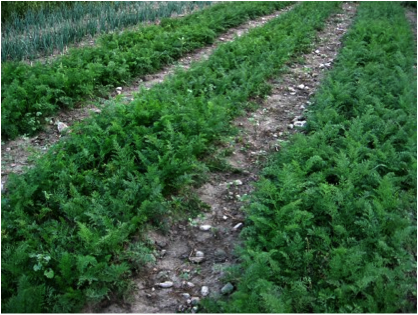
The Chinese started planting crops in rows sometime in the 6th century BC. This technique allows the crops to grow faster and stronger. It facilitates more efficient planting, watering, weeding and harvesting. There is also documentation that they realized that as the wind travels over rows of plants there is less damage. This obvious development was not instituted in the western world for another 2200 years. Master Lu wrote in the “Spring and Autumn Annals”: ‘If the crops are grown in rows they will mature rapidly because they will not interfere with each other’s growth. The horizontal rows must be well drawn, the vertical rows made with skill, for if the lines are straight the wind will pass gently through.’ This text was compiled around 240 BC.
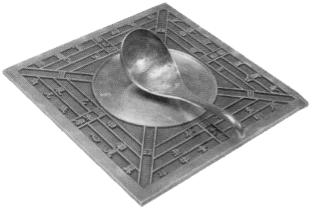
The Chinese developed a lodestone compass to indicate direction sometime in the 4th century BC. These compasses were south pointing and were primarily used on land as divination tools and direct finders. Written in the 4th Century BC, in the Book of the Devil Valley Master it is written: “lodestone makes iron come or it attracts it”. The spoons were made from lodestone, while the plates were of bronze. Thermo-remanence needles were being produced for mariners by the year 1040, with common use recorded by 1119. Thermo-remanence technology, still in use today, was ‘discovered’ by William Gilbert in about 1600.
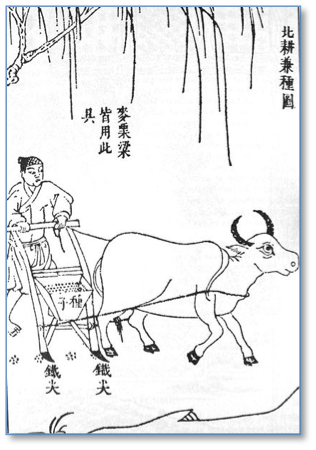
The Seed Drill is used to plant seeds into the soil at a uniform depth and covers it. Without this tool seeds are tossed by hand over the ground resulting in waste and inefficient, uneven growth. Chinese farmers were using seed drills as early as the 2nd Century BC. The first known European instance was a patent issued to Camillo Torello in 1566, but was not adopted by Europeans into general use until the mid 1800’s.
One of the major developments of the ancient Chinese agriculture was the use of the iron moldboard plows. Though probably first developed in the 4th century BC and promoted by the central government, they were popular and common by the Han Dynasty. (So I am using the more conservative date). A major invention was the adjustable strut which, by altering the distance of the blade and the beam, could precisely set the depth of the plow. This technology was not instituted into England and Holland until the 17th century, sparking an abundance of food which some experts say was a necessary prerequisite for the industrial revolution.
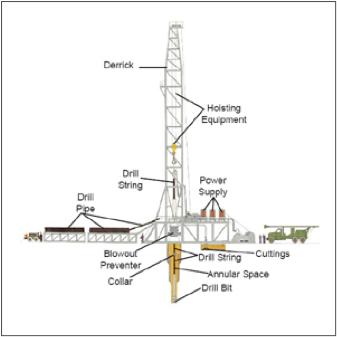
By the first century BC the Chinese had developed the technology for deep drilling boreholes. Some of these reached depths of 4800 feet (about 1.5 km). They used technology that would be easily recognizable to a modern engineer and lay person alike. Derricks would rise as much as 180 feet above the borehole. They stacked rocks with center holes (tube or doughnut shaped) from the surface to the deep stone layer as a guide for their drills (similar to today’s guide tubes). With hemp ropes and bamboo cables reaching deep into the ground, they employed cast iron drills to reach the natural gas they used as a fuel to evaporate water from brine to produce salt. The natural gas was carried via bamboo pipes to where it was needed. There is also some evidence that the gas was used for light. While I could not find exactly when deep drilling was first used by the Europeans, I did not find any evidence prior to the early industrial revolution (mid 18th century). In the United States, the first recorded deep drill was in West Virginia in the 1820’s.
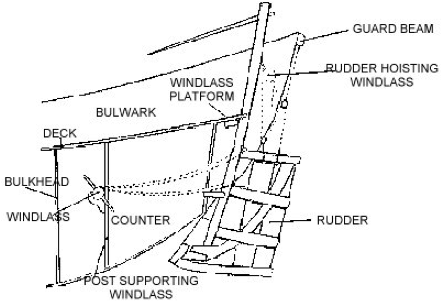
Chinese naval developments occurred far earlier than similar western technology. The first recorded use of rudder technology in the West was in 1180. Chinese pottery models of sophisticated slung axial rudders (enabling the rudder to be lifted in shallow waters) dating from the 1st century have been found. Early rudder technology (c 100 AD) also included the easier to use balanced rudder (where part of the blade was in front of the steering post), first adopted by England in 1843 – some 1700 years later. In another naval development, fenestrated rudders were common on Chinese ships by the 13th century which were not introduced to the west until 1901. Fenestration is the adding of holes to the rudder where it does not affect the steering, yet make the rudder easy to turn. This innovation finally enabled European torpedo boats to use their rudders while traveling at high speed (about 30 knots).

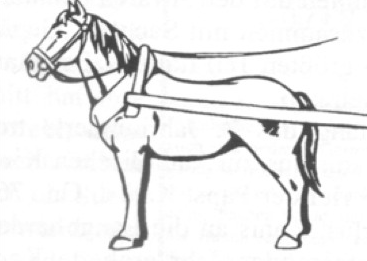
Throat harnesses have been used throughout the world to harness horses to carts and sleds. These harnesses press back on the neck of the horse thus limiting the full strength of the animal. In the late feudal period (4th Century BC) there is pictorial evidence (from the Chinese state of Chu) of a horse with a wooden chest yoke. By the late Han Dynasty the yoke was made from softer straps and was used throughout the country. By the 5Th century, the horse collar (pictured above), which allows the horse to push with its shoulders, was developed. This critical invention was introduced into Europe approximately by 970 and became widespread within 200 years. Because of the greater speed of horses over oxen, as well as greater endurance, agricultural output throughout Europe increased significantly.

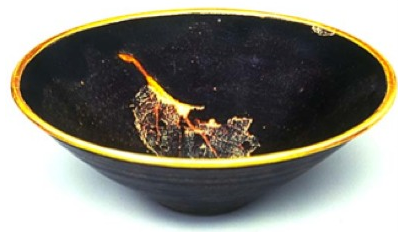
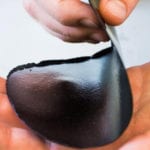
Porcelain is a very specific kind of ceramic produced by the extreme temperatures of a kiln. The materials fuse and form a glass and mineral compound known for its strength, translucence and beauty. Invented during the Sui Dynasty (but possibly earlier) and perfected during the Tang Dynasty (618-906), most notably by Tao-Yue (c. 608 – c. 676), Chinese porcelain was highly prized throughout the world. The porcelain of Tao-Yue used a ‘white clay’ that was found on the edge of the Yangtze River, where he lived. By the time of the Sung Dynasty (960-1279) the art of porcelain had reached its peak. In 1708 the German Physicist Tschirnhausen invented European porcelain, thus ending the Chinese monopoly. The picture above is a teabowl with black glaze and leaf pattern from the Southern Sung Dynasty (1127-1279).
As noted above, paper was an early invention of China. One of the first recorded accounts of using hygienic paper was during the Sui Dynasty in 589. In 851 an Arab traveler reported (with some amazement) that the Chinese used paper in place of water to cleanse themselves. By the late 1300’s, approximately 720,000 sheets per year was produced in packages of 1,000 to 10,000 sheets. In colonial times in America (late 1700’s) it was still common to use corn-cobs or leaves. Commercial toilet paper was not introduced until the 1857 and at least one early advertiser noted that their product was ‘splinter free’ – something quite far from today’s ‘ultra-soft’. One rather odd piece of trivia I picked up during my research is that the Romans used a sponge tied to the end of a stick – which may have been the origin of the expression “to grab the wrong end of the stick”.

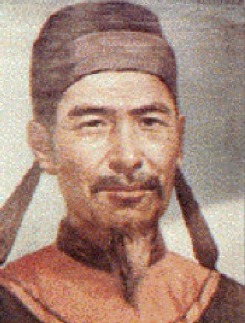
That paper was invented by the Chinese is well known (by Cai Lun c 50-121 AD), and it is one of the great Chinese inventions. The recipe for this paper still exists and can be followed by today’s artisans. In 868 the first printed book, using full page woodcuts, was produced. About 100 years later the innovations of Bi Sheng, pictured above, (990-1051) were described. Using clay fired characters he made re-usable type and developed typesetting techniques. Though used successfully to produce books, his technology was not perfected until 1298. By contrast, Gutenberg’s bibles – the first European book printed with movable type – were printed in the 1450’s. Interestingly, the Chinese did not start using metal type until the 1490’s.


I thought paper was invented by the Egyptians…anybody know the scoop on that?
Not to be gross or anything but a corncob would be the last thing on my mind for T.P.
Im like the baby bear on the commercial. #59 why so hard on Koreans. Kim-Chee is the best.
StevenH – given that I have a history degree specialising in Ancient History – Rome, Greece, Egyptian & Celtic; I can assure you without reference to the FREQUENTLY incorrect and more frequently insufficient Wikipedia that the harnessing of chariot horses by even the Hyksos was a great deal more complex than a simple “collar” as you call it. Even the rudimentary harnessing arrangements used by the Celts were more elaborate than you suggest – theiur harnessing was complex enough and firm enough that they were able to run up and down the ‘ridge-pole’ while their horses were at full gallop – something they could NOT have done using a simple ‘collar-harness’.
Face it – your list was incorrect on this one and Gunpowder has probably had as muchy bearing on modern history as Movable type – which was a Korean invention and not a Chinese one (though one could argue that they are culturally connected).
61. studizzle-
i think the egyptian paper was papyrus, made from the beaten fibers of reeds. the chinese version was more like the paper we know today. both should count as “paper,” not sure which was earlier.
oouchan- are you saying that your kids won’t eat a wok-stir-fried veggie because they’ve seen the same wok cook up asian dishes they dislike?
lo: Actually she won’t eat a veggie at all unless it’s stir-fried in the wok. I have tried everything. You see, she is a Asian fangirl. Loves everything Japanese and Chinese. Her room is decorated with everything asian. (I agree since I like all that stuff too!) Before I got the wok, I had to bribe or threaten her to eat a vegtable. But the moment I got the wok and a Japanese/Chinese cookbook, then she can’t get enough!
Today she tried bamboo shoots.She didn’t want to, but I told her pandas eat the same thing everyday…just like the one I had on a fork for her to try…she fell for it. Now she likes them.
oouchan-
i’m so happy you’ve found a way to interest your daughter in veggies.
i’ve always thought the phenomenon of “picky eaters” (which i know comes close to being a life-altering issue for some people) was hard to understand.
i think that if kids are presented many foods -and cultural types of food- right from the beginning of solids, without being taught that any are “bad,” becoming a “picky eater” is almost impossible.
i guess it’s just hard for me to grasp, as i was raised an “adventurous” eater (with fresh garden herbs and veg as long as i can remember), and have just watched my now 6-year-old god-daughter do the same -and she gobbled everything from sushi to duck confit to vegan spicy indian-inspired dishes as soon as she could safely chew them (well, her dad is a professional chef). i’ve always delighted in getting to try something i’ve never had before, or something “odd” from another culinary tradition (i admit that the latter may be part of a desire to tell “and i ate ….. too!” stories, but it’s mostly genuine curiosity.)
so wok on, my friend
i think a lot of people “decide” to hate foods without giving them a real chance. as you found out, sometimes the presentation and cultural implications are far more important than the taste!
I was a picky eater as a kid/teen but I like pretty much all food now. So there is hope for picky eaters, people can change.
shifty, mad props to you!
i mean that in all sincerity
i had a few friends in high school who could have been case studies in “picky eating.” they were mostly from homes where nobody had ever really cooked.
i can understand thinking sushi or exotic veggies were scary when they’d been raised on restaurant/take-out, canned food, lunch-meat on white bread sandwiches, pizza, and a few frozen/microwavable meals (my friends dawn and jennie were exactly like that -both were also very thin, if not that well nourished, and saw food as a boring thing needed to survive, not a taste experience. i tried hard to convert them to new foods!)
seriously, i think overcoming the “picky eater syndrome” requires a not insignificant amount of courage and willingness to risk new (and thus potentially unpleasant) experiences. again, congratulations
65. oouchan : OH MY GOD! I LOVE BAMBOO SHOOTS! Can I come to your house, pretty please?
I’m pretty sure that the “guaranteed splinter free” thing was just good marketing. Let’s put it this way, there you are at the local dry goods store looking at the shelf of toilet paper and one of them says “splinter free” do you dare pick up anything else?
mexecution: Origami originates from Japan…
70. Ronsonic- i think we’re all in agreement on this point:)
hence my “very first US commercial toilet paper ‘guaranteed 100% free of splinters!’ wasn’t marketed until 1935 by northern tissue!”
and stevenh, this list’s creator, noted: “-I could not find absolute evidence that the competitive products had splinters. Remember that the ‘truth in advertising’ laws were not what they are today…”
so, yeah, even if the competition was “100% splinter free” to start with, they lost out in the advertising game.
but this doesn’t mean other TP manufacturers truly had a “soft ‘n silky” product.
about all that TP, maybe we’ll never know!
but i can say that smooth river stones, and equally smooth sticks (used with “the long way” being the business surface) do work. and certain soft pine-cones may be employed, dependent on the local trees and local cone-softening weather…..
i learned this while doing a “leave no trace” outward-bound backpacking trip at 16 (after that i did 2 more). if you pack in fresh TP you pack out used TP, so you learn to live without it….
all that said, TP is a super-wonderful invention!
lo: I take it you have had no further problems connecting?
oouchan
Re: vegetables, wok, stir-fry
What is with you and turning EVERY comment board into a cooking blog?
Nice list! Everyone knows China was the most continuous intellectual and political centre of the world until its lapse during the European expansion. xD
And so it returns.
66. lo: Thanks for that! I totally agree, by the way! She used to eat anything I put before her right up to age 4. Then she goes to pre-school and the other kids teach her it’s bad. I really don’t know why parents allow that. Fabulous.
It will take several years of me fighting with her after that to get her to eat just a few veggies with dinner! There were many times she went without food because she didn’t want to eat what I put before her. I am happy though that I now can get veggies in.
69. Mark: Anytime! I make the best Chinese food ever! I have impressed some asian friends of mine with it! That’s hard to do.
75. gabi319: I like to eat! If you saw my picture, you would know that.
I am the product of my own culinary skills. (basically I’m fat!…mwahahaha!)
77: oochan – being ‘fat’ is only an issue in some parts of the world; in others it’s a sign of health!
Good list stevenh – and thought provoking too. So glad Mr. Graves got his wish of more Eastern themed lists; are you from the ‘East’ yourself stevenh?
On the subject of picky eaters, I was always brought up to eat anything – and coming from Lanashire, I do mean EVERYTHING! Liver and onions, hot pot, tripe! We couldn’t afford fast food so it was never a problem. Today, things have changed for me. Now, even though I can and will eat anything, I look at the quality of produce in the stores and can bring myself to stomach it. I know what goes into a chicken kiev, fish fingers, pies, cans filled with additives – I just can’t do it. I had a pizza the other day, and they’d put donnar meat and ‘fake’ plasticy cheese on it – eerrrgh
Processed foods suck.
78. Lifeschool: I agree with that. Processed foods do suck. I have always tried to be healthy…however, I have diverticulitis and I am allergic to synthetic sugar and splenda. I swell up like a balloon if I have that stuff! I was also brought up to eat what was put in front of you and I want my kid to eat the same way. It’s starting to work.
My guilty pleasure is bread. If I could cut that out, I would drop half my weight. My whole family is like that!
53. General Tits Von Chodehoffen:
There had been, previously, an extra comment of extreme distaste in the 27 – 29 grouping, which I commented on. Jamie, or one of the admin’s, deleted that comment, leaving my comment in post #29 position.
Now, anyone with an ounce of logic and sense would have figured that one out for themselves, but you aren’t just anyone.
what? no gunpowder?
80 segue- Well maybe if you had an ounce of logic you would have realized that they would have been deleted leaving my comment, pointing out something hilarious, under your scrutiny. In closing STFU you overgrown dingleberry.
79. oouchan
Drop bread?
Easy, just replace it with pasta, potatoes, corn, etc.
(just kidding – speaking as a carb fiend)
83. TEX: hahaha! I would…but pasta is just as bad.
(It doesn’t stop me from eating it though!)
They invented silk also. They didn’t technically invent it but they were the first to weave it into fabric.
Oh and dont forget Kung Fu!!!
jfrater-
yes, no more dropped connections. thanks for whatever you fixed
Hey – There’s a food topic for ya. Didn’t the Chinese invent pasta of some form??
Didn’t they invent pizza?
Whoever invented pizza has my un dieing love.
So I cain`t spell.Sue me.
What about Traditional Chinese Medicine and Acupuncture? The Chinese were the first to write down medical complications to be treated with herbs and needles and still in use today!
Great list stevenh, keep it going! Nice work on “wrong end of the stick”!
Great list! But with #70 I think the “splinter free” bit simply exemplifies the commercial hype of the day, in the US. An equivalent hype in the same period was one of the companies using albacore as tuna, and saying “Guaranteed not to turn pink in the can!”
=Eric
They may or may not be Chinese inventions. The most you can say is the Chinese were the first to write down these ideas and have the record survive to the present day.
My favorite inventions by the Chinks are fried rice and sweet and sour chicken, the Far East ***** Parlor and of course chinese checkers.
Wow…..Guess I haven’t been appreciating toilet paper as much as I should have. Speaking of which………
90. bigski
You and I are truly copasetic. I have always held that pizza is proof for the existence of god (or whoever), that and the female form.
– many happy endings to all
I hear ya.
Wow, thanks for putting together this list. As a student of western Art History and History I was unaware of many of these things.
Naku po! Ang tindi ng mga Chinoy – The Good Government
P.S. Hinding hindi kami TITIKLOP
What a great list
63. Shagrat you know I was wondering what people did with all their used “corn cobs” after “wiping” apparently you gather them and stick them up your ass! What a loser!
102. Beth29-
you think that someone having a real-world expertise in ancient eastern studies means they have a stick/corn-cob up their ass?
yeah, the comment was pretentious, but it did have some good info in it. let’s not all be calling each other “losers” unless we can back it up, hmmm?
Excellent list!
And yeah, the omission of gunpowder is quite a surprise..
(“spaghetti”?!.. not from Italy???)
Wow!! Smart bunch of people …:)
@Whatever
Umbrella was invented in ancient India. To protect from sun.
amazingly interesting and informative list..didn know about the toiletpaper always thought of it as a western concept
nice going with the toilet paper… its really nice too have….
Christina Boyle is good girl
It was the Han dynasty: an inventor who made the first earthquake machine two thousand yrs ago, also the water wheel, interlocking gears, clocks and astronomical waterworks, gunpowder, cannons, clockwork puppets etc.etc.
Great lists!! I’ve become addicted!!
An interesting list however the author should be aware that many of these inventions are unlikely to be Chinese. Spaghetti was a Moorish invention based on Roman linguini. The compass is middle eastern in origin. Though they had useful farming implements the tool you have described as a seed drill could never have functioned as such. It’s notoriously difficult to trace inventions prior to about 700 years ago but the evidence given for many of these artifacts comes from flimsy evidence such as a vague line of text or an unclear picture. For example, the Chinese claim to have invented football as there is an image of what looks like a ball possibly being kicked by a person in formal dress robes. Hmmmm. Row planting and rudders probably pre-date Chinese civilization and were likely brought from Indus valley civilizations. The iron plough is likely to be Chinese because metallurgy developed far earlier in the far east. I am no chemist but a chemistry article I read said that iron in the far east contains far more oxide which allows for a far lower melting temperature than usual. Hence the importance of bronze and iron age. There seems to be a drive to portray the Chinese as great inventors but there just isn’t much evidence and I very much doubt if it was ever so.
to the william g. The mp3 player was invented by a British guy called Kane Kramer in 1979. It was far too early, before the technology had caught up so he couldn’t sell his idea. He kept the patent hoping to make a killing and stopping anyone else developing it but in the 1990′s Korean companies who don’t much care for patents started producing their own version. This is the basis for their ‘claim’. Kramer realizing he could never compete let the patent slip so that the big companies could have a chance. Which is why the big companies where so slow in picking up on the mp3 players.
to Doc Roc – Diderot did not ‘invent’ the encyclopedia. The idea has been around for ages, probably since before recorded history. The Roman Pliny the Elder wrote one. However, Diderot’s encyclopedia was vastly superior to anything that went before for he is often ‘honoured’ with title of inventor of the encyclopedia. The same is true of Samuel Johnson’s dictionary. It wasn’t the first but it was revolutionary.
To Shagrat – I can’t comment on the Celtic harnesses for horses it does seem that this invention, like many others, was invented in several different places independently. Necessity being the mother of invention. The Celtic race were outstandingly inventive. As for movable type, that is definitely a Chinese invention. The Koreans improved it by using metal movable type whereas the Chinese only used wood. A small but important improvement. Movable type and gunpowder are two lesser know Chinese inventions because they were of little use to the Chinese. There wasn’t the demand for literature that was created by the reformation in Europe; gunpowder was mostly useless until key improvements were made by the French in the hundred years war that allowed it to be used against armies not just fortifications.
P.S. Don’t shag rats. They carry diseases.
wwwwwwwww
last name
“The Chinese instituted civil-service exams in 154 BCE.”
Wow. That’s the best you can do when a guy points out the millennian history of Chinese subjugation?
Perhaps it’s time for someone to make a list of the top-ten most despotic Chinese emperors.
Huray for Chinese ingenuity! Unfortunately, the current state of Chinese toilet paper sadly lags behind the softness of US toilet paper. The stuff you find even in people’s homes is dismally inadequate…
And fireworks! Don’t forget fireworks!
toilet paper??? Yuck, switch to water