Mankind has the honor of quite possibly being the most destructive force to ever hit mother nature. This list looks at some of the more recent, probably lesser known extinctions that humans have lent a helping hand to. Whether by over hunting or over population, driving a species to extinction is nothing to be proud of and it’s certainly not slowing down.
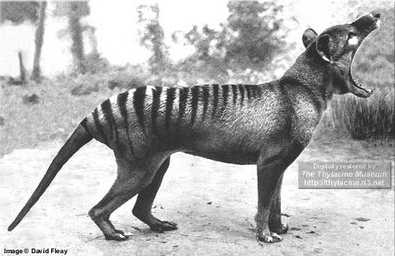
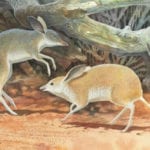
Commonly known as the Tasmanian Tiger, the Thylacine was the largest known carnivorous marsupial of modern times. Virtually wiped out in the wild due to constant hunting (they were thought to be a threat to sheep and other small farm animals) and the encroachment of humans on their already limited habitat the Thylacine was finally recognized as being in danger of becoming extinct in 1936, too little, too late as that same year the last Thylacine, named Benjamin, died on 7 September as the result of neglect — locked out of its sheltered sleeping quarters and exposed to freezing temperatures at night in Hobart Zoo, Tasmania. 60 years on there are still claims of sightings but all are yet to be confirmed.
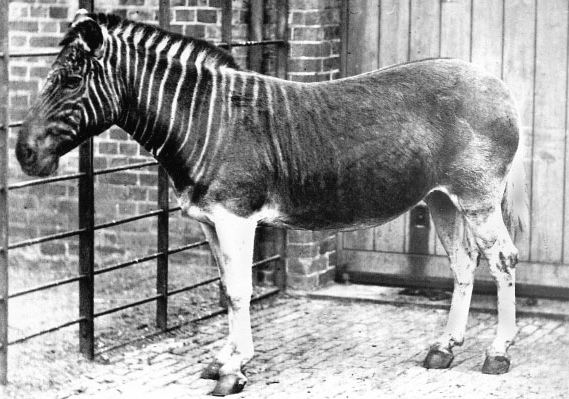
The Quagga was a southern subspecies of the Plains Zebra. It differed from other zebras mainly in having stripes on the head, neck, and front portion of its body only, and having brownish, rather than white, on its upper parts. The last free Quaggas may have been caught in 1870. The last captive Quagga, a mare, died on 12 August 1883 in Amsterdam Zoo, where she had lived since 9 May 1867. It was not realized that this Quagga mare was the very last of her kind. Because of the confusion caused by the indiscriminate use of the term “Quagga” for any zebra, the true Quagga was hunted to extinction without this being realized until many years later. The Quagga became extinct because it was ruthlessly hunted down for meat and leather by South African farmers, also they were seen by the settlers as competitors, like other wild grass eating animals, for their livestock, mainly sheep and goats.
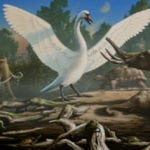
The story of the Passenger Pigeon is one of the most tragic extinction stories in modern times. As recently as around 200 years ago they weren’t anywhere near extinction. In fact, they were actually the most common bird in North America, and some reports counted single flocks numbering in the billions. Pigeon meat was commercialized and recognized as cheap food, especially for slaves and the poor, which led to a hunting campaign on a massive scale. Furthermore, due to the large size of their flocks, the birds were seen as a threat to farmers. The last Passenger Pigeon, named Martha, died alone at the Cincinnati Zoo at about 1:00 pm on September 1, 1914.
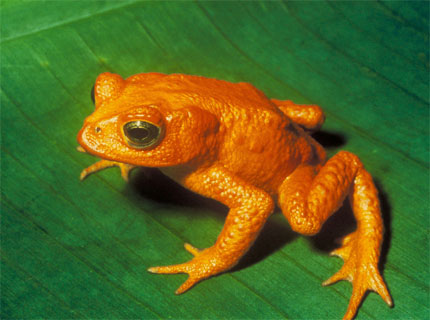
The first record of the Golden Toad was by herpetologist Jay Savage in 1966. The toad, recognized by its brilliant golden orange color, was native to the tropical cloud forests which surround Monteverde, Costa Rica. None have been seen since 1989. It last bred in normal numbers in 1987, and its breeding sites were well known. In 1987, due to erratic weather, the pools dried up before the larva had matured. Out of potential 30,000 toads, only 29 had survived. In 1988, only eight males and two females could be located. In 1989, a single male was found, this was the last record of the species. Extensive searches since this time have failed to produce any more records of the golden toad.
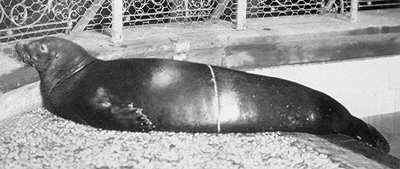
The Caribbean Monk Seal was the only known seal which was native to the Caribbean Sea and the Gulf of Mexico. It is also the only species of seal to go extinct directly due to human causes. The Caribbean monk seal was the first New World mammal to be discovered by Columbus and his company on the coast of Santo Domingo in 1494. It appears in the account of Columbus’ second voyage to America. Columbus promptly ordered his crew to kill eight of the animals, which he called “sea-wolves”, for food, paving the way for exploitation of the species by European immigrants who came in his wake. Since then, the once abundant seals have been hunted for their oil and slaughtered by fishermen, who regarded the animals as competitors. It was officially declared extinct just last year, on June 6th, 2008, although the last recorded account of the species was made at Serranilla Bank between Honduras and Jamaica in 1952. Like other true seals, the Caribbean Monk Seal was sluggish on land. This, along with its lack of fear for man, unaggressive and curious behavior, as well as human hunting, and early habitat exclusion by humans throughout their range may have dramatically speed up their decline and likely contributed to its demise.
The Pyrenean Ibex has one of the more interesting stories among extinct animals, since it was the first species to ever be brought back into existence via cloning, only to go extinct again just seven minutes after being born due to lung failure. The Pyrenean Ibex was native to the Pyrenees, a mountain range in Andorra, France and Spain. The Pyrenean ibex was still abundant in the fourteenth century (Day 1981). The Pyrenean ibex’s population declined due to a “slow but continuous persecution” and disappeared from the French Pyrenees and the eastern Cantabrian mountain range by the mid-nineteenth century. Its situation has been critical since the beginning of the 20th century, when it was estimated that the Pyrenean population in Spain numbered only about 100 individuals. Since the beginning of the 20th century, the population never rose above 40 individuals. In 1981, the population was reported to be 30. At the end of the 1980′s the population size was estimated at 6-14 individuals. The last naturally born Pyrenean Ibex, named Celia, died on January 6th, 2000, after being found dead under a fallen tree at the age of 13. That animal’s only companion had died just a year earlier due to old age.
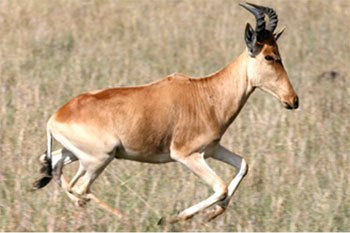
Although it once roamed throughout Northern Africa and the Middle East, the deep-rooted mythology (once domesticated by the ancient Egyptians as a food source and for sacrificial purposes) which surrounded the animal was not enough to save it from European hunters who began hunting them for recreation and meat. People who resided in Morocco shot these animals for fun, and for hunting, which wiped large herds of them out. Many Hartebeests were captured and were kept alive (e.g. in the London Zoo from 1883 to 1907), but they eventually died out. The last Bubal Hartebeest was probably a female which died in the Paris Zoo in 1923.
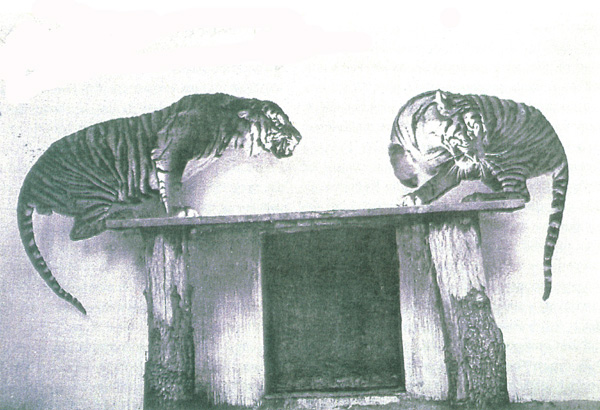
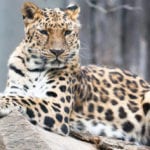
Javan Tigers were a subspecies of tigers which were limited to the Indonesian island of Java. In the early 19th century Javan tigers were so common, that in some areas they were considered nothing more than pests. As the human population increased, large parts of the island were cultivated, leading to a severe reduction of their natural habitat. Wherever man moved in, the Javan tigers were ruthlessly hunted down or poisoned. Natives carried much of the hunting out, a surprising thing since they considered the tiger a reincarnation of their dead relatives. The last specimen to have been seen was sighted in 1972, although there is evidence from track counts that the animal had lingered into the 1980’s. The last track counts to yield evidence of the tigers was held in 1979, when just three tigers were identified. The leading cause of their extinction was agricultural encroachment and habitat loss, which continues to be a serious concern in Java.
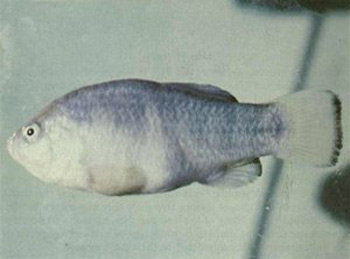
The Tecopa Pupfish was native in the Mojave Desert, in Inyo County, California, United States of America. This fish subspecies was originally found only in the outflows of North and South Tecopa Hot Springs. It was first described by Robert Rush Miller in 1948. Its decline began in the early 1940s when the northern and the southern spring which were about 10 yards apart were made into canals and bathhouses were build. The popularity of Tecopa Hot Springs in the 1950s and 1960s led to the building of hotels and trailer parks in that area. By 1981 the Tecopa Pupfish was officially delisted by the United States Fish and Wildlife Service and it became the first animal which was officially declared extinct according to the provisions of the Endangered Species Act of 1973.
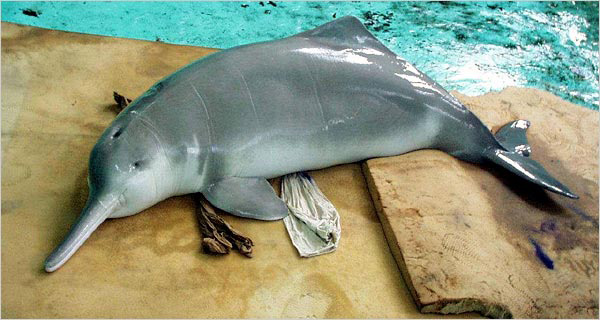
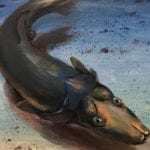
The Baiji population declined drastically in recent decades as China industrialized and made heavy use of the river for fishing, transportation, and hydroelectricity. As China developed economically, pressure on the river dolphin grew significantly. Industrial and residential waste flowed into the Yangtze. The riverbed was dredged and reinforced with concrete in many locations. Ship traffic multiplied, boats grew in size, and fishermen employed wider and more lethal nets. Noise pollution caused the nearly blind animal to collide with propellers. In the 1970s and 1980s, an estimated half of Baiji deaths were attributed to entanglement in fishing gear. Only a few hundred were left by 1970. Then the number dropped down to 400 by the 1980s and then to 13 in 1997 when a full-fledged search was conducted. The dolphin was declared functionally extinct after an expedition late in 2006 failed to record a single individual after an extensive search of the animal’s entire range.


I love how when a list is published on this site that focuses on a controversial subject, the diehard activist comes out in the hearts of commentators.
For this list it’s the environmentalists and ecologists, for the misconceptions about Islam list it was anti-Islam supporters, so on and so forth.
All in all an informative list though. Some parts seemed heavily biased (“ruthlessly hunted down for meat and leather?” hmm….) but otherwise its pretty good. For the record, personally I don’t feel affected at all by those animals being extinct, but I appreciate the research you did on them.
I like how the list says that Tazmanian Tigers “were THOUGHT [emphasis mine] to be a threat to sheep and other small farm animals.” OF COURSE THEY WERE A THREAT! THEY WERE CARNIVORES, THEY ATE OTHER ANIMALS!
That is just trying to illicit more (and false) sympathy for a case that deserves sympathy already.
Although I really have no sympathy for the Pupfish or the passenger pigeon (as these have roles filled by other animals also) I cannot begin to tell you how bad it is for apex predators and prey (like the Javan Tiger, the Baji dolphin, the Quagga and the Hartebeest) to go extinct. That changes the entire ecosystem.
Now, two of the animals on here are pretty much just losers at life. Namely the Golden Toad and the Pyrenean Ibex. These species couldn’t survive cuz they would not breed. Not our fault or problem. A slow persecution means the animal should EASILY be able to outbreed us killing it. Otherwise, it wouldn’t be slow. Hell, white-tailed deer are persecuted more here in America and look how numerous they are!
Pandas are following in their footsteps and slowly going extinct even though we are actively trying to keep them alive. What are you supposed to do when an animal won’t have *****? But when the panda dies, humans will of course be to blame.
The only one I have a REAL problem with is the Baji river dolphin. This article only mentions pollution, as if human advancement just killed the dolphin off all by itself. Now, the link between environmental extremism and socialism/communism is well known, which is possible why did doesn’t mention a touchy little subject. The subject this article DOESN’T mention is the great role that communism played in the dolphin’s extinction.
See, when the commies took over in China and started “The Great Leap Forward,” they decided to tell everybody that it was their DUTY to hunt the baji dolphin. Why? The dolphin was traditionally the symbol for prosperity in China, but communism CAN’T abide by tradition. Why, tradition is what created the difference between the bourgeoisie and the proletariat!! You must kill off tradition and let communism be the only symbol of future prosperity!!! YAY COMMUNISM!!!
Now this article ONLY mentions industrialization (i.e. the thing that has led to a better life for millions and millions of chinese) and not communism (i.e. the thing that has KILLED millions and millions of chinese and continues oppressing them to this day). Why? Draw your own conclusions.
For the sake of those who can’t see the true implications of this list, could someone please detail the impact that the loss of these species will have on the future of the planet. Please give a brief summary about how human lives will be lost, economies will be destroyed, the future of human civilization will be threatened, forward scientific progress will cease, or how the quality of life for humans (or other animals) will be diminished (overly-sensitive tweens crying while watching ‘Animal Planet’ don’t count).
In fact, as an example, showing how the world will be changed by the loss of the Tecopa Pupfish would be a good start. Please use verifiable data to show how many lives lost, banks closed, etc.
@MikeB (121): Please give a brief summary about how human lives will be lost, economies will be destroyed, the future of human civilization will be threatened, forward scientific progress will cease, or how the quality of life for humans (or other animals) will be diminished… showing how the world will be changed by the loss of the Tecopa Pupfish would be a good start.
For starters, read sof’s post 107. IMO the intent of the list is to get us thinking about the bigger picture, not to bemoan the loss of any particular seemingly insignificant species listed here. Take your blinders off. The point is – where does our unabated pillaging of the environment stop?
This is my very first list and I am quite new to this site, about 2 weeks or so. To all those copying links of similar lists into the comments, quietly accusing me of copying them, could it be that we all got our information from the same source? I used Wiki, the ICUN website and a couple of other bits and pieces that came up when I googled the animals name. Oh and I’m not a activist, I’m just truly saddened by the whole affair!
@85 & 86, I agree with you 2. This list is almost word for word from the other website.
“The last Passenger Pigeon, named Martha, died alone at the Cincinnati Zoo at about 1:00 pm on September 1, 1914.”
This sounds like it should be the last line in an epic novel detailing this lonely pigeon’s long and dramatic life..which could then be made into a movie called “Fly Home, Martha” starring Barbara Streisand
This is so sad..when will humanity learn?
It’s not actually sad. For all we know they could of evolved.
Thylacine is something I’ve never heard of before. I guess I’ll never see one now either, they look really cool.
I feel very sad for the river dolphins.
D: Didn’t know Tasmanian Tigers were extinct..
Used to be my favorite animal..
Most Douglas Adams fans don’t realize that he wrote a book in 1990 with Mark Carwardine called “Last Chance to See”. The book chronicles his travels to learn about several endangered species. One chapter tells of his visit to China in 1988 to learn about the baiji dolphin.
Adams reports in his book that while local fishermen always knew of the dolphin, science didn’t ‘discover’ it until 1914. It had always been a rather small species but noise pollution and changes in river traffic had rapidly decimated their numbers. However, no one realized just how dire their predicament was until 1984. Fairly quickly the Tongling Bajiji Conservation Committee was established. They worked to build a semi-nauture reserve by blocking off a channel in a bend of the Yangtze. To pay for the construction, a dolphin hospital, holding pools and a fish farm to feed the dolphins, funding came from the central and local governments. Also, the committee got into PR and began entering into licensing agreements to increase revenue and publicity. They had Baiji Beer, the Baiji Hotel, Baiji shoes, Baiji cola, Baiji computerized weighing scales, Baiji toilet paper, Baiji phosphorus fertiliser and Baiji Bentonite.
In 1988 there were only 200 of the dolphins left.
Bjart:
The swine flu? REALLY???
Read the news please…more people die from the “normal” flu every year than every case of swine flu.
*rolls eyes*
This list is aweful. We as people should be able to stop the extinction of animals. Withh all the supposeable technology we have and we still cant stop. The wrost part about this whole list is with most of these we caused the extinction. Is it really that hard to stop killing animals that are almost extinct. Is it really?
i just dont understand why people get so interested in protecting animals when there are only a few left when they should always try to protect them.
this is so sad
It seems to me it would be a good idea to keep a database of DNA for all endangered specis in case further developments in DNA and cloning allow for the resuragence of these animals, we could be able to repopulate the Earth with these specis, wouldn’t that be something.
I never all of these animals before…
What a loss to us human, now we never have a chance to see these animals again!
^
^Agree with you…Now that would be something positive..for science to focus on…
@erikasoup (118): On your keyboard to the left, third key up from the bottom, is a key marked, “Caps Lock.” When it’s pressed you ussually get a small indicator light to go on. That’s on your right at the top under the letter “A.” if you could go ahead and press it again you can write words in lower case. Give it a try!
(I know, I know I’m going straight to hell – so sorry!)
Education is the only thing that will prevent these horrible things from happening. As long as there are uninformed people in the world and there is a profit to be made, animals will continue becoming extinct.
Wow – interesting list. terrible scenarios that these creatures suffered. Extinction can be a completely normal/natural thing but in too many of these cases, their deaths were aided and a direct result of human interaction and destruction.
I have been reading about extinct of animals a few months ago and it’s amazing how many species go extinct everyday. We are currently living in a mass extinction started about 10,000 years ago that is currently on-going.
This can also be the greatest extinction in history.
http://en.wikipedia.org/wiki/Holocene_extinction_event
I think this is a very educational list. But why is there a modern day color photo of a “Bubal Hartebeest” if it died out in 1923? Is it a photo of a similar animal?
Damn us humanoids!
Freshies (#140), you are so correct regarding the necessity of education. Not only is it important to make people aware of potential species extinctions, but perhaps more fundamentally, we need to start a massive educational campaign regarding evolutionary theory (and I use that word–theory–to describe scientific fact, NOT as an attempt to discredit Darwin, as some mouth-breathing creationist would). It’s obvious from a disturbingly large number of comments on this list that there are some people who have only the vaguest idea of what the mind-blowingly intricuate, complex process of evolution entails. Their cavalier misuse of terms such as “survival of the fittest” and “natural selection” only serves to underscore their complete bafflement as to what these phrases actually mean in practice. (For more intrepid, educable souls, the earlier works of Richard Dawkins and/or Stephen Jay Gould would be a great starting place.)
For the sake of argument, I will concede that there may be some validity in a few of the comments, wherein the poster has stated something akin to, “So what if a particular kind of fish dies out? There are tens of thousands (or more) other species to take its place in the food chain.” While that may be true in and of itself, the real issue presents itself in the sheer number of extinctions. Yes, the disappearance of a single species may not (seemingly) have much of an impact on its environment, but it’s the aggregate, the total number, that may make a profound difference. (However, we should acknowledge here that even subtle changes can often have tremendous consequences, usually of the unintended variety. Look at how humanity’s introduction of the cane toad has decimated specific animal populations in Australia’s outback, thus throwing the entire ecosystem out of whack.)
I suppose what surprises me the most from these knee-jerk responses is that while I’m certain that many of the naysayers have children, they seem to have not the least bit of concern for the world that their descendants will inhabit. Even if one is of the fundamentalist Christian mindset and therefore believes that God will one day destroy the earth and create a new one in its wake, isn’t there something in that big ol’ book about being responsible stewards in the meantime? (And for anyone who may later point out that no one has as yet explicity made such a claim of “God-as-reanimator” in these comments, let me assure you that while it may be unspoken, it’s that very mindset that has prompted at least a few of the comments thus far.)
My hat’s off to you, forcryingoutloud (#103). It would appear that we’re fighting an uphill battle with the forces of willful ignorance.
* forcryingoutloud’s comment was #102, not #103; my error
Im glad glossberry is still around and not gone like the rest of these guys on the list
Wish I could have the chance to se a tasmanian tiger 1 day.
Yup, good list but I dont know if anybody else has commented that your idea that humans might be the most destructive force ever to plague nature is a bit over top. 250 million years ago something happened that killed off 90 percent of all plant and animal species on the planet. No people involved for sure. It made way for the rise of the dinosaurs i guess. People will never rid the world of life, maybe just of ourselves.
Save the savage-like adverbs for savage-like peoples.
“..it was –ruthlessly– hunted down for meat and leather by South African farmers”
“..the Javan tigers were –ruthlessly– hunted down or poisoned. Natives carried much of the hunting out..”
——–
Wouldn’t these seem just as –ruthless– to you?
“..was not enough to save it from European hunters who began hunting them for recreation and meat.”
“The Pyrenean ibex’s population declined due to a “slow but continuous persecution” and disappeared from the French Pyrenees..”
“..paving the way for exploitation of the species by European immigrants who came in his wake.”
steph00, while the overall intention may seem noble, your perception affects your words, however subtle it may be.
@tony ok (149):
I think a couple of people are misunderstanding the opening comment. I believe we are the most destructive force, all other things that people have stated on this list that have battered Mother Nature are all NATURAL DISASTERS…Nature VS. Nature. You can’t blame an earthquake, or make an asteroid accountable for its actions but you can sure as hell blame humans when they are too ignorant to realise the damage we are doing to our ONLY planet and its other inhabitants.
As for the photo of the Bubal Hartebeest, the photos are selected by Jamie and his crew so you will have to ask him about it
If anyone thinks for one second that humans are any match for mother nature you are wrong. We are only guests on this planet. If and most likely when, we overstay our welcome and become burdens we will be removed. We are no different from any other animal on this planet.
Y’know, the museum where I used to work has one of only 7 Quagga skeletons in the world. One of it’s legs is missing (back left, I think), it vanished during WW2. Go visit it if you’re in London – The Grant Museum
@MELCHOIR (150): As I said before: “On your keyboard to the left, third key up from the bottom, is a key marked, “Caps Lock.” When it’s pressed you ussually get a small indicator light to go on. That’s on your right at the top under the letter “A.” If you could go ahead and press it again you can write words in lower case. Give it a try!
(I know, I know I’m going straight to hell – so sorry!)”
A very sad list indeed, Comes with a load of guilt, doesn’t it? I sure am feeling that way right now.
point is, I would love to do something, and gathered from all of your comments I believe a lot of you would too.
But, what can we do? and how? my heart seriously aches for these animals, but I don’t know where to start to help any of them.
I suspect this comment will not generate a lot of ideas and solutions, maybe because there simply aren’t any. that makes me even sadder.
How is it that we as a species can have so much power over destruction, but are helpless when it comes to rebuilding anything….
Disregard this comment; @Moonbeam (154): Apparently the original comment #150 was removed.
Ah, the world would be better off if humans became extinct. Unfortunately we are too species-egotistical to let that happen, we’d destroy the world first.
Wouldn’t it be funny if this were a test for sentience, and only groups that had mastered themselves (instead of everything around them) could pass and join a larger community of responsible beings in the universe? and those that didn’t pass would forever be shunned and believe themselves alone. We’d deserve it.
why are humans such selfish jerks? sad list
sazzle: Because we are a species of animal
All animals have their behaviors rooted somewhat in greed. All emotions and actions can be traced back to either greed or fear. Heck, even love is rooted in greed if you think about it, as it gives the person a good feeling. Animals will be “selfless” and sacrifice themselves, not because it is selfless, but because it helps to preserve their species
The other species of Pupfish are currently the only animals to have ever won a supreme court case and are the reason for the end of development around aramgosa valley. a lot of the locals resent the pupfish for this reason.
glad to see people taking a list like this seriously as opposed to the jerks that would normally be leaving comments like ‘boring list! more boobs!’
@oouchan (35):
I really like that quote too… Made me think about our nature as a species. We exploit our environment without a care as to the effects we have on our “host”. In any case, it explains why Nature is always trying to kill us with new and improved organisms… Personally I think it´s only a matter of time before the next big, deadly pandemic comes around and decimates the human population. Very scary…
Sad list indeed.
Well, this had to happen. If it wasn’t for us, some other factors or forces would have pushed them (or others) towards extinction. So this self-blaming is hypocrisy.
Well this is saddening but only the best will survive. If we don’t kill ourselves and do find away out of the mess we created then maybe we can preserve some of the DNA and recreate the species.
The best thing that could happen to this earth is that mankind not procreate for twenty years or so. Clear out the pollution, disease,and infringement on the habitats of so many other living creatures. Mankind is brilliant and stupid at the same time. Such a shame,
It saddens me so much to think that we will never be able to know how great this animals tasted
Unfortunately for most wildlife on this fantastic planet,corporate greed and poor developing countries will see the end to a lot of species.Perhaps in the future the only way any wildlife will be seen is by some fantastic time device that recreates history,but by that stage humankind if not extinct ourselves,will be bored with this planet and will have moved on,but without us here,perhaps life will evolve again.To see comments like,”I see this list, and I don’t feel particularly bothered for these animals.”,shows complete ignorance and apathy,to the one and only world we,at the moment have.
This photos and videos excellent
Don’t worry. Once most of use are gone (fine, I’ll be first) Nature will flourish again.
sorry, ^us
It is worth noting that 99% of every animal that ever lived died before humans even existed. It is also noteworthy that other animals (though not one species alone) have wiped out far more species than humans, particularly their own. There are species of walrus who are endangered because the old rape the young (male and female) and suffocate them in the process. It is also worth noting hundreds on new species are born every decade. It’s not to late, we just need to smarten up a little.
hey, jw, but if the hartebeest went extinct in 1923, why does the picture look very modern? unless that isnt the same animal?
Sooooooooooo soooooooooo SAD
I wish i could of helped them but i’m only 12 :’( :’( :’( :’(
really good list about a really sad subject
save the animals!
Depressing list, but one that everyone should read.
This is really sad..
I swear I saw an animal that looked JUST like a Quagga!!
I was so freakin’ pumped but I knew it couldn’t of really been anything big since it was owned by someone and I guess news would of got it by now.