The bystander effect is the somewhat controversial name given to a social psychological phenomenon in cases where individuals do not offer help in an emergency situation when other people are present. The probability of help has in the past been thought to be inversely proportional to the number of bystanders. In other words, the greater the number of bystanders, the less likely it is that any one of them will help. This list describes the prototype of the effect and cites nine particularly heinous examples.
First, the prototype of the bystander effect. Jesus tells a story to a lawyer, who, in all other ways, is blameless and upright in God’s eyes. He obeys the Ten Commandments, and loves his neighbor as himself. But he asks Jesus, “Who is my neighbor?”
Jesus then explains, with the following parable, that everyone is everyone’s neighbor, and that help should be offered to anyone in need of it, regardless of who or what that person is.
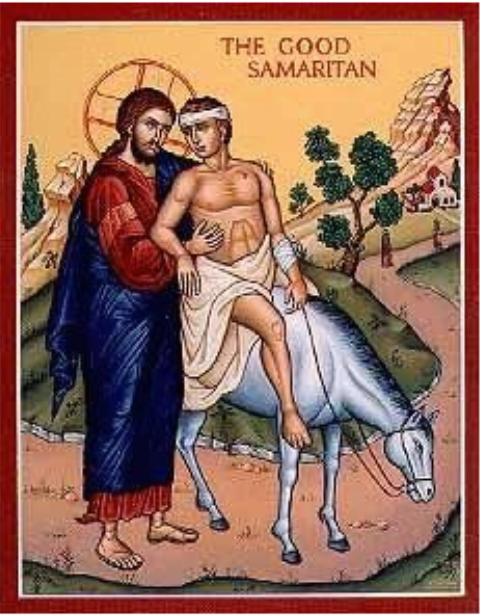
A Jew is going along the road, and is beset by bandits, who beat him severely, strip his clothes, and rob him. They leave him for dead. Later, a priest walks by. He sees the Jew, moves to the other side of the road, and walks by without helping. Later, a Levite goes by, sees him, and gives him a wide berth, going on without helping.
Later, a Samaritan (considered by the Jews to be outcasts) comes by, sees him, and immediately helps him, taking him to a nearby inn, caring for him, and paying the innkeeper.
“Which of these is the neighbor of the Jew who is beaten by robbers?” Jesus asked.
“The merciful one,” replied the lawyer.
“Go and do likewise.”
In the following nine examples, no one goes and does likewise.

From the 10th to the 11th of Janury, 1992, 12-year-old Shanda Sharer was abducted and tortured by four teenage girls, Laurie Tackett, Melinda Loveless (a propo), Hope Rippey, and Toni Lawrence. Tackett was more or less the leader of the four, and interested the others in the Goth lifestyle, punk rock, vampirism, witchcraft, Satanism, lesbianism, and such, and devised the plan for abducting Sharer and stabbing her to death, out of revenge for stealing Loveless’s girlfriend.
They abducted Sharer from her house just after midnight, pretending to take her to see their mutual friend, Amanda Heavrin, the girlfriend Loveless believed Sharer to have stolen. As soon as she was in the car, Loveless put a knife to her throat and interrogated her about Heavrin, until they arrived at “the Witch’s Castle,” a local run-down house where teenagers liked to hang out.
They took her inside, tied her up and discuss how they would kill her, at which point Sharer started crying. They claim to have been frightened by passing headlights, so they took her to a nearby landfill in thick woods, where Loveless beat her savagely with her fists. Lawrence and Rippey claim to have wanted out of the situation by this point, but did not dare try to run and call the police.
Loveless then tried to cut Sharer’s throat but the knife was too dull. Rippey then got out, had Loveless and Tackett hold her down, and strangled her with a rope. They thought she was dead and threw in the trunk, then went to Tackett’s home to wash up. They heard Sharer screaming, and Tackett went out with a kitchen knife and returned covered in blood. The screaming had stopped.
She then took out her runes, part of the Wicca lifestyle, and told the girls’ futures. They then Tackett and Loveless went joyriding from 2:30 AM, while Lawrence and Rippey stayed at her home. Sharer began struggling to get out of the trunk, so Tackett stopped, and beat her unconscious with a tire iron.
They returned a little before dawn, washed up again, and Tackett laughed as she told what she had done. They left and went to a neighborhood burning area, where leaves and limbs, etc., are disposed of, and showed Sharer, nearly dead in the trunk to the others. Lawrence claimed to have been so disgusted that she turned away. She still refused to rat out her friends. Tackett sprayed Sharer with Windex, probably to exacerbate her wounds, and taunted her, “You’re not looking so hot, now, are you?”
They then filled a 2-liter Pepsi bottle with gasoline at a nearby station, drove to a secluded field, laid Sharer, alive, in a blanket in the grass, doused and set her afire. Loveless returned a moment later and poured the rest of the gasoline on her, to be sure.
Lawrence was scared to death by this point, and finally called a friend of the same age, and told her what had happened. She refused to call the police, now out of fear as an accomplice. Loveless strangled became hysterical, sorry about what she had done, and called Amanda Heavrin to tell her. Heavrin did not believe them, until she and another friend saw the trunk of Tackett’s car with blood and Sharer’s socks.
None of them called the police. Sharer’s body as discovered by two hunters earlier that morning, the 11th, and reported. By 8:00 PM that night, the whole community knew, and Loveless finally confessed in a fit of hysteria to the police. Tackett, Loveless, and Rippey were sentenced to 60 years in prison, Lawrence 20 years. Lawrence was released on good behavior in 2000, Rippey in 2006.
Ilan Halimi was a French Jew who was kidnapped in Paris by Moroccan “barbarians,” as they like to be called, on Janury 21, 2006, and tortured for 24 days, finally dying on February 13. During this time, his kidnappers, at least 20 of them, beat him all over his body, especially his testicles, completely wrapped his head in duct tape, except for his mouth, so he could breathe and eat, stabbed him, burned his body and face with lighters and cigarettes, and broke his fingers in order to extract a ransom of 450,000 Euros from his family. They stripped him, they scratched him, they cut him with knives, and finally poured gasoline on him and set him afire.
During these three weeks, neighbors in the apartment block where his kidnappers had taken him (and where they lived) heard the commotion and came to watch. No one ever called the police. 27 people have so far been charged with joining in. 19 people have been convicted and given long prison sentences. One of the torturer’s fathers knew what was happening and did nothing to stop them. This man, Alcino Ribeiro, was sentenced to 8 months, but this sentence was suspended. He has served no time.
Those neighbors known only to have watched were not convicted, most not even indicted. Halimi was found handcuffed and bound with nylon rope, naked, to a tree about 40 yards inside a woodlot from a railway outside Paris, on February 13. More than 80% of his body had been burned with acid, as well as gasoline, to the point that he was difficult to recognize. He had severe contusions, blood blisters, and hematomas covering most of his body, to the point that he was more blue than flesh-colored, multiple broken bones, one ear and one big toe missing, and his testicles looked like “blackened oranges.”
Halimi died en route to a hospital.
Not just Topsy the Elephant, but a rather long series of animals, all of which had shown themselves to be a danger to humans. This included horses, lions, tigers, and bears. Edison was happy to oblige the state of NY in executing these “menaces to society,” by employing alternating current, but his ulterior motive was merely to show the world the danger of alternating current, invented by Nikola Tesla, his arch-rival. Edison’s direct current didn’t have the strength to electrocute an elephant, and he considered it safer.
So, on January 4, 1903, at Luna Park Zoo, Coney Island, Topsy was hooked up to Edison’s lighting plant, and electrocuted with 6,600 volts of AC. But this was after they fed her carrots that had been soaked in cyanide, just to be sure. They deemed Topsy to be a permanent threat to humans, as she had killed three handlers in three incidents, one of which involved a handler, who regularly whipped her, trying to feed her a lighted cigarette just to watch her suffer. She stomped on him.
1,500 people watched, and no one said a word in complaint. Edison filmed it, and the film is available on YouTube, if you feel like being outraged. The funny thing is that the ASPCA, which is supposed to protect the rights of animals, considered hanging to be cruel, as it would cause strangulation, not a snap of the neck, and yet had no problem with cyanide poisoning and electrocution.
Kevin Carter was a South African Photojournalist who, in March 1993, took the most infamous photograph, so far, of the brutality and disregard for human suffering in sub-Saharan Africa. The photo shows a female Sudanese toddler, alone and severely emaciated, attempting to crawl to an aid station for food. A vulture is standing on the ground behind her, waiting for her to die so it can eat her.
Carter claimed that he waited 20 minutes for the vulture to spread its wings, which he thought would make a better picture, and when it didn’t, he took the picture as is. For those 20 minutes, the toddler had to rest before resuming its trip. She whimpered and panted, and Carter did nothing to help her.
He took the picture, scared the vulture away, then left the girl to continue crawling on her own. No one knows what became of her, but it very likely that she starved to death. This account is denied by Joao Silva, a journalist friend of Carter, who stated that the child’s parents left for only a moment to take food from a plane. Either way, Carter claimed later that he just “didn’t want to get involved.” He killed himself the next year, after winning the Pulitzer for this photograph, by carbon monoxide poisoning, in his truck in Johannesburg.
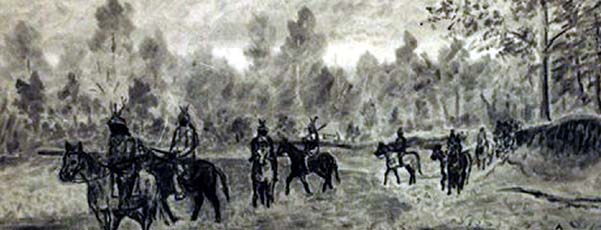
This was not a single incident, but all the major crimes against the Indians were perpetrated for the same reason. European settlers and their descendants wanted more land. They thus drove the Indians westward, killing hundreds of thousands over the centuries, in order to make way for themselves. Unfortunately, no land is ever enough land. They wanted more, and the Indians continued being deprived of life, liberty and the pursuit of happiness.
The most astonishing aspect of this crime is that many notable Americans, especially Andrew Jackson, considered it righteous, as the Indians did not have the military strength to defend themselves, and thus deserved to lose their rights. Survival of the fittest, so to speak. Jackson is the man most directly responsible for the “Trail of Tears” relocation of the Cherokee. Later, the Navajo and Sioux, to name just two large tribes, were slaughtered in outright warfare.
Very few Europeans or their descendants, from 1585 with the Lost Colony, to the turn of the 20th Century, ever raised much of a fuss, if any at all, over this disgustingly awesome mistreatment of an entire race of humans.
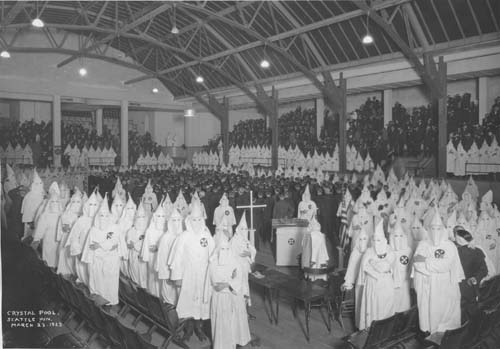
If you’ve seen the film “Mississippi Burning” you’re familiar with the murders of James Chaney (black), Michael Schwerner, and Andrew Goodman (both white, Jewish). The White Knights of the KKK shot them dead and buried them in an earthen dam in 1964. The outrage in the northern half or so of the United States was immediate and fierce, as it should have been.
But there was no public outcry of any kind in the South. Very few black people, especially in Mississippi, had anything to say about the crime, as they didn’t dare incur the wrath of the white authorities. But the truly astonishing aspect is the absence of an outcry by many white people, if any, as they either agreed with the crime, or just didn’t care about the plight of blacks (and Jews, and anyone other than “WASPs”) in the South.
Racial hatred had become so rampant and impudent that the Judges who presided over the various criminals of this sort of case rarely convicted them, and then imposed the lightest sentences. The culprits of the three 1964 murders, 17 of them, were tried, and only 7 were convicted, not of murder, but of “civil rights violations,” because the prosecution didn’t believe they could be convicted, in Mississippi, of murder, which was probably true. The harshest sentences were 10 years each to two culprits. Others received 7 years, or 3 years. No one served more than 6.
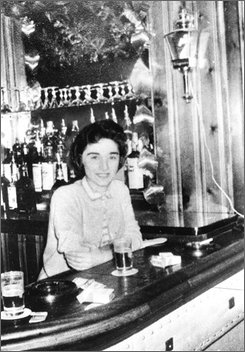
The most infamous example of the bystander effect took place on March 13, 1964, in Kew Gardens, Queens, NY, when Catherine Genovese was entering her apartment building at about 3:15 AM, from work. She was stabbed twice in the back by Winston Moseley, a heavy machine operator, who later explained that he simply “wanted to kill a woman.”
Genovese screamed, “Oh, my God! He stabbed me! Help me!” and collapsed. Several neighbors in surrounding buildings reported hearing her voice, but decided it was probably just a drunken brawl or lovers’ spat. One man shouted from his window, “Let that girl alone!” which scared Moseley away.
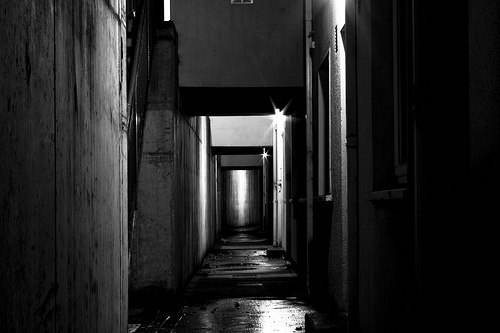
This neighbor was sure to have seen Genovese crawling across the street, under a streetlight, to her apartment, but did nothing to help her. Witnesses saw Moseley drive away, then return about 10 minutes later. He had put on a wider-rimmed hat to hide his face, and searched for Genovese in the parking lot, the train station, and the apartment complex, for 10 minutes, before finding her prone in the external hallway at the rear of the building, where the door was locked. She could not get in.
Moseley proceeded to stab her to death, inflicting multiple wounds in her hands and forearms, indicating that she tried to fight him off. She finally succumbed and he raped her as she lay dying. He then stole around $50 from her and fled. The whole incident spanned 30 minutes.
A newspaper blasted it the next day as “Thirty-eight Who Saw Murder Didn’t Call Police,” but this is inaccurate. There were approximately 12 people who claimed to have seen the first attack. Many of them later stated that they “just didn’t want to get involved.” A simple phone call to the police would have sufficed, but everyone assumed someone else would do it.
The events that transpired on the night of October 27, 2009 inspired me to compile this list and I admit that it has caused me to reconsider the crime of the #1 entry.
The girl’s name has not been released to date, as she is 15 years old, but the accounts of the crime all agree, and it is beyond belief. For 2 and a half hours, while the High School Homecoming Dance was taking place inside the gymnasium, approximately 10 men gang-raped the 15-year-old student, beating her savagely the whole time, all the while 10 others stood around laughing and taking pictures with their cell phones.
The crowd eventually numbered more than 20, and no one called the police. No one went inside to tell a security guard or a policeman, several of which were on campus at the time. A little earlier, the assistant principal looked out his office window and saw 12 to 15 grown men sitting around near the scene of the crime, none of whom had identification badges, as is required, and none of whom appeared to be a teenager, and the assistant principal did not call the police, or alert any teachers or students. He returned to his job and ignored them.
The girl is still in critical condition at a hospital, having been found later by someone leaving the dance.
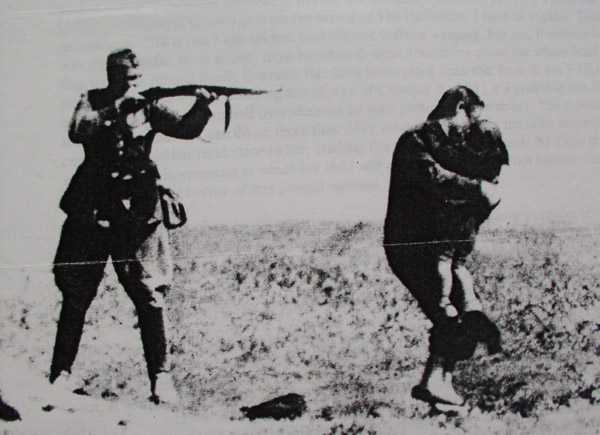
The most repugnant, globally violent disgrace of the reputation of humanity gave rise to the equally infamous use of the phrase “diffusion of responsibility,” as the Nazi officers tried at Nuremberg all claimed the same defense, “We were just following orders.”
They argued that if the Holocaust really was as bad as journalists were saying, then someone else must surely have known of it, and thus it was not necessarily their responsibility to report it to the authorities.
They also argued that the only authorities in Continental Europe at the time were German, and thus, they would only have killed themselves by attempting to inform the outside world, and would have accomplished nothing. This is not true. Most of the German population knew nothing of it, but had they, they could easily have banded together and demanded that the Holocaust be stopped. The Nazis would have been reluctant to exterminate their own “master race,” and by that point, the Allies would have heard news of it. So the Nazis wisely concealed the concentration and death camps from all but the small villages nearest to them.
The Holocaust achieves #1, however, because the populations of the villages near these camps, Dachau, Buchenwald, Bergen-Belsen, Sachsenhausen, Mauthausen, and Ravensbruck, to name a few, knew perfectly well of the atrocities and horror inside the camps. The camps were established near fairly large towns and cities, the inhabitants of which could not have ignored the stench coming from them. Allied soldiers all reported smelling camps before finding them, from as far as 20 miles if the wind blew right.
The Allies accused the German citizens of these towns of knowing full well what was happening to Jews and other “undesirables” and yet making no effort to save one life. These German populations were thus forced to clean up the emaciated corpses and bury them in mass graves, as punishment for their passivity.


maybe this list will leave a lasting impression on the minds of us who have read it and could hopefully help us to NOT just be a bystander if anything like this happens when we are around. maybe we will remember all these sad events and buck up the courage (even though in some cases this would take ALOT of balls) to do something…anything to help the victim.
And what of the monk picture I posted, or the Eddie Adams Lkienzle posted? Or this? http://www.gallerym.com/pixs/photogs/pulitzer/images/Elian_Gonzalez_cuban_boy_sequence.jpg
Now, I wasn’t alive for the Eddie Adams, and I was very young when Carter took his photo and I don’t really remember the controvery about it. I do remember the above picture being circualted and everyone being mad at the man pointing the gun. No one was mad at the photographer. No one said the photographer should have intervened and told the gunman to put down his gun. I’m not saying Carter did the right thing. I don’t think he did. However, I don’t think he deserves a place on this list, and I don’t believe he deserved the complete *****storm that befell him when other photographers take just as repugnant photos and don’t see any consequences.
@ (62) you are f*cking crazy. get your priorities right.
sayin its worse than the abuse of children etc…wow.
You really should have added the genocide in Rwanda to this list. The American government knew it was going on the entire time but didn’t want to get involved, so it kept making excuses and denying the fact.
Sick stuff.
#1 should be “The HolocaustS” and should also include the one Stalin inflicted on Ukrainians and Poles and other Eastern European civilians who were sent off to Siberia to work and die. Considering that it was an even larger number of people terrorized and senselessly murdered, I cannot for the life of me understand why the one in central Europe has always received more attention, as if it was the only one.
At any rate, very interesting and well put together list.
“ODHI” (112) First of all not all people are christians and thousands got stapled up to the cross so i don’t think a whole lot of people care bout this guy (except for the christians).
Second of all, did you forget that there was a whole lot of romans stabbing the guy in the chest with a spear?
They did something all right… stabbeti.
@callie19 (122):
You see no difference between an instance where a photographer could place himself in danger of losing his or her life, by “interfering,” and one where nothing of the kind would happen, were he/she to help?
It’s one thing to expect someone to jump in and risk their own life to help another. It’s nice when this happens—it’s commendable. But we cannot in all fairness “expect” it of others. But it’s quite another thing when one would NOT be at risk, if one were to help—and still just walked away.
The execution, however repugnant we find it—and the monk immolating himself–are not *****ogous to the situation of observing a child dying alone in the open from starvation.
We agree that he didn’t do the right thing; that in fact he should have helped the child. But no, let’s not excuse it with blather about “journalistic tenets” of non-interference and objectivity. He deserved the scorn heaped upon him and still does. Though, yes, I think knowledge of what he failed to do was punishment enough. I can’t get behind his personal decision to end his life—but neither do I find him blameless or his decision mitigated by some “professional tenet.”
@callie19 (122):
GTT’s stance on this at #114 is absolutely correct.
Harsh but good list. Sadly i can GUARENTEE that instances of this nature and worse are only going to increase. No one cares about anyone anymore. As we all argue over religion and politics
more people will stand idly by and say i dont want nothin to do with this.
Brilliant and bittersweet list. I have to maintain my faith in humanity.
In its defence, half of us would be dead if all of us were paralysed by the Bystander Effect each time heroism called.
But still… poor people. Mass psychology can sometimes become atrocious.
We have no idea what happened next in the commercial. Maybe it wasn’t even real, maybe they fashioned a third world country on an LA soundstage and maybe they got a child actress to play little Suzy No-Shoes. Maybe it was real, and maybe they packed up their Kraft services table and left while the money poured in. Maybe they went to the orphnaage and did some good deeds. The point is, if it was real, they exploited that child for their thirty second ad. Was it for the greater good? Yes. Could he have picked her up off the dirty ground with who knows what on it and made the same impact? Yes. Is he in trouble? Is anyone saying he did the wrong thing? No.
I’ll give you the monk, because he did do it to himself, but the execution is absolutely in par with this.
To many get offended at ideas as harmless as christianity
(52 tiger) instead of being offended at things like child starvation and high school girls gettin raped.
@Mark (11):
The following was an appallingly stupid comment to make:
“Of course the concentration camps would have smelled by the time the Allies reached them, without the Germans there what would have happened to those too weak and sick to force on the death march? They died… and without anyone there to bury them, what do you think happens?”
The concentration camps smelled, Mark, because people were dying there ALL THE TIME. And depending on the camp (not all camps were the same) some were being cremated, some buried. Cremations were the standard. But the number being murdered and/or dying of starvation and disease on any given day was too great for the crematoria to keep UP with it.
The smell was therefore CONSTANT, and not simply a result of the Germans “not being there.”
MOREOVER, you make an incorrect assumption anyway, because not all concentration camps were abandoned by the guards and SS by the time Allied troops arrived. Some camps were still very much manned, and the SS soldiers and guards within fought. Nevertheless, the carnage and its smell and other physical evidence was still there.
NOR was it only a matter of “smell.” Many camps were in part serviced by local businesses for various supplies and services–everything from baked goods to laundry services were delivered/peformed by locals. This varied from camp to camp, of course—and of course these services and goods were for the guards and SS troops, not the prisoners–but in any even there WERE local logistical support networks which helped keep the camps running—and this means that many local citizens DID know what was going on in the camps. They had eyes, ears, and noses with which to see, hear, and smell.
They knew.
“I think that you also under-estimate the German’s power during the majority of WWII and the efficiency of the Gestapo.”
As you are evidently ignorant of the willingness of the German people, at that time, to go along with what was done within their country and by their government and military in other countries. They were not ignorant and never were, and the German people have long admitted their complicity in what was done during the war.
You have spoken with actual correct knowledge on this subject, and quite frankly need to read more and attempt to grasp more before you offer your opinions in public like this.
EXCUSE ME… the last line in my last comment should have read:
You have spoken withOUT actual correct knowledge on this subject
I’m not sure that most of these are examples of the Bystander Effect.
Certainly #10 is not, nor is any case where the bystanders are co-consirators, nor is any case where the bystanders have reason to believe that their own safety would be jeapordized by action.
The bystander effect occurs in situations where a single person is more likely to take action than someone in a group solely because there is a group.
The lack of action in most of your examples are for reasons other than group dynamics. Fear, prejudice and simple stupidity all seem to play a much bigger role.
I could be wrong, but I suspect that only #2 and #3 qualify as true examples of the effect. In all the other cases there are other much stronger dynamics at work.
I was surprised that the tragic case of James Bulger wasn’t on the list.
Did anyone realize my first post (n. 66) was from the Seinfeld finale? It’s during the trial where the foursome is charged with breaking the Good Samaritan law. They see a man get mugged and laugh at him…. Anyone?
“Let that girl alone” ????
Thankz garash (126),the fact remains that throughout hist
ory a lot of events have taken place,The romans did what
they had to do coz they were given the orders; but on the
conscience side of human nature (which god will judge us
based on that)it was all wrong,Who in those times did’nt
know about the good works of JESUS CHRIST ?As for the byst
anders and participants during crucifiction,Judgement day
is awaiting them.make an effort to watch the film “the gat
hering and see the flimpsy side of human nature !
Flamehorse, this was a very good list of very repugnant acts. And I am sure these things go on all the time, all over the world.
I remember the Kitty Genovese case, as I was in high school at the time. My father made me read all the news articles and watch all the tv news about it,using it as a study of how good men do not act. It is something I will remember all my life.
to Audrey (62) Get a life you PETA creep, number six was far worse than feeding an elephant a lit cigarette. Not to mention all the Native American tribes that were destroyed, or the holocaust……
@Lim of St.Francis Institution and MMU (23): Yes, you can blame them. If they are unable to get actively involved, the can go for help, call for help, or grab some passersby and get involved. If you do nothing, you are a participant.
I have always been amazed by the bystander effect. Some example on this list make me almost throw up though and some are plain sad.
Anyone ready for a good story?
A number of years ago, my daughter and three of her friends were leaving Universal Studios after seeing a movie. It was quite late, about 2 a.m., and dark in the tunnels that lead from the main “street” area to the parking garage.
They heard a girl screaming and man grunting with effort. My daughter, all 5’4″ of her, raced to the sound and found a girl curled up on the cement with a 6’3″ heavily muscled man kicking her for all he was worth.
My daughter moved herself in between the two and first kicked him where no man wants to be kicked. As her friends arrived (slightly delayed because they called 911), it became apparent that the kicker had friends too, and they showed up simultaneously, and the melee began. It quickly became apparent who was in better shape, especially when my daughter kicked the 6’3″ man in the back of the head (anyone with gymnastic or ballet training can do it), but they kept the bad guys occupied until the Sheriffs Dept. arrived.
As it turned out, the big guy was a honcho in the gangs of L.A. and the Sheriffs and the PD had been trying to get him off the streets for a long time.
Moral fortitude. Ethical living. That’s what I taught them, and WOW! did she ever take it to heart.
@sg (88):
Ha, I didn’t even notice that the first time around. It’s such a valid point.
‘Satanism, lesbianism and such…’
If I was a lesbian i’d be pretty *****ed off with that.
@segues (144):
Is your daughter Jackie Chan?
@Randall (117): I agree. I would not want to work in a profession that would tell you to stand by an ignore a child dying. I know that when an observer interferes with his subject, it changes everything, but in some cases, that is the good and right thing to do.
It’s been said before but…why is it so hot and what am I doing in this handbasket?
Submitter really needs to get treatment for severe Dyslexia
Mark made the comment that since the Germans were gone from the camps and no one was taking care of them or the dead of course it would smell. Wrong my father was in the army and helped liberate camps. The smell was that of burning flesh. The ash that covered the town was not that of trees they towns folks knew what was going on. They were all proudly wearing their german pins and once they saw the American troops they would rip them off and say “Oh look we are saved”. BS.
My sister worked with a nurse who was a victim to the by stander effect. The nurse was treating a mentally ill patient who turned violent and beat her, while getting this beating a doctor sat and watched the whole incident and then went back to reading his paper.
The ironic thing is that 2 weeks later the same doctor was killed in a car crash.
Thats Karma for you.
Such a disturbing list. I hope it encourages everyone who reads it to do the right thing even if those around you are comatose.
Can I request a sci-fi novel list for tomorrow??
I recall reading a story from several years ago that stayed with me. It was about a man who jumped into a body of water and rescued a drowning person. When a reporter asked the hero why he risked his own life to help a stranger; all while no one else in the crowd of witnesses did, he replied that at first he thought,’someone should help him’ but then he realized, “I’m someone” and so he dove in.
“I’m someone” – it makes me think that most people in a crowd will assume someone else will help, forgetting that they’re someone too.
It’s a sad fact, but a good majority of the people (and possibly all of the people) leaving comments like “I would definately help them” definately would not help anyone and would simply stand around and watch expecting someone else to help.
This list reflects a sad, but true part of the human psyche.
@callie19 (131): Actually, no, it´s not and the reason has been explained various times.
It has to do with the RISK TO THE LIFE OF THE PHOTOGRAPHER. Do you think there was a real life-threatening risk that, had the photographer of the execution pic intervened, he would also have been shot? I think it´s fairly safe to assume that the risk was there.
Was Carter´s life EVER at risk? No. The situations are different.
And for your commercial example, I will not cast blame until any subsequent inhumane actions are exposed. Carter was wrong in the way he acted and he deserved to be critized for it.
Again, it´s not about taking the picture, it´s about not helping once the photograph is taken.
@Hayloiuy (61): HYPOCRITES huh? Well this “hero wanna be” will answers your question. It depends ont he situation. It is clearly obvious that you won’t jump to help someone who is being beaten up by a bunch of criminals. I mean it’s 1 against many others and you will surely get beaten up unless you have super hero powers! If you get beaten up you won’t be of any help and will end up as the person they were beating. HOWEVER, you CAN still DO SOMETHING about it. You can call the police. Little things can change the world you know? I know police takes a while to arrive but who knows? Maybe you are lucky and they arrive fast. as for fear of being involved…I wouldn’t care, I have nothing to fear if I am innocent. I would be worried about my family and all that but I would also know that they would be proud of me for helping an innocent person, so I know they would understand. Is that shameful? is that being selfish? I don’t think so. If my husband went out and jumped to help someone about to be raped and he ended up injured or even dead I wouldn’t blame him or go on about “you selfish bastard, you had to help that girl and didn’t think about us for a moment” Come on. I would be proud of him since he died in such a honorable way. I believe the problem with society is exactly what you mention, that they limit themselves to protect their family only. while it’s ok to protect your family, it doesn’t mean you have to ignore the rest of the world. Now answer my question. WHAT WOULD YOU DO IF YOU AND YOUR FAMILY WERE THE ONES IN DANGER AND NO ONE HELPS YOU, T HEY JUST STARE AT YOU AND DO NOTHING? Would you be all like “I respect you as a selfless human being” I bet you’ll be crying for help as you die in front of them. and yes I have lived dangerous situations before and have experienced the coldness of people and that made me change a big deal and decided not to act like them. It’s true that fear and surprise can make prevent you from reacting or helping someone on time, I have lived that before, everything is in slow motion, you are shaken, scared and don’t know what to do and yes you are also aware of what other people might think about you, but who cares? I have learned to not care what other people think about me or if the police is gonna accusee me falsely of something, doing the right thing or saving a life will be rewarded even if you don’t expect it. Just follow this rule: TREAT OTHERS THE SAME WAY YOU WOULD LIKE TO BE TREATED.
Sicerely,
the “Hero wanna be”
Have a nice day.
Nice story segues. I wish more people would instill basic traits like that in their children. My wife and I found a drunk teenager passed out in minus zero temperatures once and stopped to help. Though once I copped a beating for helping someone else in a fight against 4 guys. I ended up getting it worse and he did a runner. Unbelievable.
This was a weird list. I’ve never heard of the Bystander Effect as an actual sociopsychological phenomenon (of course I knew it existed) so I was surprised to see this, but I believe that some of these examples are not really fitting… To me Bystander Effect is literally standing by and not doing anything. Not all of these examples have that.
But that’s not really important because what’s written on this list is bad regardless of how it should be called.
As for the dying child photo. I remember seeing a documentary about a British woman (Kate Blanchett if I remember correctly) who filmed a lot of barely-human cases all over the world. I can’t recall a perfect example but I remember that she did something like this too, that she just COULDN’T help. (She filmed in orphanages in Eastern Europe and China, among other countries).
And number #1, ‘Wir haben nicht gewusst’… this is actually quite a major issue here in the Netherlands. How much can you trust the people living nearby? I don’t think you should believe anyone in this case. Yes, maybe they knew. But does anyone know what it was like to be in such circumstances? I’m not condoning it, I’m definitely not, but I kinda think that people shouldn’t judge before knowing the circumstances. Of course, if people actually do that, pretty much nothing would be judged.
I really think about this quite often, about the concentration camps I mean. I wonder if those people in villages near concentration camps were aware of what was happening nearby. I know that it didn’t become known in the Netherlands that people were gassed in camps until far into the war, and even then, many people didn’t believe it. Kind of makes me thing of what those villagers THOUGHT was happening in the camps.
I’m confusing myself now… clearly not a good idea.
I think fear plays a big part in the Bystander Effect.
Certain posters rightly point out that fear of retaliation, of harm coming to you or your loved ones, makes people hesitant to be “the good samaritan” in many of these cases. I can see this holding true in my own society, where members of powerful (mostly political) families have a virtual carte blanche to inflict harm on people.
It’s a difficult question to ask oneself, if one is honest. Would you help a stranger, if by doing so you would put the people you love in mortal danger? Take note, I didn’t say put yourself in danger. It’s relatively easy to make that choice. But to put your loved ones in danger, now that’s a difficult position to be in. Personally, if those were the stakes, I don’t know what I would do. I truly hope I would have the courage to do what I know is right. But I truthfully could not say.
That being said, I salute people who would rush to another’s aid without question or pause. Their acts embody the best in us. What we, humanity, can be; rather than what we, for the most part, are.
@GTT (155):He deserved to be critized to the point where he had NO other option than to take his own life? To leave his own family without a father, husband, brother, son? Photographers don’t know if a certain picture will even be published. It’s a good bet that he wasn’t thinking “Here’s my Pulitzer!!” when he took the shot. It’s widely assumed that child died. It’s not proven. Carter is DEAD. Fact. Did he deserve that? No. Does he deserve to be the first person brought up when journalism classes talk about integrity? No. No one is disputing he acted wrongly. I’m disputing that he dereves a place on this list. Would the gunman in the Elian Gonzalas picture have turned his gun on the photographer if he’d been told to stop? I doubt it, yet no one ever spoke up and said it was the photographers reponsibility to stop that for happening. He just took the picture. Don’t shoot the messenger.
Phil Ochs wrote a song about the Kitty Genovese case, “Outside of a small circle of friends”. Radio wouldn’t play it because of the line “smoking ***** is more fun than drinking beer”. How’s that for priorities?
Sadly this reminds me of an incident that happened to me two years ago at the mall.
I had to drop something off at a store in the mall, and on my way out I noticed a large crowd gathered, curious I went to see what was happening. There was an father screaming at his daughter, trying to hit her as she hid behind her mother.
As I pushed my way through the crowd, three large men around my age commented to each other “Someone should do something”.
I spent a few years working at a nightclub where incidents similar to this (Involving guys and girls) happened and we always stop it, so it’s hard to ignore for me.
I walked up to the father and pinned him to the wall, he reeked of booze. About 2 minutes later an off duty police officer pushed his way through the crowd and took over.
The thing that shocked me was the amount of people watching, and the three huge guys I pushed my way through to stop the father.
Amazing all the contradictory sentiments things like this conjure up! I’ve never seen a list that generated such a variety of controversial views that are so drastically opposed to each other. Everything from human nature, Wicca, animal rights, lesbianism, the Holocaust, Christianity, historical debate, photo-journalism objectivity, civil responsibility, etc.
Job well done Flamehorse! Its good to be reminded by things such as this from time to time. I didn’t feel this was a case of demented voyeurism as someone had suggested. This is a look at the dark side of humanity and the bizarre apathy that we are capable of. Being conscious of it can help us to fight against that urge when such a situation arises.
Has anyone else noticed that Randall has been really pleasant lately? Like even in tearing down the idiots he’s been uncharacteristically civil and calm (but equally as effective I think). Whats going on Randall? A new love perhaps? Stronger meds?
A person is good at heart. People are not.
@callie19 (160): I’m sorry to be the devil’s advocate here….but…
“He deserved to be critized to the point where he had NO other option than to take his own life?”
I’m sorry but suicide IS NOT the only choice he had at his disposal. Many people have made poor choices in life, and have regrets about their actions in situations….but have chose to learn from their mistake, often with far-reaching, humanitarian results.
“Photographers don’t know if a certain picture will even be published. It’s a good bet that he wasn’t thinking “Here’s my Pulitzer!!” when he took the shot.”
And obviously he DID have some sort of goal for his photo if he actually waited for a “better” image. Just that type of thinking makes me wonder about his overall mental health to begin with.
“Carter is DEAD.”
Well yeah, he CHOSE to be.
“I’m disputing that he dereves a place on this list.”
Personally, I read his listing as a way of showing how the whole world stood by and did little/nothing to help the plight of the Africans…by witnessing his photo in all the places worldwide that it was published, and then going on about their lives.
Regardless of what his listing here was meant to illustrate…he still walked away from that suffering child, and he did reap rewards that cannot be denied, whether that was his actual goal or not.
To whoever said that people are basically not good, you are 100% correct. Left to themselves, no matter what their IQ or talents are, people know in their heart of hearts that they prefer to do wrong. We tell ourselves how different we are than this but we know better. We do charity and other works to try to negate it but it is in vain. Without the one who told the Good Samaritan parable we are rightfully all condemned.
It’s all very well for everyone to tug at their forelocks and castigate Carter for failing to help that girl. But people, remember:
THIS IS STILL GOING ON. People are still dying like that girl in Sudan and in many other parts of the world [i]every day[/i]. And we are bystanders too.
At least Carter was out there reporting on this. At least Carter was taking an interest. At least Carter was trying to show the world what goes on in Sudan. And like a bunch of howler monkeys everyone leaps on him for not helping one dying girl, when hundreds of people are dying in the same manner every week? That is utter, [i]utter[/i] hypocrisy.
The Sudan crisis is bigger than one little girl. No, she didn’t have to die for Carter to get his picture. But what are you really angry about? Carter’s complacency or your own?
Until you’re willing to put your money where your mouth is, your indignance is utterly impotent.
@Bill Gecko (149): I’ll have you konw I resemble that commnet.
There are a bunch more good (horrible) ones I omitted, so unfortunately, someone can submit another list. Not I.
@callie19 (160):
Callie, why do you keep raising the irrelevancy of Carter’s suicide? It has absolutely NOTHING to do with the discussion of whether he was right or wrong in what he did. You continually bring it up as though it in some way logically mitigates his actions, or at least in some way proves that it was wrong that he was and is criticized. This is absurd.
“Photographers don’t know if a certain picture will even be published. It’s a good bet that he wasn’t thinking “Here’s my Pulitzer!!” when he took the shot.”
What of it? Again–his intentions in regards to his work are not at issue here. It’s his ACTIONS at the time that matter.
You keep dragging irrelevancies into this—I suspect because at heart you know you have no real argument, but you’re loathe to admit it.
“It’s widely assumed that child died. It’s not proven.”
Again, irrelevant. The child was suffering terribly. What finally became of the poor girl is not the point. Carter was in a position to help and did not. Period.
“Carter is DEAD. Fact. Did he deserve that? No.”
He took his own life. YOU do not know for a FACT, either, that the “hounding” he received over the picture is the real reason that he committed suicide, or all there was to it. Suicide is a very personal, insular act—we can never know everything in the suicide’s mind.
Moreover–it is IRRELEVANT, again, to the moral debate over what he did or didn’t do. I don’t care if he killed himself or lived a long happy life. Neither outcome has ANY bearing on the moral question of what he did at the time he was taking that picture.
“No one is disputing he acted wrongly.”
Forgive me, but you seem to be doing just that, if in a rather roundabout way. You keep talking about how HE suffered, and keep making rather pale and backhanded excuses which are apparently intended to mitigate his actions at the time, at least to some extent. I frankly can’t understand your attitude about this.
“I’m disputing that he dereves a place on this list. Would the gunman in the Elian Gonzalas picture have turned his gun on the photographer if he’d been told to stop?”
AGAIN–that is an ENTIRELY different moral situation. This has already been pointed out and explained. We cannot rightly *expect* people to place themselves in danger for another, though we recognize the heroism and goodness of such an act.
But we DO expect those who are in a position to help when it does NOT endanger to them to DO SO. Carter was not in any danger. Nor is anyone endangered by picking up a phone and calling the police when they know someone else is being victimized. We cannot rightly expect someone to run to another’s defense, bodily–to put themselves at risk–though we like to see this, surely. But we do expect the individual to help when and if and in whatever way they can. Carter did not. Not in any way, shape, or form.
“I doubt it,”
You cannot KNOW that. We can never KNOW what someone who is armed will DO, regardless of who they are, and how professional they are or seem to be. Being faced with someone with a firearm, who is in our eyes doing wrong, is VERY different with being faced with the kind of situation and choice Carter faced. VERY different.
“Don’t shoot the messenger.”
IN THAT MOMENT in which it was in his power to act, and he did not, Carter became MORE than a mere messenger. He was, in fact, in full possession of a position of human choice. And he utterly failed to make the correct choice. He chose, instead, callous, even inhuman, neglect.
This is NOT the same as a photographer facing an unfair, injust execution, or an armed policeman or soldier pointing a gun at a child. To act in either situation would be heroic, because it would require the risk of one’s own life.
To act in Carter’s situation would have simply been HUMAN and humane. He failed at both. And deserved all the scorn, professional and otherwise, that was given to him as a result.
One more thing, about item #6 on the list.
It made me recall a cinematography class I attended a few years ago. It was informal affair, held in the professor’s home (who is, incidentally, highly respected in his field). He told us about his experiences during my country’s military coups during the late 80′s.
It was nighttime and he was shooting footage of the fighting around the capital. As he turned around, he saw a horribly injured man being dragged away. It was happening right in front of him, the whole scene caught perfectly in his lights.
My professor turned to me suddenly and asked me: “What would you do? Stop and help him, or keep shooting?” I immediately stammered that I would help him. “WRONG!” he said, “Don’t stop shooting!”
In hindsight, I realize he was right. As a professional, it is my duty to tell the story; not to intervene. I understand now that this is done in the hopes (in this specific case) that others who see our images realize the truth of war. That it is horrible, ugly, and inhuman. That it is something to be avoided. But even knowing this, I am not comfortable with being the dispassionate observer. The idea of it truthfully breaks my heart. Perhaps that makes me bad at what I do, I don’t know.
I guess my point is this, do not judge Kevin Carter too harshly. An image is a very powerful thing. It can pierce through the emotional callus we naturally build up around ourselves and move us in ways we did not think possible. It can stir to action those who would otherwise do nothing. I do not condone Mr. Carter’s actions, neither do I judge him. A journalist/storyteller’s duty can be an ugly one. Sometimes it can haunt him for the rest of his life.
@Spiff17 (163):
“Whats going on Randall? A new love perhaps? Stronger meds?”
Watch your mouth, twerp, or you’ll find yourself unable to eat solid foods for a few months.
(Some of Randall’s old loves are still around and so there is no need for a “new love” at present. Randall’s *favorite* love remains himself. Ever and always).
I remeber a few examples… Once I was on the subway station, walking down the stairs when suddenly a man passed beside me running and pushed a mature woman. she fell down the stairs.. evrything seemed in slow motion, she rolled and rolled and I will never forget the expresion in her face.. that was the expression of pain, she just let herself roll for some reason and I’m guessing it was because she was not young anymore and the whole thing happened so fast. I thought of reaching her while she was rolling down the stairs but it was just impossible. she reached the bottom and I thought that people would gather there and help her. No one helped her. They stared and passed her avoiding her fallen body. I remember I could only say Oh my god in my somehow bad English at that time. I asked her is she was ok and picked her up, She was clearly in so much pain and the guy who pushed her came back when he saw I was staring at him in disbelief. He smiled and said I’m sorry and ran away. that was all. Anyways, I focused on her and I was lucky to have some tylenol with me so I gave her some and asked if she needed an ambulance,she said she didn’t think so and that she was already late for work but that she was in so much pain and her hips were killing her. she was shaking but said that she was going to get checked up. That scared the hell outta me, really. People can be cold. I have experienced that so many times. there is one that has been hauting me for some time now. I was around 10 years old I think or 11. My parents were tired from work so they took a nap after dinner and i went out to play. I thought they would wake up and call me to take a bath as always, but they didn’t and being a child I was more than happy since I was having “extra play time’ So there I was with some “friends” in their front yard. They were sisters and well we were playing and stuff. I was 1 year older than the oldest one. suddenly 2 drunk men came to where we were and he started talking to them and my friends were scared because he started chasing them. I still don’t know why I didn’t think about myself and went and took them with me. we tried to open the front door but it was locked so we called out to their mom but she was watching tv and couldn’t hear us. We ran to the backdoor but it was locked too. The drunk man that wanted to get us was older and slow so the most he could do was touch me in you know what places, everytime he tried to do something to us since I always put myself infront of my friends when he was coming. I said “the window” and the girls managed to enter the house using the kitchen window. i thought they were going to opent he back door for me since they were inside, but they didn’t. They ran away and …the oldest of the drunken men had his fun with me until the other younger guy who was also drunk came and stared like half surprised, half drunk. i can’t forget his face and i think i remember his eyes and expression more than the guy who was actually raping me. I was numb. I don’t know why but I felt like floating, like giving up, i felt betrayed by my friends and sad, and happy at the same time becaus ethey were safe. It was a complicated feeling. The younger guy managed to convince him to get away from me. I remember him saying “your wife is going to scold you, lets go lets go, come on” He went away laughing and spitting. the younger guy had this huge open eyes staring at me and I don’t know what he was trying to tell me but he looked like he wanted to help or maybe he was just plain scared. I never told my parents about it, don’t ask why since I don’t know it myself. I just know that i was afraid and ashamed and didn’t find the words to tell my parents. My personality changed a big deal too but my parents never imagined it was related to something like that. I told them about this about 4 years ago which is wayyyy too late since I’m older, but I managed to live with those memories since I have lived worse things than that. My point here is… people can be cold. I still don’t know why my friends didn’t help me since I didn’t tell them what happened. I don’t know if the mom knew about it. i was yellng and crying and yet no one came out of their house to help. No one heard me. but i think the mom knew and i think they told her because she because so cold towards me and my parents since then even made up an story and said that I was blaming their children for a toy I lost, then thatw as her excuse for avoiding me and my family. Maybe she didn’t want to get involved? whatever. If she knew what was going on… shame on her and shame on “my friends” since that incident ruined my life in many aspects especially now that I’m older so I think people should try to help even calling the police will do….In my case I think I’m just cursed since it seems such a movie-like thing taht this happened at night, the doors were locked and i was trying to save my friends. also the police would never get there since I lived in a rural area back in my home country. God… it was hard to remember all this all over, I just got so mad after reading this list and remember how people can be so… cold. However If you think about it, I bet my friend’s mom was trying to protect them and herself. I understand since it was dangerous and like i said, I lived in a poor and crappy town, at least that made me feel better.
@adi000 (169):
Sorry, but your professor’s exhortation is far too pat an answer. We’ve heard it before—I’ve heard it before—but we also know that this broad philosophy does NOT apply in all situations.
In the scenario your prof outlined, you would not, for instance, be taking an active role in the fighting. You would not be acting as a combatant. There is a very real demarcation between combatant and non-combatant in such a situation.
But Carter’s role was not in a combatant/non-combatant situation; he was, quite simply, a bystander to a human life that was in need of assistance—and nothing more. It is tantamount to a person hanging from a cliff, begging for help. Would you or your professor, in that case, exhort the photographer to “keep shooting,” and not assist the other human being in need? I would hope not. No journalist or journalism professor I know would say that.
Just a correction about what I wrote previously: “I still don’t know why my friends didn’t help me since I didn’t tell them what happened.” I meant to say taht i didn’t tell my friends what happened after they went inside the house. sorry about the misspellings. I was rushing when i wrote that. I kinda felt like “wirte it fast and forget about it”, plus I’m dyslexic and tend to write words backward a lot (I usually correct them after re-reading it, but this time I just wanted to get this over with.) Sorry.
. ww2 was a war between the soviet union and Germany and it should have been that way . Briton went to war becouse of the polish and abandoned them to the soviets we didn’t enter the war for human rights but for adventurous militarism. Morally there was no difference btween the soviets and the Nazis . The soviets had a holocost of their own even before the germans and killed as many people as them. In reality ww1 only ended for the western powers their was fighting in Europe btween facist and communists until the west decided to get involved .Look up European civil war on wikipedia, or pat Buchanons Churchill Hitler and the unecesary war.
I actually live here in Utah where the incident mentioned in number two occurred. It is surprising, and I have to fight with myself to believe it. I was fifteen just three years ago, that could have been me. It’s been my worst nightmare for years now. All those that did not report it should be sent to prison for the next 60 or so years, and the rapists should have their penises cut off and be thrown into a pit never to be seen again.
As soon as I read the title, I expected Count Axel von Fersen’s death to be on the list. I suppose watching a film about his life in class will do that to you.
@Randall (172): I agree. I don’t think I can (or should, for that matter) do nothing.
I guess I guess I just lost my cool with some of the harsher comments about him.
You guys should check out a movie called Edens Lake. It’s a British film about a couple being tortured by a bunch of teenage ‘gangsters’. The movie has A LOT to do with the Bystander Effect.
edit: and that professor does tends to be a bit flippant.