I think sounds are always underrated. There are plenty of famous pictures, graphs, and movies out there, but for a sound itself to be famous (other than music), or to even really be that interesting, takes something special. So here’s some strange sounds – some may be familiar, hopefully others won’t be – but all are definitely incredible.
The “Slow Down” is a sound that was first recorded on 29 May 1997, on an autonomous hydrophone array in the Equatorial Pacific, coming from a southerly direction. It lasted about 7 minutes, and has been recorded several times every year since it was first detected. In 2002, it was suggested that the sounds could be caused by the friction of ice in Antarctica moving over the land, as the spectrogram of the sound is very similar to the sound of two objects rubbing together – if you rub your fingers along a table, record the sound, and slow it down (as the scientist who proposed it did) you end up with a strikingly similar sound. However, the matter has not been conclusively settled.
A similar sound is the “Upsweep“, a sound detected between 1991 and 1994, which consists of several consecutive rising sounds. Its cause is also unknown, but it is thought to be caused by some underground volcanic activity, such as the release of underwater gas or lava.
Singing Sand dunes are a phenomenon found in about thirty places around the world. When different layers of sand rub against each other, pushed by the wind, or someone walking on it, it creates a deep booming sound. Ongoing investigations have found that the sound depends on the sand having particular characteristics, such as size and humidity, to make the sound. As a result of different types of sand, different sand dunes produce different notes – Sand Mountain in Nevada gives a low C, Mar de Dunas in Chile gives an F, and the sands of Ghord Lahmar in Morocco give a G sharp.
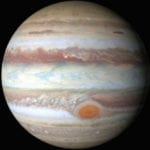
The above recording was made on 27 June 1996. It was made by the Galileo spacecraft as it passed Ganymede, a moon of Jupiter. An antenna on the spacecraft was picking up plasma waves, created by the unusually strong magnetosphere of Ganymede (about 3 times stronger Mercury). This was used to create an audio signal (above, the 45 minute signal is compressed into about 60 seconds), where the sound frequency corresponds to the frequency of the waves detected. At about 8 seconds in, Galileo enters the magnetosphere (there is a sudden increase in noise, sounding like a clap of thunder). As the spacecraft passed through the magnetosphere, the noise rose in pitch to peak, then decreased again. The irregularities in the recording, such as the sudden drop in volume at 15 seconds, are caused by irregularities in the magnetosphere of Ganymede as it passes through the influence of the immense magnetic field of Jupiter.
In 1967, Jocelyn Burnell discovered a source of pulsed emissions of radio waves which she described as sounding like an “idling truck” on the radio telescope, as it had a frequency of just over 1 Hz, about the same as a large idling diesel engine. A few theories were proposed as to the source of these emissions, including that they were coming from extra-terrestrials, because the pulses were so regular (they are more reliable than atomic clocks), leading to the first pulsar being called LGM-1 (standing for Little Green Men). However in 1968 they were shown to be coming from rotating neutron stars, which only emit radiation along one axis, so we only see the radiation when it points our way. In 1974, Antony Hewish, who had worked with Burnell as her doctoral advisor at the time, received a Nobel Prize for discovering pulsars, while Burnell did not – a decision that received much criticism from fellow scientists. Above is a recording of the Vela Pulsar, a pulsar with a period of 89ms, the shortest known at the time of discovery. The current fastest known pulsar spins once every 1.3ms, so fast that at the equator of the star travels at 24% the speed of light.
The lightning pop, or pip, or vip, or any number of words that have been used to describe it, is a sound that can be heard preceding the normal thunder associated with a lightning strike. It is heard if you are fairly close to the lightning, and is believed to be caused by an electrical discharge of nearby metal objects as the electric field immediately intensifies with the lightning strike. Above is the only recording I could find with a lightning “pop” – the cameraman was standing near a metal power line (he clearly knows his stuff about lightning), which was possibly where the sound of the discharge came from. It should be noted that the “pop” is not simply an artifact on the microphone, as people report hearing this sound with their own ears.
Whistlers are low frequency radio waves that are detected on radio receivers. Lightning strikes create radio waves, which then travel along the earths magnetic field lines through the magnetosphere and ionosphere, meaning they can be detected far away from any actual thunderstorms. In the plasma of the upper atmosphere, higher frequencies of radio waves travel faster, so a receiver will pick up higher frequencies first, followed by lower frequencies in a descending tone. The radio waves occur at frequencies low enough such that they can be converted directly into sound through a speaker, where you can hear the characteristic “whistling” sound. They can be heard almost anywhere in the world. They have also been detected on Jupiter, showing lightning occurs there.
The above recording was made by the Voyager 2 on August 26, 1981, as it passed close to Saturn’s rings. How the sound was created is not as complicated as on other entries on this list – dust from the rings was hitting the radio antenna. Still, considering that the sound was made by a tiny probe, traveling at over 35,000 mph, through a ring of dust 144,000km wide and over 1.2 billion km away, it still seems slightly creepy.
Sonic booms are created as an aircraft breaks the sound barrier, at around 761 mph. As an aircraft travels along, it creates a series of pressure waves in front and behind the aircraft, which themselves travel at the speed of sound. When the aircraft reaches the speed of sound, these pressure waves cannot travel away from each other and collapse into a huge shock wave. This in fact results in two sonic booms – one at the front of the aircraft, and one at the back shortly afterwards. The two sonic booms can be heard quite clearly on the video above. The ThrustSSC, the first car to break the sound barrier, produced a similar double-sonic boom.
On a frozen lake, where the ice is quite thick, disturbances in the ice, such as the ice naturally freezing or moving, create sounds that reverberate to create a very unique sound. The sound can also be created by throwing stones onto a frozen lake. In the video above, if you turn your speakers up, you can hear this sound being produced (it is quite quiet). From further away, a lake that is freezing will sound like it is “singing”, as in this video.
The Superb Lyrebird is a songbird found in south-east Australia which impresses females not by creating its own impressive birdsong, as with other birds, but by accurately mimicking the songs of other birds. It has an incredible vocal range, and can mimic the calls of over 20 other birds, which are so accurate even the birds it is impersonating cannot tell the difference. What has made this bird famous, however, is how well it can imitate other sounds it hears, such as car alarms, chainsaws, car engines starting, drills, electric motors, and sometimes human voices. The only other bird to do this is the much rarer Albert’s Lyrebird, also found in south-east Australia. Above is a famous clip of a Superb Lyrebird from the David Attenborough documentary “The Life of Birds”.
I couldn’t really include this in the main list, as it has appeared in Yet Another 10 Unsolved Mysteries, but I thought people might find it interesting to hear what it sounds like. Alien or not, it is a creepy sound to listen to.


Wow (no pun intended) that was a great list. Lyre Bird is quite amazing,. Really enjoyed the sound. Well Done.
Too American, like all the lists here.
Kevin, the bird in ‘Up’ had an enchanting cry.
@ mom424 (52):
Thank you, but I KNOW what the magnetoshpere is – the magnetosphere is what we thank for not getting cooked by super-charged ions flowing from the sun.
But what I meant by my question, is, what does it mean for Ganymede’s magnetosphere to be 3x stronger than Mercury’s? We don’t LIVE on Mercury, so HOW is that relevant to us? Why even mention that? Where is the context? Is Mercury’s magnetosphere 100x stronger than ours, or half as strong?
It just seems like such an irrelevant comparison – unless you’re an astronomer, astrophysicist, or rocket scientist saying that Ganymede’s magnetosphere is 3x stronger than Mercury’s means pretty much zip.
The lyrebird was great, but what about the Northern Mockingbird. Or African grays. I’ve heard them perfectly imitate all sorts of sounds. In fact, my sister’s gray can not only speak like, but also cough and sneeze like, every member of the family.
the Lyrebird really imitates human voice very good.
@robkellyj (64):
I believe the author of the list probably made the comparison with Mercury because it’s generally known–at least by we astronomy buffs–that Ganymede and Mercury are nearly the same size (actually, Ganymede is somewhat *larger* than Mercury, with a radius of about 2600 miles as opposed to 2400 for Mercury). Interestingly, Ganymede has far less mass than Mercury (since the latter is an entirely rocky/metallic body, while Ganymede is partly ice). So you might expect Mercury, with its iron crust and core, to have the stronger magnetic field.
@robkellyj (64):
ALSO… not every body in the solar system *has* a magnetosphere–or at least an appreciable one. It’s in fact a point of interest that Mercury has one, and such a relatively strong one, since it’s period of rotation is so slow (a body’s spin, or rotation, can affect the strength of the magnetic field it produces). Earth of course has a decent magnetosphere (and lucky for us) presumably because of its molten or semi-molten iron core. Mars, on the other hand, has an extremely weak magnetic field.
So in a sense, it’s a point of interest that Ganymede has such a field—even if it’s benefiting from its parent planet’s extremely large and powerful magnetosphere. And a comparison to Mercury, as I pointed out in the previous comment, was therefore natural, since the two bodies are so close in size.
It might have been helpful, though, yes, to provide a comparison with Earth’s field as well.
@Randall (67, 68):
Now THAT’S good info! (I really didn’t feel like looking it up, and I know I was being a lazy whiner)
I know how celestial bodies get a magnetosphere, that not all have one, what they do, etc… But I did not know about the points of comparison you highlighted between Ganymeded and Mercury. That bit of info certainly brings the comparison into new light, and makes the statement relevant. Thank you for that!
I would hazard a guess then that Ganymede has to have a small, dense, rapidly spinning core made of some heavy metal (possibly the speed is influenced by Jupiter?), which would allow for a pronounced magnetoshpere while leaving the entire body of Ganymede to have less mass than entire body of Mercury? It would have to be a VERY dense, VERY rapidly spinning core, though. Is Ganymede the moon of Jupiter thought to be comprised of a great deal of liquid ice (and water, underneath) that is constantly cracking and shifting? I seem to remember that from a Discover or History channel show, “The Universe.” Pretty interesting place, nontheless….
Freakin’ SAW WWEEET… fave so far ..big …THX JF
@robkellyj (69):
Well, my understanding is that Ganymede is “benefiting” from Jupiter’s magnetic field to some extent, though I can’t, just now, recall the physics of this.
But no, the moon you’re thinking of that is presumed to have an ice crust surrounding a liquid ocean is Europa. Ganymede is rockier, and not believed to have such an ocean.
A few years ago one of the conservation groups in Australia used the lyrebird in a tv ad, ending with the chainsaw imitation, to illustrate destruction of rainforest.
@robkellyj (64): All I really meant was, it’s impressive for a moon to have a magnetosphere bigger than a planet (moons are normally just clumps of rock, even if they are as big as other planets). I can see how it comes across as irrelevant scientific-sounding waffle, but it’s irrelevant waffle that makes Listverse interesting
@Randall (68): Compared to Earth, the magnetospheres of Mercury and Ganymede are both incredibly tiny – Earth has the largest magnetosphere of any rocky body in the solar system by a long way. The gas giants, on the other hand, have much larger magnetospheres – the magnetosphere of Jupiter, stretching out up until it is overcome by the solar winds, is larger than the sun, and would appear larger than the moon if seen from earth.
Nice list! The Lyrebird is fascinating, I love the camera sounds
Brilliant list cosmo312, continuing the on the line of great lists so far this year…
What about the sound of the rattle of the thompson gun?
What about The Bloop? You can google it. It’s a sound that was picked up by two separate underwater recorders on opposite sides of the world (in other worlds, it was really effing loud), and it’s center was the point in the ocean that is the furthest one can get from any body of land. Interestingly, those fans of Lovecraft will recall that this is the resting place of Cthulu
Also, I recently learned that our planet makes a sound. All planets do, apparently. You can find the sounds of Earth, Saturn, Mars, etc. on YouTube.
Nice list, Cosmo, pretty cool stuff. Like many of the previous comments, I too particularly enjoyed the Lyrebird sounds and its mimicking ability. I once had a pet parakeet that mimicked pretty well, though obviously not like a lyrebird. Parakeets are pretty fun pets, fyi. They are pretty cool when you spend the time to tame them properly. Mine would fly to my hand from across the room on command for example, which wowed my friends, and the chicks dug it. “Oh look how cute and well-trained he is. Why yes, I’ll sleep with you” they would say (the chicks, not my guy friends).
But stupidly, I made the mistake of putting a little bell on spring and an alligator clip into his cage as one of his toys. You see, you have to keep parakeets occupied with things. A small mrror, little toys, seed blocks and whatnot, so they don’t go stir crazy. It’s just a part of being a good bird owner. It was cute to watch him peck at the little bell. Jingle jingle jingle. Pretty soon, he learned to imitate that jingling sound. I mean, it sounded identical, you absolutely could not tell if it was the bell or the bird making that cute jingly sound. Seriously. Jingle jingle jingle, it was pretty cool. But then, it soon became all I ever heard. Jingle jingle jingle jingle jingle jingle jingle. Day in, day out. When he wasn’t playing with the bell and making the bell jingle, he was MIMICKING the bell’s jingly noise. 24-*****ing-7. Jingle jingle jingle jingle jingle jingle jingle jingle jingle jingle jingle jingle jingle jingle jingle jingle jingle jingle jingle jingle jingle jingle jingle jingle jingle… I grew to hate that sound. Walking around all day with my hands on my ears saying “la la la make it stop” or wrapping my head in a pillow at night in attempt to get some shut-eye did not do the trick. I was on the brink of becoming a sleep-deprived homicidal maniac, because it was the MOST *****ING ANNOYING THING I HAVE EVER HEARD AND IT JUST WOULD NOT STOP!!
Now I have a cat.
What sound does the cat make?
SRSLY, some ancient astronomers/astrologers/philosophers believed that the planets moving through space made “sounds”. The ratios of the orbits of the planets roughly correspond with the ratios of the intervals used in western music.
I always found the sounds from space very amazing. I imagine those space probes traveling in the most lonely environment there is… and it gives me the chills.
@Cosmo312 (73):
Yes, thank you, I was well aware of all that. But I never mentioned the size of the Earth’s magnetosphere compared to Ganymede’s; I merely said that it might have been helpful if *you* had, in your original write-up. I knew quite well that Earth’s magnetic field is far more powerful than either Mercury’s or Ganymede’s—but the point was, other people might *not* know that.
By the way, it’s not really accurate to say that moons are usually “clumps of rock.” Many of the moons of the outer planets are in fact bodies composed, to varying degrees, of *ice* and rock. The Kuiper Belt is thought to be composed of a huge number of icy/rocky bodies.
Still, good list.
@Randall (81): Well I couldnt have possibly included that comparison in the list – it would make Ganymedes magnetosphere sound rubbish!
Not sure if the doco on the Lyrebird is the same one I saw (no pictures or recording came up on listverse page today even after several refresh’s) but in one documentry the Lyrebird while being recorded and photographed actually mimics all 24 shots from a camera and rolls back the film it is quite interesting to watch.
Does Jeff Buckley count as an awesome sound? I think he does B)
My family and I were hiking in the Dandenong Ranges, Victoria (South East Australia) and heard 2 men’s voices calling out. We thought they might be in trouble so went looking for them. After half an hour we were getting worried because we couldn’t find them even though we could still here them calling out. My 12yo son spotted a lyre bird in a small clearing and stopped to watch. The bird was the source of the voices. We sat for a couple of hours and listened to more than a dozen different sounds, even the sound of a running creek.
Naturally occurring radio pulses. Zzzzzz..
Now, if you can find the voice of an alien either describing a *****star’s six breasts and three sets of genitalia, or decrying his government’s sixty-seven quadrillion buckazoid budget deficit brought on by Intergalactic Healthcare, then I’ll listen.
on a random note, I always find it funny that all moons have names, except our own…
@chubbmeister (87): I call it Frank.
@chubbmeister (87):
I shall remove your mirth then. Our moon, in fact, does have a name. Luna. From whence we get “lunacy.”
You might also call it “Selene,” which is the Greek.
@Randall (89):
Thanks Randall, I was about to accept Frank…
Many moons ago, there was a collision between two planetesimals, the result of which was the formation of the earth and the moon. The earth said to the moon “Did that hurt?”. The moon said “Well, I’ll be frank with you -”. And it is.
The IAU and the USGS web sites both call the moon “the Moon” (while mentioning that it has names in other languages.
most of these sounds are creepy, (like the bonus, haha!) but number one is really cool. that bird is so awesome! who ever said birds were stupid. i wonder if it could copy my voice too! haha. oh! almost forgot, nice list!
I rarely comment but I read every list…anyway, I have to say that this list is email worthy. I loved it.
Great list!
#1nis just amazing, my god.
To add to what was already said:
Earth’s moon is named Moon (although Randall is correct in that there are other names for it such as Luna). Ganymede, Europa, Phoebe, Titan, Phobos, Deimos, and all the other “moons” belonging to all the other planets are properly called “satellites”. They became known as “moons” simply through common usage of the word.
It’s one of those things you learn quickly in an astronomy class…my teacher corrected us anytime we said “moon” but meant “satellite.”
Hey great list, and congrats on making it to Gorillamask.net, Ive been waiting along time to see one of your lists make it there even though I have been a fan of this site for years.
@Dk (96):
I have always felt that maintaining that “Moon” is the NAME of our planet’s natural satellite (rather than a title, as in “THE moon”) is something which is done by those who have little imagination and have an unwillingness to buck trends.
We do not say, “hey, look at Moon up in the sky.” We say, “look at THE moon.” It’s the definite article because it was the first one we knew. Yes, I know astronomers are nice and nitpicky about their nomenclatures (being an amateur one myself) and consider “satellite” to be more correct–but the writer, one-time English major and all around cultural observer in me cannot help making the obvious point that we DO call smaller bodies that orbit larger bodies MOONS, when those larger bodies are themselves considered to be planets. They are the four Galilean MOONS of Jupiter, for instance. But then I still want to consider Pluto a planet. Unimaginative goddamn astronomers.
Anyway, I’ve told my kids that our moon’s name is Luna. Period. What I tell my kids is the truth. I promised never to lie to them. If I do, they won’t take care of me in my old age.
Man ***** “luna,” it’s Frank
@Randall (98): “What I tell my kids is the truth. I promised never to lie to them.”
Dude that’s messed up. What do you tell them about Santa?
@dr. Hannibal Lecter (21): @NickMatrix (46):
youtube.com/watch?v=NgRllWMkgiE
#2 sounds like a lasergun!
SO fascinating. O.O
@General Tits Von Chodehoffen (100):
“What do you tell them about Santa?”
That he was shot to death in a bar in Brooklyn in 1963.
That’s what *my* parents told *me.*
@Maggot (78):
I think people didnt appreciate this was one of the funniest comments ever.
so what did you do with the bird? did the cat eat it?
@78 & @105. Brilliant. Totally agree!
the lyrebird is sick
I love the lyrebird video, I’ve seen it before and am still amazed.
@Randall (98): I knew you’d have something to say!
I actually agree with you on most of that, but thought I’d include the info for a more “complete” answer. As for Santa…I happen to believe he is just fine.
@Maximuz04 (105): I absolutely agree, I stopped to read Maggot’s comment out loud to the fiance it was so good!
This lyrebird video is better!
The Lyrebird just Pwned that guy from Police Academy!
@astraya (79): What sound does the cat make?
Nothing that a little duct-tape doesn’t fix.
(note to Listverse community and staff: I would NEVER advocate cruelty to animals. I always shave my cat prior to applying tape or other adhesive products. And I use a shaving cream that contains aloe, for his sensitive skin.).
@Maximuz04 (105): so what did you do with the bird? did the cat eat it?
Some things are just better left unsaid, Maximuz.
I love the comments on this list and all the discussion about me and my name. It’s all about me!
@Moonbeam (113):
Seems you have to choose between Lunabeam and Frankbeam
@chubbmeister (114): Don’t forget the ever so popular “Selenebeam”. Not to be confused with the not so popular “Ceilingbeam”.
General Tits Von Chodehoffen
January 8th, 2010 at 10:38 am
“Nice list. Wasn’t the lightning one just thunder though?”
They are the same thing, no? Thunder is the sound lightning makes.
@Vera Lynn (116): Listen for a sharp, but very fast *snap* at the :19 second point of the video. It’s at the same time as the LARGE flash of light. (The initial strike of the lightening.)
I missed the *pop* the first two times I attempted to listen to the Youtube clip, due to sporadic streaming. (It is VERY fast.)
Downhighway61 was able to give me a time point in the sequence that allowed me to know where I was missing the sound described.
What about my all time favorite sound, the human stomache? When I was a little boy, I would rest my head on my dad’s stomache, and just listen to all the weird gurgling noise.
deeeziner (117) Yes, I know. But I still maintain that they are the same. Light, as we all know, travels faster than sound. You see the light flash; you hear the sound. Love storms, btw. To watch them come in, across land so exciting. Im in Chicago. Lots of funny weather here. Its all we talk about. “If you don’t like the weather in Chicago, wait 5 minutes. It’ll change”
how the heck am i supposed to hear the sands sing if the woman keeps talking over it!!!
Anyway, differently nice list.