English jurist William Blackstone once said, âBetter that ten guilty persons escape than that one innocent suffer.â Even lawyers are indoctrinated with this concept early in law school. Whether you support with the death penalty or not, most individuals would agree with the statement above. Despite the United Stateâs innocent-until-proven-guilty legal system, there are several cases where a presumably innocent person is convicted of a crime, some even put to death. Sadly, we may never get a chance to find out the truth. The recent inclusion of DNA evidence in trials has been used in some cases to clear many people falsely convicted. There are ten recent cases of people who are now presumed, but not proven, to be innocent and one bonus inclusion.
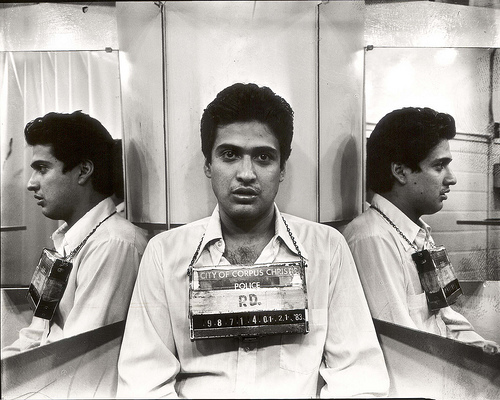
In February 1983, Wanda Lopez, was stabbed to death during her night shift at the gas station where she worked. After a brief manhunt, police found De Luna hiding under a pick-up truck. Recently released from prison, he was violating his parole by drinking in public. De Luna immediately told police that he was innocent and he offered the name of the person who he saw at the gas station. Police ignored the fact that he did not have a drop of blood on him even though the crime scene was covered in blood. De Luna was arrested too soon after the crime to clean himself up. The single eyewitness to the crime, Kevin Baker, confirmed to police that De Luna was the murderer after police told him he was the right guy.
At trial De Luna named Carlos Hernandez as the man he saw inside the gas station, across the street from the bar where De Luna had been drinking. Hernandez and DeLuna were strikingly similar in appearance but, unlike DeLuna, Hernandez had a long history of knife attacks similar to the convenience store killing and repeatedly told friends and relatives that he had committed the murder. Friends confirmed that he was romantically linked to Lopez as well. De Lunaâs lawyers knew of Hernandezâs criminal past but never thoroughly investigated his previous crimes. On December 7, 1989, Texas executed 27-year old Carlos De Luna.
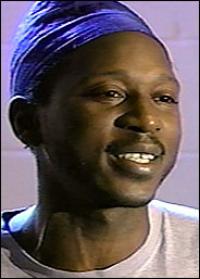
On June 26, 1980 in St. Louis, Missouri, 19-year-old Quintin Moss was killed in a drive-by shooting while allegedly dealing drugs on a street corner. The conviction was based largely on the testimony from Robert Fitzgerald, a white career criminal, who was at the scene at the time of the murder. He testified that he saw three black men in the car when shots were fired and that Griffin shot the victim through the window of the car with his right hand. This was Griffinâs attorneyâs first murder trial and he did not challenge the testimony even though Griffin was left-handed. He also failed to bring forth an alibi witness who was with Griffin at the time of the murder.
Griffinâs fingerprints were not found on the car or the weapon â all evidence against him was circumstantial. There is evidence that suggests Fitzgerald was promised a reduce sentence in exchange for his testimony. The prosecution also failed to address that there were two other witnesses who confirmed that Griffin did not commit the murder and they were able to name the three men who did.Appeals courts upheld his conviction and death sentence. Griffin was executed by lethal injection on June 21, 1995. Griffin maintained his innocence right up to his execution. In 2005, a professor University of Michigan Law School reopened the case. His investigation concluded that Griffin was innocent.
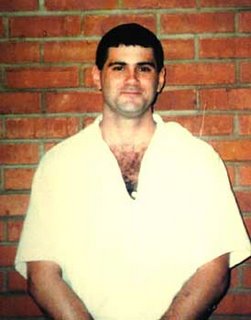
On the night of November 8, 1984, Ruben Cantu and his friend David Garza, broke into a vacant San Antonio house under construction and robbed two men at gunpoint. The two victims, Pedro Gomez and Juan Moreno, had been workmen sleeping on floor mattresses at a construction site, guarding against burglary. As they tried to take their cash, they were interrupted by Gomez’s attempt to retrieve a pistol hidden under his mattress. The boys shot both men killing Gomez instantly. Thinking they had killed both men, the two teens then fled the scene.
The police showed Moreno photos of suspects, which included Cantuâs picture, and he was unable to identify his attacker. On the basis of no physical evidence, no confession, and only Moreno’s subsequently recanted testimony, a jury convicted Ruben Cantu of first-decree murder. Juan Moreno now says that he had felt pressure from the police to finger Cantu. David Garza, Cantu’s codefendant, has since admitted involvement in the burglary, assault and murder. He says he did go inside the house with another boy, did participate in the robbery, and saw the murder take place, but that his accomplice was not Ruben Cantu.On August 24, 1993, Ruben Cantu at the age of 26, was executed by lethal injection. His final request was for a piece of bubble gum, which was denied.
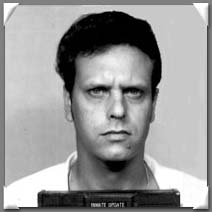
In 1982, David Spence was accused of the rape and murder of two 17-year-old girls and one 18-year-old boy in Waco, Texas. He received the death penalty in two trials for the murders. Muneer Deeb, a convenience store owner, hired Spence to do the murders and he was also charged and sentenced to death. He received a new trial in 1993 and was later acquitted.
The prosecution built its case against Spence around bite marks that a state expert said matched Spenceâs teeth and jailhouse snitches. Two of the six jailhouse witnesses who testified at trial later recanted, saying they were given cigarettes, television and alcohol privileges, and conjugal visits for their testimonies. Spenceâs post-conviction lawyers had a blind panel study in which five experts said the bite marks could not be matched to Spenceâs. Even the original homicide investigator on the case said he had serious doubts about Spenceâs guilt and a former Waco police detective involved in the case said he did not think Spence committed the crime. David Spence was executed by lethal injection on April 14, 1997.
On the morning of February 20, 1976, Highway Patrol officer, Phillip Black, and Donald Irwin, approached a car parked at a rest stop for a routine check. Tafero, his partner Sonia “Sunny” Jacobs, and Walter Rhodes were found asleep inside. Black saw a gun lying on the floor inside the car so he woke the occupants and had them come out of the car. According to Rhodes, Tafero then shot both Black and Irwin with the gun, which was illegally registered to Jacobs, led the others into the police car and fled the scene. All three were arrested after being caught in a roadblock. The gun was found in Tafero’s waistband.
At their trial, Rhodes testified that Tafero and Jacobs were solely responsible for the murders. Tafero and Jacobs were convicted of capital murder and sentenced to death while Rhodes was sentenced to 3 life sentences. Rhodes was eventually released in 1994 following parole for good behavior. Because the jury had recommended a life sentence for Jacobs, the court commuted Jacobs’ sentence to life in prison, but not Tafero’s. She was later released after agreeing to a plea bargain. Prior to his release, Rhodes confessed several times to lying about his involvement in the shooting. Even Sunny Jacobs claimed that Rhodes, not Tafero, carried out the shooting as well. Rhodes was the only person on which traces of gunpowder were found. Tafero was executed by electric chair on May 4, 1990. The chair malfunctioned causing the process to take over 13 minutes.
Ellis Wayne Felker was a suspect in the 1981 disappearance of a Georgia woman, Evelyn Joy Ludlum who was working her way through college as a cocktail waitress. He was put under police surveillance for 2 weeks, during which time Ludlum’s body was found in a creek, raped, stabbed and murdered. An autopsy performed by an untrained technician found that the body had been dead for five days. This information was later changed after realizing this would eliminate Felker as a suspect. Independent autopsies found that the body had been dead no more than three days.
In 1996, Felkerâs attorneys discovered boxes of evidence that had been unlawfully withheld by the prosecution including DNA evidence and a written confession by another suspect. Even the presiding judge in one of Felkerâs trials stated that his right to a fair trial had been severely compromised. Despite all this mounting evidence and doubts of his guilt, the Georgia Supreme Court denied Felker a new trial nor gave the defense more time to sort through the mounds of evidence to argue for exoneration. Felker was executed by electrocution November 15, 1996 at the age of 48. In 2000, a Georgia judge ruled that DNA testing would be performed in the first-ever attempt by a court to exonerate an executed person in the United States. The results were ruled as inconclusive.
On May 23, 1981 in Jacksonville, FL, police officer Thomas Szafranski killed when shots were fired at his police cruiser when he was stopped at an intersection. Within minutes, police officers busted into Leo Jonesâ apartment where they found Jones and his cousin, Bobby Hammonds. Police took both men in for questioning and then charged Jones, who they claimed had confessed. Hammonds gave a statement, saying he saw Jones leave the apartment with a rifle and return after he heard some gunshots.In 1997, a retired police officer, Cleveland Smith, came forward and said the officer that arrested Jones had bragged that he beat Jones after his arrest. Smith, who described the officer as an “enforcer”, testified that he once watched him get a confession from a suspect through torture. Smith claimed that he waited so long to come forward with this evidence because he wanted to secure his pension.
More than a dozen people had implicated another man as the killer, saying they either saw him carrying a rifle as he ran from the crime scene or heard him brag he had shot the officer. Even Florida Supreme Court Justice Leander Shaw wrote that Jones’ case had become “a horse of a different color”. Newly discovered evidence, Shaw wrote, “casts serious doubt on Jones’ guilt.” Shaw and one other judge voted to grant Jones a new trial. However, a five-judge majority ruled against him. Jones was executed by electric chair on March 24, 1998.
In 1991, a fire occurred at Cameron Todd Willinghamâs home in Texas killing his three young daughters. Willingham escaped the fire with minor injuries and his then-wife was not home at the time. Prosecutors charged Willingham with starting the fire in an attempt to cover up his abuse of his girls. This is despite the wifeâs testimony that he had never abused the children and, in fact, âspoiled them rotten.â While laboratory tests verified that an accelerant was used only near the front porch, the prosecutors alleged that the fluid was deliberately poured near the front porch, childrenâs bedroom, and in the hallway to start the fire and impede rescue attempts. Gerald Hurst, who has a PhD in chemistry, reputed claims that the extreme heat of the fire meant that an accelerant was used. The Board of Pardons and Paroles received Hurstâs argument but still denied Willingham clemency.
Willingham was deemed an âextremely severe sociopathâ by a psychiatrist using only Willinghamâs Iron Maiden and Led Zeppelin posters as indications of his fascination with violence and death. Witness testimony during the fire was contradictory and inconclusive. During his trial in August 1992, Willingham was offered a life term in exchange for a guilty plea, which he turned down insisting he was innocent. Willingham was executed by lethal injection on February 17, 2004. In June 2009 the State of Texas ordered an unprecedented re-examination of the case and may issue a ruling on it at a later date.
In 1985, Helen Schartner was raped and murdered by strangulation outside a nightclub in Virginia Beach. At the time of the murder, OâDell was already on parole for kidnapping and robbery convictions in Florida. OâDell chose to represent himself during the trial and he was convicted of the murder in based solely on blood evidence and the testimony of a jailhouse âsnitch.â There was nothing else linking OâDell to the crime.
For much of the decade that followed, O’Dell’s unsuccessful appeals went to the Virginia Supreme Court, Federal District Court, and the Supreme Court, where Justice Harry Blackmun found “serious questions as to whether O’Dell committed the crime.” O’Dell’s lawyers also had an affidavit claiming that another inmate executed in 1993, David Mark Pruett, had confessed to the crime. O’Dell asked the state to conduct DNA tests on other pieces of evidence to demonstrate his innocence but was refused. An International campaign to save his life had supporters like Mother Teresa and Pope John Paul II. Both the governor of Virginia and the U.S. Supreme Court rejected last-minute pleas to spare his life and OâDell was executed by lethal injection on July 23, 1997. In 2000, the last of the DNA evidence in the O’Dell case stored in the circuit court of Virginia Beach was burned without any further testing.
On September 29, 1981, Texas Department of Public Safety Officer, David Rucker, was shot and killed along a stretch of highway near the Rio Grande Valley. Around the same time, police officer Enrique Carrisalez pulled over a speeding vehicle driving away from the road where Ruckerâs body was found. The driver exchanged words with Carrisalez before pulling out his gun and killing the police officer. Lionel Herrera was arrested a few days later and charged with both Ruckerâs and Carrisalezâs murders. Before he died, Carrisalez also identified Herrera as the person who shot him from a single photograph shown to him in the hospital (not a photo array). In January 1982, Herrera was tried and found guilty of the capital murder of Carrisalez, for which he was sentenced to death. Later that year, Herrera pleaded guilty to the murder of Rucker.
Herrera filed a petition for writ of habeas corpus in federal court, claiming that new evidence demonstrated he was actually innocent of the murder of Carrisalez. Herrera included four affidavits from an attorney who had represented Herrera’s brother, Raul Herrera, Sr, and three others claiming that Raul Herrera, who was murdered in 1984, had told them that he had killed Rucker and Carrisalez. This lead to the Supreme Court case Herrera v. Collins where the Court ruled that new evidence demonstrating innocence did not violate the Constitutionâs 8th Amendment and Herreraâs death sentence with upheld. Herrera was executed by lethal injection four months after the ruling. In his final statement he said: “I am innocent, innocent, innocent. . . . I am an innocent man, and something very wrong is taking place tonight.”
In 1985, Texas Tech student Michele Mallin was raped and Timothy Cole was sentenced to 25 years in prison just based on her testimony. He was offered parole if he would admit guilt, but he refused. Later, Mallin admitted she was mistaken with the identity of her attacked and in 1995, Jerry Wayne Johnson confessed to the rape. She stated that investigators botched the gathering of evidence and withheld information from her, causing her to believe that Cole was the attacker. Mallin told police that her rapist smoked during the rape. However, Cole never smoked because he had severe asthma.
When DNA evidence showed him to be innocent, he was exonerated on February 6, 2009. Cole died, however, in prison on December 2, 1999 from an asthma attack. It was the first posthumous DNA exoneration in the state of Texas.


@ Randall(106)
I wouldnt be surprised if the Private For Profit prison system actually does offer a commission for sending a prisoner to one of its jails.
As for the death penalty, if a person is no longer able to function in a decent society – isnt it enough that they be locked away and excluded? Why the urge to execute them? I think it is a barbaric and hypocritical process. I think people who support the death penalty have been manipulated.
I am highly pro-death penalty for personal reasons: I have a family member that was murdered by her husband for insurance money. He is currently earning his law degree compliments of the State of Michigan.
Having stated my side I’d like to say-*most* of these people were putting themselves in the position to be wrongly accused, no? If youâre going to live a certain type of life you must accept that youâre not going to have the best outcome. Heartless? Who cares. Anyways, have a good day everyone and keep your nose clean.
@deepthinker (116):
‘And the sane, law abiding citizens will have no guns’
A sane, law abiding citizen shouldn’t want guns. He also shouldn’t support the accidental death of innocent people, just to satisfy his vengeance. He also shouldn’t watch Hollyoaks.
Agreed …. on every possible level.
……… especially hollyoaks
I’m anti-death penalty cos to me it’s like going back to the stone age. eye for an eye, tooth for a tooth.
@ames801 (121): I’m sorry for your loss.
That said your closing comments were stupid. What ‘type of life’ was #3 living? How dare he be a father?!? What about #7? He deserves everything he got for having teeth!!
All Texas or Southern States. What is wrong here ?
@Barold (124): #3: there was a question of child abuse….to his own daughters. How dare he, indeed.
#7: he was HIRED to kill someone…
@ Ames, so do you support the death penalty for all people who murder for insurance money or just those who’ve murdered someone you know?
I’m a bit confused about your second point. Are you saying that having committed one crime in the past makes it ok for you to be falsely accused and executed for a crime you didn’t commit? Or was it the ethnicity of some of the cases that makes it ok? In the case of #3, I’m really confused… can you clarify please?
With the exception of the Willingham case, all these crimes were committed in the seventies and eighties. And even the Willingham case was 1991. I’m not sure when DNA testing really took hold, but I would be interested in seeing more recent cases where DNA would have had a greater impact on the case. Specifically, whether or not recent convictions are held up better with the improved technology against the older cases.
Not saying that there has’nt been gross injustice, indeed it would seem the case in every case listed, but it would be nice to see some balance.
@shadydeathrow (109):
The guns that are allowed in our homes are not to protect us from invaders but are to protect our constitution. Our government can’t decide to take our belongings or our homes because we would blast their brains our. That is what makes our democracy so great!
@ames801 (126): He didn’t set the fire so he wasn’t trying to cover up child abuse. His wife has consistently denied that he abused the children even when she herself believed the first forsenic tests that have supposedly proved he set the fire. So, there is no evidence of child abuse!!!
As for #7. You seem to have missed the point of this list. He didn’t do it so therefore he WASN’T hired to kill someone.
The only possible thing I can think you mean in general is that the ‘type’ of lives these people were living were poor? Ethnic? How dare they not be able to afford good defence lawyers!!
@Ms Scarlett (127): I support the death penalty period. I was just adding my own personal reason/experience. I’m not saying that you should be killed because you committed a crime in the past; that would be pretty stupid, huh? And, really? You’re bringing up ethnicity? A criminal is a criminal is a criminal…regardless.
I’m saying that if you’re going to put yourself in certain situations (illegal activity of any kind) you should expect a less than fortunate outcome. That’s all.
I’m sorry, how is the death penalty less of a deterrent than jail time? It’s a proven fact that in some communities going to jail is cooler than going to college- it gives the prisoner street cred and respect. Within three years of release, over 50% of prisoners are reincarcerated. Recidivism is at an all time high. Maybe the looming threat of the death penalty isn’t enough to stop a crime from happening, but there is no recidivism for death row prisoners. We’ve all heard of people getting out of jail, going back, getting out, going back..some people’s lives are a revolving door of crime. However, I’m 110% certain that there’s never been another crime commited by someone who’s been executed.
Yes, mistakes happen, and yes, they’re heart wrenching but at it’s absolute core the death penalty is needed. It needs cleaning up, particularly among race lines and the amount of time an execution actually takes, but it’s absolutely used well more times than not. Mistakes happen with prisoners too- some people are jailed for decades until proven innocent. That doesn’t mean we should do away with the prison system because sometimes there are mistakes. More often than not, someone sentenced to jail is guilty. And more often than not, someone sentenced and put to death is guilty.
your last point is ridiculous …. no one is saying we should be getting rid of the prison system, the difference is that if you’ve killed someone that’s it … if they turn out to be innocent there’s nothing you can do. if they’re in prison, at least you can release them and give them a chance to try and get on with their life.
Also, I maintain that whether they’re innocent or not is somewhat irrelevant, the real question is: how can you justify murdering anyone? simple as, I don’t care what they’ve done, the justice system should not be dishing out such barbaric/medieval punishments ….. murder is murder, state sanctioned or otherwise.
Now, I’m not going to sit here and say that if someone murdered a family member of mine that I wouldn’t want to go out and get revenge/kill the perpetrator ….. but the fact of the matter is, I’d be under an extreme amount of personal stress leading to that attitude, I don’t expect the legal system to be that extreme as well ……. and If i did get my revenge, I’d expect them to treat me no better or worse than they would’ve treated the other person.
If you want to make an omlette, you have to crack a few eggs.
This list doesn’t prove ***** one way or the other. A snippet, a blurb, a lifted paragraph summarizing an entire case doesn’t do justice (pun intended) to whether or not an innocent person was murdered by the state.
If you’re going to believe either side based on a paragraph you’re a *****ing retard.
@callie19 (132): Excellent post. Thank you.
Annoyed Elephant @98; This list is called “convicts presumed innocent after execution” not “convicts categorically proved innocent after execution” – the aim here is to show that people are being convicted and sentenced to death regardless of circumstantial evidence, contradictory testimonies etc., thus highlighting the potential flaws in judicial systems using the death penalty!
@ames801 (131): If your loved one had been executed for a crime she didn’t commit would you be using that to argue against the death penalty.
Its fairly simple here in TEXAS. As the comedian say
“If you kill somebody…We will kill you back” And yes I am a proud gun owner, one of those the “anointed one” says clings to my guns and Religion. I assure you though, if someone breaks into my home, tries to hurt my family, I will kill them and be able to sleep at night. See, the rest of the country and world for that matter who are so pro illegal immigration don’t deal with the hoards of illegals flooding across the border into their back yard as we do in Texas. With the crime rate on the increase due to illegals who have no SS#, DL#, address, or anything they can be tied to, I think “Having the Right to Keep and Bear Arms” comes into play more and more. Of course, unless you, are an American I guess having Rights and Freedom are a pipedream. Bash us on the websites all you want, who cares?…We don’t. Have a blast in your uber-taxed, freedom lacking little worlds.
You’re either a troll or a coplete moron …. can’t work out which
*complete
@Barold (130): 5 out of the 10 are white (like me) so I’m not sure what you meant by my judging based on ethnicity. Please explain. Also, even people that can afford good representation can be criminals (OJ, the killer in my family, etc) so…still not sure what you’re saying.
Yes, the problem is the rich people who can afford to get decent legal representation also seem to be the people who rarely get convicted of anything, or whose lawyers manage to get them out of the deaht penalty through some loophole or other.
@Barold (137): No. I’m pro death penalty.
@callie19 (132): Well said.
@ames – I brought up ethnicitiy because 6 people on the list are non caucasian. As I was struggling to find the logic in your comments, I wondered if it was in fact their ethnicity you were referring to. If that’s not the case, I apologise. Though it is of course true that you are much more likely to be executed for a crime if you’re not white…
Are you saying then that if you are involved in any kind of criminal activity at all, that makes it ok for the state to fit you up and kill you for something you didn’t do? Gosh, I hope you never get caught doing something naughty then! Call me old fashioned but it seems to me that the only reason good enough to convict someone of a crime is them being guilty…
@ Callie, the death penalty isn’t a deterrent for the simple reason that most criminals never expect to get caught. If it were an effective deterrent, the states in the US which have it would have much lower murder and rape rates than the states that don’t, right? But they don’t so it is empirically proven not to be a deterrent. You’re quite right that executing someone means they can’t ever commit another crime. In that case then, why don’t we just execute everyone who’s ever committed any kind of crime? Then we’d all live in a perfect society wtih no crime.
I was expecting this list to be more about terrible, genuine mistakes. However most of the items were to do with corruption in the police force/justice system. That somehow made it less of a senseless, tragic mistake, and more like murder…
I am ANTI death penalty, partly (and only partly) for reasons like the 11 above.
@Ms Scarlett (142): Please refer to my post (131) regarding past criminal activity and being put to death. If I’m not being clear I apologize.
Here’s my position: I support the death penalty. I don’t think that being poor is an excuse for bad behavior (you’re talking to 1 of 12 kids-we didn’t have money, we had love). I’m not here to judge anyone; that’s not my job. I’m just saying that if you’re going to live in a criminal manner than you should expect criminal outcome.
I feel like a broken record…
Anyways, I may not be articulating what I’m trying to say very well. So for that, I’m sorry.
I feel sick to my stomach when reading this list. It’s…I don’t even know what to call it. I just feel like vomiting.
@jakexxxwbu – i love the way you Americans think you have a monopoly on rights and freedom, most amusing. I personally enjoy the right not to be randomly shot by some gun toting redneck for no reason. Or by a member of my own family by mistake (how common is that in the states?) Even for those who do believe in the death penalty, executing someone just for burgling your home is a teensy tiny bit over the top no? I sense a lot of anger for someone just participating in an online debate…
@ames801 (139): Even people that can afford good representation can be criminals and get away with it like OJ you mean?!?!?!? Because he could afford a good defence? How many poor people and how many rich people on Death Row… look into it. Then check out the ethnicity stats too.
@ames, ok but unless I’m getting this really wrong, only 2 of the 11 had prior criminal convictions. 2 others were committing crimes at the time. So 4 of the 11 were “living in a criminal manner” as you put it and so according to you it’s ok that they were convicted and executed for crimes they didn’t commit. Ok fair enough, I don’t agree obviously but that’s your opinion clarified.
What about the 7 people?
@ames801 (144): I agree that someone who lives a criminal life should expect justice. But execution is not justice.
And no, poverty is not an excuse for criminal behaviour. But in a highly class-based society like the USA, the application of justice must be tempered by the realisation that criminals are made, not born. Crime can be prevented. It cannot be killed.
If everyone gave an eye for an eye, we’d all be blind…
@archiealt (122): LMAO at Hollyoaks
“@ Callie, the death penalty isnât a deterrent for the simple reason that most criminals never expect to get caught. If it were an effective deterrent, the states in the US which have it would have much lower murder and rape rates than the states that donât, right? But they donât so it is empirically proven not to be a deterrent. Youâre quite right that executing someone means they canât ever commit another crime. In that case then, why donât we just execute everyone whoâs ever committed any kind of crime? Then weâd all live in a perfect society wtih no crime.”
By that logic, no criminal ever expects to be put in jail (again and again) for their crimes. Let’s just let them go free since they’ll just keep going back and we’ll live in a world with tons of crime and hope for the best. I agree it’s not a deterrent to the actual act of commiting the crime, but it does make sure it doesn’t happen again. However, jail is no more of a deterrent to crime, and is in fact a goal for some. It’s trie. Jail, or a life of crime in general, is someone’s GOAL. That turns my stomach. I wish the death penalty WAS used more often. Maybe it would be a bigger deterrent then.
That should read “it’s true”
@jakexxxwbu (138): I hope no one breaks into your and house and uses your gun against you. This reckless idea that you’re safer by having a deadly weapon around is the main reason your homicide rate is so high. Violence begets violence and when the state says it’s ok to kill then people will kill. Simple really.
First and foremost this list is in dire need of editing. And where are the sources?
If you don’t like it then leave!
God Bless America
God Bless Texas
@Mars (151): If you’re going to rip of Gandhi at leats give him credit!
I’m *****ing staggered at the amount of people who are in support of the death penalty, its a *****ing joke. A really depressing joke.
@callie19 (132):
‘Iâm sorry, how is the death penalty less of a deterrent than jail time?’
Well, study’s have not conclusively proven one way or the other whether or not the Death Penalty works as a deterrent. And seeing as though there is no conclusive evidence I think we should err on the side of caution, don’t you?
‘Itâs a proven fact that in some communities going to jail is cooler than going to college- it gives the prisoner street cred and respect. Within three years of release, over 50% of prisoners are reincarcerated. Recidivism is at an all time high. Maybe the looming threat of the death penalty isnât enough to stop a crime from happening, but there is no recidivism for death row prisoners. Weâve all heard of people getting out of jail, going back, getting out, going back..some peopleâs lives are a revolving door of crime. However, Iâm 110% certain that thereâs never been another crime commited by someone whoâs been executed.’
This is all stupid. Are you suggesting that we execute every stupid kid that roles out of school and commits a crime just to impress his mates?
The fact that recidivism is at an all time high and ‘some peoples lives are a revolving door of crime’ is a sign of a failed society. How about you try tackling the problem at source, rather than just murdering all the people who don’t fit in with your society. I’d use a cancer *****ogy but its so cliched that i’m sure you can figure it out for yourself.
‘Yes, mistakes happen, and yes, theyâre heart wrenching but at itâs absolute core the death penalty is needed.’
Back that statement up. Please enlighten me as to why the death penalty is needed? Maybe what’s really needed is a decent education system.
And those ‘mistakes’ that happen, aren’t just any mistakes are they? It’s killing an innocent person. How people are O.K with that I will never understand.
‘Mistakes happen with prisoners too- some people are jailed for decades until proven innocent. That doesnât mean we should do away with the prison system because sometimes there are mistakes.’
Again, this is stupid. You can release someone from prison, you can’t raise someone from the dead. That’s the crux of the issue.
The U.S is such a civilized country…
@betterthantheoriginalwally (120):
See… the death penalty is one of those issues—the other being abortion—that I wish people would step back from a few paces, and think about harder. And I mean everyone–on both sides of the question.
I have never felt secure with a black and white opinion about the death penalty. Surely, yes, if I suffered a personal loss of an unthinkable nature–in short, if someone murdered a loved one of mine–I’d want the murderer dead. But I’m sure I’d want to kill the bastard myself, too. (Whether I *could* is another question).
But that’s the whole point here–we’re supposed to cleave to the rule of law, and that places the responsibility for such things in the hands of society, not the individual. I, as an individual, am supposed to play by the rules even if others choose not to. And if I am to expect society and the state to protect me and help me in various ways (through paying police and a justice system… and the armed forces, and through keeping up an infrastructure so I can drive my car on a road instead of dirt, and through various entitlement programs that assist me if I should lose my job or become incapacitated, etc.) then I ought to defer to society/the state when I am in need of justice because someone has wronged me or a loved one of mine.
Okay. Now, never mind the question of, “what if society/the state fails you in this?” Because that’s a whole ‘nother discussion. But the next important question is—if I as an individual want compensatory vengeance for a crime done to me or my family—then is that what society should also seek on my behalf? Is that justice? Is that right?
See… you can quickly surmise the enormous moral conundrum that arises here. And it’s huge. And yet we treat it as though we can blow it off and not think twice about it–on both sides of the fence.
Where does revenge end and justice begin? Or turn it around… where does justice end and revenge begin? And… is there something inherently wrong or immoral about revenge?
We do seem to think so. On an individual level, we don’t give it as much thought. You do me some wrong, and I’m sorely tempted to wrong you back, to make you pay.
But something also tells us this isn’t right. We have a moral belief, today (largely stemming from Christian teachings, to be frank) that there is an inherent wrongness in revenge.
Is the death penalty, then, a deterrent? Can we justify it that way? Well, lots of research and evidence says no. It’s something of an inconclusive issue. But if it doesn’t act as a deterrent… then we’re back to the question of vengeance, and/or vengeance vs. justice.
Now… we hold it as writ that, if you come and rob my house, that I can’t just go and rob yours. Instead, society works to arrest you, try you, and if you’re found guilty, in essence “rob” you of your freedom by imprisoning you. (Or, in other crimes, you’re fined money or made to perform some service). Clearly we have no problem with this morally. And we don’t consider it “robbery in kind” or in return, if we “rob” you of your freedom for having committed a crime, or take from you a certain sum of money or what have you. We instead consider that justice. You have brought a penalty on yourself that, by the rule of law and by the terms we are supposed to agree upon as citizens of a society, you must pay in order to right what you’ve done.
But then… if you deprive someone else of their LIFE… how do we define what is “just” in compensation for that?
We tend to say that an enlightened and good society does not go and do to one of its citizens (no matter how wrong or bad that citizen is, or what terrible thing he/she has done) what it expressly says one citizen should NOT do to another. An enlightened society, in short, does not execute its citizens for any reason, because this sets up A) a bad example, and B) becomes a moral dilemma.
But this is still looking at it too simplistically. We already allow and expect the state to do things that we do not allow or expect individuals to do. So… why can’t the state take the life of a citizen if it has collectively decided that that too is justice? One side of the question says that the character of the state must be defined so as to be as humane as possible, and that therefore the death penalty is morally wrong. The other side says that the character of the state must be humane, yes, but must also defend, protect, and, yes, demand payments for crimes that the individual is not allowed to collect on AS an individual.
So we’re back to it–what’s right?
If we take the simplistic view that it’s just wrong for both the individual AND the state to kill, no matter what–well, that looks great in moral terms, but do we really practice that? War of course is the problem that comes to mind. The state allows for war. The individual may see ALL killing as morally wrong, war included. But the state cannot really take that view, because it is tasked to defend and protect its own citizens.
There’s just no easy answer to this question. And I wish people wouldn’t treat it so.
@Ms Scarlett (149): I’m glad we agree. You’re formidable.
the death penalty is only wrong if you value human life. i do not. in order to install a decent capital punishment system…we need to first eradicate those who stand against it.
I couldn’t even get halfway through this list the writing was so poor. Comma, happy, much?
I should add… it DOES seem that at bottom, the death penalty question ought to come down to whether it is right for the state to deprive a citizen of their life.
Morally, the answer should be no. At least that’s the side I’d come down on.
Practically, however, we already allow for a lot of moral fuzziness in human affairs. Some of which also leads to people being deprived of life.
If we addressed our moral fuzziness overall… I suspect it would be a far better world. But mankind seems to need to take baby steps with that kind of thing, or else it never works. I don’t know if it’s to our credit that we try, or to our shame that we don’t succeed. Quite likely, both are true.
@Randall (160):
You have delved far to deep in to a moral maze that doesn’t need to be looked at.
All the moral issues you have brought up pale in to insignificance when compared to this one statement;
‘If a country allows the death penalty, then eventually, whether it be a week, a year, or 50 years down the line, an innocent person will be put to death.’
As a society, if we are to live by any moral code, we can not let that happen.
So although the moral dilemmas that you bring up are no doubt interesting, they are wholly unnecessary. Much like debating the length of a fairies wings, interesting, but missing the point.
Fairies don’t exist. An innocent man will be put to death.
@Randall (164): What I always take comfort in is that the number of countries employing the death penalty is falling. Like all kinds of stupidity it’ll go away eventually. Baby steps as you say!!
Whether or not people believe that someone deserves the death penalty for their crime, I think we should probably take into account the fact that in the USA if you are poor you are far more likely to be convicted of a crime than if you are well off- not exactly fair if you ask me… And if you are not white you are more likely to be given the death penalty than a life sentence- just shows how blind justice really is!
I don’t understand how anyone can honestly wish for the death penalty to be implemented when such unfairness is prevalent in their justice system. I would just LOVE to find out how you pro death penalty people would feel if a member of your own family was facing it (especially if they were innocent. I think there might just end being a slight change of heart (despite how black and white it seems to you now)
@callie19 (133): Your argument doesn’t make any sense in this context. Whatever crime you think some thug is committing just to get some street cred is nowhere near the level of a crime that is worthy of seeking the death penalty. The death penalty is reserved for only the most heinous cases of first degree murder. I don’t think any gang members are committing first degree murder with the intention of being sent to prison unless they want that street cred to kick in when they are 60 and were paroled for good behavior.
No, these guys are carjacking, robbing, breaking and entering, etc. These are not capital crimes and aren’t subject to a discussion about the death penalty.
Generally, since the DP is reserved for these top heinous crimes, the people that are committing these crimes aren’t afraid of the possibility of state sanctioned execution. They are criminally insane. Ask Charles Manson if he’s afraid of the death penalty. You think Jeffrey Dahmer was scared of the death penalty when he was killing and eating people? You think Albert Fish, Ted Bundy, David Berkowitz, or any other serial killer/mass murderer is scared of the death penalty?
The group of people who the death penalty would apply to are not scared of it.
@callie19 (133): In fact, it sounds like you are making an argument for the expansion of the death penalty to non-capital crimes.
I hope that’s not what you are doing but that is what it sounds like.
Not arguing for or against the death penalty but if they are going to use it why don’t they just blast em in the head with a big ass gun. It would be less expensive and more than likely hurt less (or not at all) than the other methods of death.
@faketree78 (168): That’s a very good point. Do any of you honestly believe that a person who is sick enough to commit the sort of crimes they can receive the death penalty for is going to be put off by the threat of such a sentence? Come on. If they can’t be rational about the sanctity of human life, how can you expect them to the rational about the consequences of their actions? Justice and revenge might pass each other in the street once in a while but that doesn’t make them butt-buddies.
@Hogarth (171): “Justice and revenge might pass each other in the street once in a while but that doesnât make them butt-buddies.”
HAHAHAHAHAHAHAHA
@General Tits Von Chodehoffen (170): It’s more traumatic for the guards. That’s why the Nazis developed Zyklon B for concentration camps, because their soldiers were getting upset about having to shoot people.
That right there is a fact, and yes I did just compare all those redneck states which utilise the death penalty to the Nazis. Kiss my hole.
@Hogarth (173):
That “kiss my hole” wasn’t directed at you General Tits, that one was for everyone.
@archiealt (158):
“Well, studyâs have not conclusively proven one way or the other whether or not the Death Penalty works as a deterrent. And seeing as though there is no conclusive evidence I think we should err on the side of caution, donât you?”
Err on the side of caution of a victim’s family feeling safe by executing a monster or of saying “ah, it’s probably not stopping people, let’s do away with it.” There’s two sides of caution. You and I fall on different ones. Additionally, it’s not like jail time is a huge deterrent either.
“This is all stupid. Are you suggesting that we execute every stupid kid that roles out of school and commits a crime just to impress his mates?”
No…that’s not what I said at all. It’s two statements. I’m saying instead of letting criminals- rapists, child molesters, murderers who convince some doctor they’re cured- come back through the justice system again and again, nip it in the bud and they won’t be coming back.
The fact that in some communites a life of crime and prison is well respected is a separate statement, to show that some people will never stop. Dead people will stop.
I also don’t appreciate the way I feel and my statements being called stupid. Can we keep it civil?
“The fact that recidivism is at an all time high and âsome peoples lives are a revolving door of crimeâ is a sign of a failed society. How about you try tackling the problem at source, rather than just murdering all the people who donât fit in with your society. Iâd use a cancer *****ogy but its so cliched that iâm sure you can figure it out for yourself.”
Murdering all the people who don’t fit in with our society? The day a child rapist, or a gang member who killed a cop for some “blood in blood out” creedo fits in with society is the day I find a new one. And there are countless youth outreach programs for communities in crisis. Some work, some don’t. Some people rise above, some don’t. Those that don’t like to blame upbringing, peer pressure, this, that, and the other instead of taking reponsibility and consequences for their actions. Bleeding hearts come out of the woodwork at executions- he was poor! His mom was on crack and his dad beat him! There are no excuses for some of the crimes people commit.
“Back that statement up. Please enlighten me as to why the death penalty is needed? Maybe whatâs really needed is a decent education system.”
Yeah, we’ll educated people as to how murder is wrong and then they just won’t do it anymore. There’s a plan. The death penalty is needed becuase some people commit crimes of such a heinous nature that they should no longer be allowed to live their lives in a cell with three meals a day, education programs, free time, outside time, and the opportunity to develop friendships and relationships- things their victims never get. In fact, some people’s crimes are so heinous that lethal injection, a painless sleep, is far to good for them.
“And those âmistakesâ that happen, arenât just any mistakes are they? Itâs killing an innocent person. How people are O.K with that I will never understand.”
Killing the guilty if their crime is severe enough is the right thing to do. I’m not “ok” with killing an innocent person. It’s not an attitude of flippancy, and I acknowledge the need for reform. What happened to these ten people is terrible, but there are 3,279 people on Death Row in the US as of July 1. How many are innocent? I will never understand people who think their punishment should be living out their lives, clothed, fed, and looked after.
“âMistakes happen with prisoners too- some people are jailed for decades until proven innocent. That doesnât mean we should do away with the prison system because sometimes there are mistakes.â
Again, this is stupid. You can release someone from prison, you canât raise someone from the dead. Thatâs the crux of the issue.”
Again with the stupid. Mistakes are mistakes. You think we should do away with the death penalty because it’s inhumane, unnecessary, and mistakes are made. Some people’s inprisonment is inhumane and unnecessary as well. Again, it doesn’t mean that it it’s core the prison system is flawed.
@Hogarth (171): ‘Justice and revenge might pass each other in the street once in a while but that doesnât make them butt-buddies.’
I like this quote a lot. Well said.
I often go to Canada and the USA for work, and I’m always relived when I return to Canada. The USA is a great place, plenty of world innovations, friendly people and fantastic sights, but the culture is SO militant.
Everywhere you see military recruitment signs, arrogant policemen storming around like soldiers, flags flying everywhere, endless propaganda like Fox news, and going through customs is like being in prison.
The rest of the Western World (Europe, Canada, Australia, NZ etc.) have liberal justice systems, are patriotic, often with powerful armies involved in wars like Afghanistan, and yet still maintain peaceful societies with no militant or nationalist aspects in their culture.
“I donât think any gang members are committing first degree murder with the intention of being sent to prison unless they want that street cred to kick in when they are 60 and were paroled for good behavior.”
some gang members are required to rape or kill for initiation. Sorry if that’s not a top tier death penatly offense to you.
@archiealt (165):
As you know, I detest you. But on this point, I do agree with you—to an extent. As I said earlier—I am not comfortable with the death penalty and never have been. I can’t help but find it morally repugnant.
But you *are* wrong when you try to indicate that I’m missing a point here. I’m well aware of the point being made, that an innocent person will eventually die at the hands of the state. That’s another chief reason why I have so much difficulty with the death penalty, and the first reason I generally go to when I feel it should not be allowed.
But in *practical* terms… we DO, collectively, allow for the deaths of innocents at “our” hands (collectively, as a society/state) all the time. Again, war is the immediate example that leaps to mind here. But also, within our own ordinary daily lives–we do not suffer the deaths of our neighbors on EVERY occasion. Yes, in most of the civilized world, the state is tasked with providing health care to its citizens (the US still hasn’t gotten around to that, regardless of what system is voted into being soon) and certainly in the US and in most places that I know of, it IS viewed, loosely, as the state’s responsibility to prevent a citizen from dying needlessly if the state can do anything about it.
But the state also allows for deaths on a statistical level. We build a road system, knowing full well that even if we maintain that road system and police it, that nevertheless people are going to die on it, and in fairly large numbers. TOO large a number, and we do something about it. But there’s a certain level of number where we allow for it. We don’t outlaw road systems, or cars. We do outlaw reckless driving. But we still know there will be deaths. We do not do everything that could be morally done to prevent those deaths.
Is the *taking* of a life, then, on grounds of “justice” (however that’s defined) so very different? I have a hard time answering that one. I do NOT like it. I find it, as I said, repugnant. But…
Well, I’m sure there are other, and better examples I could come up with… but the point is, life *itself* is a bloody business, and even civilized life is no less bloody. There are many things we feel are not *supposed* to happen, and things that we feel *ought* to happen. There are many things we feel to be right, and wrong. But life doesn’t always work out that way.
None of this is meant as a defense of the death penalty. I don’t defend it. I don’t like it. I just mean to say that there are many things about human life that I don’t like. Many things that are indefensible. I don’t know where we can draw lines on these things. It is not just a game of moral philosophy—”guessing the length of fairies’ wings.”
If each of us got up right now and walked out to do good, to help each other… there’s no doubt the world would be vastly improved.
Sadly, that’s not the reality we live in, however.
What about Joan of Arc?