
 Weird Stuff
Weird Stuff
Weird Stuff  Movies and TV
 10 Characters Who Never Forgot a Grudge
 Technology
 10 Historical Inventions That Changed War Forever
 Humans
 10 Everyday Concepts That Are Shockingly Modern
 Animals
 10 Animals Everyone Gets Wrong
 Weird Stuff
 10 Bizarre Superstitions That Drive the Stock Market
 Movies and TV
 10 Films That Were Praised but Got History Wrong
 Our World
 10 Major Cities Being Swallowed by the Earth
 History
 10 Times Saying the Wrong Thing Became a Death Sentence
 Music
Music 10 Stars Who Secretly Wrote Hit Songs for Other Singers
Weird Stuff 10 Weirdly Specific Conspiracy Theories from the 1990s
Movies and TV 10 Characters Who Never Forgot a Grudge
Technology 10 Historical Inventions That Changed War Forever
Who's Behind Listverse?

Jamie Frater
Head Editor
Jamie founded Listverse due to an insatiable desire to share fascinating, obscure, and bizarre facts. He has been a guest speaker on numerous national radio and television stations and is a five time published author.
More About Us
Humans 10 Everyday Concepts That Are Shockingly Modern
Animals 10 Animals Everyone Gets Wrong
Weird Stuff 10 Bizarre Superstitions That Drive the Stock Market
Movies and TV 10 Films That Were Praised but Got History Wrong
Our World 10 Major Cities Being Swallowed by the Earth
History 10 Times Saying the Wrong Thing Became a Death Sentence
Music 10 Stars Who Secretly Wrote Hit Songs for Other Singers
10 Places With Morbid Names
Certain places in the world may own morbid or dismal names, but many of them do not have substantial or intriguing stories that accompany their origin. These ten places (in no particular order) surely do, as each one got its name for a reason. Whether these places have been this way for hundreds of years, or time has changed them for better or worse, I hope their tales will captivate you as they have me.
10
The Skeleton Coast
Namibia
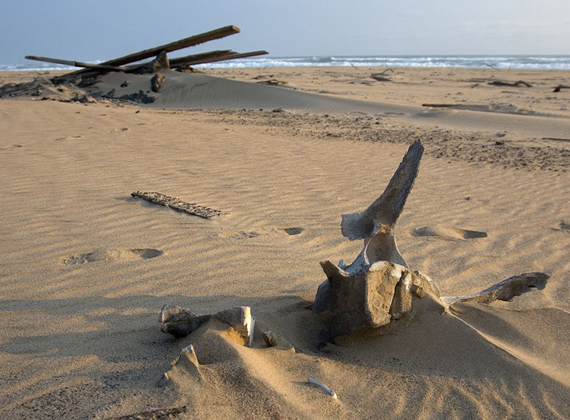
The rusted, dilapidated remnants of hulking ships, recent and ancient, litter this stretch of coast in this southwestern African nation, which the Namibian Bushmen called, “The Land God Made in Anger”. Many are covered by the sands of time – only their bows can be seen jutting through sandbars, while others are completely unseen, buried in their sandy graves. Punishing winds and currents, rocks, and fog have resulted in the demise of many ocean vessels throughout time, as well as multiple marine animals such as whales, whose bleached bones can be found intermingled with decaying hulls, and for which the coast gets its name.
Countless shipwrecked sailors came face to face with death here. If they were “fortunate” enough to avoid drowning and make it to land, they were greeted with an arid, salty wasteland of massive sand dunes that extended for a hundred miles inland with no opportunity for finding sustenance. Eventually, they would perish from thirst or exposure. Although the area is slightly more accessible today, it is still very remote and notorious, and ships go out of their way to stay farther out to sea when passing by it.
9
Tombstone
Arizona
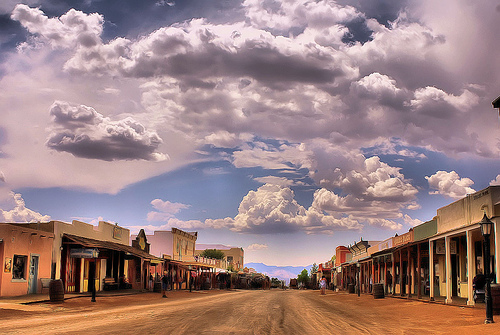
In the Southwest American desert, the town of Tombstone is a reminder of the Old West’s violent, lawless past. It received its name when a prospector looking for valuable rocks was told that all he would find out in the harsh area would be his own tombstone. However, the prospector stumbled upon silver, named his mine The Tombstone, and the town sprung up from there.
Although the inception of the name of the town was a tongue-in-cheek joke, it lived up to its name; perhaps it was a self-fulfilling prophesy. A substantial part of the town consisted of saloons and whorehouses which attracted various unsavory characters including many outlaws. One of these brothels, The Bird Cage Café, was reported by the New York Times as being “the wildest, wickedest night spot between Basin Street and the Barbary Coast”. Violence and bloodshed became the norm in Tombstone, with the Shootout at the OK Corral between Wyatt Earp and his brothers and a gang of outlaw “cowboys” being the most famous event. Not ironically, Tombstone is home to a number of cemeteries which are tourist attractions today.
8
Dead Sea
Israel/Jordan
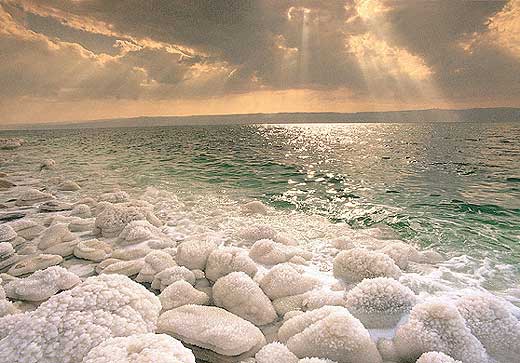
This body of water in Israel and Jordan certainly does not have a shortage of bleak or depressing nicknames. Lake of Asphalt, Salt Sea, Sea of the Devil, and Stinking Lake are a few, even though it holds some biblical importance. Its high mineral content, which makes it ten times saltier than the world’s oceans, allows nothing to live in its waters except some bacteria. It lies at the lowest point of dry earth on the planet, plunging 1,300 feet below sea level. Being so low, water does not drain but can only evaporate leaving only the strong concentration of minerals. An estimated 7 million tons of water evaporates daily.
The mineral deposits are actually sought after and are used for things such as medicines, fertilizers, and cosmetics. Health spas and resorts were also commonplace on the sea because it was, and still is, believed that the water has healing properties. However, scientists are warning that the Dead Sea is in fact dying itself. In recent years, it has been rapidly shrinking with the southern end disappearing altogether. Over the past 50 years the water level has dropped 80 feet and the sea has lost a third of its volume. To make matters worse, the only thing that flows into the sea is raw sewage with virtually no fresh water replenishing it. While officials are devising ways to keep the Dead Sea as pristine as they possibly can, it is evident that it will never be the same again and its destiny is that it will continue to dwindle. Strict conservation efforts must be put into effect to at least slow the inevitable.
7
Murder Island
Nova Scotia
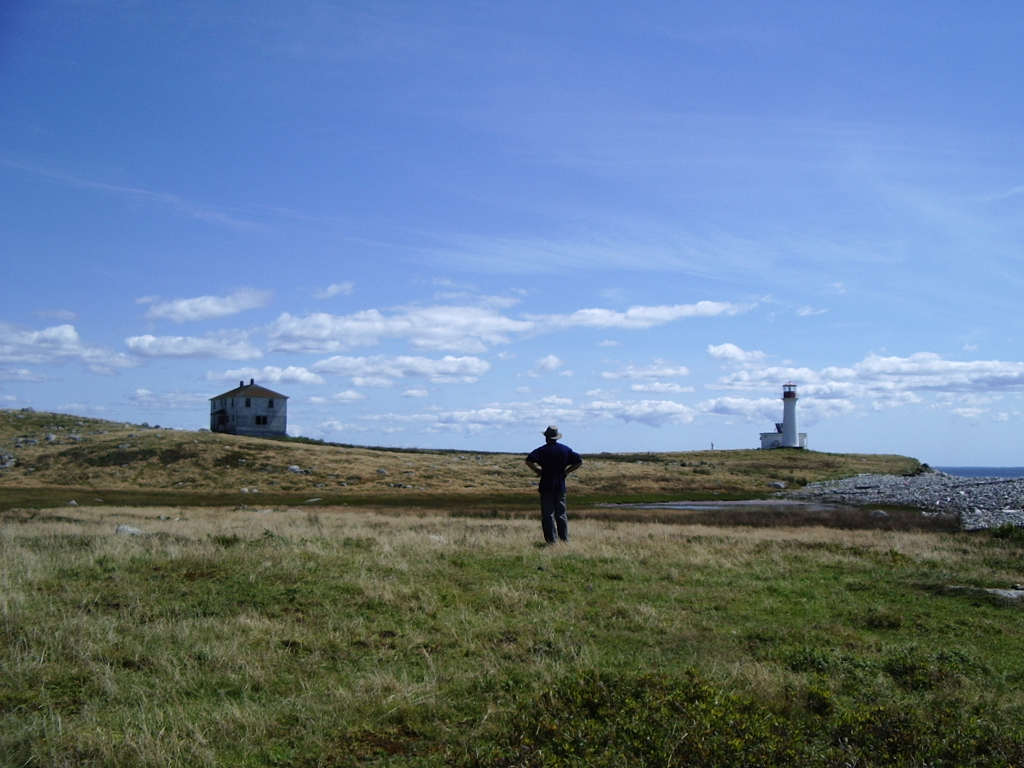
The Tusket Islands lie off the coast of the Canadian province of Nova Scotia. Although they are picturesque and beautiful, they are also home to the mysterious and ominous Murder Island.
Stories surrounding the island are quite cryptic. One tale has the origin of the name going back to 1735, when the brig “Baltimore” was discovered on the shore with its interior splattered in blood and deserted except for one mysterious woman. She told confusing stories of a convict revolt and an Indian massacre which were never substantiated or fully explained. Before a concrete conclusion could be reached, the inscrutable woman disappeared along with the knowledge of what had really happened.
Another story tells about a smallpox epidemic that ran rampant through a French fleet stationed near the island sometime in the 1700s. Hundreds of corpses were unloaded onto the diminutive island and buried there. Reports of human bones popping up through the island’s beaches continued through the 20th century. Whether or not these stories can be proven, it is probable that Murder Island holds some checkered secrets.
6
Galgbacken (Gallows’ Slope)
Stockholm

Also known as Gibbets’ Slope, which is another name for gallows, Gallows’ Slope was the largest and last place of execution in Sweden’s capital city. The last execution took place in 1862 with the preferred method of execution being, obviously, hanging. However, beheadings were also quite popular. Criminals of all ilk were put to death here, including murderers, rapists, embezzlers, and counterfeiters. A number of those sentenced to die were also prominent figures of the day. In the 1930s, construction workers found human skeletal remains while beginning construction on residential housing on the site. No doubt, bones of those unlucky enough to meet their death on the gallows still lie buried at Gallows’ Slope.
5
Hell’s Kitchen
New York City
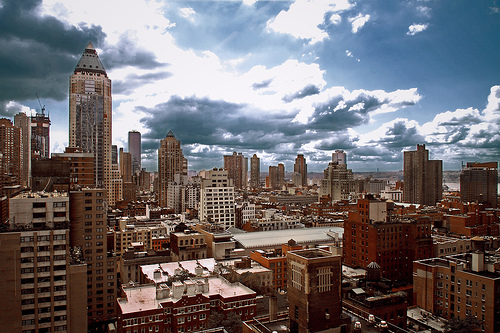
A neighborhood in Midtown Manhattan, Hell’s Kitchen was infamous for crime, sex, and violence. It is thought to have gotten its name from a rough, dangerous hostel long since gone. Irish and German immigrants first settled the neighborhood with most of them working on the docks as longshoremen, or in slaughterhouses and factories. The influx led to a filthy shantytown and the rise of multiple street gangs. After the American Civil War, the population swelled even more, and tenements rose above the streets resulting in further squalid conditions. More gangs were formed, violence grew exponentially, and the neighborhood became known as “the most dangerous area on the American continent”.
When Prohibition banned the production and sale of alcohol in America in the 1920s, some of the gangs evolved into organized crime rackets dealing in bootlegging, gambling, prostitution, and extortion. In the 1950s, Puerto Rican immigrants populated Hell’s Kitchen which resulted in much racial tension and subsequent violence with the other ethnic groups. This strife became the influence for the movie West Side Story. A bit later, the Westies, an extremely violent and powerful Irish-American gang, operated from their base in the neighborhood.
Today, Hell’s Kitchen has gone through a gentrification process and real estate agents prefer to call the neighborhood Clinton. However, there are still hints of the neighborhood’s tawdry past, as some pornography shops and strip bars still sprinkle the area.
4
The Death Zone
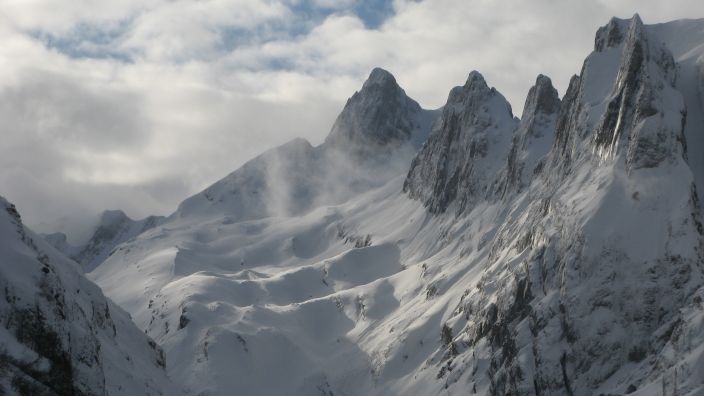
This is not a specific location per se, but describes an altitude on Earth exceeding 26,240 feet (8,000 m). Some mountaineers define it as an altitude over 25,000 feet. Almost all of the peaks in the death zone are located in the Himalaya and Karakoram ranges (which is technically part of the Himalayas). It is at this particular height that oxygen is so scarce that life simply cannot be sustained. Climbers cannot acclimatize themselves to this height, cannot digest food, and without oxygen tanks their bodily functions deteriorate at a rapid pace resulting in unconsciousness, deliriousness, hallucinations, and eventually death.
Although there are no definitive numbers, hundreds of climbers have died climbing peaks in the death zone. On a macabre note, the bodies of all who have succumbed on these mountains simply remain there since removing them would be such a painstaking and dangerous, if not impossible, task. Therefore, the death zone is essentially the world’s highest graveyard.
3
Golgotha (Place of the Skull)
Jerusalem
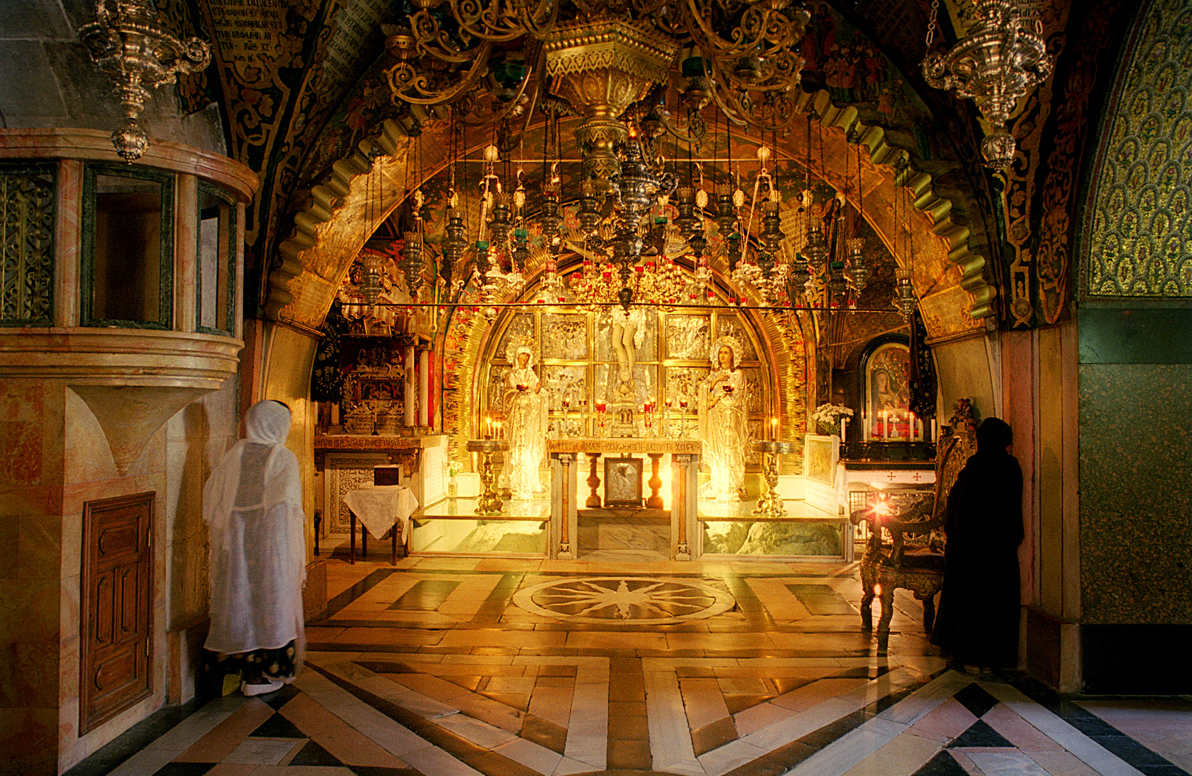
A biblical entry, Golgotha was an ancient site located outside the walls of 1st century Jerusalem. It is said that Jesus was crucified on this site, as were many who were convicted of crimes by the Roman Empire. There are a few theories about how the hill got its name. Some believe the name refers to the number of abandoned skulls and bones that were found there. Others say the craggy, rocky hill physically resembled a skull. Still others claim that Golgotha loomed over a cemetery so it naturally would be bestowed with a gruesome name.
It was a Jewish religious requirement that all executions take place outside of the city of Jerusalem and the Romans were believed to have honored this tradition. Therefore, the site of Golgotha was established just outside of the walled city. Due to many parts of Jerusalem being destroyed and rebuilt throughout history, the exact site of the hill is disputed. However, many scholars agree that the site lies within the Church of the Holy Sepulcher which was built by the emperor Constantine. According to tradition, this is also the site where Adam (the first man) was buried. Wherever the current-day location of Golgotha may be, it is a historically documented site where grisly executions actually took place.
2
Devil’s Island
French Guiana

Located off the coast of French Guiana, Devil’s Island was a notorious penal colony. The main prisons were actually located on the mainland, but the whole complex collectively became known as Devil’s Island. Originally a leper colony, it operated as a penal colony from 1884 to 1952. Conditions were probably worse than any modern-day prison in any country today. While wearing nothing but pairs of shoes and straw hats, and being barraged by malaria-carrying mosquitoes, prisoners would work waist deep in water while their skin baked in the unrelenting sun. If they didn’t meet their daily quota of work, such as chopping enough wood, they would only be fed a paltry piece of dry bread for the day.
In Kourou, which was the deadliest camp on Devil’s Island, 4,000 prisoners died within the span of three years. All throughout the penal colony, thousands of men died from exhaustion, thirst, hunger, heat stroke, dysentery, malaria, and murder. The only hope many of the convicts had was escape.
Most escapees fled through the dense jungle where they had to compete with hostile natives, piranhas, flesh-shredding brush, and the same mosquitoes and oppressive heat they faced in the colony. If they were lucky enough, they made it to Dutch Guiana where they would find sanctuary. Some attempted to escape by sea on makeshift rafts; some were successful, others died a watery death. Those who were caught and brought back to Devil’s Island were labeled as “incorrigible”. They were put into solitary confinement, made to work like animals all day, then shackled in irons overnight until it was time for them to go to work again.
Prisoners stopped being sent to Devil’s Island in 1938, and in 1952 the prison was closed. When accounts of the horrors were revealed to the general public, people were appalled that a civilized country such as France would propagate such atrocities. Today, Devil’s Island is a museum and tourist attraction.
1
Death Valley
Nevada/California
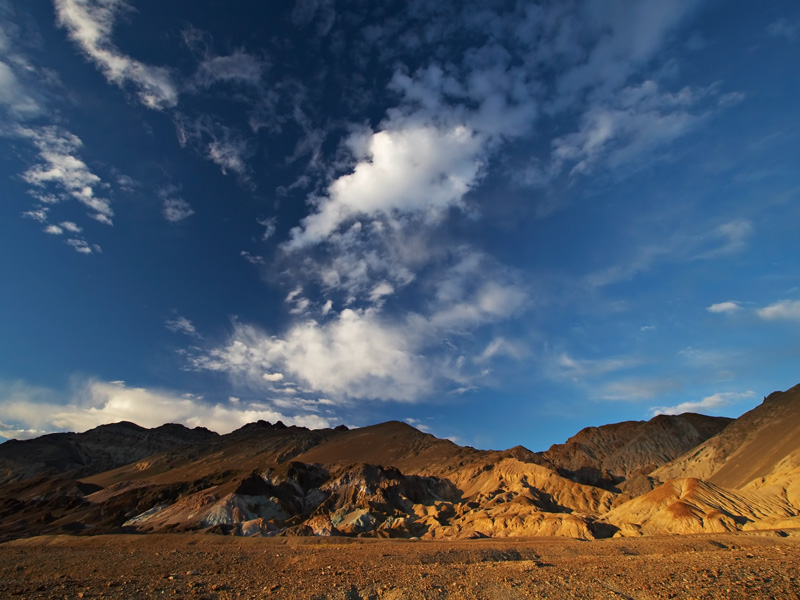
Lying in America’s Mojave Desert, Death Valley is one of the hottest, driest, inhospitable places on Earth. It is 3.3 million acres of barren wilderness consisting of towering mountains, canyons, rifts, salt flats, and sand. The lowest point in North America is here at the Badwater Basin, where the elevation sinks to 282 feet below sea level. Temperatures commonly reach over 100 degrees F, with the highest temperature recorded being 134 degrees F, two degrees short of the highest ever recorded on Earth.
The hardships early pioneers, as well as intrepid individuals following them, faced in the various regions of Death Valley gave rise to equally morbid names. Some of them include: the Funeral Mountains, Dante’s View, Furnace Creek, Devil’s Golf Course, Desolation Canyon, Devil’s Cornfield, Black Mountains, Stovepipe Wells, Hell’s Gate, and the aforementioned Badwater Basin. People first attempted to traverse the burning sands of the area during the California gold rush of 1849. They were known as the Death Valley 49ers and many of them never got to lay their eyes on gold since they became victims of the hellish conditions. In 1933, Death Valley was established as a national park. Many people visit each year, but if you are to go off the established and official roads and trails it is crucial that you are with an experienced guide; rescue operations are an all too common occurrence in this unforgiving place.
More Great Lists
 10 More British Places With Hilariously Rude Names
 10 Weird Place Names And The Stories Behind Them
 Top 10 Hilarious Scientific Names
 Top 10 Bizarre US Town Names
 10 Real People Who Died Searching For Mythical Places
 10 Creepy Places That Are Serial Killer Playgrounds
 10 Forbidden Places Where Outsiders Are Arrested (Or Worse)
 10 Religious Places With Intriguing Facts And Fakes
 10 Surprising Places With Ebola Virus Disease Cases
fact checked by
Alex Hanton
More Great Lists