
 Movies and TV
Movies and TV
Movies and TV  Technology
 10 Historical Inventions That Changed War Forever
 Humans
 10 Everyday Concepts That Are Shockingly Modern
 Animals
 10 Animals Everyone Gets Wrong
 Weird Stuff
 10 Bizarre Superstitions That Drive the Stock Market
 Movies and TV
 10 Films That Were Praised but Got History Wrong
 Our World
 10 Major Cities Being Swallowed by the Earth
 History
 10 Times Saying the Wrong Thing Became a Death Sentence
 Music
Music 10 Stars Who Secretly Wrote Hit Songs for Other Singers
 Weird Stuff
 10 Daredevils Who Treated Death Like a Suggestion
Movies and TV 10 Characters Who Never Forgot a Grudge
Technology 10 Historical Inventions That Changed War Forever
Humans 10 Everyday Concepts That Are Shockingly Modern
Who's Behind Listverse?

Jamie Frater
Head Editor
Jamie founded Listverse due to an insatiable desire to share fascinating, obscure, and bizarre facts. He has been a guest speaker on numerous national radio and television stations and is a five time published author.
More About Us
Animals 10 Animals Everyone Gets Wrong
Weird Stuff 10 Bizarre Superstitions That Drive the Stock Market
Movies and TV 10 Films That Were Praised but Got History Wrong
Our World 10 Major Cities Being Swallowed by the Earth
History 10 Times Saying the Wrong Thing Became a Death Sentence
Music 10 Stars Who Secretly Wrote Hit Songs for Other Singers
Weird Stuff 10 Daredevils Who Treated Death Like a Suggestion
10 Famous Incidences of Death by Radiation
I used to train people how to operate nuclear power plants and my students were always interested in stories about radiation sickness. Radiation poisoning or radiation sickness is a form of damage to organ tissue caused by excessive exposure to ionizing radiation. The term is generally used to refer to acute problems caused by a large dosage of radiation in a short period of time, however it can also refer to cases when somebody has been repeatedly exposed to high doses. Symptoms prior to death can include severe nausea, vomiting, and diarrhea, rapid hair loss, infections, edema, high fever, and coma.
This list will look at 10 instances where people have died from effects of radiation exposure and the circumstances surrounding their deaths.
10
Cecil Kelley
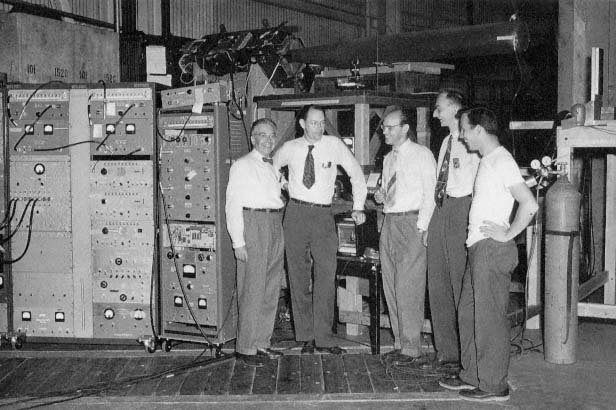
On December 30, 1958 an accident occurred in the Los Alamos plutonium-processing facility. Cecil Kelley, an experienced chemical operator was working with a large mixing tank. The solution in tank was supposed to be “lean”, typically less than 0.1 grams of plutonium per liter. However, the concentration on that day was actually 200 times higher. When Kelley switched on the stirrer, the liquid in the tank formed a vortex and the plutonium containing layer went critical releasing a huge burst of neutrons and gamma radiation in a pulse that lasted a mere 200 microseconds.
Kelley, who had been standing on a foot ladder peering into the tank through a viewing window, fell or was knocked to the floor. Two other operators on duty saw a bright flash and heard a dull thud. Quickly, they rushed to help and found Kelley incoherent and saying only, “I’m burning up! I’m burning up!”. He was rushed to the hospital, semiconscious, retching, vomiting, and hyperventilating. At the hospital, Kelly’s bodily excretions were sufficiently radioactive to give a positive reading on a detector.
Two hours after the accident, Kelley’s condition improved as he regained coherence. However, it was soon clear that Kelley would not survive long. Tests showed his bone marrow was destroyed, and the pain in his abdomen became difficult to control despite medication. Kelley died 35 hours after the accident.
9
Harry K. Daghnian, Jr.

Harry K. Daghlian, Jr. was an Armenian-American physicist with the Manhattan Project. On August 21, 1945 he was conducting an experiment attempting to build a neutron reflector by manually stacking a series of tungsten carbide bricks around a plutonium core. As he was moving the final block over the assembly, neutron counters alerted Daghlian to the fact that the addition of this brick would render the system supercritical. As he withdrew his hand, he accidentally dropped the brick onto the center of the assembly. The addition of this last brick caused the reaction to go immediately supercritical.
Daghlian panicked immediately after dropping the brick and attempted to knock off the brick without success. He was forced to partially disassemble the tungsten carbide pile to halt the reaction causing him to receive a lethal dose of neutron radiation. He died 25 days later. Daghlian was violating safety regulations by working on the assembly late at night and alone in the laboratory.
8
Louis Slotin
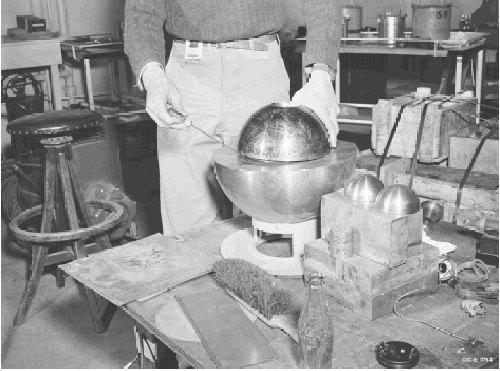
Louis Slotin was a Canadian physicist and chemist who took part in the Manhattan Project that created the first atomic bombs. He participated in criticality testing of plutonium cores, often referred to as “tickling the dragon’s tail”.
On May 21, 1946 Slotin and seven other colleagues performed an experiment that involved the creation of one of the first steps of a fission reaction by placing two half-spheres of beryllium around a plutonium core. Slotin was stabilizing the upper beryllium sphere with his left hand using the blade of a screwdriver to maintain the separation between the two half-spheres in violation of experimental protocol. At 3:20pm the screwdriver slipped causing the upper beryllium sphere to fall creating a prompt critical reaction and a burst of radiation. Scientists in the room observed a blue glow around the spheres and felt a heat wave.
Slotin instinctively jerked his left hand upward, lifting the upper beryllium hemisphere and dropping it to the floor, ending the reaction. However, Slotin had already been exposed to a lethal dose of radiation, equivalent to the amount that he would have received had he been 1500m away from an atomic bomb detonation. He was rushed to the hospital immediately, but the damage was irreversible and he died nine days later on May 30, 1946. The core he dropped was the very same core dropped by Daghnian the year before – causing it to be named the Demon Core.
Slotin’s story is integrated in the movie, “Fat Man and Little Boy” starring Paul Newman and John Cusack.
7
Eben McBurney Byers
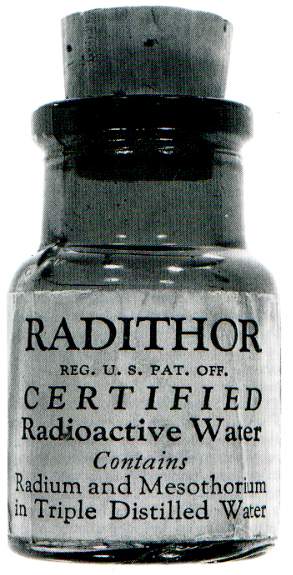
Eben McBurney Byers was a wealthy American socialite, athlete, and industrialist. In 1927 while returning via chartered train from the annual Harvard-Yale football game, Byers fell from his berth and injured his arm. He complained of persistent pain and a doctor suggested that he take Radithor, a patent medicine containing high concentrations of radium. Byers drank nearly 1400 bottles over three years. By 1930, when Byers stopped taking the remedy, he had accumulated significant amounts of radium in his bones resulting in the loss of most of his jaw. Byers’ brain was also abscessed and holes were forming in his skull. He died from radium poisoning on March 31, 1932. He is buried in Allegheny Cemetery in Pittsburgh, Pennsylvania in a lead-lined coffin.
6
Hiroshi Couchi
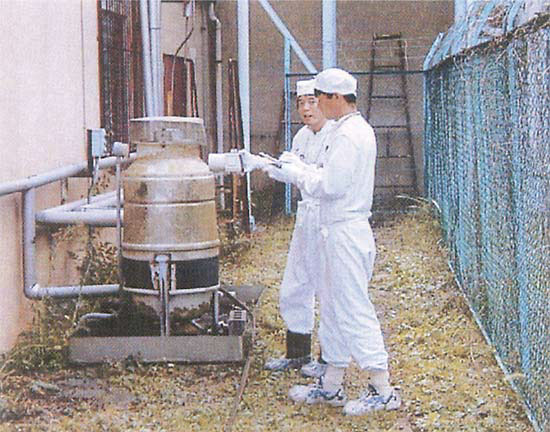
Japan’s worst nuclear radiation accident took place at a uranium reprocessing facility in Tokaimura, northeast of Tokyo, on September 30, 1999. The direct cause of the criticality accident was workers putting uranyl nitrate solution containing about 16.6 kg of uranium, exceeding the critical mass, into a precipitation tank. The tank was not designed to dissolve this type of solution and was not configured to prevent eventual criticality.
Three workers were exposed to lethal radiation doses. One of these workers, Hiroshi Couchi, was transferred to the University of Tokyo Hospital and three days after the accident he could talk and only his right hand was a little swollen with redness. However, his condition gradually weakened as the radioactivity broke down the chromosomes in his cells.
The doctors were at a loss as to what to do. There were few precedents and proven medical treatments for victims of radiation poisoning. A local television crew followed the story for 83 days until Hiroshi died. Their observations are chronicled in the book, “A Slow Death: 83 Days of Radiation Sickness”
5
Marie Curie
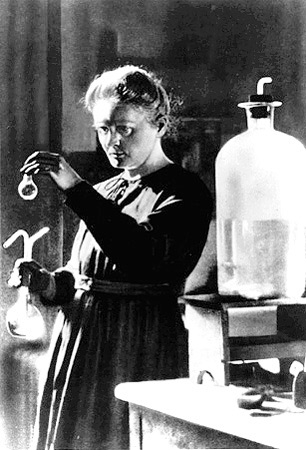
Marie Sklodowska Curie was a physicist and chemist and a pioneer in the field of radioactivity. In fact, it was Curie that coined the term radioactivity, though Henri Becquerel discovered the phenomenon years earlier. Curies research into the properties of two different uranium ores, pitchblende and chalcolite. led to the discovery of radium and polonium, other radioactive elements. Curie’s husband, Pierre, was so intrigued by her research that he decided to suspend his own research to join her.
The Curies undertook the arduous task of separating radium out of pitchblende ore. From a ton of pitchblende, one-tenth of a gram of radium chloride was separated. Unfortunately, the Curies were unaware of the deleterious health effects of repeated unprotected radiation exposure. Pierre Curie died in 1906 after being hit and run over by a horse drawn carriage, however Marie lived for another 28 years continuing her research and eventually winning two Nobel prizes. She often carried test tubes containing radioactive isotopes in her pocket and stored them in her desk drawer, remarking on the pretty blue-green light that the substances gave off in the dark.
Marie Curie died on July 4, 1934 due to aplastic anemia contracted from exposure to radiation. She is interred at the cemetery in Sceaux, alongside her husband Pierre. Her laboratory is preserved at the Musee Curie. Due to their levels of radioactivity, her papers from the 1890’s are considered too dangerous to handle. Even her cookbook is highly radioactive. They are kept in lead-lined boxes, and those who wish to consult them must wear protective clothing.
4
Alexander Litvinenko
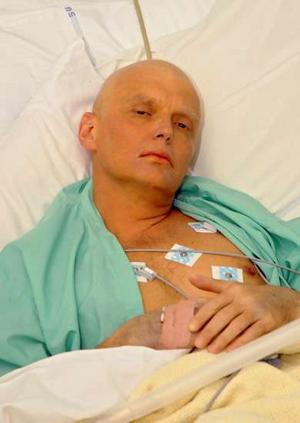
Alexander Litvinenko was a former KGB officer who escaped prosecution in Russia and received political asylum in the United Kingdom . In November of 2006 he suddenly fell ill and was hospitalized. He died three weeks later and post-mortem tests showed he had been given a lethal dose of Polonium-210 via a cup of tea. On his deathbed, Litvinenko accused Russian president Vladimir Putin of being behind his death.
Subsequent investigations by British authorities into the circumstances of Litvinenko’s death led to serious diplomatic difficulties between the British and Russian governments. Unofficially, British authorities asserted that “we are 100% sure who administered the poison, where and how”. However they did not disclose their evidence in the interest of a future trial. The main suspect in the case, a former officer of the Russian Federal Protective Service (FSO) Andrei Lugovoy, remains in Russia. As a member of the Duma, he now enjoys immunity from prosecution.
3
Soviet Submarine K-19
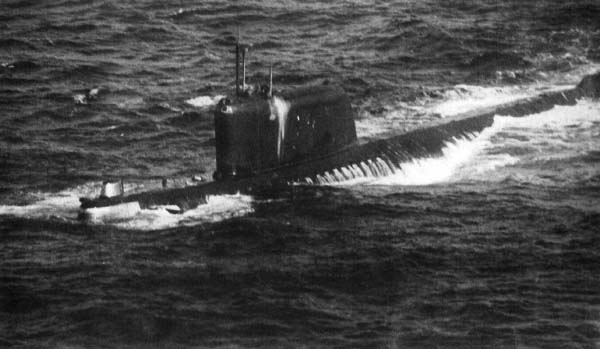
K-19 was one of the first two Soviet submarines equipped with nuclear ballistic missiles. Several people had died during its construction earning it the nickname “Hiroshima” among naval sailors and officers. On July 4, 1961 under the command of Captain Nikolai Vladimirovich Zateyev, K-19 developed a major leak in her reactor coolant system causing the reactor temperature to rise to a very dangerous 800 deg. Celsius. Due to poor design and failure to have a backup cooling system installed, Captain Zateyev had no choice but to order a team of seven engineering officers in crew to undertake a repair despite the lethal rates of radiation exposure.
The repair crew was successful in stopping the leak however all seven were dead within a week. The incident contaminated the entire boat and within a few years twenty more
crewmembers were dead attributed to the incident at sea.
The Soviet Navy made extensive repairs to boat and it later returned to service. It did, however, continue to experience horrible accidents including an at-sea collision in 1969 and a fire in 1972 killing 28 sailors. It was finally decommissioned in 1991.
The movie “K-19: The Widowmaker” starring Harrison Ford and Liam Neeson is loosely based on the nuclear accident on the K-19.
2
Chernobyl
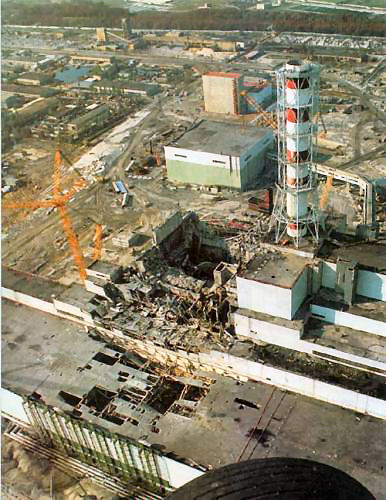
On April 26, 1986 a nuclear accident occurred on the Number 4 reactor at the Chernobyl Nuclear Power Plant in Ukraine. Workers at the plant were planning a test to determine how long turbines would spin and supply power to the main circulating pumps following a loss of main electrical power. Due to another regional power station going offline, the test was delayed and as a result, the test was conducted over the night shift where the workers had not been trained on the test procedure. Several subsequent errors, including a decision to disable automatic shutdown mechanisms, led to an unstable reactor configuration with nearly all of the control rods removed.
The reactor SCRAMed (rapid insertion of all control rods) but a flaw in the design of the control rods actually caused the reaction rate in the lower half of the core to increase. At this point, a massive power spike occurred and the core overheated. The precise subsequent course of events was not registered by instruments; it is known only as a result of a mathematical simulation. What is known is that there was a large steam buildup in the core that eventually exploded releasing tons of radioactive steam and fission products into the air. Radiation levels in the vicinity of the reactor core after the explosion were 30,000 times the lethal limit.
One person was killed immediately and his body was never found. Another died that same day as a result of injuries received during the explosion. Acute radiation sickness was originally diagnosed in 237 people on-site and involved with the clean-up and it was later confirmed in 134 cases. Of these 28 people died within weeks of the accident, six of whom were firefighters tasked with attending the fires on the roof of the turbine building. Nineteen more subsequently died between 1987 and 2004. Nobody off-site suffered from acute radiation effects, although a large proportion of childhood thyroid cancers diagnosed since the accident is likely to be due to intake of radioactive iodine fallout. Subsequent studies in the Ukraine, Russia, and Belarus estimate over 1 million people were affected by radiation from Chernobyl, however the extent of its effects may never be truly known.
1
Hiroshima and Nagasaki
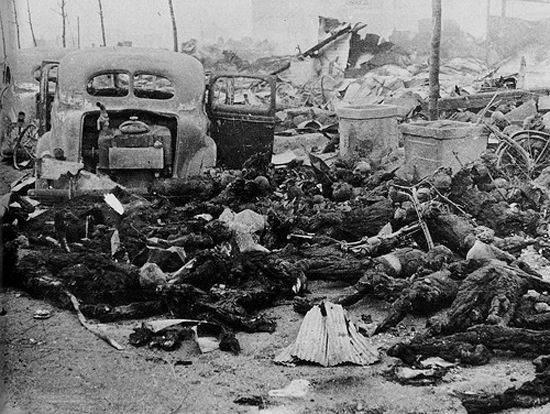
The atomic bombs dropped on Hiroshima and Nagasaki, Japan at the end of World War II have been the only time in history such weapons have been used on people. The justification for the bombings has been hotly debated since, but no doubt the memory of their destruction has been a large reason why they have been not used since.
On August 6, 1945 the uranium bomb, “Little Boy”, was dropped on Hiroshima killing 70,000-80,000 people immediately. Three days later, the plutonium bomb, “Fat Man”, was dropped on Nagasaki killing an estimated 40,000-75,000 instantly. Those that survived the initial blasts were then subject to severe radiation and thermal burns, radiation sickness and related diseases all aggravated by the lack of meckal resources. It is estimated that another 200,000 people had died by 1950 as a result of health effects of the bombings.
Surviving victims of the bombings are known as hibakusha, a Japanese word that literally translates to “explosion-affected people.” As of March 31, 2009 235,569 hibakusha were recognized by the Japanese government. The government of Japan recognizes about 1% of these as having illnesses caused by radiation.
More Great Lists
 10 Unusual Death Rituals From Around The World
 10 Stories Of People Who Cheated Death Only To Die…
 10 Strange Facts About The Mysterious Death Of Rasputin
 Top 10 Animals That Received Death Threats
 10 Reasons For Keeping Human Body Parts After Death
 10 Obscure Death Practices And Beliefs Observed By…
 10 Facts About The Moment Of Death From Modern Science
 10 Craziest Facts About The Life And Death Of Whitey Bulger
 10 Facts About Santa Muerte, Our Lady Of Holy Death
fact checked by
Alex Hanton
More Great Lists