
 Politics
Politics
Politics  Mysteries
 10 Fresh Clues That Might Crack Old Mysteries
 Weird Stuff
 10 Weirdly Specific Conspiracy Theories from the 1990s
 Movies and TV
 10 Characters Who Never Forgot a Grudge
 Technology
 10 Historical Inventions That Changed War Forever
 Humans
 10 Everyday Concepts That Are Shockingly Modern
 Animals
 10 Animals Everyone Gets Wrong
 Weird Stuff
 10 Bizarre Superstitions That Drive the Stock Market
 Movies and TV
 10 Films That Were Praised but Got History Wrong
 Our World
 10 Major Cities Being Swallowed by the Earth
Politics 10 Wild Campaign Promises That Became Political Legends
Mysteries 10 Fresh Clues That Might Crack Old Mysteries
Weird Stuff 10 Weirdly Specific Conspiracy Theories from the 1990s
Who's Behind Listverse?

Jamie Frater
Head Editor
Jamie founded Listverse due to an insatiable desire to share fascinating, obscure, and bizarre facts. He has been a guest speaker on numerous national radio and television stations and is a five time published author.
More About Us
Movies and TV 10 Characters Who Never Forgot a Grudge
Technology 10 Historical Inventions That Changed War Forever
Humans 10 Everyday Concepts That Are Shockingly Modern
Animals 10 Animals Everyone Gets Wrong
Weird Stuff 10 Bizarre Superstitions That Drive the Stock Market
Movies and TV 10 Films That Were Praised but Got History Wrong
Our World 10 Major Cities Being Swallowed by the Earth
15 Terrifying and Little Known Prehistoric Monsters
Who hasn’t heard of a tyrannosaurus Rex or a velociraptor thanks to movies like Jurassic Park? When we think of dinosaurs, we almost all think of a very small subset of these giant creatures from history. But perhaps more interesting are those which are far less familiar to us all. This list is just a small selection of monstrous or weird-looking creatures from ancient times, most of which are little known to the public.
15
Estemmenosuchus

They don’t make animals like this anymore. Estemmenosuchus is one of the most bizarre-looking prehistoric monsters; it belonged to the group of the dinocephalians, and despite their dinosaur-like appearance, they were actually more closely related to mammals… including us! Estemmenosuchus was the size of a rhinoceros, and it too had a horn on its nose, but it also had antler-like horns on the top of its head, and strange, bony protrusions coming out of its cheeks; no one knows what they were used for. It also had a set of monstrous, sharp teeth, but scientists aren’t sure about its food preferences. Personally, I believe this thing was big and scary enough to eat anything it wanted. Fossil remains of Estemmenosuchus have been found in Russia; it lived in the Permian period, long before the appearance of dinosaurs.
14
Acrophyseter
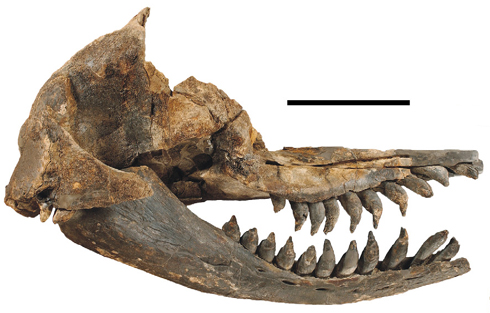
This was an ancient relative of today’s sperm whale, which as we all know (or should know) is huge, eats lots of squid and has never been known to attack humans without provocation. Acrophyseter was the complete opposite; it was moderately sized, and didn’t feed on squid but rather on other marine mammals and even on sharks! Its horrible-looking teeth were deadly weapons and have given Acrophyseter and its ancient relatives the nickname of “killer sperm whales”. Acrophyseter’s fossil remains have been found in Peru; it lived in the Miocene period, which seems to have been the best epoch for scary marine monsters including giant dolphins, colossal sharks and even monster penguins and seals.
13
Gigantopithecus
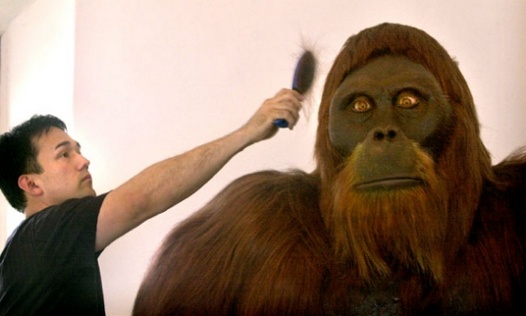
It’s name says it all; it was a monstrous ape, closely related to the orangutan, that roamed the bamboo forests, jungles and mountains of China, India and Vietnam during the Pleistocene. It was a vegetarian, but scary nonetheless; it could grow up to three meters tall and weigh up to 550 kgs! Its strength must have been extraordinary and probably kept it safe from most predators. It finally went extinct 300.000 years ago, possibly due to overhunting by early human species or as the result of climate change. Of course, all yeti and bigfoot believers like to think that Gigantopithecus survived somehow in the most remote parts of the Himalaya…
12
Epicyon

Epicyon could well be described as a giant pitbull on steroids. It was a member of the Canidae or dog family, but whereas modern day canids are built for speed and endurance, Epicyon was built for brute strength, and had jaws so powerful that they could crush bone as if they were crackers! This beast ruled the plains of North America for fifteen million years, before it was replaced by big cats (including sabertooths).
11
Edestus
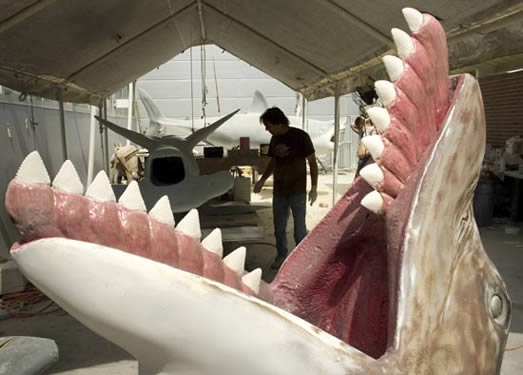
Today’s great white shark probably has some of the most nightmarish set of teeth in Nature, but its distant prehistoric relative Edestus was so scary that it would make the great white look almost cute. Edestus was about seven meters long and was one of the top predators of the Carboniferous seas. However, scientists still don’t know how it used its extraordinary teeth; instead of constantly losing the worn out teeth and replacing them with the new ones growing in rows behind, as modern day sharks do, Edestus didn’t lose its teeth at all; instead, the new teeth pushed the old teeth out of the mouth and, eventually, the gums and teeth would protrude out of the mouth like a pair of monstrous scissors. Regardless of how it did it, it seems obvious that Edestus could possibly cut any other creature in two with ease. But we still have trouble to imagine how a very old Edestus would “function”, or even how would it look!
10
Gorgonopsid
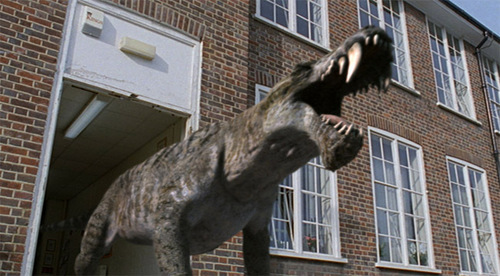
This creature has earned some popularity recently thanks to the British sci fi show “Primeval”, where it was the very first monster to appear. Although real life gorgonopsids where a tad smaller than the TV version (the largest species, such as Inostrancevia and Leontocephalus, could grow up to six meters long), they were just as terrifying; as a matter of fact, they were the dominant predators during the late Permian, before dinosaurs and their relatives took over. Gorgonopsids had a set of deadly saber-teeth (some species had two sets of them) which came handy when hunting some of the largest Permian herbivores, often the size of rhinos or bigger.
They were quite agile and could probably run quite fast, unlike the predators that came before them. Despite their reptilian appearance, gorgonopsids were actually closely related to mammals, and it is even possible that they were covered in fur!
9
Terror bird
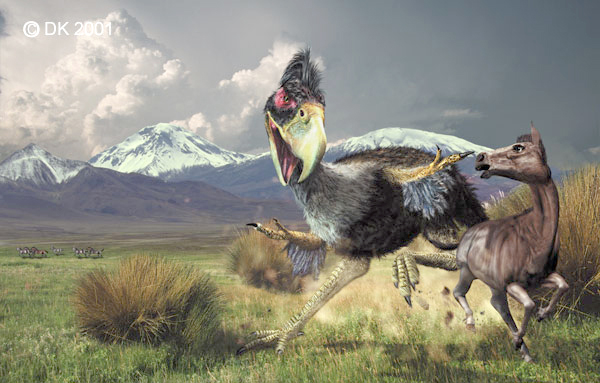
Terror birds, formally known as Phorusrhacids, were the top predators in South America and parts of North America during the Miocene, Pliocene and Early Pleistocene periods, before they were replaced by big cats and other carnivorous mammals. They were unable to fly, but could run very fast (as fast as a cheetah, according to some scientists!) and were very large; the largest species could grow up to three meters tall and weigh up to half a ton. Their main weapon was their head, which could be up to one meter long, allowing them to swallow prey as large as a dog in one single gulp! However, thanks to the hooked tip of the bill, similar to that of eagles and hawks, the terrors birds could kill and devour prey much larger than a dog, including horses, camels, etc.
8
Madtsoia
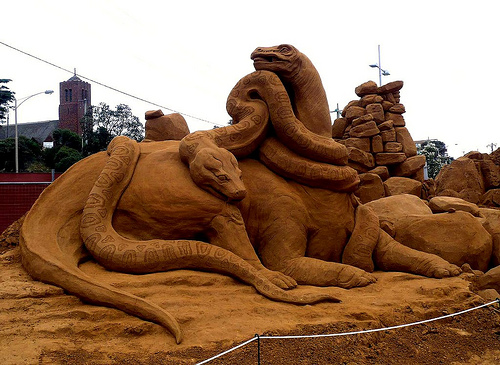
Madtsoia would be the worst nightmare of anyone with a phobia of snakes. Although only fragmentary remains are known, it is claimed to have reached the immense length of 15-20 meters! This creature appeared in the Cretaceous period and possibly dined on dinosaurs. It was similar to today’s boas and pythons in that it was not venomous, but rather squeezed its victims to death using its immense muscular strength. Madtsoia was such a successful predator, that it managed to survive the extinction that wiped out dinosaurs and other animals, but it finally went extinct about 45 million years ago. Other giant snakes are known to have existed, including one that was said to reach 29 meters in length!
7
Purussaurus
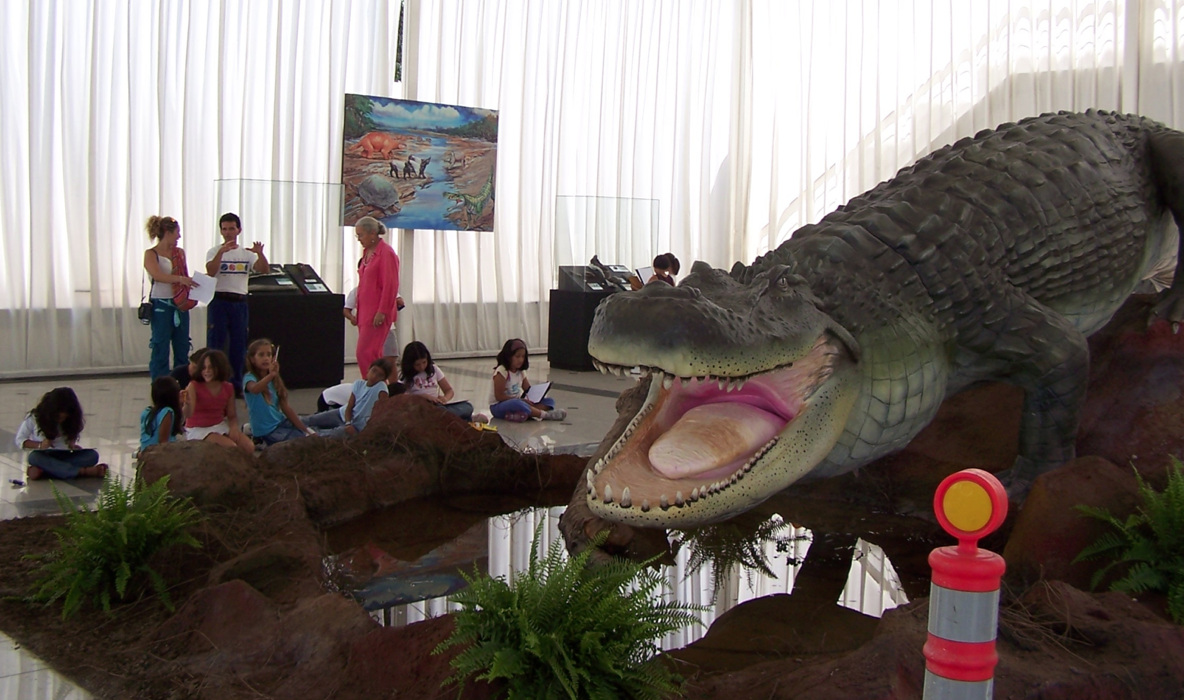
Purussaurus was a gigantic caiman (a relative to alligators) that lived in what is today known as the Amazonian rainforest. Back in Purussaurus’ days, 8 million years ago, that region was actually a vast inland sea teaming with crocodiles, gharials, fresh water whales, giant rodents and enormous turtles. Purussaurus was the top predator in that sea, and with good reason; at 12-15 meters long, maybe more, it was one of the largest crocodilians ever to have existed. The remains of other animals missing limbs or bitten in half are a macabre proof of this giant caiman’s appetite.
6
Entelodon
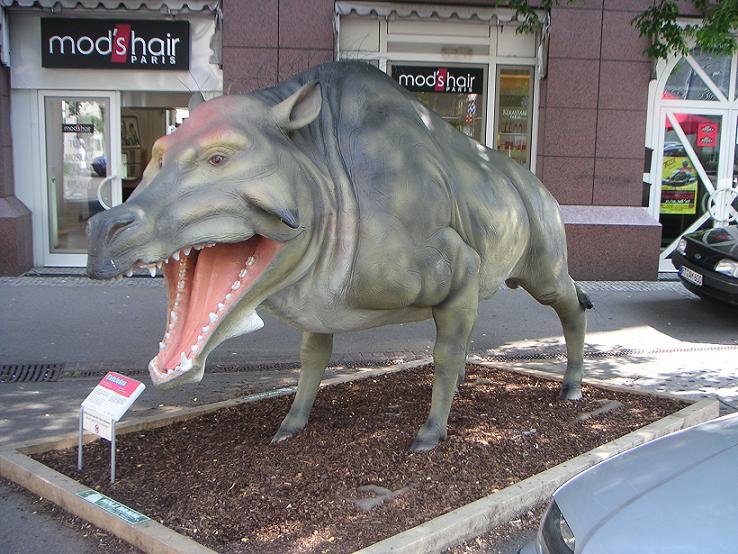
Although pigs, wild boars and warthogs today are known to eat meat on occasion, they are basically vegetarian. On the other hand, the Entelodon, a prehistoric pig relative, was a full time carnivore and possibly one of the most monstrous-looking mammals ever. Standing on all fours, this beast was as tall as a man, and had an immense head armed with powerful jaws and sharp teeth. Scientists believe that it was able to hunt live prey, but that it also scared other predators away from their kills (which should have been very easy). Its bite marks also suggest that it fought viciously with its own kind, and it is even possible that Entelodonts were cannibalistic. Entelodons were quite successful beasts, existing for about 9 million years.
5
Azhdarchid
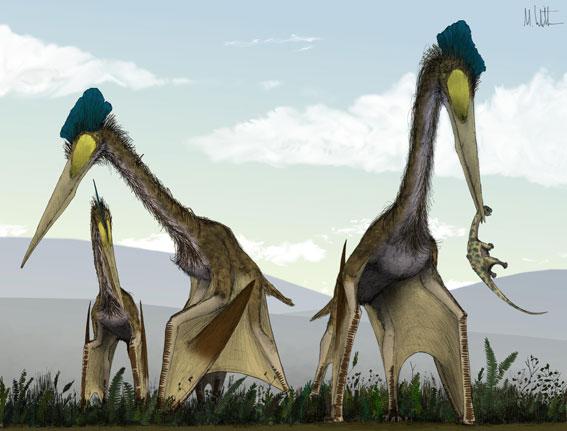
Azhdarchids were a kind of pterosaur (most popularly known as pterodactyls) which included the largest flying creatures ever to have existed. Some of them had wingspans of 12 to 15 meters, making them as large as a small plane (although they were obviously not as heavy). But what makes Azhdarchids really strange are their body proportions; they had ridiculously long legs, necks and beaks, and very small bodies, as well as relatively short wings. Scientists believe that they did not hunt on the wing, but rather walked on the ground hunting for any animal they could catch and swallow whole- that included dog-sized, perhaps even man-sized creatures! Standing on all fours, the largest Azhdarchids were as tall as a modern day giraffe… and almost as tall as a T-Rex.
4
Pulmonoscorpius
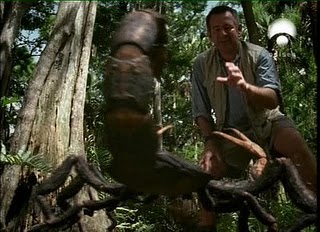
This is by far the smallest creature of the list, but it would still cause hysteria, and perhaps even some heart attacks, if it showed up today. It was very similar to today’s scorpions but could grow up to one meter long, perhaps more, and was armed with sharp chelae (claws) and a venomous stinger. Of course, we don’t know how toxic its venom was, but considering the considerable amount it injected with each attack, it was most likely a very deadly critter indeed. A predator, Pulmonoscorpius roamed the swampy forests of the Carboniferous in what is today Scotland. Just so you know, during the Carboniferous there were also giant roaches the size of house cats, dragonflies the size of hawks, and centipede-relatives up to three meters long. No kidding.
3
Xenosmilus
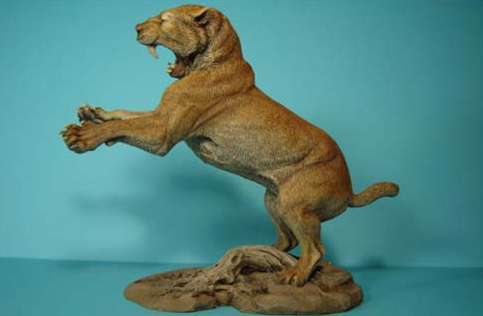
Since the formidable Smilodon (better known as saber-toothed tiger) is too well known, we have decided to go for a refreshing change. Enter Xenosmilus, possibly the nastiest feline ever to have existed. The remains of this very large cat (the size of a lion or tiger, but more robust) were recently found in Florida along with the remains of many unlucky giant peccaries (similar to wild pigs) that fell prey to it. Instead of strangling prey or breaking their neck as lions do, or stabbing them as the sabertoothed tiger did, Xenosmilus acted more like a shark or a carnivorous dinosaur, biting off a huge chunk of flesh and causing massive blood loss and shock in a matter of seconds. Compared to modern day felids, a Xenosmilus’ kill would probably be extremely bloody; so much in fact that it would probably not be shown in Animal Planet! Since we don’t know when exactly Xenosmilus became extinct, we can’t tell if humans ever met this cat, or fell prey to it.
2
Megalodon
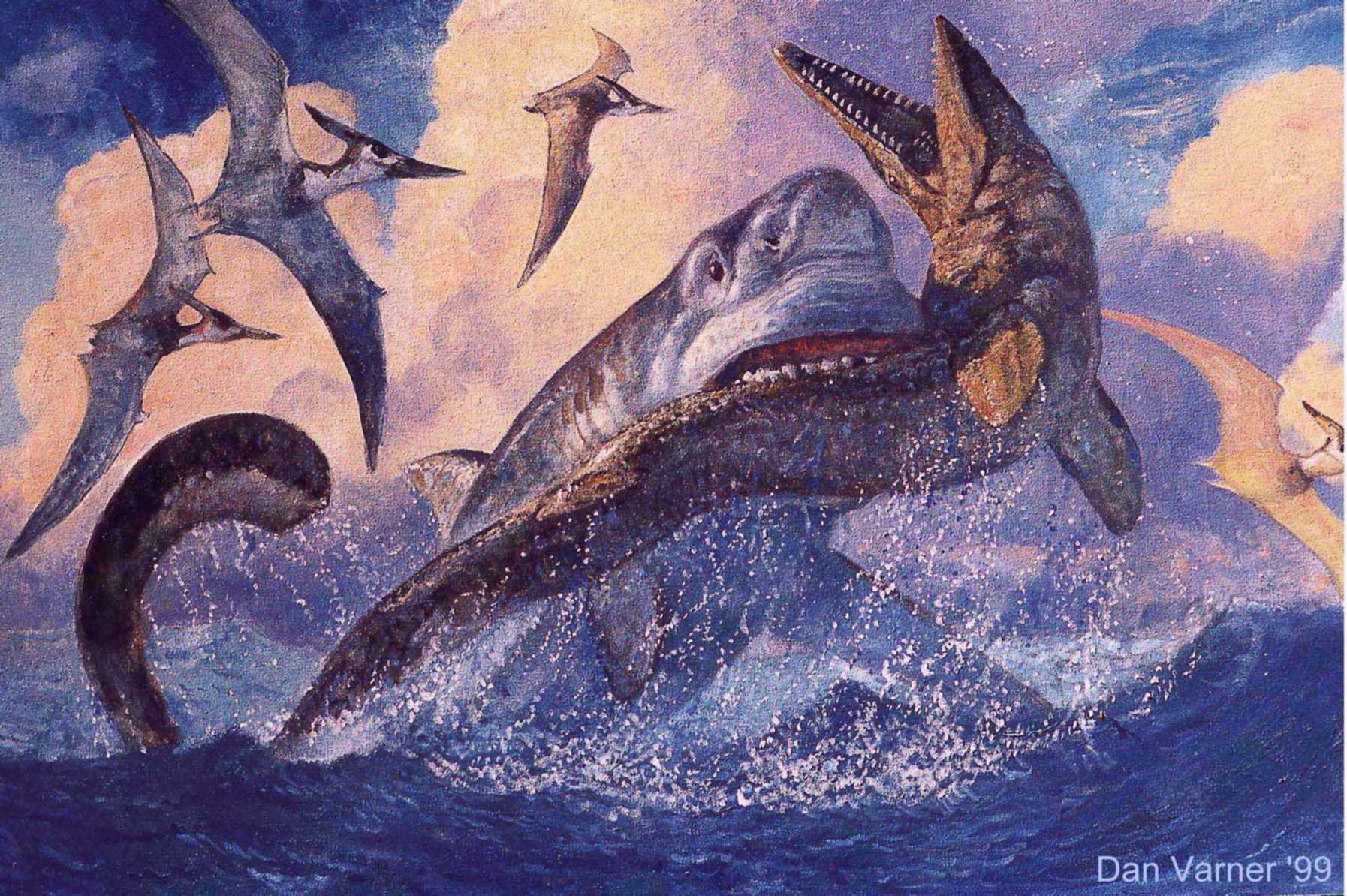
This is a fairly well known prehistoric monster, but it is just so big and scary that it deserves to be in this list. Megalodon (technically called a Carcharocles megalodon) was a gigantic shark, closely related to today’s makos and great whites. It could grow up to 20 meters long and weigh up to 60 tons, being almost six times larger than Tyrannosaurus rex! Obviously, the only thing in the sea big enough to feed Megalodon where whales, and indeed, the giant shark’s bite marks have been found in the fossil remains of whales all around the world. Although many people like to imagine encounters between Megalodon and T-Rex, or dinosaur-like marine reptiles, the truth is Megalodon appeared long after the extinction of such creatures, and it wasn’t seen alive by any humans either, although it was still roaming the oceans when our australopithecine relatives took their first steps out of the jungle.
1
Spinosaurus
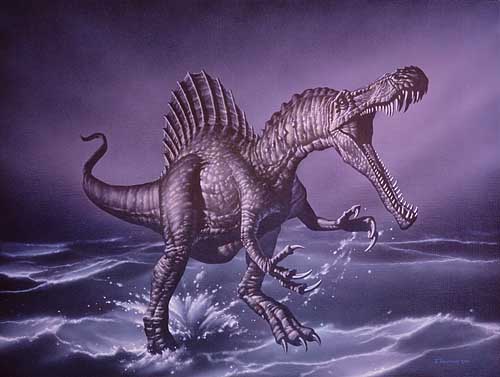
When Jurassic Park III was released in 2001, many people complained that the beloved lawyer-eating T-Rex had been replaced with a “made up” dinosaur. In reality, Spinosaurus did exist… and it was indeed bigger than T-Rex. The remains of this enormous predator where found in Egypt in 1915, and the paleontologist who studied them was already convinced that it was bigger than T-Rex. However, this couldn’t be proved as the fossils were sadly destroyed in a bombing during WWII. Recently, however, new fossils have been found, and Spinosaurus was finally declared to be the largest carnivorous dinosaur of all times. This beastie could grow up to 17 or 18 meters long, weigh up to 10 tons and had a sail on its back taller than an adult man. Its long, crocodile-like snout suggests that it spend a long time in the water and possibly ate lots of fish… but also crocodiles, giant turtles, and any dinosaur unlucky enough to cross its path. Even though T-Rex will probably always be the most popular prehistoric monster of all times, Spinosaurus is, and remains, the largest predator ever to walk the Earth… that we know of.
More Great Lists
 10 Little-Known Prehistoric Beasts With Incredible…
 10 Amazing And Little-Known Space Discoveries Of 2018
 10 Shocking Little-Known Facts About Bonnie And Clyde
 10 Amazing And Little-Known Space Discoveries Of 2019
 10 Terrifying Lesser-Known Cases Of American Cannibalism
 10 Little-Known Stories About How Slavery Ended…
 10 Little-Known Facts About Alcoholics Anonymous
 10 Little-Known Facts About The Development Of The Bikini
 Top 10 Crazy Little-Known Facts About Bananas
fact checked by
Alex Hanton
More Great Lists