Papaver Somniferum, the Opium Poppy, has been considered one of the most influential, as well as interesting things in the world for thousands of years. For those unfamiliar with it, the poppy produces opium, the euphoric painkiller that is the starting point for heroin. Depictions of the plant have been traced back to the Sumerians of 6000 years ago. The beautiful flower has been worshiped as a gift from the gods, and just the same has been feared for its potential to destroy millions of lives. Rather you see them as divine, or quite the opposite, it’s hard to argue how much influence they’ve had in our world. Here are ten particular areas that the plant and its drug have dramatically impacted.
“Music is a beautiful opiate, if you don’t take it too seriously.” Henry Miller. Think of your favorite rock band from the 70s or 80s. I’ll bet you the shoes on my feet that at least one of their songs was inspired by, or if not, directly refers to heroin. It became popular with the rock community for its mild altering effects. Inspiring romanticism, creativity, joy, fun, and of course pleasure made it a hit to rebellious world. Some songs you might be familiar with that have been thought to refer to the drug – “The Needle and the Damage Done” by Neil Young, “Mr. Brownstone” by Guns N’ Roses, “Heroin” by Velvet Underground, and “Comfortably Numb” by Pink Floyd (that one is probably the most arguable). Courtney Love (above) did well to summarize the relationship between musicians and heroin: “the drug you do if you’re in a fuckin’ four-star hotel and you can order all the goddamn room service that you want and you can just lay in bed and drool all over yourself because you’ve got a million bucks in the bank. That’s the drug you want to do if you want to be a kid forever.”
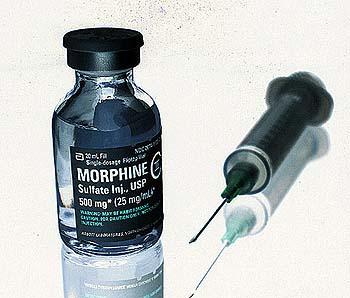
Surgery is thought to have been practiced for centuries, pioneered by ancient civilizations in Egypt, India, Greece and China. The gap between ancient surgery and modern lies heavily on the control of the inevitable pain that comes with it: anesthesia. While local anesthesia is available for us by a completely different plant, the Coca, general anesthesia became possible with the Opium Poppy. The art of putting patients out for surgery made a breakthrough in the 19th century, when Morphine, one of the opiate alkaloids found naturally in opium, was extracted from the plant. With this discovery, surgery was able to advance to the previously unheard of feats we think of commonly today. Soldiers were able to inject themselves with Morphine in the latter half of the Civil War, making the removal of bullets a much less excruciating experience. Nowadays we have other methods of general anesthesia for surgery, such as hypnotics (propofol) and Dissociatives (nitrous oxide), but nevertheless morphine and other opium-derivatives are still commonly used.
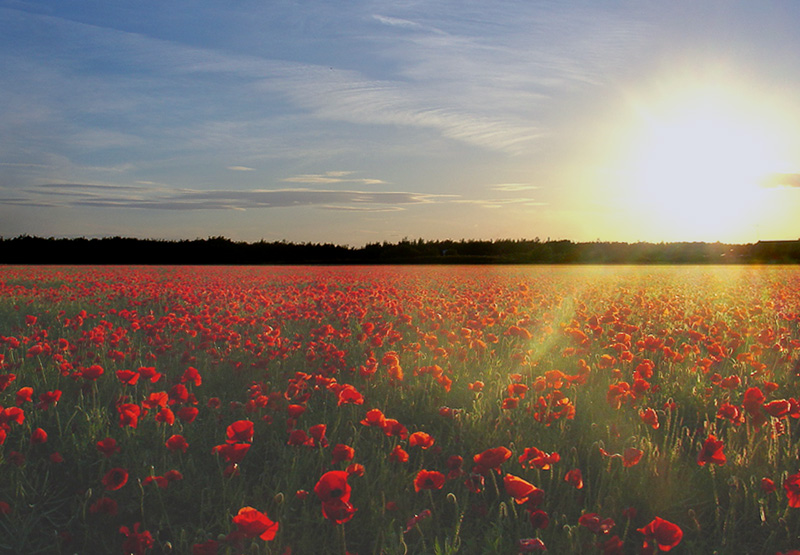
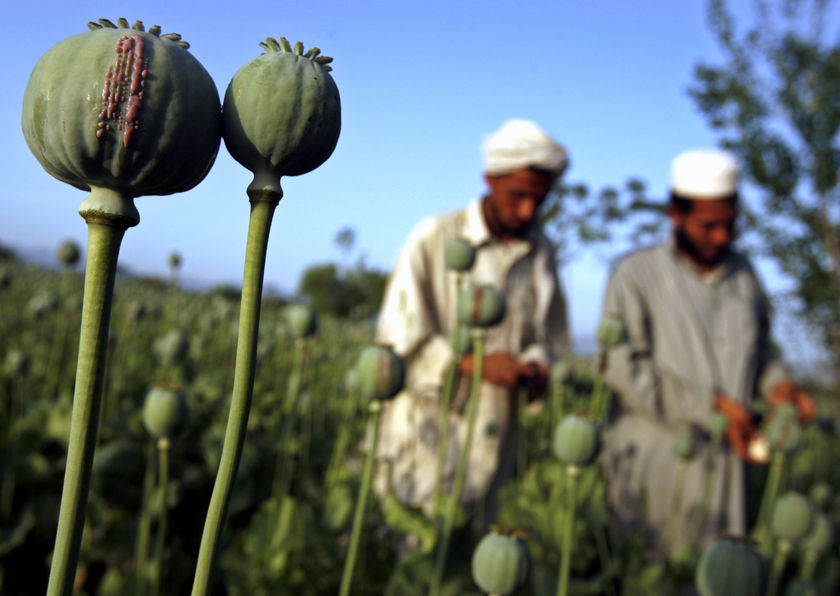
Stepping aside from the drug the Opium Poppy produces; let’s focus on the flower itself. At a time referred to as the “common garden poppy”, the plant is widely cultivated for ornamental purposes all over the world. The flower, depending on the particular variety, ranges from red to white and even purple hues. The capsules containing the opium are very interesting looking and easily emphasizes the plant as a poppy. Even the tiny black seeds are used to decorate food, such as cakes and muffins. The poppy seeds you can go get at your local grocer this afternoon are indeed the same species of poppy used to harvest opium. While not trying to drift too far off topic, I’ll note that the common “myth” that someone who consumes poppy seeds can fail a drug test is absolutely true and proven. The seeds contain enough opiate alkaloids to make it show in your system. My advice: let your employer know if you’ve been eating anything with poppy seeds before your drug screening results come back, or you might be looking for a new job.
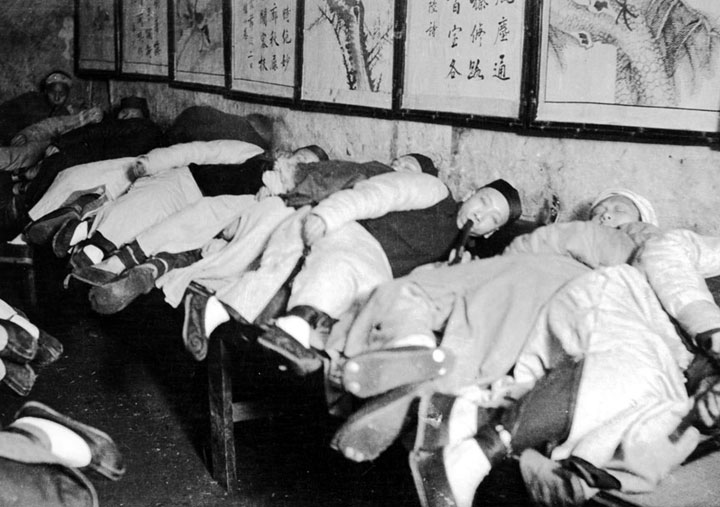
The customs and traditions of societies throughout written history have likely been much more influenced by the Opium Poppy than your high school history teacher let you know. Starting back in Ancient Greece, Homer described opium’s pleasant effects in “The Odyssey”: “…had a happy thought. Into the bowl in which their wine was mixed, she slipped a drug that had the power of robbing grief and anger of their sting and banishing all painful memories. No one who swallowed this dissolved in their wine could shed a single tear that day, even for the death of his mother or father, or if they put his brother or his own son to the sword and he were there to see it done…”. Fast-forward to 19th century China, where the drug was so popular it’s estimated that at least a quarter of Chinese men were addicted to it. It was smoked in opium dens as a pastime, something at first thought to be joyful and social. This was before its addictiveness was well known. The Chinese eventually outlawed it, leading to the Opium Wars in the next section. To this day opiates are used worldwide recreationally and and impact many cultures.
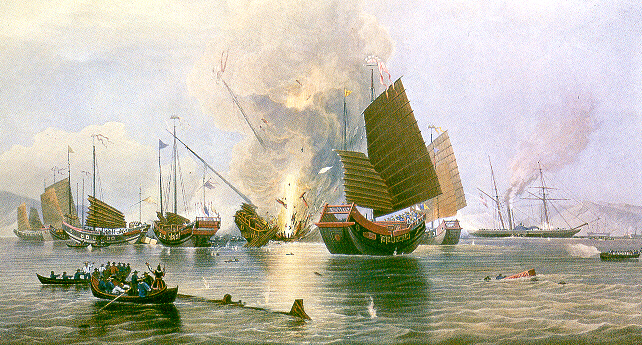
The Opium Wars were two separate affairs between the Chinese and British, both stemming from China’s opium prohibition and its effect on the British Empire’s cash crop. The first war was fought between 1839-1842, and the second 1856-1860. Massive opium production was occurring in British India and acted as a huge source of wealth, as China’s demand for it was unrelenting. When China’s government realized the harmful effects of so many men being addicted to it, it was outlawed. One way to put it: they quit cold turkey. Although the drug was still being smuggled into China, the effects of Britain losing its main source of money were very damaging, and it would lead to war. The British would end up defeating China, and they were forced to allow opium to be imported into the country. Even the Governor-general Lin Zexu’s efforts of destroying millions of pounds of it and arresting some 1700 dealers were futile; it was an entire nation under the spell of the Opium Poppy.
I remember in March I was so excited to see the new Alice in Wonderland movie coming out. I’ve always found the story interesting and I decided to do some research on it and its original author, Lewis Carroll. I was surprised to find that it is popularly held that he was an avid opium user, and that the drug was probably a huge inspiration to the story’s imaginative world and characters. This is disputed by some – but laudanum was popular in his time so it is certainly not improbable that he used it. Authors such as Arthur Conan Doyle, Oscar Wilde, and Charles Dickens were all fans of the Opium Poppy’s inspirational potential, showing just how much of an impact a single plant has had on literature, especially notable in the 19th century. The Wizard of Oz, commonly referred to as one of the greatest and timeless films ever, comes from an opium inspired book. However, you might have been confused by the scene where Dorothy falls deeply asleep in the poppy field before Emerald City. But perhaps the most famous work inspired by opium use is Kubla Khan by Samuel Taylor Coleridge – he was using opium to counter the effects of dysentery and in doing so dreamed up one of the most ravishing poems in the English language.
Knowing that the outlawing of opium in China lead to two major wars, it’s obvious that the financial potential of the plant has been huge throughout history. From the opium harvesters of the past, to the Pharmaceutical Companies who use the poppy to produce medicine, to the common street heroin dealers, one thing is clear: Opium Poppy is a cash crop. It’s estimated that growing kilogram of opium costs a farmer about $300. He can sell that to a drug dealer for around $800, making him a hefty little profit. That dealer, after converting the opium to heroin, will make $16,000 on the same amount of product it took $300 and some help from nature to grow. An enjoyable modern depiction of this process is 2006’s “American Gangster”. A man goes from rags to riches after getting connecting from poppy farmers in Vietnam.
While pain relief is of course a key to surgery, it goes much further than that. Opium has been used from the very beginning for its painkilling properties. In some parts of the world, there is no such thing as retirement. A man will work his whole life, and opium’s relief has sometimes been the only way to keep living. It’s been called “God’s own medicine”, and considered divine and sacred by many people. The two alkaloids in it that bind to out brain’s opioid receptors are morphine and codeine. Many opiate derivatives have been discovered from these; heroin (diacetylmorphine) and hydromorphone from morphine, and oxycodone and hydrocodone from codeine. Since these are semi-synthetic, these substances may start from the poppy, but have to be chemically structured in labs by Pharmaceutical Companies
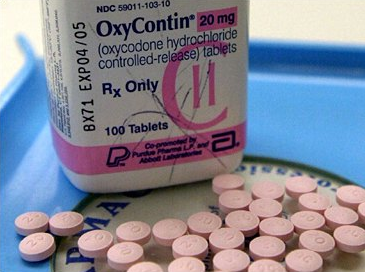
Opium Poppy may be quite easy to grow, but its genetic properties have made pharmaceutical companies billions and billions of dollars. Bayer marketed Aspirin and Morphine as painkillers for uncontrolled use in the 19th century. The rose of morphine’s superiority to aspirin came with the thorn of its unforgiving addictiveness. Finally a solution, the rose without a thorn. A drug with the power of morphine that wouldn’t hook you: heroin! Well, you can guess what comes next, heroin (named for being thought of as a heroic substance) was found to be even more addictive. Opiates were criminalized in the United States, and used legally only when a medical doctor saw fit to let you. In the 20th century many other opium-derivatives were discovered, such as oxycodone (OxyContin, Percoset), hydrocodone (Lortab, Vicodin), and oxymorphone (Opana, Numorphan). Next time your doctor gives you medicine for your sore back or broken foot, chances are that medicine came from the Opium Poppy.
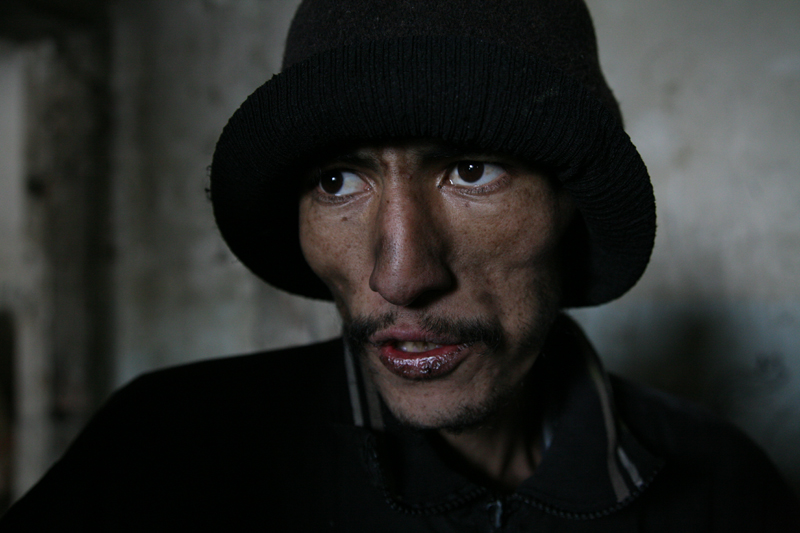
This section really has little need for further description. Opium Poppy introduced society to one of the most harmful and abundant issues of today: drug addiction. With moderate, spiritual opium use addiction wasn’t an issue, but as time went on: chronic use, harmful ways of ingestion, and chemically altering the substance all helped see the downfall of the plant’s “divinity”. It may be the most useful, helpful, and peaceful thing in history. Or it may be the plant responsible for a father’s neglect or a brother’s death. Whichever way you look at it, the Opium Poppy is one of the most influential things to ever grace this Earth.


A fact follows which I hope hasn’t been released in the comments already. I haven’t time to read many now, but hope to, although may not have time for a while more.
I’ve travelled in Turkey. Afyon, a western Turkish province and traditional centre of P. somniferum production, is the Turkish word for opium. In Turkey the poppy can only be grown under licence for medical purposes (or so it was some while back: I’m assuming that still holds true). Afyon when I was there was still the province with most acreage. One of my most treasured ethnic pictures is of women there in colourful local dresses harvesting the capsules.
We were also told that teething local babies were given ripe capsules to chew on, as the unrefined, milky sap acts as a mild anaesthetic to deaden the pain (and keep the little buggers quiet!).
@Casualreader [61]:
–cas– i owe you a reply to the silly spider spat
im running on fumes, and have to get up in sbout 3 hours
check the sports traditions around this time tomorrow, and youll have a reply
as for this topic: a quick note.
@Casualreader [61]: “In Turkey the poppy can only be grown under licence for medical purposes (or so it was some while back: I’m assuming that still holds true).”
that is definately still true..
–the govt banned it for 3 years, but its legal once again.
more interestingly though, it is government mandated, and very carefully watched.
the penalties for illegal opium production (including clandestine harvesting, and improper collection of opium) are severe. under immense pressure from the governments of several countries (including usa), the government of turkey banned its production. the usa based their protests on a statistic that (although i’m not sure it has any emperical merit) stated that between 80%-85% if the heroin in usa country came from turkey — specifically from the afyonkarahisar region which is fairly close to the largest opium manufacturing plant in the world. oh yeah, and the word afyonkarashiar is commonly truncated to afyon (just like we shorten los angeles to l.a.)…
–the word afyon means opium (i believe it is of greek origin)
let me back up one second…..the opium farmers, and proprietors of opium fields are a tight knit community — not necessarily in proximity to one another — but b/c they have one major characteristic in common: their lifeblood. it seems to be *****ogous to the early farmers in usa…..it is not just a select handful of folks, but rather an entire society dependant on the production of the poppy (they make 75 tons of morphene a year) http://www.poppyformedicine.net/documents/Political_History_Poppy_Licensing_Turkey_May_2006
so…..when turkey’s government banned the harvest of the poppy many *many* farmers lost their jobs, their farms, their livelyhood — and in some instances, their sanity
)changed drastically, giving birth to the mass amount of current restrictions and regulations facing farmers. penalites are in upward of 55 years, and *most always* result in a lifetime ban of opium farming for the offender.
–it crippled the economy, and only lasted 3 years before the gonernment caved in and begin to allow the harvests to take place again ( i *think* this was 1968-1971 — not positive im right, but i am positive im at least close)— with one contraversial prerequsite — the poppy production paradigm (more alliteration for ya
lately, there have been rumblings from the afganastan government that they are thinking of putting their hat in to the global opium production ring.
should they do this, economists predict that not only will this crippple the turkish economy, but the world economy will also feel the effects. the direct effect on the turkish economy revolves around the stout prediction that prices will plummet, rendering it nearly impossible for many farmers there to put food on the table and keep a roof over their head. — the world market would be flooded causing the aforementioned collapse in price, and eventually, more than likely, demand as well.
I am so glad you wrote this as I had been wondering for the last month “whatever happened to opium?” as you just dont see it around or hear about it much now days.. (at least I havent). Thanks heaps for the great read!!
as much as i agree with addiction being a huge influence i also miss the days when heroin was the dominant drug on the street.
i come from vancouver, and for those of you who don’t know, there are very few places in the world like main and hastings (also refered to as pain and wastings) when it comes to rampant drug use. unfortunately methamphetamines and crack cocaine have taken over. at least a heavily intoxicated heroin user was predictable, ie. on the nod, but crack heads and speed junkies are far more erratic
an interesting list idea might be pharmaceuticals that have been co-opted by the dark underbelly
@Mindymoo [60]:
My god.. I’m truly, truly sorry that this has happened to you.
I was started on all this when I was 21 on November of last year, so far I’ve gone from 20mg Oxycontin a day to 80mg a day..
The problem that people don’t understand is that even if you’re weened off – which is hard enough – they would still have to find a replacement which would more than likely be just as if not more addictive and dangerous.
Your story genuinely scares me as I’ve only been caught in this cycle for 6 months, but like you I have neuropathological pain which will never go away, but seeing how your usage has risen, I can see how mine is likely to also..
It’s true though, it really is the only painkiller which hits the spot for certain types of pain.. is there any chance of talking to your doctor about alternative treatment?
I feel for you, man, really I do.
sorry to contradict you but the first opium war was fought over opium but, it was the British who were smuggling it in to china in order to reverse china’s balance of trade so that china would trade with them.
@Arsnl [55]: I’m with you. It always strikes me as odd when people who claim to have strong beliefs in their religions are also less than sympathetic to the suffering and downfall of others. Of course I also am acquainted with many folks who are heavily involved in different faiths who are thoughtful, kind, caring and sympathetic. But if I just look at any comments sections of any lists here concerning religion, I have a perfect example of bad behavior by people who are trying to defend their faiths. Their posts are full of foul language, anger and threats.
Sure while addicts are still caught up in their using, many will latch onto excuses such as poverty, difficult childhoods, past abuse, and so on in order to justify the continued substance abuse. But it’s such a complex problem for someone to simply brush off a possible cause and to instead blame the addict seems harsh. To say that poverty is not a possible cause of addiction is cold. Certainly many of the wealthy are users. But to say that there is no history of poverty as a contributing factor is to ignore facts. Look at homeless children driven to sniffing glue in many places around the world.
Another angle that could be taken is that drug abuse leads to poverty. Look at many once famous and wealthy celebrities who end up destitute.
Just because someone is a priest, minister, rabbi, monk or whatnot doesn’t automatically make them loving and charitable. Back in the day many priests would tell woman who were being beaten by their spouses to stay with the husband. They were asked what they were doing wrong that was upsetting the man. Is the home clean? Cooking up to par? Children kept in check? As though it was her fault! Nice. And don’t even get me started about shuffling around pedophile priests in order to protect the perpetrators. Good times, good times…“In the name of love. What more in the name of love?…”
They say hope is the opium of the masses – followed by Television.
In Flanders fields the poppies blow
Between the crosses, row on row,
That mark our place; and in the sky
The larks, still bravely singing, fly
Scarce heard amid the guns below.
We are the Dead. Short days ago
We lived, felt dawn, saw sunset glow,
Loved, and were loved, and now we lie
In Flanders Fields.
Take up our quarrel with the foe:
To you from failing hands we throw
The torch; be yours to hold it high.
If ye break faith with us who die
We shall not sleep, though poppies grow
In Flanders Fields.
- John McCrae
@Casualreader [61]:
@oliveralbq [62]:
Wonderfully interesting. I have seen photos of exactly what Cas is describing. Beautiful in appearance. Everything oliveralbq says serves to remind us that nothing we do is done in a vacuum, every action, no matter how intended, will affect the lives of others we will never see.
@Lifeschool [68]: The actual quote is ” Religion is the opiate of the people.” It was said by Miguel de Unamuno, and later borrowed by Karl Marx.
@ Nikitabug, 69,
Thank for posting that. A wonderful, moving, powerful piece of poetry, as are so many from WW1.
Without intending to take anything away from your contribution, I’d point out that the Flanders poppy is Papaver rhoeas. The opium-giver is P. somniferum. Somniferum, means (sleep-bearing)of course , and one supposes McRae used a deliberate +cross-species+ reference in the penultimate line, which makes the poem of singular interest here. The opium poppy has not only powered artists, but even formed part of their work.
The world knows about 80 different species of true poppies. (I.e., as opposed to Californian, Mexican poppies, etc.)
@ oliveralbq, 62,
Thanks for the detailed fill-in. I was aware in general terms of that short ban, but other information was new to me. Received information has it that the Golden Triangle is and has been traditionally the principle source of illegal poppy-popping products (sorry, couldn’t resist adding another alliteration (and another)!) rather than Turkey. So that was particularly interesting, and the potential consequences you mentioned singularly shocking. How fragile are all the interdependent global economies. I was particularly struck reading your revelation of Turkish tradional and dependent opium farming, banning, etc., on the close parallel with Bolivia and coca/cocaine.
@Casualreader [71]: Hmmm…
@Casualreader [71]: well that is absolutly fantastic to know lol. My oops.
Still brings me to tears.
Addicts will use any excuse, that includes unbearable pain. Gee without heroin and its derivatives what would people use for all this pain I wonder, how did they survive before we became a “take a pill for everything” society.
and where I live, prescription addicts are no different than street addicts, one is just more honest.
I know, the prescription addicts will say I have no understanding of the pain they are in, there are no alternatives, to which I say hooee. The alternative is pain management, not bigger doses of drugs.
Yes I am a recovering addict and today if I am in excruciating pain (kidney stones allegedly are one of the worst in the world, contrary to what some might think) an asprin will do the trick. ONE aspirin and believe it is only temporary and will abate and it does. Power of the mind. In the last 15 years I have taken a total of maybe 10 aspirins (compressed disks, migraines, kidney stones, broken arm and dental extractions with no drugs).
Does that make me superman, no it means I won’t take drugs while making excuses to support my habit.
@canuck1234 [74]: There are two different kinds of addicts: Those on the street, heroin=seeking junkies or what you’re describing, but it’s a whole ‘nother level for people who DIDN’T make the choice to try a drug, the difference is that they needed it and this is where your logic falls apart.
A kidney stone is nothing compared to the diseases and dystrophy discussed above.
By the way, I love Flanders Fields, and was considering putting it on a list of poetry.
I thought MythBusters proved that poppy seeds won’t cause you to fail a drug test. I think Adam Savage consumed a bunch and it didn’t show up enough to be considered a fail. Maybe I’m wrong.
@Blondie [65]:
One possible treatment for the RSD is a ketamine coma. They put you under ketamine for anywhere from five days to three weeks, and when you wake up, the majority of your pain is gone. The worst part is coming off of the ketamine, which is a crazy and scary drug. Unfortunately, this treatment is currently illegal in the US, the closest place it’s available right now is Mexico, and is around $50k.
There’s a ketamine treatment available here, where they give you a cathetar in your spine, and you get 2-3 infusions of ketamine, morphine and bupivicaine a day for six months. But there’s no way I am going on something that can make me psychotic for six months. Also, I likely couldn’t get Medicaid to cover that anyway. So for now, the only think I can try is a drug holiday, to get on lower amounts of the drugs. I go in the hospital for a few days, they put me on suboxone and some sort of benzo, and they try to lower the amounts I am on. I have tried so many other drugs, *****s directly on the area to desensitize it (was hell and did not work), pain blocks where they jabbed a needle directly through the chest wall to inject it with steroids and a numbing medication (which was even more hellish than the *****) and they really have no clue what to do but treat the pain I am in. I haven’t had my meds increased in six months, because I am trying to just stay on what I am on for now. I’ll try to not take the immediate release morphine every four hours, or at night, when I’m about an hour away from another dosage, I’ll take the ambien to knock me out so I hopefully won’t need to take it. They wanted to try me on Oxycontin, but I am so horrified of that drug that I refused. I know people who were absolutely destroyed by that drug, and I really fear it.
Thank you so much for your concern; I hope that your pain is relieved very quickly, and that your bouts of nerve pain aren’t so severe. For some people, it doesn’t get that bad, and it can go away with time. That’s what I’m hoping for, at least.
@canuck1234 [74]:
What am I supposed to do for my unbearable nerve pain then? I didn’t ask to have this genetic disorder, and I didn’t ask for my procedure to be botched. I am in severe pain every second of every day, and I am physically addicted to the drugs. Should I just not take them, then? Because I assure you, I’ve tried just taking motrin or asprin or tylenol for the pain, and it does not work. Should I just suck it up and suffer?
im doing an essay on the opium wars which is due tomorrow… i hope i have the will power to stop procrastinating on listverse =(
You need to research the Opium Wars a little more. It was not money, directly, that the British were after, but Tea. China were the only country that produced it, and they kept the cultivation to themselves. Being a closed country, they would only trade for silver, any other trading was outlawed. The British, seeking an alternative, discovered the Chinese would accept Opium too, which they could produce. It's very easy to simply call the British all sorts of nasty names for things like this, however, it's much more complicated than that. The Chinese played their own part too. The history is there to be read.
Oh and Uder The Bridge, by RHCP, is an excellent Heroin song, wonder if anyone told the All Saints, when they covered it as a love song?
@Blondie [42]:
@Mindymoo [60]:
I was going to comment on the barious sides of the argument until I came to your posts. I am so sorry that you´ve ever had to go through something like that. I cannot even begin to imagine how horrible that must be.
That said, I think there is a HUGE difference between those poeple who become addicted due to a pressing medical need (segue comes to mind) and those who decide to try the stuff because they are “sad”, or “curious” or “poor” or had a “sucky life”. These are excuses, nothing more. These people made a choice, they chose to try these drugs and risk getting addicted…
And no, I´m not being overly harsh. If someone honestly wants to kick the habit, makes a real effort to stop, then they get my sympathy. People who say “Oh well, I´ve had a *****ty life, I deserve to use these drugs” do not. Whatever happened to taking personal responsibility for your actions?
Thankyou.
I agree in the sense that, if you're going to try something that you know beforehand is addictive, then you cannot complain when the moment is passed that you are an addict.. this said, all addicts, alcoholics, heroin addicts, smokers (yes, you too) all have my sympathy. All were no doubt started in relative innocence.. regardless of public knowledge, you never started smoking and assumed straight away that you would later in life end up with lung cancer, but when it happens.. sympathy all around. You know it's addictive, you know these things can happen, but still, you get sympathy. I believe the same should go for addicts of all kinds.. I don't believe in their excuses, but you must understand that no-one ever goes into something thinking that the worst will happen to them. As much as you can have a few cigarettes and not become a smoker, you can use heroin recreationally and not become addicted, in-fact, smoking is far more addictive and far more likely to kill you (yes I did check this out) than heroin. It's all a matter of what the ethics and morals of the masses are on the particular day in hand.
My point was merely that "it just takes willpower" was a load of nonsense, nothing could be further from the truth, how and why someone has become an addict however is an entirely different matter. I apologise for the rather long rant above also.. after being caught in this situation I did do alot of reading on the matter and the more you educate yourself the more you question the way we look upon ourselves in this modern society.
Amazing list, Brandonladd. A great idea that was well-executed.
@canuck1234 [74]:
Oh! Look! Go You!!!!!!
*sarcasm*
You’re obviously too ignorant to realise that the majority of prescription addicts did NOT voluntarily begin the use of such addictive drugs.
Personally I had a morphine IV drip for 1 1/2 months followed by Fentanyl (very strong version of diamorphine) injections every 2 hours, this was all in the hospital and lasted a total of 2 1/2 months – So you’re telling me that despite the fact that medically trained professionals decided that I needed these drugs in order to cope with the pain (I’m currently on doses of Gabapentin higher than those given to cancer patients – not my choice), that after all that, I should force myself through the absolute hell that is withdrawal and then attempt to deal with the paralysing nerve pain that I would experience every day if it wasn’t for these drugs?
It’s one thing saying no to a drug for a short period of time, it’s another being practically paralysed with pain for years unless you take the drugs. I hope that you never have to experience what either myself or Mindymoo have gone through but if you do, your opinion of addiction will change so quickly.. so quickly I can’t even find the words to do it justice.
It’s not our fault if, while in hospital, we’ve been put on highly addictive drugs, and it’s not our fault that on leaving the hospital we cannot stop taking them. If you’re ever in this situation, go ahead, try to stop, hopefully someone will be there to take you to hospital while you’re having seizures covered in your own ***** and vomiting every other minute whilst feeling a depression so deep you think that hell itself has become you.
You’re just so ignorant.
Oh for sure, people should have fore-knowledge that the drugs they are about to recieve will become incredibly addictive, but what some people don't seem to get it that in some cases, they literally WILL NOT stop giving you the painkillers as, along with the incredible pain, your blood pressure would go through the roof, you would scream uncontrollably,be unable to eat etc.
Personally I was unconcscious for those 6 weeks that I was on the morphine drip, so go ahead, go into an intensive care ward, listen to the screams of the people who are already on these painkillers and tell them that they're just using their pain as an excuse. It''s people like you who make people like myself feel the same as people who became addicts by choice y'know? There are those who seek out addictive drugs and there are those who wake up one day and realise that they may never walk again, and the only thing stopping the pain from becoming absolute is the drug they pump into your neck every 2 hours (every other major vein was hooked up to a machine, coming off life support this happens)
Yes there are those who use an affliction to score drugs, but there are many more who DON'T want them but have to have them. Get it right.
Wow, fascinating list. I knew most of this already, but interesting nonetheless. This is coming from a former painkiller addict. Evil yet divine.
Interesting. I take about 30 mg of hydrocodone a day for chronic pain and had no idea it was from the poppy, It contains a *****load of acetaminophen. Perhaps this is why my old pain Dr said he would prescribe heroin if it was legal. I bet you see within a couple years states on the brink of collapse legalizing pot for tax revenue. As far as I am concerned it is just a WEED.
You forgot Flanders's fields. XD
sweet, this totally helped me with my science project!
Thanks tons!!
Well, I’ll be straightforward here. I’m a moderate addict. My habit includes more or less any opiate I can get my hands on, but most often it’s heroin (intravenous) and hydrocodone (insufflated or oral, depending on my mood), the two easiest ones to acquire in my area. It’s nice to see something historically-based, unbiased and noncriminalizing of my favorite plant. The article doesn’t say “This is bad”; it says “This has had a drastic effect on our culture, in ways good and bad” which is very, very accurate. Wonderful piece, here!
At any rate, knowing personally what the stranglehold of addiction to opium and its “progeny” is like, I’ll say this on the comments I’ve read here so far: Addiction is too complex a thing to slap a formula on. Everyone always asks “Why?”, be it an addict’s family or puzzled psychologists. The answer is never so simple as genetics, boredom, mental problems or hiding from one’s life. Usually it’s an intricate conglomerate of things and the recipe seems to differ vastly between every addict I’ve met, myself included. I know it’s overused, but the saying really is true: “Everything is relative”, and for things that literally entwine with one’s mind the way opiates do, this is doubly so. I personally use to inspire creativity, to de-stress, to treat social anxiety, depression and PTSD, all of which are better treated by opiates than any of the myriad of antidepressants I’ve been placed on since childhood (and don’t you forget that some of those antidepressants, Effexor for instance, are also addictive and will make you very sick if you stop taking them, the same as any other drug!), and, to put it bluntly, because it feels good!
Yes, everyone gets so caught up in the sickness, desperation and death of it all, but they forget why we do the things we do, and that’s the ultimate fulfillment of the basic human need of self-enjoyment. There is a pleasure there, one that is no less than what the religious attribute to “heaven”, a mental and physical euphoria that no joy, not even *****, can possibly come close to touching, and once you’ve gotten a taste, no matter what your genetics or your background or your psyche, you find yourself wanting more. Now, are some people more resistant than others? I’m sure they are, but I’ve known plenty of people with non-addicted families, happy childhoods and pretty average psychiatric states that were addicts, and when asked, they reply with exactly what I’ve summed up in this paragraph as their reason: “Why not? I enjoy it and it adds something to my life that was not there before.”
So, to sum up this wall of text, it’s in my findings as someone with experience on this topic that “Why?” is a question to be asked referring to the individual and not to the masses. Just like anyone who partakes in any activity, as safe or harmful as it may be, we all have our own reasons; no two users are alike.
Lewis Carrol suffered from a syndrome that caused extremely bizzare dreams called Alice in Wonderland Syndrome which was not dicovered until much after his death by psychiatrist John Todd where symptoms include hallucinatons brough on by migranes where objects appear abnormally sized, Hence the large heads and constant shrinking.
I see no balance here. I am in exrteme pain. The opiates allow me to live comfortably. I am surprised that the authortisizes would use my tax dollars to make sure I am bed ridden for the rest of my life.
Herm, Gulf Vet
I started using Heroin because I was severely depressed. I was in a time of my life where I felt a deep sadness. I got to the point where I didn’t care what happened to me, and found no happiness in anything I did. I just wanted some refuge for even the short time I used heroin.
Many people try and say the worst part about withdrawal is the physical symptoms. They are indeed awful, especially the sleeplessness. But in my opinion, the worst part of quitting is knowing what happyness and relief you had while using, and knowing you can’t go back.
Very great post. I simply stumbled upon your blog and wished to say that I’ve truly loved surfing around your blog posts. In any case I will be subscribing in your rss feed and I’m hoping you write once more very soon!