
 Movies and TV
Movies and TV
Movies and TV  Technology
 10 Historical Inventions That Changed War Forever
 Humans
 10 Everyday Concepts That Are Shockingly Modern
 Animals
 10 Animals Everyone Gets Wrong
 Weird Stuff
 10 Bizarre Superstitions That Drive the Stock Market
 Movies and TV
 10 Films That Were Praised but Got History Wrong
 Our World
 10 Major Cities Being Swallowed by the Earth
 History
 10 Times Saying the Wrong Thing Became a Death Sentence
 Music
Music 10 Stars Who Secretly Wrote Hit Songs for Other Singers
 Weird Stuff
 10 Daredevils Who Treated Death Like a Suggestion
Movies and TV 10 Characters Who Never Forgot a Grudge
Technology 10 Historical Inventions That Changed War Forever
Humans 10 Everyday Concepts That Are Shockingly Modern
Who's Behind Listverse?

Jamie Frater
Head Editor
Jamie founded Listverse due to an insatiable desire to share fascinating, obscure, and bizarre facts. He has been a guest speaker on numerous national radio and television stations and is a five time published author.
More About Us
Animals 10 Animals Everyone Gets Wrong
Weird Stuff 10 Bizarre Superstitions That Drive the Stock Market
Movies and TV 10 Films That Were Praised but Got History Wrong
Our World 10 Major Cities Being Swallowed by the Earth
History 10 Times Saying the Wrong Thing Became a Death Sentence
Music 10 Stars Who Secretly Wrote Hit Songs for Other Singers
Weird Stuff 10 Daredevils Who Treated Death Like a Suggestion
Top 10 Prehistoric Fish Alive Today
This list looks at fish that were around in remote, prehistoric times and have survived to our time, still keeping their “prehistoric” looks to prove it. Feel free to mention those I have excluded in the comments.
10
Hagfish
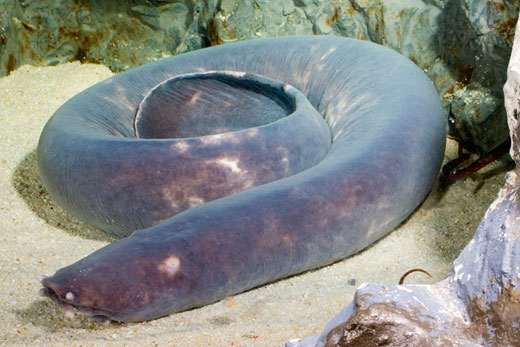
According to the fossil record, hagfish have existed for over 300 million years, which means they were already old when dinosaurs took over the world! Found in relatively deep waters, these animals are sometimes called slime eels, but they are not really eels, and actually, they may not even be fish at all, according to some scientists. They are very bizarre animals in all regards; they have a skull but lack a spine, and they have two brains. Almost blind, they feed at night on the carcasses of large animals (fish, cetaceans etc) which fall to the sea bottom. They owe their “slime eel” nickname to the fact that they produce a slimey substance to damage the gills of predatory fish; as a result, they have virtually no natural enemies.
9
Lancetfish
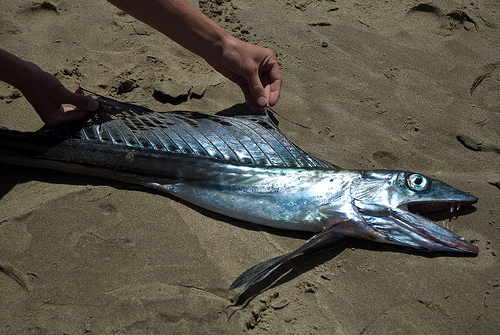
The lancetfish has a very obvious “prehistoric” appearance, with those fierce-looking, sharp teeth on its jaws and the sail on its back, reminiscent of that of some dinosaurs (although, in the lancetfish the sail is actually an enlarged dorsal fin). Even its scientific name has a dinosaurian sound to it (Alepisaurus ferox). Up to two meters (6′ 6″) in length, this predator is found in all the oceans except for polar regions; very voracious, it feeds on smaller fish and squid, and has known to feed on members of its own species sometimes.
8
Arowana
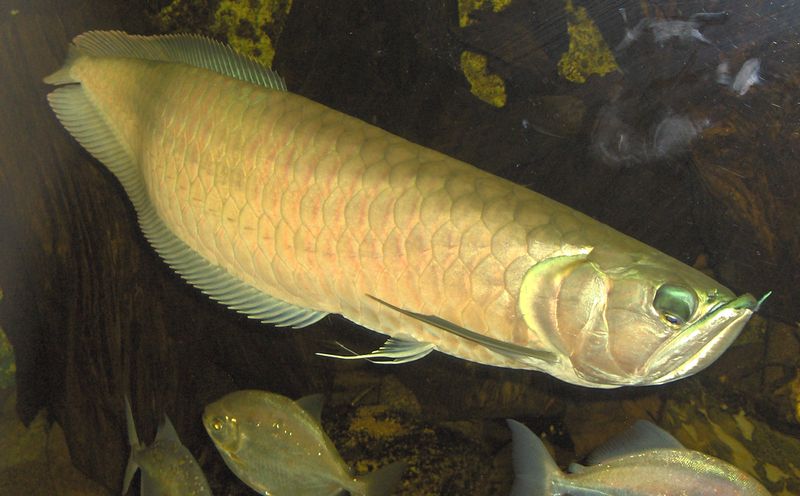
Belonging to the ancient group of the Osteoglossids, these fish already existed in the Jurassic period. Today, they are found in the Amazon, and in parts of Africa, Asia and Australia. Sometimes kept as exotic pets, arowanas are voracious predators that feed on any small animal they can catch, including birds and bats which they catch in mid flight (they are able to leap up to 2 meters (6′ 6″) into the air). In China, arowanas are known as “dragon-fish” due to their appearance, and they are thought to be harbingers of good luck.
7
Frilled Shark
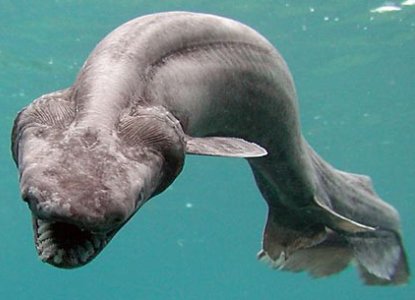
This deep sea predator, one of the most primitive sharks alive today, is a relic from the Cretaceous period, when dinosaurs ruled the Earth. Seldom seen alive, and only recently filmed for the first time, the frilled shark can grow up to 2 meters (6′ 6″) (with females being larger than males) and they live in deep waters, where they feed mostly on squid. They are not dangerous to humans, and as a matter of fact, most frilled sharks spend their whole lives without seeing a human being. Only dead or dying specimens are usually seen and recorded by fishermen or scientists.
6
Sturgeon
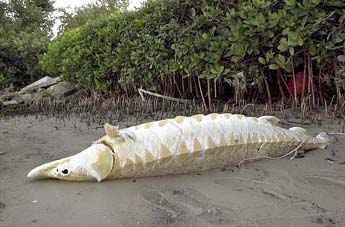
Another survivor from the age of dinosaurs (they were already around in the early Jurassic), the sturgeon is well known for being one of the main sources of caviar (which is made out of their roe or egg masses); due to overfishing, these magnificent, armored fish are sadly endangered nowadays. The largest sturgeon species can grow up to 6 meters (19′ 7″) long, being as large as most great white sharks; they feed on small animals from the sea bottom and pose no danger to humans, unless provoked (although they are so big that they have hurt, and even killed, people unintentionally by leaping out of the water and landing on boats!)
5
Arapaima

A close relative to the arowana (see #8), the Amazonian arapaima is sometimes considered to be the largest freshwater fish in the world. According to early descriptions, it could grow up to 4.5 meters (14′ 8″) long, but today, enormous individuals like these are seldom found and most adult arapaimas average 2 meters (6′ 6″) long. These slow moving predators feed on smaller fish, crustaceans and whatever small animal they can fit in their mouth. An interesting trait of this fish is that it needs to breath oxygen from the air, like a cetacean, in order to survive. Arapaimas pose no danger to humans and are often hunted for their meat; unfortunately, they are very scarce nowadays. Although the arapaima seemingly appeared in the Miocene period, it belongs to a much older family, the Osteoglossidae, and therefore its origins can be traced back to the age of dinosaurs.
4
Sawfish

This critically endangered animal is a survivor from the Cretaceous period, and can be found both in saltwater or in rivers and creeks, and has been found up to 100 kms inland. Up to 7 meters (23′) in length, sawfish may look like sharks but are actually more closely related to rays. Their “saw” is both a weapon and a sensory organ, covered on electro-sensitive pores which allow it to sense prey despite its terrible eyesight. Although usually peaceful, the sawfish can become extremely dangerous if provoked. Due to an extraordinary fossil, we know that gigantic, prehistoric sawfish were probably a staple food for the largest carnivorous dinosaur, Spinosaurus, as a vertebra from the fish was found stuck between the dinosaur’s teeth.
3
Alligator Gar
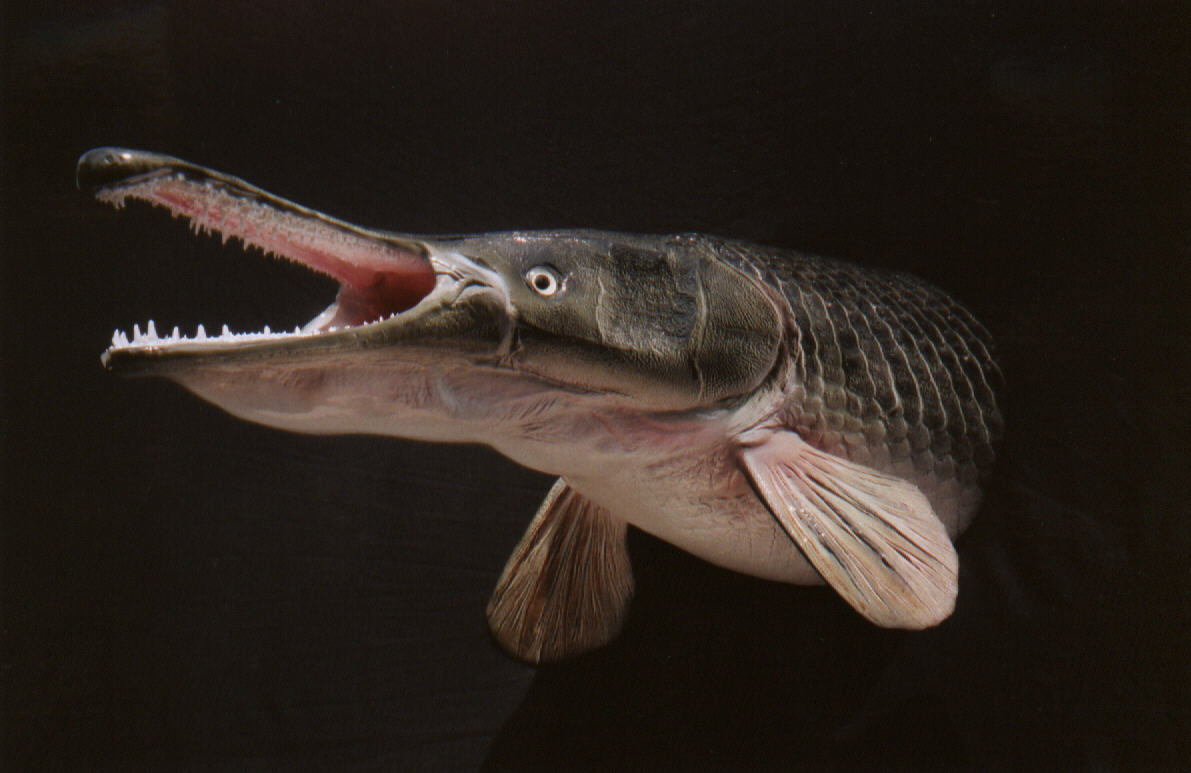
This formidable, thick scaled predator is found in the southern US and northern and eastern Mexico, being the largest freshwater fish in North America (although it sometimes wanders into the sea). It can grow up to 4 meters (13′) long and weigh up to 200 kgs (440lbs). Gator gars are so called because of their reptilian appearance and long jaws, armed with a double row of sharp teeth. They are voracious ambush predators and have been known to bite humans on occasion, although no confirmed deaths due to alligator gars have been recorded to date. Gars are among the oldest fish alive today; their origins can be traced back to the Cretaceous period.
2
Polypterus Senegalus

These african fish are often called “dinosaur eels”, due to their reptilian appearance and serrated dorsal fin, reminiscent of some dinosaurs’ spiked backs. They are not really eels, but members of the bichir family. Bichirs were already around in the Cretaceous, so the “dinosaur” part of their name is actually fitting in a way. Although often sold as exotic pets, dinosaur eels are prone to escaping their fish tanks. They can survive out of the water for long periods of time as long as their skin remains wet, which enables them to wander far away from their tank.
1
Coelacanth
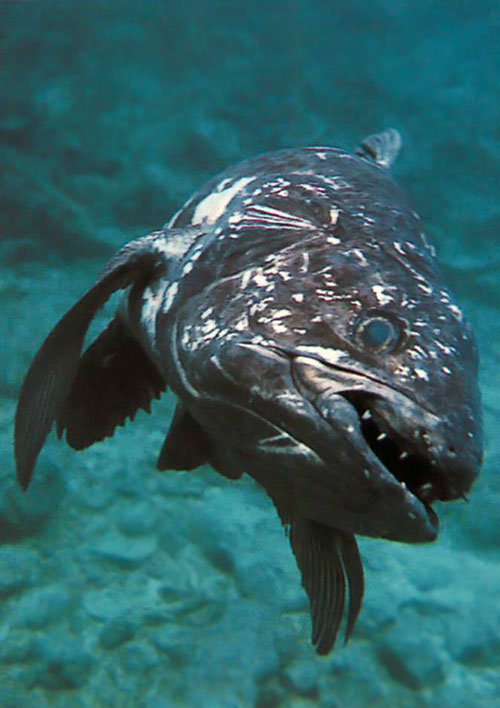
The Coelacanth is the most famous of all “living fossils” and deserves to be #1 in this list, because it is the best example of a “Lazarus taxon”, this is, animals that were supposed to be long extinct and are unexpectedly found to be alive. Coelacanths were supposed to have become extinct in the Cretaceous period, along with the dinosaurs, but in 1938, a live specimen was caught in South Africa. Since then, more specimens have been seen and photographed, and a second coelacanth species was even found in Indonesia in 1999. Coelacanths are large predators, up to 2 meters (6′ 6″) long; they feed on smaller fish, including small sharks, and are usually found in deep, dark waters. Although rarely captured and consumed due to their horrible taste, coelacanths are critically endangered nowadays.
More Great Lists
 Top 10 Worst Times To Be Alive In History
 Top 10 Insane Elvis-Is-Alive Theories
 Top 10 Amazing Prehistoric Creatures With Unexpected…
 Top 10 Fish That Hunt Land Animals
 Top 10 Weird Stories Involving Aquarium Fish
 Top 10 Great Scientists Who Would Be #Cancelled Today
 Top 10 Great Nature Mysteries To Puzzle Over Today
 Top 10 Reasons To Be Fascinated By Cubes Today
 Top 10 Bizarre Magazines You Can Buy Today
fact checked by
Alex Hanton
More Great Lists