Martial arts are great as spectator sports and a good way to get fit, but they really come into their own when they are used in self-defense – undoubtedly the ultimate result for many of them. This list looks at ten of the best martial arts for if you are especially interested in defending yourself against attackers.
Firstly, and this is true for all these entries, if you’re on the street and a stranger attempts to mug you, or worse, he most likely doesn’t know any particular fighting style, other than “swing for the fences and keep moving forward.”
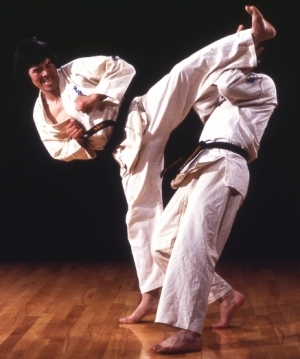
There are quite a few offshoots of kickboxing, the most famous of which is Muay Thai, which roughly translates to “art of the eight limbs.”
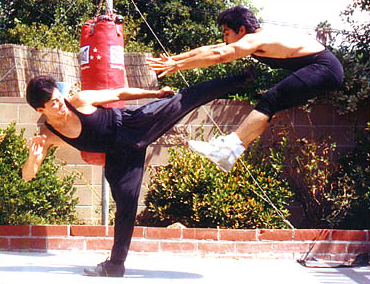
Kickboxing for self-defense concentrates on its version of punches, knees, and kicks: fast-paced, distracting, and aimed at all available openings. If the attacker has a knife or gun, and is within arm’s reach, he will use the weapon. The defender is thus armed with more weapons, hands, feet, knees, elbows, head.
Simply walk toward the attacker (who has any weapon but a gun), and throw a front kick straight up against his chin as hard as possible. Kickboxing thrives on this sort of move, and teaches the practitioner to execute it with such extreme speed, faster than the attacker can react, that it virtually rules out the risk of “fancy kicks.” Do it correctly and it will almost always break his jaw, crush his larynx, shatter his teeth, force him to bite off his tongue, etc. He will not fight after this. This sort of kick is well trained to the point that it can, in fact, be delivered efficiently, that is, quickly and powerfully, without being telegraphed.
Alternatively, step to the side, grab the attackers weapon arm, and sling your forehead into the his nose. This will not hurt you nearly as much as you think. The attacker’s nose, on the other hand, will shatter like a firecracker.
Well trained kickboxers practice something called “combat qi”,which is the physical conditioning of any part of the body through repeated damage, until it no longer sends sufficient pain signals to the brain to bother the person. Kickboxers will roll a baseball bat handle up and down the shin firmly enough to cause aching, for about an hour a day for 2 years. The tibia is repeatedly damaged and rebuilds itself stronger and thicker. Eventually, the kickboxer can kick the baseball bat in half with his or her shin, and not feel pain.
Here, special emphasis is placed on attack deflection. Most punches or knife lunges are performed straight toward you, not in an arc. Few fighters are stupid enough to try a looping haymaker.
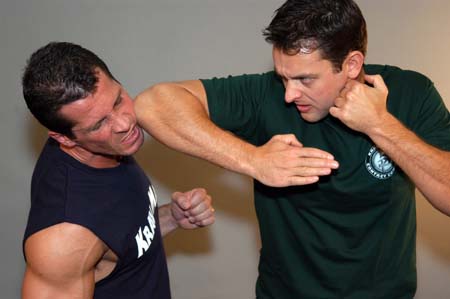
Thus, step to the side, creating a lateral line toward the attacker’s arm, strike the attacker’s punch or knife hand, then quickly strike his lower side, belly, or back with your other fist. This is very difficult to defend against, and most likely he will not be able to. Push forward and throw a knee into his quadriceps. This hurts like crazy.
Strikes to the face and head are important, but the attacker will expect them, so instead, block his right-handed attack with your left fist (or vice versa), and punch with your other hand straight into the soft spot below his sternum as hard as possible, twisting the hips. This target is the solar plexus, and will incapacitate him as effectively as a strike to the groin.
Or, if he charges forward, snap a front kick straight up with the ball of the foot planted as hard as possible into his stomach or solar plexus, not the groin. If one of the former targets is struck, the attacker will be forced back in agony, by means of his center of gravity. He is leaning forward while charging, and a kick to his groin will cause him to lunge into you.
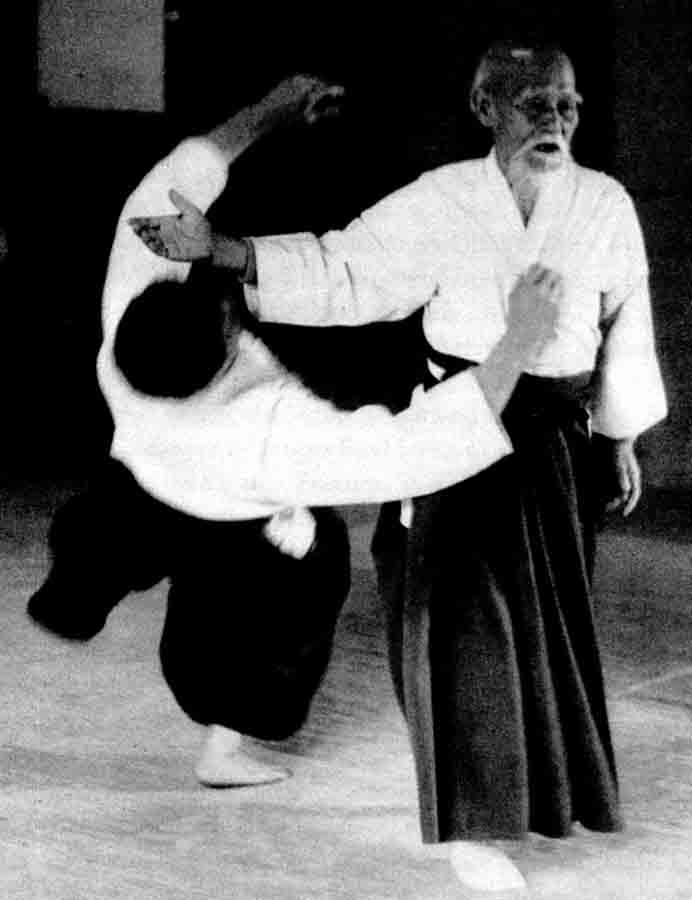
An interesting art that is immediately recognizable. It does have a few striking moves in it, but for the most part, it is based on the principle that when an attacker strikes, he leaves some part of his defense vulnerable. If you, the defender, do not attack him, you remain defensively invulnerable.
Do not resist his attack. Use its momentum against him. Steven Seagal is the most famous Aikido practitioner in the Western world. He may be a horrible actor, but he is a genuine 7th degree black belt in Aikido, and his signature move is absolutely essential to any self-defense arsenal: the kote gaeshi, or “forearm return.”
The attacker steps forward and throws a straight punch. You sidestep, snatch hold of his wrist, and twist around in time with his punch. Do it right, and it will fling him completely off balance, using his own momentum, while you whirl around, and twist his wrist toward the outside. He probably will not flip over like the classic theatrics in a Seagal film, but his wrist may well break. He’s unlikely to fight anymore after that.
Most critics of this art point out that it is nearly impossible for the average black belt to catch a person’s punch and turn fast enough to perform this move, but that’s not true. It’s actually a very easy move to learn and perfect.
Aikido thrives on joint locks, which do not require much speed to perform, compared to the kote gaeshi, and are extremely effective in immobilizing and incapacitating an attacker.
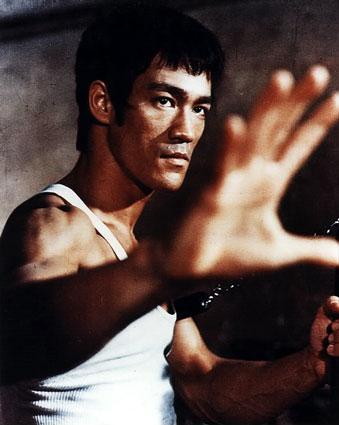
Wing Chun Kung Fu is the art that Yip Man taught to Bruce Lee, and which Lee rebelled against as too slow and formal for self-defense. That’s quite misleading. He meant that it was insufficient for him when fighting against professional martial art experts, like Wong Jack Man, with whom he fought a famous duel.
Lee invented his own version of Wing Chun, which became entry #5, because of the inadequacies he noticed in Wing Chun. With this method, he defeated Wong in 3 minutes, when almost any other fighter in the world would have needed a lot more time, and would have suffered much more injury.
He won by delivering Wing Chun’s signature punches: they do not use the hips, but are instead, very fast, rapid-fire left, right punches to the attacker’s chest, not the belly, not the throat, but the sternum or solar plexus.
You block the opponent’s attack with one hand and respond with the other fist straight into his chest, following with the other fist, again and again, walking into the attacker as you punch. The forward motion of your whole body adds power, which, coupled with the arm strength of the average 100 pound woman, results in about 300 pounds of force rammed repeatedly into the attacker’s chest. The only thing left is to practice your speed in doing this. 15 punches before the attacker can react are not unheard of. These punches also have the advantage of keeping the elbows close to the sides, preventing the attacker from grabbing the punching arm.
Then there’s the centerline defense versus looping attacks, like a haymaker or roundhouse kick. The shortest distance between two points is a straight line, so instead of picking up extra power by swinging around and twisting the hips, you block the attacker’s strike and simultaneously throw a front kick straight forward into his belly. This will take almost anyone off his feet the first time, if you kick as hard as possible.
The closer range of this method favors a shorter person, like a woman defending herself against a would-be rapist, etc. The closer the two people are, the easier it is for the shorter person to invade the reach of the larger person, effectively penetrating his defense.
This is the most universal style on this list. It is a true hybrid, incorporating elements of grappling, hard striking, eye gouging, choke holds, biting, joint locks, as well as the awareness of the defender’s center of gravity versus the attacker’s center of gravity.
You throw your attacker by lowering your center of gravity under his, and jerking him over you, or around you. It’s simple and effective. If he attacks with a weapon, you trap this arm, then deliver a knife-hand strike to his collarbone, while shoving him backward and down, locking the weapon wrist and breaking it.
If he throws either a front or roundhouse kick of any kind, he must stand on the other leg. You sidestep his kick, trap the leg, and deliver your own kick into his standing knee, breaking it backward, then whipping him around by his raised leg. He will go down and will be unlikely to be capable of much retaliation.
If he charges forward and grabs your shirt, you do not move backward. You move forward and bend down, ram your hip into his midsection, grab one of his shoulders with one hand, and with the other grab him around his back, and whip him over your own shoulder, shoving upward with both legs. A 100 pound woman can do this very easily to a 250 pound man. You can then trap one of his arms and lock one of its joints while he is down.
Bruce Lee envisioned “a style without style,” which seems nonsensical. But try to understand the concept of adaptation. Lee emphasized this above all: “the worst thing you can do is to anticipate the outcome of a fight. You ought not to be thinking of anything but his attack and your response. Clear all other thoughts from your head, or they will slow you down.”
Thus, you use one stance, the western fencing “en garde” stance. Remain bouncing on the toes in order to switch from left forward to right forward foot, to retreat or to advance, to be able to kick with either leg. Footwork is all-important in a real fight, as it determines how far you are from the attacker.
Elements of Wing Chun include close-quarters trapping of hands and feet; no kicks higher than the waist, since kicking higher than this leaves the groin and standing leg vulnerable; and simultaneous attack/defense (see #1).
Elements of Jiu-jitsu include body throws and strike deflection. Emphasis is placed on the speed of strike combinations, and well trained practitioners can strike the attacker’s throat up to 10 times in one second.
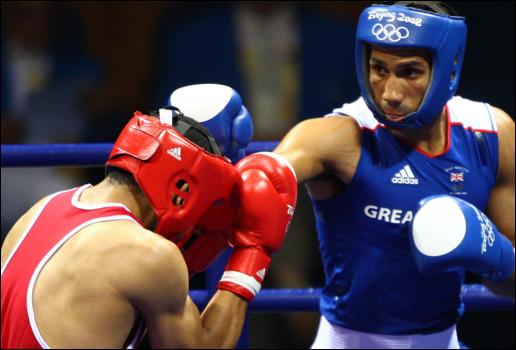
You’ve heard stories of would-be muggers picking the wrong old man to mug. The fight typically ends with one swing. That’s all a boxer needs. In fact, boxers have been imprisoned (wrongfully, in my opinion) for defending themselves from muggers, murderers, bank robbers, etc., on the grounds that their hands are lethal weapons. Boxers throw punches faster, harder and more accurately than any other trained fighter on the planet.
This is because boxers train on average for 4 years to do just that: punch properly. They are not allowed to kick, so their hands are all they have. Consider that Rocky Marciano knocked out Rex Layne with an off-balance, out-of-reach right hand, covered with a 16-ounce leather glove. This punch knocked Layne’s mouthpiece 10 feet across the ring, out of clenched jaws, and sheared off four of his teeth at the gumline.
Boxers also toughen their bodies religiously, every day, to strengthen their muscles for endurance and durability. They don’t look as hulkingly large as bodybuilders, but their muscles are as powerful and hard as a farmer’s.
They punch, block, bob and weave going forward, and punch, block, bob and weave going backward. They are drilled relentlessly with the maxim, “Always protect yourself”. The hands stay on both sides of the head, the posture crouched so that the whole body is ready for explosive power, and that the front of the torso is protected by the forearms.
Your target is the side of the chin, which will wrench the attacker’s head sideways and shut off his brain by pinching the spinal cord in the neck. His strength and rage do not matter. He will black out instantaneously.
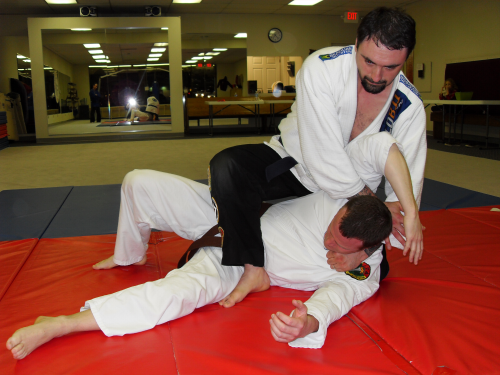
This hybrid mixes Jiu-jitsu’s standing throws and strikes with ground fighting, which emphasizes joint manipulation and overall control of the opponent, effectively ending a fight very quickly. The larger the attacker, the more easily he can be grappled off his feet, using his center of gravity against him, and forcing him to submit (or pass out).
Once on the ground, the first thing Brazilian jiu-jitsu teaches is to seize a limb and break it at a joint: kneebars for snapping knees or ankles, armbars for snapping elbows and wrists, chokeholds and the use of the powerful legs to immobilize the attacker’s torso while the defender ends the fight with fists or elbows to the face.
You’ll see it in Chris Nolan’s Batman films. It was developed by Justo Dieguez and Andy Norman, based on Dieguez’s street fighting experiences in Spain. Batman’s method of fighting is understood from the comic books to require the utmost efficiency, because Batman is a genius at fighting crime, and will not waste time or effort in putting criminals away. Ten or twenty bad guys at a time routinely attack him, and Dieguez and Norman have developed the style to defend against this many people. It sounds impossible, but after 6 or 7 years of training in it, which is not too terribly long, anyone can perform all the necessary moves. You become a self-defense machine.
Nolan looked around for a style of fighting never depicted on screen, something fast-paced, close-quarters, but quick, dirty and brutal. Classical Tae Kwon Do is beautiful to watch, but terribly inefficient in terms of the street fight, in which there are no rules.
The Keysi Method has almost no kicks of any kind. It thrives on extreme close-quarters combat using every weapon the body can quickly wield in such a small space: fists, head, knees, and especially the elbows.
There is only one stance to know, and when you see it one time, you can do it: “the thinking man,” with the hands clasped on the head, and the elbows raised to protect the head, neck and upper chest. It looks like a man holding his head while deep in thought.
It is designed to strike with the sharp elbows, and lots of hammer fists, which are MUCH more powerful and devastating than straight punches, because they employ the entire upper body in bringing the firm, outside muscle, from the root of the little finger to the wrist, down like a hammer against the target.
This is a hybrid style, using elements of grappling from Jiu-jitsu and Aikido, ground fighting from Brazilian Jiu-jitsu, close strikes and centerline defense from Wing Chun, and trapping from Jeet Kune Do. The Keysi Method teaches its practitioners to defend themselves against any number of attackers, 5, 10, 20 and even more, with a 360 degree range of aggression, and to observe all objects in the vicinity for their potential as weapons.
It is Israel’s national martial art, developed largely by Imi Lichtenfeld, and dedicated to no-holds-barred incapacitation for the purpose of street survival. No quarter is expected or given.
It incorporates Western boxing punches, Karate kicks and knees, Greco-Roman wrestling, Brazilian Jiu-jitsu ground fighting, Jiu-jitsu throws and grappling, and most importantly, “bursting,” adapted from Wing Chun. This is a simultaneous defense/attack: instead of blocking an attack and then delivering a response, you block the attack and deliver a response at the same time, i. e., block with the left arm and push forward with the legs, striking with the right fist to the throat, all simultaneously.
Also stressed are attacks to vulnerable body parts: the eyes, throat, and groin. Attackers can expect testicular ruptures. Emphasis is also placed on disarming attackers with both knives and handguns, and turning these weapons on the attacker. It also exclusively trains hand-eye coordination, until defense becomes second nature and does not require thought. And a good Krav Maga instructor can teach all of this to anyone, regardless of athletic prowess, in only 3 to 6 months.
It’s something of a joke, and out of regard for the popular definition of “martial arts,” firearms were left off the list. They are, however, by far the most efficient method of self-defense. Bruce Lee carried a .357 magnum everywhere once he became famous as the guy no one could beat in a fight, because there are always stupid jerks who want to prove that wrong. He had no intention of risking injury.
Chuck Norris is well known as a pro-gun advocate, and in response to a reporter’s ironic question, “If someone broke into your house, would you use your roundhouse kick?” he replied, “No, I’d use my 10 gauge.”
The ranking of most of the entries on this list does not account for the length of time it takes to master the given art. Krav Maga is #1 largely because it can be learned proficiently in only 3 to 6 months. But then, you can learn how to shoot the chest and head of a man-size silhouette target from 50 yards (46m) in one afternoon. And most street violence occurs within arm’s reach. No caliber smaller than the .380 (or .38 revolver) is recommended.


Pretty stupid list some some of these are meant for SPORT and not self defense like Kickboxing and Pugilism(which btw, is Boxing).
By now, we know enough about no-holds-barred fighting that the ‘superior’ styles are BJJ, Boxing and plain old wrestling. Karate, Taekwondo, Wing Chun etc are completely useless in terms of self-defence. I really can’t believe some are on the list. As for Krav Maga, it is unproven. It’s better than the laughable Chinese/Korean arts, but not so great if you’re facing a person with basic boxing training or even a Blue Belt BJJ guy. Probably a good start for the layman who doesn’t have the time to get skilled.
@Reality – you should read what self defense means. I would like to see how a blue belt bjj can stop eye gouge, ears slap, groin shots and so on during his tryings to do an arm bar
) or being in his “half guard” position
). Karate, Taekwondo and Wing Chun contain strikes to throat, ears, neck, eye, groin, … so they are perfect for self defense but I think you see in these martial arts just “oi zuki” and nothing behind that. That’s why you will not see these martial arts in MMA, because what they will teach you is NOT ALLOWED in MMA.
Really, where are these opinions coming from?
If you want some respect, you have to earn it, largely by offering the possibility of respect in turn.
First off, styles proven in “no holds barred” fights that we all know and love, are indeed tried and tested. In a one-on-one, sports environment, where the main motivation is to win, not just to survive. On a sprung canvas. That you can escape from. With a referee. You get the picture. Oh, I’m sure there are some “underground”, fightclub-style “street fights” going on, but some or all of the above still apply. Even if its only the one-on-one rule, that my friend, is a biggie.
Slightly unrelated but on-topic: Self-defense is about escaping alive, whether or not/how much you end up hurting your opponent is by-the-by.
Secondly, Krav Maga is one of the most proven styles out there (and for my money, an excellent start for the untrained/time constrained), having been invented in order to teach defense techniques to otherwise untrained civilians quickly and effectively, in a very unpredictably violent environment (Israel, hello!). If you still doubt me, look up its history, if you still doubt after that, take a class (a good one, one with the logo).
Next time you wrestle a mugger into some broken glass, say hello to the sole of his friend’s shoe for me, before you get knocked out. Ok, sorry, that comment is a bit confrontational, but you get my point.
Caveat: I’m not knocking the styles you say are the “best”, my comment is that I find it hard to justify even the existance of a “best” categorisation.
I’m Kung Fu oriented myself, but I cannot recommend Krav Maga highly enough, some things that are lesser-known:
In training, *every* technique taught starts and ends with non-confrontational body language, all-around situational awareness, and running away (before OR after the technique even begins).
You learn how to fight in a crowd and how to protect someone in a crowd.
Everyone knows and loves the anti-firearm techniques, always of course taught as a last-ditch manouvre.
You are often made to train, from the start, whilst utterly exhausted.
Even from the first class, techniques are vicious and effective.
And yes, you even learn how to fight on the ground, although clinches and grapples are avoided (see escaping alive, above).
And these are not peculiar to the teacher I attended either, they pretty much come from the founding principles of the style.
The best way to become an accomplished martial artist is to take what suits you from any style, indeed Krav Maga is all JuJitsu, Judo, Kung Fu plus others, it is more of a style of teaching than a technical style, IMO.
I love my Kung Fu because of the art, history and philosophy that are so strong in the various kinds – a not-insignificant part of being a martial artist is knowing *why* you fight. It is also, contrary to some opinions, very effective. It also affects more than just how you fight, but to an extent, how you live too.
But I would only be half as good if I only stuck to the one style, I have taken major skills (major to me, I’m not proclaiming invincibility here) from all of the arts I have studied. Indeed, I am in fact, most intimidated by someone who is skilled at your takedowns and grapples, but rather than wishing to join them on the floor, I concentrate on learning how to deal with it. But that is just the way I fight, it is not a commentary on how good I think a style is, I just tend to think that the groundfighting styles are less appropriate for self-defense. Sure, they’re great, and dangerous, but IMO they have limited range of situational usefulness.
Anyway, that is all for now.
The last one had me laughing. And you don’t have to go to the gym
wow, and I thought the “list” was stupid………
Absolute garbage list … garbage … Krav maga ? Oh my god . For real street application i would put boxing or muay thai at the top … Wing chump ummm nope … Bjj always stay off the ground dont ever go there … Jkd up there for sure and even judo is good … The shredder is definitely one of the best ive ever seen …. Even defendu is better than puke maga.
Wow, your use of derogatory puns really marks you out as someone whose opinion is to be respected.
WTF were i systema on this list it should be some were if not in the top 5 in my 2 year martial art and survival experience it is by far one of the most destructive martial arts ive ever seen
would like to see krav maga in a real fight, MMA
KKKKKKKKKKKKKK, just have daddy’s boy, these guys never took a punch to the nose or a broken rib.
I am Brazilian, but here we know than BJJ is one of the worst martial arts for seld defense. The reason? You can’t fight against more than one person at the same time.
Furthermore, different from the fluffy mat, the floor of the street may be full of hazardous materials, and you will leave the fight badly hurt
If you are looking for self defense, BJJ is a very bad ideia.
For self defense, anything is better than Krav Magá or Shaolin Kung Fu
I won’t fall into the trap of just spouting “No way! Krav Maga and Shaolin are the best!”.
Apart from the fact that the “best” can differ from person to person, I also try not to make sweeping statements that I can’t support, ie: I do not have intimate knowledge of every other martial art to compare them to.
What I will say is that both Krav Maga and Kung Fu have both been proven in combat, not just in self-defence on the street, but in War.
I couldn’t rank them on a list, but their effectiveness is not a matter for debate.
It is beside the point, but just fyi, I have trained in both of these, amongst others, and personally find them eminently practical, but thats just me.
Peace, out.
Well written!
I myself am taking Krav Maga at a local center and agree wholeheartedly with its paragraph in the article. It is rather easy to learn and progress in (I’ve been taking it for a month and just earned a yellow belt), and above all it is inescapably practical. There can be a lot to remember, but from what I’ve learned, seen and read, there is only the fighting stance, not twelve million positions and stances and who knows what else to remember like some of the more traditional martial arts. Krav is improv. You defend, and then you attack. There are no rules, no stupid oaths to take that you won’t use this against anyone, no mercy in the fight itself. You play by the rules of the idiot who attacks you: no rules. Whoever attacks you won’t stop if they get your leg in a lock. They won’t ask if you are okay. You need to be faster, more efficient, more brutal than your opponent and a good Krav instructor will teach you this. If you want to see the sort of stuff that you can learn, go to Youtube and search for Roy Elghanayan. He is the greatest living Krav practitioner and it shows. Good luck to all who read this article and stay safe.
this list is wrong shaolin kung fu is the best martial art look it up and you will see
hi dear
Most people are missing the point of this list. It is listing the top SELF DEFENSE martial arts. And Krav Maga definitely has earned that. If you are talking about great looking martial arts maybe you can start naming all those other arts people were naming. And eskrima? seriously this is not deadliest warrior. How many times do you see trained martial artists walking around waiting to “defend” themselves from knives?
Most of the martial arts listing are great for sportsmanship but not great for real life situations. Krav Maga was designed for that, it is not at as complex to pull off and it relies on augmenting one’s instinctual reactions in combat. It is also made to take out an assailant as quickly and efficiently as possible. And someone can be good enough to defend against any “normal” self defense situation in a year. If that is not number one I don’t know what it is.
And anyway, I don’t know why people are bring up martial arts masters lol. This is a “self defense” list some who uses Krav Maga will never have to “defend” themselves against a martial arts master, unless you work in law enforcement and you have to arrest a martial arts master. In real life however you will primarily be defending yourself from muggers, ignorant people, etc. Martial Arts Masters do not pick fights, and you will probably have to provoke them before they fight back and that is not the point of this list.
Sorry I meant to say defend themselves WITH knives
To discredit eskrima for knife defence is idiotic.
Eskrima teaches armed and unarmed, as well as unarmed vs. armed, and considering self defence is often when you’re at a disadvantage, and if someone comes at you with a knife, say a mugger, then clearly something like eskrima is useful. You even mention Krav Maga which has a lot of weapon defence too. If you’re going to throw that argument, you might as well dismiss Krav Maga for being designed as a military art, and since the average person (or even martial arts master) is rarely going to be attacked by a soldier with a gun, it’s even less useful than eskrima (which is obviously a stupid argument).
But I agree with your final point, you’re not really going to be facing any masters in day to day life.
It seems like you misunderstood what I posted about eskrima. Sorry, I corrected myself. I meant to say defend themselves with knives. Eskrima is primarily a weapon based martial art. I didn’t discredit it for self-defense as a whole, I said as in a “real world” application. I didn’t say eskrima was “bad” for self defense. I said it was overkill, because most of the weapons you are trained to use cannot be carried around on your person. So alot of the techniques/weapons that you train to use can’t be done in real life. Except for the hand-to-hand strikes/disarming that you do learn. There was a reason it was not listed on here, or on any other defense list. It is overkill.
Krav Maga on the other hand is quicker to learn, and it is primarily hand-to-hand. Just like every other martial art listed here. Krav Maga is a military art, but it is not weapon-based, so you don’t have to walk around with any weapons to “fully” use it. And since it is strictly hand-to-hand and it was not made only to defend against a soldier with a gun.
At my local krav maga training center, they teach you how to defend yourself in a night club area, in a car, from someone that sticks you up with a knife/gun, from normal attacks, etc. It is not only designed to defend against a soldier with a gun, but from almost any real life scenario. It just trains you on ways to end a fight quicker, but using you current reflexes and counterattacking to end a fight. That is why it is so easy to learn, and why it should be considered one of the best martial arts for self defense.
So to put it shortly, I am discrediting eskrima for this list because of it’s weapon offense. I am not saying it is bad or anything, hell it is an excellent martial art probably one of the best ones out there AS A WHOLE, but it doesn’t fit into this list since it is mainly weapon offense.
That’s mostly fair, however the most common weapons you will be attacked with in real life are pretty much bottle, stick/bat, and knife. Eskrima works well against ALL of those.
In terms of overkill, not really if you focus on the H2H as a beginner.
Krav Maga also focuses on techniques, not skills, in my experience.
Eg.
Do XYZ to defend a knife to the throat.
Do ABC to defend a knife to the kidney.
etc.
As opposed to Learn to do defence A, which can be used against attacks X,Y & Z. If you follow my drift. Not to mention the proliferation of crap teachers out there, but certain “techniques” are unrealistic, and though it’s got a great selection of skills, and the “throw students right in at the deep end” attitude is great in some ways, the lack of building foundations I’ve seen in a number of schools (No I don’t mean all that cardio and fitness they do in warmups etc), doesn’t adequately prepare people.
But that’s just IMO.
Krav Maga is good but vastly overrated. However, for the purpose of this list, it’s a pretty reasonable number one. The issue is whether it can be shown to work beyond demonstrations, and that, only time can tell.
P.S.
As for overkill.
Almost every defence in Krav Maga seems to involve a shot to the groin, and almost every response seems to be to kill or seriously injure the attacker, even from hand grabs (watch any demo on YouTube from even the best practitioners to see the stupid looking move where an attacker tries to grab the practitioner’s hand while it is by their side and proceed to get beaten to a pulp).
Surely THAT is overkill?
I am calling eskrima overkill for this list because this list is ONLY H2H. Where as eskrima is primarily a weapon based martial art with H2H elements, it is probably 0ver 70% weapon based training. That is why I said it should not be on this list. I have nothing against it in anyway, I just said it should not be on this list that’s all.
And Krav Maga is made to end any fight as quickly as possible, so it is based on attacking vital areas it is not all groin shots. And even that doesn’t make it overkill, because you can use any martial art to seriously injure someone. You can use BJJ to break someone’s leg, neck, etc. In Aikido, you can break someone’s arm when pulling off most of those throws in real life, people don’t fly around like they do in demo’s and steven seagal movies all the time. Someone skilled in boxing can also pull off groin shots in a street fight. So krav maga’s techniques don’t make it overkill.
PS.
As for if Krav maga has proven itself past demonstrations, yes it has. That’s why they teach it to CIA, FBI, US Marshalls, Police, British SAS, etc. It is one of the easiest martial arts to learn and it was created based on real world situations. It is not a demonstration martial art like Aikido, etc.
P.S. it’s not Krav Maga they teach to the forces and what not. Systema is where its at. I know former spetsnaz that trains these guys.
Wow the person who published this doesnt know anything about martial arts. So what if batman does Keysi or if bruce lee made has made his own style. That doesnt mean anything.
very good
boxing shouldnt be up there. that is strickly sport. look up systema, a russian Krav Maga. More effective and less angry fighting style.
Karate? Bjj? Krav Maga is the best I belive but a strong Muay Thai fighter would beat the ***** outta any other martial artist… After all in Bjj you just fight in the ground, what if there are more than one attacker? And Krav Maga is good if you want to disarm cause in a 1v1 fist fight the Muay Thai fighter would rock any one of these martial artists
You forgot ninjitsu. it looks like a mix between jiu-jitsu, aikido and a more close-combat version of karate. It also emphasize traditional japanese weapons, including hidden weapons, throwing weapons, guns, poisons and explosives (depending on your degree). Being alert and cautious, using the environment and improvizing, moving silently, staying hidden and using surprise attacks is also an effective way to defend against modern weapons, just ask any Special Ops.
“He won by delivering Wing Chun’s signature punches: they do not use the hips, but are instead, very fast, rapid-fire left, right punches to the attacker’s chest, not the belly, not the throat, but the sternum or solar plexus. ”
As a wing chun practicioner I do not agree with the above statement. The hips are often used to shift and pivot, adding thrust to punches which start from a well rooted stance and rise up, through the lats and tricep, to deliver a stronger strike. Its just simple physics and body mechanics really.
Also it is wrong to assume that strikes are only delivered to the chest. In fact I find the chest is one of the least preferable areas to aim for when striking along the centre line, which also includes the eyes, nose, mouth, chin, throat, solar plexus, stomach and groin.
I do hope this is a list and not a count down. While I agree Krav Maga is very effective, in fact it would be my personal preference should I wish to learn another martial art, I believe there is no definitive style that beats all. Each has its own strengths and weakness and comes down to an individuals practice, dedication, technicality, ability and circumstance, which can be applied to all martial arts.
In the Wing Chun section you stated Yip Man taught Bruce Lee that is incorrect it is Ip Man. No “Y”.
Taekwondo is the best!
Hey tae kwon do should be number 8 !!! stupid article #:O
It’s challenging to get despite somebody who has genuinely offended you. Exactlty what can you do well, Harry Truman authored an awful notice !airsoft sniper rifles
The 15th May 2010 must be the greatest day in the history of the world.
Can I just say what a comfort to uncover someone who genuinely understands what they are discussing over the internet. You actually realize how to bring a problem to light and make it important. More and more people need to read this and understand this side of your story. I was surprised that you’re not more popular because you surely possess the gift.
May I just say what a relief to uncover someone that really understands what they’re discussing on the net. You definitely understand how to bring a problem to light and make it important. More and more people ought to check this out and understand this side of the story. I can’t believe you are not more popular because you definitely possess the gift.
Good article. I definitely appreciate this website. Thanks!
i want to learn online shoalin kungfu. plz help me what i do?
Google classes in your area and train for real.
Once upon a time I wanted to learn online too, but I bit the bullet and started training instead and never looked back!
Two types of ju jitsu and zero mention of JUDO which incorporates grappling, throwing, choking & strangling and various armlocks!!!!! Give me a break with the Keysi Fighting Method!!!! No one has heard of it. I’ve studied at least four different martial arts and I can tell you, some of them are not that effrective for self defense. Some of the moves are effective but most definitely, not all are. Krav Maga for all the talk is a combo of various martial arts but is extremely effective.
“…grappling, throwing, choking & strangling and various armlocks…”
None of which are techniques ideally suited to true self defence.
I’m not saying it’s useless, just my two pence.
TAEKWONDO??
I think Taekwon-Do should be in this list as well.
Why?
This is about self defence.
Considering TKD is very much kick based, and self defence is generally arms length or less, TKD is one of the least suited for modern self defence.
Agreed. TKD is mostly taught as a sport these days too, although I don’t preclude the possibility of there still being some traditional classes out there.
But this list isn’t “name your favorite fighting style” it is about “self defence” and I would only choose TKD as a supplement to another style or styles as a rounded training regime, but it wont stand on its own.
I can relate. Thanks
good
Wow, this article seems to be a compilation of complete and utter bull*****.
I take it you train, then, in a style not mentioned on the list?
pretty bad list. where’s judo? you can kill a man or paralyze him with a single throw. hell, a lot of the moves in judo were designed to kill or seriously incapacitate. and what about sambo and greco-roman wrestling? both utilize dangerous throws that can knock any men out if done properly.
You really make it seem really easy along with your presentation but I in finding this matter to be really something that I think I’d by no means understand. It sort of feels too complicated and extremely extensive for me. I’m taking a look ahead for your next publish, I will attempt to get the dangle of it!
I’m a boxer and a practitioner of American Kenpo. I think this is a very decent list but I have a few things to add from my point of view.
Krav Maga is trendy and a fad right now. People are attracted to the unique and sinister sound name. It is no better than any other art at it’s core and offers nothing new really. Brazilian JiuJutsu is also trendy thanks to the misleading UFC/MMA competitions. BJJ is really my lest favorite system for practical self defense because it was designed for the tournament scene. Basically,BJJ is a game, not real self defense. You cant be rolling around on the ground in a street fight and you certainly cant go to the ground on purpose. The Gracies made up statistics in order to market BJJ and make money. 99% of fights DO NOT end up on the ground.
I don’t know much about the Keysi fight system so I cant comment on it but I do know that the Keysi system is what was taught to Christian Bale for the Batman films and the moves that Batman uses are mostly Keysi.
I like most of your comment, I’d just like to say that krav maga has been proven in violence – it was developed to train inexperienced civilians quickly in high-risk environments (early 20th century eastern europe, for example, was not a safe place for regular jewish folk).
I would also stress that it is not, exactly, a martial art in itself, but more of a teaching doctrine that takes what it can from various arts and applies certain training tactics in order to get an untrained civilian from zero to effective in a short time, without skipping essentials or rushing things. In this way it is necesserily quite a punishing regime, beginners will train almost full-contact from lesson one.
I’m not jewish, nor do I train regularly in krav maga, but I have studies a few things and had the opportunity to train in KM for a while and found it very effective and practical. I’d like to go back to it one day if I can find a good class.
Definitely imagine that that you said. Your favourite reason seemed to be at the net the easiest factor to be mindful of. I say to you, I definitely get irked even as other people consider worries that they just don’t recognise about. You managed to hit the nail upon the top as smartly as outlined out the entire thing without having side-effects , other folks could take a signal. Will probably be again to get more. Thanks
is the author of this list 13 years old or sonething..? everything in here is totally based on tv and movie myhts about martial arts, and de ‘tutorials’ of respective defense strategies and techniques is hilariously childish and uninformed.
These Are Very Helpful You Guyz Should Keep It Up And Do More
Krav Maga is the best is it? Shame the Israeli army use it to slaughter innocent men, women and children – well, they use guns, tanks and explosives to slaughter innocent men, women and children, then use Krav Maga to beat up starved, defenceless prisoners.
Good description of each fighting style though, depends on the indivdual what style would suit them best and if the instructor is any good.
All I can say is aikido has no place on the list.. Let’s start by saying AIKIDO DOES NOT WORK IN A STREET FIGHT. No one has ever seen anyone lead or blend. I took Aikido for 6 years and nothing they teach has ever worked against a punch . The ideas behind it are good for foot work but Find one example of someone catching a fist. This list is just a space filler and has no merit. AIKIDO Is cool to look at but has failed every single REAL LIFE Application. IF you want a good system take Muay Thai, , or kick boxing, or real boxing and mis it with a ground like BJJ or judo or wrestling. VEry simple answer.. Putting Aikido on the list proves the writter knows nothing about martial arts. I have been a martial artis for 20 years and have met and trained with the best in the world especially the MMA world. NO ONE ENDORSES AIKIDO or any form of AIKI JIU JITSU. yes they have some techniques that will work. but most will get you beat up. The rest I wotn comment on..
You do of course realise that 6 years isn’t enough to be proficient in Aikido right?
Absence of evidence is not evidence of absence. Aikido takes too long to learn for it to be common in MMA.
Just because you don’t see it, doesn’t mean it doesn’t work.
With respect, I find myself at odds with both of you.
I need not elaborate as it serves no purpose, other than to add two small points:
– If Aikido is so ineffective, why study it for 6 years?
– MMA, in the context of tournament fighting, is not self defence.
It is apparent that having a strong STANCE AND STRONG LEGS is a vital part of most of these systems for defensive and aggressive moves.
Would you consider MMA as a martial art? If so, would it be number 1 on your list?
GUYS LOOK UP ”SILAT” MAYBE TOP OF LIST…..
Um, Muay Thai doesn’t roughly translate to “art of eight limbs” – it exactly translates to “Thai boxing”
PIKITI TERSIA KALI dapat sanah…
It is quite obvious that the author of this article knows little about martial arts. I say this with conviction because firstly Krav Maga is not a martial art but a self defence program that comprises the techniques from true martial arts. Secondly, the main concept of simultaneoulsy defending and attacking in Krav Maga is stolen from Filipino Martial Arts and Jeet Kune Do. For years, Krav Maga practitioners have claimed that their “art” can be seen in the Bourne Trilogy, however, the martial art used is Jeet Kune Do and Filipino Martial Arts as taught by the great Guro Dan Inosanto and his instructors.
Please do your research before misleading those who are looking for knowledge.
Whilst I would agree that you are technically correct about the classification of Krav Maga – it is more of a teaching regime that a standalone martial art – I do not believe that this is to its detriment.
Krav Maga does have unique attributes that other styles often lack, and there is no true martial art that does not “borrow” techniques and influences from other arts. This is of course inevitable, to make a rather blunt example: otherwise there would only be one art with punches or kicks and all other arts would have to think of something else.
I have spent some time training in Krav Maga and I can tell you that, despite its technical definition, I have no problem with regarding it as a martial art in itrs own right. An “honorary” martial art, if you will. It was designed by a martial artist for practicality in hand-to-hand self defence, and its teaching styel and practical techniques are effective.
You realise that:
a. JKD takes “the main concept of simultaneoulsy defending and attacking” from Wing Chun.
and
b. JKD is also not a martial art, in the same way that Krav Maga is not a martial art. It (to use your words) “comprises the techniques from true martial arts” such as fencing, wing chun, western boxing etc.
Please do your research before misleading those who are looking for knowledge.
And please stop being a JKD groupie. You have some points just don’t be so diehard about them.
i want to learn how to fight group without weapo,i lyk your article
Step 1.
Research
Step 2.
Do not trust people’s claims about themself, their teacher, or their style until you’ve tested it.
Step 3.
Do not trust anyone talking about no touch KOs, or who will not let you spar. Sometimes they might make you wait a while, but if you don’t spar and spar hard, you won’t be able to fight.
What about Judo? It’s all about self-defense.