Paradoxes have been around since the time of Ancient Greeks & the credit of popularizing them goes to recent logicians. Using logic you can usually find a fatal flaw in the paradox which shows why the seemingly impossible is either possible or the entire paradox is built on flawed thinking. Can you all work out the problems in each of the 11 paradoxes shown here? If you do, post your solutions or the fallacies in the comments.
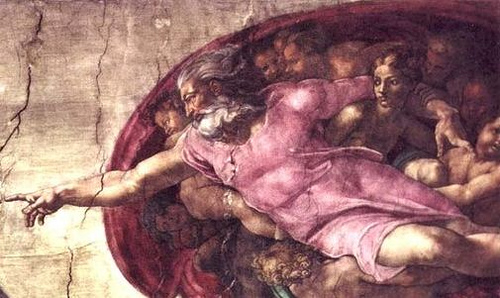
The paradox states that if the being can perform such actions, then it can limit its own ability to perform actions and hence it cannot perform all actions, yet, on the other hand, if it cannot limit its own actions, then that is—straight off—something it cannot do. This seems to imply that an omnipotent being’s ability to limit itself necessarily means that it will, indeed, limit itself. This paradox is often formulated in terms of the God of the Abrahamic religions, though this is not a requirement. One version of the omnipotence paradox is the so-called paradox of the stone: “Could an omnipotent being create a stone so heavy that even that being could not lift it?” If so, then it seems that the being could cease to be omnipotent; if not, it seems that the being was not omnipotent to begin with. An answer to the paradox is that having a weakness, such as a stone he cannot lift, does not fall under omnipotence, since the definition of omnipotence implies having no weaknesses.
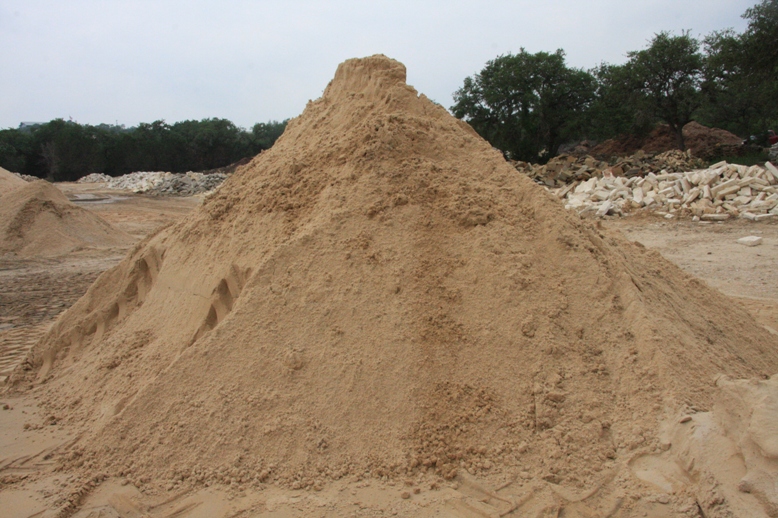
The paradox goes as follows: consider a heap of sand from which grains are individually removed. One might construct the argument, using premises, as follows:
1,000,000 grains of sand is a heap of sand. (Premise 1)
A heap of sand minus one grain is still a heap. (Premise 2)
Repeated applications of Premise 2 (each time starting with one less grain), eventually forces one to accept the conclusion that a heap may be composed of just one grain of sand.
On the face of it, there are some ways to avoid this conclusion. One may object to the first premise by denying 1,000,000 grains of sand makes a heap. But 1,000,000 is just an arbitrarily large number, and the argument will go through with any such number. So the response must deny outright that there are such things as heaps. Peter Unger defends this solution. Alternatively, one may object to the second premise by stating that it is not true for all collections of grains that removing one grain from it still makes a heap. Or one may accept the conclusion by insisting that a heap of sand can be composed of just one grain.
Claim: There is no such thing as an uninteresting natural number.
Proof by Contradiction: Assume that you have a non-empty set of natural numbers that are not interesting. Due to the well-ordered property of the natural numbers, there must be some smallest number in the set of not interesting numbers. Being the smallest number of a set one might consider not interesting makes that number interesting. Since the numbers in this set were defined as not interesting, we have reached a contradiction because this smallest number cannot be both interesting and uninteresting. Therefore the set of uninteresting numbers must be empty, proving there is no such thing as an uninteresting number.
In the arrow paradox, Zeno states that for motion to be occurring, an object must change the position which it occupies. He gives an example of an arrow in flight. He states that in any one instant of time, for the arrow to be moving it must either move to where it is, or it must move to where it is not. It cannot move to where it is not, because this is a single instant, and it cannot move to where it is because it is already there. In other words, in any instant of time there is no motion occurring, because an instant is a snapshot. Therefore, if it cannot move in a single instant it cannot move in any instant, making any motion impossible. This paradox is also known as the fletcher’s paradox—a fletcher being a maker of arrows.
Whereas the first two paradoxes presented divide space, this paradox starts by dividing time – and not into segments, but into points.
In the paradox of Achilles and the Tortoise, Achilles is in a footrace with the tortoise. Achilles allows the tortoise a head start of 100 feet. If we suppose that each racer starts running at some constant speed (one very fast and one very slow), then after some finite time, Achilles will have run 100 feet, bringing him to the tortoise’s starting point. During this time, the tortoise has run a much shorter distance, say, 10 feet. It will then take Achilles some further time to run that distance, by which time the tortoise will have advanced farther; and then more time still to reach this third point, while the tortoise moves ahead. Thus, whenever Achilles reaches somewhere the tortoise has been, he still has farther to go. Therefore, because there are an infinite number of points Achilles must reach where the tortoise has already been, he can never overtake the tortoise. Of course, simple experience tells us that Achilles will be able to overtake the tortoise, which is why this is a paradox.
[JFrater: I will point out the problem with this paradox to give you all an idea of how the others might be wrong: in physical reality it is impossible to transverse the infinite - how can you get from one point in infinity to another without crossing an infinity of points? You can't - thus it is impossible. But in mathematics it is not. This paradox shows us how mathematics may appear to prove something - but in reality, it fails. So the problem with this paradox is that it is applying mathematical rules to a non-mathematical situation. This makes it invalid.]
This is a figurative description of a man of indecision. It refers to a paradoxical situation wherein an ass, placed exactly in the middle between two stacks of hay of equal size and quality, will starve to death since it cannot make any rational decision to start eating one rather than the other. The paradox is named after the 14th century French philosopher Jean Buridan. The paradox was not originated by Buridan himself. It is first found in Aristotle’s De Caelo, where Aristotle mentions an example of a man who remains unmoved because he is as hungry as he is thirsty and is positioned exactly between food and drink. Later writers satirised this view in terms of an ass who, confronted by two equally desirable and accessible bales of hay, must necessarily starve while pondering a decision.
A judge tells a condemned prisoner that he will be hanged at noon on one weekday in the following week, but that the execution will be a surprise to the prisoner. He will not know the day of the hanging until the executioner knocks on his cell door at noon that day. Having reflected on his sentence, the prisoner draws the conclusion that he will escape from the hanging. His reasoning is in several parts. He begins by concluding that the “surprise hanging” can’t be on a Friday, as if he hasn’t been hanged by Thursday, there is only one day left – and so it won’t be a surprise if he’s hanged on a Friday. Since the judge’s sentence stipulated that the hanging would be a surprise to him, he concludes it cannot occur on Friday. He then reasons that the surprise hanging cannot be on Thursday either, because Friday has already been eliminated and if he hasn’t been hanged by Wednesday night, the hanging must occur on Thursday, making a Thursday hanging not a surprise either. By similar reasoning he concludes that the hanging can also not occur on Wednesday, Tuesday or Monday. Joyfully he retires to his cell confident that the hanging will not occur at all. The next week, the executioner knocks on the prisoner’s door at noon on Wednesday — which, despite all the above, will still be an utter surprise to him. Everything the judge said has come true.
Suppose there is a town with just one male barber; and that every man in the town keeps himself clean-shaven: some by shaving themselves, some by attending the barber. It seems reasonable to imagine that the barber obeys the following rule: He shaves all and only those men in town who do not shave themselves.
Under this scenario, we can ask the following question: Does the barber shave himself?
Asking this, however, we discover that the situation presented is in fact impossible:
- If the barber does not shave himself, he must abide by the rule and shave himself.
- If he does shave himself, according to the rule he will not shave himself
This paradox arises from the statement in which Epimenides, against the general sentiment of Crete, proposed that Zeus was immortal, as in the following poem:
They fashioned a tomb for thee, O holy and high one
The Cretans, always liars, evil beasts, idle bellies!
But thou art not dead: thou livest and abidest forever,
For in thee we live and move and have our being.
He was, however, unaware that, by calling all Cretens liars, he had, unintentionally, called himself one, even though what he ‘meant’ was all Cretens except himself. Thus arises the paradox that if all Cretens are liars, he is also one, & if he is a liar, then all Cretens are truthful. So, if all Cretens are truthful, then he himself is speaking the truth & if he is speaking the truth, all Cretens are liars. Thus continues the infinite regression.
The Paradox of the Court is a very old problem in logic stemming from ancient Greece. It is said that the famous sophist Protagoras took on a pupil, Euathlus, on the understanding that the student pay Protagoras for his instruction after he had won his first case (in some versions: if and only if Euathlus wins his first court case). Some accounts claim that Protagoras demanded his money as soon as Euathlus completed his education; others say that Protagoras waited until it was obvious that Euathlus was making no effort to take on clients and still others assert that Euathlus made a genuine attempt but that no clients ever came. In any case, Protagoras decided to sue Euathlus for the amount owed.
Protagoras argued that if he won the case he would be paid his money. If Euathlus won the case, Protagoras would still be paid according to the original contract, because Euathlus would have won his first case.
Euathlus, however, claimed that if he won then by the court’s decision he would not have to pay Protagoras. If on the other hand Protagoras won then Euathlus would still not have won a case and therefore not be obliged to pay. The question is: which of the two men is in the right?
The Irresistible force paradox, also the unstoppable force paradox, is a classic paradox formulated as “What happens when an irresistible force meets an immovable object?” The paradox should be understood as an exercise in logic, not as the postulation of a possible reality. According to modern scientific understanding, no force is completely irresistible, and there are no immovable objects and cannot be any, as even a minuscule force will cause a slight acceleration on an object of any mass. An immovable object would have to have an inertia that was infinite and therefore infinite mass. Such an object would collapse under its own gravity and create a singularity. An unstoppable force would require infinite energy, which does not exist in a finite universe.
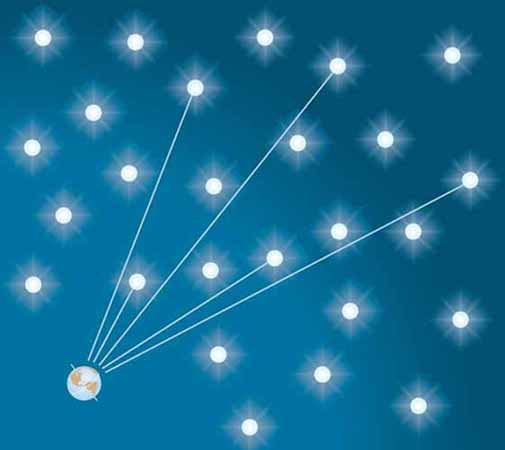
In astrophysics and physical cosmology, Olbers’ paradox is the argument that the darkness of the night sky conflicts with the assumption of an infinite and eternal static universe. It is one of the pieces of evidence for a non-static universe such as the current Big Bang model. The argument is also referred to as the “dark night sky paradox” The paradox states that at any angle from the earth the sight line will end at the surface of a star. To understand this we compare it to standing in a forest of white trees. If at any point the vision of the observer ended at the surface of a tree, wouldn’t the observer only see white? This contradicts the darkness of the night sky and leads many to wonder why we do not see only light from stars in the night sky.
Text is available under the Creative Commons Attribution-ShareAlike License; additional terms may apply. Text is derived from Wikipedia.


what happens when Pinocchio says that “My nose will grow.” ?
I love this list. Nice one. Sorry if someone has already mentioned it but another good one is another paradox of Zeno. Where it is argued that in running a race, no one will ever cross the finish line. As you will begin, compete half the race, and still have half way LEFT to go between your current point and the finish line. So you run further to the next halfway point, where you then still have halfway to go between your next current point and the end. And so on for infinity, meaning you will never finish the race.
Zeno’s paradox collapses as soon as you consider the time taken for each step as well as the distance. As the distance traveled in each segment approaches infinitely small distances, the time taken to complete each segment takes an infinitely small amount of time.
Therefore your speed over each segment remains constant and a simple graph of distance traveled against time will show a stright line (assuming constant speed) and will cross the zero mark (the finish line) at the exact point where we would expect it to and is completely consistant with your infinitely small, infinitely fast segments.
It is more of a thought experiment useful in considering the nature of “infinity” than a true paradox.
paradox 8 actually relates in a way to heisenberg’s uncertainty principle and planck’s constant
I -a paradox I would like to post that is known to me as “The paradox of the missing dollar”. Here is the premise: 3 guys go to rent a motel room for the night , the desk clerk informs them it will be $30 dollars for the night. They agree and split the cost at $10 per person. The men check into their room and 30 minutes later, the desk clerk realizes that he charged them $5 too much, he sends the bellboy up to the room with 5 -$1 dollars bills as their rebate for overpayment. The men cannot agree on how to evenly split the $5bucks, one guy suggests that they each take a dollar back and tip the bellboy $2 bucks for bringing it up to them. Now we come to premise no. 2; which leaves each one of the guys paying $9 dollars each for the room; now, if 9×3=27 and they gave the bellboy a $2 dollar tip; bringing the total to 29; where did the other dollar go??????? Please email me with suggestions; I have brain melted on this for 10 yrs., with no perceivable explanation, and even won a few bets with it…….I look forward to comments, conjucture, fallacies, and maybe even a solution.
You said it yourself, the clerk charged them $5 too much.
That means that the price for the rooms was $25.
Each person is out of pocket by $9, having each paid 10 and recieved 1 back.
3 people, $9 each, so a total expenditure of $27.
$27 is $25 for the rooms plus the $2 tip.
All dollars accounted for.
nerds
i just got mindf*cked O_o
Delivery Boy Paradox
You are the pizza delivery driver and your boss tells you your job is to deliver every pizza I make to the address I give you. Then he gives you a G.P.S. to help you reach your destination. You type in the address on the G.P.S. and it shows you on the screen where to go and how to get there. You follow that path with little belief that this device will be able to show you where to go but you try it any way. When the device said final destination, you look up expecting to see the address you want but what you see is a completely wrong house, you are actually a block away from where you want to go. You tell yourself this thing does not work, so you shut it off and try to figure it out for yourself. You start to see that you are not aware of every road, and it leads to a series of u-turns, and wrong houses. Each day again and again more wrong turns and houses, which equal’s less money for you. Then it clicks, if you can use your knowledge of the roads, plus the G.P.S. then you can eliminate most of your wrong turns. The G.P.S. will not get you to the exact location and you will still miss a turn from time to time but it always will lead you in the right direction.
Boss=God
Pizza=knowledge
Address=personal happiness
G.P.S=Balance of Science and Faith
I think this is more of a metaphor than a paradox.
Also, what is wrong with your GPS? Did you check God gave you the right Address? Sometimes postcodes are out of date so I’d go with the street name and number if I was you…
Some of these are not actual paradoxes.. They are fun to read however.
Many of these items on the list combine math with languages, like the heap of sand for example.
Languages are invented, made up, so many years ago.
Math is discovered, by studies, observation, calculation.
You can’t always combine the two.
The heap of sand example again:
a “heap” is just a word we use for multiple grains of sand. When you take a gain of sand from the heap, you will still have a heap… However, when you are at the last grain… What is left is called a single grain.
I don’t know if there is a language out there that has no word for multiple grains, but just calls it “sand”.. then there is no paradox…
You can’t combine math with words
Agreed. For my statistics A-level (for the non-uk peeps: this is an exam taken at school around the age of 16-18) I had to do a study of car depreciation, the maths was easy but then I had to produce a big long essay about why the math was right and that was bl**dy awkward to write.
My brain hurts.
An omnipotent being can create a stone that he can not lift, for if he can not lift it, no other being can, therefor giving him no weakness.
10. “1,000,000 grains of sand is a heap of sand. (Premise 1)
A heap of sand minus one grain is still a heap. (Premise 2)”
-Premise 1 uses standard logic.Â
-Premise 2 does not ask to be repeated. 1,000,000 – 1 = 999,999. Not 999,998, 999,997, et cetera.
9. “proving there is no such thing as an uninteresting number”. iLol’d.Â
8. Let me introduce this person to Isaac Newton: “An object in motion…”
7. I was going to get in-depth with this one but JFrater pointed out the logic already. In short I would explain Car 1 (Tortouise) moving at 15 mph got a headstart of 5 miles. Car 2 (Achilles) will move at 75 mph. The race is 50 miles long. Car 2 is constantly *catching up* to Car 1 Â because the slower car doesn’t have enough speed to ultimatly surpass or even sustain the faster car’s
6. Is this a joke? *Looks at my two school uniforms* …..Which one should I wear!?
5. He was ignorant to think he wouldn’t pay for his crime. Childish thinking led to his own “surprising” fate.Â
4. “ He shaves all and only those men in town who do not shave themselves.”Â
-”If the barber does not shave himself, he must abide by the rule and shave himself.” In other words whether he follows the rule or not it’s his choice to shave himself while working as a barber.Â
-”If he does shave himself, according to the rule he will not shave himself.” Purposeful hypocrisy is ignorance. But to answer the question, he doesn’t shave at the barber, he shaves at home so the rule is followed.Â
3. The only paradox here.Â
2. ”Euathlus, however, claimed that if he won then by the *court’s decision* he would not have to pay Protagoras. If on the other hand Protagoras won then Euathlus would still not have won a case and therefore not be obliged to pay. The question is: which of the two men is in the right?”
-The court has nothing to do with what two men promised each other but can have an adverse effect on Protagoras (as opposed to what he argued). Haha! The irony here is if Protagoras were to win he would get no money (Euathlus lost) and owes no money (because he won). But if he were to lose, due to legal actions (court butts in), he will HAVE TO pay Euathlus. Neither is right because both jackasses broke a promise between men (Euathlus inadvertedly because of a court being called forth). Deceit is a terrible thing.Â
1. I stand corrected. Another actual paradox.Â
Solution to number 7.
The paradox implies that it will take infinite amount of time to reach the tortoise, which is false, because it is implying that reaching the 3rd point where the tortoise will take same amount of time as reaching the 2nd point or 4th point, and unless Achilles was slowing down with each time he reached the point, but never falling below tortoise speed, then it’s not maths that is at fault here, but human error. You see, in this situation we have two values that we must consider, distance and time, claiming that Achilles will never reach tortoise is claiming that he will be travelling these points forever, but in this question distance and time are related to one another, one cannot change without another not changing.
Although here’s an interesting thought of the day, between point A and point B there are infinite amount of points, between point A and point C there are infinite amount of points as well, between point B and point C there are infinite, as well, amount of points, but these 3 distances are not equal to another. What does it mean? That we have managed to put a differing value on infinity, we have created smaller and bigger infinities, how cool is that?
Problem with 10.
The problem with 10 is that it’s assuming that a collection of sand is either a heap or not, the problem here is that it is not black and white, that’s why we have large heaps and small heaps. That is the solution, although 1,000,000 grains of sands – 1 is still a heap, it is a ‘smaller’ heap. The question is when does the heap no longer become a heap, but the question is also relying on subjectiveness, if we were shown a same amount of sand at two different points of lives when we would be in two different moods, and asked whether this is a heap or not, then we could claim same heap to be and not to be a heap. Therefore the answer is that at certain point a heap enters a grey area where, depending who you ask, it may or may not be called a heap.
Number 6.
The simple problem is that there is still a variable that can determine which stack the ass will choose, it may prefer the movement towards left than right, it’s left hemisphere might be more active at the time than right, it’s eyes might move more towards the left than right, the sole facts that one heap is one one side and other heap on the other puts a very small variable into the equation, or the fact that there are less atoms on one side than another. Not even theoretically is it true, since it’s impossible for an ass to be perfectly symmetrical which in itself will be causation of making a decision. In order to reach equilibrium, you require a force with equal value that will act in opposite direction on an object, which is impossible in real life world.
Number 2.
Unless he is a liar/mislead (not everyone who speaks false, lies) and NOT ALL cretans are liars. Again, it implies the black and white fallacy, the answer doesn’t have to be either 1 or 0, you can have 0.5.
Bonus.
The problem I see here is that the author didn’t consider the inverse square relationship of intensity and distance.
Another problem that is necessary to understand is that this problem assumes that star emit infinite amount of photons.
Third problem is that it’s assuming the ‘perfect vision fallacy’
Now to debunking. If this theory was true, then it is assuming the two problems I have mentioned, therefore no matter where you stand, the intensity of the light would always remain 100%, but it is scientifically proven that the further you move from a source of light, the dimmer it becomes, why? And here comes second consideration, stars emit large numbers of light waves, not infinite, therefore the further you move away from the source, the less light waves there are per square meter, therefore less light waves reaching our eyes.
Our eyes are also imperfect, we cannot catch hundred percent of all light waves, which is why we can’t read small fonts from large distances, even if there are some light waves reaching our eyes, they probably do so one at the time. That’s one hubble telescope had to stare at one point of space to get a clearer image of the famous hubble picture.
[...]Every after in a though we decide on blogs that we study. Listed beneath are the most current websites that we decide on [...]
i think a heap is anything with 2 or more grains. the point of the paradox is to show that there is no point of arbitrarily deciding what constitutes a heap, since there’s no real difference between 100000 and 99999 grains, say, or 99999 and 99998, if 100000 grains is the boundary line for a heap. but there is a big difference between 1 and 2 grains (proportionally speaking)
11. An omnipotent being cannot lift a pebble let alone a mountian, because (s)he cannot possibly exist in the world (s)he made.
10. If a heap is 1,000,000 grains of sand, 999,999 grains is not a heap.
9. No number is intresting unles it means somthing. example, “1″ is unintresting because it has no meaning.
8. The same can be said about falling.
7. The tortise wins, it’s a short race.
6. The ass will eat both. The starving, dehidrated man must go for water first to servive. All others could flip a coin.
5. Self fulfilling prophasy.
4. He is only a barber when he is working. When he shaves himself he is not a barber.
3. All cretians are liers, so is evreybody on earth. Even though they may be truthfull some of the time, or most of the time.
2. Check mate Euathlus. Win or loose, you pay.
1 They destroy eachother, wichever is bigger will servive. The object will brake and not move, and the force will never stop even if it breaks. I have seen it.
BONUS. In such a forest you can see; the ground, the trunks of the trees, animals, other plants, the space between trees,ext, not just white. Space on the other hand is an infanant flat black field with an odd white tree in the far distance, now you see mostly black fields with far off (tiny) white trees in the distance.
actually the bonus is incorrect, since that we do see the night sky lit up by stars in the distance, but it is only viewable in another spectrum of light, since it is stretched, and the night sky is lit up by microwaves instead
only nearby stars can be seen by the naked eye since light has not had to travel as far.
Whilst you are correct about doppler-shift being an important factor in the observation of distant phenomena, your explanation is slightly flawed. What you describe as the solution to the paradox is the cosmic microwave background which is not produced by the doppler-shift of light from distant starts.
We are actually able to observe objects that are extremely distant regardless of this shift. This example of a paradox ceased to be such a paradox as further understanding of the nature of the universe came into being (big bang theory etc.), the paradox is now more of an illustrative thought tool.
So….. I’m wondering if the donkey is so smart to ponder that much and starve to death wich makes him kinda stupid or if he’s stupid enough to just randomly eat a pile wich makes him kinda smart , me , I’d just eat both piles.
I don’t know exactly how to phrase this so maybe someone can help me out , but it’s kinda like the universe . If the universe is infinitely expanding , what is it expanding into ? Basically there’s something on the edge or other side of everything so what’s on the end of the last item ? There can’t be a last item as there’s always something else…..did anyone understand my concept ? Lol
Most of this is a play on words. Words such as ‘heap’ do not have exact definitions in all contexts. For example if 10,000 grains of sand define a heap and 9,999 do not, then there is no problem with the paradox. It is either a heap or it is not and it is easy to say which one it is. Of course from our eyes a pile of sand with 9,999 grains and a heap with 10,000 will pretty much look the same. But it is no different between measuring two pieces of string, one 0.000001mm long and another 0.000002mm long.
With the unstoppable force paradox the unstoppable force would go straight through the immovable object therefore is not a paradoxe
One adjective that defines Simon Wilby is smart. He is the CEO of Smart Power, Inc. He developed “The Smart One,” a revolutionary lithium battery powered by solar for cell phones and “The Smart Juice” which is energy with the same principle for lap tops.
With regard to the bonus paradox, the Olber’s one. We do not see all the stars in the visible galaxy from earth because 1) our atmosphere creates a kind of haze that we struggle to see the faintest of light sources through, and 2) mainly because of the sheer distance between us and these stars that are millions of light years away. I agree with the fact that if we actually could see every possible star in the Universe from Earth, we’d be blinded by a pure white sky 24/7. Yet the fact that the light from those stars occupying the black spaces we see inbetween our visible stars has to travel millions of lightyears through space dust and gas and ice etc, this light becomes obscured and lost in the gigantic voids of space.
Name
Here’s an interesting thought about 9:
Premise 3: Having established that in this paradox, one grain of sand can be regarded as a heap of sand, pouring another 1,000,000 grains on top of one another would mean you have created a heap of 1,000,000 heaps.
Premise 4: In this heap of heaps, removing one “heap” would mean it still remains a heap. Similarly to removing every grain, removing every heap would leave you with one “heap” (still one grain of sand), which you would have to accept as being 1,000,000 heaps.
Repeat the process (i.e. now pile 1,000,000 heaps of 1,000,000 heaps on each other to make a pile of 1,000,000,000,000 heaps – still one grain of sand) infintely and you must arrive at the following conclusion…
1 grain of sand = infinity.