
 Politics
Politics
Politics  Mysteries
 10 Fresh Clues That Might Crack Old Mysteries
 Weird Stuff
 10 Weirdly Specific Conspiracy Theories from the 1990s
 Movies and TV
 10 Characters Who Never Forgot a Grudge
 Technology
 10 Historical Inventions That Changed War Forever
 Humans
 10 Everyday Concepts That Are Shockingly Modern
 Animals
 10 Animals Everyone Gets Wrong
 Weird Stuff
 10 Bizarre Superstitions That Drive the Stock Market
 Movies and TV
 10 Films That Were Praised but Got History Wrong
 Our World
 10 Major Cities Being Swallowed by the Earth
Politics 10 Wild Campaign Promises That Became Political Legends
Mysteries 10 Fresh Clues That Might Crack Old Mysteries
Weird Stuff 10 Weirdly Specific Conspiracy Theories from the 1990s
Who's Behind Listverse?

Jamie Frater
Head Editor
Jamie founded Listverse due to an insatiable desire to share fascinating, obscure, and bizarre facts. He has been a guest speaker on numerous national radio and television stations and is a five time published author.
More About Us
Movies and TV 10 Characters Who Never Forgot a Grudge
Technology 10 Historical Inventions That Changed War Forever
Humans 10 Everyday Concepts That Are Shockingly Modern
Animals 10 Animals Everyone Gets Wrong
Weird Stuff 10 Bizarre Superstitions That Drive the Stock Market
Movies and TV 10 Films That Were Praised but Got History Wrong
Our World 10 Major Cities Being Swallowed by the Earth
Top 10 Most Influential Psychiatrists
Psychology has, historically, been considered the ugly stepchild of science. There are some legitimate reasons for this. First of all, the average person associates psychology with the kooky antics on on-screen therapists in various movies and T.V. shows. Second, everyone considers him or herself an “amateur” psychologist. While most of us don’t have direct experiences with black holes DNA or atoms, we all have experienced and generated behavior, emotions and thoughts. Finally, few understand that, historically, there were attempts to shape psychology as a science of human nature, along the lines of physics or chemistry. Unfortunately, modern psychology is an incredibly fractured discipline with many components, some of more value than others. The ten individuals I’ve selected, in my semi-educated opinion, are those who had the greatest impact on the shaping of psychology into the field it is today (both for good and ill).
10
Karl Lashley
1890-1958
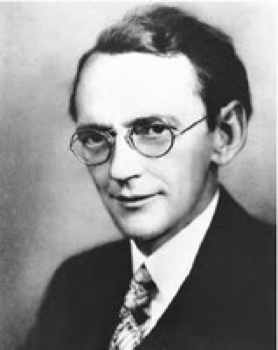
Karl Lashley is a debatable choice for the tenth spot. I selected him because he was one of the first psychologists to try to understand the physiological underpinnings of behavior. Lashley was an American psychologist who initially worked with John Watson. However, Watson was never very interested in the brain-behavior relationship and Lashley eventually went his own direction. He conducted a series of studies with rats where he attempted to locate the “engram” or the physiological seat of memory. Lashley trained his rats to run a maze, systematically removed portions of their brains, and observed any effect it had on their ability to run the maze afterwards. Lashley found, to his astonishment, that it didn’t matter. What did matter is how much of the brain was removed. Lashley would go on to train, and mentor, a number of psychologists and physiologists who built upon his early work linking brain and behavior. Currently, much of the work in modern experimental psychology is focusing on this topic.
9
B.F. Skinner
1904-1990
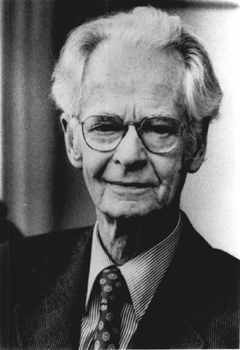
B.F. Skinner is one of the few psychologists with name recognition outside the field. Much of this had to do with his charismatic personality, excellent writing ability (he originally wanted to be a novelist), and confrontational style. Skinner was convinced that his approach to psychology was the only reasonable one, and had little patience with opposing views. Arrogance aside, few men in history can claim to have created the vocabulary for an entire discipline. In psychology, when we speak of “operant conditioning”, “positive reinforcement”, and “shaping” these are terms introduced and popularized by Skinner. But his ideas go beyond terminology. Skinner was instrumental in making his notion of psychology (called “behaviorism”) a dominant force in the discipline. In fact, in America, between the years 1930 and 1950, behaviorism WAS psychology. Much of this had to do with the compelling nature of Skinner’s ideas; a few simple principles based on the interaction of the organism and environment, that can explain a multitude of behaviors without invoking ideas like “thought”, or “emotion” or “unconsciousness”.
8
Jean Piaget
1896-1980
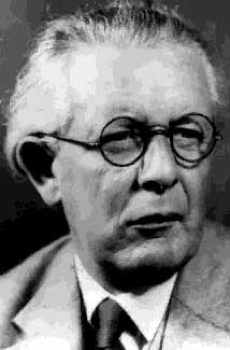
My first cheat: Piaget was not a psychologist. His training was as a natural scientist. As a young man growing up in Switzerland, he was interested in fossils, shells and birds. However, after finishing his degree, he became interested in developing an “embryology” of intelligence. Piaget initially planned to spend only a few years on this. He ended up spending 60 years observing children and their abilities, and formulating his highly influential theory of cognitive development. His ideas had a huge impact on developmental psychology, educational psychology and cognitive psychology. Ironically, Piaget, perhaps due to his own unusual childhood, while intellectually interested in the children he studied, never really engaged with them emotionally.
7
Abraham Maslow
1908-1970
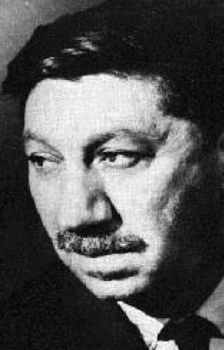
Maslow, an American psychologist, was familiar with the two dominant forces in psychology during the mid-twentieth century: namely, psychoanalysis and behaviorism. Maslow felt that neither of these approaches adequately explained human experience. Behaviorism was founded on animal research which Maslow felt couldn’t have any real relevance to humans. Psychoanalysis seemed to focus on psychotic individuals and not healthy personalities. Maslow, by nature shy and reserved, felt strongly enough about this to lead the development of a new approach to psychology he called “third-force” psychology. His psychology discarded research as not relevant to human beings, focused on what it takes to become mentally healthy, and paved the way for a number of approaches to therapy, developed in the sixties and seventies, of dubious utility. Depending on your perspective, Maslow either increased the scope of psychology or reduced its overall validity.
6
Max Wertheimer
1880-1943
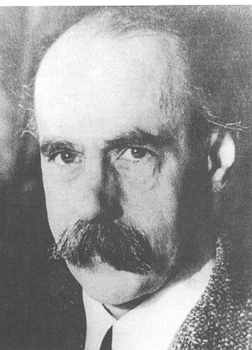
Wertheimer was a German psychologist, fascinated by fact that what we often see is not what is present. For example, when we watch movies, we are actually watching several still pictures presented quickly in sequence. What we see is movement up on the screen. Wertheimer believed that our minds do something to the perceived image to create this apparent movement. His curiosity in this phenomenon led to the development of Gestalt psychology, and its focus on perception, cognitive insight and learning and dynamic social systems. Wertheimer had to leave Germany because of the rise of Nazism, and when he came to America, presented the only real competitor to the ideas of behaviorism that were so dominant at the time. The principles of Gestalt psychology were instrumental in the founding of social psychology and cognitive psychology. While it no longer exists as a separate discipline, many Gestalt principles have been integrated into other subfields of psychology.
5
Alfred Binet
1857-1911
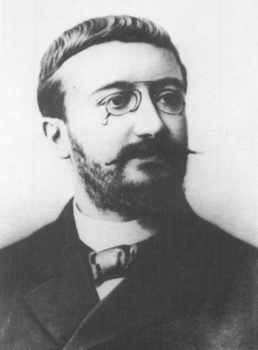
During the late 1800s, “intelligence” was conceptualized as a psychological quality passed on from one generation to another. What was needed was a way to successfully measure this particular quality. Binet was a French psychologist, approached by the French government to assist in developing a number of tests to discriminate between children of normal ability and children who needed extra educational assistance. In 1905, Binet and a colleague, Theodore Simon, developed their first attempt, called the Binet-Simon Test of Intelligence. It was based on a brilliant but simple idea. If you want to know if a child is “less intelligent” than another, first see what a “normal” child does and then observe how many of those tasks the child you’re evaluating can accomplish. This is the basic principle that all modern intelligence tests follow. Binet’s simple test was brought over to America and eventually revised to become the Stanford-Binet Test of Intelligence that is still being published and used today. But more importantly, Binet introduced the concept of successfully measuring psychological qualities that led to an absolute testing mania in the United States and other parts of the world. Few people have not been touched, for good or ill, by testing. Ironically, Binet would probably be appalled by the direction that testing has gone.
4
Wilhelm Wundt
1832-1920
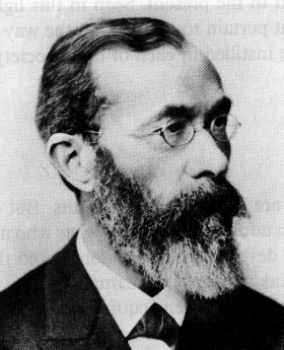
Wundt is probably the most influential psychologist that no one has ever heard of. His influence did not lay in his ideas of psychology (his goal was to discover the “elements of thought”), or his methods of studying psychology (his one original contribution to methodology was probably “introspection”, which involved having subjects, somewhat subjectively, report their mental responses to different kinds of stimuli). No, Wundt is considered the founder of psychology. He was the first individual to call himself a psychologist, and to recognize that the work he was doing was part of a new discipline that hadn’t been labeled. Wundt was serving as the chair of the department of philosophy at the University of Leipzig, in Germany, when he began conducting his first psychological experiments, probably around 1879. His program of study was so successful that Germany became the center of psychology for a time (until a couple of world wars occurred). During the late 1800s, if you wanted to study psychology, there was no question that you must go to Germany, and many of the early psychologists traced their intellectual genealogy back to Wundt.
3
John Watson
1878-1958
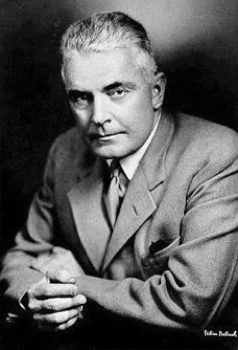
Few famous men have started out so ignominiously. John Watson was the son of a drunkard who abandoned his family, and an extremely pious woman who made Watson promise to become a minister. Unfortunately, as a young man growing up in South Carolina, Watson was well on his way to juvenile delinquency. For some odd reason, (perhaps in the interest of pleasing his mother) Watson suddenly decided to go to college. Eventually, he graduated from the University of Chicago with its first Ph.D in psychology. Watson was dissatisfied with the current trends in psychology and believed only that which was directly observable could, and should, be studied. In 1912, Watson presented his ideas to the psychology community and in one broad stroke, swept away the old methodologies and presented his own. B.F. Skinner, as influential as he was, built his success on the foundation of Watson’s ideas. Watson is also well-known for his notorious “little Albert” study and, even more notoriously, for carrying on an affair with his assistant in that work, Rosalie Raynor. The affair cost Watson his academic position in 1920 (times being what they were) and, like any good behavior modifier, he worked in advertising for the rest of his life.
2
Sigmund Freud
1856-1939
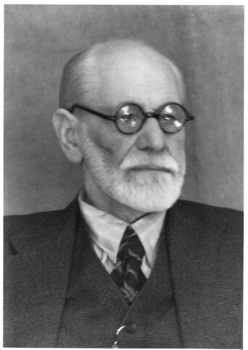
Here he is: the most well-known psychologist in history, and another cheat. Freud was not a psychologist; he was a psychiatrist (and, yes, there is a difference between the two). It is difficult to overestimate the influence that Freud’s ideas had over psychology and culture. His terms ‘ego’, ‘id’, ‘libido’ and others have entered every day language, and his very name is synonymous with probing techniques that reveal the damage that your parents did to you when you were young, and dreams that are superficial covers for surging, uncontrollable desires. What may be perplexing to the layperson is that in modern psychology, Freud’s ideas are not taken very seriously. Most acknowledge that his ideas have little basis in reality, and were more the product of Freud’s highly creative and innovative imagination. So why is he so well-known? Whole books have been written on this subject but I would say his place on the list is due to a very basic, but at his time, completely new idea. This was the notion that mental disorders could be treated psychologically. Before Freud, doctors considered mental disorders to be the product of some physical aberration (and many of them are). Freud provided compelling anecdotal evidence for the psychological origin and treatment of many of these problems.
1
William James
1842-1910
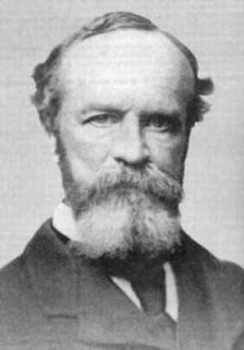
James was an American psychologist who disliked the label. Morton Hunt, the science writer, described him as the psychologist malgre lui or the reluctant psychologist. James fancied himself more as a philosopher than a psychologist, and did very little experimentation in psychology. He was not impressed with the work of Wilhelm Wundt, and towards the end of his life focused on matters of religion and spiritualism. However, I place him in the number one position for one reason: in 1890, he wrote a book called “Principles of Psychology” which is still in print today. It contains some apparently very modern ideas of psychology. In fact, a naïve reader would probably assume the book had been written in the last couple of decades not over 100 years ago. James essentially outlined modern psychology in this book. Wundt had proposed a psychology that focused, primarily, on the senses and perception. He rejected the notion that psychology could concern itself with some of the higher-order processes, like learning or problem-solving. James disagreed and outlined in his “Principles” the idea that psychology could concern itself with issues like: emotions, habits, consciousness, self, adaptation and learning. Behaviorism has many of its roots in James’ ideas, as does concepts like “self-esteem, self-concept, clinical psychology, biopsychology” and others. There are few topics in psychology that James didn’t anticipate, in one form or another. Interestingly, James was unsatisfied with the book. He wrote to the publishing company and described it as “a loathsome, distended, tumefied, bloated, dropsical mass, testifying to nothing but two facts: 1st, that there is no such thing as a science of psychology, and 2nd, that W. J. is an incapable”.
More Great Lists
 Top 10 Most Influential Synthwave Artists
 10 Influential Profiles Of Notorious Criminals
 10 Influential Movies With Dark And Surprising Origins
 10 Influential US Political Parties That Disappeared
 Top 10 Most Notorious Metal Bands Ever
 Top 10 Most Fascinating Mummified Bodies Found Outside Egypt
 Top 10 Most Talked-About Hotels In The World
 Top 10 Most Brutal Modern Fight Sports
 Top 10 Most Catastrophic Computer Failures In History
fact checked by
Alex Hanton
More Great Lists