
 Mysteries
Mysteries
Mysteries  Weird Stuff
 10 Weirdly Specific Conspiracy Theories from the 1990s
 Movies and TV
 10 Characters Who Never Forgot a Grudge
 Technology
 10 Historical Inventions That Changed War Forever
 Humans
 10 Everyday Concepts That Are Shockingly Modern
 Animals
 10 Animals Everyone Gets Wrong
 Weird Stuff
 10 Bizarre Superstitions That Drive the Stock Market
 Movies and TV
 10 Films That Were Praised but Got History Wrong
 Our World
 10 Major Cities Being Swallowed by the Earth
 History
 10 Times Saying the Wrong Thing Became a Death Sentence
Mysteries 10 Fresh Clues That Might Crack Old Mysteries
Weird Stuff 10 Weirdly Specific Conspiracy Theories from the 1990s
Movies and TV 10 Characters Who Never Forgot a Grudge
Who's Behind Listverse?

Jamie Frater
Head Editor
Jamie founded Listverse due to an insatiable desire to share fascinating, obscure, and bizarre facts. He has been a guest speaker on numerous national radio and television stations and is a five time published author.
More About Us
Technology 10 Historical Inventions That Changed War Forever
Humans 10 Everyday Concepts That Are Shockingly Modern
Animals 10 Animals Everyone Gets Wrong
Weird Stuff 10 Bizarre Superstitions That Drive the Stock Market
Movies and TV 10 Films That Were Praised but Got History Wrong
Our World 10 Major Cities Being Swallowed by the Earth
History 10 Times Saying the Wrong Thing Became a Death Sentence
10 Fascinating and Amusing Relationships
Relationships are not always about sex (though listverse has generally only published lists of that type, thus far) and this list looks at ten relationships that were either amusing, interesting or quirky. This is but a small selection of the potential candidates, so do be sure to mention others you might think worthy of a follow up list in the comments.
10
Bohr and Einstein
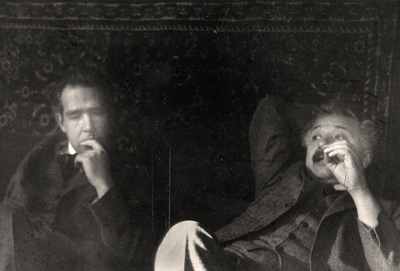
The two founding fathers of Quantum Mechanics vehemently debated one another over the interpretation of quantum theory. Bohr was a champion of the uncertainty principle put forth by Werner Heisenberg, which states that it is not possible to obtain completely accurate measurements of certain pairs of properties of quantum systems, such as position and momentum, or time and energy, at the same time. At the fifth Solvay conference, Einstein expressed his disagreement with Bohr. Einstein distanced himself from the uncertainty principle, famously proclaiming “God doesn’t play dice”. Over the course of several years, Einstein came up with several papers and thought experiments in trying to refute the Copenhagen Interpretation championed by Bohr. However, Einstein’s arguments failed in refuting Bohr’s interpretation of the quantum mechanical view as wrong or incomplete, despite intense collaboration with other prominent scientists. The debate between Bohr and Einstein continued till the death of Einstein in 1955.
9
The Five and Pyotr Ilyich Tchaikovsky
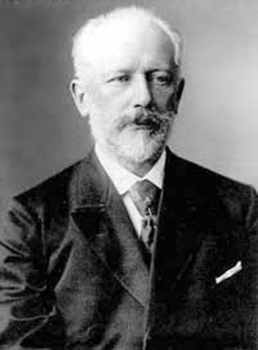
During the 19th century, differing opinions occurred on the nature of classical Russian music. Tchaikovsky wanted to write professional compositions of such quality that they would stand up to Western scrutiny, and thus transcend national barriers, yet remain distinctively Russian in melody, rhythm and other compositional characteristics. The Five, which consisted of a circle of powerful composers who met in St.Petersburg, had the aim of producing a specifically Russian kind of art music, rather than one that imitated older European music, or relied on European-style conservatory training. The Five also believed in using the melodic, harmonic, tonal and rhythmic properties of Russian folk song, along with exotic melodic, harmonic and rhythmic elements from music originating in the middle- and far-eastern parts of the Russian Empire. While Tchaikovsky himself used folk songs in some of his works, for the most part he tried to follow Western practices of composition, especially in terms of tonality and tonal progression. However, the relationship between Tchaikovsky and The Five was quite friendly: In 1869 Tchaikovsky entered into a working relationship with Mily Balakirev (one of the members of the Five). The result was Tchaikovsky’s first recognized masterpiece, the fantasy-overture “Romeo and Juliet”, a work which The Five wholeheartedly embraced. Furthermore, when another member of the Five, Nikolai Rimsky-Korsakov, was offered a professorship at the Saint Petersburg Conservatory, it was to Tchaikovsky that he turned for advice and guidance, and during the 1880s, after the members of The Five had gone their separate ways, Tchaikovsky enjoyed a very close relationship with Rimsky-Korsakov.
8
Chesterton and Shaw
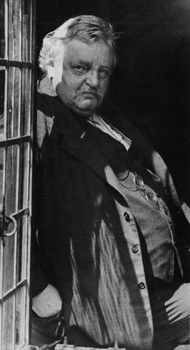
Chesterton’s most famous philosophical opponent was the Irish playwright, George Bernard Shaw. Shaw represented the new school of thought, modernism, which was rising at the time, while Chesterton’s views were increasingly focused towards the church. Nevertheless, they both maintained good-will, and had great respect for one other (It had been Shaw who had encouraged Chesterton to write a play, and claimed that the world was not thankful enough for Chesterton).
Their debates, in print and in public, were a subject of great amusement, and a source of one witty exchange after another:
Shaw: If I were as fat as you, I would hang myself.
Chesterton: If I were to hang myself, I would use you for the rope.
Chesterton: I see there has been a famine in the land.
Shaw: And I see the cause of it.
7
Martin Luther King and Malcolm X
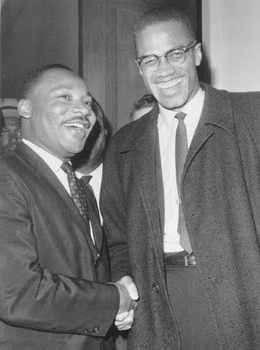
To many, King and Malcolm X were heroes of the Civil Rights Movement, two towering icons of contemporary African-American culture. Their speeches reflected visions on improving America, and both men believed that if blacks were to attain freedom, they first needed to achieve self-respect. However, their intentions were delivered in different styles and purposes; King believed in peaceful demonstrations and arguments, and a non-violent approach to things, the same approach applied by Gandhi, while Malcolm X promoted nationalist and separatist doctrines, and for most of his life, he believed that only through revolution and force could blacks attain their rightful place in society. Thus Malcolm and King each became a focus of one of the opposing wings of the movement for equality that swept Black America, and the country, and their titanic struggle shook the nation and the world. Nevertheless, near the end of their lives, Martin Luther King and Malcolm X’s beliefs had become more similar. After his break from the black Muslim movement, Malcolm X emphasized unity and change through black pride, and respect for oneself, rather than through hate and revenge. Their relationship became more amiable with X expressing his interest to join forces with King and the progressive elements of the Civil Rights Movement.
6
Gilbert Lewis and Irving Langmuir
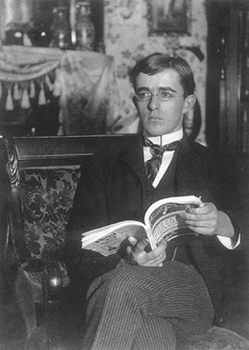
The two greatest American chemists of the first half of the twentieth century, Lewis and Langmuir were also famous rivals. Lewis had helped create the College of Chemistry at the University of California, Berkeley, and made it into one of the world’s most productive centers of chemistry research. His contributions to chemical bonding, chemical thermodynamics and theory of acids and bases had made Lewis a household name. Langmuir (above), in turn, had extended Lewis’ theory on chemical bonding and popularized it to a great extent, often to the annoyance of Lewis. Langmuir had been recipient of the Nobel Prize for his work on surface theory, while Lewis had been denied the covetous prize, despite a staggering 15 nominations. In 1946, Lewis’ lifeless body was discovered under a laboratory workbench at Berkeley, and while officials have reported the death to have been brought about by hydrogen cyanide, most believe it to be a suicide due to his relationship with Langmuir, and subsequent depression brought on by it. Indeed, on the day of Lewis’ death, Langmuir and Lewis had met for lunch at Berkeley, and Langmuir had expressed that he had been on the Berkeley campus that day to receive an honorary degree.
5
Thomas Jefferson and John Adams
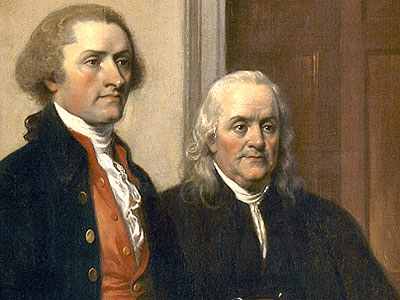
With Ben Franklin ill, the task of conjuring the Declaration of Independence had fallen to John Adams. Adams however argued that Jefferson should draft it instead, and Jefferson’s draft was defended by Adams with much eloquence. However, from that point on the two had a less than amicable relationship. During Adam’s tenure as vice-president, the two argued vehemently on the nature of politics and the direction to lead the country. A heavily contested presidential election between the two was determined by only three electoral votes, and Adams became the second president of the United States. However, the bitter campaign was renewed in 1800, when Jefferson defeated Adams to become the third president. The two exchanged hostile letters on several occasions, and Adams famously declared “I will out live Jefferson”. On his death bed on July 4, 1826, Adams famously proclaimed “Thomas Jefferson survives”; however, unbeknownst to him, Jefferson had actually passed away a few hours earlier.
4
Freud and Jung
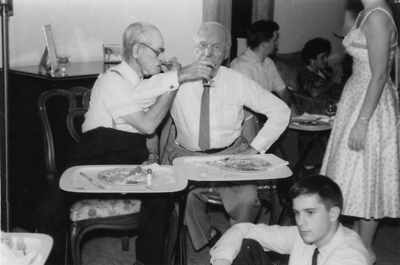
Freud met Jung in February of 1907, and the two established a firm friendship, and corresponded extensively over a period of six years. Freud had described the, then young, Carl Gustav Jung as his heir to psychoanalysis. However, as Jung began to expand his own theories and dissented with the basic tenets of Freudian theory, the relationship started turning sour. This eventually led to a highly hostile exchange of letters between the two, and Jung’s resignation as chairman from the International Psychoanalytic Congress, where he had been elected with support from Freud. Jung went on to form his own school of thought, known as analytical psychology, while Freud continued to develop his own views of psychology. They met for the last time in September, 1913, in Munich, where Jung developed some key concepts on psychological types in analytical psychology, that would come to distinguish Jungian theory and Freudian theory for the next 50 years.
3
Schopenhauer and Hegel
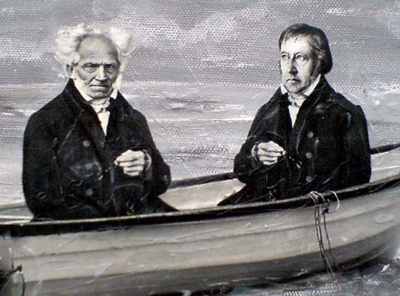
Arthur Schopenhauer was a German philosopher whose metaphysical analysis of will, his views on human motivation and desire, and his aphoristic writing style influenced many well-known thinkers, including Friedrich Nietzsche, Richard Wagner, Albert Einstein, Sigmund Freud and Leo Tolstoy among others. Subsequently, Hegel was one of the creators of German Idealism, and his historicist and idealist account of reality as a whole had revolutionized European philosophy, and was an important precursor to Continental philosophy and Marxism. However, Schopenhauer was a strong critic of Hegel, often accusing him of deliberately using vacuous verbiage that sounded impressive, but was ultimately devoid of any content. Such was the hostility between the two, that in 1820 Schopenhauer became a lecturer at the University of Berlin, and scheduled his lectures to coincide with those of Hegel. However, only five students turned up to Schopenhauer’s lectures, while Hegel’s classes overflowed, causing Schopenhauer to retire from academia.
2
C.S. Lewis and J.R.R Tolkien
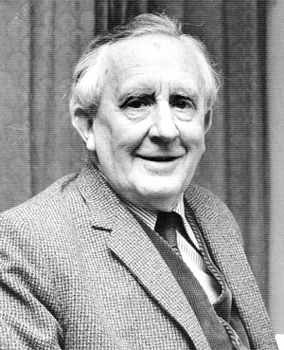
The Inklings were a literary discussion group which hosted several influential intellectuals of the 20th century, the two most prominent members being C.S. Lewis and J.R.R Tolkien (above). Tolkien and Lewis were close friends, and it had been Tolkien who had helped Lewis to convert to Christianity, whereas Lewis had encouraged Tolkien to expand his fictional writing; both taught at Oxford, both were interested in literature, and both wrote fictional books which propagated basic Christian themes and principles. They often narrated manuscripts of their works in progress to one another and The Inklings long before they were published. However, Tolkien expressed strong disapproval of Lewis’ Narnia books, citing that the Christian themes and messages were far too strong. Tolkien also never thought highly of Lewis’ attempt at popular theology, and believed that theology should be left to the professionals to avoid misinterpretations of key Christian themes. Nonetheless, Lewis dedicated his massively influential and popular “The Screwtape Letters”, which had landed him on the cover of Time magazine, to Tolkien. However, the rift between the two seemed to widen following Lewis’ growing affiliation with the Anglican church and his romance with American widow, Joy Gresham. After Lewis married Gresham, he grew apart from his old friends, and it is believed that Tolkien took it personally.
1
Werner Heisenberg and Niels Bohr
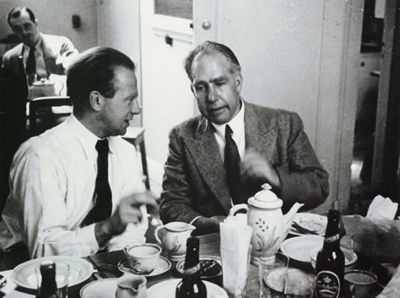
The world of the newly emerging quantum physics had been very much defined by the Danish scientist Niels Bohr. His contributions to the understanding of atomic structure and quantum mechanics had resulted in the Nobel Prize in 1922. During one of Bohr’s crucial lectures among a host of intellectuals, a young German student raised his hand and pointed out a mathematical flaw in one of his arguments. This left Bohr stunned, and he personally asked for the young man; this 20 year old was none other than Werner Heisenberg. The two, then, established a firm friendship that would last many years, and several collaborations, and Bohr was overwhelmingly pleased when Heisenberg, too, received the nod for the Nobel.
However, what science had brought together, politics would divide. Theoretical physics had been labeled as Jewish science due to the immense popularity of Albert Einstein, and Bohr, too, had Jewish connections. With the onset of the Second World War, Heisenberg was viewed with an eye of suspicion by the Gestapo and was eventually recruited by the Nazis to work on a project concerning development of the atomic bomb. In their final meeting, Bohr thought that Heisenberg supported the idea of developing an atomic bomb for the Nazis, and was appalled by the thought that Heisenberg showed no moral qualms towards the idea of the bomb. The friendship was strained. After the war the scientific community ostracized Heisenberg, and it would be some time before he would once again gain acceptance from both the scientific community and in his friendship with Bohr. However, the relationship was never to be restored to the same status. An excellent documentary documenting the relationship between the two and the politics involved can be found here.
More Great Lists
 10 Weird Plant--Animal Relationships
 10 Famous Nonmonogamous Relationships From History
 10 Times Ancient Bodies Revealed Fascinating Facts…
 Top 10 Fascinating Facts And Firsts Of Historical…
 Top 10 Fascinating Facts And Stories About Sharks
 10 Fascinating Facts And Stories Involving Body Parts
 10 Fascinating Facts And Stories About Vaccination
 10 Fascinating Finds And Stories Involving Old Ships
 10 Fascinating Facts And Finds Involving Temples
fact checked by
Alex Hanton
More Great Lists