
 Movies and TV
Movies and TV
Movies and TV  Technology
 10 Historical Inventions That Changed War Forever
 Humans
 10 Everyday Concepts That Are Shockingly Modern
 Animals
 10 Animals Everyone Gets Wrong
 Weird Stuff
 10 Bizarre Superstitions That Drive the Stock Market
 Movies and TV
 10 Films That Were Praised but Got History Wrong
 Our World
 10 Major Cities Being Swallowed by the Earth
 History
 10 Times Saying the Wrong Thing Became a Death Sentence
 Music
Music 10 Stars Who Secretly Wrote Hit Songs for Other Singers
 Weird Stuff
 10 Daredevils Who Treated Death Like a Suggestion
Movies and TV 10 Characters Who Never Forgot a Grudge
Technology 10 Historical Inventions That Changed War Forever
Humans 10 Everyday Concepts That Are Shockingly Modern
Who's Behind Listverse?

Jamie Frater
Head Editor
Jamie founded Listverse due to an insatiable desire to share fascinating, obscure, and bizarre facts. He has been a guest speaker on numerous national radio and television stations and is a five time published author.
More About Us
Animals 10 Animals Everyone Gets Wrong
Weird Stuff 10 Bizarre Superstitions That Drive the Stock Market
Movies and TV 10 Films That Were Praised but Got History Wrong
Our World 10 Major Cities Being Swallowed by the Earth
History 10 Times Saying the Wrong Thing Became a Death Sentence
Music 10 Stars Who Secretly Wrote Hit Songs for Other Singers
Weird Stuff 10 Daredevils Who Treated Death Like a Suggestion
10 Genre-Changing Sci-Fi Films
Science Fiction is a genre that often comments on social values and mores by utilizing technology and our interaction with it. First came science fiction books, then movies – this list looks at 10 of the significant sci-fi films which enhanced, improved or changed the way filmmakers produce their work.
10
Terminator 2: Judgment Day
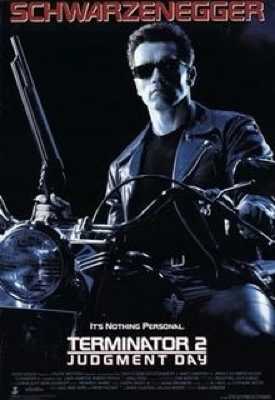
Dir: James Cameron, 1991
The first film to create a realistic CGI (Computer Generated Imagery) character in a major movie. Technological advancements have greatly impacted the cinema experience, and ‘Terminator 2: Judgement Day’ foreshadowed the CGI (and other film technology such as animatronic(s)) dinosaurs of Jurassic Park (1993)) and set a precedent for ‘The Matrix’ (1999) and ‘Avatar’ (2009) to continue to build on the technological tools for filmmakers to use. ‘Terminator 2: Judgement Day’ explored the notion that the future can be rewritten and we can choose and change our destines. Presently, CGI is the main visual effect technology used in the majority of science fiction films.
9
Frankenstein
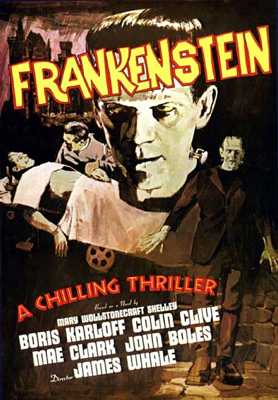
Dir: James Whale, 1931
James Whales’ ‘Frankenstein,’ based on Mary Shelley’s 1818 novel ‘Frankenstein; or, The Modern Prometheus’ was a precursor for every science fiction film to date. It provides filmmakers with a universe of extraordinary creativity to prophesy (often with terrifying accuracy) and reflect on the present. The mad scientist/evil professor as the archetypal character who creates life (principally by electricity) from dead body parts, who then turns on Dr. Victor Frankenstein. This was the first incarnation of technology turning on man; technology progressing too far beyond our control and man warned not to ‘play God.’ With every development in technology, we see robots taking over; genetic engineering, a crippling class system developed. ‘The Day the Earth Stood Still’ (1951), ‘War of the Worlds’ (1953), ‘Invaders from Mars’ (1953), ‘Invasion of the Body Snatchers’ (1956) represent nuclear weapon/Cold War fears; while ‘Jurassic Park’ (1993), ‘Gattaca’ (1997), ‘The Fifth Element’ (1997) and more recently ‘The Island (2005) and ‘Repo Man’ (2010) use genetic engineering and cloning to deal with the concept of technology overreaching/destroying our society.
8
Twelve Monkeys
Dir: Terry Gilliam, 1995
“A story should have a beginning, a middle and an end… but not necessarily in that order.” – Jean-Luc Godard. This quote resonates with anyone we has seen ‘Momento’ (2005) and ‘Inception’ (2010), the non-linear structure, mainly time travel and flashback as the vehicle of ‘Twelve Monkeys’ is a shy away from Todorov’s Theory of Narrative. ‘Twelve Monkeys,’ like all science fiction, is communicating with societal beliefs. AIDs, the Ebola virus and Mad Cow disease dominated the medical field in the 1990s. ‘Twelve Monkeys’ like the movie ‘Outbreak’ (1997) examines these issues but with more flair and sophistication. It has one of the most mind-blowing plot twists and keeps you guessing even after the film has finished. But why has it changed the science fiction genre? Many people do not give enough credit to Terry Gilliam; Gilliam introduced us to the true horrors of knowledge. While James Cole wants to reject knowledge to embrace safety in ignorance, a contrast to the audience, we discover that society is also confused and misinformed about wars, global issues and everyday life. ‘Twelve Monkeys’ warns of the impeding doom that knowing too much (and too little) can create. It is the movies that followed this trend which have allowed ‘Twelve Monkeys’ to hop onto this list. ‘The Matrix’ (1999), ‘Minority Report’ (2002), ‘I, Robot’ (2004) and ‘Surrogates’ (2009) all deal with knowledge as our destruction, rather than our saviour. At the end of the movie we are left with an ambiguous ending, something many directors now use, ‘Inception’ (2010) is a notable example.
7
Star Wars Episode IV: A New Hope
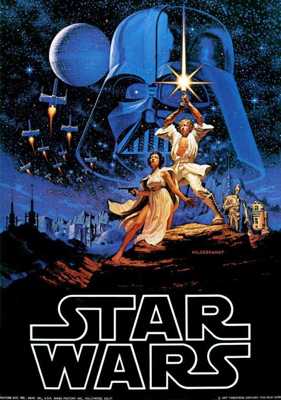
Dir: George Lucas, 1977
Arguably, several people consider the ‘Empire Strikes Back’ superior to ‘A New Hope.’ However, since ‘A New Hope’ virtually creates an entire universe, basically started the ‘blockbuster’ film and began the saga, it is only right it deserves the spot instead of the ‘Empire Strikes Back.’ ‘Star Wars’ is the definition of an epic space opera and the height of escapism – a dream-like, alternative world for every science fiction viewer. The technical brilliance, which now may seem aged, made the specials effects, set designs and aesthetics in ‘Star Wars’ a masterpiece in its heyday. (It’s a shame, and to some sacrilege, it has been digitally remastered and changed; as another example ‘E.T.’ has omitted the word “terrorist” and replaced guns with walkie-talkies). ‘Star Wars’ had such a profound effect that an entire religion was formed, based on the film and future films in the saga. Film review aggregator, Rotten Tomatoes, sums up why it has, not only, changed the science fiction genre but film itself: “George Lucas opened our eyes to the possibilities of blockbuster film-making and things have never been the same.”
6
Alien
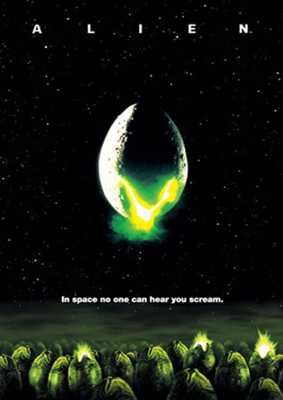
Dir: Ridley Scott, 1979
‘Alien’ is considered one of the best science fiction movies, as here we see a turn from the ‘Star Wars’ and ‘Star Trek’ – to put it blatantly – bland (childish) imagery, to the more scary and real prospects of space. Rather than a “long time ago” in a “galaxy far, far, away” ‘Alien’ probes our galaxy and returns to the ‘science’ in science fiction. Rod Serling used to say that “fantasy is the impossible made probable, science fiction is the probable made possible.” Thus, science fiction was moving away from the element of plausibility in science. ‘Alien’ depicts a more realistic space ship than the Enterprise, examines aliens in a time when UFO sightings dramatically increased, and opened the door to the financial success of the science fiction-horror sub genre.
5
E.T.
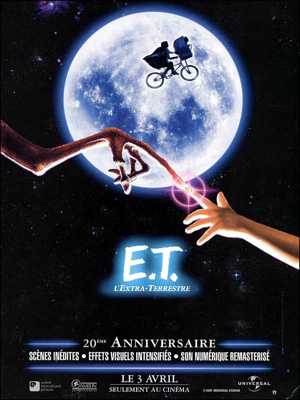
Dir: Steven Spielberg, 1982
Who could forget one of the most iconic and gut-wrenching lines in cinematic history: “E.T. phone home.” The line was ranked 15th on ‘AFI’s 100 Years… 100 movie quotes’ in 2005. ‘E.T.,’ unlike every other science fiction movie before, depicted aliens as benevolent, and humans as the ‘baddy.’ But who could blame the filmmakers? After the Iraq War in 1990, for example, American society’s morale was lower than ever. Science fiction helped place us on top in films such as ‘Independence Day’ (1997) and ‘Armageddon’ (1998). Our humanity is our secret weapon as we learn to work collectively to kill the ‘baddy’ or ‘other’ and make us feel positive for the future. ‘E.T.’ on the other hand, depicted a benign and loving alien, who becomes homesick. ‘E.T.’ also served as social commentary on how media and film have shaped our views. Mary and Elliot, the children, treat E.T. with respect and kindness, in stark contrast to the adults reaction. While the trend to depict aliens as the ‘baddy’ continues, films such as ‘District 9’ (2010) are rare theatrical exceptions.
4
Inception
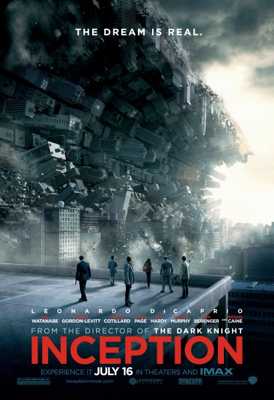
Dir: Christopher Nolan, 2010
This may be the most controversial addition to the list, especially because it is so high up the order. Earlier, I examined ‘Twelve Monkeys’ non-linear narrative, but ‘Inception’ takes the viewer even further, blending the time-line more than twice, using a dream within a dream within a dream. What ‘The Matrix’ did for science fiction in the 1990s, ‘Inception’ will do for the 2010s. We may not see the ramifications yet, but ‘Inception’ had a profound effect in 2010. It mystified and annoyed some, and challenged others to go beyond the superficial aspects of action in film. ‘Inception’ does not insult your intelligence, it assumes you’re smart. Modern movies like to spell out every detail because it believes the audience do not want to work out anything dense. Like ‘The Matrix,’ the blur between reality and dream is inverted, and we are thrust into a world of possibilities. We all have our take on the way to ‘read’ the movie and that is its brilliance. The possibility of a minute aspect, a top spinning for ever or falling, defines the plot. ‘Inception’ dares to be original. It is not derivative and excites us for the potential for iron-laced plots in the future. Technology does not hold the film together, ‘Inception’s’ subtle special effects are the result of pure realism. The jargon and futuristic science (which is why we love science fiction) is a thin veneer underneath greater story telling. The idea takes center-stage, not mindless action or CG effects. ‘ Inception’ is a movie that has become part of our collective subconscious. It has changed the way we think about our lives and who we are.
3
The Matrix
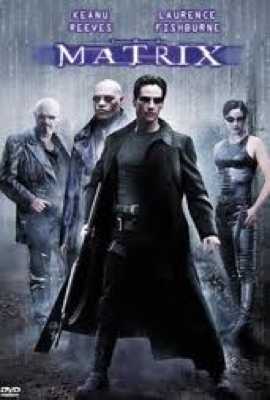
Dir: Andy Wachowski, and Lana (Larry) Wachowski, 1999
‘The Matrix’ was a 1999 landmark film for science fiction, in which the makers utilize novel camera techniques known as ‘flo-mo’ and ‘bullet time’ in order to create an entire visual lexicon, as well as raise expectations for realism in action scenes, whilst also allowing the resurgence of loud CGI-ridden blockbusters. A legion of imitators still try to recreate the spectacle of slow-motion bullet time to not much avail, ‘Wanted’ (2008) for example.
‘The Matrix’ asked the simple question ‘what is reality?’ Is the world around us real or an illusion? Or more suitably, what is the ‘meaning’ of reality? This one philosophical question still puzzles us today, and is the reason why it deserves a number 3 spot. ‘The Matrix’ presents us with the choice between blissful ignorance, the ‘blue pill’ and painful truth, the ‘red pill.’ We are yanked from the comfort of our seats to a dystopian, derelict wasteland. The audiences’ perception of reality was even tested when we took our first steps out of the theatre and pondered for a second ‘is the world real or just an illusion?’
‘The Matrix,’ reinvigorated the genre, delivered 5 star quality, maintained science fiction lovers and gained legions of new fans.
2
Blade Runner
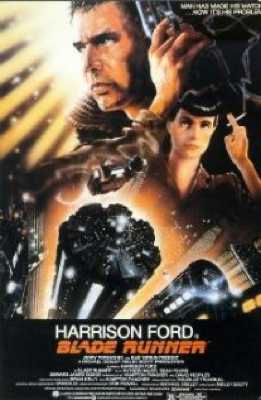
Dir: Ridley Scott, 1982
‘Blade Runner’ always comes up on every top 10 science fiction list. Because of this there is no doubt ‘Blade Runner’ has influenced the genre and directors.
Unlike many science fiction films, ‘Blade Runner’ does not try to make a viewing experience pleasant. The film is slow and visually unattractive. But the sheer intellect and realism of the film is more than enough for any science fiction fan. During its time, ‘Blade Runner’ was not one of the most realistic films, and even now it is not. But a few years ago, the hyper-oriental and skyscraper dominated landscape of dystopian 2019 Los Angeles was a real prospect. Ridley Scott’s attention to detail is truly magnificent. Each viewing experience is never the same, you’ll notice a few details here, or catch a new aspect or theme that was right in front of your eyes. The movie is ‘layered’ with what is the meaning of humanity. What keeps us different from the replicants, clones or robots. A multinational Company, Tyrell, whose motto is “more human than human” allows men to play God. Again, the film is based on the typical science fiction themes that challenge our ethics and humanity, but to a greater extent. When cloning develops, films like ‘Gattaca’ (1995), where there is “no gene for the human spirit” keep technology in check. ‘Blade Runner’ is the type of film they build 5-disc special editions around and release 4 different versions.
1
2001: A Space Odyssey
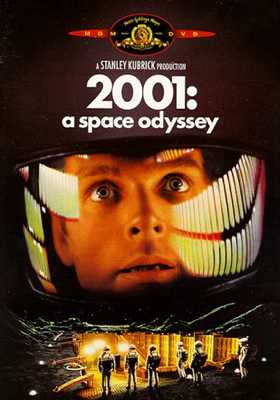
Dir: Stanley Kubrick, 1968
While many ‘best science fiction films’ lists place ‘2001’ second to ‘Blade Runner,’ ‘2001’ completely redefined the science fiction genre, particularly during a time when the genre was almost debunk. The 1960s experienced an ebbing tide of tacky, low-budget films that were rampant in the 1950s. ‘King Kong vs. Godzilla’ and ‘Ghidrah: The Three-headed Monster’ to name but a few. Many people at this time viewed science fiction as mindless, far-fetched entertainment. ‘2001’ removed this misconception, but was not truly recognized until a few years later, due to its ‘elusive’ and challenging storyline. Like many science fiction films before, ‘2001’ did not dabble in new themes; technology taking over, yes, progress beyond our comprehension, yes, but what it did add was a sense of realistic, thought provoking and serious subject matter. Radical evolution of technology and the space race between the US and USSR began to intensify. There was much room to imagine the future of space exploration. ‘2001’ offered a glimpse of what technology the space program might offer, such as induced hibernation, liquified meals and long distance video calls from space. However, there was widespread fear of what technology could become, seen in HAL 9000’s malfunction and mutiny. The impressive, realistic, and indeed, groundbreaking nature, of the opening sequence, back-drops and clever use of soundtrack and sound (remember there is no sound in space) served to bestow much prestige in a flunking genre. ‘2001’ is filmmaking at its finest – technically masterful (the ‘match cut’), innovative, original, enthralling, aurally exquisite and unforgettable… this all places ‘2001’ at number one!
+
Avatar
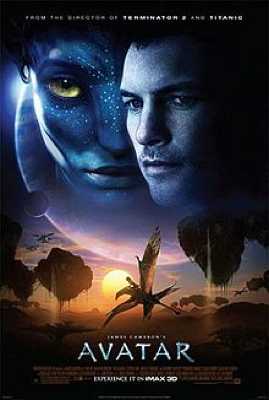
Dir: James Cameron, 2009
In 2008, there were only 8 films released in 3D, but in 2009 there were 20! 3D has enhanced the viewing experience, created headaches for some and polarized filmmakers and critics alike. 3D has also boosted box office receipts in the midst of ever increasing illegal file-sharing, there are 100 million users of ‘BitTorrent’ as of February 2010. Tickets sales have fallen in the U.S while box office receipts have increased. 3D, in 2009, racked up 11% of the total box office receipts, but accounted for only 4% of all films released. If ‘Avatar’ had not been successful or the highest-grossing film off all time, audiences might not be subjected to a barrage of 3D movies like the flops before it. However, what makes ‘Avatar’ so special? A derivative storyline, extensive use of motion capture and photo-realistic CGI or its blatant conformity to mainstream Hollywood film? ‘Avatar’ exemplifies how technological advancements can enhance the cinematic experience by using 3D to showcase the storytelling instead of a substitute but fail to veritably or genuinely change the genre itself. There is no doubt that ‘Avatar’ is a visual treat for audiences, but I cannot include it on the list just for this reason alone. While the future of 3D looks strong, James Cameron’s ‘Avatar’ has changed the way science fiction is filmed. It has changed the style of science fiction films, as directors’ camera shots adhere to the guidelines set by 3D, to really make films worthwhile to watch in three dimensions. American film critic Roger Ebert’s cover story in Newsweek (May, 2010) attacks 3D, ‘Why Avatar is bad for the movies,’ where he opines: “[3D] adds nothing essential to the movie-going experience. For some, it is an annoying distraction.” He also says: “It limits the freedom of directors to make films as they choose” because studios push for audience demand and, hence, profit rather than creativity.
More Great Lists
 Top 10 Best Sci-Fi Movies By Genre
 Top 10 Must-See Recent Genre-Defying Horrors
 10 Life-Changing Inventions That Were Discovered By Accident
 10 Futuristic Sci-Fi Military Technologies That…
 Top 10 Real Fungi Straight Out Of A Sci-Fi Movie
 Top 10 Behind The Scenes Facts About Dystopian Sci-fi Movies
 10 Of The Most Sought-after Lost Films
 10 Family Films Banned For Stupid Reasons
 Top 10 Best Films About Real Conspiracy Theories
fact checked by
Alex Hanton
More Great Lists