Another 10 Common English Errors
Published on September 11, 2008 - 274 Comments
This is a list of 10 more common English errors. This list follows our previous popular list of Top 10 Common English Errors. Hopefully a few of these will help to fix one or two mistakes that we all make from time to time.
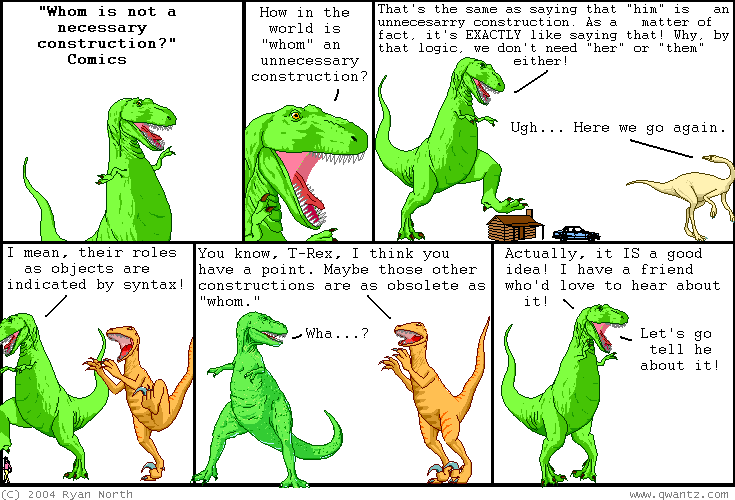
This particular error has become so common that it is beginning to look like the word “whom” may vanish entirely from the English language. The reason for this is that so many people have no idea what the difference is. The difference is a simple one: who “does” the action, and whom has the action “done” to them. We use this difference in other words - “I” and “me” for example. “who” is the equivalent of “I”, and “whom” is the equivalent of “me”. The technical term for this difference is noun case - “who” is the nominative case, and “whom” is the accusative. Here is an example of correct usage:
Who is going to kill Bob? (I am going to kill Bob)
Bob is going to be killed by whom? (Bob is going to be killed by me)
English does not use cases as much as it used to. Many other language do use cases frequently, such as German, Latin, Greek, etc. [Image Source - click for a larger view]
On the previous list of errors I included Irony as a bonus - it deserves its own place and a fully description so here it is. There are four types of irony (none of which resemble remotely anything in Alanis Morissette’s song:
I. Verbal irony
This is when the speaker says one thing but means another (often contrary) thing. The most well known type of verbal irony is sarcasm. For example: “He is as funny as cancer”.
II. Tragic irony
Tragic irony occurs only in fiction. It is when the words or actions of a character contradict the real situation with the full knowledge of the spectators. For example: In Romeo and Juliet, Romeo mistakenly believes that Juliet has killed herself, so he poisons himself. Juliet awakens to find Romeo dead so she kills herself with his knife.
III. Dramatic Irony
In drama, this type of irony is when the spectator is given a piece of information that one or more of the characters are unaware of. For example: in Pygmalion, we know that Eliza is a prostitute, but the Higgins family don’t.
IV. Situational Irony
Situational irony is when there is a difference between the expected result and the actual result. Take for example this account of the attempted assassination of Ronald Regan: “As aides rushed to push Reagan into his car, the bullet ricocheted off the [bullet-proof] car, then hit the President in the chest, grazed a rib and lodged in his lung, just inches from his heart.” The bullet proof car - intended to protect the president, nearly caused his death by deflecting the bullet.
You may want to check out our list of 10 images of irony.

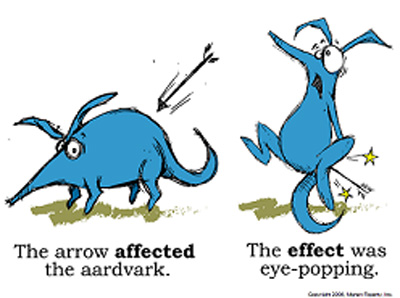
These two words are commonly confused - probably due in part to the fact that both words have more than one meaning. I will explain clearly the main difference and just briefly mention the other (rare) meanings:
Affect (a-FECT): this is usually a verb (doing word) and the form most commonly confused with “effect”. It means “to influence” or “to cause a change”. For example: John’s protest affected great change in the farming industry (John’s protest caused change to happen).
Effect (e-FECT): this is usually a noun (thing) and it refers to the “end result” or the impact something has on someone or something. For example, “the cocaine had a numbing effect”, or “her smile had a strange effect on me”.
For those who are curious, affect (AFF-ect) means “emotion” but this meaning is used almost exclusively by psychiatrists. And just to further confuse the whole thing, “effect” can also mean “to create” - which is probably the reason that many people confuse it with affect (a-FECT). For example: “I am trying to effect a new council in the city”.
But wait, there’s more: something can “take effect“, but it cannot “take affect“.
Confused? No wonder. Here is a simple way to remember the basic rule:
If it’s something you’re going to do, use “affect.” If it’s something you’ve already done, use “effect.”
Lay: To put something or someone down: “lay your head on the pillow”. Lay needs a direct object to act upon - in the example here the object is “your head”.
Lie: To rest in a horizontal position or to be located somewhere: “If you are tired, lie down”, “New Zealand lies in the Pacific Ocean”. Lie does not need a direct object to act upon - therefore it would be wrong to say “if you are tired, lie yourself down”.
This is seen quite often these days and some people claim that it is acceptable English, but it is not. Do not do it. Here is an example of the offending phrase:
“I wish she would have kissed me”
To correct this grievous error, you need to say: “I wish she had kissed me”.
The reason this is wrong is that “wished” suggests something contrary to reality, and adding “would have” which is also a statement of contrariness, is excessive and unnecessary.
Of course, “would have” is perfectly acceptable in the following sentence: “I would have given a donation if I agreed with the party’s politics.”
The most common problem here is the use of “myself”. Take this sentence: “If you have any questions, ask Jane or myself”. This is wrong. To see how obviously wrong it is, just take Jane out: “If you have any questions, ask myself”. It seems that many people think that “myself” is like an intensified version of “me”. So how do we use “myself” correctly?
“Myself” is only used when “I” has already been used. For example: “I washed myself” or “I put half of the cake away for myself.” This is the only time it is ever used. The same rules apply for “herself” and “himself”.
The difference between “I” and “me” is the same as that shown in item 10 above. “I” is the “doer” and “me” is the “done to”. For example:
I paid the tax department.
The tax department paid me.
Things get a bit more confusing when you add a second person, but the rule is exactly the same:
Jim and I paid our taxes.
The tax department gave refunds to Jim and me.
The difference between less and fewer is that one is used in reference to “number” - things you can count, and the other in reference to “amount” - things measured in bulk. For example, you can’t count sand, so if we want to empty a hole filled with sand, we say “we need less sand in that hole” - but if we want to empty a hole filled with eggs, we say “we need fewer eggs in that hole”. There are other words that follow the same rule:
“A great quantity of sand” - “A great number of eggs”
“We should remove a little sand” - “We should remove a few eggs”
“There is too much sand” - “There are too many eggs”
If you eat too many ice-creams, people might think you have eaten too much dessert.
We commonly see this error crop up with regards to people: “We need less people on this team” - this should actually be “we need fewer people on this team”.
Measurements of time and money ignore this rule, therefore we say: “I have less than 5 dollars” and “It takes less than 2 hours to get to Paris”.
This is wrong. It is a very common error and an appalling one at that! The correct form is “different from”. In British common use, many people say “different to” but that is still technically bad form and most UK style guides reject it. Let us look at each option:
Wrong: “Pink is different than blue” (common use in the US)
Wrong: “Pink is different to blue” (common use in the UK)
Questionable: “John is different than he was before his accident. (this can be phrased better - but because “different” is followed by a full clause, some accept it.)
Right: “Pink is different from blue”.
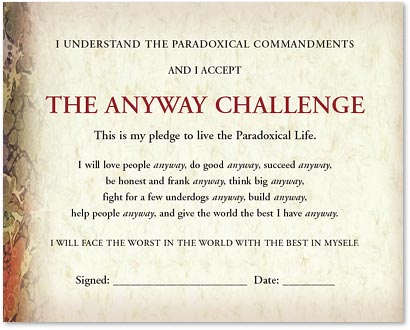
First of all, “anyways” is not an English word - in fact, I am not aware of it being a word in any language at all. You should never say “anyways”. The word most often crops up in sentences such as this: “John was an idiot anyways!” The correct word to use is “anyway”.
Secondly, anyway is different from any way - both are acceptable but have different uses:
“I didn’t like him anyway”, and: “is there any way to stop the marriage?”
I am sure no one will disagree with this entry being number 1 on the list - it is extremely common nowadays to see these words interchanged - sometimes with hilarious consequences but usually not. Let us look at each word separately:
They’re: The apostrophe is used here to replace a missing letter - the letter ‘a’. “They’re” means “they are” - it only mean “they are”, and can never mean anything else. So if you want to say that someone is happy, you say “they’re happy”. Remember, the apostrophe stands for a missing letter.
Their: This means “belongs to them” - it only means “belong to them” and nothing else. The confusion that has arisen over this word is no doubt related to the fact the an apostrophe is often used to denote possession - such as “John’s dog” - but when we are talking about “them” possessing something, we don’t use the apostrophe.
There: Everything else falls in to this category. “There is a happy man”, “Over there!”, “There aren’t many people at the party”.
Here is a little tip for remembering:
Their - “Their” has “heir” in it - an heir ultimately possesses items left to them in a will.
There - “There” has “here” in it - this can remind you that it refers to a place.
Related ListsTop 10 Errors in English that Aren’t Errors10 Images of Irony 10 Common English Language Errors 25 English Language Oddities |
SubscriptionsLike this article? Subscribe to the RSS feed to keep 'em coming, or subscribe via email: |
If you find this site helpful, please leave a donation so you can enjoy the spirit of giving too.
Email This Post


1. Scar. - September 12th, 2008 at 3:54 am
I hate There/They’re/their errors!
Drives me nuts!
2. jhoyce07 - September 12th, 2008 at 3:59 am
i love grammar lists like this..i’ll spread the word to the office tomorrow..ty JFrater! ü
3. fishing4monkeys - September 12th, 2008 at 3:59 am
I thought this was a repeat list then I read the top haha
4. Sgt. Batguano - September 12th, 2008 at 4:20 am
Excellent reference material; I need to bookmark this list.
I find grammar, definitions, usage, etc. a fascinating contradiction. One of the primary methods of establishing these rules is through observing public usage; therefore, if the error becomes common enough, it becomes accepted standard practice. Is this situational irony???
A great example is the use of the phrase hoi polloi. Originally it meant the masses, but over time has been misused to represent the upper class and most people have come to accept the latter.
Scene from Caddyshack -
[Caddy Danny arrives among the rich in his yachting outfit]
Spalding Smails: Ahoy polloi… where did you come from, a scotch ad?
BTW, did anybody else feel very self conscious about their spelling grammar when they commented on this list?
5. lotte - September 12th, 2008 at 4:24 am
Interesting list! This really cleared up some doubts.
6. Phil - September 12th, 2008 at 4:32 am
One that bugs me is when people pronounce pronunciation as pronounciation. Like these lists.
7. Phil - September 12th, 2008 at 4:33 am
I like these lists.
8. rob - September 12th, 2008 at 4:46 am
Beat it Spalding!
9. The-dude - September 12th, 2008 at 4:47 am
Great list. Here is another; OUR team thinks you ARE great at this list business.
10. ryan - September 12th, 2008 at 5:08 am
#9 are you referencing a pronunciation error?
11. becca - September 12th, 2008 at 5:09 am
Great list!
I really hate it when people write ‘alot’ and not ‘a lot’. I’ve also noticed that kids seem say ‘nuse’ instead of ‘use’ a lot. As in: “I like to nuse the blue pencil.” Gah!
Has anyone else observed this?
Oh, and the incorrect use of the apostrophes such as “Puppy’s For Sale” REALLY bugs me.
People seem to write an ’s’ and just want to throw in an apostrophe there for good measure.
Wow, I feel better now. Thank’s! [irony intended]
12. becca - September 12th, 2008 at 5:13 am
yeah, yeah… I just noticed…. It should be “Oh, and the incorrect use of the apostrophe such as in…” Bah! Now I hate myself!
13. ryan - September 12th, 2008 at 5:16 am
#11 I don’t hear that one often. I have children that pronounce “they’re” as “they are”. It bugs me, but it is their second language.
14. warrrreagl - September 12th, 2008 at 5:19 am
About #6 “Would Have” - there is even an incorrect usage of this incorrect English. More and more I see people spelling it as “would of” instead of “would have,” but it’s hard to correct somebody when they can’t even spell something that’s incorrect to begin with.
15. mitchsn - September 12th, 2008 at 5:36 am
Im sorry but people using YOUR when it should be YOU ARE is probably the most frequent mistake ive seen on the internet and one that still drives me nuts
16. storm_shadow - September 12th, 2008 at 5:41 am
Nice list. I think I use most of them in the right place, at least when I’m writing, except I never use “whom!” When I’m talking I’m a bit lazy though. I like the “irony” entry. I remember hearing some comedian talking about how Alanis Morrisette had ruined the understanding of the word “irony” in America!
17. perun99 - September 12th, 2008 at 5:41 am
Is it ironic that a list about common English errors has so many spelling errors/typos in it?
#10 “Many other language”
#1 “it only mean “they are””
There were a few others, but I forgot where…
18. Shen - September 12th, 2008 at 5:47 am
I agree with warrrreagl.
“Would of” / “could of” / “should of” is so irritating!
19. Ashar Ali - September 12th, 2008 at 6:06 am
dude who cares?
20. Ashar Ali - September 12th, 2008 at 6:07 am
life is too short to worry about grammer
21. brian - September 12th, 2008 at 6:29 am
I teach English here in Barcelona–it’s amazing how many “experienced” teachers make these same errors…
“different to” is like silverware on crockery to me….
22. segue - September 12th, 2008 at 6:31 am
Having attended parochial school in the 50’s and 60’s, 13 years worth of parochial school, this stuff is second nature to me.
It was drilled into us daily, from at least second grade, by the nuns and priests, and so proper grammar (and spelling) just come naturally.
I don’t know why all the schools don’t teach this way, it did us nothing but good; even the poorest child in the schools had a grasp of language equal to the richest child, quite an advantage when applying to University and for jobs.
23. nollidge - September 12th, 2008 at 6:32 am
I stopped reading when I saw this: “This particular error has become so common that it is beginning to look like the word “whom” may vanish entirely from the English language.”
WELL THEN IT’S NOT AN ERROR! There are no rules except those of common usage. If a “rule” is so rarely followed, then it is the rule which must adapt to the users of the language.
Language changes. Arbitrary rules will not get in the way of it.
24. Downhighway61 - September 12th, 2008 at 6:34 am
Ashar- But what about grammar?
25. Mom424 - September 12th, 2008 at 6:34 am
Warrr: are you sure? I’m thinking it is not ‘would of’ but would’ve, could’ve, and should’ve. A fine distinction I’m aware, but at least it leaves some hope that the kids actually know the correct words and are just too lazy to pronounce it fully.
Great list by the way Jamie, I knew most of these but still make the odd error when I’m either in a hurry or not paying attention. I get corrected rather frequently by our resident Grammar nazi.
26. dischuker - September 12th, 2008 at 6:37 am
is it ironic that, on a list of common english errors, there is a grammatical error?
“On the previous list of errors I included Irony as a bonus - it deserves its own place and a fully description so here it is. “
27. Shen - September 12th, 2008 at 6:37 am
Mom424: Yes it comes from “would’ve” but I’ve seen people writing “would of” too many times…
28. glaukopis - September 12th, 2008 at 6:55 am
dischuker:
The errors are amusing.
In one of the irony blurbs
but the Higgins’s family don’t.
should be but the Higgins’s family doesn’t.
29. astraya - September 12th, 2008 at 6:57 am
People who care about “who” and “whom” ought to start caring about “you” and “ye”, as in “Whom do ye trust” (USA presidential election 1992). “Ye” bit the dust and no-one mourned.
I’m teaching English in Korea. I’ll think about this overnight then let rip with 2 years’ worth of accumulated frustrations.
30. astraya - September 12th, 2008 at 6:59 am
I would say “but the Higgins family doesn’t” cf “but the Frater family doesn’t”.
31. Bob - September 12th, 2008 at 6:59 am
Great list. It’s funny how the internet has underscored just how poor the grammatical skills of most people are. Then again, one suspects the vast majority of internet users are children and teenagers. . .
32. Nikki J - September 12th, 2008 at 7:02 am
People who use “your” where “you’re” should be used deserve to die!
33. Bob - September 12th, 2008 at 7:04 am
astraya - Yes, but it was a useful distinction, and it’s sad when a useful thing like that falls out of the language. Who/whom is a useful distinction, though obviously not as useful as it was when English was more inflected and less analytical. For the time being, who/whom, in its misuse, serves to flag pretentious folks (along with overuse of “myself” and “she and I” as objects).
34. sheltiesan - September 12th, 2008 at 7:04 am
#17 and #26 I also noticed the grammatical errors. I felt sure that they were typos. Among ‘friends’, you’d think they would be forgiven. I’m sure this post has grammatical one or more grammatical errors. If so, please forgive me.
35. solensdrottning - September 12th, 2008 at 7:12 am
What about “farther” versus “further”. I’ve never figured that one out.
36. Randall - September 12th, 2008 at 7:19 am
JFRATER:
THANK YOU!!!!
That “different to” thing has been driving me batshit NUTS! I’ve heard it more and more on Brit TV lately—and in fact you never hear it said correctly, which is scary—I’d even come to think that Britain had changed the rule. But I even hear it from Brit friends now, sometimes, and I actually said to one of them the other day, WHY IN GOD’S NAME DO YOU SAY THAT? And she shrugged and said, “dunno mate, always said it that way.”
I had “different from” drilled into my brain by my grammar-loving and proper-speech-loving mother. It’s scary that in the UK it seems to be falling utterly out of use.
37. dave4248 - September 12th, 2008 at 7:21 am
#9 part III..Dramatic irony. That was used on the old M*A*S*H television show after Dr.Winchester became a regular character. Hawkeye would often give him a hard time, leaving the viewer annoyed. After all, Winchester wasn’t Frank Burns, he had a good side. But much of his virtue,… he helped a man relearn to play piano after losing his right hand, he also helped a soldier with a stuttering problem,…was something ONLY the audience saw. Hawkeye never did.
38. warrrreagl - September 12th, 2008 at 7:23 am
segue, what a brilliant and insightful comment. I couldn’t agree more. My 18-year old niece is a new college freshman and her parents raised her to scoff, ridicule, and mock the people who took the time to learn correct grammar.
Now, she has been figuratively decapitated her first month in college as she sees how far ahead of her the rest of her classmates are going. Unless she changes her entire way of thinking, she will never recover.
So many people refuse to accept what a tremendous advantage they can have by simply learning the language.
39. Callie - September 12th, 2008 at 7:27 am
An easier trick for who and whom is asking the statement as a question. If the answer is him or her, the correct usage is whom, if the answer is he or she, it’s who. For example, the most classic use of whom:
To whom it may concern: It concerns HIM/HER.
However:
Who is coming to the party? SHE/HE is coming to the party.
Warrr is correct about would of/should of. It’s such a pet peeve of mine and I’ll never forget a classmate getting blasted by our professor for putting would of in the first sentence of his term paper. (We were English majors, so this was particularly distressing) the teacher refused to read the paper and the kid failed until he re-wrote it, then the teacher averaged the new paper with the F and ended up with a C. Tough teacher…good class though.
40. Nauplius - September 12th, 2008 at 7:29 am
I wish you would have told me about #6 before now.
41. mandysparky - September 12th, 2008 at 7:30 am
I always make these mistakes!
42. mattayeaux - September 12th, 2008 at 7:32 am
In # 1
They’re: The apostrophe is used here to replace a missing letter - the letter ‘a’. “They’re” means “they are” - it only mean “they are”,
Should not that be “means”
43. JUNQUEMAN - September 12th, 2008 at 7:36 am
TO NIKI J- Your write, it’s drive i crazy two.
44. KimoK - September 12th, 2008 at 7:38 am
How about “seven-year anniversary” instead of “seventh anniversary”? “Year” is redundant because it’s already part of “anniversary” (anni = annual)
45. ScottyBGood - September 12th, 2008 at 7:40 am
Does Bob know someone’s out to get him?
46. kris - September 12th, 2008 at 7:48 am
That’s an English lesson for me today… i am waiting for more comments on this list & make my own project… there is some one in this list who is teacher…
as I am not going to school ( must be in 8th grade actually) … would i do to make sure I am good at English (grammatically) though I am a British I think I am spoiling my language a bit (or a lot) while I am here in India!
47. shaunism - September 12th, 2008 at 7:58 am
Lay/lie cause so much confusion because of the tenses. The past tense of ‘lie’ is ‘lay’, as in “I lay down yesterday for a nap.”
Going present/past/past participle, the two are:
lie / lay / lain
lay / laid / laid
Not easy to remember in off-the-cuff speaking since, unless you were indoctrinated in a different English-speaking world than I, it is not engrained.
48. Sandeep - September 12th, 2008 at 8:00 am
@glaukopis:
“but the Higgins’s family don’t.
should be but the Higgins’s family doesn’t.”
Actually it’d be Higgins’ and not Higgins’s.
Thats another common error, just like the confusion between “lists” and “list’s”.
49. Miss Destiny - September 12th, 2008 at 8:01 am
Great list! A few things I didn’t know.
50. Catsy - September 12th, 2008 at 8:04 am
On the would have, would’ve, would of conversation, I used to write would of because I said would’ve and they sound the same. After getting corrected (in high school only) I started saying only would have instead of the conjunction and never made the spelling mistake again.
51. MartinL - September 12th, 2008 at 8:09 am
Number 6 particularly drives me nuts. #7 and #3 also make me cringe on at least a weekly basis. What annoys me most is that so many people in business and government, who’ve been to college and supposedly been well educated, perpetuate these errors in speech and writing constantly, and can’t be corrected because of their position (and the arrogance that comes with it). And of course their poor grammar percolates down through their subordinates, who assume it must be right because the boss says or writes it that way. I’ve even heard my kids’ teachers using English I would have been made to stand in the corner of the classroom for, back in the barbaric and unenlightened 60s. (Oh yeah, there’s another one: it would be 60s, not 60’s. People keep turning plurals into possessives right and left — especially in advertising.)
Anyway, Jamie — WONDERFUL list. Keep ‘em coming.
52. jawilli1 - September 12th, 2008 at 8:10 am
I believe that people use “myself” as indicated because it sounds like “my self”. That still may not be correct, but it seems to work in general conversation.
Similarly, the phrase “a whole nother” happens because “another” sounds like the phrase “a nother”. It makes no sense, but it sounds correct in conversational English.
53. Jen - September 12th, 2008 at 8:12 am
Thank you, THANK YOU for including the awful anyway/anyways error. “Anyways” is like hearing fingernails on a chalk board for me, and when I hear one of my good friends say it, I actually have to sit back and think for a second, “WHY AM I FRIENDS WITH THIS PERSON OH. MY. GOD.”
Maybe if we started teaching the incorrectness of anyways as early as kindergarten…unfortunately, most of the teachers I had growing up were anywaysers. God, what an obnoxious mistake.
OK, I’m better now.
54. Cubone - September 12th, 2008 at 8:15 am
I love this list! Every time I here someone use “myself” incorrectly I cringe (and it happens a lot)!
55. Heroajax - September 12th, 2008 at 8:20 am
Oooooooh!!! Amen finally. I Jamie, is there a way you can get this list published for every single English speaking school in the world? I agree with #22 Segue. I also attended parochial school and same thing. Although I would think when Segue refers to having it “drilled” in on a daily basis. Given the time cited, I’m assuming that’s fairly close “beaten” in daily.
Another error I see constantly that makes me cringe is “backward” and “forward.” There is no “s” at the end of either of those words … ever! Although some dictionaries list it as acceptable. It never has been to me. Singular subject or plural subject can only physically move in one direction! Don’t do it. It’s backward or forward, NOT backwards and forwards! Ever!
Awesome list.
56. Dan - September 12th, 2008 at 8:21 am
Don’t kill bob…
I recommend everyone spends a good amount of time reading these lists. Spelling and grammar can be considered a part of history we should not lose. If people ignore these values we could end up talking like short hand sounds on the internet, as the internet has promoted not using full English.
57. Mariabeth - September 12th, 2008 at 8:24 am
I love lists like this! I hate it when people I’m with have bad grammar, and I find this lists to be helpful when I’m calling them out on it.
What about the same thing/same difference situation? Do they really mean the same thing? Or is there a difference?
58. EL COCHINO - September 12th, 2008 at 8:28 am
This list really effected me. Anyways…I need to lay myself down next to the woman who I love.
59. bigski - September 12th, 2008 at 8:30 am
What bothers me most is when someone uses the non-word irregardless in a sentence.When i hear that my automatic bullshit detector goes off and i disregard whats being said REGARDLESS of whos speaking.
60. Heroajax - September 12th, 2008 at 8:35 am
@19 Ashur Ali, @23 Nollidge. Umm, that was the exact point of the list. It’s an error because it’s an error. I agree languages do change over time. The problem here is the language is not being taught correctly to begin with. You’d do well to read this list entirely and memorize it as well as people’s additional comments. Knowing how to speak correctly is one of the most valuable business skills a person can have. You need to read this list and memorize every rule here.
Additionally, you two need to go back and read Segue’s comment at 22. There’s also a common punctuation errors list. Go memorize those too. You need it.
61. kofeelite - September 12th, 2008 at 8:40 am
I cringe whenever I hear “on accident”-it’s “on purpose” or “by accident”…
I use the phrase “same difference” which also sends people into fits, I think it’s proper english…
62. Dani - September 12th, 2008 at 8:45 am
“For example: in Pygmalion, we know that Eliza is a prostitute, but the Higgins’s family don’t.”
Was this supposed to be irnoic as well?
63. Dani - September 12th, 2008 at 8:46 am
*ironic
64. kofeelite - September 12th, 2008 at 8:46 am
six of one, half dozen of the other…
65. T Cups - September 12th, 2008 at 8:50 am
Does anyone else hate it with a passion when people say “ax” instead of ask? Whenever someone does that I not only cringe, but have serious thoughts of punching them in the face
66. EL COCHINO - September 12th, 2008 at 8:53 am
Double negatives! ARGH!!!
67. Elli - September 12th, 2008 at 9:11 am
#35: “Further” is used when indicating distance (as in “JFrater’s house is further down the road than mine is”. “Farther” is used when talking about anything else (as in “Jfrater has taken grammar farther than anyone else ever has.)
Excuse the crappy examples; it’s way too early in the morning for this!
68. Christine - September 12th, 2008 at 9:24 am
I love grammar lists too, they are always fascinating and I always learn something new.
69. Lynn - September 12th, 2008 at 9:35 am
#65.. YES! That one bothers me too.
I do make many mistakes, and I am in no position to judge others, but some errors are so bad that they make me cringe.
Like “windowSEAL” instead of sill
I’m afraid that online chatting and texting will be the death of the english language. I’ve heard people actually say “lol” in a sentence.
Oh, and have you received a text or message from a teen lately? You need a decoder ring to figure those out!
70. JB - September 12th, 2008 at 9:43 am
Thank you for that list jfrater. I’ll be waiting for another “even more common English errors” and improve my writing through it.
@21 brian:
that’s true. That’s what we call the “macarronic” english, and should be out of the educational centers.
But this is a minor problem. I hope it’s changing by now but I feel like a victim of a messed educational program.
Here in Catalonia english education is a joke. Lots of primary schools (especially in rural villages) give french as third lenguage instead of english and that slows so much the learning in secondary, when those who’re learning it for the first time and those speaking it since childwood are joining in the same classroom . Out of school lessons aren’t within everyone’s reach and taking them makes in-schol lessons a waste of time. I hope it’s going to improve with new legislations.
71. Eggs - September 12th, 2008 at 9:45 am
Some of this is important, but things such as “myself” and “would have” really don’t degrade the English language. It’s really not a big deal.
72. Elli - September 12th, 2008 at 9:47 am
Lynn: Believe it or not, there ARE some of us who text in complete, grammatically-correct sentences!
Unfortunately, I’ve had to tell some of my friends that I no longer have a texting plan just so I don’t have to read their awful texts.
73. Elli - September 12th, 2008 at 9:47 am
Also, Dinosaur Comics FTW!
74. YogiBarrister - September 12th, 2008 at 9:55 am
I’m embarrassed to admit I make a lot of these errors. Sometimes it’s because I’m tired, more often it’s out of ignorance.
I do have one quibble though. The English language is constantly evolving, so the meanings of words(like irony) and even their pronunciation(forte) change over time. Now that English is the international language, be prepared for a lot more. I’m totally “new school”. I’d like to eliminate some of the quirks from our language. First order of business, cut our ties to to middle English, and start spelling phonetically. The time is rite. Why make it harder for people to learn English?
75. Elli - September 12th, 2008 at 10:03 am
becus it wil taik sum taim tu git yused tu it?
It would probably just make things harder for everyone. It would be hard to have standard spelling, since people will spell things differently depending upon which language they were raised speaking. What may seem phonetic to you may not be for, say, a Spanish, Finnish, or Japanese speaker.
76. Mom424 - September 12th, 2008 at 10:29 am
Segue, Warr; Part of the atrocious grammar skills of today are partly the fault of poor marking techniques. I have had my children bring home assignments chock full of spelling and grammar errors. I had a fit and the excuse was; but his imagination is great, we’re marking the story, not the spelling. Eee gads, it is still wrong. Where is the incentive to do it correctly? Hand it back with all the circles and underlines and have them re-do it. “Oh, but then it will become a chore, I would hate to stifle little Johnny’s creative processes”. Bullshit I say.
No point in teaching the rules if you’re not going to enforce them.
77. Jackie - September 12th, 2008 at 10:35 am
Sandeep: If the last name is Higgins and you are talking about something that belongs to them, it SHOULD be Higgins’s. Why not Higgins’ ? Because the s is PART of the name.
Here’s an example:
This is James’s dog. James isn’t a plural word already so you can use the ’s
You only use the ‘ withOUT the s if the word is already plural.
For example:
Those two dogs’ outfits are cute.
See the difference?
This was always my understanding of it anyway
78. Erin - September 12th, 2008 at 10:36 am
Loose/Lose is the worst
It really grinds my gears
Oh, and when people say cousin or across and add a “T” on the end of it so it becomes cousint or acrosst.
So annoying!
79. YogiBarrister - September 12th, 2008 at 10:37 am
Point well taken Elli. What I really meant, was that exceptions to the rules of spelling should be phased out, er I mean, fased out. It’s going to happen anyway, as the United States and Great Britain become marginalized by countries that use English as a second language. Two billion Chinese can’t be wong.
80. Erin - September 12th, 2008 at 10:41 am
Those are spelling moreso than grammatical though.
Hmm, I wonder if moreso is correct…
81. Erin - September 12th, 2008 at 10:45 am
“More so” should always be spelled as two distinct words. It is also overused and misused.
Well there ya go
82. JayArr - September 12th, 2008 at 10:50 am
The example for “They’re” in number 1 is correct only whey referencing a group of two or more people being happy. It cannot apply to ’someone’, as that is singular in form, and an individual should not properly be referred to as ‘they’… use he/she/it.
A good example of a sentence that uses all three of our #1 words, is the answer to the question, “Where are the suspects?”: “They’re over there, with their hands in the air.”
A great honorable mention should be “irregardless” and “regardless”. The word ‘irregardless’, so often used by many people I know and meet, is NOT a word primarily because it is a double negative - not having no regard… The correct word is ‘regardless’ (having no regard).
I know there’s a definite slang push from some to make ‘irregardless’ a real honest to gosh word…, but truth be told, it aint not never gonna be a real word no how, nuh-uh, no ways!
83. Toryoom - September 12th, 2008 at 11:01 am
The most annoying grammatical mistake, in my opinion, is the casual switching of the words “then” and “than,” most typically in written form.
E.G.: “I’m angrier then a bull in a china store!”
I don’t understand why people continue to make this mistake. It doesn’t even SOUND correct when you say it out loud, never mind elaborating on the technical explanation for why it’s wrong! This mistake makes persons of any age sound like a grade-schooler.
84. Toryoom - September 12th, 2008 at 11:03 am
…oops. I mean, makes A PERSON of any age sound like a grade-schooler.
85. YogiBarrister - September 12th, 2008 at 11:16 am
Would one of you English experts weigh in on an argument I had online. I asked this question, “Who is the most contemtible?”, and was told it should be, “Whom is the most contemptible?”. My ear tells me, starting a sentence with the word, whom, is wrong, my sense of logic tells me, contemptible is an adjective, therefore the nominative case should be used, but the nature of the word itself, makes me wonder if the accusative case is correct. Perhaps I should have written, “For whom do you have the most contempt?”, just to be safe.
86. Cedestra - September 12th, 2008 at 11:28 am
Great list, Jamie. Thanks for the pictures (especially using dinosaurcomics
).
87. Anon - September 12th, 2008 at 11:40 am
Yogibarrister,
I’m an Englishman who (subject) uses English, with no further or greater qualifications. Under those circumstances:
“Who (subject) is the most contemptible”
“Whom (object) do you (subject) consider to be the most contemptible.
The safe rule is to look for a verb describing the action or whatever of a *who*.
Your final version is correct and safe. In fact ‘The Right Word at the Right Time’ (Readers Digest publication, thoroughly remommended), advises always to consider rephrasing that way if in doubt, or if you inital attempt sounds clumsy. At the extreme, try some form of circumlocution.
There are grammatical difficulties we all tend to fall into (speaking for myself!) unconsciously, such as *it happened to my wife and I* (should be *and me*), *There’s several of them* (should be *there are several of them*).
However, minor grammatical nicities are less important than sense (i.e., are you being understood as you intended? Do you understand what is being said?) unless the context demands otherwise.
Grammatical nit-picking when not needed amounts to pedantry or intellectual snobbery, but hardly, I feel, when simply applied to improving one’s own practice!
88. JayArr - September 12th, 2008 at 11:40 am
Yoryoom, you could also have said: …”makes person of any age sound like grade-schoolers.” It did not have to go to the singular form. heehee…
89. JayArr - September 12th, 2008 at 11:44 am
oops…sorry…Toryoom…
90. JayArr - September 12th, 2008 at 11:45 am
eeeshh… *persons* of any age… I need more caffeine!!!
91. Anon - September 12th, 2008 at 11:48 am
Sorry. I came straight in, responding to Recent Comments without reading the list or all before, so have just noticed the answer was provided at Nº10.
It occurs to me that there must be a type of person who would flash the word *whom* around, regardless of accuracy, simply because they imagine it *sounds* more posh, educated and less hoi polloi than *who*. Heaven spare us.
92. Callie - September 12th, 2008 at 11:53 am
Yogi:
your original thinking is correct, as is the last phrasing.
I think the accuser is wrong.
Along the lines of the regardless/irregardless snafu, does it bug anyone else when someone thinks inflammable means not flammable? It doesn’t. They mean the same thing. However, there’s been so much confusion that now only “flammable” is used on warning for chemicals and such. But man…it makes me upset. I’ve had actualy fights over it. People are dumb.
93. JayArr - September 12th, 2008 at 12:01 pm
Callie, I think it’s because inflammable has the NFL in it - and we all know that those football players are ON FIRE!
Okay, bad joke… time to get back to work… lunch is over, and time for me to be done with my inflammatory deeds for the day.
94. kiwiboi - September 12th, 2008 at 12:12 pm
does it bug anyone else when someone thinks inflammable means not flammable? It doesn’t. They mean the same thing. However, there’s been so much confusion that now only “flammable” is used on warning for chemicals and such.
Callie - yes, it bugs me a little too. Inflammable is derived from the Latin inflammare (to combust). From memory, flammable is merely an idiomatic shortening of inflammable.
I did, though, once hear a Professor of Linguistics state that the meaning of flammable is self-evident (”able to catch fire”), and that inflammable infers “able to be inflamed”, or similar…which also makes sense, I guess.
95. YogiBarrister - September 12th, 2008 at 12:14 pm
Anon, Callie thanks for your input. My main objection to this particular commenter was that using whom, even when correct, often sounds pretentious. Before the Super Bowl, the same person asked, “Whom are you rooting for?”. It’s proper English to be sure, but nobody I know talks that way.
As for number one, I sometimes make that mistake when I’m tired or over-excited. I have a word for people who get upset by this kind of mistake, they are homophonophobics.
96. kiwiboi - September 12th, 2008 at 12:23 pm
Yogi - coincidentally, there was an item on Sky News (UK) earlier this week about the adoption of phonetics. The one consideration that most discussion participants agreed had merit, was that centuries of English Literature would likely become inaccessible to much of the populace after a couple of generations. (As an English Lit. graduate I, myself, would find this regrettable).
For context, the discussion came about as the “answer” to the current generation of British kids having relatively abysmal spelling skills - one result of the persistent creep of political correctness and dumbing-down in the British education system, IMHO
97. Shay - September 12th, 2008 at 12:24 pm
None of these are actually mistakes if you look at them from a purely linguistic point of view. There are always many varieties of a language, commonly referred to as “dialect” or “sociolect”. So called “standard” forms of language, like the Queen’s English if you’re British, are only one variety of a language, albeit a prestigious one. As soon as a group of people begin to use a certain linguistic item, such as saying “who” instead of “whom”, many linguists do not consider it to be an actual mistake. It is simply a feature of a variety of a language. Also, living languages, like English, are constantly changing - when they stop evolving, we get dead languages. Some people would argue that Shakespearean English, referred to as Early Modern English, is one of the more “pure” forms of English,(and there have been many forms of English: Old English, Middle English, Early Modern English and Present-Day English, including all the varieties of English found during those periods). However, if you’ve ever read a Shakespearean play, would it be reasonable to expect every English speaker to use this particular form of English today? No, simply because the English language has evolved in a huge way over the last few hundred years and will continue to do so. No matter how much we try to impede these changes, they will inevitably occur.
98. nollidge - September 12th, 2008 at 12:26 pm
“@19 Ashur Ali, @23 Nollidge. Umm, that was the exact point of the list. It’s an error because it’s an error.”
Says who? Who makes the rules? Why are they rules? Is there some set of divinely-etched stone tablets containing such laws that I’m not aware of?
“It’s an error because it’s an error.” You’ve got to be kidding me. Is there no evidential standard? Perhaps learning a bit about logical fallacies, particularly Begging the Question, would do us all some good, rather than pedantic grammar violations which confuse no one and yet irritate everyone.
99. Cernunnos - September 12th, 2008 at 12:50 pm
i like this list. the way that the english language is being torn apart by teenagers hiding behind their keyboards is terrifying.
however, this list would serve it’s purpose better somewhere else, most here spell (way) better than “average.”
“it was said that:
if given time, one hundred monkeys with typewriters would eventually recreate shakespeare’s complete works.
now that we have the internet, we know that that is not true “
100. Elizabeth S. - September 12th, 2008 at 1:04 pm
I’d like to address my personal grammar peeve: Misuse of “they” and “their” as as a substitute for “he” or “his”.
I often read/hear people using “they” as a gender-nuetral pronoun for a single individual. Example:
“The person crossed the street when they saw the light change”
“A human being wants their family to be safe.”
I don’t understand what is so upsetting about saying “he or she” to describe an unspecified individual. It especially bugs me when I see it in print; I find “s/he” is perfectly simple and correct.
It just bothers me so much.
101. benny - September 12th, 2008 at 1:17 pm
i liked this list but hate English anyways lol
102. Heroajax - September 12th, 2008 at 1:18 pm
@98 Nollidge. You’re kidding right? You’re attempting to bash on me because I tried to explain the rules of the English Language to you? There is a standard! Whether you learned it or not, a standard set of English grammar rules does exist. Do some research. Look it up. You can choose either the Associated Press Stylebook or The Chicago Manual of Style. Either one will set you on the correct course to learn those lessons you clearly didn’t.
The reason we have rules for grammatically correct English is to ensure proper communication between others. When people correctly communicate with others, it eliminates miscommunication between two parties who do not share the same race, mind, creed, ideals, background, etc. I would imagine you often are asked, “what do you mean?” Simply because you’re not clearly communicating.
Your argument about logical fallacies and “begging the question,” is simply not relevent, mostly, because you’re not obeying the rules set out for communication purposes. The rules are there to ensure as uniformly similar communication as possible. That’s why there are rules and that’s why you need to obey them. It facilitates communication between people.
Do you violate rules of mathematics? In your world does 2+2=5? Do you violate the legal code in your area? Probably not. Why not in math? Because you’ll likely be thought by your peers to be a moron who lacks an education. Why not the laws, because there are punishments for breaking the laws. You don’t (for the most part) question either of those do you? Probably not. So, therefore, why do you regularly break the English Language laws as you see fit? If you want to go through life being though of as uneducated, hey, that’s fine. I’m merely suggesting a proper course of action so you can be taken seriously. Since it appears you either disregarded your education in this matter or simply don’t care, I’m trying to help you see why it’s necessary.
Hope that clears it up? Probably not, but at least I tried.
103. Heroajax - September 12th, 2008 at 1:24 pm
@100 Elizabeth S. The reason is because the English language does not truly have a designation for a gender neutral pronoun. You correct to say that the substitution is incorrect. Unlike other languages like French, Spanish and Italian in particular, English does not have that pronoun.
You could make an argument to say that “one” would be the substitute, but often it simply sounds so strange to us English speakers, that we often simply substitute an incorrect pronoun simply because it sound better. It’s not correct, but that’s a fault of the language rather than the users imho.
104. michael - September 12th, 2008 at 2:03 pm
actually according to your definitions a few of alanis’ lines could easily be fitted under situational irony.
“free ride when you’ve already paid”
..is an inverse situation to the Reagan example.
Clearly a negative result is expected and achieved (payed for ride) when a positive result unwittingly comes out of it and a free ride exists.
“like rain on your wedding day” EASILY fits your loose definition of situational irony. “Situational irony is when there is a difference between the expected result and the actual result.” This is the only definition we’re given here and that pretty much solidifies most of the ironies Alanis invokes.
So the only real error with the word irony you’ve revealed is the one you’ve made yourself. “There are four types of irony (none of which resemble remotely anything in Alanis Morissette’s song:” as some of them fully resemble one of the types of irony you’ve put forth.
ps - I dislike her music.
105. Joni - September 12th, 2008 at 2:04 pm
Nice list! I’m a big grammar freak, so these type of lists really appeal to me :).
Oh and is it just me, or is #1 not numbered?
106. segue - September 12th, 2008 at 2:16 pm
38. warrrreagl
segue, what a brilliant and insightful comment. I couldn’t agree more. My 18-year old niece is a new college freshman and her parents raised her to scoff, ridicule, and mock the people who took the time to learn correct grammar.
55. Heroajax
Oooooooh!!! Amen finally. I Jamie, is there a way you can get this list published for every single English speaking school in the world? I agree with #22 Segue.
76. Mom424
Segue, Warr; Part of the atrocious grammar skills of today are partly the fault of poor marking techniques. I have had my children bring home assignments chock full of spelling and grammar errors.
****
When my children were babies I made a conscious decision to speak to them properly, that is, not to engage in “baby talk”, to use proper words, grammar, tense, syntax.
Both grandmothers were appalled! Fortunately, they both lived almost 400 miles away, since every time they were around they babbled on about birbies (yes, birbies, this was his mother’s word from god knows where!), weewee, did ums get a widdle booboo?…
I’d gently (at first) correct the grandmothers, reminding them that we were teaching the children to speak English, not gobbledygook.
They’d argue that “all” children learned baby talk first, and it was cute.
I said it would make sense if baby was their language, but it wasn’t, English was, and English was the language I was teaching them.
Long story short, it worked.
They entered school speaking, reading, and writing years ahead of their class.
To me, it was a no brainer.
My eldest now has an 18 month old daughter, and she is doing exactly the same thing I did, and it’s working again.
Funny how that happens.
107. Nejikun - September 12th, 2008 at 3:26 pm
With regards to number 9, You dont happen to know a Bob that you don’t like, do you Jfrater?
108. knight_forked - September 12th, 2008 at 4:05 pm
JFrater, informationistically great list! However I am wondering when you use “they’re” don’t you mean they as a plural of he, she or it…and when you say “someone” it is always singular? Basically I was referring to the following statement:
“So if you want to say that someone is happy, you say “they’re happy””
Shouldn’t that someone be replaced by a group or a family for them to be referred by they (although they also refers to someone previously mentioned)?
109. Heroajax - September 12th, 2008 at 4:31 pm
@108 Knight_Forked. “They’re” is a contraction of the two words “they are.” You are correct in saying that the word “someone” is always singular.
So, in answer to your specific question. You can’t replace the word “someone” with either “they’re” or “they are.” That is an incorrect subject/object usage. You have a singular subject and a plural object.
Technically you should designate a gender as your object of the sentence which would read like this:
“So, if you want to say someone is happy, you say he’s happy.”
You could also designate by saying “she’s happy” as well. Either would be correct. If you refer to comments 100 and my explanation in comment 103 you will see this is a problem in the English Language that other languages don’t have. English technically has no impersonal pronoun.
Hope that helps?
110. Heroajax - September 12th, 2008 at 4:44 pm
Okay before anyone else jumps on me. Here’s the correct sentence.
“So, if you want to say someone is happy, you say, ‘he’s happy.’”
I got to typing too fast.
111. Anon - September 12th, 2008 at 5:04 pm
Yogi, (95),
I’ve scrolled right down to the end, so don’t know whether anyone else has addressed your point at that number yet.
“Whom are you rooting for?” is an “Up with this I will not put.” type of absurdity because it separates off the preposition, which should be connected as follows:
“For whom are you rooting?” This is not only elegant and correct, but it also makes “For who are you rooting?” sound as suspect as it should.
Suggested sensible circumlocution in everyday language, “Which team/side/player do you want to win?”
Broadly speaking, we have the grammar we have and the differences we have, because they help to clarify understanding and reduce ambiguity as proven since time (ca) immemorial. Where this is not so and the differences are therefore an affection, they will tend to fall into disuse.
Cultural groups are also quite happy with certain nominal misuses (which may not have been misuses at one time, incidentally) and understand what is meant. It also acts as a verbal *badge* to bind and identify the particular culture, along with the local accent. One branch of my family is from East London. Although they read and hear “We were” all the time from the wider world, including me, they themselves always say “We was”. To all intents and purposes it only matters if you don’t want anyone to know you come from a humble background in East London!
112. Mikerodz - September 12th, 2008 at 5:08 pm
I can’t believe I am learning this much from Listverse. Thanks you people
113. Mikerodz - September 12th, 2008 at 5:10 pm
Just kidding guys
114. Jtradke - September 12th, 2008 at 5:21 pm
“There is a standard! Whether you learned it or not, a standard set of English grammar rules does exist. Do some research. Look it up. You can choose either the Associated Press Stylebook or The Chicago Manual of Style.”
Oh! Sounds like there’s TWO standards, then, hey? Which one’s the right one? Also, if you read the titles closely, you’ll notice they’re both talking about “style”, not “rules” or “laws”.
“Either one will set you on the correct course to learn those lessons you clearly didn’t…I would imagine you often are asked, “what do you mean?” Simply because you’re not clearly communicating….you’re not obeying the rules set out for communication purposes…”
Spare me. You’re obviously not reading my words - you’ll have some difficulty coming up with any violations therein. I ain’t perfect (oops, there’s one!), but I do know the standards and I do follow them generally. That’s because I have a certain style, which I adapted from writing I admired. I have a personal set of standards, but by no means do I hold others to them. If I do not understand, I ask for clarification.
“why do you regularly break the English Language laws as you see fit?”
Again, which “English Language laws” am I breaking? Do my subjects and verbs not agree? Have I dangled a participle within these couple hundred words of mine? (Which, I hasten to add, is all you know of my linguistic abilities)
Just because I think prescriptivist grammar is a load of crap doesn’t mean I constantly violate it. I would agree that there’s a certain baseline of grammar that does enable more efficient, clear-cut communication. Subject-verb agreement, for one, and, say, commas between clauses or items. But “whom vs. who”? “Less vs. fewer”? And, for Christ’s sake, “would have vs. had”?
After a point, it becomes the complaints of pedants, not people who care about communication.
115. Jtradke - September 12th, 2008 at 5:24 pm
Oh, for crying out…
jtradke = nollidge. Sorry.
116. Anon - September 12th, 2008 at 5:31 pm
The greatest difficulty with singular male and female useage is when the gender is not known, but cannot be avoided.
“A mixed group of children was playing on the roof. One jumped down and we saw him? her? run round the back.” (You don’t know whether the child is male or female.)
Although I realise it is gramatically wrong, the easiest solution is to say “… and we saw them run round the back”.
” … we saw it run round the back …” would do and be accurate, but is rather silly, since we don’t commonly use *it* for persons, except perhaps babies.
“… we saw him or her run …” is also accurate, but sounds awkward and fussy.
“… we saw that child run round the back” would be correct, and perhaps should be the result of thoughtful writing.
It might also be expressed as “… and one jumped down, whom we saw run off …”
But for off the cuff speech *them* works and is unambiguous, since it was just stated clearly there was only one child.
My reference source (cited above) notes that although the grammatical objection is strong, the *they, them their* co-opted singular format has been used throughout history, even by some of the greatest writers, and very few have managed to avoid it altogether. And that is writing, folks, not everyday speech.
Any thoughts on this one?
117. -DAR - September 12th, 2008 at 5:42 pm
I feel so.. edumacated…
118. astraya - September 12th, 2008 at 5:50 pm
Before I get started on grammar, I think I’ve missed something factual: Eliza Doolittle was a prostitute???? Since when? She is shown as a flower-seller. She protests regularly that she is a “good girl”. The word is not mentioned in the play, but then it probably wouldn’t be anyway, though if they can say “bloody”, then surely they can say “prostitute”.
The wikipedia article (the only source I can keep my head around early on a holiday weekend Saturday) says:
Higgins says she could get married, but Eliza interprets this as selling herself like a prostitute. “We were above that at the corner of Tottenham Court Road.”
which infers that she wasn’t.
During my school years the state education department gradually wound back teacher grammar. Almost everything I know I learned by self-education.
Sometimes I slip “errors” into a posting as tongue-in-cheek deadpan.
I’ll start on grammar when I’m awake.
119. Heroajax - September 12th, 2008 at 6:05 pm
@114 Jtradke/nollidge. Firstly, let’s get something straight. Just because they’re called “stylebooks,” does not mean it’s a style of writing. Again, try picking one up before bashing on either. They both contain all the rules for correct writing in English. Until you read one, shut up. You don’t know what you’re talking about.
Secondly, there’s a difference between style and grammar. What we are discussing here is not “style,” but “grammar.” There’s a difference and it’s important. What you are discussing is “style.” No one here is discussing style. All of us, except you obviously, are discussing grammar. When you want to join the grammar discussion going on here let us know, but you have no business whatsoever bashing a grammar discussion simply because your “style” doesn’t agree with it.
You have a writing style, so do I. Just because you have a style of writing does not mean it’s okay to ignore the grammatical rules of the English Language. Every author in the world has a different style of writing, but they all obey the rules of grammar.
We are simply discussing finer points of English grammar. Obviously, that does not interest you at all, but don’t bash on people because they want to discuss it.
120. Heroajax - September 12th, 2008 at 6:12 pm
@116 Anon. Would you mind posting the source of that information. As you can see from my previous posts on that point, I tend to agree with you. I wouldn’t mind reading the source directly if it’s available? Thanks.
121. krchuk - September 12th, 2008 at 6:16 pm
I am forever vehemently correcting the “would/should ofs” around me. Everyone thinks I’m nuts!
122. Anon - September 12th, 2008 at 6:25 pm
Jtradke,
Following your logic we end up with a curious and interesting situation which is clearly, some would say shamefully, demonstrated throughout LV. Those whose native tongue is not English are carefully taught the difference between who and whom, less and fewer. They understand the distinctions and use them accordingly. One therefore finds dr Lecter, a Croatian gentleman, posting a far higher and more comprehensible standard of English than many here whose native tongue is English.
There were much lumps of sugar in my tea.
Many sugar fell in my tea.
I want fewer sugar in my tea.
Many haste fewer speed.
I would like less lumps of sugar in my tea.
I would like fewer lumps of sugar in my tea.
In fact the distinctions between these terms and the reason for their existence is made clear enough in all but the last couplet. That is the common *grey area*. Whereas the intention is unlikely to misunderstood, and will only mark out your grammatical ability, there is a slight hint that *less lumps* might mean smaller lumps rather than a lesser number of lumps. There are also occasions when to use *less*
instead of *fewer* works better, even when the latter is grammatically correct. A good user probably tends to develops an instinct and an ear.
The broad overall distinction is clear.
If you are talking about individual objects making up a group: fewer, more and many.
If a homogeneous mass: less, more and much.
At the end of the day, it amounts to little more than the semantic equivalent of dressing smartly or running around with shoelaces undone and buttons undone. Some take a pride in looking sloppy. Fine.
123. Anon - September 12th, 2008 at 6:38 pm
Heroajax, (120),
Nearly went off the air for a long time, perhaps until next week even. Glad I picked you up. Sure:
Readers Digest Association Inc. ‘The Right Word at the Right Time’ A Guide to the English Language and how to use it. John Ellison Kahn (ed.). First ed. (mine), 1985. 688 pps.
Bought U.K. 1989 for 14.95 sterling.
Chock full of common sense. An update of Fowler, but much more. It was recommended to me by a friend who writes horticultural literature for a living, and whose wife is a compiler of all kinds of book idices (or indexes!). He also introduced me to computing at a critical time: I was contributing to an encyclopaedia. It saved my bacon.
124. Jtradke - September 12th, 2008 at 6:47 pm
Heroajax, I have no issue with mere discussion of grammar. I did not “bash on” you, or anyone else here. I, for one, did not tell anyone to “shut up”, like some obtuse misanthrope who gets defensive at the slightest criticism. Nor did I “bash on” either of the aforementioned style manuals; I just pointed out that even they do not fancy themselves purveyors of Law, as you appear to.
Anyhow, if you’d like to play the “Appeal to Authority” game, how about the opinions and evidence from some real, live academic linguists? http://languagelog.ldc.upenn.edu/nll/?p=465
125. Kreachure - September 12th, 2008 at 6:50 pm
First of all, I found an ERROR in the list!
In the irony item, you put:
“For example: in Pygmalion, we know that Eliza is a prostitute, but the Higgins’s family don’t.”
Wrong! “family” is used as a singular noun, so it should be “the Higgins’ family doesn’t”! Mass nouns, baby!
Second, do you have something against Alanis Morissette? Her song is called “Ironic”, not “Irony”, so while the situations she describes (e.g. “Meeting the man of your dreams/And then meeting his beautiful wife”) are not irony, they’re definitely ironic! (I would say “situationally ironic” from what the list says, but I’m not sure.)
126. knight_forked - September 12th, 2008 at 7:07 pm
@109,110 Heroajax : Thanks H (if you are fine by me using that) , eventually thats what I wanted to point out but you put it in better words
127. Kreachure - September 12th, 2008 at 7:28 pm
PS. I love lists like this one. Isn’t it obvious?
Thanks!
128. nexam - September 12th, 2008 at 7:58 pm
Why isn’t the difference between well and good on this list? “How does Harry perform in math?” “Harry is good at math…..Harry does math well.”
129. Sandeep - September 12th, 2008 at 8:04 pm
@77 Jackie: Looks like we’re both right. Just looked up wikipedia, and it says “This is now often considered nonstandard although it was originally essentially the norm (even in formal writing).”
130. Bob L - September 12th, 2008 at 8:17 pm
Great list. I have noticed that a lot of younger people (in New Zealand)use ‘bet’ instead of ‘beat’. (I bet him in a race).Is this common in other countries? I also hate the reply ‘Good’ to the question ‘How are you?’.
131. Heroajax - September 12th, 2008 at 8:26 pm
@124 Jtradke. Sigh, I’m not sure why you’re persisting when I’m only trying to help. Here goes:
Directly from the back cover of my 2000 edition of The Associated Press Stylebook: “this edition contains over 5,000 entries laying out the AP’s rules on grammer, spelling, puncutaion and usage. It gives journalists the references they need to write about the world today: correct names of countries and organizations, internet language and search tecnhiques, langauge to avoid and common trademarks.”
Although I do not personally own a copy of the Chicago Manual of Style. I have used several editions in the past and it says the same thing. All of your English teachers used either manual to instruct you in correct grammatical English.
You might possibly make the argument, that one is a Journalism style and the other is a Novela style, but definitely for all the above rules and for rules of punctuation, they agree completely.
Additionally, I also busted out my Random-House Webster’s New College Dictionary Deluxe Edition. Which after the last “z” entry has … that’s right, a “guide for writers,” Which has … that’s right, all the rules of the English Language we’ve been discussing. EVERY SINGLE ONE!
Those three I listed above are THE authorities in English. So, as far as your “appeal to authority.” Ummm, ya. You definitely need to learn to do some research. Are you honestly trying to cite an internet web site as a bastion of authority? Do you know who set that site up? Where are the webmaster’s credintials? Where are the author’s credentials? What references are they using? Based on my admittedly quick read of the site, seems like it’s mostly opinion. It could be typed out by apes for all we know. Talk to any one of your teachers/professors and ask them what they think about using any internet web sites as a specific, expert reference. They’ll laugh you out of their office. Do web sites sometimes have good and interesting information. Absolutely! Are they a good source of expert information? Not so much in most cases.
I’m sorry. It’s clear you don’t like it, but this is the world we live in. You can choose to be precise in your communication or not. It’s up to you. I can’t change it. I’m simply offering you the opportunity to learn and grow and not to be thought less of because of poor grammar. When you get into the professional business world, this type of nitpicking thing matters … unfortunately. Many good ideas are lost due to poor writing and speaking. It sucks, but it’s true. Anon summed it up perfectly in #122. You can look sloppy or not.
BTW, make sure you place all punctuation within the quote marks.
132. Heroajax - September 12th, 2008 at 8:30 pm
*Credentials* gaaaa. I hate it when I type too fast.
133. Danica - September 12th, 2008 at 8:33 pm
I always puke in my mouth when people mix up your and you’re.
134. ChaoticPython - September 12th, 2008 at 8:54 pm
People who screw up “there, their, and they’re” bother me so very badly. It looks so wrong, and I can’t understand how they do it. It’s SO. FREAKING. ANNOYING.
Rawr.
135. TheOnlySaneOne - September 12th, 2008 at 9:37 pm
I agree that most of these errors make me mad. However, language is dynamic and constantly changing. Some of these, such as the “different than,” may be accepted soon because of their common usage.
136. Quaker - September 12th, 2008 at 10:11 pm
#67 got it backwards: “Farther” refers to distance and “further” is figurative. You travel farther but pursue a topic further.
#125: I believe “family” is singular in the USA and plural in the UK (same with “company” and similar).
My own peeve: I wish I would have known. No — I wish I HAD known. The overuse of “would have” (or “would of”) is infuriating! “If I would have known, I wouldn’t have gone.” Incorrect. If I HAD known, I wouldn’t have gone. Why do we not teach English in schools anymore?
137. kittymama - September 13th, 2008 at 12:04 am
Eliza Doolittle is not a prostitute. She sells flowers for a living. Her father is initially suspicious about why she has moved into the home of Professor Higgins (who, by the way, has no family), but he soon realizes that Higgins’ intentions are honorable. The title character of “Mrs. Warren’s Profession” (another play by the same author) is a prostitute.
138. astraya - September 13th, 2008 at 12:09 am
Time to pontificate. Random thoughts:
1) There are no “rules”! In every language, the people started speaking first, followed by grammarians, style-guide writers and teachers trying to make work for themselves. The three books Heroajax mentions are not “rule books”; they are two “style guides” and a “dictionary”.
2) For every “say this and you’ll sound like an ignorant yokel” there is an equal and opposite “say this and you’ll sound like a pretentious twat”.
3) For every appeal to authority there is an equal and opposite rejection of that authority and appeal to another authority. I reject any authority which says “math”, “gotten”, “-ize” and “-or”.
4) Language changes. English used to be a highly formal, inflected language. Now it isn’t. Once there was a singular and plural “you”, and a subject case and object case “you”. Now there isn’t. The first person to (mis)use “you” in the modern way probably had scorn heaped on it/them/he/she.
5) Does this mean that anything goes? No. I’ve often said to my students “Language is about communication. If you can communicate using limited vocabulary and poor grammar, then go right ahead. But” (and this is important) “the best way to communicate most clearly with the most number of people is to use standard meanings, grammars and styles”.
At the level I am working (vocational high school in Korea) the mistakes that students make are far more basic than any of these items, and are things that no native speaker over the age of 3 would say. Last week students wrote sentences such as “Mr (my surname) is English teacher” and “Lee Yeong Ae is a actress”.
One third-year student has been coming to my desk at lunch-time and lesson breaks for some extra help. Having learned English for at least 5 1/2 years (through middle and high schools) she still does not understand “a” and “an”. She said “What does it mean?” I said “It doesn’t mean anything. It’s just a word we use with nouns.” I explained about “an” before a vowel and “a” before a consonant. She came back the next day with “an umbrella” and “a university student”. I explained that it is the sound that matters and not the letter. She came back the day after that and said that her language academy teacher had said “an university student”. I said “You’re language academy teacher is WRONG!!!!” and appealed to the authority of Berlitz and Microsoft Word.
As well as the internal inconsistencies of English, any student of English as a second language is going to be influenced by its own language. Korean doesn’t have “a”, “an” or “the”, “he” or “she” (or any other personal pronouns) so Korean students of English struggle with these basic things. Korean has a system of case markers which resemble Latin more than English. I can’t understand them, but in modern Korean they are falling out of use anyway. No doubt Korean stylists fulminate against that. Korean has a number of constructions that are mainly used when speaking, and others that are mainly used when writing.
A lot depends on context. No-one is going to say to its mate in the pub “Whom did you shag last night?” or even “Who did you shag last night?”, but approximately “Whodja shag last night?”. Would we really say “With whom did you make love last night?”
The best grammar is often invisible. One style guide I have (at school, so I can’t quote directly) gives the example (something like):
“Two boys were playing with a frog, and it died. To the boys, this was just part of the game, but to the frog, it was real”. (Plato, sometime BC.)
Concise, elegant, saying exactly what needs to be said and no more. Maybe I need to do that.
139. astraya - September 13th, 2008 at 12:13 am
‘Enry ‘Iggins ‘as a mother, if she counts as “family”.
140. Heroajax - September 13th, 2008 at 12:56 am
@ Astraya. I completely agree with everything you said. Except point 1. There are rules. You can choose to follow them or not. The books I cited actually are the rule books for English. They just happen to be named “stylebooks.” Again, you can choose to use them or not.
Remember to keep all punctuation within your quotes.
Great points. 
141. astraya - September 13th, 2008 at 2:10 am
Heroajax: I’ll