Top 10 Books For a Classical Education
Published on December 7, 2007 - 65 Comments
It is time for another competition! We all know that the modern education systems around the world are failing in many areas once thought important in human mental development. The Classical Education system covered all of the topics that we learn today, but with a greater emphasis on our western Classical past. Here is a list of ten books that will help you on the road to giving yourself a classical education at home. The competition? The first registered user that can name the source of the quote below, will win an unlimited size email address of theirname@listverse.com.
εν αpχη επoιησεν ο θεoς τoν oυpανoν και την γην. η δε γη ην αopατoς και ακατασκευαστoς και σκoτoς επανω της αβυσσoυ και πνευμα θεoυ επεφεpετo επανω τoυ υδατoς.
10. An Introduction to Traditional Logic
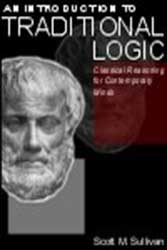
The full title to this book is An Introduction To Traditional Logic: Classical Reasoning For Contemporary Minds. A classical education starts with the trivium. This covers logic, rhetoric and grammar. This book will give you a good start on the logic portion of the trivium. This is not as hard as it seems - I have seen five year old school children studying all three aspects of it.
9. English Composition and Grammar
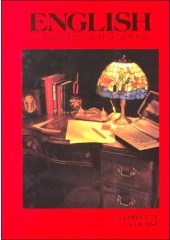
This is a core aspect within the trivium - it is the grammar of your own language. The book I have selected has received excellent reviews for its ability to teach good grammar and composition in a very easy manner. I strongly recommend it. If used in combination with the following two books, you will become a master of your language in no time.
8. Greek: An Intensive Course
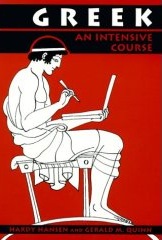
Learning a second language helps you to understand essential points of grammar in your own language. Ancient Greek and Latin were fundamental languages taught in the Classical Curriculum. Forget that it is a different alphabet - it takes only an hour or two with the right direction to be able to read the Greek alphabet. This book will take you through the process quickly and easily. How cool will you look at parties when you can read Aischulos in his original Greek?
7. Teach Yourself Latin: Complete Course
Latin is often considered a dead language, but to this day it remains the official living language of the Roman Catholic Church and the Vatican City State. In addition, when visiting Europe for holidays, many of the old plaques and graves are inscribed in this venerable language. Like Ancient Greek, Latin will help you to have a true understanding of your own language and a much deeper insight in to the life and thinking of the Romans.
6. Classical Rhetoric for the Modern Student
Now we move on the last part of the Trivium: rhetoric. Rhetoric is the art of persuasion - either with spoken, visual, or written language. Rhetoric is what makes poetry out of language. By mastering this essential classical skill, you will win friends and arguments.
5. Arithmetic the Easy Way
Having completed the trivium, we move on to the quadrivium - the final stage of education before the serious study of philosophy and theology. The first aspect of the quadrivium is arithmetic - the study of numbers. This book is an excellent resource for young students or adults alike. It will help you to gain a much greater understanding of mathematical concepts.
4. Euclid’s Elements
After Arithmetic we move to geometry. The book I have chosen is the first volume of 3 in the series by Euclid (considered to be the father of geometry). One reviewer from Amazon had this to say: “There has never been a writer of mathematics as successful as Euclid. For well over 2000 years the work that Euclid did in compiling The Elements has been the crowning achievement of geometry.”
3. Tonal Harmony
The third subject of the quadrivium is music - but not music in the sense that it is taught in schools today. In classical education, music is the study of harmony. As we have often heard in all of the arts, you must know the rules to break them. This book on tonal harmony will help you with the rules; following that, you can start to break them (atonal harmony).
2. The History and Practice of Ancient Astronomy
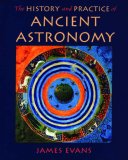
We now come to the final subject of the quadrivium: astronomy. Astronomy is, of course, the study of all that is outside the atmosphere of the earth. From one review of the book: The History and Practice of Ancient Astronomy is one of the most exciting and original books ever written on ancient, as well as medieval and Renaissance, astronomy, indeed, on the history of science. Here, for the first time, the reader can learn not only about ancient astronomy, but how to do ancient astronomy. The breadth of coverage is encyclopedic, from the Babylonians and Greeks, Ptolemy in particular, through Arabic astronomers of the middle ages, to Copernicus and Kepler.
1. The Complete Works of Aristotle
When a student has completed the primary (trivium) and secondary (quadrivium) portions of their classical education, he is ready to move on to a deep study of philosophy and theology. According to Wikipedia, philosophy is the discipline concerned with questions of how one should live (ethics); what sorts of things exist, and what are their essential natures (metaphysics); what counts as genuine knowledge (epistemology); and what are the correct principles of reasoning (logic). In the middle ages, the heyday of the classical curriculum, Aristotle was at the core of philosophical education. For that reason I have included his complete works. This is the revised Oxford edition and comes in two volumes for easy reading.
Bonus: The Summa Theologica
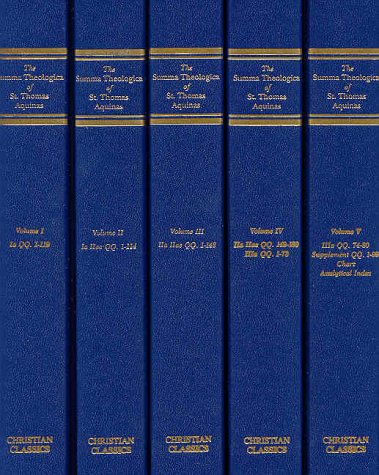
We have already covered the philosophical aspects of the classical education, which leaves us with the theological. Thomas Aquinas is the greatest theological thinker of the Middle Ages. The Summa’s topics follow a cycle: the existence of God, God’s creation, Man, Man’s purpose, Christ, the Sacraments, and back to God. It is famous for its five arguments for the existence of God, the quinquae viae (Latin: five ways). Throughout his work, Aquinas cites Augustine, Aristotle, and other Christian, Jewish, Muslim, and ancient pagan scholars. This is the epitome of theological thinking and is still the foundation of modern seminary training.
Related ListsTop 10 Tips for HomeschoolersTop 20 Kids Books Your Local School Doesn’t Stock 10 Books that Screwed Up The World 10 Rhetorical Figures |
SubscriptionsLike this article? Subscribe to the RSS feed to keep 'em coming, or subscribe via email: |
If you find this site helpful, please leave a donation so you can enjoy the spirit of giving too.
Email This Post


1. ? - December 7th, 2007 at 12:50 pm
Regardless of any individual’s views, the Holy Bible is the most influential book ever written, period.
2. Randall - December 7th, 2007 at 1:02 pm
?:
The list refers to a *classical* education. Ordinarily that does not include the Bible, as “classical” is a term that, in context, usually refers to the Graeco-Roman civilization that existed prior to the fall of Rome.
However, the author of the list *does* include a book on *English* composition and grammar. English, of course, does not count as “classical” when the term is used as I’ve just defined it.
3. MPulse600 - December 7th, 2007 at 1:12 pm
Seemed to have left out Hank the Cowdog.
4. jfrater - December 7th, 2007 at 1:14 pm
Randall: my reason for that is that the portion of the trivium dealing with grammar needs to cover your own language as well - I used English as I expect most people reading this will have English as their first language
Obviously English is not part of the classical curriculum officially.
5. Gravy - December 7th, 2007 at 1:18 pm
How about Playboy. Thats a classic.
6. Juggz - December 7th, 2007 at 1:19 pm
gonna look into some of these
7. Gravy - December 7th, 2007 at 1:19 pm
How about Playboy. Thats a classic!
8. Gravy - December 7th, 2007 at 1:19 pm
oops, i posted my comment twice! Sorry j-fra!
9. Juggz - December 7th, 2007 at 1:21 pm
attack of the non editable comments. hehehe, just playin Jamie im not gona spam the site
10. Randall - December 7th, 2007 at 1:21 pm
jfrater: I totally understand, and I agree with your reason. I actually wasn’t criticizing the choice, but was anticipating that someone, having read what I wrote, might then come back and point out to *me* that “English” doesn’t count as “classical.”
11. Randall - December 7th, 2007 at 1:23 pm
jfrater: OH, the quote! As it happens, I learned Greek a few years back (long story, ask me sometime) and if I’ve translated it correctly, then this is from the Bible, Genesis… “the spirit of God moved upon the face of the waters” and so on.
Do I win?
12. nelia - December 7th, 2007 at 1:34 pm
i’m guessing genesis, the Christian Bible version
13. jfrater - December 7th, 2007 at 1:36 pm
Book/Chapter/Verse please. And a poetic translation for fun
Post the book chapter verse first so you don’t lose your prize if you are first.
14. jfrater - December 7th, 2007 at 1:38 pm
nella: the Christian Bible is different from the Jewish version? Regardless of where the quote is from - Jesus and the majority of jews in his time used the Septuagint version of the Bible which is the basis of the “Christian” Old Testament (at least the Catholic version - protestants dumped that in the 1500s because it contradicted their views).
15. nelia - December 7th, 2007 at 1:59 pm
jfrater - i was referring to the fact that many cultures and religions have a genesis story, and I was specifically talking about a Greek Christian Bible. I assumed you wanted a specific guess (as evidenced by your asking for book/chapter/verse, which can vary between versions). As you may be able to tell, I’m rather offended that you would think that I was an idiot, and unaware that the Genesis story of the Old Testament and the Torah were the same thing. But I suppose you never can tell who is or is not an idiot when it comes to the internet, so i’ll just get over it.
That said, i’m not sure, but I’m guessing Genesis 1:2. Keep the email address and give it to the person who can give you a poetic translation. I have enough email addresses as it is. My Greek is rusty and I only managed God, darkness, earth, and water.
16. jfrater - December 7th, 2007 at 2:06 pm
nelia: I most certainly didn’t think you were an idiot! I need far more than 2 sentences to make that judgement
I presumed you were suggesting that the LXX is inferior to another version of the Old Testament - which, clearly, you were not. I need to learn not to be so presumptuous! I should thank you for correcting me in that regard
I feel rightly chastised now!
17. jfrater - December 7th, 2007 at 2:08 pm
Anyway! You were both right - it is the first two verses of Genesis. I will give you both an email address if you would like one - email me - frater@gmail.com - with the username and pass you want
I am extremely impressed by the intelligence of our users - as usual!
The poetric translation is not part of the competition - I just wanted to see how you all went with the Greek -> English - I find it fascinating when people translate ancient languages.
18. jfrater - December 7th, 2007 at 2:09 pm
Juggz: you will definitely not regret it - buy them all and go in to hiding for a month - you will come out a different person
19. Juggz - December 7th, 2007 at 2:15 pm
Jamie: Well Im about to hit up the unemployment lines at the end of the month so I should have plenty of time until another job is found.
20. Mystern - December 7th, 2007 at 2:26 pm
Genisis chapter 1 verse 2
21. Mystern - December 7th, 2007 at 2:26 pm
aw shoot too late
22. jfrater - December 7th, 2007 at 2:28 pm
Juggz: lots of comments then please
23. Mystern - December 7th, 2007 at 2:33 pm
jfrater: what did you mean by the poetic translation?
24. Juggz - December 7th, 2007 at 2:34 pm
Jamie: i dont know about that, Im already getting haters on here saying im spamming the list. lol
25. Black Lutefisk - December 7th, 2007 at 2:40 pm
In the beginning God made the heaven and earth. And the earth was invisible, and without order; and darkness was over the abyss: and the Spirit of God moved over the waters.”
26. Black Lutefisk - December 7th, 2007 at 2:43 pm
Oh pits, I’m late.
27. jfrater - December 7th, 2007 at 3:01 pm
Juggz: ignore it - I look forward to your comments and I am the master of the list universe - post post post
Mystern: I want to see the most beautiful English translation of the original Greek quote as possible - it doesn’t have to rhyme - rhyming is for nursery rhymes these days - it just has to evoke beautiful images
In other words - prose is fine - but if you want to make it rhyme that is fine too.
Black Lutefisk: you are too late - but I have to wonder where your quote came from as it has a hanging quotes marks at the end
Let’s hear it in your own words!
28. jfrater - December 7th, 2007 at 3:02 pm
Umm - I have posted more comments than anyone else here - how awful. I love my own lists more than you all
29. jfrater - December 7th, 2007 at 3:05 pm
For the record, here is what the Douai portion of the DR Bible writers translated the text as:
In the beginning God created heaven, and earth. And the earth was void and empty, and darkness was upon the face of the deep; and the spirit of God moved over the waters.
For all those people who say the KJV is the most poetic bible - the text above shows that the DR authors had a great grasp on not just English, but rhetoric - those first two lines include extraordinary use of it.
30. Juggz - December 7th, 2007 at 3:12 pm
Jamie: its because you reply to everyone….and i just cant keep up with you.
31. Mystern - December 7th, 2007 at 3:15 pm
This is about the best I can come up with with the limited verbiage of the verse. If I were to include a few other verses I could likely make it better.
Thus was the earth void without form, and darkness reigned upon the waters of the deep. And upon the face of the waters did the Spirit of the Lord God move.
32. JT - December 7th, 2007 at 3:22 pm
This has already been found out as the beginning of the Bible…got here too late.
Being a former student of ancient Greek, I can tell you that the very important breathings are missing from many words. ‘η’ for example can mean either ‘the’ with a smooth breathing, or ‘or’ with a rough breathing, showing how important they are.
33. Mystern - December 7th, 2007 at 3:36 pm
I love writing poetry. Here’s my take on a couple more verses. Admittedly I enjoy long phrases but I tried to keep the context the same.
In the beginning God created the heaven and the earth.
Thus was the earth void without form, and darkness reigned upon the waters of the deep. And upon the face of the waters did the Spirit of the Lord God move.
And God did say, Let there be light: and indeed, light did shine upon the face of the deep.
Thus God saw the light, and found it favorable unto his eyes; and God did shear the light from the darkness.
Naming the light Day, and the darkness, Night. Thus was the evening and the morning of the first day.
34. joe legge - December 7th, 2007 at 5:19 pm
woo! 34th comment! oh yeah!
35. newsong - December 7th, 2007 at 5:23 pm
Here’s my hack at the poetry:
“To begin, God laid out Heaven and Earth.
The Earth was matter unformed, and over the depth of it was darkness. And over that darkness hovered God’s Spirit.”
36. Kelsi - December 7th, 2007 at 5:39 pm
*Yawn*
37. andy - December 7th, 2007 at 5:52 pm
half of the bible is of course a spoof of the famous film the life of brian, and should be read only at parties when everyone tires of charades and twister
38. mooster - December 7th, 2007 at 6:14 pm
This is not as hard as it seems - I have seen five year old school children studying all three aspects of it.
And yet, when I took Logic a few years ago when I returned to school, most of the class struggled and never could get it. It think it may be easier for those five year olds, who haven’t learned ‘how not to think’ yet…
39. mooster - December 7th, 2007 at 6:15 pm
On the other hand, closing my html tags still confounds me, apparently.
40. phunniemee - December 7th, 2007 at 7:48 pm
Neat list! Wheelock’s Latin gets my vote for best beginner’s text, though. I
41. stugy - December 7th, 2007 at 9:09 pm
This is an amazing list, as a graduate student I am routinely surprised and sometimes disgusted at my peers that seem not to know any part of the trivium. I do not expect most people to know what the trivium is, but many people cannot not follow a logical argument for themselves, and they know nothing of how to express themselves.
Of course the upside to this is that I was quickly elected to any position of every club I ever joined, haha
One of the best lists I have seen on this site… hmmm a top ten list of the best lists? Or maybe I need to go to bed…
list on listers
42. el duderino - December 7th, 2007 at 9:10 pm
“Regardless of any individual’s views, the Holy Bible is the most influential book ever written, period”
Quick, Get a copy of Number 10 - An Introduction to Traditional Logic - to this barbarian stat!
43. Kelsi - December 7th, 2007 at 10:28 pm
Mooster: Someday you shall learn. Perseverence! (haha…sarcasm there…it’s hard to tell online.)
44. Nelia - December 7th, 2007 at 10:29 pm
Phun - Wheelock’s is a GREAT text. I learned Latin in 8 weeks using it. And languages are not exactly my gift. Greek was maybe my second worst attempt. Strangely, Italian was my worst. Why a language everyone thinks is pretty easy completely stumped me, i’ll never know. Though maybe meeting my now-fiance in that class may be slightly related…
45. Harsha - December 8th, 2007 at 12:46 am
I have read only Euclid’s Elements and Aristotle!!..My classical educaion is only 1/5th of what it should be…..[:(].I think I’ll go download the ebooks…err..I meant BUY them of course!!heh heh!
46. jfrater - December 8th, 2007 at 4:10 am
Thanks for the great comments guys - especially the very poetic renderings of the first two verses of Genesis. What a talented bunch we have here! I have to say that I have wanted to write this list for a LONG time and at the moment is my favorite list on the site
47. jfrater - December 8th, 2007 at 6:05 am
JT - the only online source for the text that I could find did not include accent marks or breathings. Keep in mind, the original texts would not have included them anyway
48. JT - December 8th, 2007 at 7:34 am
“JT - the only online source for the text that I could find did not include accent marks or breathings. Keep in mind, the original texts would not have included them anyway”
Are you sure? Like I said, breathings completely alter the meaning of the word. Accent marks are different and were only added by Erasmus to help foreigners pronounce the words iirc
49. jfrater - December 8th, 2007 at 7:50 am
JT: positive - breathings were used - of course - but not written on the letters - they were known by context presumably.
50. aplspud - December 8th, 2007 at 9:12 am
This shall be my winter reading list.
51. Shelly - December 8th, 2007 at 10:43 am
HEY ALL-
Who picked out these books and wrote this article. I’m sure the information is somewhere on this page but I don’t see it.
Thanks-
52. Sarah - December 8th, 2007 at 10:46 am
they all look REALLY boring to me…lol
53. jfrater - December 8th, 2007 at 10:49 am
Shelly - I picked the books and wrote the article.
54. Black Lutefisk - December 8th, 2007 at 12:18 pm
jfrater: Babelfish, Google, hastiness.
55. Shelly - December 8th, 2007 at 2:11 pm
Thanks Jamie-
Tell me how you decided on this list. I’m tempted to go for it. But we’re talking about quite a commitment!
Shelly
56. demibrob - December 8th, 2007 at 8:20 pm
Classical rhetoric for the modern student isn’t particularly enlightening, it justs gives a name to various rhetorical tools you already know.
57. lando - December 8th, 2007 at 10:00 pm
my AP music theory class is currently using the tonal harmony book….. it’s quite difficult
58. mklong - December 9th, 2007 at 12:48 am
lando, i used tonal harmony in my ap music class last year, it about killed me.
59. champ - December 9th, 2007 at 9:06 am
Bible? he left out fiction.
60. sarahenity - December 9th, 2007 at 4:12 pm
i don’t think i can trust a book with “arithmetic” and “the easy way” in the same title…
61. Randall - December 10th, 2007 at 8:30 am
Jamie:
In regards to these poetic translations you want—you’re forgetting something.
Genesis was originally written in Hebrew. This is true of most–I believe all–of the Old Testament. The New Testament was written in the koine Greek of the day.
The original Hebrew is what the King James translators of the Bible used, when creating their version–and their English reflects the poetic style of that original Hebrew, which is a kind of poetry far different from what the ancient Greeks wrote… their was sparse and clean, elegant, simple, with very spare use of complex metaphor. Whereas Hebrew made use of repitition and rephrasing and a great deal more metaphoric language.
Therefore, the KJV Genesis which reads:
“In the beginning God created the heaven and the earth.
And the earth was without form, and void; and darkness was upon the face of the deep. And the Spirit of God moved upon the face of the waters”
Is essentially a reflection of the Hebraic poetry of that book.
And frankly, I can see little likelihood of improving on it. IMHO.
(Genesis, Chapter 1, verses 1 & 2, by the way).
JT: Those breathings, unless I’m mistaken, are *modern* Greek… I’ve studied both, and I was fairly sure that it’s a modern change that makes the eta into either “the” or “or” depending on accent. (?) I could be wrong though.
62. jfrater - December 10th, 2007 at 8:43 am
Randall: I was asking more for beautiful prose rather than being honest to the original
You need to email me with the details of your whatever@listverse.com and password too btw 
63. Stephanie - December 22nd, 2007 at 12:07 am
Where’s the AP Calculus BC love? Just joking, but I absolutely hate that class. I love geometry much more. There’s this Dover geometry book with tons of problems in it that’s just the best…I don’t recall the name.
64. Shakespeare’s Girl - January 17th, 2008 at 6:43 pm
My HS was switching over to Classical Education when I was there, and in the process I had to learn rhetoric, which we took almost exclusively from Aristotle. However, in addition to that, we also used Mortimer Adler’s “How to Read A Book” (not recommended, it’s pretty much a very long-winded speech on underlining the important parts of what you’re reading so you can remember it better) and the Syntopicon, which is actually helpful, and extremely hard to find if you don’t know where in the library it is.
65. Brian Moo - February 26th, 2008 at 8:03 pm
I want every single book in this list so badly! Particularly the learning classic Greek and Latin ones. I read a book on the Icelandic language and I found that to be interesting as well, perhaps you could do a list on the best way to learn languages (if you haven’t done so already)?