
 The Arts
The Arts
The Arts  History
 History’s Ten Most Lopsided Battles Ever
 Movies and TV
 10 Great Meta Horrors to Watch Before Scream 7
 History
 10 Brave Women Who Fooled Entire Armies
 Crime
Crime 10 Criminal Masterminds Brought Down by Ridiculous Mistakes
 Movies and TV
 10 Movie Franchises That Started Dark but Turned Surprisingly Soft
 History
 10 Wars That Sound Made Up (but Absolutely Happened)
 Movies and TV
 10 Movie Adaptations That Ruined Everything for Some Fans
 History
 10 Dirty Government Secrets Revealed by Declassified Files
 Weird Stuff
 10 Wacky Conspiracy Theories You Will Need to Sit Down For
The Arts 10 Iconic Masterpieces Attacked by Pure Pettiness
History History’s Ten Most Lopsided Battles Ever
Movies and TV 10 Great Meta Horrors to Watch Before Scream 7
Who's Behind Listverse?

Jamie Frater
Head Editor
Jamie founded Listverse due to an insatiable desire to share fascinating, obscure, and bizarre facts. He has been a guest speaker on numerous national radio and television stations and is a five time published author.
More About Us
History 10 Brave Women Who Fooled Entire Armies
Crime 10 Criminal Masterminds Brought Down by Ridiculous Mistakes
Movies and TV 10 Movie Franchises That Started Dark but Turned Surprisingly Soft
History 10 Wars That Sound Made Up (but Absolutely Happened)
Movies and TV 10 Movie Adaptations That Ruined Everything for Some Fans
History 10 Dirty Government Secrets Revealed by Declassified Files
Weird Stuff 10 Wacky Conspiracy Theories You Will Need to Sit Down For
10 Scientific Breakthroughs of 2025 That’ll Change Everything
The world of science never stops spinning, and every year, laboratories and research facilities quietly produce breakthroughs that will fundamentally change the future. While the headlines often focus on incremental improvements, 2025 delivered several “sleeper” innovations—discoveries that weren’t front-page news but hold profound implications for human health, energy, and planetary sustainability. These ten achievements in fields ranging from materials science to genomics demonstrate that the next revolution is already underway, often in ways the public hasn’t even begun to fully appreciate.
Related: 10 Extremely Simple Concepts That Completely Changed the World
10 The First Nanoscale AI Chip for Fiber Optics
Lightmatter’s 8X Leap: World-First 16-Wavelength Bidirectional Optical Link for AI Data Centers

In a critical step toward ultra-efficient quantum communication and medical imaging, researchers successfully developed an AI chip smaller than a grain of salt that can be mounted directly on the tip of an optical fiber. This chip uses a “diffractive neural network” to process images by harnessing the natural diffraction of light itself, eliminating the need for bulky electronic components or external processors.
This breakthrough tackles two major constraints in miniaturized technology: power consumption and speed. By processing information at the speed of light using passive optical layers, the chip drastically reduces energy use and heat generation. Diffractive neural networks require no electricity to compute—they’re essentially stacks of tiny, precisely patterned surfaces that perform calculations as light passes through.
The immediate impact is in two key areas. First, it enables real-time, high-resolution medical imaging inside the human body via tiny fiber-optic endoscopes. Second, it lays the foundation for securing low-energy quantum communication networks by enabling fast, local processing of delicate quantum optical signals.[1]
9 A Biobased, Recyclable Plastic from Cereal Grass Waste
Could this new material replace plastic?
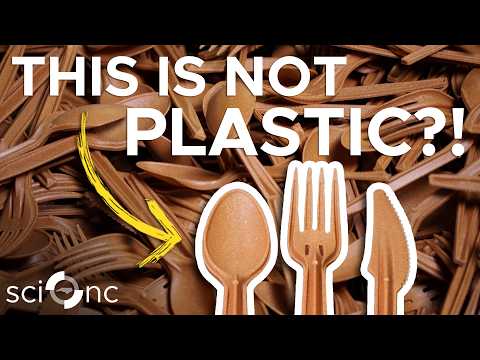
The global plastics crisis demands materials that are both high-performance and genuinely sustainable. Researchers at the University of British Columbia achieved a major milestone by creating a strong, flexible, transparent biodegradable film—branded as Grasstic—made entirely from agricultural waste such as wheat straw and cereal grasses.
Unlike many bioplastics that require dedicated crops or industrial composting, Grasstic uses lignocellulosic biomass that would otherwise be burned or discarded. This waste stream is one of the world’s most abundant renewable resources. The process transforms tough plant residues into a polymer with strength and clarity comparable to petroleum-based packaging, but with full biodegradability.
The impact is both environmental and economic. Environmentally, it offers a realistic replacement for single-use polyethylene packaging. Economically, it gives farmers a new revenue stream by converting agricultural by-products into high-value materials. This research represents a significant shift toward a fully circular, low-waste bioeconomy.[2]
8 Discovery of an Antibody Class for Next-Generation Malaria Treatment
New malaria drug brings hope for infants in Uganda

Malaria remains one of the world’s deadliest parasitic diseases, with drug resistance posing an escalating threat. In early 2025, researchers identified a new class of anti-malaria antibodies in human blood that target Plasmodium falciparum—the parasite responsible for most severe malaria cases—in a way never seen before.
Unlike traditional therapeutics that target the parasite’s rapidly changing surface proteins, this antibody class binds to a more stable internal structure that the parasite struggles to modify. Even better, the antibodies showed exceptional potency at extremely low concentrations.
This discovery opens an entirely new direction for vaccine development. Rather than building incremental improvements, scientists can now design vaccines specifically engineered to trigger this potent immune response. With P. falciparum responsible for hundreds of thousands of deaths annually, this breakthrough may be the key to a truly broad and durable malaria vaccine.[3]
7 AI Platform Achieves Human-Level Text Conversation (GPT-4.5)
GPT-4.5 Is The Most Human AI EVER & More AI Use Cases

While large language models have rapidly advanced, 2025 marked a controversial but significant milestone. A new model—reportedly OpenAI’s GPT-4.5—was said to be indistinguishable from a human in a wide range of text-based conversations, effectively “passing” the Turing Test under standard evaluation setups.
The leap wasn’t just in generating coherent prose. The model showed nuanced memory continuity over long conversations, the ability to express uncertainty appropriately, and subtle context-switching skills that previously tripped up AI systems. Reports emphasized that GPT-4.5 displayed conversational rhythms and conceptual reasoning that testers described as “eerily human.”
If verified, this development has vast implications for law, medicine, education, and creative industries. It suggests that AI may now serve not merely as a tool, but as a functional conversational partner capable of assisting with complex, high-context tasks previously reserved for trained experts.[4]
6 Targeted Gene Therapy for Drug-Resistant Epilepsy
When seizures don’t stop: Anthony’s battle against drug-resistant epilepsy

Focal epilepsy affects millions worldwide, and drug resistance leaves many patients with no options beyond surgery—an invasive and often risky intervention. In 2025, researchers at University College London reported a major advance: a targeted gene therapy that delivers the crucial LGI1 gene directly to malfunctioning brain regions using an adeno-associated virus (AAV) vector.
The LGI1 protein regulates electrical signaling between neurons. In some forms of focal epilepsy, this protein is deficient or dysfunctional, allowing runaway electrical activity that triggers seizures. Restoring the gene restores the protein—and, in pre-clinical models, stabilizes neural activity at its source.
This approach represents a shift from symptom management to root-cause intervention. While still early in development, the therapy has the potential to become a one-time treatment for a debilitating condition that has long resisted traditional medications.[5]
5 Receptor Discovery That Boosts and Protects Bone Strength
Can This New Compound, AP503, Actually Reverse Bone Loss? (Doctor Explains)
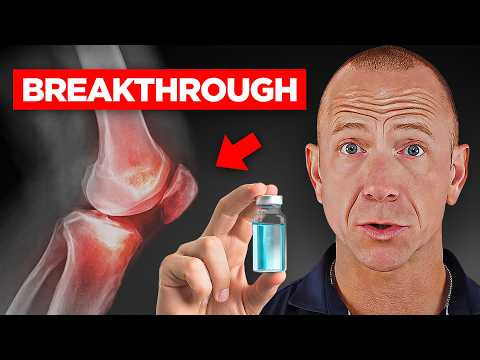
Treatments for osteoporosis and age-related bone loss traditionally focus on slowing deterioration. Scientists at Leipzig University uncovered a breakthrough that may go further: they identified a receptor, GPR133, that plays a key role in stimulating new bone formation.
Researchers developed a compound called AP503 to activate this receptor. In pre-clinical studies, activating GPR133 not only halted bone weakening but also significantly increased bone strength and density. The treatment even reversed osteoporosis-like damage in animal models.
This discovery opens the door to therapies that strengthen bone rather than merely preserving what remains. If human trials prove successful, GPR133-targeting drugs could become the first treatments to actively rebuild skeletal tissue using the body’s own natural pathways.[6]
4 A Cyclic Peptide That Directly Targets Organ Fibrosis
Peptide Mimics Targeting Scar Tissue in Idiopathic Pulmonary Fibrosis

Fibrotic diseases—including pulmonary fibrosis, cirrhosis, and NASH—arise when specialized cells produce excess scar tissue, slowly causing organs to stiffen and fail. In 2025, scientists at the Max Planck Institute of Biochemistry identified a cyclic peptide capable of directly targeting and neutralizing the cells that drive this scarring.
Cyclic peptides have a circular structure that makes them highly stable and resistant to enzymatic breakdown. This stability allows them to remain active in the body longer than traditional drug molecules. The new peptide binds to the specific cellular machinery that produces pathological extracellular matrix, effectively shutting down the overactive scarring process at its source.
Since fibrosis contributes to a large fraction of chronic-disease mortality in developed countries, this breakthrough represents an important step toward targeted antifibrotic therapies—potentially applicable to the liver, lungs, and even the heart.[7]
3 Proof of Concept for Enteral Ventilation in Humans
Is It Possible for Humans to Breathe Through Their Butt?

For patients with acute respiratory failure, the inability to oxygenate the blood is the immediate life-threatening danger. In a groundbreaking trial, Japanese scientists demonstrated enteral ventilation in healthy volunteers—absorbing oxygen through the gut using perfluorodecalin, a liquid that carries large amounts of dissolved oxygen.
This method involves administering the oxygen-rich liquid rectally, where it diffuses across the intestinal lining into the bloodstream. The trial showed that this alternative pathway provided a measurable and significant boost to blood oxygen levels, offering a non-pulmonary route for oxygen delivery.
While still in an experimental phase, enteral ventilation could become a supplemental therapy for severe pneumonia, ARDS, smoke inhalation, or other conditions where lung function is critically impaired. It may even serve as a bridge treatment during emergency care when mechanical ventilation isn’t immediately possible.[8]
2 A Low-Energy Chemical Process to Capture CO₂ from Air
New Breakthrough Changes Plastic To A CO2 Sponge
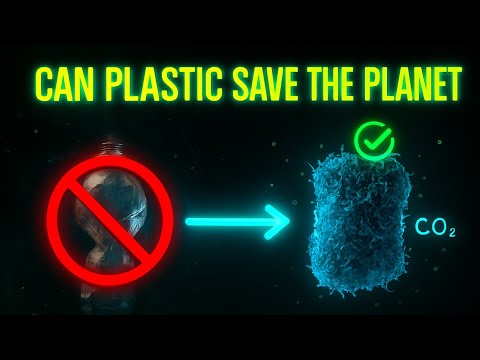
Removing carbon dioxide from the atmosphere requires materials that are cheap, durable, and low-energy. Chemists at the University of Copenhagen announced the creation of BAETA, a new adsorption material synthesized from recycled plastic bottles that dramatically improves the efficiency of CO₂ capture.
BAETA operates through an enhanced temperature-swing adsorption process: at one temperature, it selectively binds CO₂ from air or flue gas; when gently heated, it releases the gas in concentrated form. Because BAETA is derived from PET waste and synthesized with minimal energy input, it offers an unusually low-impact method for producing large quantities of capture material.
If scaled, BAETA could significantly reduce the cost of direct air capture and industrial decarbonization. Its stability, low production cost, and high CO₂ uptake capacity make it a strong candidate for future carbon-removal infrastructure.[9]
1 A New Quantum State Where Electrons Move Like a “Wild” Liquid
Electron Behavior in Atoms
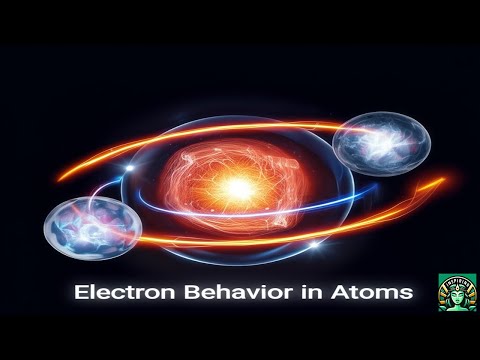
In a discovery that pushes the limits of quantum physics, researchers identified a new electronic state in which electrons behave like a chaotic, fluid-like liquid rather than staying locked in rigid positions or behaving as independent particles.
Under specific quantum conditions in two-dimensional materials, electrons can normally form a Wigner crystal—a geometric lattice predicted in 1934. But researchers observed the electrons melting out of this crystal and flowing collectively in a liquid-like manner. This tunable transition between electron “solid” and “liquid” states offers unprecedented control over how electrons move through a material.
This breakthrough could be transformative for next-generation electronics. Liquid-like electron behavior is closely related to superconductivity and other exotic quantum effects. Understanding how to manipulate these states may accelerate advances in ultra-efficient energy transport, quantum computing components, and novel types of quantum logic gates.[10]
More Great Lists
 Ten Recent Medical Breakthroughs to Get Excited About
 10 Energy Breakthroughs That No One Is Talking About
 10 Un-Be-Reef-Able Medical Breakthroughs Found in the Ocean
 10 Things That Will Make You Rethink Everything Normal
 10 Bleak Predictions for 2025
 10 Exciting Things Entering the Public Domain in 2025
 Ten Extraordinary Predictions for 2025 from Fiction
 Ten Signs 2025 Will Be the Year of the U.S. Recession
 10 Groundbreaking & Historical "Firsts" We Witnessed…
fact checked by
Darci Heikkinen
More Great Lists