
 Mysteries
Mysteries
Mysteries  Our World
 10 Countries Where Water Scarcity Gets Seriously Weird
 Weird Stuff
 10 of the Most Bizarre Buildings Around the World
 Creepy
 10 American Urban Legends Far Stranger Than Bigfoot
 Movies and TV
 10 Radical Reimaginings of Frankenstein
 Facts
Facts 10 Explosive Facts You Probably Don’t Know About Volcanoes
 Pop Culture
 0 Things That Became Massive Hits the Second Time Around
 Humans
 History’s 10 Little-Remembered Acts of Charity
 The Arts
 10 Iconic Masterpieces Attacked by Pure Pettiness
 History
 History’s Ten Most Lopsided Battles Ever
Mysteries 10 People Who Infamously Appeared out of Nowhere
Our World 10 Countries Where Water Scarcity Gets Seriously Weird
Weird Stuff 10 of the Most Bizarre Buildings Around the World
Who's Behind Listverse?

Jamie Frater
Head Editor
Jamie founded Listverse due to an insatiable desire to share fascinating, obscure, and bizarre facts. He has been a guest speaker on numerous national radio and television stations and is a five time published author.
More About Us
Creepy 10 American Urban Legends Far Stranger Than Bigfoot
Movies and TV 10 Radical Reimaginings of Frankenstein
Facts 10 Explosive Facts You Probably Don’t Know About Volcanoes
Pop Culture 0 Things That Became Massive Hits the Second Time Around
Humans History’s 10 Little-Remembered Acts of Charity
The Arts 10 Iconic Masterpieces Attacked by Pure Pettiness
History History’s Ten Most Lopsided Battles Ever
10 Weird Ways That TV Shows Were Censored
Censorship is an accepted part of entertainment. If a story contains content deemed too intense for audiences, higher-ups edit that material to make it more appropriate. Changing art after the fact is a slippery slope. You obviously don’t want kids witnessing inappropriate content, as it could scar them for life. On the other hand, removing that content may lessen the story’s intended impact. It’s especially concerning given that these censors’ standards are always changing. Television is a perfect showcase for such nonsense.
Several TV shows have endured truly bizarre censorship. These scenes don’t seem to have any problems on the surface, yet studios bend over backwards to soften them. Even in cases where the content is extreme, the solutions don’t seem to solve the problem. Then again, an upside to these edits is humor. It’s funny to look back on the weird ways studios changed these series. Not only are they amusing time capsules of society, but they make everyone involved look downright foolish.
Related: 10 Short-Lived TV Series That Thrived in Reruns
10 Invisible Guns
Yu-Gi-Oh! 4Kids Edited Scene 1

Yu-Gi-Oh! went through a ton of changes from its manga beginnings. Originally a darker series with horror elements, it quickly evolved into a marketable franchise about card games. Each card contained a unique monster, a powerful spell, or a crippling trap. Players strategically placed them on the field to destroy their opponents’ monsters and eliminate their life points. Although the game was a simple pastime on the surface, the anime upped the ante by playing for massive prizes and even people’s lives. Those stakes prompted the more unscrupulous characters to whip out guns—or at least they did in Japan.
The English broadcast of Yu-Gi-Oh! came courtesy of 4Kids Entertainment, a company notorious for censoring violent anime for younger audiences. The card-based show saw several such changes, but the most comical involved firearms. The localizers simply removed the guns digitally without altering the surrounding animation. As a result, characters appeared to be pointing finger guns at each other during serious confrontations. To say this undermined their threats is an understatement.[1]
9 Lasers or Bullets?
How 4KIDS Censored SONIC X | New World Saga

You wouldn’t think Sonic the Hedgehog would call for censorship, but Sonic X challenged that assumption. The series followed the Blue Blur and his animal friends as they battled the maniacal Dr. Eggman. After damaging one of Eggman’s machines, they were transported into the human world. While Sonic and friends tried to live peacefully with their new neighbors, Eggman predictably attempted to conquer this dimension as well.
Both Eggman’s robots and human military forces used conventional weapons. Viewers could clearly see assault rifles and rocket launchers, and the animation depicted them firing standard ammunition. Once again, 4Kids stepped in to soften things for Western audiences. Whenever guns were fired in the English dub, the audio was altered to resemble sci-fi laser blasts instead of gunshots. The visual realism clashed awkwardly with the cartoonish sound effects, creating scenes that were more confusing than intense.[2]
8 The Next Dimension
Sending the Ghoulish Guldo to another dimension

Dragon Ball Z helped popularize anime in the West, but many fans didn’t realize they were watching a heavily altered version. The series continued the adventures of Goku and his allies as they used martial arts and planet-shattering energy blasts to defend Earth from alien threats. These battles were often catastrophic, and characters died with alarming frequency. That’s why the English dub’s reluctance to acknowledge death felt so strange.
The first English-language dub, produced by the Ocean Group, avoided explicit references to killing or the afterlife. Characters didn’t “die” or “kill” their enemies—even when villains were obliterated by massive energy attacks. Instead, they were said to have been sent “to the next dimension.” Hell itself was renamed the Home for Infinite Losers (HFIL), complete with comical imagery replacing darker symbolism. Considering that resurrection was already common in the series, the censorship felt especially unnecessary.[3]
7 Blood Over Nudity
The Most Intense Show on TV: Hannibal Season 1 Episode 5 Reaction

Stories featuring Hannibal Lecter are typically drenched in blood, and the television series Hannibal was no exception. The show followed the infamous cannibal while he was still a practicing psychiatrist, working alongside criminal profiler Will Graham to hunt serial killers. Crime scenes frequently showcased gruesome displays of mutilation, pushing the boundaries of what network television would normally permit.
NBC, however, drew a firm line at nudity. Several victims were discovered partially unclothed, and the network objected to visible buttocks. The solution was as bizarre as it was ironic: the creators added more blood. By strategically pouring additional gore over certain areas, they obscured nudity while technically complying with broadcast standards. Graphic violence was acceptable; exposed skin was not. Even series creator Bryan Fuller later commented on the absurdity of having to add more blood to make scenes suitable for television.[4]
6 Remixed Lyrics
Operation: F.O.O.D.F.I.T.E. – Joaquin Vs. Slamwich ~ Complete Fight/Music Video (High Quality)

Codename: Kids Next Door often parodied pop culture, but one of its strangest tributes came in the episode “Operation: F.O.O.D.F.I.T.E.” The preteen secret agents faced off against an evil lunch lady named Gramma Stuffum in a full-blown musical showdown. The soundtrack featured music from the heavy metal band GWAR—hardly the typical choice for a children’s cartoon.
GWAR’s original songs were filled with profanity and violent themes, so the show’s writers reworked the lyrics while keeping the instrumentals. “Techno Destructo” became “Kids Must Eat,” and “Gor-Gor” was transformed into “Slam Witch.” Voice actress Grey DeLisle performed the rewritten versions, turning the band’s aggressive sound into tongue-in-cheek parody. The result was a bizarre fusion of shock rock and Saturday morning cartoon energy—sanitized just enough to pass standards and practices.[5]
5 Don’t Say the P-Word
Lucy Ricardo tells Ricky Ricardo they’re having a baby
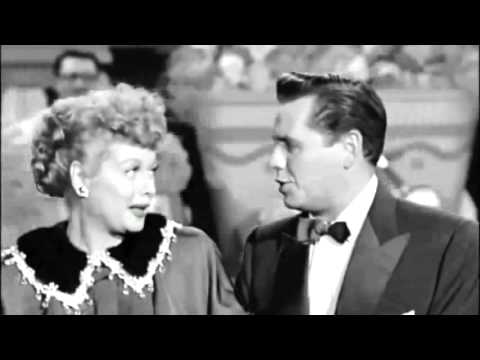
The 1950s prioritized clean, family-friendly television, and I Love Lucy was the ultimate example. The show followed the domestic adventures of Lucy Ricardo, a housewife in New York City with a musician husband and a quirky circle of friends. Between everyday mishaps, Lucy constantly schemed to break into show business through increasingly harebrained plans. One storyline, however, hit much closer to home.
When Lucille Ball became pregnant in real life, the writers incorporated her pregnancy into the show. The network, CBS, approved the storyline—but with one major caveat. The word “pregnant” could not be spoken on air. Executives believed it was too indelicate for prime-time television. Instead, the characters referred to Lucy as “expecting,” and the landmark episode announcing the news was titled “Lucy Is Enceinte.” Apparently, the French term was considered more refined than plain English.
The episode ultimately became one of the most-watched broadcasts in television history, proving that audiences could handle the concept just fine—even if censors couldn’t handle the vocabulary.[6]
4 Extraterrestrial Cavemen
Star Trek – Galileo Seven – Spears

Despite Star Trek‘s reputation for optimism and exploration, not every alien encounter was peaceful. The Original Series regularly placed the crew of the Enterprise in dangerous situations. One such mission occurred in the episode “The Galileo Seven,” in which Spock and several crew members crash-land on a hostile planet inhabited by primitive humanoid creatures.
These alien “cavemen” attacked the stranded crew with spears, leading to casualties that were unusually brutal by Star Trek standards. However, NBC’s concerns reportedly centered less on violence and more on how frightening the creatures appeared. Executives worried that close-up shots of the snarling humanoids might disturb viewers.
As a result, the production limited certain close-up footage and emphasized distant shots instead. While the changes softened the horror elements, they also had the unintended side effect of concealing the episode’s less convincing creature costumes. In this case, censorship may have accidentally improved the illusion.[7]
3 Game of Presidents
Game of Thrones Creators Scramble After Severed Bush-Head Cameo Revealed

Given the graphic violence and political intrigue in Game of Thrones, it might seem immune to censorship. The HBO series depicted a brutal fantasy realm where noble families vied for power through warfare, manipulation, and public executions. One of the most infamous moments occurred when Ned Stark was beheaded for treason, his severed head displayed on a spike for all to see.
Sharp-eyed viewers later noticed that one of the background heads resembled former U.S. President George W. Bush. Using the likeness of a real political figure in such a grisly context sparked backlash. Showrunners David Benioff and D.B. Weiss later acknowledged that a Bush mask had been used as a prop due to limited available head molds during production.
HBO publicly apologized, and subsequent DVD releases removed the likeness. In a series filled with shocking imagery, it was this subtle visual gag that drew the network’s intervention.[8]
2 I Dream of Modesty
I Dream of Jeannie STRICT Censorship Guidelines Revealed! Insane or Not?

Another seemingly innocent sitcom, I Dream of Jeannie began with U.S. Air Force pilot Tony Nelson discovering a genie in a bottle on a deserted beach. After freeing her, he brought Jeannie home, where her magical attempts to help frequently caused chaos. Beyond the supernatural hijinks, however, the network fixated on something far less mystical.
NBC executives believed that Jeannie’s costume was too revealing for television audiences of the 1960s. Specifically, they objected to her exposed belly button. The solution was strict wardrobe control: her trousers were pulled higher, and camera angles were carefully chosen to ensure her navel remained unseen.
Ironically, pop culture depictions of genies almost always featured midriff-baring outfits. Yet on prime-time television, even a glimpse of a belly button was considered inappropriate. The rule gradually loosened in later seasons, but the early restrictions remain a telling example of mid-century broadcast standards.[9]
1 Pokémon’s Jelly Donuts
pokemon jelly filled donut dub and sub comparison

To close the list, we return to 4Kids Entertainment and one of its most infamous localization decisions. Pokémon, based on the wildly popular Japanese video games, followed Ash Ketchum as he traveled the world capturing creatures and battling rivals. While one might assume concerns would center on cartoon violence, the English adaptation focused instead on food.
In the original Japanese episodes, characters frequently ate traditional dishes such as onigiri—rice balls wrapped in seaweed. In the English dub, however, these were renamed “jelly donuts.” The visuals clearly showed triangular rice balls, yet the dialogue insisted they were pastries filled with jam.
This culinary rebranding became legendary among fans, who viewed it as an unnecessary attempt to Americanize the show. The mismatch between what viewers saw and what characters described created a moment of unintentional comedy that has endured for decades.[10]
More Great Lists
 10 Ways the Ancient Olympics Were Weird
 10 Weird and Wonderful Public-Access TV Shows
 10 Weird Stories Missing People Told When They Were Found
 10 People Who Were Declared Dead But Were Still Very…
 Ten Strange Books & the Strange Ways They Were Written
 10 Ways Actors Were Tricked into Starring in Films
 Top 10 Most Memorable Super Bowl Halftime Shows
 10 TV Shows That Deserved More Seasons
 Top 10 Reality Shows with Outrageous Behind-the-Scenes Drama
fact checked by
Darci Heikkinen
More Great Lists