The history of computing is a fascinating one. Over the last 40 years or so computers have evolved from enormous and complex machines requiring specialized knowledge for operating, to small devices that most people can understand and operate in a few hours. This is a list of 10 software developments that have been the most revolutionary in the history of computing.

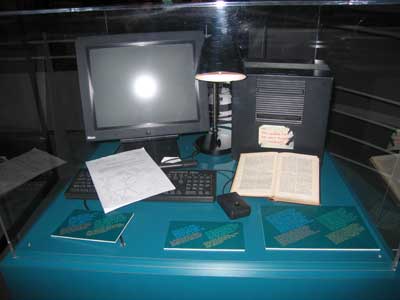
On November 12, 1990, Sir Tim Berners-Lee wrote a document outlining the basics of what we now know as the world wide web. Within the same year he created the first web server and web browser (which he called WorldWideWeb) on a NeXT computer (NeXT was Steve Jobs’ company when he left Apple – it was this operating system that Apple based its OS X on after Jobs returned there). No one would have guessed the impact the web would have on the world. It is probably the most revolutionary concept in modern history. Pictured above is the world’s first webserver.
The world wide web eventually grew to such an extent that it has now become the leading source of news and entertainment for many people. It has already forced traditional enterprises like Print Media and recording/film media to completely change (or consider changing) their whole business model. It is also thanks to this invention of Englishman Sir Tim Berners-Lee, that you are now reading this list on the List Universe!

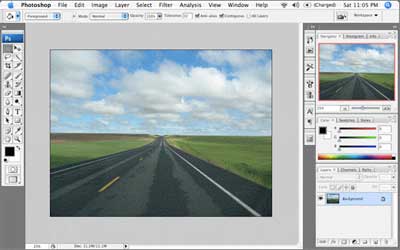
Photoshop, written by Adobe was an original program developed by brothers John and Thomas Knoll. There are few products that become so ubiquitous as to become a verb; in the UK we Hoover the carpet, people Xerox documents and now we Photoshop images. Photoshop is by far the most widely used image manipulating program with no serious commercial competition available to this day. Adobe has gone on to become the world leader in media software.
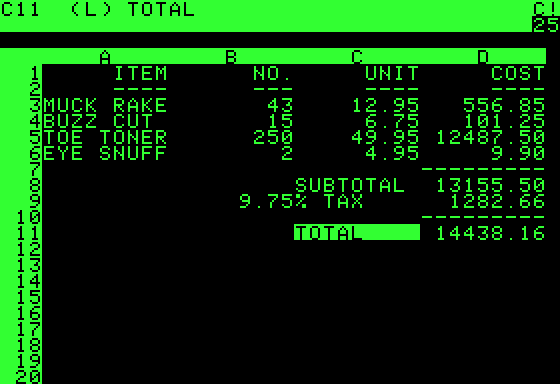
Visicalc was the first successful spreadsheet program, written for the Apple II (an early computer by Apple Inc). Successful operating systems are built upon key programs and Visicalc is the prime example. Visicalc was the first computer program that did things that were impossible with a pencil and paper system and made thousands of people realize that they needed a computer. So great was the success of the program, people would go into a computer store and ask for “a Visicalc” – meaning an Apple II.
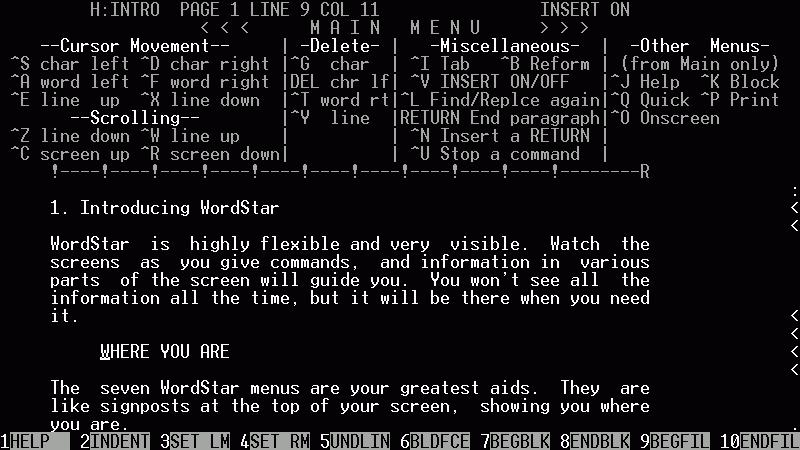
Visicalc did it with numbers, Wordstar did it with words. Wordstar did things that, at the time, made jaws drop – it could count the words in a document, and when the document was printed on a daisywheel printer it printed one line forward and the next line backwards because it was faster that way.
Suddenly, small companies could send out printed letters – unless companies could afford to employ full time typists, letters were often hand written at that time. Authors switched in droves; Jerry Pournelle (author) said that after seeing Wordstar, he realized that within a few years no-one would write with a typewriter again. A side effect was that books became much longer!

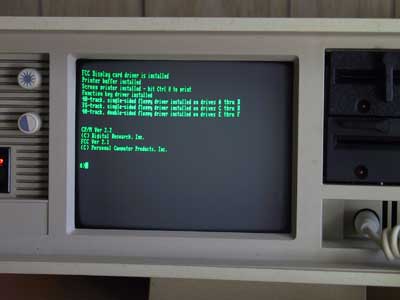
CP/M was something of an accidental invention; The legend is that Gary Kidall was working at Naval Research labs on an operating system and wanted to continue work at home on his own home built computer.
Unfortunately, the machine at work was different to the one at home, the solution was to separate out the machine dependent parts of the operating system (the disk controller and serial input/output) into a small subsection (the BIOS), the bulk of the operating system being left unchanged.
This concept made it relatively simple to “port” (the process of adapting software so that an executable program can be created for a computing environment that is different from the one for which it was originally designed) CP/M to different computers – as long as the computer was 8080 (or Z80) based. Having a single operating system made it possible for applications such as Wordstar to flourish.
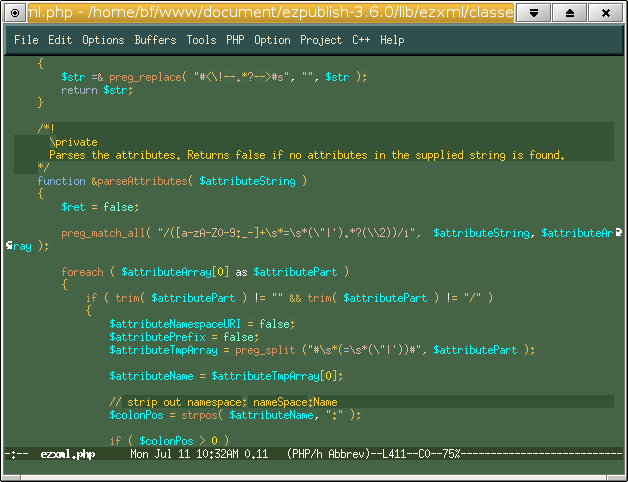
In the early days of small computers, programs were written using text editors – often Wordstar – and then the program files were processed through compilers and linkers to produce a finished program. EMACS was (indeed still is) an editing system for the UNIX operating system and provided the first programming environment – the compiler and linker was still there, but the process was hidden. Essentially the programmer always worked in EMACS; the program was edited, a single keypress would compile and link it.
EMACS can be configured to “know” about the format of different languages, keywords are shown in different colours, function parameters are shown automatically – it’s changed how programmers program. Virtually all programming languages provide an environment now. But it started with EMACS. Emacs is one of the two main contenders in the traditional editor wars, the other being vi [which is much better! -jfrater].
UNIX shows the advantage of giving bright guys some time and money. Ken Thompson was the bright guy and he, essentially, developed the first version of UNIX (then called Unics) to make a game run faster.
UNIX had the advantage of CP/M that it could fairly easily be ported to different machines, but it wasn’t particularly dependent on the hardware – CP/M needed a 8080/Z80 processor, UNIX can generally be run on anything from a phone to a supercomputer. This is because UNIX was essentially written in a high level language (of which, more below). UNIX (and its modern derivative Linux) is a programmers dream – it doesn’t get in the way too much, has powerful editors, good compilers, is very adaptable and, probably most importantly, a world wide community of fans and users.
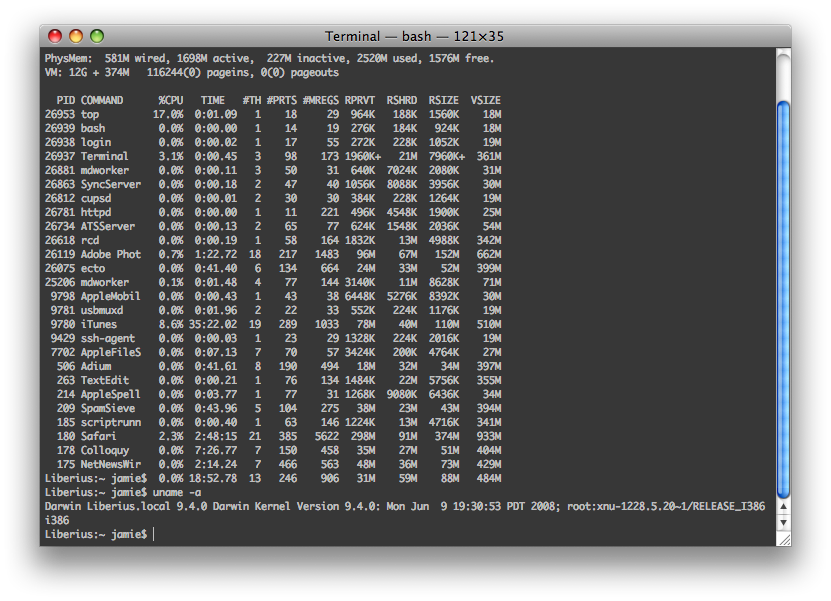
Apple’s Mac OS X is based on UNIX (BSD to be exact), and most developments in modern computing (virtual desktops, virtual memory spring to mind) start on UNIX. Pictured above is the terminal on my Mac OS X machine which gives you access to the underlying UNIX system.
C is the language of UNIX, C was written by Dennis Ritchie in 1972. Pretty much the whole of UNIX and applications that run on UNIX are written in C, or C derived languages (C# or C++). C is a small language and therefore easily learnt and easily ported to different operating systems – C compilers are usually written in C.
Some of the key features of C are extendability, close coupling with the hardware, fairly strong variable typing and function pointers. These don’t mean much unless you’re a programmer! But essentially, they stop the language getting in the way of what the programmer is trying to achieve.
The influence of C has spread with the influence of UNIX; most applications throughout Windows/Linux/Mac OS are written in C, C++ or C#. C has also influenced other computer languages; Visual Basic now looks very like C.
Another programming language; Smalltalk was the first successful object orientated language. Before Smalltalk, languages dealt largely with strings and numbers. Smalltalk allowed the programmer to describe all kinds of things – shapes, sounds, video – as objects. Imagine writing a drawing program before objects; if you want to draw a circle on the screen, you use a function for drawing circles. If you want to draw a square, you use a different function to draw a square. And so on for all the shapes. With object orientated languages, you can use a single function to draw a shape – and tell it it’s a square, circle and so on.
It made application writing much easier. Smalltalk isn’t used much nowadays; C++, C#, Visual Basic are far more common, but they are all object orientated.
A side effect of object orientation is that the executable applications became much bigger; it was with the introduction of objects, particularly C++, that applications started being delivered on multiple CDs.

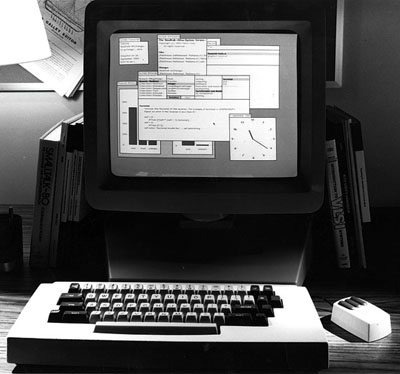
The single most influential operating system bar none. Are you using a graphical user interface (ie, Windows, Mac OS X) and a mouse? Are you connected to a network? Are you used to WYSIWYG editing (like MS Word?) Do you print to a laser printer? Is your computer doing more than one thing at once? All of these things originated at the Xerox PARC research facility under Alan Kay around 1973. Think about that year – 1973; ten years before the Apple Lisa was released. As you can see from the list of features of Xerox Alto; it more or less defined modern computing.
So why aren’t we all using Xerox Alto, instead of Windows/Mac OS? In 1979, Xerox, in exchange for Apple stock, allowed some Apple engineers, including Steve Jobs, to visit Xerox Parc and look at the Alto workstation. There a lesson here; if you invent a sensational, high tech product, don’t invite competitors to come and have a good look at it.
Contributor: apepper


September 3rd, 2008 at 2:49 am
great list i love computers
September 3rd, 2008 at 3:02 am
No games? they’re programs too, you know.
September 3rd, 2008 at 3:03 am
Awesome
September 3rd, 2008 at 3:19 am
Amazing!
I never know about Number 1. Bet Xerox have been kicking themeselves ever since… :-p
September 3rd, 2008 at 3:21 am
Sorry – My grammar’s gone to pot – I never KNEW about…”
My bad.
September 3rd, 2008 at 3:21 am
#4 – remember that PARC means Palo Alto Research Center, so xerox sold their resarch to Apple (not that unusual) and im sure they are making plenty of money from it to this day.
September 3rd, 2008 at 3:22 am
don’t forget about signal encoding. we’d still be using 8 cables for each byte
September 3rd, 2008 at 3:40 am
I think one important thing is missing. “The home computers”. When the ZX80, Amiga, etc… was released it introduced computers to a lot of young kids, who today form the experienced backbone of the it-industry. If we haven’t got the hands on these “toys” back then the computers would not be like they are today.
An other important driver is “Games”. If you look into what drives the entire industry today (just take graphic cards as an example) it will be games for the home consumer. Sure it will be difficult to pick a specific game that pushed the threshold but its to important to ignore on the list.
But when that is said, its still a great list.
Saggi
http://www.rednebula.com
September 3rd, 2008 at 4:16 am
Cool stuff. Bit old for me though heh except no.10
September 3rd, 2008 at 5:07 am
think i smell paint drying
September 3rd, 2008 at 5:14 am
The silicon chip?
I am an everyday user of computers (Windows at work and Mac at home) and I have very little knowledge of what goes on inside. Sometimes I have to ring techies, and they always ask me such obscure questions. Congratulations, apepper, for not making this incomprehensible.
September 3rd, 2008 at 5:18 am
Interesting list, a bit over my head, though. I just want to know why my computer is so annoyingly slow and why internet explorer spontaneously closes. Oh, yeah, and long live Nick Burns, your company’s computer guy! *Thanks*
September 3rd, 2008 at 6:08 am
haha…I remember working with Wordstar…Ctrl KB and KK to block a line…hehehe
September 3rd, 2008 at 6:31 am
Amazing list… although I only understood 10-7. Maybe an idea for another list is the top 10 programs?
September 3rd, 2008 at 7:11 am
The Xerox 8010 was also the first system to come with a mouse.
September 3rd, 2008 at 7:32 am
@astraya – I think I would have to agree with the silicon chip. Before the days of the microprocessor only so much was possible but the invention of the microprocessor opened a lot of new horizons.
On that same note, an argument could be made that the next (as in forthcoming) most important invention in the history of computing that we will see will be a feasible solution for quantum computing. Imagine being able to use a bit to store two values at once!
September 3rd, 2008 at 7:34 am
Nice guns on the list g but shouldn’t firefox be on there?
September 3rd, 2008 at 7:43 am
I started programming in around 89 and i remember a DOS based OS and writing a palindrome checker program. Was in school then. Seems so long ago..
September 3rd, 2008 at 7:45 am
Video production has been turned on it’s ear in the last 15 years with non-linear production. When I first started out it was all analog – tape decks galore. Our first computer was simply a tape controller with a few effects. Now we have Avid and Final Cut Pro. All done on the keyboard – pretty awesome stuff.
I remember my first version of Photoshop – I think it was version 3. I used to play with that alone for hours.
September 3rd, 2008 at 7:57 am
Ha, i wish i was tech minded.
There is nothing quite like the panic one feels after typing a stupidly long word doc / email and then clicking something a bit quickly and without much for-thought. Then watching (almost in slow motion) the writing disappear before your eyes. This is generally followed with much percussive foul language and then a slight sigh of relief after finding edit -> Undo.
September 3rd, 2008 at 7:57 am
And not one mention of Al Gore? Scandalous!
September 3rd, 2008 at 8:03 am
Heh..great list. I’m a CPA by training, and remember first discovering the unbelievable functionality of VisiCalc on an Apple PET (though I first saw a spreadsheet on my brother’s Apple IIe). The spreadsheet is *the* killer app of all time, IMHO.
I also remember going into work on a Saturday morning to watch an engineer install a 16meg (yep, *meg*) memory card in our DG mini-system (an MV2000).
Actually, I could go on all day…
- my brother’s Sinclair ZX80
- using an IBM XT that had no hard drive (all progs loaded off a 5.25″ floppy)
- saving/loading games into a Commodore VIC20 from cassette tape
- using a 400bps modem to “hack” into one of the only companies in our city that had dial-up access (and CTRL-C would shell you out on just about any system back then)
- not downloading any image greater than 200k in size, because it would take forever
- remembering when all email was DOS-based
- writing my first COBOL batch scripts; writing my first prog (Basic); and my first app in C (a Lotus 123 emulator)
..those were the days
September 3rd, 2008 at 8:06 am
Oh, and as for the silicon chip…
The list is about “10 software developments” and “programs that changed the face of computing”, so it’s right that it isn’t here.
September 3rd, 2008 at 8:25 am
It’s lists like this that confirm the fact that I am indeed a nerd. Great list.
September 3rd, 2008 at 8:28 am
I liked the list, but there was some wording in there that just went over my head and made it a bit hard for me to read (Jane Q Average). Still, pretty interesting!
September 3rd, 2008 at 8:30 am
It’s amazing when you think that the World Wide Web has only been around for 18 years.
How did I survive all those years without it?
September 3rd, 2008 at 8:32 am
rushfan: Looks like it was over both our heads.
September 3rd, 2008 at 8:33 am
Crazy. Kids today have never known a world without the internet.
September 3rd, 2008 at 8:34 am
It will be interesting to see where the intellectuals of China and India will go from here, now that giants in the software industry like Microsoft are on the far-end downturn of their business curve and are about to jump to holding companies and high finance with their huge amounts of capital, forsaking programming altogether. I suspect an international language structure, possibly not based on the ‘C’ group of languages, much to the chagrin of the American computer scholar, and strongly away from ‘patent’ languages for programming. The court rulings that allowed Microsoft to flourish by granting these patents short-changed and choked America as leader in the world for programming. Any regrets now, Judges???
September 3rd, 2008 at 8:34 am
brickhouse ~ Yeah, I rely on my husband for all things computer-related. He’s currently studying IT and networking and being Mr. Mom with our daughter while I work. When he graduates I get to stay home and it’s his turn to work. I can hardly wait!
September 3rd, 2008 at 9:05 am
I enjoy this site very much, and like to comment – but will take a rain check on this one. But you are never to old to learn.
September 3rd, 2008 at 9:36 am
not exactly relevant to anything, but my first computer science teacher was one of the developers of wordstar! absolutely brilliant man, if you could get through the thick eastern european accent.
September 3rd, 2008 at 9:44 am
Great list, very enlightening.
Found myself wondering what years items #8 & 7 were invented in.
September 3rd, 2008 at 9:51 am
kiwiboi – The list is simply titled “10 Developments That Changed The Face Of Computing”. There is no mention of “software” in the title.
September 3rd, 2008 at 10:03 am
oh wow! nice information… I know computers are so complicated… I saw my dad’s Office in Mumbai & Hyderabad ( India)
they have more than 3000 computers and there something called server room etc… I just learnt how to use Internet and I drawing on my laptop… my brother taught me…
September 3rd, 2008 at 10:25 am
I thought Al Gore invented the internet?
September 3rd, 2008 at 10:29 am
The list is simply titled “10 Developments That Changed The Face Of Computing”. There is no mention of “software” in the title.
Sharki – The list is about software developments, irrespective of the title. Read the introduction; it says “This is a list of 10 software developments that have been the most revolutionary in the history of computing.”
But, I agree, that the title is ambiguous and should be clearer.
Actually, at the risk of appearing anal, we have :
- a list titled “10 Developments That Changed The Face Of Computing”
- a URL that reads “10-programs-that-changed-the-face-of-computing”; and
- an introduction that says “This is a list of 10 software developments
Sloppy
September 3rd, 2008 at 10:29 am
Gee, anyone remember I B M — UNIVAC? I’d certainly put those on the list somewhere!!!
September 3rd, 2008 at 10:51 am
very interesting list. it is a bit complicated sometimes, so much of it went over my head, but I liked it!
September 3rd, 2008 at 10:57 am
Kiwibob(22) – it was Commodore PET, not Apple
I remember programming on the PET and CBM computers waaayyyy back in the day.
September 3rd, 2008 at 10:57 am
err… “kiwiboi”… not bob…sorry.
September 3rd, 2008 at 11:13 am
it was Commodore PET, not Apple
I remember programming on the PET and CBM computers waaayyyy back in the day.
JayArr – you’re absolutely correct, of course (stupid me!). Wonderful machines.
September 3rd, 2008 at 11:31 am
“…UNIX (and its modern derivative Linux)…”
Uh-oh!
September 3rd, 2008 at 12:01 pm
This list should be called “10 Software Developments that changed the face of Computing”, because there are many hardware inventions that changed the face of computing, including the first computers and several watershed computer machines.
You should clear the subject of a list in the intro only if you couldn’t have a more clear list title, but in this case you do.
September 3rd, 2008 at 12:27 pm
why is this all.. italics-ified?
September 3rd, 2008 at 12:48 pm
I would probably find this list interesting if there were a few more dates in it.
“Suddenly, small companies could send out printed letters”
When?
September 3rd, 2008 at 1:38 pm
loser ^
September 3rd, 2008 at 1:42 pm
wow
really a great list!
But I think photoshop doesn’t deserve to be up there. Of course has become a verb but is just because of its popularity. Is really photoshop itself that diferent to any other image editor?
Insteed HTML could be there. It’s a notable omission.
But again, thanks for that nice list. In terms of 70′ Xerox Alto seems really futuristic! It had to be impressive to be there and see that.
September 3rd, 2008 at 2:56 pm
i would have to say you’re missing the transistor, fiberoptics, WIMP OSs,
September 3rd, 2008 at 2:58 pm
Cool list. I once worked at a planetary science institute, and they had an old spectrometer that had a computer built in. The computer was pre-integrated circuit – it was several 2×2ft boards covered with wire-wrapped transistors! It had an 8.5 inch floppy drive as storage.
September 3rd, 2008 at 3:03 pm
I remember the days of Word star. There were also Lotus1-2-3 and FoxPro….
Than sometime I upgraded to Windows 3.1. And the world suddenly changed….
The only game that my computer had was a *snake game* which I build myself on Basic
September 3rd, 2008 at 4:15 pm
Interesting List. I learned something new today; mostly the fact that I’m not a computer programmer is a good thing. Ha ha just kidding, very informative.
September 3rd, 2008 at 4:18 pm
I will definitely consider a hardware version of this list
September 3rd, 2008 at 6:28 pm
Yawn…
September 3rd, 2008 at 7:17 pm
so i know 10, 9, and 1
September 3rd, 2008 at 7:19 pm
45. Steph: the term is italicized. nice try though
September 3rd, 2008 at 10:57 pm
r u serious?
the world wide web should’ve been at least 3 on that list
September 4th, 2008 at 2:54 am
I would have thought removable storage would make the list…be it media or otherwise. I still like the list…makes me feel old though.
September 4th, 2008 at 6:22 am
In 1996 there was a three hour special on PBS called Triumph of the Nerds. There was an entire section on Apple touring PARC and realizing its potential. If you ever have a chance to see it I highly recommend it.
September 4th, 2008 at 7:30 am
I’d have to argue against Photoshop, it wasn’t the first nor is it the best. If your picking software on how widely it is used and how ubiquitous it has become with it’s relevant field, how about you put Windows in there, it is by far the most widely used software suite in the entire history of all things computing.
I guess we all have our opinions, personally I would put ViolaWWW and XMLHTTP in there, but I’m biased towards the web.
September 4th, 2008 at 9:00 am
“It’s a UNIX system,…I know this.”
-Lex Murphy in “Jurassic Park”
WTF does that mean? First of all it’d be virtually impossible for a 12 year old child to “know” an entire, complex operating system. To say nothing of the fact that she’d never before seen the park’s software. Was that a movie goof or what?
September 4th, 2008 at 11:22 am
I read some trivia somewhere about that scene in the movie. Actually, it shows a real Unix machine running some popular 3D file system visualizer. Some derivative of that software still exists in most Linux distributions, but I forgot the package name. I think the girl had seen a Unix workstation before because they were still quite ubiquitous (on the higher end of computing) in the early 1990s.
September 4th, 2008 at 3:49 pm
56. emmstein: nah, my computer was showing this whole list in italics when i viewed it yesterday. now it’s back to normal. odd.
September 4th, 2008 at 5:33 pm
‘In 1979, Xerox, in exchange for Apple stock, allowed some Apple engineers, including Steve Jobs, to visit Xerox Parc and look at the Alto workstation. There a lesson here; if you invent a sensational, high tech product, don’t invite competitors to come and have a good look at it.’
I’m a little confused here. Are you saying that Xerox sold the Intellectual Property in exchange for Apple stock, or are you saying the Apple engineers reverse engineered what they saw to create their own programme without permission from Xerox?
I can imagine in the early days of computing that a company may have been arrogant enough to assume that no-one would be able to figure out what they had developed, therefor didn’t consider confidentiality agreements and establishing IP rights, but I’m afraid your paragraph doesn’t make it clear which happened in this instance. Perhaps it’s just me.
September 5th, 2008 at 12:23 am
and i thought the world wide web was designed and created at CERN’s facilities, and was originally a way for them to contact each other within the building..?
September 5th, 2008 at 9:16 am
See “Pirates of Silicon Valley”, it’s excellent! Great list!
September 5th, 2008 at 8:18 pm
Nice list but about the Smalltalk section… I don’t see how you missed Java which takes as much from Smalltalk as from from C++. And then to add insult to injury, you include C# which is a MS Java ripoff.
September 6th, 2008 at 1:48 am
html?
September 6th, 2008 at 9:36 pm
it is a very educational work. at least it was for me “a new begainer
September 7th, 2008 at 12:59 pm
good post with some good comments
September 7th, 2008 at 2:01 pm
i see a lot of people have asked about HTML, thing is he included SmallTalk the original breakthrough markup language. and although a lot of people know about HTML you dont know about smalltalk or TeX, SGML or Scribe. I was very happy with the number one choice, well done to you my friend for not putting something else there and also C in number 3 brought a smile to my face. These were the originals, the revolutionary languages and products that did what this list is about, change the face of computing
September 7th, 2008 at 2:04 pm
im sorry i mean SmallTalk was a breakthrough OOP language, my mistake i have too much info in my head lol
September 7th, 2008 at 7:01 pm
So what exactly does one do with 43 muck rakes, 15 buzz cuts, 250 toe toners, and 2 eye snuffs? (refering to #8 pic)
September 7th, 2008 at 8:26 pm
Nice list.
If anyone wants to check out Visicalc, you can download it free from the original author’s site here:
http://www.bricklin.com/history/vcexecutable.htm
September 8th, 2008 at 4:48 am
The internet is obviously #1.
September 8th, 2008 at 9:36 am
Smalltalk, ok, but what about the first successful languages for other programming paradigm. OOP isn t the only one.
September 8th, 2008 at 10:03 am
flaminio – thanks for the link. Visicalc was one cool application.
September 8th, 2008 at 9:27 pm
for the PARC one, don’t forget about networking
September 10th, 2008 at 7:18 pm
You know what the only true top program that changed the face of computing?
Well, Do yah?
No?
Are yah sure?
Quiet huh?
Well, I’ll tell yah.
The only true top program that changed the face of computing was, AND IS,
MY FIST!!!
Nuff said.
September 10th, 2008 at 7:24 pm
Yes, the fist that has broken many computers I assume.
September 11th, 2008 at 6:47 pm
C easy to learn? Ha-Ha. C and its derivatives are garbage.
September 12th, 2008 at 4:04 pm
If “C and its derivatives are garbage” then why is C++ used for so many successful commercial applications.
October 3rd, 2008 at 8:21 pm
FFS!! The claim that Unix invented Virtual Memory is preposterous. For one thing, IBM claim to have invented it around 1970. For another it was first delivered to customers by Burroughs in the early 1960’s.
October 4th, 2008 at 12:18 am
People seem to have forgotten Algol 60, by Niklaus Wirth. It set the syntactical tone for every structured language we are still using today, and in fact has some structures – such as functions as first class values that can be passed as arguments – that are only recently being realized in a general way, specifically as closures in Javascript. C drew heavily from it.
Some others that may seem so basic as to be un-noticeable today, yet are absolutely responsible for making today’s wonders possible:
1: we must not forget Alan Turing, the person who codified what exactly is a computation, what kinds of problems can be solved, what kinds not, and proved this formally. The Turing Machine is a most wonderful concept. For all the millions of transistors in a Core Duo, it is still incapable of computing anything that can be shown to be beyond a Turing Machine. And for any computing language to be worthy of the name, its semantics must be shown capable of modeling a Turing Machine. If it can do that, it is by definition “Turing Complete”, and any computer that can execute programs written in it is provably functionally no more nor less than a Turing Machine, except in how long it takes to run the program.
2: John von Neuman’s basic architecture. Stored program, execution pointer, ALU, R/W memory, instructions that can reference memory and direct data through the ALU. Even today, more than 50 years down the line, we are seeing only elaborations of the basic concept. I do not consider parallel or pipelined or multiple data space architectures to be different – all are ’simply’ added complexities in the pursuit of fast and big.
3: the return stack. Indeed, stacks in general, but that one in particular as a hardware device. Without it modular and re-usable programs are impossible. Stacks are also an essential and integral part of today’s compiler technology.
While it is true that Photoshop heavily influenced the emergence of multi-media on the desktop, by the time it came out publishing had already been revolutionized by Aldus Pagemaker and the Laser printer. That put typesetting on the desktop and within reach of small businesses, and suddenly it seemed everybody could do their own publishing. Then Jobs put Postscript in the Apple Laser Writer and finished the transition.
I’ll not join in the language wars. My first was Algol, and from that I can easily understand all current ones, so which to use becomes mostly a matter of taste and the availability of libraries that make the expression of my current project most natural. Not always the same language either. Smalltalk was an eye-opener for me with the OOP and late binding concepts, i.e. as a new way of organizing a program, a way which made complexity much easier to internalize, yet even Smalltalk is a language elaboration, not a fundamentally new language. In defense of that, I must say that I have implemented equivalent functionality and structure in C at a time when Smalltalk ran way too slowly for my needs but I needed the paradigm.
November 23rd, 2008 at 3:21 pm
Even though I can’t really wrap my mind around .. these things and I don’t really understand what it says there about some of the softwares (yes, I am in my teens and female).. but Great list! #1 was a surprise
January 18th, 2009 at 12:03 pm
Simula is considered the first object-oriented programming language.
Simula is a name for two programming languages, Simula I and Simula 67, developed in the 1960s at the Norwegian Computing Center in Oslo, by Ole-Johan Dahl and Kristen Nygaard.
Simula 67 introduced objects, classes, subclasses, virtual methods, coroutines, discrete event simulation, and features garbage collection.
http://en.wikipedia.org/wiki/Simula
February 24th, 2009 at 4:14 pm
5 emacs nice!
vi is better but not listed? haha vi sucks. command mode, text mode nonsense good way to get carpall tunnels.
March 24th, 2009 at 3:10 am
Replace Photoshop with AutoCAD and you’ve got a pretty decent list there. Anyone else agree?
March 29th, 2009 at 1:50 pm
I’ve only just spotted the list was available(!) I’ll do some feedback on the feedback:
I’ve been working/studying with computers since 1973; the first microcomputer I used had 256 bytes of memory! So I thought it would be interesting to describe some of the key events that got us here. I also thought it was salient, although I don’t quite know how, that Microsoft and Apple didn’t really feature when I compiled the list – historically, it’s young, bright people whose ideas are bought/exploited by big companies.
I think the list was mis-titled; it really is my suggested top ten software developments. As it is, I agree that integrated circuits – and particularly MOS based chips, should be there.
I did toy with a games program entry, but I don’t have much knowledge in the history of computer games so I wouldn’t like to pick just one – although when I was at university, Star Trek and Adventure were the big two.
March 29th, 2009 at 1:57 pm
dave4248 – I remember watching Jurassic Park and thinking, in reality, the line would be:
“This is a Unix system – I’ll never work it out, we’re all dead.”
March 29th, 2009 at 2:04 pm
I realise I should have made it clearer – I was thinking about the most influential things in software, not the *first* examples of a particular technology. Pretty much every item has precursors; so although people have pointed out that Simula predates Smalltalk, Smalltalk is the language that I can remember causing a big buzz in the programming world.