This list contains not only works that have been completely lost to time and carelessness, but also those which have been left unfinished by their authors, leaving readers to wonder how they might have ended. These are ordered chronologically.
Aristotle is one of the most important founding figures in Western philosophy. He was the first to create a comprehensive system of Western philosophy, encompassing morality and aesthetics, logic and science, politics and metaphysics. Aristotle’s views on the physical sciences profoundly shaped medieval scholarship, and their influence extended well into the Renaissance, although they were ultimately replaced by modern physics. Only about one third of Aristotle’s work survives today.
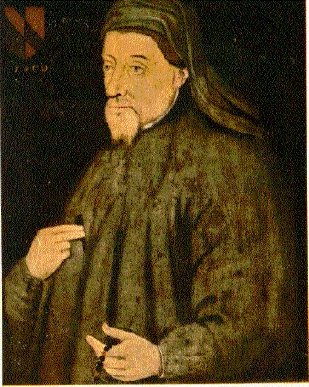
The tales in this book, some of which are originals and others not, are contained inside a frame tale and told by a collection of pilgrims on a pilgrimage from Southwark to Canterbury to visit the shrine of Saint Thomas Becket at Canterbury Cathedral. Canterbury Tales is one of the most celebrated works of Middle English literature, despite the fact that Chaucer only completed 24 of the originally planned 124 tales before his death in 1400.
This is a somewhat controversial entry. Some people believe that “Love’s Labour’s Won” is the original title of some surviving Shakespeare play; however, consensus seems to be that this is a separate play which has been lost. For many years, it was assumed that Love’s Labour’s Won was an alternative name for The Taming of the Shrew but in 1953 the title was found listing it as part of a group of “already published” plays which included both the Shrew and Love’s Labour’s Won.
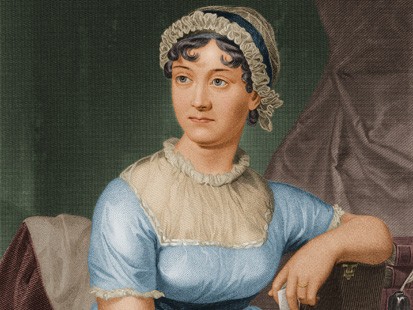
In Sanditon, Austen explored her interest in the verbal construction of a society by means of a town – and a set of families – that is still in the process of being formed. The manuscript for Sanditon was originally titled “The Brothers,” likely after the Parker brothers in the story. After her death, her family renamed it “Sanditon.” Austen died in 1817 before finishing the novel. A shame, as the small fragment that remains shows that the novel is extremely innovative while keeping all of Austen’s celebrated wit.
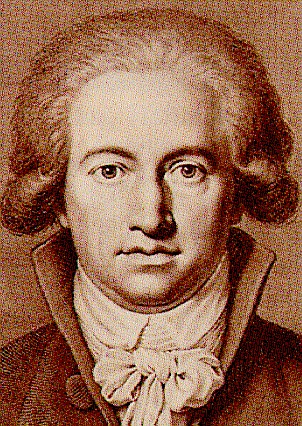
Written as a sequel to Mozart’s opera “The Magic Flute” (Die Zauberflöte), Goethe worked on this from 1794 to 1796, before abandoning the idea. It would surely have been as great as “Faust.” There is no Wikipedia mention of it, but the Stuart Kelly book states: “Goethe seemed to want to outdo Mozart’s spectacular stage effects: the Queen of the Night enters accompanied by ball lightning and St. Elmo’s fire.”

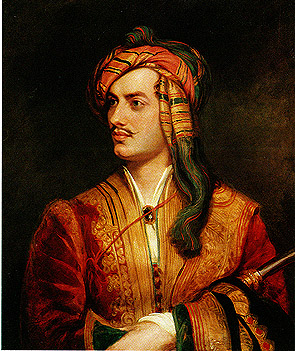
On 17 May 1824 (after Byron’s death), publisher John Murray participated in one of the most notorious acts in the annals of literature. Lord Byron had given him the manuscript of his personal memoirs to publish later on. Together with five of Byron’s friends and executors, he decided to destroy Byron’s manuscripts because he though the scandalous details would damage Byron’s reputation. Opposed only by Thomas Moore, the two volumes of memoirs were dismembered and burnt in the fireplace at Murray’s office. Unfortunately we do not know what was contained in the memoirs. They would have provided valuable information on how the poet thought and on his poetry in addition to his life.
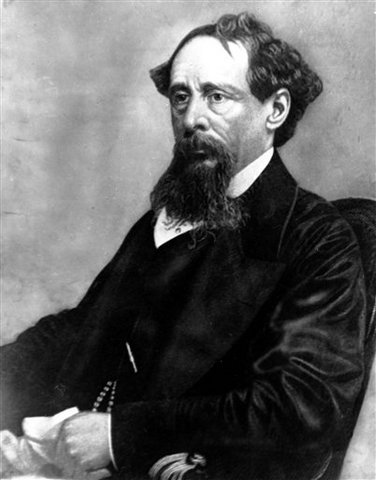
This work filled with murder, mystery and shady characters was left unfinished upon Dickens’ death in 1870. Ironically, Dickens had given Queen Victoria a sneak peak a few months before his death, and offered to let the queen know of the ending in advance, but she declined, not wanting to be spoiled.
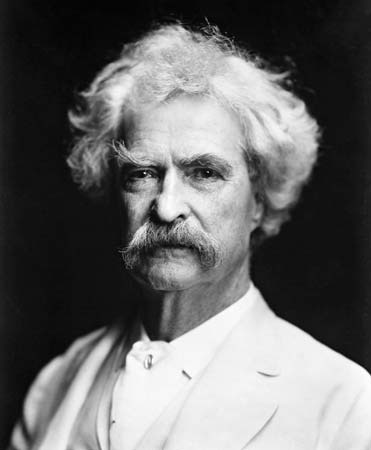
As one of the most celebrated American Authors, Mark Twain worked on three very different versions of “The Mysterious Stranger” and finished none of them. The central figure in all three was to be Satan. The first substantial version is commonly referred to as The Chronicle of Young Satan and tells of the adventures of Satan, the sinless nephew of the biblical Satan, in an Austrian village in the Middle Ages. The story ends abruptly in the middle of a scene involving Satan entertaining a prince in India, suggesting Twain abandoned this piece before he finished writing it.
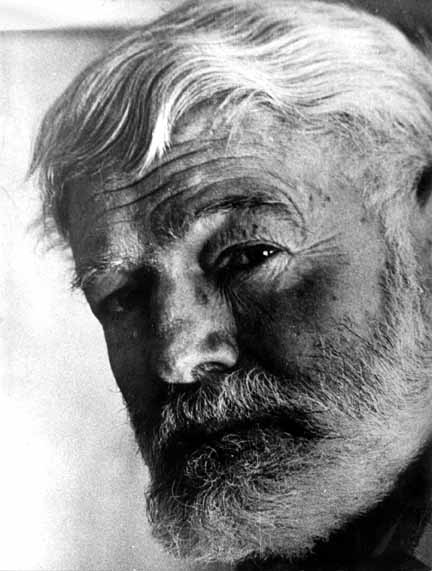
Hemingway had been a big writer all of his life, but had not published much before 1926. In 1922, Hemingway’s first wife, Hadley, was traveling through Europe. In one the trunks was everything Hemingway had written up to that point, and the luggage was unfortunately stolen. Among the manuscripts was a novel about Hemingway’s experiences in the First World War.
After Plath’s suicide in 1963, her widower, Ted Hughes, from whom Plath was separated, took over her estate and the unpublished writings that were left. Hughes burned much of the journals and letters Sylvia wrote in the final months of her life. A nearly finished novel, “Double Exposure” or “Double Take,” featured a wife, husband and mistress; it was probably a semi-autobiographical account of Plath’s relationship with Hughes. According to Hughes, the manuscript “disappeared” before 1970.
This article is licensed under the GFDL because it contains quotations from Wikipedia.
Contributor: The Anachronism


October 25th, 2008 at 1:59 am
Double exposure FTW!!!
October 25th, 2008 at 2:36 am
Gentrified guns on the list, g. Love these lit lists as I’m a lit teacher in China.
October 25th, 2008 at 3:13 am
great read
It’s saddening to know the scope of just what we’re missing.
I would have liked to see mention of all those ancient Greek epics that were lost…the Theban Cycle, and the tales of the homeward journeys of the Achean heroes after the Sack of Troy.
October 25th, 2008 at 3:34 am
Great list! It is a bit of a bummer re: Plath’s estranged hubby. Plonker.
And I bet ol’ Vicky booted herself for that one. How irritating.
Thanks for this list !
October 25th, 2008 at 4:04 am
how sad that so many writers died be4 finishing their novels. Im a huge austen fan n i know sanditon would have gr8.
October 25th, 2008 at 4:15 am
Thanks – nice list.
I’d maybe have included the unwritten portions of Coleridge’s Kubla Khan. And, personally, I think Plath – whilst a decent writer – is somewhat over-rated. But I’d love to read that lost manuscript; Ted Hughes, in terms of his personal life, has always seemed like an asshole to me.
October 25th, 2008 at 4:34 am
The Magic Harp would’ve been interesting. Topping Mozart would’ve been surely impossible!
October 25th, 2008 at 5:14 am
Thanks a lot – this was a great list!
Although it is a tragedy that so much great literature has been lost, especially when it’s due to simple theft or wanton destruction.
October 25th, 2008 at 5:21 am
Should there be a distinction between “lost” works and “uncompleted” works?
October 25th, 2008 at 5:53 am
My personal choice for this list – “The Scented Garden” and other works by Richard Francis Burton, burned by his widow after his death.
October 25th, 2008 at 6:19 am
In reference to #9, on today’s date (October 25), 1400, Geoffrey Chaucer died at the age of 57. He was the first poet to be buried in Westminster Abbey…
October 25th, 2008 at 6:41 am
Cool….so many good works lost….a shame.
October 25th, 2008 at 7:19 am
I agree with Notary Sojac, Sir Richard Francis Burton had many unpublished works, now lost..
October 25th, 2008 at 7:29 am
All the lost works of epicurus would have been a good addition to the list. Apart from the principle doctronies basically all that is known of him is the epic poem “de rerum natura” by lucretis which also may not have been fully completed.
October 25th, 2008 at 7:37 am
It’s such a shame that such potentially great works were unfinished/lost. Good list!
October 25th, 2008 at 7:48 am
I would have loved to read the memoirs of Lord Byron. I’m sure a lot of people were mentioned and the shit would’ve hit the fan!
October 25th, 2008 at 7:48 am
In Umberto Eco’s “The Name of the Rose,” the trouble centers around a Medieval monk’s discovery of a lost treatise by Aristotle on humor. Anybody have a clue as to whether this work has any basis in historical fact?
I mean, you have to wonder what ol’ Ari’s impact would have been on standup. A little more catharsis, a little more mingled pity and terror?
October 25th, 2008 at 7:53 am
i can’t believe some of these were purposely destroyed. what a loss. btw, a good spin off of this list would be ‘top 10 lost/unfinished films’. perhaps i should attempt it myself.
October 25th, 2008 at 7:56 am
Mebee Satan came a-visiting ol’ Samuel J. whilst he was writing. Sam was an atheist and that would trouble his disbelief. Remember what they say about calling the devil.
October 25th, 2008 at 8:07 am
If some of these lost manuscripts, letters and works surfaced today – they would be worth a bob or two.
Nice list!
October 25th, 2008 at 8:08 am
Fine list The Anachronism.
Funny, but I’ve read what has been published of all the above books.
Chaucer, for both my kids and I, was something we had to learn first in middle English, only afterward did we get to read the modern English translation. Entire generations apart, different schools, middle English still required! Weird.
I have read Edwin Drood, and it does just sort of quit, even though his estate attempted to construct an ending. It’s all too obvious where Dickens ended and someone else took over.
As for the rest of the writers, I’ve read what is available with joy. Now I’m saddened to be aware that there are holes which could have been filled.
Oh, with Aristotle and that crowd, one expects things to be lost to time, but as to the more modern writers, well…a bit more care, and a little less of the hair of the dog, might have added much to our enjoyment.
BTW – I am down with a nasty flu, I may not be posting much today as I feel like an 18 wheeler took a casual drive over my body and brain.
October 25th, 2008 at 8:25 am
Wow, I thought that Love’s Labour’s Won wads fictional. In the book Harvard Yard by William Martin a treasure hunter named Peter Fallon hears that there is a lost Shakespheare manuscript somewhere in Harvard. Its a really good book, I’d reccomend it. Its funny that it really did exist because I always thought while reading that it was made up.
October 25th, 2008 at 8:45 am
I nominate for honorable mention Samuel Taylor Coleridge’s poem “Kubla Khan”. His epic poem about the land of Xanadu was never finished after an opium infused vision of the earthly paradise filled his head and he began writing feverishly, when he was interupted by a knock on the door. When he sat back down,it was gone from his head.
He wrote many celebrated works, but this one has always left readers tantilised with what might have been.
October 25th, 2008 at 8:49 am
The book I would want to read would be Emily Bronte’s second novel, which her sister is alleged to have burned upon her death. Shame. I love Wuthering Heights.
October 25th, 2008 at 10:12 am
Very good list. There is at least a possibility that some of Hemingway’s lost works may resurface; wouldn’t that be amazing? Such a same there is no such possibility for the rest.
October 25th, 2008 at 10:30 am
What about the third chunk of Homer’s epic! The original lost work of literature. The ILIAD and the ODYSSEY and the the the the LOST ONE!
October 25th, 2008 at 10:35 am
…despite the fact that Chaucer only 24 of the originally planned 124 tales were written before Chaucer’s death in 1400.
Should that read “…despite the fact that only 24 of the originally planned 124 tales were written before Chaucer’s death in 1400?
October 25th, 2008 at 10:40 am
I’d have put Cardenio instead of Love’s Labour’s Won.
October 25th, 2008 at 10:45 am
If you watch Doctor Who you know what happened to Love’s labours Won…
October 25th, 2008 at 11:19 am
Another author who would fit in this list is Franz Kafka. All of his novels (The Trial, The Castle, America) were unfinished at the time of his death.
October 25th, 2008 at 11:24 am
Hello, everyone! Hope you enjoyed this list.
Just a few short mentions about this list. When I was submitting this, I wasn’t sure if I was supposed to write a blurb for each work, or leave that for jfrater, so I just wrote a very brief mention. Luckily, jfrater expanded on most of them.
To astraya: In most of these cases, the differences between lost and unfinished is not really important. The unfinished works that I chose here are either LARGELY unfinished (“Canterbury Tales” is only about 20% completed; “Sanditon” not even 50%, for example) or are perplexing without being finished (The mystery in “…Edwin Drood” is never solved; Manuscripts of “The Stranger” never hint as to how the stories will end or what Twain wants the reader to learn from them.)
To cb: I didn’t include other Greek and Roman greats like Epicurus, Archimedes or Pliny the Elder/Younger because there are a great many classical authors with missing works. I’m sure that after 2,000 years, even authors we think of as “complete” have something missing from their oeuvre. I chose Aristotle not only because he was highly influential on Western thought, but also because he is recognizable to a great many people.
October 25th, 2008 at 12:20 pm
Oh, man.. I bet Queen Victoria felt like a total goob when Dickens died.
Interesting list, I enjoyed it. (maybe that’s just because I’m a literature geek… )
October 25th, 2008 at 2:17 pm
Excellent list!
October 25th, 2008 at 2:51 pm
were reading the canterbury tales in english and chaucer was a dirty old man.
October 25th, 2008 at 3:54 pm
The list is good, but I think Aristotle should be higher. Also, why no Pre-Socratics? They were pretty important, considering they were pretty much the first philosophers and scientists.
October 25th, 2008 at 3:57 pm
Another thing about Kafka – he actually requested that all his works be destroyed upon his death. Thankfully for us, his friend Max Brod disobeyed FK’s request and published them anyway. A nice opposite to this list eh?!
October 25th, 2008 at 4:47 pm
On #5, it says
“Together with five of Byron’s friends and executors, he decided to destroy Byron’s manuscripts because he though the scandalous details would damage Byron’s reputation.”
but I think it should say
“Together with five of Byron’s friends and executors, he decided to destroy Byron’s manuscripts because he thoughT the scandalous details would damage Byron’s reputation.”
Also, no mention of the incomplete series of Robert Jordan’s Wheel of Time?
October 25th, 2008 at 5:53 pm
Hmmmm. What might have been lost from The Great Library of Alexandria?
October 26th, 2008 at 12:24 pm
interesting
October 26th, 2008 at 12:24 pm
Jfrater I am having an inordinate amount of trouble getting on today. I keep getting a Cannot Display message. I have been trying all day. I finally got through on the Greatest Strategy list, but it took literally hours.
October 26th, 2008 at 8:17 pm
Iserion, the rankings mean nothing. These are presented in chronological order.
October 27th, 2008 at 6:50 am
How about the library at Alexandria…
October 27th, 2008 at 6:54 am
segue: (21)
I had to memorize the prolouge of the Canterbury Tales in old english and recite in for my professor..it was a requirement of everyone taking the class.
He was as fluent as someone can be in a dead language and would often ask us questions out of the blue in old english- if we knew the answer in english we got 5 extra credit points and if we could answer back in old english we got 15 (that only happened to me twice in 2 years)
My 5th and 6th tattoos were the old english words for “think” and “dream” in negative space on either side of my ribs.
Man I wish I was still in school.
October 27th, 2008 at 7:55 am
Love’s Labours Lost was so horrible, let’s be glad if we dodged a sequel.
Pity we also are missing some of Spenser’s works, not to mention that he didn’t finish the Faerie Queene.
October 27th, 2008 at 10:51 am
43. Callie, sounds as if you received a fine education!
I honestly believe an education which pushes the student to his/her limits, and just beyond, is good for the student. Nothing is worse than a brilliant mind which is unchallenged. It will always find ways to challenge itself, not always good ways.
My flu is still with me, but down from the 18 wheeler to a city bus.
October 27th, 2008 at 12:22 pm
wainboy(1) Um…whatever… they are listed chronologically, so there is no ‘winner’
October 27th, 2008 at 12:44 pm
#4 is the only one I was familiar with.Accidently learned something today. Very interesting list !
October 27th, 2008 at 1:05 pm
The great loss here, from Classical civilization, is not so much Aristotle as it is the loss of so many of his predecessors (and betters). The lost works are legion; we have only a fraction of the plays of Aristophones, Euripedes, Sophocles and Aeschylus; only a TINY fraction (and then most of what we have is only fragmentary) of the works of Sappho, as well as a long list of other Greek poets. We have lost many of the epic cycles of the ancient Greeks, and know their stories only by secondhand retellings and rewritings. We’ve lost much of the remarkable Greek science, which knew so much that had to be rediscovered in our modern age.
The loss of some minor works by authors on this list–whose extant writings are probably far superior to what, of theirs, is lost–is NOTHING in comparison to the staggering tragedy of the loss of 90% of a great civilization, which for all time will remain silenced. We KNOW that Sappho was one of the most touchingly brilliant poets in human history—we know this not only from the fact that this was SAID of her by her contemporaries, amounting to a chorus of praise–but we also know this from the fragments of her work that remain. Yet Sappho will remain, for all time, mostly stifled. Most of her words will never be heard again. THAT is a tragedy… multiplied over and over again by the loss of so many of her fellows.
October 27th, 2008 at 1:39 pm
Randall, I can only agree.
I was surprised by the free interpretation “lost” got in the list. I had thought that for a work to be lost it had to exist first? At least it should have had as much existence as Kubla Khan, which was mentioned in the comments.
And I really disagree with Nr.6. ‘Der Zauberflöte zweyter Teil’ is a rather unimportant fragment. Goethe tried to imitate Schikaneder, never found a composer and stopped working on it. “It would surely have been as great as “Faust.”” seems to be a slight exaggeration.
October 27th, 2008 at 4:00 pm
madgett:
Well I agree… this list is flawed; there are many truly LOST works in the history of literature. Some of these clearly don’t qualify. Edwin Drood and The Mysterious Stranger, for instance, are merely “unfinished.”
October 27th, 2008 at 4:10 pm
i ate 2 pounds of nuts and took a dump in a basket at easter and it looked like a giant toberone egg, i sprayed it with hairspray to keep it hard but i dunno where it is now .. my nutshitegg should be at number 4 i think.
October 27th, 2008 at 9:57 pm
jay-I just read what you wrote and I dont understand what you said but I laughed my ass off !
October 27th, 2008 at 10:15 pm
Thank you, Seven. Some of us know the true story of Loves Labors Won! Expelliarmus!
October 28th, 2008 at 11:59 am
The Mystery of Edwin Drood was inspired by strange events in Cardiff. Or at least it was in Doctor Who.
October 28th, 2008 at 1:05 pm
I think that Luis de Camões’s “Parnasum” should be here, he was a great poet, with many great works, and his Parnassum should not be an exception.
October 30th, 2008 at 3:39 pm
I have a rule that I don’t read unfinished novels like Wives and Daughters by Gaskell or The Buccaneers of Edith Wharton but I had to read Jane Austen’s Sanditon..no regrets
November 1st, 2008 at 11:55 pm
Re: madgett “‘It would surely have been as great as “Faust.”” seems to be a slight exaggeration.’”
The pure brilliance of Goethe’s writing is his “mind plays”: in other words, dramas that are not meant to be staged as an actual play, but read as a novel and imagined in the reader’s mind. This is what was done with both parts of “Faust,” and “Die Zauberharfe” would have been his only other writing done in this style. That is why I felt it was important, and while it certainly wouldn’t reach the brilliance of “Faust,” it could have easily come close.
December 9th, 2008 at 2:55 pm
manuscripts because he though the scandalous details would. I think that is a typo
December 22nd, 2008 at 5:20 am
Vedas – the ancient body of text from Ancient India. It is generally believed that a lot of text from the Vedas have been lost.
The reason: Vedas were handed down the generations through oration. The practice of writing it down was adopted only in the first centuries AD and hence the belief that lots of works were lost.
January 14th, 2009 at 8:49 am
Plays of Robert Marlowe….
January 27th, 2009 at 9:52 pm
I’m not sure if I’m allowed to put links in here, but there is a claymation rendition of Mark Twain’s ‘Mysterious Stranger’, which is breathtaking.
http://ru.youtube.com/watch?v=cqi5F5MqqTQ
If that doesn’t work go on you tube and type in very creepy, disturbing. Or Mysertious Stranger will probably work as well…hah
March 25th, 2009 at 6:02 am
I commend Randall for his mentioning of Sappho. Her writings are probably the most important lost works of literature. She was considered by many in her time to be the greatest poet who ever lived, but we don’t know why.
April 13th, 2009 at 9:58 am
There was an old claymation thing based off Mark Twains mysterious stranger its on youtube and damn is it freaky
August 30th, 2009 at 5:02 pm
Dead Souls by Gogol is another unfinished book and the story behind it is very interesting, including madness etc.
October 25th, 2009 at 8:24 am
Lord Byron is one of the best here, he visited many countries, among them also Albania, he showed the world who and what are Albanians because at that time Albania neighboring states have had territorial claims and have presented them as shquptaret Albania pupull backward and illiterate
October 25th, 2009 at 8:27 am
fuck grek ,fyrom ,serbia, slav’s and ottoman empire
November 3rd, 2009 at 11:59 pm
The brothers Karamazov was meant as part one of three of a larger work called “The Life of a Great Sinner”.
And Albert Camus meant to write on the three topics central to his philosophy, the absurd, revolt, and love. He died in a car crash before he even started ‘Love’. This means no complete development of his absurdist view exists.
Those are two big names severely lacking,
and Fitzgeralds incomplete ‘Last Tycoon’.