I have a special fascination with World War One, a fascination that intensified when my father told me that his dad served in the Marines in 1917-1918. (My other grandfather and my wife’s grandfathers served in World War II, but my dad’s dad was in the first war.) My grandpa had trained as a sniper, but was never sent to France and was discharged after the armistice. The following are 11 fascinating facts concerning the people and events of the finale of the most destructive and bloody war in human history (until World War II, of course), which ended at 11 a.m. on 11/11/1918.
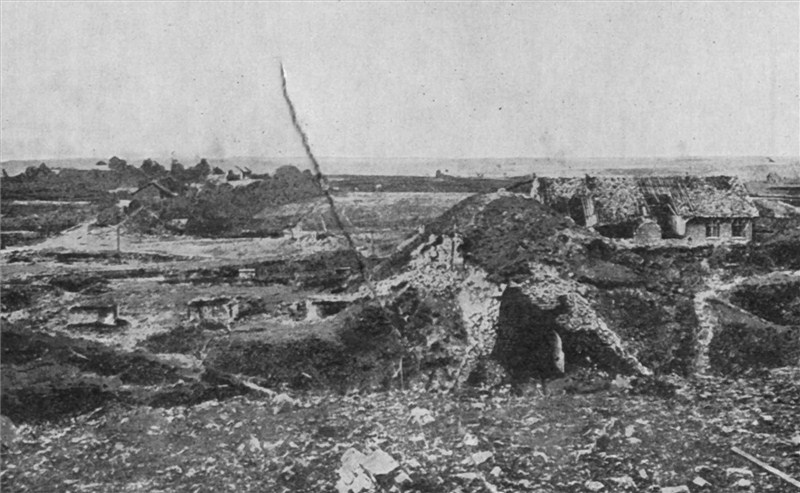
Once they crossed the lines on Nov. 8, the German delegates were not driven directly to the railway car where the armistice talks were to be held. Rather, the French gave them a 10-hour “scenic tour” that showed incredible damage to the French countryside after four years of war. The delegates were then ushered into a rail car in the forest of Compiegne to begin the talks that lasted three days. After being informed that Kaiser Wilhelm II had abdicated on Nov. 10, the German delegates received an un-coded message from general-in-chief Hindenburg to accept whatever terms they could get — and quickly — because of rioting and increasing unrest at home. The picture shows just a small portion of the devastation in northern France.
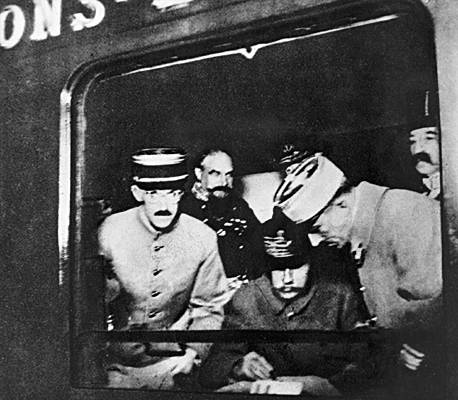
The Germans and Allies signed the armistice just after 5 a.m. Paris time. Only one photograph seems to exist of the actual signing, unlike, say, the surrender of France in 1940 or the surrender of Japan in 1945. The photo above appears to have been shot through a window; I think that’s Matthias Erzberger, the chief German negotiator, at far right. This other photo shows the Allied representatives shortly after the signing; Marshal Foch stands second from right.
The rail carriage (car) and armistice spot later became a national monument. Almost 22 years later, in June 1940, Hitler made the French surrender in that very rail car. Before the Allies liberated France in 1944, Hitler ordered the monument dynamited and the following year ordered the carriage itself destroyed, to prevent a possible second German armistice or surrender from being signed in that same car. Here’s how the site looks today: http://pierreswesternfront.punt.nl/?r=1&id=435051
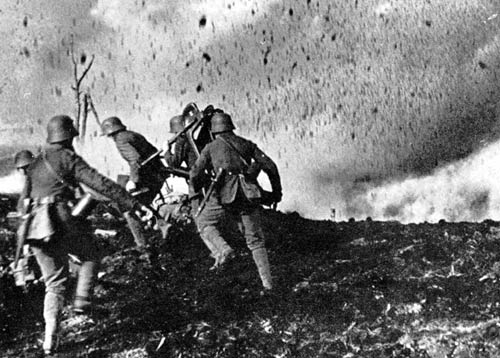
The armistice was signed just after 5 a.m. (Paris time) the morning of Nov. 11. The fighting was to officially end at 11 a.m. The German delegation had requested an immediate cease-fire, but the Allies set a six-hour deadline so that all commanders could get the word. When they heard the news, some commanders had their men stand down. Why fight for piece of ground that you could simply walk over a few hours later? But others continued to attack — especially some American commanders — who saw chances for “glory” or promotion slipping away, or because they thought the Germans needed to be flat-out beaten. Several thousand men on both sides were killed or wounded in the final six hours of the war. For example, the Commonwealth War Graves Commission recorded 863 British and Commonwealth deaths on Nov. 11. The picture shows German troops under attack in the final weeks of the war.
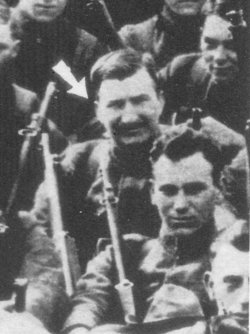
One American artillery captain kept his battery firing at the Germans until just minutes before 11 a.m., because he believed the armistice was premature and the Germans needed to be truly beaten, not just defeated. His name? Capt. Harry S. Truman. Some historians draw a straight line from Truman’s actions on 11/11/1918 and his decision to use the atomic bombs.
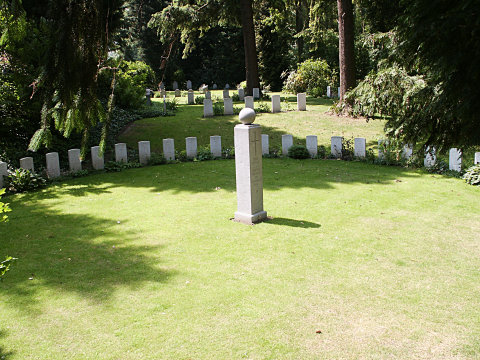
In a freak coincidence, the British Army started and ended the war at Mons. Some of the first British soldiers killed in the Great War died at Mons in August 1914, when the five divisions of the BEF fought their first battle. More than four years later, the British returned to Mons, and some of the very last Commonwealth soldiers killed in the Great War died there on November 11, 1918. Scroll down this page of the St. Symphorien Military Cemetery at Mons, which has the graves of the first and last British soldiers killed at Mons.
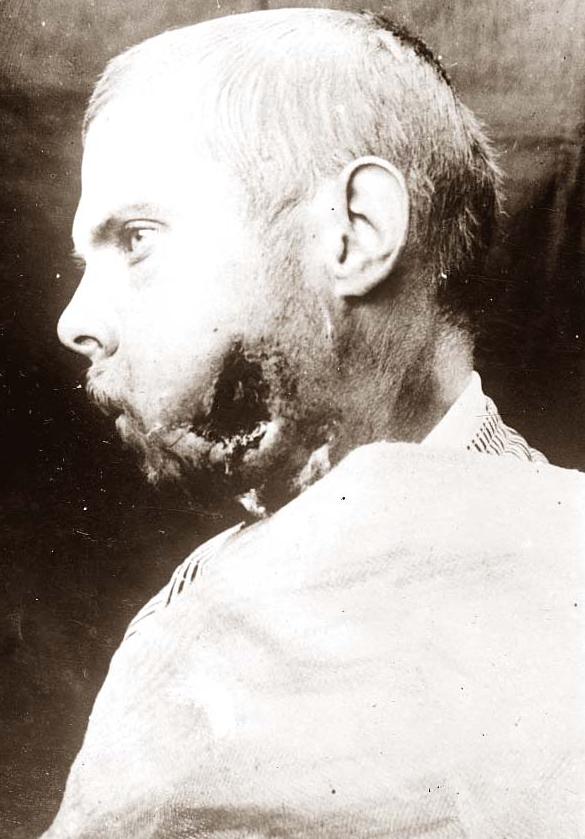
Many men wounded on November 11 succumbed to injuries after the 11th hour. Many more endured years of pain and suffering over physical wounds that couldn’t quite heal right or could never be healed. One of the most horrifying, a Commonwealth soldier named Thomas, was gravely wounded on Nov. 6, just before negotiations started, and was still alive AND conscious when the armistice took effect. Whatever hit him in the face literally tore away the lower parts of his face — nose, mouth, jaw. Amazingly, he survived. After years of surgical reconstruction, Thomas finally had something approaching a normal looking face in August 1922.
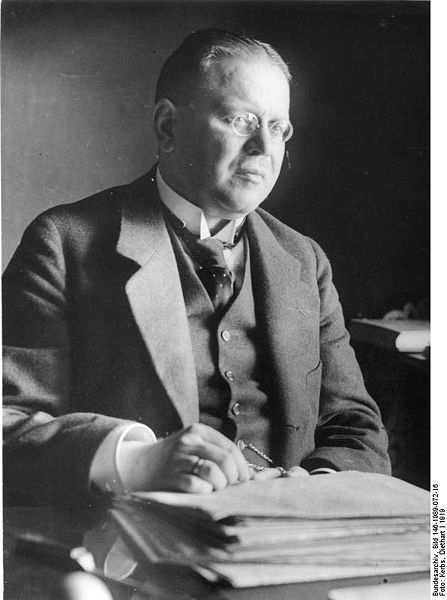
Matthias Erzberger, Germany’s lead negotiator at the Armistice, initially supported the war until 1917. By then, the static and incredibly bloody lines in France convinced him that Germany should negotiate a peace. Prince Max Von Baden picked Erzberger to lead the negotiations because Erzberger was a civilian and known opponent of the war. After the fighting ended, Erzberger joined the newly formed government and endorsed the 1919 Treaty of Versailles, which many hard-core Germans held in contempt. For his role in the “stab in the back” (see #2), Erzberger was forced from office in 1920 and murdered in 1921.
Historians generally (but not totally) list a German soldier by the name of Lt. Tomas with being the final German casualty. He was killed after the 11th hour by an American unit that apparently hadn’t received word of the cease-fire. The final German killed before the 11th hour is not known. According to generally accepted records, the last British, Canadian, French and American men killed were the following: British soldier George Edwin Ellison died around 9:30 a.m. while scouting around Mons. French soldier Augustin Trébuchon was killed at 10:45 a.m. while spreading the news that they would get hot soup after the 11th hour. Canadian soldier George Lawrence Price died two minutes before the 11th hour, just north of Mons.
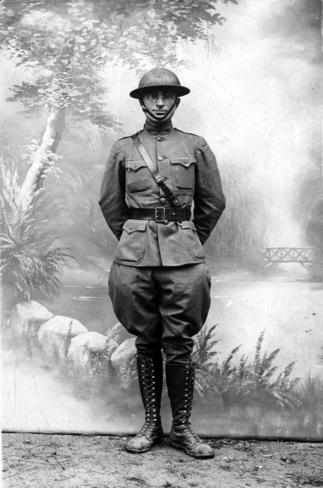
The last man believed killed in the Great War was American soldier Henry Gunther, 60 seconds before the 11th hour. German soldiers were shouting and waving at Gunther and the others to go back. The photo above is of Gunther.
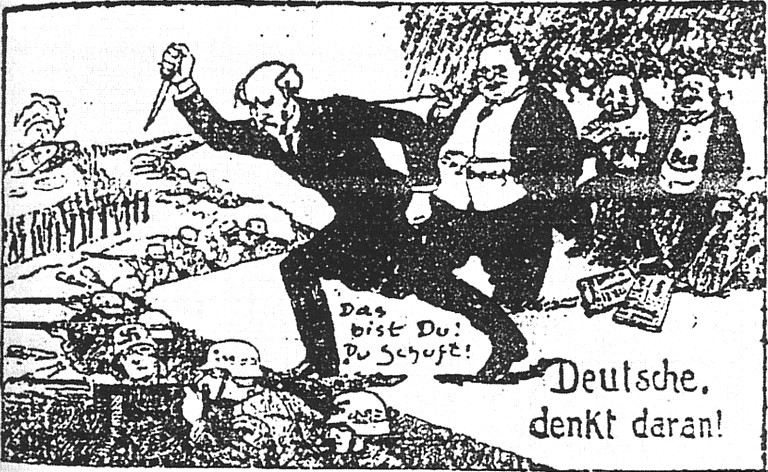
Most accounts of the end of World War I and the origins of World War II contain some discussion of the “stab in the back,” the claim that the German army had not been defeated but was betrayed by the civilian leadership. This wasn’t merely a Nazi propaganda line, either – many Germans heading home from France, Belgium, Romania, Italy, Russia, etc. really did believe it. Never mind the facts. The military leaders had told the Kaiser that the army and navy would no longer support him; naval mutineers had refused to fight any more; the army high command had sought the armistice before Allied armies hit German soil; and the home front was literally starving and rioting. Nevertheless, the legend of the “stab in the back” became darn near holy writ. So, while the Nazis didn’t create the “stab in the back” legend, they certainly exploited it to devastating effect.
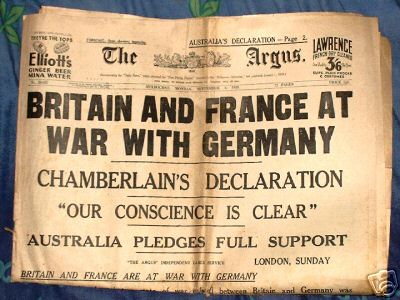
Both AEF commander Gen. Pershing and Allied supreme commander Foch of France were unhappy with the nature of the armistice and subsequent Versailles peace treaty. Pershing believed that it was a grave mistake to let the Germans simply lay down their arms without actually being beaten. (They were defeated, yes, but not beaten.) He correctly predicted that because they did not make the Germans beg for peace on their knees inside a ruined Germany, the Allies would soon be fighting them again. Foch was even more prescient. Upon reading the Versailles treaty in 1919, Foch was heard exclaiming, “This isn’t a peace. It’s a cease-fire for 20 years!” Twenty years and two months later, England and France declared war on Germany.
![]() 10 Decades of the 20th Century | ![]() Top 10 Greatest Historical Warriors | ![]() Top 10 Worst Plagues In History |
![]() 15 Fascinating Lesser-Known Science Facts | ![]() 10 More Common Misconceptions | ![]() Top 10 Worst Roman Emperors |


1 faheem
February 15th, 2010 at 1:34 am
nice list…keep it up
2 cm
February 15th, 2010 at 1:38 am
No more war.. Please.
3 Grasshopperking
February 15th, 2010 at 1:39 am
Fantastic list! Much better than yesterday’s. Keep it up!
4 ned
February 15th, 2010 at 1:39 am
Horrible picture of cheek wound. What an awful mincing machine the trenches must have been.
5 ricekiller
February 15th, 2010 at 1:40 am
nice list…im a war trivia buff myself..
6 cny
February 15th, 2010 at 1:42 am
awesome list Jf!!!
7 shawn-laura2010
February 15th, 2010 at 1:45 am
Absolutely fascinating list…I too have always been fascinated with WWI, as I feel it was the first war to include what is considered “modern warfare” instead of the usual hand-to-hand type combat seen up to the time of, and during, the Civil War.
I think more than anything it is the psychology of war that most interests me. I can’t imagine the mindset soldiers must slide into to be able to kill enemy soldiers. My favorite quote is by Einstein…”He who marches to music in rank and file has already earned my contempt…It is my conviction that killing under the cloak of war is nothing but an act of murder.”
8 warrdogg
February 15th, 2010 at 1:46 am
What a tragic waste of life. Nice list.
9 shawn-laura2010
February 15th, 2010 at 1:46 am
@Grasshopperking (4):
Totally agree with yesterday’s list…
10 Vera Lynn
February 15th, 2010 at 1:55 am
Wow! Didnt know a lot of this.
11 nepratini
February 15th, 2010 at 2:03 am
I really liked this list. Its always great to learn more about our history.
12 BravehisTickle
February 15th, 2010 at 2:09 am
Good..a refreshing change from WWII..there has been an overdose of WWII with all the games and movies devoted to it.
13 Jedknight
February 15th, 2010 at 2:17 am
Nice one. I have always been intrested in history
14 Jedknight
February 15th, 2010 at 2:19 am
Nice one. I have always been intrested in history!
15 63jax
February 15th, 2010 at 2:21 am
very nice list, gooood.
16 Mark
February 15th, 2010 at 2:26 am
The ridiculous “concessions” demanded by the Allied Powers in the Treaty of Versailles are in no small part to blame for Hitler’s rise to power and consequently, the Second World War.
More fighting would have led to more death, and a fairer peace would have been much more benificial in the long run. A weakened Germany would have been (and was) a bitter Germany, and Germany wasn’t going to stay weak for long.
That’s what revenge gets you… Just ask France, was it worth it?
17 Jack Deth
February 15th, 2010 at 2:33 am
My Grandfather told me of the disabled veterans who were blinded in gas attacks.
There was a ‘marching’ band of them, the leader would shuffle along in the gutter using the kerb-stones to guide them along whilst playing for pennies.
So many dead, such an awful war.
18 muzli
February 15th, 2010 at 2:53 am
Not interested.
19 jake ryder
February 15th, 2010 at 3:02 am
Very good. The war that shaped the world for the entire 20th century, and beyond.
20 Jody
February 15th, 2010 at 3:15 am
Interesting facts. I wonder how long it will be before there can be a list about “The facts about the end of the Iraq war” hopefully not too long! Good list
21 T
February 15th, 2010 at 3:15 am
Great list. I find pictures of WW1 especially fascinating.
22 MeganKayleen
February 15th, 2010 at 3:22 am
Great list! I think too much of WWI is glossed over in history classes as a precursor to the (arguably) more exciting and eventful WWII.
Interesting side note: General John Pershing was my great(several times over) uncle. My grandfather has letters written home to his grandfather, James Pershing, who was John’s brother. I’ve also seen a few pictures and an old keepsake book with newspaper articles.
23 fivestring63
February 15th, 2010 at 3:40 am
During World War I many German reports had called the attacking Marines “teufel-hunden,” meaning Devil-Dogs. Teufel-hunden were the vicious, wild, and ferocious mountain dogs of Bavarian folklore.
Some Marines offer a more detailed story: The Battle of Belleau Wood was fought in France in the summer of 1918, in the midst of a heat wave. At some point during the battle, the Marines were ordered to take a hill occupied by German forces. As the Marines prepared to charge the hill, word came down from command that the Germans were preparing to use mustard gas to repel the attack. As a precaution, the Marines were ordered to put on their gas masks and take the hill. As the Marines fought their way up the hill, the heat caused them to sweat profusely, foam at the mouth and turned their eyes bloodshot. Additionally, at some points the hill was very steep, which caused the Marines to have to scramble on all fours to make their way up. Consequently, from the Germans’ vantage point, they witnessed a pack of tenacious, growling figures whose lower faces were obscured by gas masks (which at the time had a prolonged shape that somewhat resembled a snout) but left open their bloodshot eyes and mouth foam seeping from the sides, advancing up the hill, sometimes on all fours, and killing everything in their way. As the legend goes, the German soldiers, upon seeing this spectacle, began to yell that they were being attacked by “dogs from hell.”
24 NickNamed
February 15th, 2010 at 3:59 am
Great list STLMo fantastic work
25 astraya
February 15th, 2010 at 4:22 am
I read somewhere that:
1) One of the smaller combatant nations (maybe Andorra) was accidentally left out of the armistice document, so technically they continued to be at war with Germany. In 1939, they had to sign an armistice before immediately declaring war again.
2) The clerk who typed the document accidentally put the carbon paper between the sheets of paper incorrectly, so that one of the documents which was signed was reversed, and no-one noticed.
(I can’t verify those two right now.)
Many WWI memorials in Australia are dated 1914-1919. Because the war finished so late in the year, soldiers were still counted as being on active service while they were returning on the troop ships.
Minor error in item no 1: should be 20 years and *ten* months.
26 Ubercams
February 15th, 2010 at 4:31 am
loved this list, always had thought that the second world war recieves a bit too much of the limelight.
Personally I think that if the treaty of versailles had not been so rediculously harsh then we might have never had a second world war.
(i’d even go so far as to saying that britain and france should not have got involved, I suspect that the true reason was jealousy, seeing as germany was fast becoming more powerful than both of them)
btw i am british
27 Gladiator
February 15th, 2010 at 4:48 am
After the First World War, Germany had millions unemployed, and the hyperinflation was so ridiculous that money was used as wallpaper. Was it right to let Germany be like that? I don`t think it was. If that hadn`t happened, we never would have had, you know who. and the world today would be a much better place.
28 sad muso
February 15th, 2010 at 5:35 am
Superb list, well done! I too have a huge fascination with all things WWI and trench warfare.
29 oouchan
February 15th, 2010 at 5:37 am
Not a fan of war of any kind, but this one always amazed me on the sheer epic scale of it. Interesting list, STLMo. I liked all of the facts.
30 Kreachure
February 15th, 2010 at 6:01 am
Okay. This list needed a warning for the picture from number 5. I’m sure more people would be complaining about it if the subject were more popular.
Well, off to breakfast then….
31 Ninja_Wallaby
February 15th, 2010 at 6:07 am
What a fantastic list. ty very much.
32 get a clue
February 15th, 2010 at 6:19 am
Intersting list.
One minor typo.
Harry S Truman
No period after the S.
33 gersgraeme
February 15th, 2010 at 6:28 am
great list,
enjoyed it a lot
34 Pout
February 15th, 2010 at 6:40 am
Great list, horrible war.
Happened in my backyard. 3th battle for Yper (Passchendaele) was here in the neighbourhood.
A quote on that:
Lancelot Kigell, LT-General on the 6th of November 1917:
‘Good God, did we really send men to fight in that?’
The answer
“It’s worse further up on….”
35 MChris
February 15th, 2010 at 6:47 am
@31
sheesh… warnings?
I’m sure the poor dude in #5 didn’t have someone go into a room to announce he was coming in as a warning to folks who might be grossed out.
36 WiseMenSay
February 15th, 2010 at 7:24 am
great list. being a history student its always frustrating how much emphasis pop culture puts on WW2, to the degree where i just get sick to death of hearing it mentioned (usually in inane ‘my country is better than yours’ arguments).
WW1 is fascinating largely for how farcical the whole thing was. you have this huge war which nobody wanted and with causes stretching back as far as the 17th century, being hideously mismanaged by incompetent generals who were clearly out of their depth when it came to the new form of warfare that was developing. no wonder Blackadder chose it as the setting for the fourth series.
37 Moonbeam
February 15th, 2010 at 7:28 am
Your title for #5: No End for the Wounded is poetic and as true today as it was then. Whenever I see a list about the number of casualties of any war, I always wonder about those who continue to die months or years later as a result of their injuries. But I realize it’s probably impossible to account for them all. Also those who commit suicide because of their inability to cope with the injuries or the horrors they endured are just as much victims of any war.
Very good list. Often when a list inspires me to want to know more about a subject, it gets bonus points from me.
I’m curious about Thomas (from #5) and wonder if there is more info about him. Although he was certainly not the only one to suffer horrific disfiguring injuries.
38 Scratch
February 15th, 2010 at 8:01 am
Great list, STLMo, your passion for the subject is apparent in your careful research.
There was quite a bit of pressure on the neutral Netherlands as they offered asylum to Kaiser Wilhelm (the house of Orange and the house of Hohenzollern were tied by blood). Lloyd George and Woodrow Wilson both pressed Wilhelmina to release Wilhelm to them, but she refused – both because of her blood ties and because of Dutch foreign policy. When WWII broke out, Wilhelm refused the British offer of asylum, as he didn’t trust them due to their earlier efforts at extradition. When the Germans invaded, Hitler ensured that almost no one had access to the Kaiser as he distrusted his desire to restore the monarchy in Germany. Wilhelm died in March of ’41, and remains buried in the Netherlands as he refused a German burial until the monarchy was restored.
39 Shagrat
February 15th, 2010 at 8:08 am
How true Item 5 is. My Grandfather served for 3 1/2 years in France – most of the time in or near the front lines – with the “KOSBEES”: The King’s Own Scottish Borderers.
He was gassed 3 times (one of his brothers was also gassed – but “only” once).
My Grandmother was advised by all and sundry; especially the army and civilian medics NOT to marry my Grandfather because “He’ll be dead before he’s 30!” Grandfather lived to be 62 before dying in 1960 from the effects of the gassing that utterly destroyed his lungs and heart – he survived (only being able to work intermittently) because of the babying and nursing at my Grandmother’s loving hands: she died in 2002 living to be 104 and spent her last 42 years mourning “her Johnnie”
Of seven brothers who all fought; 6 made it home alive; My Grand-dad’s brother succumbed to his destroyed lungs in his late forties (just after World War 2 – or The Great War; PART 2 as it probably should be called – Foch was correct).
My Dad then had to go and take part in the sequel.
FUCK WAR!@
40 Lifeschool
February 15th, 2010 at 8:35 am
Hi. War! – has never been so much fun! (to research that is) as WWI and WWII. Both for different reasons. War in the 19′teens had moved on from the Boer wars with the help of new machinery, tactics, logistics, and many other coined advances in a world in which the chivalry of the cavalry had ruled since the middle ages!
The art of modern warfare was very much still in it’s infancy; leading to blindsightedness in the face of a class-divided infrastructure. Mismanagement and “gentleman’s club” rules eventually leading to a huge stale-mate on all sides – and throwing scores of men into the mix did nothing to improve the recipe.
The reason I love to research the ‘Wars’ is because, for a very limited time (1914-1945), the world was still quite naive in many ways and yet had modernised considerably after the industrial revolution. Technology was thin on the ground – but technological advances over those thirty-odd years steadily revolutionized the world and necessitated millions of applications and provisions we take for granted today.
Now-a-days war is soooo technical that the honor, bravery and diplomatic skill seems to have moved out in favour of ‘Lets see what this button does.’,'Lets see if we can destroy their DNA.’, ‘Lets see if we can microwave their brains from 100 miles away?’. That is to say, some prefer World of Warcraft, I prefer Stratego.
41 General Tits Von Chodehoffen
February 15th, 2010 at 8:44 am
From what I understand the “stab in the back” was more along the lines of Hindenburg saying he wanted to keep fighting but it the parliment wanted peace.
42 signe
February 15th, 2010 at 8:49 am
Really good list, informative and interesting. i agree with many of the other commenters that it is really great to learn more about WWI. I’m from Europe, but because my home country was neutral in WWI but occupied during WWII there has always been much more focus on the second in history classes, literature, movies ect. Hope to see more lists dealing with WWI in the future…
43 Lifeschool
February 15th, 2010 at 8:59 am
Hi. War! – has never been so much fun! (to research that is) as WWI and WWII. Both for different reasons. War in the 19′teens had moved on from the Boer wars with the help of new machinery, tactics, logistics, and many other coined advances in a world in which the chivalry of the cavalry had ruled since the Middle Ages!
The art of modern warfare was very much still in it’s infancy; leading to blind sightedness in the face of a class-divided infrastructure. Mismanagement and “gentleman’s club” rules eventually leading to a huge stalemate on all sides – and throwing scores of men into the mix did nothing to improve the recipe.
The reason I love to research the ‘Wars’ is because, for a very limited time (1914-1945), the world was still quite naive in many ways and yet had modernised considerably after the industrial revolution. Technology was thin on the ground – but technological advances over those thirty-odd years steadily revolutionized the world and necessitated millions of applications and provisions we take for granted today.
Now-a-days war is soooo technical that the honour, bravery and diplomatic skill seems to have moved out in favour of ‘Lets see what this button does.’, ‘Lets see if we can destroy their DNA.’, ‘Lets see if we can microwave their brains from 100 miles away?’. That is to say, some prefer World of Warcraft, I prefer Stratego.
(sorry if this post appears twice)
44 Lifeschool
February 15th, 2010 at 9:41 am
Excellent list, excellent comments!
45 Lifeschool
February 15th, 2010 at 9:41 am
Hi. War! – has never been so much fun! (to research that is) as WWI and WWII. Both for different reasons. War in the 19′teens had moved on from the Boer wars with the help of new machinery, tactics, logistics, and many other coined advances in a world in which the chivalry of the cavalry had ruled since the Middle Ages!
The art of modern warfare was very much still in it’s infancy; leading to blind sightedness in the face of a class-divided infrastructure. Mismanagement and “gentleman’s club” rules eventually leading to a huge stalemate on all sides – and throwing scores of men into the mix did nothing to improve the recipe.
The reason I love to research the ‘Wars’ is because, for a very limited time (1914-1945), the world was still quite naive in many ways and yet had modernised considerably after the industrial revolution. Technology was thin on the ground – but technological advances over those thirty-odd years steadily revolutionized the world and necessitated millions of applications and provisions we take for granted today.
Now-a-days war is soooo technical that the honour, bravery and diplomatic skill seems to have moved out in favour of ‘Lets see what this button does.’, ‘Lets see if we can destroy their DNA.’, ‘Lets see if we can microwave their brains from 100 miles away?’. That is to say, some prefer World of Warcraft, I prefer Stratego.
46 Lifeschool
February 15th, 2010 at 9:42 am
Wonder why my post is lost in moderation???
47 undaunted warrior
February 15th, 2010 at 10:15 am
Great list STLMo well written and researched.- Thanks
48 RedMan
February 15th, 2010 at 10:32 am
I had a few relatives who fought in this war although you didn’t dare ask them about it. Both my grandpas and a great uncle served in ww2. Only my moms dad would talk about his experiences in the pacific the other 2 relatives were silent. I don’t know if it is true or not but I heard that Native Americans were used greatly in this war because of their mentality. I wonder when ww3 is gonna happen. Good list
49 debsfullcircle
February 15th, 2010 at 11:03 am
Great list, STLMo. Thanks!
50 davidjpalmer
February 15th, 2010 at 11:51 am
Excellent list! I am also fascinated by The Great Wat, but moreso on the aviation side.
The Argus newspaper is the local paper in the Brighton and Hove area, I wonder if it’s actually the same paper or just a coincidence?
51 lrigD
February 15th, 2010 at 12:54 pm
I’m very interested in the 20th century – I live in the Netherlands, which was neutral in WWI (though there’s a rather believable theory that Germany crossed some of the Netherlands when they went to Belgium – officially making the Netherlands an occupied country, but since we were never actually occupied I don’t think it counts) but was occupied in WWII. The focus in history class has always been much more in WWII. I must say I muself are more interested in that too, specifically the shoah and such.
It’s fascinating, though, to see how history has this kind of snowball effect. I mean, a cause of WWII (A cause, not THE cause) was Germany’s anger over the Treaty of Versailles, as they felt they were being treated unfairly and had a hatred towards France for it. The Treaty of Versailles also caused Germany to become very poor as they had to pay lots of money to the countries who’d suffered..
and then WWI, in turn, was caused among other things by the war in 1870-1871 between France and Germany… which I’m sure had another cause in history, too.
And this way something that happened over 130 years ago can still has its effects today… (WWII definitely still has some effect nowadays)
Yeah, I’ll stop rambling. I guess all I wanted to say is good list! ^^
52 necro_penguin
February 15th, 2010 at 2:45 pm
good list, but i didn’t really learn much new stuff other than #4 and #7. i’ve had a huge interest in the great war for about 30 years now. that’s probably why i already knew so many of these.
you could have added a #12 about those suffering from shell shock or possibly added that into #5. just because their bodies remained whole doesn’t mean their minds weren’t scarred for the rest of their lives. some of the film i’ve seen of the shell shocked guys were extremely disturbing.
53 Metalwrath
February 15th, 2010 at 2:50 pm
As a frenchman, I do prefer WW1 because I can actually feel more pride in it (also, like many frenchmen, I have ancestors who fought in WW1, but not in WW2… hence I feel more “involved”).
I think WW1 is fascinating. I’m interested in WW2 as well, but I think it has less of this psychological warfare side to it, and its also less “old school”. ^^
54 Doc
February 15th, 2010 at 2:54 pm
Ah, I see someone has managed to watch the episode of Timewatch presented by Michael Palin on WWI.
55 MagpieMagic
February 15th, 2010 at 2:57 pm
Great list. When i was in high school i was lucky enough to go on a trip away to France and Belgium to see the battlefields and what remains of the trenches.
Extremely moving experience standing in a field where thousands of people have been killed/wounded. The French countryside is scarred by ww1 to this day
56 FlameHorse
February 15th, 2010 at 3:09 pm
Fun stuff, STLmo! Thanks.
57 Maia
February 15th, 2010 at 3:10 pm
It should be mentioned for number 6 that the second battle at Mons was completely unnecessary.
58 Cody
February 15th, 2010 at 3:40 pm
good list buddy. please, many more to come
59 steeveebee
February 15th, 2010 at 3:55 pm
excellent list was fascinating to read, dont think ive ever seen so many positive comments about a list before.
60 Julius
February 15th, 2010 at 4:40 pm
Wow thats the first list in a long time that didn’t reach 100 comments in the first day! One of the most disturbing moments I ever had was standing in the middle of the Verdun soldier cemetary and in every direction, as far as I can see, just graves. Just whole generations waste, and for what?
61 Julius
February 15th, 2010 at 4:41 pm
wasted
62 gorg
February 15th, 2010 at 4:57 pm
number 5 reminds me of the book/film “Johnny Got His Gun”
63 fajita
February 15th, 2010 at 5:28 pm
good job dude
64 fielyoung
February 15th, 2010 at 6:26 pm
nice list
65 many
February 15th, 2010 at 6:41 pm
Shouldn’t there be a NSFW label since this has a rather gruesome picture?
66 Julius
February 15th, 2010 at 7:07 pm
@many (60): its one small picture in an otherwise safe for work list… IF JFrater would label it as NSFW a lot less people would read it… Its an educational list about the first World War and lets face it war is gruesome…
67 mrmepham
February 15th, 2010 at 7:14 pm
I was in northern France and Belgium this past July. It’s saddening to see so many cemeteries from the Great War. The worst part is the majority of the headstones are of unidentified soldiers. Tyne Cot Cemetery, just north of Ypres (Ieper today), really captures the human cost of war.
68 Beki710
February 15th, 2010 at 7:35 pm
Thank you for today’s list. I adore history and The World Wars horrify yet interest me. I have been to belgium to see the battlefields but most of these facts were new to me. Thanks for bringing them into the limelight.
69 landhog8
February 15th, 2010 at 7:48 pm
Excellent List. I learned a lot by reading it.
70 justcurious1
February 15th, 2010 at 7:49 pm
Nice list. It’s great to see WW1 get some attention. Way too much attention is paid to WW2. WW2 is too hyped and romanticized.
71 brubbish223
February 15th, 2010 at 7:51 pm
reallly interesting never knew he president of 1940 was in the first war….
picture 8 has is really
powerful!
72 Shagrat
February 15th, 2010 at 8:02 pm
Amen Moonbeam (35) – My Grandfather spent 3 1/2 years in France with the King’s Own Scottish Borderers (Kosbees): He was gassed 3 times and was left an invalid from the age of 20. His brother was gassed once as well. Pop died in 1960 having outlived the doctor’s prognoses by over 30 years (he was 62 – they told my future Grandmother not to marry him as he’d be dead before he was 30) when his gas-ravaged lungs and heart gave out. His brother wasn’t as fortunate – he only lived to his mid-40′s before the effects of the gassing killed him. Their other 5 brothers all escaped unscathed (physically).
My Grandfather outlived the prognoses thanks to my Grandmother’s love, nursing and coddling – after he died; she mouned him for 42 years before rejoining him in ’02 at the grand old age of 104.
73 Kay
February 15th, 2010 at 10:03 pm
I found this list very interesting. I never hear much about world war one.
74 Bats
February 15th, 2010 at 11:08 pm
@Shagrat
wow good genes in your family..
Wars are devestating for everyone involved, it’s a shame so many died due to governments making life altering desicions for sildier who fought for no other reason than being told it’s required by people who are prepared to sacrifice innocent lives to acheive beauricratic objectives in the name of honour and country.
Australians faught and died in something that had nothing to do with us and didn’t effect us, england used us as disposable soldiers and sent us places that they wouldn’t send their boys, we got slaughtered
75 ingrafted
February 15th, 2010 at 11:16 pm
Nicely done. This is my first visit to your site; I’ll be back. As many other posters, I have ancestry who served in France during the “war to end all wars”. I have a large photo-portrait of a pair of brothers, Uncle John and Uncle Billy who enlisted together. Uncle Billy never came home.
I have included a song tribute to “William McBride” by Celtic Thunder entitled “Green Fields of France” on my blog “poetry” page clear to the bottom under the flag. It is a haunting story of no less than 10 men named William McBride who died in WW1. It truly was a horrendous theater but aren’t they all?
76 Pout
February 16th, 2010 at 1:48 am
@62
As far as i know even back then ‘Ieper’ was ‘Ieper’
Ypres is the english name for the city.
It has been the stage for 4 battles. Of which the third one (Passchendaele–>where tyne coat is) was worst. Some very interesting fights in that battle. Read more here: http://en.wikipedia.org/wiki/Battle_of_Passchendaele
For those interested : Adolph Hitler fought in Ypres during WW1.
77 Shagrat
February 16th, 2010 at 3:06 am
G’day Bats (69)
Real good genes – all Grandad’s brothers that weren’t gassed lived into their late 90′s and my Grandmother’s mother was only a day or so short of her 103rd when she passed!
However – that war DID have meaning to us at the time: we were a VERY British Colony – despite being a brand new country at the time and thus anything that affected Britain affected us – or to put it another way – if England was cut, Australia and New Zealand bled (as did the other Colonies)
However, British soldiers died in greater numbers in every theatre of WW1 than did Australian soldiers – including Gallipoli. However this was primarily due to the fact that British soldiers blindly followed orders and were largely unimaginative soldiers: That said – Australian and other “Colonial” soldiers WERE seen as expendable in preference to losing English lives. After the Anzac troops were handed over to their own commanding officers and taken away from the English ones our losses fell dramatically and our gains increased just as dramatically.
A good book to Read is Les Carlyon’s “The Great War”
Ingrafted (70)
I researched the song some years ago and came up with the following information – which after checking through Eric Bogle’s Site:
The William McBride of the song is most probably Private William McBride of the Royal Inniskillen Fusiliers: Service Number 21046.
This William McBride died at the age of 19 on February 10th, 1916 during the “lull” between the Battles for Loos and the opening of the Somme Offensive later in ’16. The irony is that, he was a volunteer – ALL Irish combatants were volunteers – the only member of the United Kingdom that didn’t rely on conscription was Ireland: the Brits didn’t like the idea of drafting men who were just as likely to shoot their commanding officers as they were the Germans as the Irish were fighting for independence at the time – add to that; even had they NOT shot their officers they would have ended up sending several MILLION well-militarily-trained veterans home to Ireland after the war to bolster the independence fighters numbers (and experience)
(he wrote No Man’s Land: The Green Fields of France; not Celtic Thunder. BTW – The best version of the song is done by the Dropkick Murphy’s – the You Tube video has great images though some are of WW2: the scene of the two little girls (1:40 -1:50) tending a grave is from the Australian War Cemetery at Villers-Bretonneux.
78 Shagrat
February 16th, 2010 at 3:20 am
Pout (71)
Ypers (pronounced “eeper”) is NOT the English spelling or pronunciation.
Ypres is of course, in Belgium the native tongue of which is “Flemish” – that is French with a heavy Dutch influence. As such all Belgian towns tend to have TWO ways of being spelled:
Ypres is the FRENCH spelling with ‘eeper’ being the French pronunciation.
Ieper is the DUTCH spelling for the town and, since some time after World War Two, the official spelling for the town – prior to that, for a great many centuries the town’s name was spelled the French way – particularly during WW1.
BTW – The English spelled it the French way but
pronounced it “Wipers”.
Also: I believe Hitler actually won his Iron Cross at Ypres!
79 Pout
February 16th, 2010 at 4:48 am
Shagrat, off course you are right.
Ypres is indeed the french name of the town Ieper. (There even has been a time where it was called ‘Yper’)
‘Flemish’ though is the other way arround: It is a ‘sort’ of dutch with some french influences (more French influences towards the french border)
And indeed he won his Iron Cross there.
Anyway, interesting things you have written in the post above
80 Lifeschool
February 16th, 2010 at 6:52 am
Hi. War! – has never been so much fun! (to research that is) as WWI and WWII. Both for different reasons. War in the 19′teens had moved on from the Boer wars with the help of new machinery, tactics, logistics, and many other coined advances in a world in which the chivalry of the cavalry had ruled since the Middle Ages!
The art of modern warfare was very much still in it’s infancy; leading to blind sightedness in the face of a class-divided infrastructure. Mismanagement and “gentleman’s club” rules eventually leading to a huge stalemate on all sides – and throwing scores of men into the mix did nothing to improve the recipe.
The reason I love to research the ‘Wars’ is because, for a very limited time (1914-1945), the world was still quite naive in many ways and yet had modernised considerably after the industrial revolution. Technology was thin on the ground – but technological advances over those thirty-odd years steadily revolutionized the world and necessitated millions of applications and provisions we take for granted today.
Now-a-days war is soooo technical that the honour, bravery and diplomatic skill seems to have moved out. That is to say, some prefer World of Warcraft, I prefer Stratego.
81 kat
February 16th, 2010 at 6:54 am
I just loved this list! I have a Bachelors degree in History, and both World Wars really interest me, but WWI seems to be forgotten alot recently, even though it was truly horrifying.
I remember reading a bood called “The Rites of Spring”, about WWI, and reading about one Christmas during the war, both sides decided to take a break from fighting and enjoy the holiday. There were German soldiers and French soldiers playing soccer in the snow, etc. Then when Christmas was over, it was back to fighting again…. it must have been surreal…
82 kat
February 16th, 2010 at 6:54 am
hmmm that was *book* not *bood*.. sigh it’s early
83 Lifeschool
February 16th, 2010 at 7:20 am
@Pout (74): “And indeed he won his Iron Cross there.” – You know I never knew that! I’m not big on Hitlers lifestory – I was always under the illusion he was a painter before WWII. D’oh! We’ve never had a pure Hitler historyline list have we?
84 Jay Poe
February 16th, 2010 at 7:42 am
Teufel Hunden “Devil Dogs”. I was a Marine for 8 years and the history and origin of the phrase is very interesting. However you do get tired of hearing other Marines call you Devil Dog because it is usually used in a negative way. Like if you get in trouble they will say, “Hey Devil Dog, come here..”
85 Lifeschool
February 16th, 2010 at 7:42 am
Sorry, my bouncy mood got the better of me today. Full RESPECT to everybody who knows about or has survived war.
86 meaty urologist
February 16th, 2010 at 11:49 am
@shawn-laura2010 (7):
I had no idea Einstein was so simple minded. I’m not a war monger by any means, but to say that any and every soldier is a murderer is ridiculous. Should the Allied forces have just bowed down to Hitler and allowed him take over the world? Seems to be a very unfortunate quote from an otherwise brilliant man.
87 alpenstocks
February 16th, 2010 at 1:08 pm
Ubercams…(25) “Britain and France should not have gotten involved” How do you “Not get involved” when you are invaded? The French set up their defenses and awaited German assualt, which came. You could make a case for Britain staying out, but France had to defend herself. And Britain Had a previous alliance with the French to assist if Germany invaded. Do you truly advocate Britain reneging on her promise? Craven, my friend.
88 Alencon
February 16th, 2010 at 1:20 pm
@Shawn-laura2010 (7)
“I can’t imagine the mindset soldiers must slide into to be able to kill enemy soldiers.”
Unfortunately, if the option is being killed yourself, it turns out to be a surprisingly easy mindset to achieve especially when every effort has been made to dehumanize the enemy.
89 Julius
February 16th, 2010 at 3:57 pm
To all listversers interested in WW.I. I can only recommend the book “All Quiet on the Western Front” (Im Westen nichts Neues) by Erich Maria Remarque, a german Veteran of the war. Educational as well as a good read…
90 kerool
February 16th, 2010 at 4:31 pm
@Pout (71) and @Shagrat (73)
Both not very wrong but not quiet right. “Ypres” is the Frecnh name, Ieper is the Dutch name. There is no such language as “Flemisch”. In short in Belgium you have Dutch-speeking Flanders, French-speekling Walloon and a small area where they speak German.
Back on topic:
WWI (or ‘de grooten oorlog’ ‘the great war’) lives on in Flanders more than WWII. You can still see today the bomb craters caused by English and German mines. And every year there are still victims of non-exploded ammunition. After nearly a century.
The Britisch army and people have suffered immense loses in the area of Ieper. This you can witness at the cemeteries around.
And still in Ieper at the Menin-gate (Menenpoort) every night (without interuption!) since 1928 the last post is sounded by some firemen volunteers (only during WWII they couldn’t for obvious reasons)
More than nationalist feelings WWI has lead to pacifist feelings in Belgium. It was here that the first poisonned gas was used, the first air raid in Antwerp, the first tanks,…
and this lead to a treaty that we did not want. A new invasion of belgium, V1 and V2 bombings on Antwerp again, battle off the Bulge,…
So @Redman (43) please no WW3, we will be the ones who suffer
91 Peter
February 16th, 2010 at 5:35 pm
Regarding the idea that Truman’s Armistice experience makes it more understandable that he would be willing to use atomic weapons to end World War II: There’s an important fact that I believe should always be mentioned. It is that the price to pay for not using the bomb would very likely have been a million dead soldiers and sailors and airmen. Most Americans either forget this, ignore it, or choose to deny it, but the reality at that point in a five-year-long struggle was that no one in the US wanted actually to invade Japan if it could be avoided. It was, and both a lot of Japanese and a lot of Americans stayed alive because of it. Those that died under the atom bombs — the highest responsible estimate is about 250,000 from both the blast and later radiation — is a far lower number than perhaps 3 million (1 million US and 2 million Japanese) if the US had been required to invade Japan.
92 Mark
February 16th, 2010 at 6:15 pm
@Peter (86): Yeah, but those Japanese that did die were almost all civilians.
93 x
February 16th, 2010 at 7:24 pm
I’m always amazed when people just spout the official dogma without having looked any further into the facts of a given situation. Yes, the casualties of invading Japan would have been catastrophic on both sides, and that was a factor in the reluctance of the Allies to do so. The Japanese had proven themselves willing to die in great numbers for their Emperor rather than surrender, and a battle for the Japanese homeland would have been long and hideous.
BUT
Japan is an island nation, cut off from many resources, which is why the Japanese sought conquest of Asia in the first place. Once their navy had been destroyed and they had been isolated from supplies such as fuel and food, they were basically besieged and helpless. It was only a matter of time — weeks, even — before they would be completely unable to operate the machinery of war, and hundreds of thousands would begin to starve. In addition, regular bombing raids were already destroying whatever was left of Japanese manufacturing WITHOUT a land invasion. By early 1945, they were beaten into submission and wanted a way out; the common perception that they were unwilling to surrender is false. They wanted a CONDITIONAL surrender — that is, they wanted their Emperor to remain in power, as he was to them a religious figure and icon of their ancient culture. The US demanded UNCONDITIONAL surrender, which to the Japanese meant abandoning their God/Emperor and was thus a humiliation and ‘loss of face’ that many of them simply couldn’t imagine. Still, negotiations were in the works, and many scholars believe they were days away from accepting the terms before the bombs were dropped.
Truman ordered the use of the atomic bombs for one primary reason: a show of force to Stalin. The USSR was already seen as the next enemy, and Truman was intent on showing them who was in charge. This backfired, as one might expect that it would have with the ultra-paranoid Stalin, prompting him to gear up for the next big conflict, and the Soviets had The Bomb just a few years later themselves.
Then, after nuking the Japanese ‘into unconditional surrender’, we allowed Japan to keep its Emperor anyway — because that made it much easier to disarm, occupy, and eventually convert them into an ally. So after needlessly massacring a quarter million Japanese civilians and unleashing the horror of the A-bomb on the world, we gave them the terms they wanted anyway.
Of course it’s always easy to judge the actions of the past, but in all likelihood it would have been much better to have never used the atomic bomb, keeping it a secret and a last resort in the event of another major conflict. We’d already won the war; it was in the bag. We didn’t have to show all our cards, and a better strategy would have been to save the atomic card for later (and maybe even never). Such an action may have prevented the Cold War and the deadly arms race that accompanied it, along with the ripple effect that we still deal with today in the forms of global instability and terrorism that the Cold War precipitated. We now worry about ‘rogue states’ and terrorists getting nuclear weapons, mainly because WE unleashed them on the world. Maybe, since we didn’t have to do that, we shouldn’t have.
And we wouldn’t have killed 250,000 civilians to prove a point that ended up being the wrong point to prove to the wrong sort of guy anyway.
94 Imants
February 16th, 2010 at 8:06 pm
This is..well, not good at all. One of the points should have been about the fact that for all of the Eastern Europe – starting from Germany/Poland till Urals (and beyond) the 11th of November had no peacefull meaning whatsever. The wars like Polish-Russian war, The independence wars of Baltic States and Finland (for Baltics it was fighting Germans and Russians), not to even mention Russian Civil war, etc.. One of the main facts here should have been that End of the Great War in Eastern Europe came ~2 years (or 5 if including Russian Civil war) later then for Western Europe. Many countries that had claimed independence there before the November 1918 and had yet chance to live, but didn’t survive past 1919-21, for example Belarus, Idel-Ural, Armenia, Ukraine, Georgia, etc. Maps of Europe made even in 1919 had very approximate borders in Eastern Europe and had even some countries that didn’t manage to get to exist past planning (like United Baltic Duchy). Many of the German troops were fighting and were playing very active part of those events before and after Armistice. Some German officers had even idea that since Germany has won in the east (Treaty of Brest-Litovsk), its only a short matter of time before Germany will help rebuild a powerull Russian ally and with that ally backing Germany, the war in the west will resume. Just one of the points, should at least have mentioned this – its rediculous to write about “who was the last to die” but forget about all the dead just next doors.
95 Imants
February 16th, 2010 at 8:23 pm
Well, a small fact could have also been added, that it was the Great war and not WW2 that had the greatest (though arguably) impact on European (and arguably global) psyche and culture. The mass killings became “ok” (just look at games or popular mentality, nothing serious happens without death involved), the culture and popularity of tragic physical heroes (just look at the movies. though arguably this was an old trend from Romanticism, but still it gained far greater momentum with the war), and a great, “final” war as a theme and trope – from sci-fi genre to well..anywhere. The Great war shaped and created the man of 20th century (the historians have a saying that there was the long 19th century – from 1789 to 1914 and there was the short 20th century – from 1914 to 1989). Though the WW2 was more “succesfull” at killing large amounts of people, it did not create the man of 20th century, only pushed it more so, totally finishing off any remnants of popular mentality of 19th century that yet worked. So in a way, we still have large amount of concepts and cultural tropes that were direct result of The Great War – of course, most of them were reinforced – but were not created – by the Second part of the Great Slaughter competition 20 years later.
96 Jeezlouise
February 16th, 2010 at 8:55 pm
My grandparents grew up in France, they were born in the 20′s and both their fathers fought in WWI (one of them fought in both wars). They told about the special seats in trains that were kept for those wounded during the First War. My grandfather’s father died at the age of 40 from weak lungs due to mustard gas he inhaled during the war, this goes to show that even those who survived did not necessarily go on to live a full life.
97 porkido
February 16th, 2010 at 9:28 pm
@Peter(86):
“It is that the price to pay for not using the bomb would very likely have been a million dead soldiers and sailors and airmen. Most Americans either forget this, ignore it, or choose to deny it, but the reality at that point in a five-year-long struggle was that no one in the US wanted actually to invade Japan if it could be avoided.”
Jeez, not this argument again…
The “million dead” comes up constantly, yet I never see its source…it’s become conventional wisdom, but based upon what?
98 winston
February 16th, 2010 at 11:34 pm
Too American, like Porkido
99 Dieles
February 16th, 2010 at 11:37 pm
Men with facial injuries and nervous problems:
http://www.youtube.com/watch?v=YdUEBzeA_qs&feature=related
(warning: video very graphic)
I supose that facial injuries were very common, due the fact that in the trenchs, the most exposed part of the body was the head.
The shrapnel of the bombs could inflict damage over the entire body, the head included.
I think some of the men showed in the video were still in cirurgical treatment, so, many of them doesnt died with the face is showed in this video.
100 Imants
February 17th, 2010 at 4:43 am
@x (93):
While large part of x’s comment is worth of thought, I can’t agree to the statement that Cold War would be somehow avoided if not for Hiroshima and Nagasaki. Thats absurd. The Communist dogma stated that global Communism is the goal, that goal never changed. Other political ideologies were NEVER acceptable to Soviet Union. There is no precedent or loophole to claim that. All the congresses of Communist party, as far as I know, allways reinforced this goal. Yes, Stalin did changed the approach to this goal from “exporting revolution at ONCE” to “building communism in one country and THEN exporting it” – as was perfectly shown by actions in Eastern Europe, Asia (China, North Korea) and the many countries around the world during Cold War.
Some paranoic Russian academics have even stated that Cold War began already with Entante troops invading and helping Czarist forces during Russian Civil war. Well, most paranoid have said that the confrontation of Russia against the West started already before WW1 with Russia being as a unique civilization or personification (soul) of Christian world, etc, but thats beyond rediculous.. Also, it was Soviet Union that allways claimed itself to be the primary reason for dropping nuclear bombs and since Soviet Union claims have allways been close or outright full of deciet or propoganda, I would approach this claim very carefully with heavy dose of scepticism. Of course, it doesn’t mean that claim of “millions of dead in case of invasion” demands any less carefull analysis.
101 nicoleredz3
February 17th, 2010 at 5:38 am
@kat (82):
At least you did not say “boob”. Lol!
Cool list!
102 Scratch
February 17th, 2010 at 8:13 am
@x (93):
Well said, except for the part about the Cold War.
103 Marv in DC
February 17th, 2010 at 9:51 am
@Redman (48)
You’re right about Native Americans being used in the Pacific during WW2. They were mainly used as code talkers. From what I know the Apache language was used as a code to pass information along. I think it was because the Apache Language (I may be wrong about the language. If I am, I’m sorry) was so unique that the Japanese were unable to have a basis to break the code. I believe that the “code” was never broken by the Japanese.
104 Greatlarks
February 17th, 2010 at 10:13 am
Also little known is the story of the British soldier who had Hitler in his sights during the last 6 weeks of the Great War, but decided there had been enough killing and didn’t shoot him. http://www.worldwar1.com/heritage/hitler2.htm
I was in Mons this past May — the monuments showing the first British engagement of the war and the last British engagement of the war are literally across the street from each other. For them the war began and ended less than 100 yards — put millions of lives and 4 years — apart.
105 Lifeschool
February 17th, 2010 at 12:06 pm
Sorry to everyone – my dumb ass post seems to have been posted over and over – who cares, right? Dumb.
Thanks Randall ‘x’ for clearing that up.
106 Randall
February 17th, 2010 at 12:29 pm
@Lifeschool (105):
I am not this “x” person. I would never agree with the things “x” has written about the use of the atomic bombs. In fact, I’m pressed for time at the moment, but if I can get back here soon enough, I intend to write a rebuttal.
107 Pout
February 17th, 2010 at 3:39 pm
@kerool (90):
If you ask people living in the flemish part of Belgium what language they speak most of them would answer ‘Vlaams’ which is ‘flemish’. Which can be seen as a dutch dialect maybe.
108 Ironcross
February 17th, 2010 at 5:32 pm
The first time I read where Hitler used the same site, the same train and embarrassed the French, among other things, I realized how truly this man was a genius, but also a pathetic childish human being
109 fenom
February 18th, 2010 at 1:03 am
In a website that’s full of excellent top ten lists, this is the best one yet. Great job, STLMo. Even though I have joint specialist degree in history and thought I knew everything, I learned so much fascinating stuff. If you can, post some more links to more great WWI info.
BTW, I always wanted to know how those hours between 5am and 11am were spent, and whether soldiers kept fighting despite the signing of the armistice.
110 Lifeschool
February 18th, 2010 at 7:28 am
@Randall (106): My appologies. I was under the impression the Bomb helped save thousands of lives by ending the war early, but ‘X’s comments seem to say the war was over anyway. Please, I’m not taking the piss, I would be very interested to hear your view on this.
111 kerool
February 18th, 2010 at 7:50 am
@pout (107)
Absolutelly true, butt that doesn’t mean it is an actual language. “Vlaams” is Dutch. For the moment there is no official seperation between the language spoken in The Netherlands and in Flanders. It might become so one day if the “verkavelingsvlaams” tends to stay
And most of the people who will say they speak Flemish, do speak their local dialect (of some form of it)
112 Dan
February 18th, 2010 at 8:32 am
Hey, it was the Japanese that started the damn war in the first place! Sorry for their bad luck that they ended up receiving a couple atom bombs on their heads, but they should have realized, along with everybody else, bad shit happens in war. I’m sure if the Japanese had the bomb, they would not have hesitated to use it.
113 ozhan
February 18th, 2010 at 9:05 am
Ottoman in WW1… The sick man of europe lost all battles in its colonies but when enemy reach its doors, against all odds, the allies were stoped at Gelibolu.
When the news of German defeat arrived, Turks seeked a conditional surrender but the plans to conquer the anatolia were already made by allies so Turks found themself in a war for survival. Both the cease fire treaty and peace treaty were heavy.
I’m pretty sure, if the atom bomb were exist in that era, British would have use it against us (Turks) just like USA used it to force Japan to a unconditional surrender.
114 Scratch
February 19th, 2010 at 7:07 am
The last Canadian Great War veteran died yesterday.
115 archangel
February 19th, 2010 at 7:35 am
How prophetic!
116 Jim
February 23rd, 2010 at 8:59 pm
This was more murder than war, if the numbers I’ve seen are right, it came out to 3.6 people killed every minute of every day for 1,574 days. Or 216 a hour, 5,184 a day 36,288 a week 1,886,976 a year. Hope this never happens again.
117 Struth
March 1st, 2010 at 7:50 pm
@ozhan (113): I think you will find that the “Armistice of Mudros” was signed on 28 October 1918 and that Turkey surrended outright on 30 October 1918.