Top 10 Greatest Inventions
Published on September 13, 2007 - 53 Comments
This is one of those subjective lists that many people will agree with and many will not. I have chosen what I think are the greatest modern inventions and listed them from least to most important. Feel free to use the comments to add to the list or to debate my choices.
10. Modern Plumbing

The ability to remove sewage from and bring clean water into places of dense human habitation makes the modern city possible. Without it, we’d still have cities, but not like the ones we know. A high-rise building would be impossible, really, without toilets and plumbing. Remove apartment buildings, office towers, and dense downtown cores from your picture of the world and you have to change the whole rest of your picture too, because the implications keep rippling.
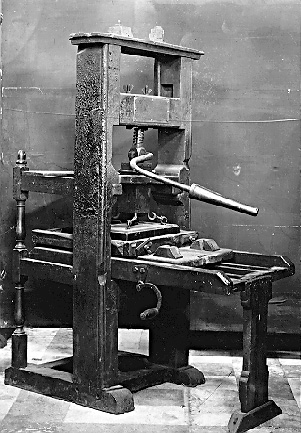
9. Printing Press
The printing press was the first one of many communication mediums, changing how information was collected, stored, retrieved, criticized, discovered, and promoted. It has been implicated in the Reformation, the Renaissance and the Scientific Revolution. Johannes Gutenberg is credited with inventing the first printing press in the Western civilizations of Europe. Screw presses for olives and wine had been known in Europe since Roman times; presses for the binding of manuscript books were also in use. Gutenberg was the first to convert the concept for printing uses. Gutenberg’s use of mechanical presses along with other innovations made printing a proto-industrial process with a far greater output compared to manuscripts made by copyists.
8. Automobile

In 1769, the very first self-propelled road vehicle was invented by French mechanic, Nicolas Joseph Cugnot. However, it was a steam-powered model. In 1885, Karl Benz designed and built the world’s first practical automobile to be powered by an internal-combustion engine. In 1885, Gottlieb Daimler took the internal combustion engine a step further and patented what is generally recognized as the prototype of the modern gas engine and later built the world’s first four-wheeled motor vehicle.
7. Pesticides

Since before 2500 BC, humans have used pesticides to prevent damage to their crops. The first known pesticide was elemental sulfur dusting used in Sumeria about 4,500 years ago. By the 15th century, toxic chemicals such as arsenic, mercury and lead were being applied to crops to kill pests. In 1939, Paul Müller discovered that DDT was a very effective insecticide. It quickly became the most widely-used pesticide in the world. However, in the 1960s, it was discovered that DDT was preventing many fish-eating birds from reproducing which was a huge threat to biodiversity. Pesticide use has increased 50-fold since 1950, and 2.5 million tons of industrial pesticides are now used each year.
6. Steam Engine
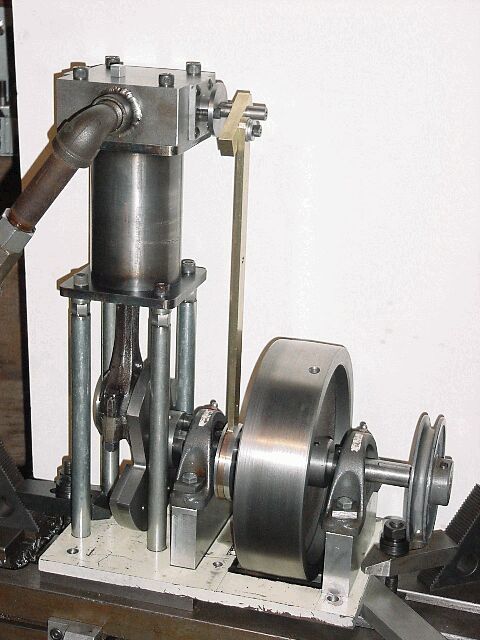
Thomas Savery was an English military engineer and inventor who in 1698, patented the first crude steam engine. Thomas Newcomen invented the atmospheric steam engine in 1712. James Watt’s incarnation of the steam engine ushered in the Industrial Revolution. His centrifugal governor kept the engine running at the desired rate, and is a modification so simple and elegant that it may be one of the best ideas of all time.
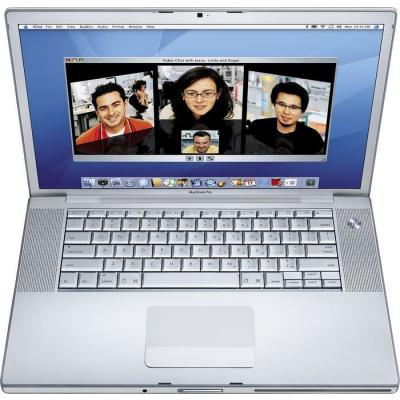
5. Computers
In 1837, Charles Babbage was the first to conceptualize and design a fully programmable mechanical computer that he called “The Analytical Engine”. Due to limited finance, and an inability to resist tinkering with the design, Babbage never actually built his Analytical Engine. Large-scale automated data processing of punched cards was performed for the U.S. Census in 1890 by tabulating machines designed by Herman Hollerith and manufactured by the Computing Tabulating Recording Corporation, which later became IBM.
4. Transistors
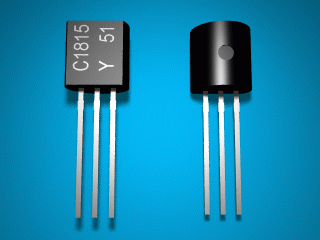
The transistor is the fundamental building block of the circuitry that governs the operation of computers, cellular phones, and all other modern electronics. On 16 December 1947 William Shockley, John Bardeen and Walter Brattain succeeded in building the first practical point-contact transistor at Bell Labs. This work followed from their war-time efforts to produce extremely pure germanium “crystal” mixer diodes, used in radar units as a frequency mixer element in microwave radar receivers.
3. Plastic
Plastic is composed of organic condensation or addition polymers and may contain other substances to improve performance or economics. There are few natural polymers generally considered to be “plastics”. The first plastic based on a synthetic polymer was made from phenol and formaldehyde, with the first viable and cheap synthesis methods invented by Leo Hendrik Baekeland in 1909, the product being known as Bakelite. Subsequently poly(vinyl chloride), polystyrene, polyethylene (polyethene), polypropylene (polypropene), polyamides (nylons), polyesters, acrylics, silicones, polyurethanes were amongst the many varieties of plastics developed and have great commercial success.
2. Harnessed Electricity
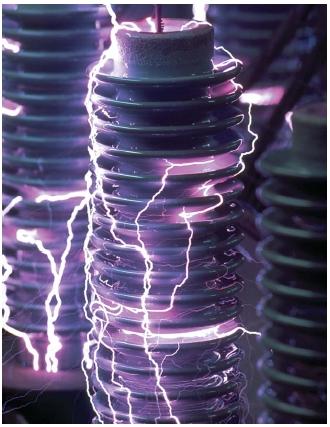
Electricity existed all along, but the system of devices needed to generate this force and distribute it to individual buildings was an invention, launched initially by Edison: He effectively turned electricity into a salable commodity and his Pearl Street station was the world’s first electric power station. Nikola Tesla’s invention of alternating current (AC) technology then made it possible to transmit electricity over long distances, leading to the nationwide grid we know today. Now, anyone in the West and throughout most of the world can tap into the grid to power everything from light bulbs to computers.
1. Immunization / Antibiotics
Three centuries ago, almost everyone died of infectious diseases. When the plague broke out in 1347, it killed nearly half of Europe–in about two years. When diseases such as smallpox reached North America, they reduced the indigenous population by about 90 percent within a century. As late as 1800, the leading cause of death in the West was tuberculosis. Hardly anyone died of old age back then, one reason why elders were revered. Today, elders are a dime a dozen: nothing unusual about surviving past 70. In the United States, 73 percent of people die of heart failure, cancer, and stroke.
Notable others: Laser, Radio, Clock
Sources: Encarta, Wikipedia, AskMen
Technorati Tags: inventions
Related Lists33 Funny Exam AnswersTop 10 African American Inventors Top 10 Inventions of the Middle Ages 10 Great Opera Performances |
SubscriptionsLike this article? Subscribe to the RSS feed to keep 'em coming, or subscribe via email: |
If you find this site helpful, please leave a donation so you can enjoy the spirit of giving too.
Email This Post


1. dalandzadgad - September 13th, 2007 at 4:27 am
agreed. the day has barely begun and i’ve already used almost everything on this list, heh.
2. RobS - September 13th, 2007 at 5:04 am
Why wasn’t the wheel in there?
I mean, if it wasn’t for Mr. Antrobus’ invention, we’d all be walking.
3. jfrater - September 13th, 2007 at 5:36 am
RobS: seemed a bit ancient to me
4. bucslim - September 13th, 2007 at 6:10 am
Another great list.
Gotta go with the clock, of course I don’t know what I’d eliminate. However simple clocks made it possible for ships in the age of discovery to navigate much easier. It wasn’t the beginning of geography, but it was instrumental in helping sea goers determing longitude and latitude.
The bigger reason the clock needs to be on this list is because it gave humanity a better sense of time and a more accurate reading of seasons.
5. jfrater - September 13th, 2007 at 6:35 am
bucslim: Thanks
Even though it didn’t make it to the top 10, the Clock would be in the top 13 (as you can see from the notable others).
6. RobS - September 13th, 2007 at 6:56 am
“seemed a bit ancient to me”
That’s age discrimination! That’s what that is! ;^0
7. jfrater - September 13th, 2007 at 7:11 am
RobS: hey - I can’t be perfect ALL the time
8. warren - September 13th, 2007 at 7:27 am
This is a great list. I personally think Plumbing should be #1 on your list, and you should specifically mention water treatment plants, because people will think about toilets but forget to think about taps. If you ever go camping, you start missing the toilets and the water faucets pretty much right away.
#2 is electricity, the thing you pretty much miss the second most when you go camping.
#3 is refrigeration, something that limits my ability to camp, because I can’t keep my food from spoiling.
A city without these three things is no city at all, but a camp.
Camping is an interesting thing; I think it’s important for human beings to live Off Grid for a little while each year. Think of it as a period of nearly complete Technology Fasting. Sure you bring fuel-burning lamps and stoves with you, and you have your own stores of food, and you may even hike all your water in with you.
I love Camping itself. But even more than the camping itself, I love coming home, having a shower, turning on my fan or air-conditioner (if it’s summer) and lying down in a cool, clean bed. You know what? Modern springy mattresses are one of the greatest inventions ever. Try sleeping on cold hard ground , and beds will make your list pretty quick too.
Cheers!
Warren
9. Cat Skyfire - September 13th, 2007 at 7:30 am
RobS: Technically, the wheel is not the invention. Round things are a part of nature. The invention that makes the round things useful is the Axle. Sticking a hole into the round thing (or finding a round thing with a hole) and shoving a stick in it.
As for the list: I’d put the plumbing up at #1. Without the decrease in filth, the connection to disease probably wouldn’t have been completely found, and the urge to find real solutions might never have come.
10. steve - September 13th, 2007 at 7:50 am
i agree with warren about refrigeration. Although, it has been in use to some extent with ice in the winter, so maybe not?
anyway, i think the ability to fly is an important addition to the list, and should have been there somewhere, maybe instead of The Computer, because the computer we know of today isn’t possible without the transistor, and they seem to go together.
while a clock is important, it’s been around since the dawn of time (literally) with sun dials, so as with the wheel, it’s not really relevant enough.
The compass, that’s important, with out it, there would be no New World, and therefore no America.
Same would go for the sail.
Maybe this should have been one of those top 15 lists you do, either that, or make a follow up list.
it is a good list, i agree, and use everything on that list on a daily basis, and i guess that’s why they are all there.
11. JOE ROSSON - September 13th, 2007 at 8:00 am
How about cloth.
12. sakul - September 13th, 2007 at 8:03 am
CRT?
13. JOE ROSSON - September 13th, 2007 at 8:04 am
Very nice website you have here. For the past month or so I have been coming here every morning before work and anticipating what will be next, keep up the great lists, oh, another great invention should be the telephone.
14. kancgab - September 13th, 2007 at 8:09 am
There is a difference between INVENTION and DISCOVERY. Electricity wasnt invented, it was discovered.
15. jfrater - September 13th, 2007 at 8:17 am
kancgab: I am talking about the things that enable the use of electricity - not electricity itself.
16. purvislets - September 13th, 2007 at 8:18 am
What? No sliced bread?
17. evan - September 13th, 2007 at 8:59 am
flight? or the airplane?
18. jfrater - September 13th, 2007 at 9:06 am
Human Flight
It would be on a top 15.
19. Mr Ed - September 13th, 2007 at 10:02 am
The Plow. It allowed for an increased dependable food supply. Because more food was available individuals did not need to spend all their time farming and could specialize in other areas. Increased grain production required pottery to store it, writing to note contents, laws to control ownership and so one. This single invention freed people from subsistence farming and gave them the time and need to develop all the follow on technologies. See Egypt.
20. 9000 - September 13th, 2007 at 10:09 am
soap. I know it seems silly, but an ounce of prevention…
Probably staved off more illness than medicine has since cured.
21. Late O’Day - September 13th, 2007 at 10:13 am
Except maybe for some novel ways to provide it for highrises, etc., the principles of “modern” plumbing haven’t really changed all that much since Roman times.
22. Kip - September 13th, 2007 at 1:02 pm
concrete!
23. Jason - September 13th, 2007 at 2:53 pm
Steve is pissed that the iPhone didn’t make the list.
24. Adam W. - September 13th, 2007 at 3:11 pm
I think toilet paper would be at least #1 on my list. I can live without computers, cars, clocks, whatever. But I think I’d end up commiting suicide if i couldnt properly clean my ass without taking a shower. Oh yeah, how about showers, or just the bath-tub in general.
25. Martin L - September 13th, 2007 at 4:57 pm
First off, I just want to say there are two things I love about Listverse: a) the lists (duh!) and b) the commentators. There seem to be almost no pinheads spouting misspelled abuse in an idiots’ delight of back-and-forth. Second, I think Adam W. came closest to a vital invention nobody else quite mentioned. It’s essential to the printing press, computer technology, and indoor plumbing. Oh, and you can’t write prescriptions without it!
26. Fe - September 13th, 2007 at 6:01 pm
It could be argued that without the printing press none of the rest of the list would have been possible. Not only did movable type make books available to everyone and bring about a social revolution, but the idea behind movable type can be held directly responsible as the impetus behind such inventions as the conveyer belt and mass production.
27. Ben - September 13th, 2007 at 6:36 pm
The toilet should be number 2. Okay I could not help it. Potty humor always makes me laugh.
Great list again! I now hit this website every day!
28. Daniel - September 13th, 2007 at 7:30 pm
You should do more research on the list’s and be more specific on naming them, Top 10 Greatest Inventions, moder time?, Ancient time?
29. ben - September 13th, 2007 at 9:46 pm
Its not really an invention, but if plastic is on the list it should be close:quick, efficient ways of producing steel. Think about it. look at any one object in your room right now. Its either made with steel or by machines made of steel. not to mention the skyline of any major city on planet earth, and tankers and cargo ships that supply nearly every import and export in the world. If Bessamer (i think he was the one that did it) hadn’t come up with the system for producing steel our lives would be a LOT different
30. jfrater - September 13th, 2007 at 10:57 pm
There are some really good additions in the comments - thanks. I should have made it a top 20!
31. Baz B - September 30th, 2007 at 8:06 pm
I would also definitely put:
Satellite technology
surgery/organ replacement
and the Internet, unless that counts as part of the Computers (#5) entry, as among the greatest technologies of our time.
Nonetheless, great list, great site. I just came across it and have been reading it for hours. I now know a new site that I will be enthusiastically frequenting : )
~Baz
32. Barb - October 1st, 2007 at 6:16 am
A friend once told me that she considered man’s greatest inventions to be stretch denim and hairspray. It was the 80’s after all! Gotta agree with the organ transplant Baz B.
33. jfrater - October 1st, 2007 at 6:17 am
Baz: Surgery is definitely a biggy.
Barb: hilarious! That sounds like it could be from a movie
34. marc - October 5th, 2007 at 4:44 pm
Antibiotics are better described as being discoveries rather than inventions - they have existed long before we ever harnessed them. Also, don’t forget microchips, the internal combustion engine, and Mountain Dew!!
35. crss - October 7th, 2007 at 10:40 am
I think that the telephone is also one of the greatest inventions of our time. Others may not think of this as that great of an invention, but to me the ability of being able to talk to people anywhere in the world through a mouthpiece and a receiver is pretty incredible.
36. gibson8tor - October 7th, 2007 at 6:06 pm
I think the spring driven clock, while definitely not worthy of top 10, should be on a top 20 list. Without the ability the accurately keep track of time, it used to be impossible to keep track of longitude on sea voyages. John Harrison came up with an alternative to pendulums so that clocks could actually work at sea, leading to accurate navigation and the beginning of globalization.
37. jfrater - October 8th, 2007 at 1:22 am
gibson8tor: The Mechanical clock is number 7 on the Top 10 inventions of the middle ages.
38. 2overpar - October 10th, 2007 at 3:51 pm
harnessing fire
39. ben - October 10th, 2007 at 4:16 pm
i think fire is on the list of prehistoric inventions and whatnot
40. heavybison - October 12th, 2007 at 3:04 am
What abt the bicycle…more people on those than cars..
41. dave4248 - November 8th, 2007 at 1:58 pm
There is no way the printing press s/b anything but #1. It made all the others possible.
42. lalala360 - November 17th, 2007 at 10:24 am
kool
43. M3LISSA!!! - November 28th, 2007 at 9:51 pm
WHAT ABOUT THE FRIDGE?!?!
IT KEEPS OUR FOOD FROM ROTTING, AND SAVES $$ WITH LEFTOVERS!!
44. sdggrant - November 28th, 2007 at 10:15 pm
Melissa, have you ever heard of the CAPS LOCK KEY, it is also a great invention
Oh and about the steam engine. I read a book on ancient greek sholars and inventions, and they actually had a steam engline. It was used in temples in what was also one of the first “vending machines”
A gold coin could be dropped in a slot and when it would land, it trigger a device that dropped water on to a set of etremely hot stones, the steam from the stones would then propel a small bird on in a small circle on a table, the steam was also funneled through a small tube that would make the bird “sing”. It was also one of the first ever religious scams seeing as the prists claimed that the gods made the bird move and sing!
Imagine if the ancient greeks would of realized the potential of their little invention! How far along would we be now if the industrial revolution had happened 1500 years ago?!
45. travis reece - January 7th, 2008 at 11:25 pm
if the industrial revolution happened 1500 years ago, we’d all be dead right now. too much killing power in these wars to last 1500 years.
46. Bob - January 16th, 2008 at 9:33 am
“A high-rise building would be impossible, really, without toilets and plumbing. Remove apartment buildings, office towers, and dense downtown cores from your picture of the world and you have to change the whole rest of your picture too, because the implications keep rippling.”
Spectacular. That’s exactly what we need, though most people don’t realize it. Apartment buildings? Horrible. Office towers? Eyesores. Dense downtown cores? Centers for crime and dehumanization.
What a wonderful world it would be without those.
47. Reese - January 18th, 2008 at 9:14 am
I would like to add the Pill to this list. Contraception in general, really, but the pill is the most effective. I think halting unwanted pregnancies is definitely a good thing.
48. Tomo - January 27th, 2008 at 5:12 am
Ok, there are a lot of great inventions.
How about a list of worst inventions. Top Ten Things We Wish were Never Invented. Whaddaya say Jamie?
49. jfrater - January 27th, 2008 at 5:25 am
Tomo: great idea!
50. albert0 - January 27th, 2008 at 6:25 am
Why not make one?
51. Polly Odyssey - February 8th, 2008 at 8:38 pm
I’m sorry, but I don’t think pesticides should be on the list…the rest are fine.
52. doz - February 11th, 2008 at 2:59 pm
i’m surprised the hypodermic needle isn’t on this list.
53. Jon - April 7th, 2008 at 6:59 am
Can I count pen and paper as an invention? Because the ability to amass knowledge from generation after generation is what has catapulted humans into such incredibly fast progress. Our position at the top of the food chain was secured primarily through our only real skill: communication. The most significant advance in communication was the invention of writing.
And for that matter, why not the internet?