
 History
History
History  Movies and TV
 10 Movie Adaptations That Ruined Everything for Some Fans
 History
 10 Dirty Government Secrets Revealed by Declassified Files
 Weird Stuff
 10 Wacky Conspiracy Theories You Will Need to Sit Down For
 Movies and TV
 10 Weird Ways That TV Shows Were Censored
 Our World
 10 Places with Geological Features That Shouldn’t Exist
 Crime
Crime 10 Dark Details of the “Bodies in the Barrels” Murders
 Animals
 The Animal Kingdom’s 10 Greatest Dance Moves
 Movies and TV
 10 Box Office Bombs That We Should Have Predicted in 2025
 History
 10 Extreme Laws That Tried to Engineer Society
History 10 Wars That Sound Made Up (but Absolutely Happened)
Movies and TV 10 Movie Adaptations That Ruined Everything for Some Fans
History 10 Dirty Government Secrets Revealed by Declassified Files
Who's Behind Listverse?

Jamie Frater
Head Editor
Jamie founded Listverse due to an insatiable desire to share fascinating, obscure, and bizarre facts. He has been a guest speaker on numerous national radio and television stations and is a five time published author.
More About Us
Weird Stuff 10 Wacky Conspiracy Theories You Will Need to Sit Down For
Movies and TV 10 Weird Ways That TV Shows Were Censored
Our World 10 Places with Geological Features That Shouldn’t Exist
Crime 10 Dark Details of the “Bodies in the Barrels” Murders
Animals The Animal Kingdom’s 10 Greatest Dance Moves
Movies and TV 10 Box Office Bombs That We Should Have Predicted in 2025
History 10 Extreme Laws That Tried to Engineer Society
10 Ways Icelandic Culture Makes Other Countries Look Boring
In the North Atlantic Ocean, between Greenland and Ireland, lies a tiny island. The country of Iceland is Middle-earth beautiful, and a unique culture calls it home. Indeed, the inhabitants do things one might not see anywhere else in the world. From altering roads to please fairies, holding funerals for glaciers, and throwing seabirds (it’s not as hideous as it sounds), here are 10 reasons why Iceland is cooler than its name.
Related: 10 Crazy & Hilarious Micronations That Want to Be Real Countries
10 How to Ísbíltúr
‘Ísbíltúr’: Iceland’s ice-cream road trips
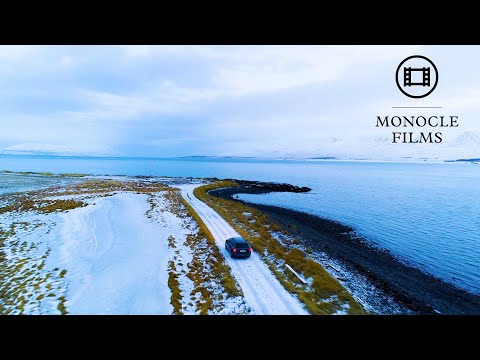
In most other countries, getting ice cream is not ingrained as a mindfulness practice in the nation’s psyche. But for as long as most Icelanders can remember, they have embarked on Ísbíltúr, or an ice cream road trip. In the same spirit as hygge, many Icelanders drive to a shop to enjoy a dairy treat as intentional relaxation.
The ice cream can be eaten at the site or on the way back home. Either way, as tasty as one’s favorite flavor might be, the goal of Ísbíltúr is to savor the anticipation and the journey more than the dessert itself. Ísbíltúr is not limited to winter—far from it. Icelanders jump in their cars for a spontaneous cold treat, whether it’s snowing, windy, or midnight-bright during summer.
Some families even follow personal “routes” passed down through generations, visiting the same beloved shops year after year.[1]
9 Christmas Book Flood
Christmas helps keep Icelandic storytelling alive | AFP

Iceland’s reading culture runs deep. Tales of ancient sagas once comforted families through hardships including a brutal Danish colonization and the Little Ice Age, a catastrophic cooling event that caused famines and population decline. During the Middle Ages, poor farmers worked indoors at night while one member read stories aloud.
Today, many Icelanders partake in Jólabókaflóð, or the “Christmas book flood.” In October, publishers release new titles for the festive season, and people give and receive books as gifts. The tradition also has roots in World War II, when Iceland faced strict rations. Paper imports, however, were abundant, and Icelandic books became a wartime favorite.
Jólabókaflóð is a major driving force behind Iceland’s publishing industry, helping sustain the country’s strong literary scene. Since many books are printed in Icelandic, the tradition also plays an important role in preserving the island’s ancient language. Many households mark the holiday by staying home on Christmas Eve, drinking hot chocolate, and reading late into the night.[2]
8 Puffin Throwing
An Iceland Community Rallies to Save Lost Baby Puffins | WILD HOPE

Iceland’s Vestmannaeyjar island is home to Europe’s biggest colony of puffins. The small, parrot-like seabirds breed along the cliffside in large numbers, and every year, Icelanders do something that outsiders might consider alarming—they toss baby puffins over the cliffs.
As bad as it looks, casting a chick into the air actually helps them. When a puffling is old enough, it uses the Moon as a guide to navigate toward the sea, where it will spend the next few years. However, city lights can confuse them, causing the chicks to crash-land on rooftops, roads, and in fishing villages.
Icelanders gather the wayward birds, let them rest overnight, and then release them on the island’s south side, where they can safely join hundreds of other puffins. This event is part of an annual community effort known as “puffling patrol,” where children, families, and volunteers scour the streets with cardboard boxes to rescue confused chicks during their fledging season.[3]
7 Turf Houses
🇮🇸 Why Icelanders Lived in Turf Houses For Centuries

Icelandic turf houses resemble something from a children’s book. They are cozy cottage-style homes, but one feature makes them magical—a carpet of living grass lines their walls and roofs. Instead of dried straw, the grass grows on slabs of marshland turf up to 3.9 inches (10 cm) thick.
There is evidence that Icelanders have been building turf structures for over a thousand years, mainly because the island lacked abundant timber. As it turns out, lining a home with living turf is an exceptional insulator. Residents still use turf in modern construction to reinforce wooden or stone houses, keeping them warm in the harsh climate.
These homes require some maintenance, with reinforcement needed every 25 years or so. Yet some turf houses have remained intact for up to 70 years without renovation. A few preserved examples—including traditional farmsteads—have even been converted into museums to show visitors how Icelanders lived centuries ago.[4]
6 Global Peace Index Topper
Top 10 Most Peaceful Countries in the World (2025 Global Peace Index)
Every year, the Global Peace Index reveals the world’s most peaceful countries. This list is compiled by the Institute for Economics and Peace (IEP), which grades nations according to militarization level, societal safety, and degrees of domestic and international conflict.
According to the IEP, global peacefulness has sharply declined over the past 20 years. In many recent reports, Ukraine and Russia have ranked among the world’s most violent countries. But amid worldwide instability, Iceland continues to safeguard its peace. For years running, it has been named the most peaceful country on Earth.
This feat is impressive, considering Iceland has no standing army, navy, or air force—only a coast guard. Crime rates are low, trust in institutions is high, and social welfare is strong. Even Icelandic police officers rarely carry firearms. Combined with high happiness scores and strong community values, the island consistently ranks as one of the most stable societies on Earth.[5]
5 Iceland Rewrote Dracula (Better)
The Icelandic Dracula Story You Never Knew
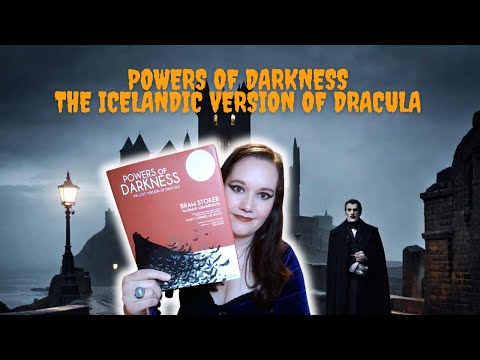
Bram Stoker published his famous Gothic horror novel Dracula in 1897. A few years later, Valdimar Ásmundsson translated the book into Icelandic. Under the title Makt Myrkranna, or “Powers of Darkness,” the novel became a local hit and has remained in print ever since.
The existence of Makt Myrkranna was known to scholars, but few realized how different it was. In 2014, historian Hans Corneel de Roos examined the text and discovered that it wasn’t simply a translation—it was practically a new novel. The Icelandic version used different character names, featured a faster pace, and was far more scandalous than Stoker’s original.
Some believe Ásmundsson may have had access to early drafts of Dracula, or that Stoker gave him unusual creative freedom. Whatever the case, readers often praise the Icelandic version for its punchier writing and tighter plot structure. It has since been translated back into English, giving modern readers a glimpse of this alternate vampire classic.[6]
4 An Anti-Dating App
Iceland app prevents accidental incest
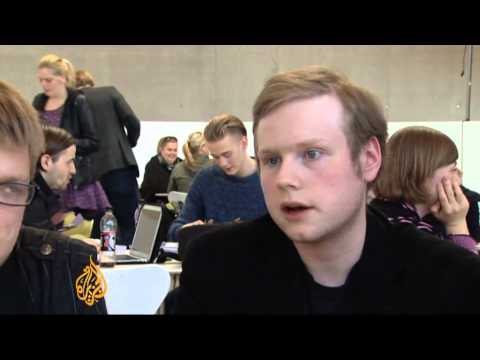
Iceland’s population sits at around 380,000 people today, and most are distantly related. This can make dating tricky. Many Icelanders have heard stories of someone unintentionally meeting a romantic partner at a family gathering.
To prevent such awkward scenarios, the country launched a unique smartphone app called the “App of Icelanders.” By tapping their phones together, users can check whether they share a close familial connection. If so, the app sends a warning alert.
The tool was developed by three University of Iceland students during a competition exploring new uses for the Íslendingabók, or “Book of Icelanders”—a colossal genealogical database stretching back 1,200 years. The country’s deep records are so detailed that Icelanders are often listed alphabetically by first name rather than by a shared family surname.[7]
3 A Unique Naming System
Why Iceland Doesn’t Have Family Names: Iceland’s Unique Naming Traditions! 🇮🇸
In most countries, naming a baby is straightforward: the child receives a given name and a family surname. In Iceland, however, a surname rarely passes down. Instead, a child’s last name is derived from a parent’s first name plus “-son” or “-dóttir,” meaning “son of” or “daughter of.” This results in each generation carrying a new set of surnames rather than one inherited family name.
Another unique aspect of Iceland’s naming tradition—dating back to the Viking Age—is the Name Committee. This board approves or rejects new baby names based on Icelandic grammar, spelling, and cultural rules. It ensures that names fit the structure of the language and remain compatible with Icelandic identity.
Icelanders are also alphabetized by their first names in phone books, school rosters, and government directories. This naming system is so ingrained that using family surnames can sometimes feel foreign to locals.[8]
2 Fairy Belief
Iceland’s magical world of elves | BBC Ideas
Iceland has glaciers, fjords, waterfalls, volcanic fields, and massive lagoons filled with icebergs—the kind of landscape that practically begs for folklore. As early as 1,000 A.D., Viking-era poems mentioned elves and hidden folk, and remarkably, some Icelanders still believe in them today.
Modern surveys found that three percent of the population claims to have encountered elves. Eight percent definitely believe, while 54 percent will not deny that fairies might exist. This makes belief in hidden folk a surprisingly mainstream idea.
The phenomenon even affects construction. Some builders avoid areas where elves are thought to dwell, leading to split roads, curved driveways, and houses with oddly shaped walls. For major projects, a clairvoyant may be hired to communicate with the hidden folk before work begins. Even when taken lightly, the custom acts as a reminder of Icelanders’ deep respect for their land and traditions.[9]
1 A Glacier Got a Funeral
Iceland commemorates first glacier that ‘died’ by climate change

In 1901, the Okjökull glacier in Iceland covered around 15 square miles (38 sq km). By 2014, the glacier had vanished completely, leaving only an ice-free volcano. Most countries would have shrugged and moved on—but Icelandic researchers and filmmakers did something different.
In 2019, they held a funeral for the lost glacier, complete with a memorial plaque and an official “death certificate.” The ceremony drew major figures including Mary Robinson, former United Nations High Commissioner for Human Rights, and Iceland’s Prime Minister Katrín Jakobsdóttir.
The plaque marks Okjökull as the first Icelandic glacier to lose its status as a glacier. It also warns that all of Iceland’s glaciers could disappear within 200 years if climate change continues at its current pace. Since its installation, the site has become a symbolic reminder of environmental responsibility—and a call for future generations to protect what remains.[10]
More Great Lists
 Ten Countries That Weren't Countries for Very Long
 10 U.S. Websites Banned in China and Other Countries
 10 Game Characters That Look Dangerous but Are…
 10 Exotic Foods That Look Like Aliens
 10 Sinister Cults That Make You Afraid to Look Over…
 10 Prehistoric Creatures That Might Not Look How We Think
 10 Science Facts That Will Change How You Look at the World
 10 Conceptions of What Extraterrestrial Could Look Like
 10 Weird Space Images That Look Like Unlikely Things
fact checked by
Darci Heikkinen
More Great Lists