
 Mysteries
Mysteries
Mysteries  Our World
 10 Countries Where Water Scarcity Gets Seriously Weird
 Weird Stuff
 10 of the Most Bizarre Buildings Around the World
 Creepy
 10 American Urban Legends Far Stranger Than Bigfoot
 Movies and TV
 10 Radical Reimaginings of Frankenstein
 Facts
Facts 10 Explosive Facts You Probably Don’t Know About Volcanoes
 Pop Culture
 0 Things That Became Massive Hits the Second Time Around
 Humans
 History’s 10 Little-Remembered Acts of Charity
 The Arts
 10 Iconic Masterpieces Attacked by Pure Pettiness
 History
 History’s Ten Most Lopsided Battles Ever
Mysteries 10 People Who Infamously Appeared out of Nowhere
Our World 10 Countries Where Water Scarcity Gets Seriously Weird
Weird Stuff 10 of the Most Bizarre Buildings Around the World
Who's Behind Listverse?

Jamie Frater
Head Editor
Jamie founded Listverse due to an insatiable desire to share fascinating, obscure, and bizarre facts. He has been a guest speaker on numerous national radio and television stations and is a five time published author.
More About Us
Creepy 10 American Urban Legends Far Stranger Than Bigfoot
Movies and TV 10 Radical Reimaginings of Frankenstein
Facts 10 Explosive Facts You Probably Don’t Know About Volcanoes
Pop Culture 0 Things That Became Massive Hits the Second Time Around
Humans History’s 10 Little-Remembered Acts of Charity
The Arts 10 Iconic Masterpieces Attacked by Pure Pettiness
History History’s Ten Most Lopsided Battles Ever
10 Dark Details of Australia’s Gruesome Unsolved Wanda Murders
On January 11, 1965, the shimmering sands of the Wanda beaches in Sydney, Australia, became the scene of one of the nation’s most horrific and senseless crimes. The victims were two 15-year-old best friends, Marianne Schmidt and Christine Sharrock, who had headed out for a simple day of fun, sun, and surf, but tragically were never seen alive again. Their mangled bodies were found the next morning stowed away between two sand dunes in a manner that strongly suggested a level of frenzy and abject malice that shocked not only the local community, but many beyond Australia as well.
Despite decades of investigation, forensic advancements, and a revolving door of high-profile suspects, the case remains cold and officially unsolved. The Wanda Beach murders have become a permanent fixture in Australian true crime lore, serving as a grim reminder of a lost age of innocence. They are often referred to simply as “Wanda.” To grasp the true essence of these horrific crimes, we need to dig deeply beyond the gore to uncover the dark details that have kept investigators guessing for more than half a century.
Related: Top 10 Crimes That Went Viral After A Podcast
10 The Weather Conspires
Wild southerly buster hits Sydney as sweltering temps plumet | 9 News Australia

On January 11, 1965, the weather in Sydney was oppressive and unpredictable. Marianne and Christine, along with Marianne’s three younger siblings, sought relief at the beach. However, a sudden and fierce southerly gale—known locally as a Southerly Buster—whipped up the surf and sand and sent most beachgoers scrambling for cover.
This abrupt shift in weather proved to be a devastating stroke of bad luck for investigators. The gale cleared the beach of many potential witnesses at precisely the wrong moment, leaving only a handful of people still braving the shoreline. As the younger children returned to the surf club to wait for their parents, the two teenagers decided to take one last walk toward the southern dunes and out of sight of their charges.
The blinding sand and howling wind created ideal conditions for a predator to strike unseen and unheard. Investigators later confirmed that very few reliable sightings were reported during this narrow time window. This misfortune would plague the case for decades to come.[1]
9 A Horrific Scene
The Wanda Beach Murders | UNSOLVED
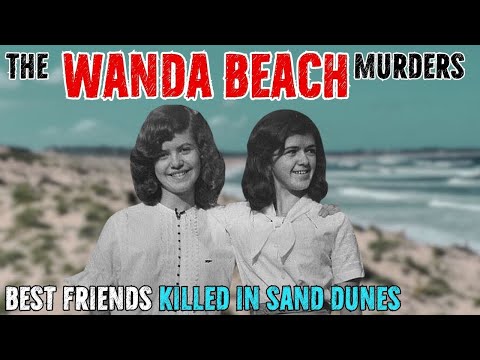
When the bodies were discovered the next morning by a local hiker, the brutality of the scene was emotionally overwhelming even for seasoned detectives. The girls had been either lured or forced into a secluded space between two sand dunes, where they were stabbed dozens of times in a frenzied attack.
What made the discovery particularly harrowing was the clear evidence that both girls had fought desperately for their lives. Investigators noted defensive wounds consistent with a violent struggle in the sand. The killer used a small, extremely sharp blade, and the force involved led detectives to suspect the assailant may have injured his own hands during the attack.
The positioning of the bodies and the nature of the wounds led police to believe the murders were sexually motivated rather than the result of robbery or random violence. No valuables were taken, reinforcing the conclusion that the attack stemmed from a deeply disturbed and violent compulsion.[2]
8 Missing Murder Weapon
(1965, Sydney) The Terrifying Wanda Beach Murders That Shocked Australia

Despite an exhaustive search of the Wanda sand dunes involving hundreds of police officers and volunteers—many equipped with metal detectors—the murder weapon was never recovered. This absence dealt another major setback to the investigation.
Based on the girls’ wounds, forensic experts concluded that the weapon was most likely a small, possibly folding pocketknife or scout knife, with a blade measuring approximately 3 to 4 inches (8 to 10 centimeters). Such knives were extremely common at the time, making identification even more difficult.
The failure to locate the weapon suggested a killer composed enough to either carefully dispose of it elsewhere or leave the area with it in hand. Over the years, members of the public turned in several knives discovered in backyards and under floorboards, but shifting sand dunes and decades of erosion meant none could ever be conclusively linked to the distinctive wound patterns.[3]
7 The Mysterious “Man in the Shorts”
THE WANDA BEACH CASE | MIDWEEK MYSTERY

One of the most promising early leads involved a man reportedly seen near the girls shortly before their deaths. Multiple witnesses described a young man, likely in his late teens or early twenties, wearing brightly colored swimming trunks that stood out against the grim weather conditions.
Accounts varied. Some witnesses claimed the man appeared to follow the girls toward the dunes, while others recalled seeing him lingering near the path they took. Despite widespread public appeals and the circulation of composite sketches, the man was never identified.
Whether he was a critical witness who never came forward or the killer himself remains one of the most frustrating unanswered questions in the case. Decades later, investigators still consider the sightings credible, but without a name, the lead ultimately went nowhere.[4]
6 A Link to the “Family Murders?”
Derek Percy | Australia’s Worst Child Serial Killer | Crimes That Shook Australia

In later years, investigators explored potential links between the Wanda murders and other notorious Australian crimes. One theory pointed to Derek Percy, a convicted child killer who was suspected—but never charged—in several other cases.
Percy was convicted of the 1969 murder of a young girl and was believed to have been in the Sydney area around the time of the Wanda killings. Detectives noted similarities in the extreme violence and the targeting of young victims, which kept him under scrutiny for years.
However, Percy never confessed to the Wanda murders before his death in 2013, and no physical evidence tied him to the scene. While behavioral parallels raised troubling questions, the lack of proof ultimately prevented investigators from pursuing the theory further.[5]
5 The Christopher Wilder Connection
Secrets buried in the sand: What really happened at Wanda Beach? | True crime
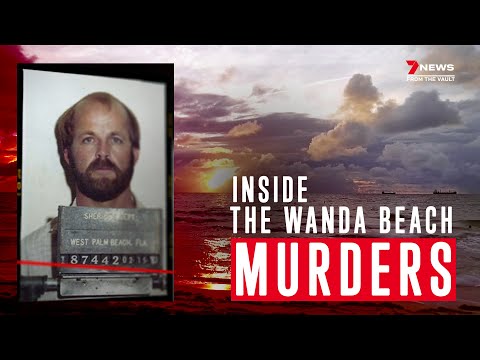
Another name that repeatedly surfaced was Christopher Wilder, later infamous as the “Beauty Queen Killer.” Before embarking on a deadly cross-country spree in the United States during the 1980s, Wilder lived in Sydney as a teenager.
In 1965, he matched the age range described by witnesses who reported seeing a man near the dunes. Wilder also had a documented history of sexual deviance and violence toward women, and his known method of luring victims into isolated areas bore disturbing similarities to the Wanda case.
While Wilder died in a shootout with U.S. Marshals in 1984, New South Wales police have never officially ruled him out. Investigators have also noted differences between his confirmed crimes and the Wanda murders, leaving the connection speculative rather than conclusive.[6]
4 The Blood-Soaked Clothing
How Forensics Works To Solve Crimes: Beyond CSI

One of the most haunting missed opportunities emerged from a local laundromat days after the murders. A worker reported that a young man had brought in trousers and a shirt heavily stained with what appeared to be blood, behaving nervously and demanding immediate service.
By the time police were notified and arrived, the man had already collected his clothes and disappeared. Compounding the loss, the attendant had not recorded his name or address, and laundromat record-keeping at the time offered no paper trail.
With blood typing technology still limited in 1965, the failure to secure the garments themselves meant investigators lost what could have been the most direct physical evidence in the entire case. Many historians consider this moment the point at which the investigation truly stalled.[7]
3 The 2012 DNA Breakthrough—That Wasn’t
Murder investigation must wait on technology

Hope surged in 2012 when advances in forensic science allowed police to extract a DNA profile (10 Crimes That DNA Evidence Failed to Solve) from preserved clothing belonging to the victims. The profile was compared against the national database and against several key suspects.
True to the case’s long history of frustration, the results proved inconclusive. Decades of storage had degraded and contaminated the samples, leaving investigators without a reliable match.
While partial DNA profiles still exist, they have yet to yield definitive answers. Authorities have acknowledged that future techniques may offer renewed possibilities, but for now, modern forensics has failed to bring closure.[8]
2 Impact on Australian Culture
Sydney’s Wanda Beach cold case remembered 60 years on | ABC News
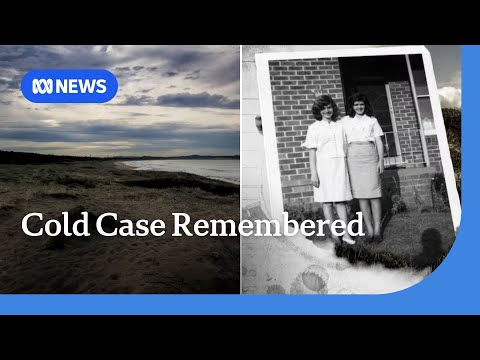
The Wanda Beach murders did more than end two young lives—they shattered a widely shared way of life in Australia. Before January 11, 1965, it was common for children and teenagers to travel freely by train or on foot without close supervision.
The shocking discovery dominated national headlines and changed public attitudes almost overnight. Parents tightened restrictions, and the concept of “stranger danger” took root across suburban Australia.
The beach, once a symbol of freedom and carefree summer joy, became linked in the public imagination with hidden dunes and unseen threats. Much like the Beaumont Children case that followed, Wanda marked the end of an era of innocence that would never fully return.[9]
1 The Final Suspect—Alan Logan
Marianne Schmidt & Christine Sharrock: What Happened at Wanda Beach

In recent years, investigative journalist Alan Whiticker drew renewed attention to a suspect named Alan Logan, a local man with a history of mental instability and violent behavior. According to Whiticker’s reporting, even members of Logan’s own family privately believed he was responsible for the murders.
Logan allegedly owned a knife similar to the suspected murder weapon and reportedly displayed an intense fascination with the Wanda case. He died years ago in a psychiatric institution, taking any possible secrets with him.
Police have acknowledged the theory but stress that, without a confession or viable DNA evidence, Logan cannot be named as the killer. Like so many other suspects, he remains a shadowy figure in a case defined by chilling possibilities and permanent uncertainty.[10]
More Great Lists
 10 Darkest Details of the Infamous Lobotomy
 10 True Tales of British Women Transported to…
 Top 10 Gruesome Deaths That Will Make You Nauseous
 10 Shocking and Gruesome Founding Father Facts They…
 10 Gruesome Realities from the Great Chinese Famine
 10 of the Worst Murders Committed in Colorado
 10 Decades-Old Cold Case Murders Solved with DNA
 The Ten Most Brutal Garden State Murders
 The Ten Most Shocking and Horrific Television Murders Ever
fact checked by
Darci Heikkinen
More Great Lists