
 History
History
History  Movies and TV
 10 Great Meta Horrors to Watch Before Scream 7
 History
 10 Brave Women Who Fooled Entire Armies
 Crime
Crime 10 Criminal Masterminds Brought Down by Ridiculous Mistakes
 Movies and TV
 10 Movie Franchises That Started Dark but Turned Surprisingly Soft
 History
 10 Wars That Sound Made Up (but Absolutely Happened)
 Movies and TV
 10 Movie Adaptations That Ruined Everything for Some Fans
 History
 10 Dirty Government Secrets Revealed by Declassified Files
 Weird Stuff
 10 Wacky Conspiracy Theories You Will Need to Sit Down For
 Movies and TV
 10 Weird Ways That TV Shows Were Censored
History History’s Ten Most Lopsided Battles Ever
Movies and TV 10 Great Meta Horrors to Watch Before Scream 7
History 10 Brave Women Who Fooled Entire Armies
Who's Behind Listverse?

Jamie Frater
Head Editor
Jamie founded Listverse due to an insatiable desire to share fascinating, obscure, and bizarre facts. He has been a guest speaker on numerous national radio and television stations and is a five time published author.
More About Us
Crime 10 Criminal Masterminds Brought Down by Ridiculous Mistakes
Movies and TV 10 Movie Franchises That Started Dark but Turned Surprisingly Soft
History 10 Wars That Sound Made Up (but Absolutely Happened)
Movies and TV 10 Movie Adaptations That Ruined Everything for Some Fans
History 10 Dirty Government Secrets Revealed by Declassified Files
Weird Stuff 10 Wacky Conspiracy Theories You Will Need to Sit Down For
Movies and TV 10 Weird Ways That TV Shows Were Censored
History’s Ten Most Lopsided Battles Ever
When English lawyer William Taverner wrote the play The Artful Husband in 1717, he probably had no idea he’d adapt a quote still commonly used today. He took a phrase written by another Englishman 140 years before and turned it into a memorable line. “All advantages are fair in Love and War,” the playwright famously penned. Today, we shorten that to “all’s fair in love and war.” But is it? Ask anybody going through a bad breakup if all is “fair” in love. And ask the countless soldiers who died in battles throughout history if all is really fair in war.
That wartime unfairness is exactly what we’re looking at today. In this list, we’ll dive into ten of the most lopsided battles in human history. You’ll see the ways one side outnumbered the other. In many cases, the outnumbered faction lost in a rout. But not always. However, one thing is constant: when the fighting began in each of these events, the sides were not close to evenly matched.
Related: 10 Bizarre Battles That Took Place Where You’d Least Expect
10 The Battle of Fei River
The Battle of the Fei River & the Former Qin Dynasty (351 – 394)

In 383 AD, the Jin Dynasty and the Qin Dynasty were locked in a struggle for control of China. The Qin had by far the larger army, especially after conquering Xiangyang. They could call on mercenaries and cavalry units and had loyalists in other provinces. At the Fei River, the Qin brought everything to win the war. Records claim the Qin had more than 870,000 troops; the Jin had 80,000. Even if exaggerated, the Jin were massively outnumbered.
But the Jin sent a message to Qin commander Fu Jian that they wanted to cross and fight head-on. Fu Jian ordered his men to fall back from the banks to lure the Jin in. The problem: the Qin force was packed with mercenaries and foreign fighters, lacking cohesion and clear communication. Fu Jian’s fake-out backfired. Many of his men thought they were retreating, clogging roads and supply lines. Despite being outnumbered, Jin soldiers communicated well and fought ferociously. They routed the Qin at Fei River, delivering one of history’s greatest military upsets.[1]
9 The Battle of Iquique
Combate de Iquique y Punta Gruesa 1879 VIDEO COMPLETO

On May 21, 1879, the Peruvian ironclad Huascar attacked the Chilean wooden corvette Esmeralda. The Huascar, commanded by Miguel Grau Seminario, was iron-built with advanced artillery. The Esmeralda, captained by Arturo Prat, was one of the oldest ships in the Chilean navy, pressed into service to enforce a blockade during the War of the Pacific.
Off Iquique, the Huascar’s shells tore through the Esmeralda, while Chilean shots bounced off the iron hull. Realizing he would be sunk, Prat sailed between the Huascar and the town. Grau hesitated to risk hitting Iquique, but land-based crews began firing on the Esmeralda. Grau then rammed the wooden ship repeatedly. The Esmeralda sank in one of the most one-sided naval engagements of the war.[2]
But the Huascar didn’t win the war. Prat and his men became Chilean heroes, inspiring a stronger fight. Chile’s navy overall was larger than Peru-Bolivia’s. Less than five months later, six Chilean ships—two ironclads—chased down the Huascar, battered it, and captured it.
8 The Battle of Cajamarca
Spanish Conquest of the Incan Empire
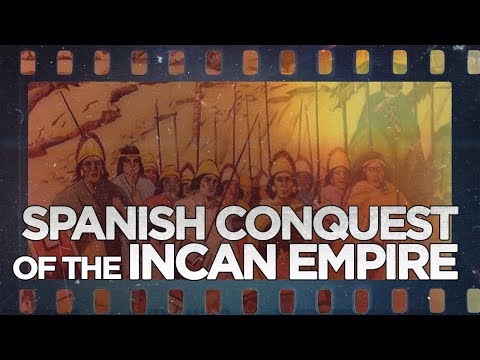
In 1532, Spanish conquistador Francisco Pizarro marched into the Inca Empire with fewer than 200 soldiers. Waiting for him in the city of Cajamarca was the Inca emperor Atahualpa, who commanded tens of thousands of warriors and controlled one of the largest empires in the Americas.
Despite the overwhelming numbers against them, the Spaniards had enormous technological advantages. They carried steel weapons, firearms, and cannons—and rode horses, animals the Inca had never seen in battle. When Atahualpa arrived in Cajamarca’s plaza with thousands of attendants but few armed guards, Pizarro launched a surprise ambush.
Spanish cavalry charged the crowd while cannons fired into the densely packed Inca ranks. Panic spread instantly. Within hours, thousands of Incas were dead, and Atahualpa himself had been captured. The shocking defeat allowed the Spaniards to dismantle the Inca Empire in the years that followed.[3]
7 The Anglo-Zanzibar War
The Anglo Zanzibar War – The Shortest War in History

In 1896, Zanzibar’s sultan died. The British, then colonial rulers, intended to name Hamud Ibn Mohammed as sultan. Prince Khalid Ibn Barghash had other plans. He rallied 1,000 soldiers and 2,000 civilians, mounted artillery on the yacht Glasgow, and seized the palace. The British assembled 1,000 troops, and five warships sailed into the harbor.
The British gave Khalid a day to surrender while awaiting London’s approval. He refused. The next morning, the warships opened fire. Within minutes, the Glasgow was sunk, the palace burned, and much of Khalid’s force was killed or wounded. The British suffered only one injured sailor.
In roughly 40 minutes, the war was over—making it the shortest war in recorded history. Khalid fled to German East Africa and was eventually captured years later by British authorities.[4]
6 The Battle of Acosta Ñu
The Paraguayan War: South America’s Most Devastating Conflict

Few wars were more lopsided than the War of the Triple Alliance. Paraguay’s leader, Francisco Solano López, declared war on Uruguay and Brazil in 1864 and then on Argentina. López had about 50,000 men; the Alliance fielded more than 500,000. Early Paraguayan victories faded as the six-year war ground on.
At Acosta Ñu in 1869, López brought 3,000 to 4,000 troops against 20,000 Brazilians. By then, Paraguay relied on child soldiers, many 15 or younger, some even wearing fake facial hair. Paraguay had lost nearly every able-bodied man.
The result was a devastating rout. Months later, the war ended, leaving Paraguay shattered. Historians estimate that roughly two-thirds of Paraguay’s male population died from war, violence, and famine.[5]
5 The Battle of Dybbøl
German Wars of Unification: The Battle of Dybbøl, 1864 (Part 3)

In 1864, the Prussian Army invaded Denmark, blasting through fortresses toward Dybbøl with more than 40,000 troops. The Danes had fewer than 11,000 and hoped their new ironclad Rolf Krake could help.
There was no underdog miracle. Prussian heavy artillery rained shells across the battlefield. Danish fortifications were steadily destroyed, leaving defenders exposed.
When the final assault began, Prussian troops stormed the trenches and overwhelmed the Danish lines in minutes. The Danes lost more than a third of their forces, while Prussian losses were far lower. The battle became one of the defining defeats in Danish history.[6]
4 The Siege of Jadotville
The Siege of Jadotville (155 Irish soldiers VS 4,000 Katangese troops)

After the Democratic Republic of Congo gained independence in 1960, the province of Katanga declared independence in 1961. The DRC asked the United Nations for help. Among the peacekeepers were 157 Irish soldiers, airlifted to Jadotville to protect Belgian settlers. Katangan forces attacked with roughly 3,000 troops and mercenaries, supported by artillery and even a fighter aircraft.
The Irish held out for five days under constant attack. Despite being surrounded and heavily outnumbered, they repelled repeated assaults and inflicted severe losses on their attackers.
Katangan forces suffered hundreds of casualties while the Irish suffered none during the battle. Eventually, running low on ammunition and supplies, the Irish surrendered after negotiations arranged by the United Nations.[7]
3 The Battle of Fraustadt
Battle of Fraustadt 1706 – Swedish Invasion of Poland DOCUMENTARY

In 1706 near Fraustadt, the Swedish army faced a larger Polish-Russian force. The Swedes had fewer than 10,000 men and no heavy artillery; their enemies had more than twice that number and three dozen cannons. Swedish commander Carl Rehnskiöld believed the enemy forces would struggle to maneuver quickly.
He planned a bold pincer attack. As Swedish troops advanced, the Polish-Russian artillery struggled to deploy effectively.
Rehnskiöld then ordered a sudden charge. Swedish infantry closed quickly with bayonets before the opposing troops could fire sustained volleys. The result was catastrophic for the Polish-Russian force, which suffered enormous losses while the Swedes secured a decisive victory.[8]
2 The Kabul Retreat
The DEADLIEST Retreat in British History

In 1839, Britain sent 18,000 troops to Kabul to counter Russian influence and support a British-backed Shah. The ruler was assassinated two years later, and British forces suddenly found themselves trapped in hostile territory.
About 4,500 British and Indian soldiers attempted to withdraw from Kabul along with roughly 12,000 civilians and camp followers. They faced a brutal winter retreat through nearly 90 miles of mountain passes.
Afghan fighters harried the column constantly. Ambushes, freezing weather, and starvation devastated the retreating force. London long believed Assistant Surgeon William Brydon was the sole survivor after he rode a wounded horse into Jalalabad. Later research revealed that several officers and thousands of Indian troops survived captivity—but most of the original force vanished during the disastrous retreat.[9]
1 The Battle of Omdurman
What Happened At The Battle of Omdurman, Sudan 1898?
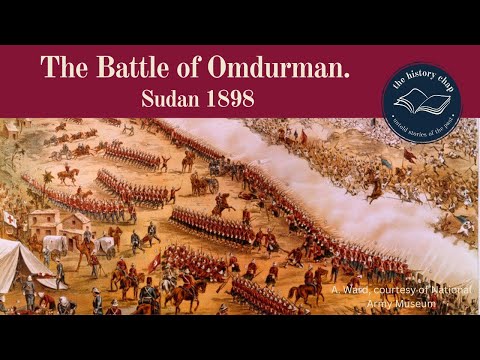
In 1898, British and Egyptian forces under General Herbert Kitchener faced the Mahdist army outside the Sudanese city of Omdurman. The Mahdist fighters numbered more than 50,000, while Kitchener commanded about 25,000 well-trained troops.
Despite the Mahdists’ numerical advantage, the technological gap between the armies proved decisive. British forces were equipped with modern artillery and Maxim machine guns—some of the first automatic weapons used in large-scale warfare.
As the Mahdist army charged across open ground, machine guns cut down thousands of fighters in minutes. By the end of the battle, more than 10,000 Mahdists had been killed while British and Egyptian forces suffered only a few hundred casualties. The battle became a brutal demonstration of how industrial-age weapons could devastate traditional armies.[10]
More Great Lists
 10 of History's Most Badass Female Warlords Ever
 10 of the Most Unusual Deaths Ever Recorded in History
 The Ten Most Shocking and Horrific Television Murders Ever
 The Ten Most Bizarre English Aristocrats Who Ever Lived
 Top Ten Most Ruthless Fictional Gangsters in Movie History
 History's Ten Most Intense Sibling Feuds
 History's Ten Most Heroic Horses
 10 of the Most Bizarre Things Ever Dumped
 10 Most Complex Machines Ever Built
fact checked by
Darci Heikkinen
More Great Lists