
 Health
Health
Health  History
 10 Surprising Facts You Never Knew About Paul Revere
 Music
Music 10 Misconceptions in Music History
 Animals
 10 Wild Animals Ancient Cultures Successfully Tamed
 Movies and TV
 10 Action Flicks That End on a Quiet Note
 Mysteries
 10 People Who Infamously Appeared out of Nowhere
 Our World
 10 Countries Where Water Scarcity Gets Seriously Weird
 Weird Stuff
 10 of the Most Bizarre Buildings Around the World
 Creepy
 10 American Urban Legends Far Stranger Than Bigfoot
 Movies and TV
 10 Radical Reimaginings of Frankenstein
Health 10 Times the Placebo Effect Fooled Modern Science
History 10 Surprising Facts You Never Knew About Paul Revere
Music 10 Misconceptions in Music History
Who's Behind Listverse?

Jamie Frater
Head Editor
Jamie founded Listverse due to an insatiable desire to share fascinating, obscure, and bizarre facts. He has been a guest speaker on numerous national radio and television stations and is a five time published author.
More About Us
Animals 10 Wild Animals Ancient Cultures Successfully Tamed
Movies and TV 10 Action Flicks That End on a Quiet Note
Mysteries 10 People Who Infamously Appeared out of Nowhere
Our World 10 Countries Where Water Scarcity Gets Seriously Weird
Weird Stuff 10 of the Most Bizarre Buildings Around the World
Creepy 10 American Urban Legends Far Stranger Than Bigfoot
Movies and TV 10 Radical Reimaginings of Frankenstein
10 Times the Placebo Effect Fooled Modern Science
The human brain exerts an astonishing influence over physical processes. For centuries, doctors have known that simply believing a treatment works can sometimes improve a patient’s symptoms. This strange phenomenon, known as the placebo effect, continues to fascinate modern researchers. Scientists have documented cases where fake pills caused measurable physiological changes that can resemble the effects of real drugs. From easing pain to mimicking aspects of real medical procedures, the mind can produce surprisingly powerful effects.
These ten remarkable instances suggest that one of the most powerful contributors to healing might just be your own expectations.
Related: 10 Medicines That Work But We Don’t Know Why
10 The Sham Knee Surgery
BBC Documentary – Placebo Effect As Good As Surgery For Outcome In Knee Pain.
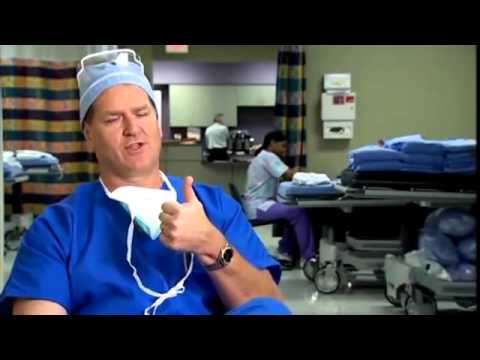
In 2002, a surgeon named Bruce Moseley conducted a study of patients with severe knee osteoarthritis. He divided the volunteers into groups, giving some standard corrective surgery and others a completely fake procedure. The patients receiving the fake surgery were sedated, given three small incisions to mimic the real operation, and then sent home.
To make the illusion convincing, the medical staff acted out a full operating room script during the fake procedures. They splashed saline to simulate joint washing and played recorded sounds of surgical tools. The patients had no idea that their joints had not actually been repaired by the doctor.
The results of the study shocked the medical community because the fake surgery group reported similar levels of pain relief as the real surgery group. Some of the placebo patients were even walking better and climbing stairs more easily years later. This study forced orthopedic surgeons to reconsider whether certain common procedures were as effective as once believed.[1]
9 The Poison Ivy Blindfold Test
The Chemistry of Poison Ivy

In a widely cited 1962 study in Japan, researchers selected a group of children who were highly sensitive to the leaves of the lacquer tree, which can cause a reaction resembling poison ivy. The scientists blindfolded the children and told them that one of their arms was being rubbed with the toxic leaves while the other arm was rubbed with a harmless plant. In reality, the researchers reversed the application, putting the harmless leaf on the arm they claimed was poisonous.
Within hours, many of the children began to develop visible skin irritation on the arm that had been rubbed with the harmless leaf. Their expectation of exposure appeared to trigger a real physiological response.
Even more strikingly, the arm that was rubbed with the actual toxic leaf showed little or no reaction in several of the children. Because they believed it was harmless, their bodies did not respond as strongly as expected. While the details of this study are debated, it remains one of the most frequently referenced examples of how expectation can influence physical reactions.[2]
8 The Incredible Case of Mr. Wright
Did The Placebo Effect Cure This Man’s Cancer? The Case of Mr. Wright.

In the 1950s, a man known in medical literature as Mr. Wright was suffering from advanced cancer of the lymph nodes. He had large tumors throughout his body and was in extremely poor condition. Despite his prognosis, he became convinced that a new experimental drug called Krebiozen was the breakthrough treatment he needed.
His doctor agreed to administer the drug, and shortly afterward, Mr. Wright showed dramatic improvement. Reports describe his tumors shrinking significantly, and he was soon able to move about more comfortably.
However, when Mr. Wright later read reports suggesting the drug was ineffective, his condition worsened again. His doctor then attempted to restore his confidence by administering an inert injection presented as a refined version of the drug, after which Mr. Wright again improved temporarily. When negative reports resurfaced, his condition declined once more.
Although this case is often cited as a powerful example of the placebo effect, the details are largely anecdotal and should be interpreted with caution. Still, it highlights how strongly belief can appear to influence perceived health outcomes.[3]
7 The Fake Alcohol Parties
They replaced the alcohol with water!!!

Psychologists have conducted studies in which participants are invited into a simulated bar environment and served what they are told are alcoholic cocktails. In reality, the drinks contain no alcohol. They are made from mixers like tonic water and fruit juice, sometimes with a small amount of liquor on the rim to provide a convincing scent. The participants are then observed as they socialize and interact.
Within a short time, many participants begin to display behaviors commonly associated with alcohol consumption. They may become louder, less inhibited, and occasionally unsteady, as though intoxicated.
When researchers later reveal that the drinks were non-alcoholic, some participants are surprised or even skeptical. In some cases, they still perform poorly on coordination tasks despite having consumed no alcohol. These findings suggest that expectations and social context play a significant role in behaviors often attributed solely to alcohol.[4]
6 The Color-Coded Sedatives
Pill Appearance Change Causes Some Patients to Stop Taking Their Medication

Medical researchers have found that a pill’s physical appearance can influence how effective it feels as a placebo. In various studies, patients suffering from anxiety or insomnia were given inert pills dyed in different colors. The goal was to determine whether visual cues alone could influence patients’ experience of the treatment.
Patients given blue pills often reported feeling calmer and more relaxed. In many Western cultures, blue is associated with tranquility, and that association appears to influence perception. By contrast, red or yellow pills were more frequently associated with feelings of stimulation or increased alertness.
This effect is strong enough that pharmaceutical companies carefully consider pill color when designing medications to align with patient expectations. While color does not alter a drug’s chemical properties, it can influence how patients perceive its effects.[5]
5 Open-Label Placebos
Placebos Work Even if You Know They’re Placebos!
For decades, it was widely accepted that the placebo effect only worked if the patient believed they were receiving real medicine. However, a series of studies in the 2010s challenged this assumption by testing what are called open-label placebos. In these trials, doctors gave patients inert pills and explicitly told them that the pills contained no active ingredients.
The doctors explained that the body can sometimes respond positively to the act of taking medication itself, even when the treatment is inactive. Surprisingly, many patients suffering from conditions like chronic back pain, irritable bowel syndrome, and depression reported noticeable improvements in their symptoms.
Even without deception, the routine of taking medication appeared to trigger beneficial responses. Researchers suggest that the ritual of treatment—visiting a doctor, receiving a prescription, and taking pills regularly—may activate conditioned responses in the brain that contribute to symptom relief. This discovery has opened the door to new approaches that ethically and transparently use placebo effects.[6]
4 The Mammary Artery Ligation
The Shocking Truth About Surgical Placebos

In 1959, a cardiologist named Leonard Cobb conducted a study on a widely used surgical procedure for treating severe chest pain known as angina. The operation involved tying off internal mammary arteries in the chest to improve blood flow to the heart. Many patients who underwent the surgery reported significant relief.
Dr. Cobb questioned whether the benefits were due to the procedure itself or to patient expectations. To test this, he designed an experiment in which some patients received the full surgery, while others underwent a sham procedure involving incisions but no alteration of the arteries. Neither the patients nor the evaluating physicians knew who had received which treatment.
The results showed no significant difference in outcomes between the two groups. Many patients in the sham group reported improvements comparable to those who had undergone the actual operation. Following this study, the procedure was largely abandoned, highlighting the powerful role expectation can play in perceived symptom relief.[7]
3 Placebo Sleep Performance
The SURPRISING Power of PLACEBO SLEEP – HACK your Mind for REST

In a 2014 study, researchers explored whether beliefs about sleep quality could influence cognitive performance. Participants were connected to devices that were described as measuring brainwave activity and REM sleep cycles. However, the equipment did not actually assess sleep quality.
The researchers then gave participants fabricated feedback. Some were told they had experienced excellent sleep, while others were told their sleep quality had been poor. The participants were then asked to complete a series of cognitive tasks designed to measure memory and attention.
Those who believed they had slept well performed better on the tests, even when their actual sleep was not restful. Meanwhile, participants who were told they had slept poorly tended to perform worse. The findings suggest that expectations about rest can influence measurable cognitive outcomes.[8]
2 Parkinson’s Sham Brain Surgery
Placebo Effect in Parkinson’s Disease

Parkinson’s disease is a neurodegenerative condition that affects movement due to reduced dopamine levels in the brain. In the late 1990s, researchers tested an experimental surgical treatment involving the transplantation of dopamine-producing cells into patients’ brains.
To evaluate the effectiveness of the procedure, some patients underwent a sham surgery. Surgeons performed steps such as drilling small holes in the skull, but did not implant any cells. The patients were unaware whether they had received the real treatment or the placebo.
In follow-up assessments, some patients in the placebo group showed noticeable improvements in motor function. These results suggested that expectation alone may influence how symptoms are experienced or reported, even in serious neurological conditions. The study highlighted the importance of carefully controlled trials in evaluating surgical treatments.[9]
1 Placebo Morphine Conditioning
Why Placebo Medications Work!

One of the most compelling demonstrations of the placebo effect involves pharmacological conditioning. In clinical settings, patients recovering from surgery are often given morphine to manage pain. Over time, their bodies begin to associate the act of receiving an injection with pain relief.
In some studies, researchers replaced the morphine with a saline solution without informing the patients. Despite the absence of an active drug, patients still reported significant pain relief. Their brains appeared to respond to the expectation of treatment by activating internal pain-control mechanisms.
Further experiments showed that when patients were given a drug that blocks endorphins, the placebo effect disappeared. This indicates that the brain was releasing its own natural painkillers in response to expectation. Rather than being purely psychological, the placebo effect in these cases involved measurable biochemical changes within the body.[10]
More Great Lists
 10 Mind-Blowing Examples of the Placebo Effect
 Top 10 Times Sci-Fi Forgot to Use Science
 10 "Groundbreaking" Scientific Studies That Fooled the World
 10 Brave Women Who Fooled Entire Armies
 10 Peculiar Examples of the "Pizza Effect"
 10 Curious Musical Compositions Created by Science…
 10 Science Myths That Persist Despite Being Dead Wrong
 Top 10 Weirdest Jobs in Science Fiction
 10 Shadowed Geniuses: Science's Silent Trailblazers
fact checked by
Darci Heikkinen
More Great Lists