
 History
History
History  Animals
 10 Extinct Creatures That Aren’t What We Thought
 Weird Stuff
 10 Wild Facts You Might Not Know About Quicksand
 History
 10 Royal Dynasties That Endured for Centuries
 Travel
 10 Famous Movie Sets & Filming Locations You Can Still Visit Today
 History
 10 Super Unsettling Historical Facts We Wish Were False
 Weird Stuff
 10 Bizarre Ways People Used Blood in the Past
 Politics
 10 Laws Written for Exactly One Person
 Movies and TV
 10 Movie Sequels That Took Decades to Arrive
 Our World
 10 Remarkable Archaeological Sites Hidden in the Desert
History 10 Boring Ancient Documents That Exposed Astonishing Secrets
Animals 10 Extinct Creatures That Aren’t What We Thought
Weird Stuff 10 Wild Facts You Might Not Know About Quicksand
Who's Behind Listverse?

Jamie Frater
Head Editor
Jamie founded Listverse due to an insatiable desire to share fascinating, obscure, and bizarre facts. He has been a guest speaker on numerous national radio and television stations and is a five time published author.
More About Us
History 10 Royal Dynasties That Endured for Centuries
Travel 10 Famous Movie Sets & Filming Locations You Can Still Visit Today
History 10 Super Unsettling Historical Facts We Wish Were False
Weird Stuff 10 Bizarre Ways People Used Blood in the Past
Politics 10 Laws Written for Exactly One Person
Movies and TV 10 Movie Sequels That Took Decades to Arrive
Our World 10 Remarkable Archaeological Sites Hidden in the Desert
10 Asteroids That Sneaked Closer Than Our Satellites
Our solar system is a shooting gallery, and Earth is constantly cruising through a dense field of comets and asteroids. While NASA and other agencies diligently catalog larger, potentially hazardous objects, history is littered with tiny, fast-moving space rocks that sneak up on us, sometimes only being spotted after they have already zipped past. These “near misses” are not just astronomical curiosities; they are sharp, recurring reminders of the fragility of planetary safety, often passing closer than our own satellites.
The scale of these close calls is staggering. The distances are measured not in lunar distances (the distance to the Moon, ~238,900 miles [384,000 km]), but in mere thousands of kilometers above the planet’s surface, sometimes passing within the altitude of the International Space Station. Ranging from car-sized rocks to bus-sized behemoths, these 10 asteroids represent the closest non-impacting flybys ever recorded, proving that we live in a cosmic neighborhood where a quiet evening can turn into a close encounter without a moment’s notice.
Related: 10 Groundbreaking Space Missions That Flew under the Radar
10 Asteroid 2008 TS26
What If A Giant Asteroid Hit Earth Tomorrow? | FULL DOCUMENTARY

The year 2008 marked a significant entry into the astronomical record with the close approach of asteroid 2008 TS26 on October 9. This space rock was remarkably small, estimated to be only about 3–8 feet (1–2.5 m) across, or roughly the size of a small refrigerator. Its diminutive size made it incredibly difficult to detect, and fittingly, it was only spotted by the Catalina Sky Survey just hours before its closest approach, cementing its place in the history of “surprise” close calls. The nearest approach distance was recorded at just over 3,832 miles (6,168 km) above Earth’s surface.
Had 2008 TS26 been on an impact trajectory, its small size would have ensured a safe outcome for the planet, as the friction of entering Earth’s atmosphere would have caused it to burn up completely, resulting in a spectacular but harmless fireball. It was one of the first objects tracked to pass well inside the orbit of all geostationary communication satellites, which hover at about 22,236 miles (35,786 km).
The flyby also served as a demonstration of Earth’s gravitational influence. Even this small object’s orbit was subtly but permanently altered by its gravitational slingshot past the planet, reinforcing the scientific community’s concern that many similar Near-Earth Objects remain undetected until it is too late to observe them in advance.[1]
9 Asteroid 2011 CQ1
2011 CQ1
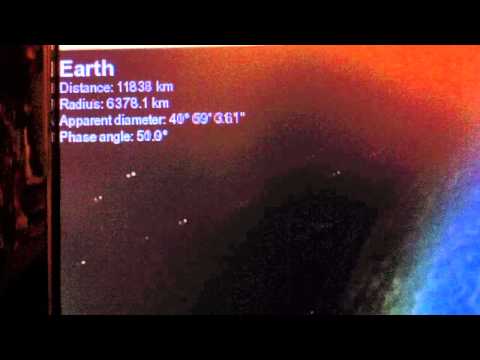
On February 4, 2011, asteroid 2011 CQ1 completed its astonishingly close flyby, estimated at just 3,406 miles (5,480 km) above Earth’s surface. This space rock was another tiny member of the Apollo group of asteroids, estimated to be about 3–7.5 feet (1–2.3 m) in diameter. As with many similar encounters, it was first detected only after it had already passed Earth, underscoring the limitations in tracking objects that approach from the Sun’s direction.
At its closest approach, 2011 CQ1 passed well inside the orbit of high-altitude satellites. While posing no danger to people on the ground, the event sparked renewed discussion among planetary defense experts about how often such close flybys likely occur without detection.
Astronomers concluded that asteroids of this size probably pass Earth at similar distances several times per year, but most go unseen due to their small size, speed, and approach angles. The flyby highlighted the need for improved sky surveys capable of detecting even the smallest objects before they slip past unnoticed.[2]
8 Asteroid 2023 BU
The Closest Impact on Record │Asteroid 2023 BU Passes by Earth

Asteroid 2023 BU made its closest approach on January 27, 2023, passing just 2,231 miles (3,589 km) above Earth’s surface. Unlike many objects on this list, it was discovered before its closest approach, a rare success for planetary defense systems. The asteroid was spotted by amateur astronomer Gennadiy Borisov, and its unusual orbit quickly drew the attention of NASA’s automated Scout impact-monitoring system.
The asteroid was estimated to be about 10–23 feet (3–7 m) wide, roughly the size of a large delivery truck. The short advance warning allowed scientists to track its path precisely, confirming that it would pass harmlessly over the southern tip of South America. Even in the unlikely event of impact, the object would have burned up in the atmosphere.
NASA described the event as a success story for modern detection systems, showing that even small objects can sometimes be identified and tracked with limited warning. For the public, the close call was a reminder that small Near-Earth Objects are frequent visitors to Earth’s immediate neighborhood.[3]
7 Asteroid 2021 UA1
Asteroid 2021 UA1 sneaks within 2000 miles of Earth went undetected | NASA surprised

On October 25, 2021, asteroid 2021 UA1 passed just over 1,898 miles (3,055 km) above Earth’s surface. The object was extremely small, estimated at only 3–8 feet (1–2.5 m) across, and posed no threat. However, its proximity was striking, particularly because it was detected only after it had already passed Earth.
The asteroid was first observed by the Mount Lemmon Survey roughly 11 hours after its closest approach, highlighting a long-standing challenge in planetary defense: detecting objects that approach from the direction of the Sun. This blind spot makes early warning especially difficult for small, fast-moving asteroids.
Although harmless, 2021 UA1 added to the growing evidence that meter-sized asteroids frequently pass through Earth’s orbital region. The event reinforced concerns about how many similar objects may pass undetected each year, grazing past satellites without anyone noticing.[4]
6 Asteroid 2020 QG
Asteroid 2020 QG Closest Fly – By Of Earth

For a time, asteroid 2020 QG held the record as the closest-known non-impacting flyby. On August 16, 2020, the SUV-sized object, estimated to be about 10–20 feet (3–6 m) across, passed just 1,830 miles (2,945 km) above Earth’s surface over the southern Indian Ocean. It was discovered by the Zwicky Transient Facility in California approximately six hours after it had already made its closest approach.
The flyby became famous because Earth’s gravity dramatically altered the asteroid’s path. The gravitational interaction bent its trajectory by about 45 degrees, significantly changing its orbit around the Sun and providing scientists with valuable data on how planetary gravity affects small Near-Earth Objects.
Despite its shocking proximity, 2020 QG would have burned up harmlessly in the atmosphere had it struck Earth. Still, the encounter demonstrated how easily small asteroids can slip past detection and pass closer than even geostationary satellites, reinforcing calls for improved early warning systems.[5]
5 Asteroid 2024 UG9
What Happens When Asteroids Hit The Earth: The Ultimate Disaster

Asteroid 2024 UG9, a small, fast-moving object roughly the size of a car, flew past Earth over the Indian Ocean on October 25, 2024. Its trajectory brought it within just 1,540 miles (2,478 km) of Earth’s surface. The asteroid was discovered only after the flyby, once again illustrating how quickly these tiny objects can appear and vanish.
The flyby distance placed 2024 UG9 well inside the orbits of many GPS and communications satellites. Scientists believe its approach angle temporarily placed it in a blind spot for ground-based telescopes, preventing earlier detection.
Although its size meant it posed no danger to Earth, the event contributed valuable data about how often small, undetectable asteroids cross Earth’s orbital path. The rapid post-flyby tracking helped validate models used to predict orbital changes after close gravitational encounters.[6]
4 Asteroid 2024 LH1
Asteroid 2024 LH1 fly-by

Asteroid 2024 LH1 became one of the closest-known flybys of 2024 when it passed just 1,073 miles (1,726 km) above Earth’s surface on June 5. This distance placed it well within the orbits of many low-Earth-orbit satellites, including weather and imaging spacecraft.
The object was detected late in its approach, limiting observation time but providing valuable data due to its extreme proximity and speed. Scientists used the encounter to refine orbital calculation models for small Near-Earth Objects.
The close pass through Earth’s crowded satellite region underscored the risk of orbital collisions. It highlighted the difficulty of detecting small asteroids with little warning. The event reinforced the need for improved monitoring of Earth’s immediate space environment.[7]
3 Asteroid 2024 XA
What You Need To Know About Asteroids and Other Near-Earth Objects

Asteroid 2024 XA made an extraordinarily close flyby on December 1, 2024, passing just 841 miles (1,354 km) above Earth’s surface. While still higher than the International Space Station’s typical orbit, the asteroid passed closer than many weather and reconnaissance satellites, marking it as a significant near miss.
The object’s small size and rapid approach made tracking difficult, but multiple agencies successfully monitored its trajectory. Earth’s gravity noticeably altered its orbit, allowing scientists to study how close encounters reshape the paths of small Near-Earth Objects.
The event highlighted the density of objects passing through low-Earth orbital space and reinforced the importance of automated, high-cadence sky surveys capable of detecting fast-moving threats with minimal warning time.[8]
2 Asteroid 2025 TF
Astronomers Shocked! Asteroid 2025 TF flies by Earth at only 250 Miles Away!

Asteroid 2025 TF became the second-closest asteroid ever recorded to pass Earth without impact, skimming just 260 miles (419 km) above the surface over Antarctica on October 1, 2025. Estimated to be about 3–10 feet (1–3 m) wide, the object was discovered only hours after its record-setting flyby.
The asteroid passed closer to Earth than the orbits of most crewed space missions, including the International Space Station. Although objects of this size pose no threat to the ground, the event caused concern due to its proximity to valuable satellite infrastructure.
The close encounter emphasized the need for space-based infrared telescopes capable of detecting small, dark objects approaching from the Sun’s direction. The event served as a stark reminder of the vulnerabilities in current asteroid detection systems.[9]
1 Asteroid 2020 VT4
Asteroid 2020 VT4 orbital simulation

Asteroid 2020 VT4 currently holds the record as the closest known non-impacting flyby of any space rock. On November 13, 2020, it passed just 229 miles (368 km) above Earth’s surface near French Polynesia, well inside the orbit of the International Space Station. The asteroid was estimated to be about 16–36 feet (5–11 m) across, roughly the size of a bus.
Alarmingly, 2020 VT4 was discovered only about 15 hours after it had already passed Earth. The lack of advance warning demonstrated that an object capable of producing a Chelyabinsk-style airburst could approach and escape detection almost entirely.
The extreme proximity of the flyby caused Earth’s gravity to significantly alter the asteroid’s orbit, shifting it from the Apollo group into the Aten group. Scientists described the event as a clear warning shot, highlighting how thin the margin is between a harmless flyby and a potentially damaging impact.[10]
More Great Lists
 10 Exciting Snapshots of a Future Much Closer Than You Think
 10 "City‑Killer" Asteroids That Scientists Are…
 10 Ways Science Is Bringing Us Closer to Teleportation
 A Closer Look at 10 of Tim Burton's Memorable Movie…
 10 Lesser-Known Fascinating Facts about Our…
 10 Innovative Spinoffs Developed by NASA That…
 10 Fascinating Facts about Our Furry Feline Friends
 10 Misconceptions About Our Bodies That Many of Us…
 10 Crops That Are Destroying Our Planet
fact checked by Darci Heikkinen
More Great Lists