
 Creepy
 Humans
10 Mathematical Geniuses Who Quietly Built the Modern World
 Movies and TV
10 Movie Antagonists Who Deserved More Sympathy
 Weird Stuff
10 Lakes Where Nature Gets Seriously Weird
 Music
10 of the Biggest Music Careers Launched by Sitcoms
 Movies and TV
10 Period-Drama Details That Look Fake but Are Historically Accurate
 Weird Stuff
10 Wild Facts You Might Not Know About Bears
 Mysteries
10 Terrifying Medical Mysteries That Turned Out to Be Poisoning
 History
10 Real Intelligence Operations That Sound Like Hollywood Fiction
 Creepy
10 Drowned Towns That Reappear When the Water Recedes
Creepy 10 Appalachian Legends to Haunt Your Halloween
Humans 10 Mathematical Geniuses Who Quietly Built the Modern World
Movies and TV 10 Movie Antagonists Who Deserved More Sympathy
Who's Behind Listverse?

Jamie Frater
Head Editor
Jamie founded Listverse due to an insatiable desire to share fascinating, obscure, and bizarre facts. He has been a guest speaker on numerous national radio and television stations and is a five time published author.
More About Us
Weird Stuff 10 Lakes Where Nature Gets Seriously Weird
Music 10 of the Biggest Music Careers Launched by Sitcoms
Movies and TV 10 Period-Drama Details That Look Fake but Are Historically Accurate
Weird Stuff 10 Wild Facts You Might Not Know About Bears
Mysteries 10 Terrifying Medical Mysteries That Turned Out to Be Poisoning
History 10 Real Intelligence Operations That Sound Like Hollywood Fiction
Creepy 10 Drowned Towns That Reappear When the Water Recedes
10 Appalachian Legends to Haunt Your Halloween
The Appalachian Mountains are beautiful by day, but darkness can turn even the most inviting trail into something sinister. For generations, the region’s battlefields, railroad towns, isolated communities, and shadowy forests have inspired stories of restless ghosts, strange lights, phantom animals, and creatures that refuse to fit comfortably into the natural world.
Some of these legends grew out of historical tragedies. Others traveled through oral tradition until nobody could remember where the facts ended and the frightening additions began. A few are modern creations spreading around today’s digital campfires. Whether ancient or surprisingly new, these ten Appalachian legends may make you think twice before wandering into the mountains after sunset.
Related: 10 Obscure Cryptids and Why You’ve Never Heard of Them
10 The Not Deer
The Not-Deer: The Mysteries of This Eerie Cryptid
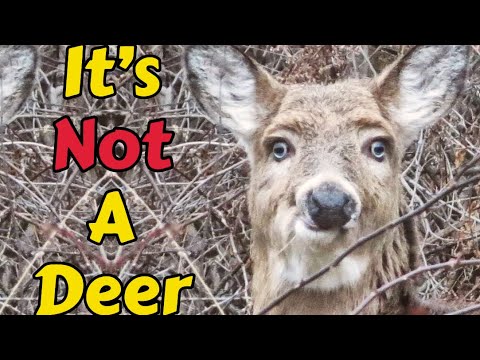
It looks like a deer—at first. Then it turns its head, and something about the animal suddenly seems wrong. Its eyes face forward instead of toward the sides, its legs appear too long, or its joints bend in directions they should not. Some witnesses claim the creature stands upright, moves like a poorly operated machine, or watches people with an intelligence no ordinary deer should possess.
The Not Deer is often presented as an ancient Appalachian monster, but its documented history is much more recent. The creature appears to be modern internet folklore that grew through online stories, social media posts, and supposed eyewitness accounts. Its popularity shows that new legends can still emerge from old fears—especially the fear of encountering something familiar that isn’t quite what it seems.
Real deer suffering from injuries or illnesses such as chronic wasting disease can become thin, confused, and uncoordinated. That may explain some unsettling encounters, although it cannot account for every detail added as the Not Deer story travels across the internet.[1]
9 Old Green Eyes
REAL Old Green Eyes Battlefield Ghost | Chilling Haunt Analysis Revealed

The Battle of Chickamauga was fought across northern Georgia on September 19 and 20, 1863. It produced more than 34,000 combined casualties, making it one of the bloodiest battles of the Civil War. According to local legend, however, something was already lurking in those woods before the armies arrived.
Some accounts describe Old Green Eyes as the ghost of a soldier whose head was destroyed by a cannonball. Other versions transform him into a fanged, long-haired creature that prowled the region long before the war. The stories agree on his most disturbing feature: a pair of glowing green or greenish-orange eyes watching visitors from the darkness.
Former park historian and chief ranger Edward Tinney reportedly encountered the figure around four o’clock one morning in 1976. Tinney described something more than six feet (1.8 meters) tall, wearing a long black coat and with hair reaching its waist. It passed close by, then turned to reveal a terrifying grin and brightly shining eyes. Headlights then swept across the area, and the figure disappeared.[2]
8 Screaming Jenny
The Haunting Legend of Screaming Jenny | Harpers Ferry Ghost Story

Harpers Ferry, West Virginia, is remembered for its pivotal role in American history, but its railroad tracks also hold one of Appalachia’s most tragic ghosts. Legend says Jenny was an impoverished woman who lived in an abandoned storage shed near the Baltimore and Ohio Railroad.
One cold night, Jenny was warming herself beside a fire when a spark ignited her clothing. Terrified and engulfed in flames, she ran from the shed and onto the tracks, apparently searching for help. An approaching train could not stop in time. The engineer saw the burning woman ahead of him, but Jenny was struck and killed before she could escape.
The legend says that an engineer traveling the same stretch of track later saw another burning woman running directly toward his train. He applied the brakes, only to find no one there. Jenny’s fiery apparition supposedly continues to appear near the anniversary of her death, eternally repeating her desperate final run along the rails.[3]
7 The Marrtown Banshee
The Marrtown Banshee | A Chilling West Virginia Ghost Story

Thomas and Mary Marr lived near Parkersburg, West Virginia, in a community that eventually became known as Marrtown. According to the legend, Thomas worked nights and repeatedly encountered a veiled figure riding a white horse. Whenever he attempted to approach the mysterious rider, she vanished.
One evening, Mary allegedly heard hoofbeats outside the farmhouse and saw the veiled woman herself. The apparition announced that Thomas had died and instructed Mary to prepare herself before disappearing into the darkness. Someone arrived a short time later with news of Thomas’s death.
The historical record tells a different story from the familiar legend. A newspaper notice dated February 12, 1874, reported that Thomas was found near a railroad freight depot with a broken neck. He may have fallen while attempting to clean a stovepipe. Later retellings moved his death to other years, made him a toll-bridge watchman, and sometimes claimed that he drowned after the ghost frightened him into the river. Those contradictions reveal how an accidental death gradually became a supernatural warning passed between generations.[4]
6 Indrid Cold
West Virginia Folklore: Indrid Cold

On November 2, 1966, appliance salesman Woodrow Derenberger was driving home near Parkersburg, West Virginia, when a strange craft reportedly blocked Interstate 77. A man about six feet (1.8 meters) tall emerged. He had dark hair, an olive complexion, and a glossy blue coat—and communicated without visibly moving his lips.
The smiling stranger supposedly identified himself as Cold and assured Derenberger that he meant no harm. Derenberger reported the encounter to authorities and described it on local television the following day. He later expanded the story, claiming that the visitor’s full name was Indrid Cold and that Cold took him to a planet called Lanulos.
The West Virginia visitor was not the same figure as the “Grinning Man” two boys spotted in New Jersey several weeks earlier. Writer John Keel later suggested the encounters involved the same entity, merging two separate stories into one enduring legend. Later retellings also connected Cold with the Mothman sightings that began near Point Pleasant less than two weeks after Derenberger’s alleged encounter.[5]
5 The Snarly Yow
The Snarly Yow

Travelers crossing South Mountain in western Maryland once told stories of a massive black dog that appeared beside the National Road after dark. Known as the Snarly Yow, the phantom animal reportedly had glowing eyes, an enormous mouth, and a habit of materializing directly in the path of horses and automobiles.
People who tried to strike the creature supposedly found their weapons passed straight through it. Others claimed to have shot it at close range, only to watch it vanish without suffering an injury. The Snarly Yow was therefore less a living cryptid than a spectral black dog, sometimes interpreted as an omen that disaster was approaching.
The legend was already circulating by the nineteenth century. After purchasing an inn at Turner’s Gap in 1876, wealthy widow Madeleine Vinton Dahlgren began collecting the region’s stories from local residents. She included the supposedly unkillable Snarly Yow in her 1882 book South-Mountain Magic, preserving a creature that might otherwise have vanished along with the travelers it once terrified.[6]
4 Soap Sally
The Legend of Soap Sally

Parents could summon Soap Sally whenever children refused to complete their chores. Stories described her as a solitary woman who lurked around rural communities throughout Appalachia and the American South. Depending on the version, she appeared as an old crone, a local washerwoman, or even a friendly person or animal that children might willingly follow.
Any child foolish enough to trust her would be taken to her cottage and placed in a large pot. Soap Sally boiled her victims until she could turn their fat into soap or candles. In an especially gruesome version, she shaped the candles like children’s hands and sold them to the victims’ unsuspecting families.
The legend may have served a practical purpose. Rural families once produced soap by leaching dangerously caustic lye from wood ashes stored in barrels. Soap Sally gave children a horrifying reason to stay away from those barrels—and reminded them what might happen if they neglected their household duties. Her stories largely faded after commercially manufactured soap replaced home production during the early twentieth century.[7]
3 Tailypo
The Tailypo — The Strange Appalachian Creature Behind an Old Forest Legend

Tailypo has many versions, but one of the most familiar begins with a hungry woodsman living in a remote cabin with his three dogs. After returning from an unsuccessful hunt, he notices a strange furry creature crawling through a gap in the cabin wall. The woodsman cuts off its long tail, cooks it, and eats it for supper.
That night, something begins scratching outside. A voice calls from the darkness, demanding, “Tailypo, Tailypo, give me back my Tailypo.” The woodsman sends his dogs after the creature one at a time, but none return. Each disappearance brings the voice closer to the cabin.
Eventually, the creature reaches the woodsman’s bed and asks for its tail one final time. When the man cannot return what he ate, Tailypo tears him apart. In the morning, nothing remains of the cabin except its chimney. The wind carries one last message through the trees: “Tailypo, Tailypo, now I’ve got my Tailypo.” Passed down in many forms, the story remains a favorite Appalachian campfire tale because the repeated warning practically begs listeners to join in.[8]
2 The Brown Mountain Lights
The Haunting Mystery of the Brown Mountain Lights

For more than a century, people near Brown Mountain in western North Carolina have reported seeing mysterious lights rise above the landscape, drift through the darkness, and disappear. Some appear white, while others are described as yellow or red. They may hover motionless, move across the mountain, or suddenly divide into several lights.
The phenomenon attracted enough attention that the U.S. Geological Survey investigated it more than once. A brief 1913 examination attributed the sightings to locomotive headlights. When reports persisted, geologist George R. Mansfield conducted a more extensive investigation in 1922. He spent two weeks observing the area and compared the lights’ positions with maps of nearby roads, railways, towns, and natural features.
Mansfield concluded that most sightings came from automobile and locomotive headlights, stationary lights, and occasional brush fires. Atmospheric conditions could distort these ordinary sources, making them appear suspended above the mountain. The explanation did not kill the legend. Visitors still gather at overlooks after dark, hoping to see a light that refuses to behave like a distant car or train.[9]
1 The Greenbrier Ghost
The Greenbrier Ghost: Appalachia True Stories

When Zona Heaster Shue was found dead in her West Virginia home in January 1897, her husband, Edward, behaved strangely. He cradled her head, dressed her body in a high-collared garment, and reportedly resisted attempts to examine her neck. The local doctor nevertheless attributed her death to natural causes, and Zona was buried.
Zona’s mother, Mary Jane Heaster, remained suspicious. She later claimed that her daughter appeared to her on four nights and explained that Edward had killed her after becoming angry about supper. During one visitation, Zona reportedly turned her head completely around to demonstrate how her neck had been broken.
Mary Jane convinced the local prosecutor to investigate. After Zona’s body was exhumed, an autopsy revealed that her neck had been dislocated, her ligaments torn, and her windpipe crushed. Edward was charged with murder.
The prosecution relied on medical findings and circumstantial evidence rather than testimony from beyond the grave. However, Edward’s defense attorney questioned Mary Jane about the apparition during cross-examination, letting the jury hear the entire ghost story. Edward was convicted of first-degree murder and sentenced to life in prison. The Greenbrier Ghost may not have literally testified against her killer, but her mother’s unwavering story helped transform a suspicious death into one of Appalachia’s most extraordinary murder cases.[10]
More Great Lists
 10 Spanish-Language Horror Films That Will Haunt Your Dreams
 Top 10 Ghost Adventures Episodes That Will Haunt You Forever
 10 Mind-Bending Psychological Thrillers From The 90s…
 10 Thanksgiving Stories Sure Tto Blow Your Mind &…
 10 Truly Evil People Who Used Halloween as the Perfect Cover
 10 Unsettling Ghost Stories to Tell This Halloween
 10 Urban Legends That Might Be True
 10 Terrifying Native American Legends
 10 Ghost Stories and Odd Legends from Italy
fact checked by Darci Heikkinen
More Great Lists