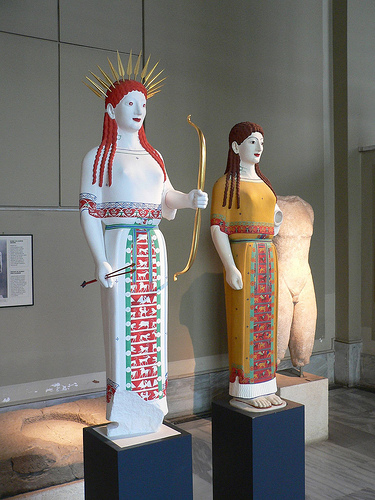
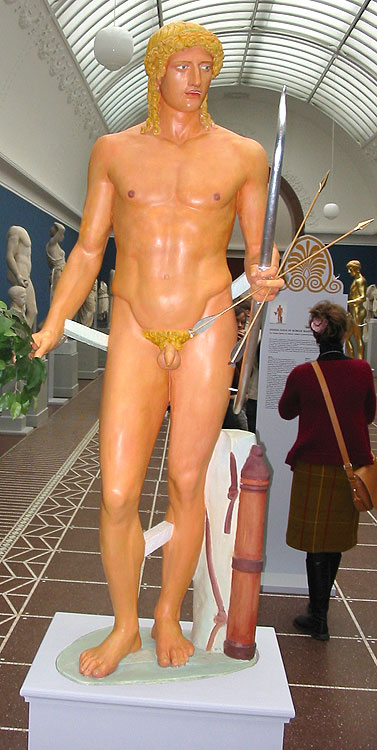
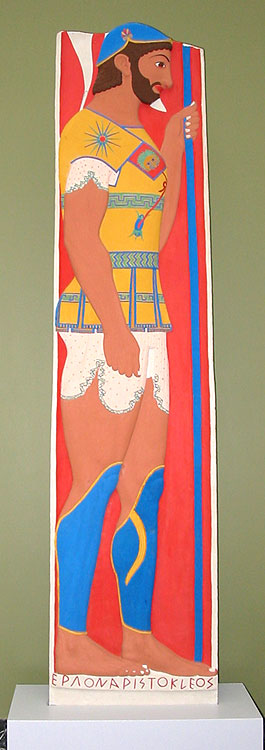
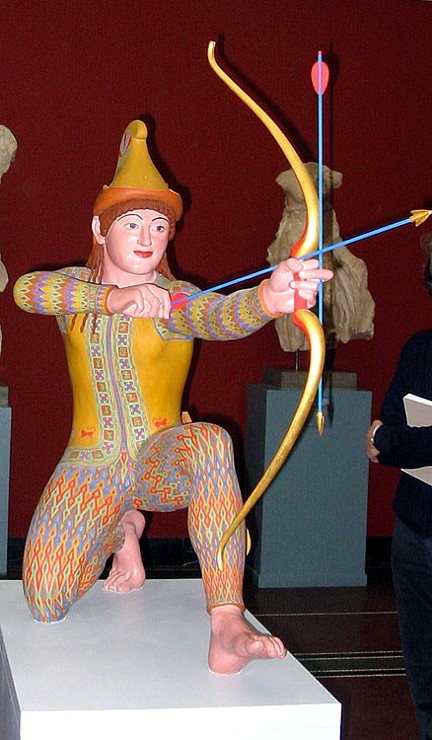
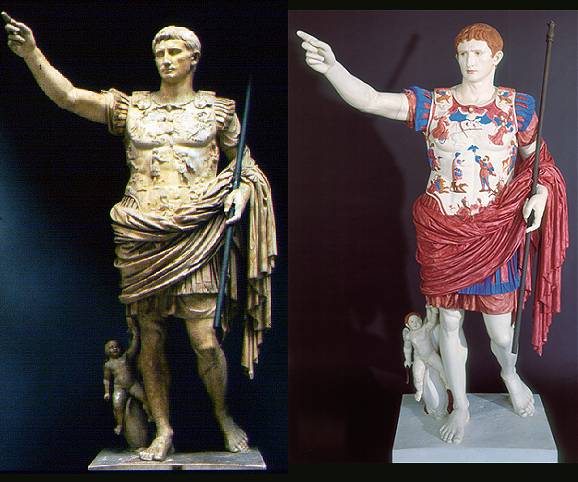
When we think of statues and buildings of the classical period, we tend to imagine white marble; scientists in recent years have discovered that it is in fact most likely that many of the buildings and statues were painted and probably adorned with jewelry. The Vatican Museum has recently put on an exhibition of some of the most famous antiquities from the era with reproductions painted as close to the originals as they can – this is possible because many statues contain trace amounts of pigment from their original coats of paint. This is a list of ten spectacular reproduction statues from the Classical Period. As usual, click each image to view a larger version.
10. Augustus of Prima Porta
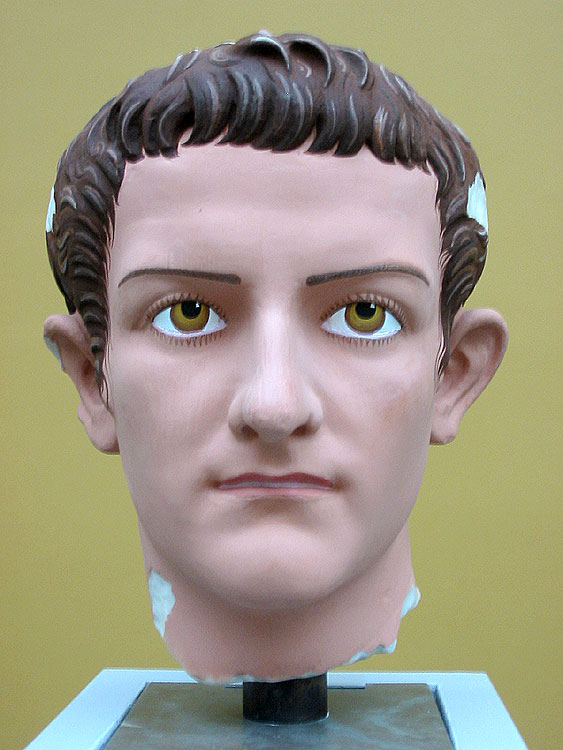
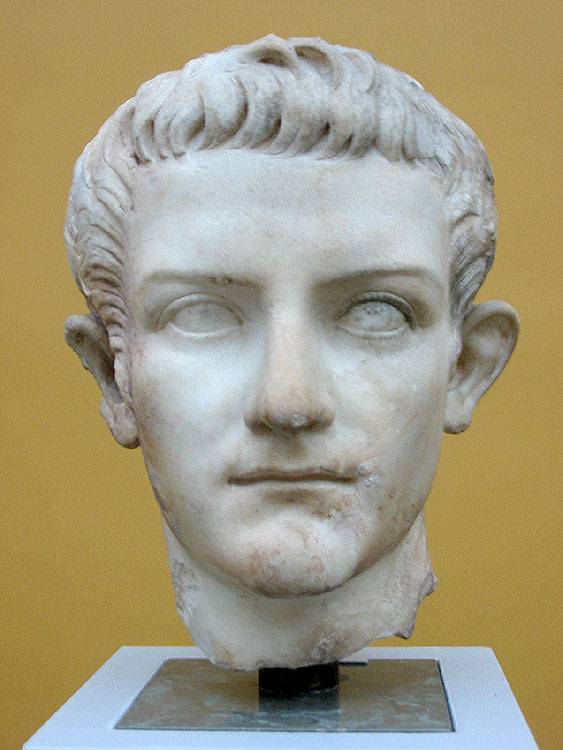
9. Emperor Caligula
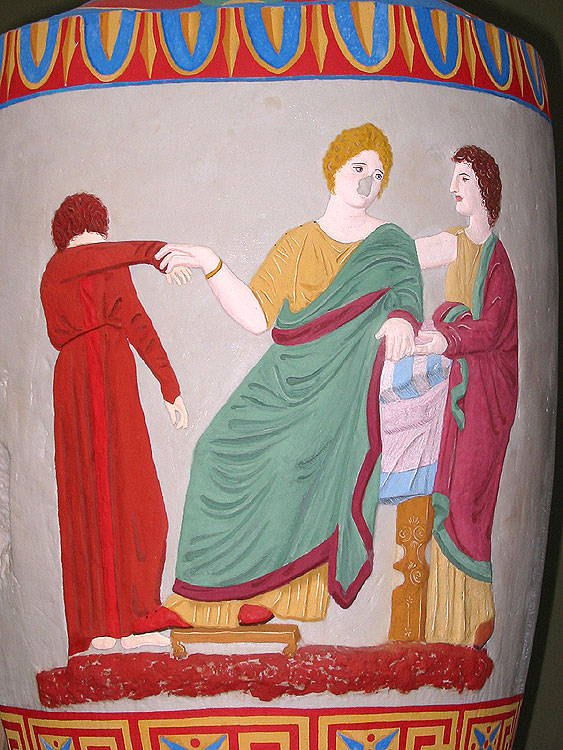
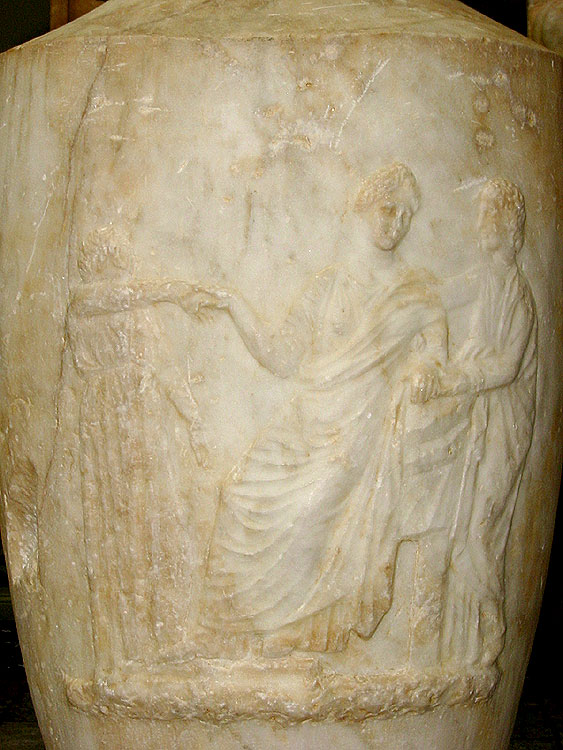
8. Attisk Gravlekythos
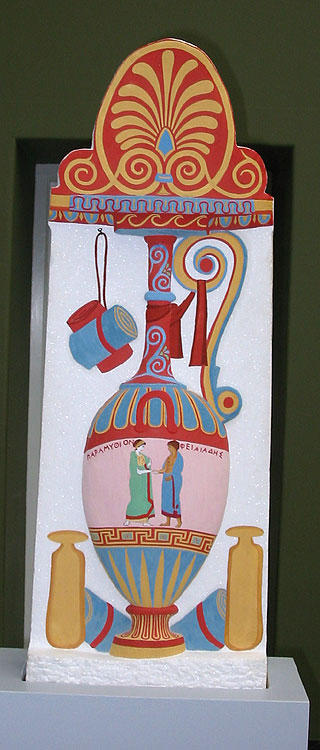
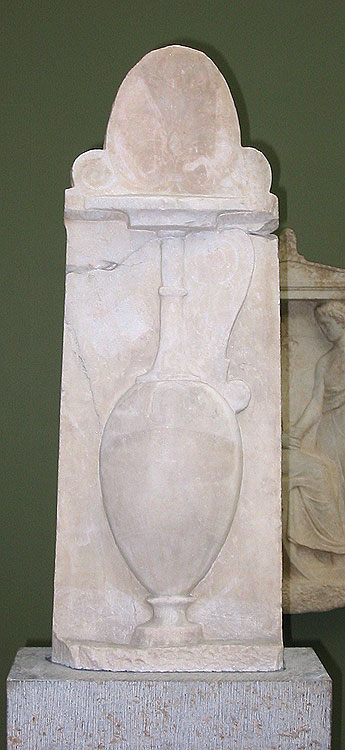
7. Stele of Paramythion
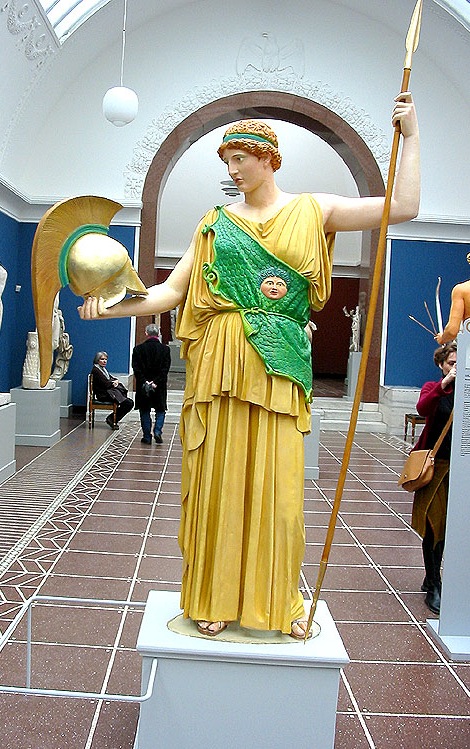
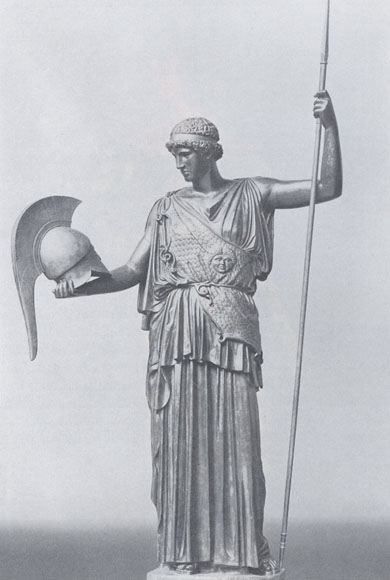
6. Athena Lemnia
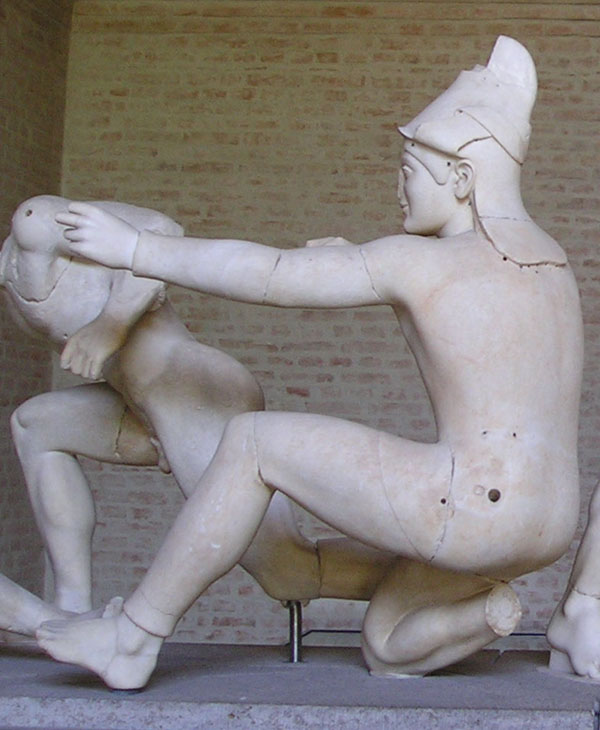
5. Aphaiatemplet Aigina
4. Peplos Kore
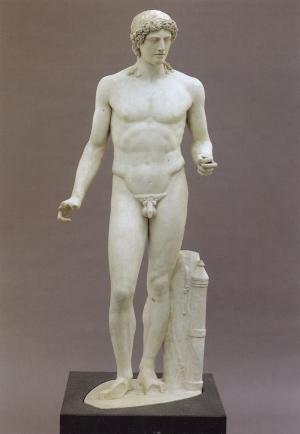
3. Apollo
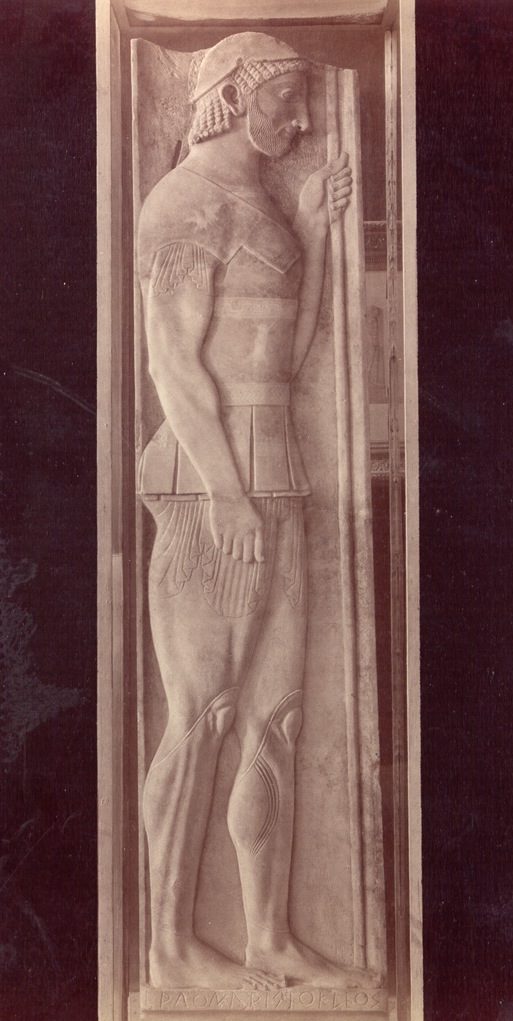
2. Stele of Aristion
1. Paris


December 24th, 2007 at 3:38 pm
pretty cool to see ancient items colored
December 24th, 2007 at 3:48 pm
Hm. Was Ted Turner there that day?
December 24th, 2007 at 4:10 pm
I like that Apollo’s carpet and curtains match. Fine attention to detail.
December 24th, 2007 at 4:22 pm
Although it’s great to see those works of art in color, I felt more comfortable to see them in actual appearances. More likely, I admire #6 and 3#.
Nice X’mas guys..
December 24th, 2007 at 4:51 pm
This is kinda weird. It takes away from the authenticity.
December 24th, 2007 at 5:42 pm
pretty good. kinda confusing. i think the artists/sculptors used to bright of colors for the artifacts.
December 24th, 2007 at 5:52 pm
Ughh, all those bright colors remind me of tijuana (sp?). The color makes it look like something you would see in a cartoon. I definately prefer the plain old “marble” tone.
December 24th, 2007 at 5:58 pm
they look so much better without colour.
December 24th, 2007 at 6:15 pm
wow those really suck, not being a jerk here but the origionals much better
December 24th, 2007 at 6:25 pm
Why does the Athena Lemnia have a Cabbage Patch Doll head on her outfit?
It’s not a surprised that the items would be colored and bright. Color is a part of our world, and bright often means more powerful/holy.
December 24th, 2007 at 6:28 pm
Man, I can’t believe all these comments. Just admit that your artistic perception has been warped by being taught that “classic” works of art had to be colorless.
December 24th, 2007 at 7:00 pm
i wouldn’t say ‘warped’ least not in my case. i think the lack of pigment induces a need to really look at the piece and get a better appreciation of the skill of its creation. pigment ‘covers up’ some of the craftsmanship.
and yeah…i just think it looks creepy. i wonder if the original pigments/paints were so cartoonish. ugh.
December 24th, 2007 at 8:19 pm
It’s funny how people are saying they prefer the original, ie the un-adorned version, when really the original is likely to have been painted. It’s all what you’re used to.
December 24th, 2007 at 8:23 pm
Yeah, if the originals were painted, then you actually prefer the worn-out, aged, de-colored versions, not the “originals”.
December 24th, 2007 at 8:36 pm
Their sense and ability to sculpt is apparently more advanced than their painting skill.
December 24th, 2007 at 9:23 pm
It’s interesting to see how nearly gaudy the famous stoic striking statues look once painted. I agree with Joshua, hehe.
December 24th, 2007 at 9:33 pm
lol@ angelina; i was thinking the same thing
December 24th, 2007 at 9:44 pm
Ben- Yes, it’s true that our artistic perceptions have been “warped” by the stereotype that it should be colorless, but does that make it bad?
Can you really say that it’s better with color and call us all “warped” for disagreeing? My friend, that is art and art is truly within the eye of the beholder.
And most of our eyes thing that the “colorless” and bland versions are better. Regardless of original intention.
December 24th, 2007 at 9:48 pm
This is quite interesting. As early 40 A.D., bust and life size statues are primarily done in lost wax casting in bronze. The big marble statues are just a replica of the originals. Most of the time, these marble sculptures are done from very fine sand finish to highly polished. This kind of finishing do not require pigmentation or what we call now painting. These process are even used by Michaelangelo up to late 1400.
Pigmentation are commonly used in Egypt in their hieroglyphs and maybe to some sculptures.
December 24th, 2007 at 11:12 pm
>recent years have discovered
This has been known for centuries.
December 24th, 2007 at 11:53 pm
This is an amazing list, J!
I have heard many times about the original colour of the statues, but never saw any recreation.
And I also heard that the way the satues were coloured was a bit “kitsch” (according to contemporary taste), and it’s true!!!!
December 25th, 2007 at 2:27 am
Somehow it seems as though they didnt quite capture the right facial expressions of the original sculptures. Athena Lemnia for instance, they did an excellent job with the colour but it dont quite feel quite the same. Tell me what you guys think….
December 25th, 2007 at 3:31 am
Yeah but, Who knows? Maybe Augustus had a big “MOM (in a heart)” tattoo that they missed out on.
December 25th, 2007 at 9:13 am
I’m kinda wondering if perhaps the painting/colorization of the statues made them far more valuable in ancient times due to the cost of pigment. Ostentatious displays of wealth are a huge part of the human condition even today; ever seen pimp my ride? or Cribs? or even the idiot in the giant SUV with the wireless blackberry?
December 25th, 2007 at 2:57 pm
did the ancients paint their statues?
December 26th, 2007 at 12:40 am
Interesting list. At first I read it wrong and to my horror I thought they had painted the actual statues, rather than reproductions. I much, much prefer the unpainted version. Amazing how art has been so influenced by the common misconception that the statues were originally white. It is like the people who thought that the Sistene Chapel was done in dark colors. Books and books and books were written about why it was done in dark colors, then they restored it and it turned out that the famous ceiling had been done in very bright colors, but years of tourists and candle light had darkened it.
Very interesting list, but I must say Apollo looks very odd. Maybe it is the weird flesh tone used, or maybe I just prefer him marble white
December 26th, 2007 at 9:32 am
I think what we’re most used to about the colorless statuary is that you see the lines more clearly, or at least in a different way. And there’s something more mysterious, even godlike, about the eyes being colorless, sometimes even pupilless, orbs in the face; makes the figure look inscrutable, distant. But it is fascinating to see how much color was really used in Greek and Roman statuary.
December 26th, 2007 at 11:38 am
That’s horrible!!! White marble rules. Colors look silly and ugly.
December 26th, 2007 at 11:39 am
Part of what makes marble sculpture beautiful and lifelike is the slight translucency of the surface, which mimics the translucency of the skin. It’s amazing to me that these sculptures were covered evenly with opaque paint. It’s possible that the original paint jobs were done more masterfully than these on the reproductions, which make them look unbelievably cheesy to me.
December 26th, 2007 at 12:24 pm
I feel sure that the ancient artists who painted these marble statues used the same level of skill in the painting as they did in the sculpting. These “cheesy” looking paint jobs were done by contemporary people with contemporary pigments – probably working under museum deadlines and limited budgets. It’s likely that the ancients used much more subtle and realistic colors, with blending and variations in skin tone and less of a stark, primary color look. They were probably painted by master painters to a degree that made the statues look startlingly lifelike. I can’t imagine that they’d spend so much effort and skill in the sculpting stage only to paint them with the simple coloring book colors that we see in these photos.
December 26th, 2007 at 6:26 pm
ROFLMAO SO UGLY !!
December 26th, 2007 at 7:30 pm
It is worth noting that many Greek and Roman buildings were also painted gaudy colours, and were not the austere white marble columns we today, or in historical depictions of the period.
December 26th, 2007 at 7:37 pm
it’s interesting how people get have a preconceived notion of what things “should” be rather than would they “really” were. i work at a historical home and we recently had scientific paint analysis done which found that the wood was historically painted purple with a pink ceiling. many people who come and tour this 1755 house are outraged that there is purple in a colonial home. people think colonial homes should be drab and depressing.
sometimes our conception of what we think something is, is not always correct. i thought it was refreshing to see these sculptures how the ancient societies would have.
December 26th, 2007 at 9:59 pm
I think it’s kinda hilarious ppl taking potshots at the reproductions because they aren’t the “originals”.
Looking back, historically, some art is fairly tasteless, rudimentary or almost childlike, because that was what the artist created at the time and it’s value is more in it’s age than any actual fulfillment of modern artistic tastes.
Think Bayeux Tapestry (which had very rudimentary renderings of people), recovered tribal fertility art (generally very simplistic) and of course, the above artworks which, if analysis is correct, were painted as shown.
I agree, they do look disturbingly ugly for the most part, but I admire the fact that someone has given us a true perception of what the original “art” looked like rather than what we’ve gotten used to.
December 26th, 2007 at 10:49 pm
Caligula is sooo pretty! He could have been in a boy band, swoon.
December 26th, 2007 at 11:47 pm
I would not be surprised if these “colorizations” were accurate. Look at photos of frescoes and mosaics of the period. The ancient Greeks and Romans (who emulated the Greeks) used bright colors. Subtle colors and realistic blendings was not widely used until the Renaissance. They really did not have to. Look at Caligula: you can see much more detail in the painted version.
BTW how many people go into a modern Catholic church or cathederal and say those statues would look so much better if they were painted white? Should Madame Touseaud’s use white wax?
December 27th, 2007 at 5:49 am
DLhall: in the Catholic Churches that haven’t been destroyed by overzealous bishops since Vatican II, the statues are all painted and are far more beautiful (IMHO) than the awful minimalist ones you see in modern parishes.
December 27th, 2007 at 6:08 am
KillerAngels: excellent comparison – thanks for mentioning it.
asmo: so true! The Bayeux tapestry looks very plain, but that was art for its time and it has beauty in its simplicity.
December 27th, 2007 at 6:39 am
once again id like to say its all greek to me
December 27th, 2007 at 2:17 pm
all the ugly/pretty debating aside, I think the best thing about seeing familiar sculptures in color and accessorized the way they probably looked originally is that it can give us a totally different perspective of that time and place. As I looked through the pictures I imagined a whole city full of those colors and figures and although it may seem gaudy or creepy to us–wouldn’t it be like a drug trip to live in a place like that? aesthetic overload, but how beautiful. i love seeing them with skin tone–i actually think it enhances the craftmanship, the way the shadows come out on the face of caligula and the fabrics look very real. big fan. love it.
December 30th, 2007 at 1:00 am
Ugh!! Didn’t know Caligula was SO hot!!
Uhhahahaaaaaaaaaaa))))
December 30th, 2007 at 9:07 am
Just ugly… sry
December 30th, 2007 at 9:09 am
it could be nice but it’s bad colorized
January 3rd, 2008 at 9:51 pm
They didn’t have photography in them days so obviously they would’ve painted their sculptures. That said It is unusual to see it in colour but as someone has already mentioned the modern paint jobs are a bit shite. I’m sure they were better back in the day.
January 6th, 2008 at 4:18 am
Has anyone considered the simple yet undeniable possibility that, like with many other modern customs, grafitti could have been a regular and inadvertently simple way to deface the “figures of authority” of the ancient age. Surely, if the ideological grandeur of pristine, pure-white, statue-strewn streets was to be tarnished in any way, those pigments would remain for us to assume, incorrectly, that these streets were not the bright, summer-y, cartoon lands these poor representations would make us believe they were. Have we taken scientific analysis too far?
P.S. Who in their right mind would want to ruin the splendour of the original sculpted masterpieces
February 7th, 2008 at 11:31 am
Odd that no one has thought to further delve into how ancient (particulariy Roman) artists painted. For a good insight, why not look at the wall paintings on Villas in Pompeii that have had their pigments preserved since the eruption of Vesuvius in 79 AD? The Villa of Mysteries is a good example. Also, one could read Vitruvius and Pliny, who documented how buildings, walls…and statues, were painted.
June 28th, 2008 at 11:48 pm
did they still keep the original when, they make colored ones?
June 29th, 2008 at 1:48 am
Pamela: fortunately yes
The colored ones were modeled on the originals.
July 10th, 2008 at 2:56 pm
I always thought that the Greeks & Romans didn’t use colour because they didn’t want the distraction of colour to emphasise the contours and shapes – akin to black & white photography.
Like a lot have people have commented on, I should not be sch a snob, but they really do look cheap & tacky!!
October 1st, 2008 at 8:44 pm
Wow! When I saw these pictures, I had to go back and look at the date they were published, to be sure it wasn’t April Fools Day! They look garish and infantile. Are they sure these are the colors they would have used?
December 3rd, 2008 at 7:47 pm
Cool, but I think I like the real ones better. Great List!
February 26th, 2009 at 8:45 am
Fantastic! Brings to life musty old antiquities. Keep up the good restoration work.
February 26th, 2009 at 10:36 am
Jesus Christ, some people here are depressingly stupid…
Art and taste varied hugely throughout the centuries. A simple stupid (yet pertinent) example is that still a few decades ago in Europe, very pale skin was a criteria of beauty, now its to be tanned.
There you go.
Tastes change, live with it.
February 26th, 2009 at 4:15 pm
This is pretty amazing… to think that the originals back then looked the same (or at least similar) to these in color..
I think that although these colored ones are pretty awesome, the fact that they are now all worn down and colorless gives them an air of antiqueness which is probably what draws us to them in the first place.
Either way, awesomeness!
February 27th, 2009 at 4:15 am
that is total bull, some of the pictures coloured in look very differant to the original and i dont mean the fact that its coloured in,look at Stele of Aristion for one, the legs are covered with armour but the original puts detail into the defination in his calfs, his “skirt” has lost detail in the coloured version and also his hair has lost detail, how could any one be expected to believe this, IDIOTS!!!
February 28th, 2009 at 3:05 am
“This is kinda weird. It takes away from the authenticity.” – #5
HAH!
March 1st, 2009 at 4:25 am
If there’s one place in the world one must visit, it is Pompeï (awa Herculanum). You will be confronted to a still live picture of the roman life. Wall paintings al fresco so fresh and lively you won’t believe it.
When it comes to the reconstitution of polychromy on sculptures, you are facing a cultural shock as we are accustomed to “read” antiques in the purity of matter (mainly marble). The same with “historic” movies showing ancient architecture all in white marble.
In fact all those were painted but probably a much more subtle way (have a look at Fayoun portraits).
The medieval buildings were colorfully painted too and didn’t look at all like they are seen today.
In fact keeping statues free of colors started when the Romans, collecting greek antiques (yes they did), didn’t want them to look fresh and new and kept them the way they were found or even had them cleaned.
Then, of course, they made fake ones and intentionally kept them free of colors, to look like antiques.
This was re-discovered with the Renaissance era and, since then, color free sculptures became academic.
March 1st, 2009 at 4:48 am
Oh yes, one more thing: There were “indoor” and “outdoor” circumstances.
Thus the clothed, dressed up sculptures (i.e. when clothes were included in the stome carving) belonged to the outdoor when the naked ones to indoor as they were all dressed up in precious materials and adorned.
One can get a pretty good idea of what they looked like when considering the catholic statues around the mediterranean, which are painted and dressed up as richly as possible and worshipped as live entities.
Different gods but same popular faith in all extends…
March 2nd, 2009 at 9:37 am
Academic or not, I still prefer the white ones. Try to put aside the problematic of originality. It does help us get a more accurate picture of our ancestors, agreed; but as literature has found its way to modern time’s artistic needs, why can’t sculpture? Woyzeck has missing parts, but we don’t care what they where, we embrace the possibilities the gaps offer, becoming artists of our own, creating a “solo” vision of a work of art.
March 2nd, 2009 at 6:35 pm
While the ancients may have painted their statues, I hope they used better paint than what those eyesore reproductions had. The paint just made the statues look so GARISH.
March 3rd, 2009 at 1:20 am
Hahahahaha!!! So these works of art that I’ve so admired my entire life have turned out to be something more akin to those damned tacky garden gnome and lawn jockey statues? Splendid! Life has made a funny once again.
March 3rd, 2009 at 11:25 pm
These actually look remarkably like deities from India… condidering that a lot of them are religious icons it makes me think that the pantheistic cultures are all very close in their expression of art
March 4th, 2009 at 7:10 am
I quite like this, but it begs the question:
“Is the preference for colourless sculptures wider TODAY than it was back then?”
If the statues were painted at the time they were made – in order to create more vivid and visually appealing art for the masses to enjoy – and then our culture has (d)evolved to the point where the grey and lifeless is perceived as beauty in contemporary society… Doesn’t it give one proof of the continuity hypothesis regarding behavioral modernity?
March 5th, 2009 at 1:34 am
It just looks like the photographer of the painted statutes did a very bad job. The lighting is really flat so you don’t get to see any of the relief. I’m sure they look better in person.
March 22nd, 2009 at 9:15 am
It was a nice try, but some of these just look terrible. The paint makes them look like gaudy lawn decorations…
March 22nd, 2009 at 9:57 am
Please read this book: Il costume di casa (1973 – English translation: Faith in Fakes: Travels in Hyperreality, 1986)
it might enlight you about the gaudyness of your perception.
Then if what you see here is “bad taste” look on Warhol, Disney, most of the American super production movies and… yourselves:o)
Then, yes Matt the garden gnomes are (almost) descending from the greek colorful statues. They are the Lares gods of today.
March 22nd, 2009 at 11:37 am
Ooops! “Faith in Fakes: Travels in Hyperreality, 1986)” the author is Umberto Eco (sorry)
March 22nd, 2009 at 12:27 pm
@ Cat Skyfire
Is it possible that the head on Athena’s clothes is Medusa’s? I believe Athena is the mythical figure who carried Medusa’s head on her shield in some statues and paintings.
That’s just a guess, but the hair is green in the painted version, so it seems like it could, realistically, be snakes. Sorry if someone else has already brought that up.
As for the statues presented, I prefer the white version, but it may be just because it’s what I’ve studied and am used to. I love the plainness of the white statues and the way light and shadow come into play rather than color. I am sure the colored statues looked very beautiful in the beginning; naturally we cannot hope to reproduce the pigments and style perfectly.
March 26th, 2009 at 1:53 pm
I do think I prefer the worn away marble versions, although the busts look OK in colour. I reckon the best example of colour in ancient art is to be found in Greek red/black figure pottery.
April 1st, 2009 at 4:13 pm
“The Church tried to kill Eros, but only managed to poison it.”
Bright colors were normal for much of our history, certainly in Classical, Hellenistic and Classical Roman times. I wonder at the juxtaposition: when most of the world was ‘natural’, unnatural ornamentation was the rule; now that most of the world is unnatural, it’s ‘natural’ ornamentation that’s preferred.
Huuummmm…
April 1st, 2009 at 4:16 pm
BTW, to fgdhfj:
The addition of colors to red/black Greek pottery was a late accretion to the tradition, appearing during the Hellenistic age, and indicative of the decadence (and decline) of that ancient artistic tradition. For a few good examples, try the Met exhibits in NYC.
June 8th, 2009 at 11:02 pm
I think the statues of humans generally look better colorless. Apollo looks like a Ken doll [although with the appropriate equipment included]!
June 21st, 2009 at 8:17 am
Guys dont judge the ancient colored statues beaause of these ugly replicas..for this reproduction they used flashy depless colours applyed with no art at all…if ancients greeks were artists like that, we would probably still be on the trees eating bananas
September 7th, 2009 at 2:58 pm
the caligua bust was improved by painting
September 25th, 2009 at 7:22 am
Not to insult the artists who I’m sure took a lot of time painting these replicas,
But my personal opinion of it is that they look a thousand times better in their older states.
The lack of detail leaves blanks to be filled.
And lets the imagination wander.
Giving color makes it look .. somewhat less respectful in my mind.
I don’t know.
I’ve always thought black & white was classier.
October 20th, 2009 at 10:52 am
I’m shocked, the colour makes them look cheap and weird.
October 28th, 2009 at 7:12 pm
Would these have looked better in ancient times? Doubt it. Remember the scientists found what the molecular structure of the the paints were, recreated the molecule (easily done), and reaplied the paint with the exact same molecular structure as the original to the painting. Since the laws of physics and chemistry are the same today as back than the colors should look just like that; or at least very close.
November 23rd, 2009 at 5:02 am
ANother thing to remember in considering the bright and garishness of the colours is that many of these, especially the Augustus Prima Porta, were postioned outside, and quite high in grottos on the side of a building. The brightness was necessary for people to actually be able to see it.
December 29th, 2009 at 11:27 am
Does the statue of Athena at the Parthenon (Nashville, TN) count?
http://upload.wikimedia.org/wikipedia/commons/0/05/Nashville_Parthenon_005.JPG