There is nothing better than a bit of mythbusting (which accounts for the popularity of the television program of the same name), so here we are again, presenting you with a new list of terribly common misconceptions and myths – this time about science.
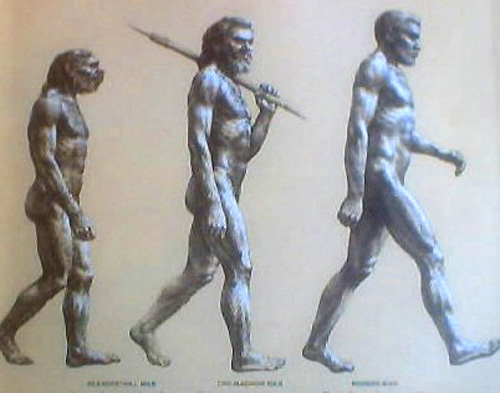
The Myth: Evolution causes something to go from “lower” to “higher”
While it is a fact that natural selection weeds out unhealthy genes from the gene pool, there are many cases where an imperfect organism has survived. Some examples of this are fungi, sharks, crayfish, and mosses – these have all remained essentially the same over a great period of time. These organisms are all sufficiently adapted to their environment to survive without improvement.
Other taxa have changed a lot, but not necessarily for the better. Some creatures have had their environments changed and their adaptations may not be as well suited to their new situation. Fitness is linked to their environment, not to progress. [Source]
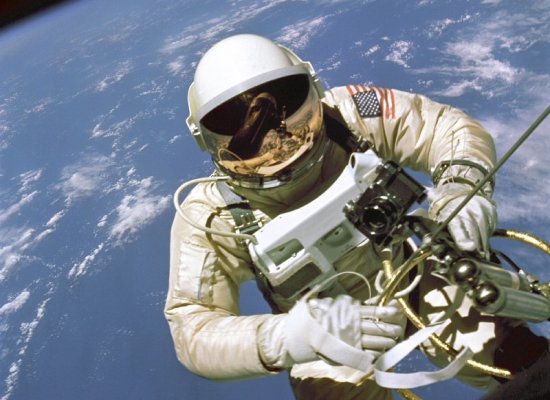
The Myth: When exposed to the vacuum of space, the human body pops
This myth is the result of science fiction movies which use it to add excitement or drama to the plot. In fact, a human can survive for 15 – 30 seconds in outer space as long as they breathe out before the exposure (this prevents the lungs from bursting and sending air into the bloodstream). After 15 or so seconds, the lack of oxygen causes unconsciousness which eventually leads to death by asphyxiation.
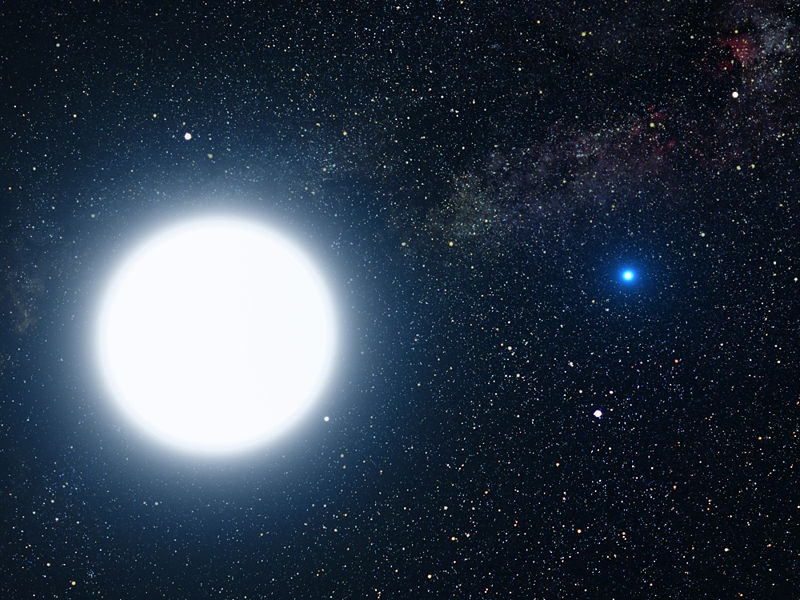
The Myth: Polaris is the brightest star in the northern hemisphere night sky
Sirius is actually brighter with a magnitude of −1.47 compared to Polaris’ 1.97 (the lower the number the brighter the star). The importance of Polaris is that its position in the sky marks North – and for that reason it is also called the “North Star”. Polaris is the brightest star in the constellation Ursa Minor and, interestingly, is only the current North Star as pole stars change over time because stars exhibit a slow continuous drift with respect to the Earth’s axis.
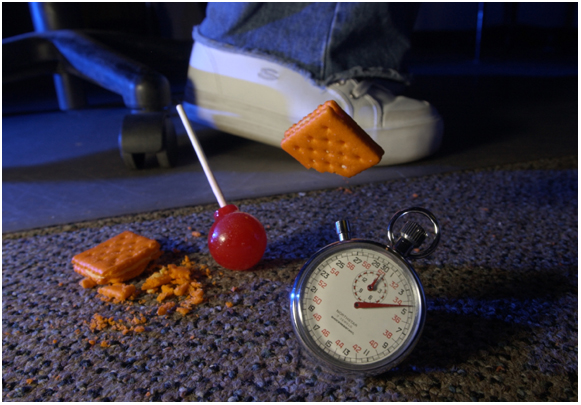
The Myth: Food that drops on the floor is safe to eat if you pick it up within five seconds
This is utter bunkum which should be obvious to most readers. If there are germs on the floor and the food lands on them, they will immediately stick to the food. Having said that, eating germs and dirt is not always a bad thing as it helps us to develop a robust immune system. I prefer to have a “how-tasty-is-it” rule: if it is something really tasty, it can sit there for ten minutes for all I care – I will still eat it.
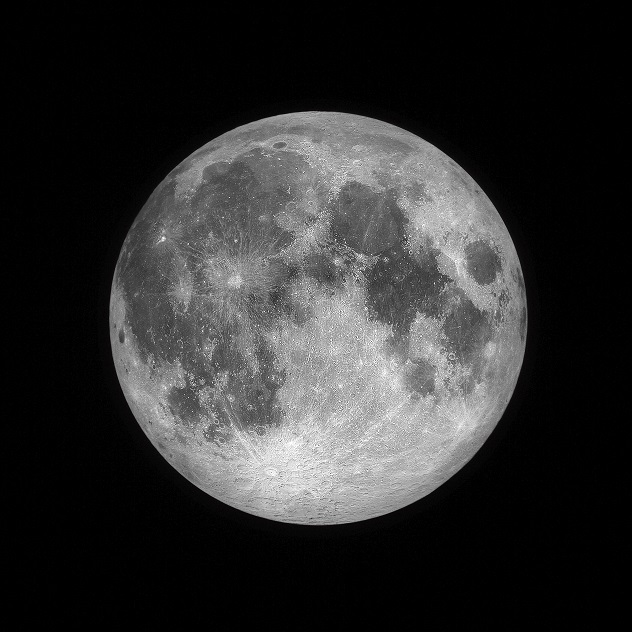
The Myth: There is a dark side of the moon
Actually – every part of the moon is illuminated at sometime by the sun. This misconception has come about because there is a side of the moon which is never visible to the earth. This is due to tidal locking; this is due to the fact that Earth’s gravitational pull on the moon is so immense that it can only show one face to us. Wikipedia puts it rather smartly thus: “Tidal locking occurs when the gravitational gradient makes one side of an astronomical body always face another; for example, one side of the Earth’s Moon always faces the Earth. A tidally locked body takes just as long to rotate around its own axis as it does to revolve around its partner. This synchronous rotation causes one hemisphere constantly to face the partner body.”
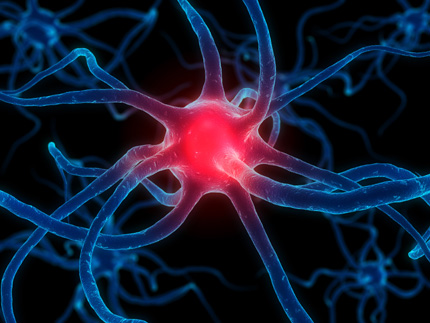
The Myth: Brain cells can’t regenerate – if you kill a brain cell, it is never replaced
The reason for this myth being so common is that it was believed and taught by the science community for a very long time. But in 1998, scientists at the Sweden and the Salk Institute in La Jolla, California discovered that brain cells in mature humans can regenerate. It had previously been long believed that complex brains would be severely disrupted by new cell growth, but the study found that the memory and learning center of the brain can create new cells – giving hope for an eventual cure for illnesses like Alzheimer’s.
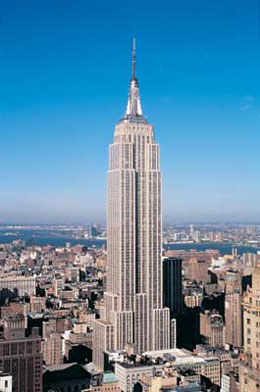
The Myth: A penny dropped from a very high building can kill a pedestrian below
This myth is so common it has even become a bit of a cliche in movies. The idea is that if you drop a penny from the top of a tall building (such as the Empire State Building) – it will pick up enough speed to kill a person if it lands on them on the ground. But the fact is, the aerodynamics of a penny are not sufficient to make it dangerous. What would happen in reality is that the person who gets hit would feel a sting – but they would certainly survive the impact.
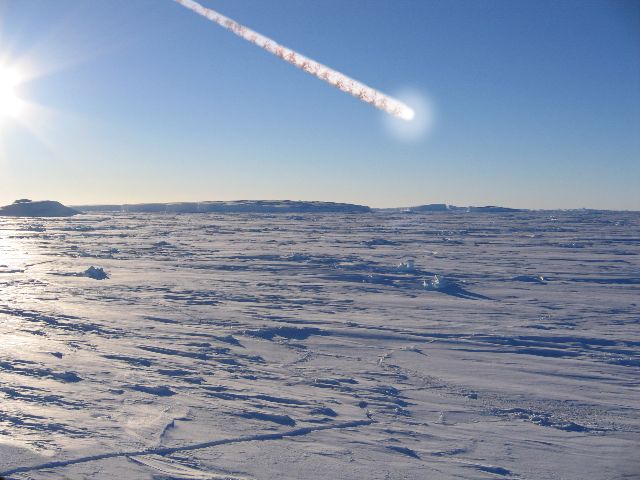
The Myth: Meteors are heated by friction when entering the atmosphere
When a meteoroid enters the atmosphere of the earth (becoming a meteor), it is actually the speed compressing the air in front of the object that causes it to heat up. It is the pressure on the air that generates a heat intense enough to make the rock so hot that is glows brilliantly for our viewing pleasure (if we are lucky enough to be looking in the sky at the right time). We should also dispel the myth about meteors being hot when they hit the earth – becoming meteorites. Meteorites are almost always cold when they hit – and in fact they are often found covered in frost. This is because they are so cold from their journey through space that the entry heat is not sufficient to do more than burn off the outer layers.
The Myth: Lightning never strikes the same place twice
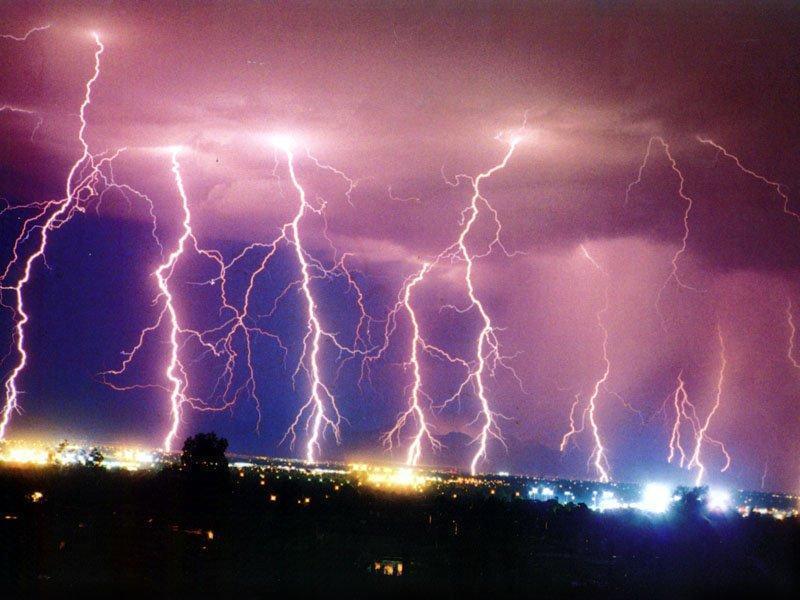
Next time you see lightning strike and you consider running to the spot to protect yourself from the next bolt, remember this item! Lightning does strike the same place twice – in fact it is very common. Lightning obviously favors certain areas such as high trees or buildings. In a large field, the tallest object is likely to be struck multiple times until the lightning moves sufficiently far away to find a new target. The Empire State Building gets struck around 25 times a year.
The Myth: There is no gravity in space
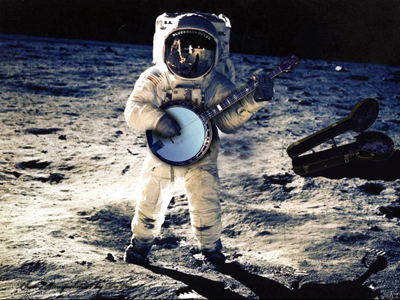
In fact, there is gravity in space – a lot of it. The reason that astronauts appear to be weightless because they are orbiting the earth. They are falling towards the earth but moving sufficiently sideways to miss it. So they are basically always falling but never landing. Gravity exists in virtually all areas of space. When a shuttle reaches orbit height (around 250 miles above the earth), gravity is reduced by only 10%.
Inspired by an excellent LiveScience Article. This article is licensed under the GFDL because it contains quotations from Wikipedia.


@locutus83
Thats what i though, the two contradicting themselves.
seems we missed the contributor name..please forgive me if it mentioned in some of the comments. I am too old to read all 121 comments.. cheers
here is a very good discussion of the “survival in the vacuum of space and decompression events” stuff:
http://www.geoffreylandis.com/vacuum.html
the writer is a Visiting Professor of Astronautics at MIT, and has published in many academic journals, but he’s also written some science fiction and all the info on his site is easy to understand.
122. Hemant Abhare: It’s Jaime Frater. Listed at the top of the list.
oouchan:
I understand your confusion, and its still mostly with semantics. You’re beginning to mix the words “fully” and “always”. Fully is a measure of completeness. Always is a measure of time.
I think we can agree that neither the Earth nor the Moon are “always” dark, as we can see they are lit by the Sun (as are all the other planets) for part of the time. Nor is any PART of the Earth or Moon “always” dark, because of their rotations and orbits. Finally, neither the Earth or the Moon are “fully” dark, again because some part is lit by the Sun at all times (just not the same part).
Reflected light is just as valid as emitted light to consider something as being NOT dark.
But you never answered my question. By the same rules you are applying to the Moon (that it is dark because it does not emit light), do you consider the Earth to ever be “fully dark”?
Thanks for #76. and #123. That sort of clears my misconception to a large extent.
All said and done though, it would be a very PAINFUL, suffocating and scary experience, and I wouldn’t wish exposure to outer space to even my worst enemy.
125 copperdragon: Reflected light is just as valid as emitted light to consider something as being NOT dark.
Depends on context and semantics cd, that’s all. This is really a pointless argument. When you turn off a light-bulb, is the bulb light or dark? Shine another light on the powered off bulb, or even take it outside in broad daylight to look at it, and it is still a dark bulb.
maggot – i agree. i’m just trying to help oouchan understand.
applying his logic to his other example, if you take 100 lit flashlights into a room, the room is still dark because the room is not emitting its own light. the walls are simply reflecting the light.
125. copperdragon: Oops. Thought I did answer it. Yes, the earth is dark as well. I so believe that due to the fluctuation of the surface of a planet like Jupiter that it can *emit* light.
Always being a measure of time, means that at one point it will end. I understand your point. Since it is ‘semantics’ wouldn’t what we are saying amount to the same thing? Meaning, right now at this very time, the moon is not dark because of the sun. Take away the light now or in the future, and it’s dark. Basically the moon needs an artificial light source to become ‘light’. So, we can have both options at the same time.
Kind of like the phrase: “I say tomato you say tomahto”.
128 copperdragon: I think “she” understands. She’s basically saying the same thing I am saying.
the moon: i think we can all agree that it emits (creates) no light of its own.
we can also agree that if we were standing on a part of the moon currently being lit by the sun our surroundings would be lit, just as they are on earth during the day.
so the next question is how much light does the moon reflect for us to see here on earth?
this is a rather complicated question. i’d always heard “the moon is as reflective as asphalt,” but this turns out to not be quite right. it would be better to say parts of the moon reflect about the same amount of sunlight as a golf green (sort of). if this interests you, you can learn more here:
http://jeff.medkeff.com/astro/lunar/obs_tech/albedo.htm
how would everyone feel about saying “the moon is a dark (non-light emitting) celestial object, and it is lit by the light of the sun and other celestial objects that reflect starlight onto its surface.”
131. lo: I like it!
lo and behold, lo’s got it.
jfrater-
i’m joining those taking slight issue with your evolution info. it’s totally true that something like fungi might not seem as “perfect” to some of us as a mammal. but this argument only works if we start with the assumption that complex life forms like mammals are “better” or “superior” to less complex organisms.
the truth is that the “best” organisms are simply those most suited to their own environment, the best survivors for there niche. knowing this, an organism like a shark which hit on a “perfectly” good body plan that hasn’t required changes for millennia is not “imperfect” in any way!
i think what you meant to say was “it is a fallacy that evolutionary adaptation always leads to ever-increasing complexity.”
we can see this in cave creatures which have lost their pigment and functional eyes. we can also see it in all those creature you named that found a simple, functional form and had no need to change it further to survive.
oouchan: none of the gas-giant planets – Jupiter, Saturn, Uranus or Neptune – emit light.
All of their light is reflected from the sun. Because their gases create a perpetual cloud cover, they reflect more light than average.
Venus is the same, although it is a rocky planet (like Earth and Mars), it is perpetually cloud covered and reflects a great deal of light.
135: Copperdragon – (You don’t say…!) Ahem, must be polite. Er, C.D. that is a good statement you write, but your point is a little vague – unless of course you are trying to tie up this uncredibly low-brow argument that nothing is ‘light’ unless it is a light emitting super-sized ball of nuclear fusion (star). Is that fair to say?
People believed Polaris was the brightest star?
137: Joe – Yes they did. A stars brightness, as it appears to us, depends on four major things – its size, its age, its rate of fusion, and of course its distance from us. Some of the brightest stars appear to be quite dim only in so much as they are [b]so very far away [/b].
131 lo: an interesting tidbit (I thought so anyway) from the link you provided:
“the perfectly full moon is never visible from Earth (at such times, the moon is eclipsed). From the Apollo missions, we know that the exact subsolar point – in effect, the fullest possible moon – is some 30% brighter than the fullest moon seen from earth.”
Makes perfect sense of course but I never really thought about it before now – that the “full moon” we see from Earth is never really 100% “full”. This sounds like a good bar bet in the making.
For those who think you either freeze or burn if tossed into space, follow the link below. I think those guys know what they’re talking about.
http://imagine.gsfc.nasa.gov/docs/ask_astro/answers/970603.html
Contrary to what many may think, empty space is NOT cold. Temperature is a state of molecules. But in empty space there are no molecules (it’s mostly… empty).
There is no such thing as “cold” by itself. SOMETHING has to be cold to take away your heat. That’s conduction.
If you are in empty space, you will only lose your temperature little by little through radiation. And it’s a rather slow process.
And even conduction is not instantaneous… If you heat your oven at 200°C; after some time, everything in it will be at 200°C… including the air. But you can open the oven and put your hand in it, you won’t get burned. Because air is a bad heat conductor.
If you touch the metal grill, NOW you will get burned. Because metal is a very good heat conductor. But the air and the metal are at the same temperature.
I know that seems weird but that’s the way it is.
Growing up in the southern hemisphere, I never got the change to see Polaris for 38 years, until my trip to Europe. Then I didn’t even see the stars, though at one point was dumbfounded by the moon being in that part of the sky and lit like that.
During my time in Korea, I looked at the stars occasionally. I found Polaris easily enough, but struggled with the rest of the stars being “upside down” and six months out of date (eg Orion is a summer constellation in the southern hemisphere).
I am amazed that anyone would think that Polaris was the brightest star in the northern sky. Several seconds of actual observation would put that one to rest.
BTW most of the brighest stars lie in the southern hemisphere (though are visible from (sometimes) large parts of the north).
And BTW, the moon is dark. It has a very low albedo (rate of reflection) and is close to being the colour of coal. The only reason that it appears bright is that there is a huge light source (the sun), and the moon is (astronomically speaking) very close and comparatively big.
For the people who doubted the penny/quarter killing thing, the equation for terminal velocity comes from equating the gravitational force with the drag force, and is given by
V(max)=((2*m*g)/(rho*A*C))^(1/2)
where m is mass of the object (0.002kg?), g is gravitational const (9.81 m/s^2), rho is density of the fluid (1 kg/m^3), A is cross sectional area of the object (depends if it tumbles, assume 0.02m by 0.001m as worst case) and C is a dimensionless drag (around 0.5).
That comes out at about 220 mph. I don’t know much about the biomechanics of bone fracture, but it depends on rates of momentum and energy transfer. For the sake of comparison the coin has a kinetic energy (0.5*m*v^2) of around 7 Joules. A punch can reach maybe 5 m/s with the arm mass of maybe 1kg or 12.5 Joules. The coin is much smaller so the local stresses will be higher, but bone can flex a little so the coin would probably just bounce of. I’d expect soft tissue damage, no more…..
Of course the coin is not aerodynamically stable so once it starts to tumble the cross-sectional aread goes up by a factor of around 20, which decreases the terminal velocity by around a factor of 4. So you’d be pretty unlucky to get hit by a coin end on and seriously hurt.
I’d be scared of something that would drop more stably, like a pen. If it fell point down the small cross-section would make it pretty fast. All you anarchists out there – you need to make a flight out of card to stabilise the fall – then it’s dangerous.
Wow that was time consuming. Hope it helps someone!!
It’s funny. I knew all of this. Most of it from my seventh and eight grade science class.
Arnaud I basically said that in post 74. Honestly I don’t know why I bother sometimes
To be precise, the power radiated by a blackbody source (that means the energy is radiated across a broad spectrum) is
Power = sigma*T^4
sigma is the Boltzmann constant (10^-7) and the body temp is 300K so
P = 0.8KW
Now that is quite a lot, so it would burn. But the point is that the skin would very quickly cool as the blood supply cuts off (blood that is cooled by a couple of degrees entering the heart can cause it to stop, so the body is pretty efficient at closing off circulation close to the skin when it needs to). Once this happens and energy is no longer being transported to the surface it would take many minutes for heat trapped in the core to be transported out. Think of cooking a big turkey at 200C – the skin gets crispy before the inside even starts to heat up.
Before any of this became important you’d want to start breathing again, so heat tranfer would be a problem.
123. lo: That was very interesting. Thank you.
I guess this thread will teach me to introduce some levity into the conversation.
copperdragon, any reaction to the point I made earlier that the whole discussion about light is moot since “[dark] refers to not knowing since until space travel we did not know what the other side [of the Moon] looks like. It is kind of like saying you’re in the dark about something – you’re not saying that you’re in an unilluminated area, but rather do not know the answer to a problem.”
Great List! When I was a bachelor living alone it was the 3 day rule. That’s even 2 days longer than Genghis Kahn (as #53 AstroNerd brought up)
shaymm (#69) says: “#5….makes me feel so much more comfortable getting drunk now. Im sure that has been on another list (drinking does/doesn’t equal cellular brain damage), but I dont remember.”
I know you’re partly joking, but just FYI there is something called “wet brain syndrome” caused by alcoholism.
“A… consequence of years of alcoholic drinking, wet brain (Wernicke-Korsakoff syndrome) occurs from a thiamine deficiency due to malnutrition.
“Alcoholics become deficient in thiamine (vitamin b-1) through poor eating habits (liquid meals), damaged gastro intestinal systems that do not absorb nutrients well, and through liver damage (leading to a reduction in thiamine processing). Thiamine is an essential nutrient for glucose conversion in the brain, and over time, a thiamine deficiency leads to significant brain cell death and serious structural damage in certain areas of the brain.” – From choosehelp.com
Well,actually lightning also strikes a few times to the very same person!!!
good list.
Brock Sampson survived being in the vacuum of space
148. Moonbeam – “). Thiamine is an essential nutrient for glucose conversion in the brain, and over time, a thiamine deficiency leads to significant brain cell death and serious structural damage in certain areas of the brain.”
Is THAT why a number of new hangover cures are including a vitaB pill?! Haha, although when I tried to google the one I heard of, I’m seeing “take B-6″ or “take B-12″….among the other hangover remedies
Someone should make a list of the most ridiculous ones. Just from the excerpts on Google search I see “Eat a greasy breakfast sprinkled with *****.”
I saw a mythbusters episode about the Penny Drop and they tested it…the terminal velocity of a penny is around 70 mph, I don’t remember… so anyway, they made a gun that would shoot the penny at terminal velocity, and they shot it at each other, didn’t even make a scratch on their skin, but it stung for a couple minutes. And it made no impact on concrete either. The penny drop is harmless, unless you were looking straight at a penny falling from the sky and it hit you in the eye, lol.
Wait what about the myth of brain cells? Does this mean that people who drink and smoke can still regenerate cells? Cuz if so…yah!
#7 “Five Second Rule” does have to do with germs/bacteria on the floor, however (and this was tested on Mythbusters), it depends highly on the moisture-content of the food piece. The more moisture, the more stick of whatever was on the floor. Think about this: Drop a cracker and slice of cucumber (about the same thickness), the cucumber will pick up more bacteria than the dry cracker, if you put sand on the floor to represent bacteria, it will be obvious.
kiyomi: I would still eat the cucumber
well, why can’t we put the floor-cucumber on the floor-cracker with some fancy spread (or a soft white cheese)? bacteria sandwich…yum yum
gabi319: mmm – sounds appealing
i would eat the cucumber slice too. but i’d rinse it off first. clinging grit and fuzz/hair isn’t yummy!
our western (american? do they do it in australia and the EU?) obsession with antibiotic hand soap and the like is only helping super-bacteria to evolve and making us sicker. i once drank some hot coco mix with had been literally scraped out of the montana mountain dust on a leave-no-trace backpacking trip. and i ate tons of street vendor and market food in the amazon, no harm done.
#5: recent studies and trials (unfortunately outside the US, but still credible) have showed that stem cells introduced to the brain (not directly, through a femur vein or whatever the name of the huge vein…) allow the brain to regenerate some of the damaged brain cells.
Also, there are trials that have shown positive results in diabetic patients who had their own stem cells introduced to their pancreas. Their pancreas started producing insulin again and now they can once again eat chocolate cake!!!
I wonder why the US isn’t funding these…
jfrater lists are the best!!
What a beautiful picture for #2!
“unfortunately outside the US, but still credible”
Ahem! Excuse ME. As a european research scientist I feel honour bound to question that statement. Some of the best research in the world is done OUTSIDE of the US. *shock horror!
America is a waning intellectual power. If current school trends continue, your intellectual base will go the same as your manufacturing base – overseas.
Remember, the UK has a far better cost effectiveness for research than the US.
“I wonder why the US isn’t funding these…”
Ethics. Your political and education systems are hampered by religion. I’m disgusted that, this month, the Texas board of ed will now call on studnts to “*****yse and evaluate scientific explanations for the complexity of cells, the fossil record, glbal warming and the origin of the universe.” The board also voted to remove from textbooks the fact that the universe is about 14billion years old.
How can you criticise world class research done abroad, when there is a serious debate in your schools to teach CREATIONISM. Seriously, the US is the laughing stock of my uni’s zoology, ecology, cosmology…etc.etc…departments.
I would ask for an apology, but you probably DO think that all research done outside of america is sub-standard. Don’t worry. We are used to it.
Out of the top 20 most influential scientists lists, only 2 – Edison (an inventor) and B.F Skinner (psychologist and inventor) – are american.
cym- i beg you not to take all 300 million US citizens as idiots.
yes, my nation has some very bad policies (based in a religious conviction held by a very vocal minority of our citizens) that effect research funding. but please remember that many of us are working hard to change this, and seeking private funding while we wait for policies to change!
p.s. maybe that other poster meant “unfortunately outside of the US” as a criticism of the the fact that the US is behind the times, not a criticism of other research!
It was less than a week ago that I had to correct my friend’s opinion that the pole star is the brightest star in the sky.
About Thuban: If the ancient Egyptians did align their pyramids due north when they were built they would remain aligned due north even today. This means that if they set up some pyramids pointing at Thuban back then, these pyramids would point to Stella Polaris today. If some of them point to Thuban today, they must have pointed to something else when the Egyptian built them.
Copperdragon, please realize that the poles don’t change position in relation the ground. A simple proof of this fact: The 5000 years old Newgrange mound still points in the same direction as when it was built. It still lights up inside at dawn during the winter solstice only. Also, the almost as old Great Pyramid is still aligned due North, pointing at the pole star, not at Thuban (but it must have been aligned with Thuban when it was built or it wouldn’t point to the pole star today).
159. Curious_missy – #5: recent studies and trials (unfortunately outside the US, but still credible) have showed that stem cells introduced to the brain…I wonder why the US isn’t funding these…
oh sweetie, you answered your own question…The answer’s right in front of your face (unless you are as ignorant about US politics as you are World Science Research). Stem cell research was a huge huge topic in the past presidential elections because there is a strong movement against it. So if this trial you speak of uses stem cell research while US Politics and American religious right are against it…connect the dots…
And this is a very international group commentors. I’d advice you to be more considerate and less arrogant when creating your future comments.
5 seconds is way too long, i belive the 3 second rule is much more appropriate.
164 – in that case she should take care with how she phrases things, in case they insult people.
163 – don’t worry, I dont take you ALL as idiots. Statistically speaking there must be three or four intelligent americans
I kid! I’v met plenty of intelligent americans! It is a shame that you also have such a vocal opposite end of the spectrum that is so powerful!
However, if trends don’t reverse (and quickly) america will get more stupid as a nation. As it is, our final year of A-level (17/18 years old) is more advanced than many first year degree courses in the US
First thing is first – nationalise the curriculum. Otherwise certain students will go to university less well informed than others. That will inevitably breed a two tier system.
“Copperdragon, please realize that the poles don’t change position in relation the ground”
Geographical poles, no. But magnetic poles reverse periodically.
164. lo – “p.s. maybe that other poster meant “unfortunately outside of the US” as a criticism of the the fact that the US is behind the times, not a criticism of other research!”
If she had left it as just “unfortunately outside of the US” perhaps something was lost in translation and the reaction was unnecessarily harsh but it’s hard to misinterpret “but still credible”
Do you really think I’m harsh, gabi?
cym- while i maintain (strongly) that we aren’t all idiots, it seems plenty of us might be. but is this because they’re inherently stupid or simply poorly educated in critical thinking?
what i really feel is the problem is that science, education, and religious convictions are getting so sadly intertwined in our political system (what the hell ever happened to separation of church and state?) add “reality” TV to that and america is on a path toward idiocracy levels of dumb. this breaks my heart!
and this is why i fight tirelessly to keep creationism out of the science classroom (it’s welcome in the philosophy or comparative religions classroom) and religion out of the legal system. it’s a very frustrating fight
man looking at that star picture was hypnotic…anyine else think so?
Cym:
Had it been a phrase that could’ve been interpreted a couple different ways (both positive and negative and the honest mistake), then your response could’ve tread the fine line between sharp and harsh. However, like I said to lo, that particular phrase could only be interpreted as either willfully ignorant or downright arrogant. I thought the reaction was fitting.
What you’ve written would only be insulting if directed to those of us who did receive a good education. It’s the generalization of the entire American education system and its students that I think lo found objectionable in your comment.
167. georgia – “5 seconds is way too long, i belive the 3 second rule is much more appropriate.”
Do you really think those two extra seconds will make things better/worse?
“what the hell ever happened to separation of church and state?”
You mean you used to have it? You have “in god we trust” on your money! Your presidents constantly end their press conferences with God Bless America!
Everyone knows that God is actually British. Common sense. We don’t have earthquakes or twisters. “Why, cym?” I don’t hear you cry! Well I shall answer anyway! Because you dont crap on your own doorstep!
gabi,
Unfortunately, as a Brit, I tend to generalise as I get most of my information from secondary sources. Leafing through new scientist, there is a constant struggle in the american education system to actually teach the students the truth – particularly in evolution (which is a cornerstone of current biology as you well know)
I tend to be a little sarcastic and for that I do apologise. I have the greatest respect for america, but I fear where it is heading.
Luckily I have you to keep calling me up on stuff
i might be giving the other poster way too much credit, but maybe she was referring to the Dr. Hwang Woo Suk hoax, it was really bad for the credibility of the field:
http://www.sfgate.com/cgi-bin/article.cgi?f=/c/a/2006/01/03/EDG2IGCOIT1.DTL
my mother has early-onset Parkinson’s disease, so i follow stem-cell and other genetic therapy research pretty regularly, even though it’s outside of my field of study (botany.)
“Do you really think those two extra seconds will make things better/worse?”
Now there is a statement that requires its context!
According to my fiancee, a couple of seconds (on very rare occassion you understand) can make ALL the difference :p
177. lo – “my mother has early-onset Parkinson’s disease, so i follow stem-cell and other genetic therapy research pretty regularly”
Had I continued on in science research, I would’ve tried to get into Alzheimer’s research since it’s near and dear to my heart (or er, brain, haha). I do try to get my hands on as much neuroscience-stem cell information as I can.
“According to my fiancee, a couple of seconds (on very rare occassion you understand) can make ALL the difference”
Oh, so those rare occassions are the only “differences” she can get? poor girl……