The ancient Greeks have had a massive influence on Western society. Numerous sciences and literary genres were founded by Greeks, and many of their writings have survived more or less complete. This list describes 10 of the most influential ancient Greek writers. The thing that connects them is the huge impact their works have had – and still has – on modern culture and society. I’ve listed them chronologically.
Homer is best known for the two epic poems the Iliad and the Odyssey. The Iliad is generally considered the oldest work of Western literature. Even the Greeks themselves recognized Homer for his influence and did not consider themselves educated unless they had read his works. It’s disputed whether Homer actually is a historic person. Absolutely nothing is known about him or his life and some scholars believe that the Iliad and the Odyssey are the works of multiple authors rather than just one. No matter who wrote them, both the Iliad and the Odyssey have had a huge influence on literature. In fact, even Shakespeare based one of his plays on the Iliad.
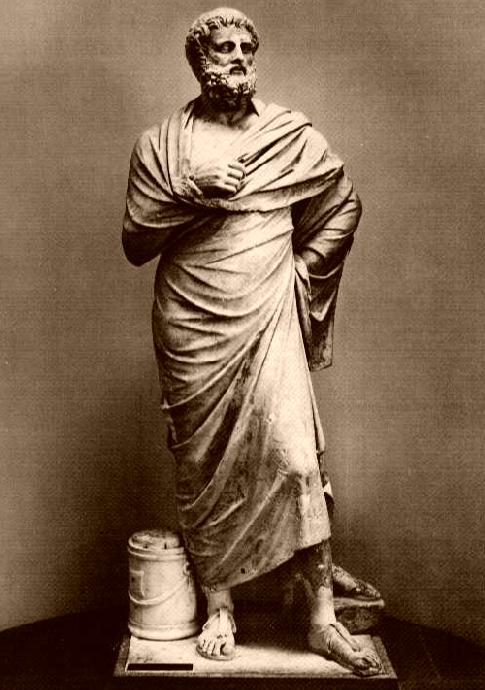
Sophocles was a tragedian who wrote 123 plays during his life. Only seven have survived in entity, but they include classics such as Antigone, Oedipus the King and Electra. He developed theater by adding a third actor, reducing the importance of the chorus, and introducing scenography. Sophocles also abolished the traditional trilogic form of tragedies and made each play complete in itself – this added dramatic value to the plays.
Herodotus is considered the father of history in Western culture. He approached history as a science by collecting his material systematically and testing its accuracy. Herodotus was also a gifted narrator. The word history itself comes from Herodotus’ book The Histories, which means “inquiries” in Greek. This book is also considered the first work of history in Western literature.
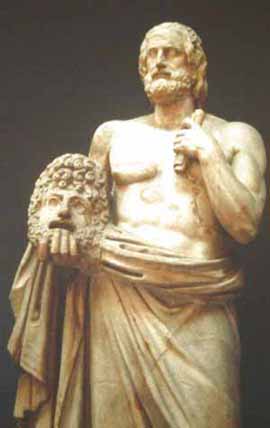
Euripides was another Greek tragedian. He wrote about 95 plays, 18 of which have survived completely and many more as fragments. His most known works are Alcestis, Medea and The Bacchus. His plays were very modern for his time in that they portrayed the characters very realistically and included strong women and wise slaves – which was very unconventional at the time. Euripides is the Greek tragedian who has had the biggest influence on European tragedy.
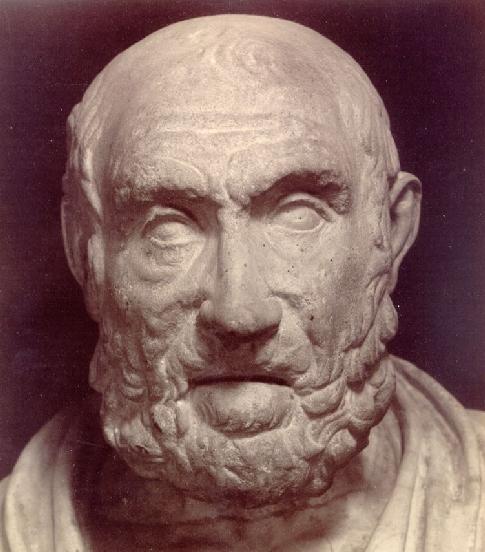
Hippocrates was a physician and is the father of medicine. The Hippocratic Corpus is a collection of 70 works on different medical topics. A large portion of it is made up of case studies. The most famous work is the Hippocratic Oath which is about doctoral ethics. Derivatives of this oath are still taken by doctors today. Hippocrates has also made a direct contribution to medicine as he was the first to describe a number of illnesses. Whether Hippocrates was actually the author of the Hippocratic Corpus is disputed, and most seem to agree that at least parts of it were rather written by his students and followers.
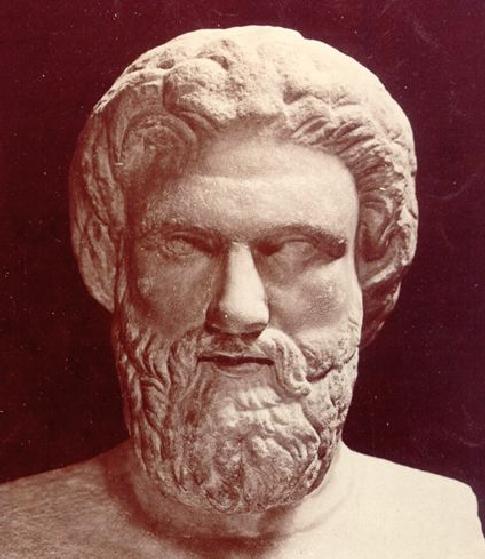
Aristophanes was a playwright who wrote comedies. He wrote 40 plays, 11 of which have survived as complete manuscripts and some of the others have survived as fragments. Aristophanes’ pen was feared as he ridiculed famous Athenians. Plato pointed out his play The Clouds as a contributing factor to the trial and execution of Socrates. Whether that was really the case is disputable. Other notable plays from his hand are The Wasps and Lysistrata. His works have not only had artistic influence on later theater but have also served as historical documents about life in Athens.
Plato was the student of Socrates. While Socrates never wrote anything of his own, his philosophy is known through the works of Plato. Plato was very influenced by Socrates’ thinking and not least by his execution, which Plato witnessed when he was 29 years old. 35 dialogues and 13 letters have been attributed to Plato, the most famous being The Republic and Symposium. Plato is regarded as one the fathers of Western philosophy, and his Theory of Forms and idea of the ideal state, both put forward in The Republic are still discussed today.
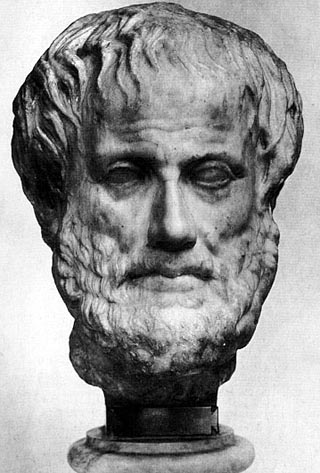
Aristotle was the student of Plato and the first to criticize him. 47 of his works have survived, most of which are actually lecture aids. Aristotle is the last of the great Greek philosophers (the two others are Socrates and Plato) and is considered the first biologist as well. He founded logic as a science, lay the grounds of scientific method and wrote about several other subjects as well. Aristotle was also the tutor of Alexander the Great for some time. Aristotle was a large influence on St Thomas of Aquinas and consequently remains a major influence in Catholic education and theology.
Euclid was a mathematician and the father of geometry. Very little is known of his life, but he was active at the Library of Alexandria. His main work is The Elements which is still used as a textbook in mathematics and may only be exceeded by the Bible in terms of copies sold. The book includes a system of mathematical proofs that remains the basis of mathematics today.
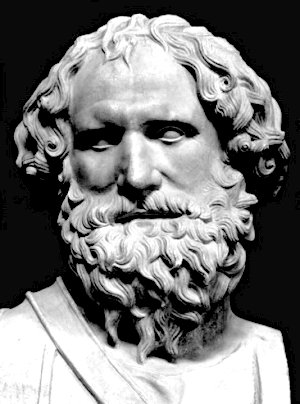
Archimedes was a mathematician, engineer, inventor, physicist and astronomer. He is known for the invention of The Archimedes’ Screw, a mechanism for moving water that is still in use today. He also calculated the value of pi very precisely. Archimedes discovered how to define the volume of irregular objects by submerging them in water. According to legend, this discovery made him run out on the street naked (he was so excited that he forgot to get dressed) and cry “Eureka!” – I have found it.


Thucidydes? N0t sure of the spelling
before, Socrates was resigned to death. If he hadn’t told all those loppee he was wiser than them because he knew that he knew nothing (ha, paradox), what point would he have made? What impression would he have made on them? He did what he had to do to get his point across, there was no other way. He was almost a pathological truth-teller (except he had good reason behind it). I agree with Noodles that he was much more worried about being honest than being a fraud (or dying for that matter). Integrity doesn’t die. As far as dying cutting off someone’s ability to change, you also have to remember that the pupils Socrates had carried on his ideas, and Plato has even given us enough that we have it now and we’re still learning from Socrates and letting him change our worlds. And dying in the name of self-examination was the most important thing and was the most valuable lesson Socrates taught.
Euclid really is remarkable, not only is his elements highly relevent today – students still get taught it, if they don’t know where it comes from. Also, after 2000 years no errors have been found in any of the proofs.
damn you beat me to first,
nice list.. interesting to know
Where’s Socrates?
Socrates actually wasn't a writer, since he hasn't written anything. Writing down his theories was against his idea of what philosophy is. He does play a very important role in Plato's work.
Yet, there is another fault in the text. Plato did not witness Socrates' execution; he witnessed the trial but was ill on the day he drank the poison.
nice list, i love the ancient history lists
lol i hate Aristotle, all his historical works are like “So-and-so was great, but not as great as I”
Very nice, informative list
I just wish that Sappho had been included.
Socrates? Great list.
B0ring.. Hehe i remember my literature class.. But its ok.. Average list..
Love Greeks writers, but IMO Homer should be at top 5
boring list!
I learned something today
Thanks
I love Homer ! His literature works are the best
MMM… nice,, Aristotle has once said ” An All knowing human,who have understood the path to complete liberation, can only be born to a Royal family” Reminds me of Gautama Buddha.. but ironically eventhou8gh Siddhartha was born in a Royal family( The Shakya Vansa- the most reputed caste at the time) Buddha has said ” Nobody is a born king nor a slave, Its ones actions that makes one a king or a slave”
Nice list..Amazing how in modern days with all these technological advancements and political revolutions , Philosophers such as Socrates,Plato or aristotle are Non-existent…
I love Homer, but all the Simpsons are funny as well.
@astraya (14): I must say I was rather depressed to find that a search on google images for homer returned the cartoon only. I had to specify Greek homer to get a pic for the list
Pretty informative list
No socrates? Also, the title is “10 ancient greek WRITERS … ” Shouldn’t it have been, “10 Ancient Greek intellectuals or somethin like that ?
Anyways, Great list.
Jamie -
Do’h!
You could have covered both at the same time: http://4.bp.blogspot.com/_MryQii-dvu8/RdRnN2Cqj-I/AAAAAAAAAQQ/K1hgtYArPC4/s400/homer%2Btoy.bmp
Great list, but i don’t understand why everybody wonders where’s Socrates!!! It is stated in number 4 that Socrates didn’t write anything of his own, you can’t include him in a writers list, can you?
I’ve heard that it’s questionable whether Socrates existed or not. Perhaps this was the reason for not including him? But his existense isn’t important, the concepts attributed to him are valid whether they come from Socrates, Plato, or some burger flipper at McDonalds (When I worked there one of my co-workers was a HUGE philosophy buff, made me wonder why he made burgers for a living).
Every day truly is a school day. Great list.
Can people stop with the “boring list” comments. Every list will not be to everybody’s taste but each to their own. Personally I have expanded my knowledge with this list and really enjoyed it. Comment on the content and be constructive… please!
A GIANT step up from the “midget bowling” list.
Archimedes FTW
um, where is Epicurus! defo expecting to see him in there.
Hello again, very good list there – condensed and to the point. So what did the Greeks do for us? A whole lot it would seem. Back in those days, almost everything had yet to be discovered; and tapping into the rich seam of biology, chemistry, mathematics and art could easily take over a man’s life. Not surprisingly, some of the ‘truths’ discovered then have remained true, and may always be so.
After thousands years of dedicated toil by so many individuals, is it really so surprising that the well of new discovery has dried out? Well, perhaps in actuality it hasn’t. New things are still being discovered every single day – it’s just that these revelations are usually made far less public.
@Skrillah (13): “Amazing how in modern days with all these technological advancements and political revolutions , Philosophers such as Socrates,Plato or aristotle are Non-existent…”. Big Name philosophers are relatively unknown today, but there are still many notable figures. Robert Anton Wilson and Eckhart Tolle to name but two. The trouble is – to get down to the nitty-gritty – the world of fame and recognition is so often contrary to higher concepts, and many modern-day philosophers can’t see the benefit of going down that route.
@D. (20): I agree. Having dedicated my life to ‘Where am I in all this!?’ I have to say my first job was working in a restaurant dishing up all-day breakfasts.
Small world.
"Back in those days, almost everything had yet to be discovered…"
Lifeschool, generations 25 centuries from now might be saying the same thing about our time. I know you're not criticizing or trying to cheapen those early Greeks minds, but I wonder: How will we stack up against them? Are our contributions as valuable as theirs? Man, those early Greeks were good – a tough act to follow!
@Lifeschool (26): these truths support (at least in my mind) the concept of universals – some things are *absolutely* true regardless of opinion.
@tripsyman (22): thanks for that comment – I agree completely. I posted this summary of great Greeks because I thought it was a good starting point for those who might be interested in reading more than just Stephen King.
i really have to wonder where’s aesop? he has poems which practically counts as writing and taught many values in the poems that are short and sweet alot of people on this list seem to be philosophic in writings which is kind of overrated form of writing
Those who are asking why Socrates is not on the list have clearly not read it. The entry on Plato clearly states that Socrates did not write anything.Show some intelligence! Fools!!!
9 kjour
July 5th, 2009 at 2:09 am
I love how dumb you are. Just kidding, I´m appalled to be the same species as you.
Old guys who been dead for hundreds of years don’t interest me much.
Those asking for Socrates should stop, as stated above.
The first of two notable omissions is the previously mentioned Thucydides and for his work on The Peloponnesian War, which is the first book to explore International Relations and how world powers interact. The second being Aeschylus, the oldest of the known Greek tragedians and often considered the “Father of Tragedy”. One can argue that without Aeschylus’ influence, neither Sophocles nor Euripides would be mentioned here.
Interesting list… I learned a few new things
@jfrater (27): I agree, on this 3D level of reality there are many absolutes.
Great list! I went to school back in the day – back in the day when the classics were still taught. I knew every single one of these and it kind of horrifies me that there are folks that don’t. Frankly it’s our own fault – looky up there at how many “boring” comments we have; but then what can I expect? We don’t laud deep thinkers any more, we’ve traded that for the idiots at Fox News or for that matter CNN. In depth *****ysis means rewarding a paid shill to repeat the opinions you already hold.
EXCELLENT LIST!!!
I’m a fan of this site, but it’s the first time I write. Keep the good work!!!
@Pickles (30): This.
Pickles – THANK YOU! I was hoping that at some point someone would point that out.
Mom424 – Some of them were still being taught when I was coming up, and my wife too; she’s six years my junior. However, it looks like my son won’t be taught them unless I do it myself.
Sadly, public school seems to discourage deep thought.
One of the things I love about this site is the vast array of lists. Yesterday’s list; “Hilarious Sports Photos,” then today, this list. Unfortunately I feel as though my education was lacking as I wasn’t taught about most of these writers in school. Great list.
@tripsyman (22): I have to resign myself to the repetitive posts that crop up on just about every list. The people who don’t clearly read the list or the preceding posts; the person who thinks we all want to know he/she’s the first to post on this list; the “boring” or “this list sucks” people. Then there’s the commenter who intentionally wants to enrage people. I wonder, for example, if they say “boring,” again and again because every one else asks them to stop? Just as a fifth grade boy might torment a girl by wiggling a dead bug in her face? Same mentality, I suppose.
Sophocles – “in entity”? perhaps you meant “in their entirety” or “intact”? or is this a new meaning for “entity”?
The spelling is Thucydides I think: What I learned in history today is… The above list
Kinda boring. We need an MMA list.
Good list. Makes me feel all well-rounded when I have heard of and/or studied all the people on a list like this
I love ancient Greek writers, they have always been one of my very favorite genres. It is always fun to read them and discover just how much modern writers owe to these people.
So, we already have one that I noticed, but how many more people do you think will skip reading the intro and then dispute the list order? The list writers explain their ordering in the intro! Read it people!
Funny how much we stuff we learned from the Greeks even a lot of the English language is descended from Greek. Did we ever achieve anything from the Romans except for roads, aquaducts, latin or the ability to throw an orgy???
Awesome list. I’ve always been interested in the Ancient Greek writers, particularly the philosophers. If I could have a conversation with them, I definitely would travel back in time just for it – imagine the interesting things we would discuss!
I enjoyed the History Lesson
@Chineapplepunk (45): I feel Monty Python has already covered that one.
Where is Aeschylus??? He is known as one of the greatest tragedy writers, although, unfortunately very little of his work has survived throughout the years. His book The Oresteia is one of my all time favourite books.
Nice list, congrats
P.S. I also think Homer should be on the top 5 (to say the least)
Heya General Tits – might I assume that the recently submitted list that you’ve been chirping about may just be pertaining to MMA? not that I have any problem with semi-naked men pommeling each other into the dirt…
I have a sneaking fondness for that french Canadian guy.
Mom- LOL I’m with ya’! My husband thinks I really enjoy watching the fight with him for the sport of it.
Diogenes? Heraclitus? Pythagoras? We owe so much to the ancient greeks that there is is simply too many names to include in a top 10 list.
Awesome list, egernunge! I have read about and from the majority of these writers. Have learned more about them as well, today.
Side note….did anyone else see the word ‘Geek’ instead of ‘Greek’ when they pulled up this list? Had me giggling at first.
@49 Palrao
July 5th, 2009 at 10:16 am
You people just don’t know how to read do you?
Euclid and Archimedes FTW!
I’m an engineer student so, to me, this two here are the most important writters of this list.
Nice one. But in a list of writers, I think Hesiodus should have been included instead of Archimedes.
I read some of Homer’s odyessy this year in school. We did not read the whole this, just pieces of it and watched the movie and Big Fish.
where the heck is socrates???
Well, as some of you may know, ancient history is one of my specialties, and the ancient Greeks most especially. So I was cautiously thrilled when I saw this list… only to find it quite a letdown.
Nowhere does this list really tell us WHY these ancient Greeks should be so important to us, why they’re still vital and alive. On the contrary, its intent seems to be at odds with its title, since instead of illustrating why WE (moderns) should know the works of these long-dead men, it only gives a very brief, all-too-sketchy description of why they were important to their own times–but little if any description of what role they play in ours. I got the feeling that somebody with a fondness for the Greeks just cobbled this list together and forgot to make it interesting; forgetting, in fact, to sell the intended purpose to us.
We should, indeed, KNOW a figure like Archimedes; he was amazing for his time, as a precursor to Da Vinci and quite likely even his superior. But what little of his written work that survives is of interest primarily to mathematicians and engineers. We should KNOW Aristotle, but if we read him, we find that most of his scientific ideas and conclusions were absurdly wrong, and in fact he was if anything a harmful influence on western science until the modern age. Aristotle, to be perfectly frank about it, was an aristocrat (like Plato) who believed that scientific “inquiry” ought only to be a matter of *thinking* about things–not actually investigating them or performing experimentation to prove hypotheses. Experiment and the scientific method were in fact the demesne of the Ionian Greeks (and some later Alexandrians) who preceded Aristotle by a few hundred years; but their idea of doing actual *labor* to prove things was dismissed by Aristotle and his kind as “low class” and “ungentlemanly.”
To KNOW Aristotle then, for his importance (and he WAS important–and wasn’t, after all, ALL wrong about everything) yes–sure. But to have to have a knowledge of his works? Some, perhaps. But Thucydides is someone we can feel far more affinity for, and his viewpoint is far more rational and sober-minded than Aristotle’s–though of course they write about entirely different things.
Hesiod is not here; but his “Works and Days” is still interesting to those want to know and feel the vitality of the pastoral life.
Sappho is not here; but her poetry is more “modern” than many “modern” poets who have written in the last 100 years, and anyone who comes to her with an open mind always finds her not only a delight, but to be refreshingly alive and moving.
Pindar is not here; and while Pindar has lost some of the enormous popularity he once had with the Victorians (because, again, he was an aristocrat who mirrored their values) he is surely still one of the three or four greatest poets who have ever lived.
Xenophon is not here; but ANYONE can still read the Anabasis, today–the moving and thrilling and FUN TO READ account of The Ten Thousand, an army of Greeks cut loose in the wilds of Asia who have to fight their way home.
In short, there are dozens of reasons to still read and enjoy the ancient Greeks–believe me, people… try some of them. But this list utterly fails to convey any of these reasons. It comes off as dull and unimaginative, like a cobbed collection of Wikipedia blurbs. Great and representative quotes from the authors would have been nice… in fact, should have been considered essential… but even more essential would have been a list writer who knew his or her subject well enough to thrill OTHERS who don’t know it and might otherwise not be interested. But as it is this list is a solid bore and only does disservice to the purpose it seeks to serve.
Sorry, but total fail on this one.
If “Greek” is read as “Geek”, then the three Google ads at the top of the page read:
“Classic Roman and Geek Reproductions Marble Bust – Torso – Heads
How To Date Geeks Online
Practice With Single Greeks Then Meet For A Date. Free For Geeks
Ancient geek tattoos
All About Ancient geek tattoos Ancient geek tattoos and Much More!”