
 Politics
Politics
Politics  History
 10 Astounding Ways Spy Agencies Hid in Plain Sight
 Weird Stuff
 Top 10 Famous Minds Changed by Psychedelics
 Creepy
 10 Little-Known Unsettling Urban Legends
 Creepy
 10 Books That Were Allegedly Written by Ghosts
 History
 10 Overlooked People Who Accidentally Changed the World
 Space
Space 10 Fascinating Explanations for Cosmic Mysteries
 History
 10 Insane Covert Operations from WWII
 Our World
 10 Massive Landmarks Built to Bury Dark Historical Secrets
 History
 10 Jokes That Accidentally Triggered Real-World Crises
Politics 10 of the Bloodiest Coups Ever Attempted
History 10 Astounding Ways Spy Agencies Hid in Plain Sight
Weird Stuff Top 10 Famous Minds Changed by Psychedelics
Who's Behind Listverse?

Jamie Frater
Head Editor
Jamie founded Listverse due to an insatiable desire to share fascinating, obscure, and bizarre facts. He has been a guest speaker on numerous national radio and television stations and is a five time published author.
More About Us
Creepy 10 Little-Known Unsettling Urban Legends
Creepy 10 Books That Were Allegedly Written by Ghosts
History 10 Overlooked People Who Accidentally Changed the World
Space 10 Fascinating Explanations for Cosmic Mysteries
History 10 Insane Covert Operations from WWII
Our World 10 Massive Landmarks Built to Bury Dark Historical Secrets
History 10 Jokes That Accidentally Triggered Real-World Crises
10 Gamblers Who Beat The Casino
Everyone who walks through the doors of a casino is in an optimistic state of mind. The promise that they can walk out a winner is exhilarating and they convince themselves that they can do so. However, most gamblers walk out losers since every game is mathematically designed with a house edge. The following people knew this and were determined to rectify the situation. Whether it was through intelligence and cleverness, or by outright cheating, they were not going to walk out of there without a hefty profit.
Many people may consider the list to be “too American” but it’s just what research yielded. It can be concluded that the U.S. has a bit more of a gambling culture than other countries because it is home to Las Vegas, Atlantic City, and multiple other gambling cities and towns. Enjoy.
10
Ron Harris

In January, 1995 Reid Errol McNeal defied roughly 1 million to 1 odds and hit a monster keno jackpot of $100,000 at Bally’s Park Place Casino Resort in Atlantic City, New Jersey. What aroused suspicion of officials was that he showed very little emotion, did not have identification on him, and asked to be paid in cash.
New Jersey law requires jackpots of over $35,000 to be verified by state gaming officials, and when they arrived at the casino they went up to McNeal’s hotel room with two state troopers. There they also found Ron Harris, who said he was a friend of McNeal. When McNeal went downstairs with the officials to answer questions he told them that Harris was a computer technician for the Nevada Gaming Control Board, which regulates gaming in Las Vegas. When officials went back to the room to search, Harris was gone but they found computer equipment and books and notes detailing how Bally’s random number generator could be beaten.
It was then discovered that Harris’ job was to actually check and test slot machines throughout Nevada to make sure only computer chips that were approved by the state were being used. He apparently had used his savvy, brilliance, and inside knowledge of casino gaming to access Bally’s programming for their keno machine’s random number generator, then used his computer equipment to duplicate the calculations that the actual machine made. Therefore, he was able to know the outcomes beforehand and he gave them to his partner, McNeal. McNeal was arrested immediately and Harris was later arrested in Nevada. Needless to say, Harris was not allowed to keep his job.
9
Gonzalo Garcia-Pelayo

Garcia-Pelayo of Spain was initially a record producer but proved to not be very successful in that endeavor. As a result, he decided to devote all his energies to his passion, roulette, and became the first person to successfully exploit wheel bias in the 90s.
Others had suggested the idea of wheel bias but had never taken advantage of it in a casino situation. Wheel bias is the belief that not all roulette wheels are perfectly random, and that each individual wheel is unique in that certain numbers are more likely to drop than others. This aberration was a result of wheels being ever so slightly off level or because of other minute inaccurate measurements such as tiny differences in pocket sizes, or the way the wheel’s gears worked.
He began in casinos in Spain by tediously staring at a specific wheel for thousands of spins, recording his results, then analyzing them with a computer. He also recruited his 5 children to help record results. Before he bet a cent, he did many observation sessions on the same wheel. When he felt it was time to bet on the wheel’s “hot numbers” he swung a 5% house edge to a 15% player’s edge and raked in the cash. When he began to feel heat he found a new casino and did the process over again. When every casino in Spain knew who he was he took his method to the United States and Las Vegas where he continued to profit. When he became just too well-known by casinos around the world he retired with an estimated $1.5 million in the bank. One casino sued to recover their losses but Spain’s Supreme Court ruled in Garcia-Pelayo’s favor saying that all he did was use “ingenuity and computer techniques. That’s all”.
8
Dominic LoRiggio

“The Man With The Golden Arm” and “The Dominator” are LoRiggio’s nicknames. Through years of practice, hours at a time, LoRiggio learned “controlled shooting” which is a technique of getting the rolls you needs in the game of craps when you need them.
The method involves setting the dice a certain way, gripping them precisely, tossing them so they stay together in the air, then having them land as gently as possible against the back wall of the craps table. He began with fellow dice control aficionados as the team known as Rosebud, and together they were the first to attack the Vegas strip with their specialized way of shooting. To this day, many still think that controlling the dice is impossible, but “The Dominator” says he is able to do so through simple physics.
LoRiggio eventually left the group because he felt their steadfast adherence to conservative betting was restraining him from making serious money. He teamed up with famous gambler and writer Frank Scoblete, and using controlled shooting they have claimed to have won thousands of dollars at various casinos. Although nothing LoRiggio has ever done is illegal, thanks in large part to him many casinos now identify controlled shooters and will force them to shoot the dice using different mechanics. LoRiggio now conducts dice throwing classes so if anyone wants to learn how to win thousands of dollars in the casinos with a lot of practice, sign up!
7
Keith Taft

Taft was a real-life Inspector Gadget (sorry to those who never saw the cartoon). He was a legitimate electronics genius who devoted roughly 30 years to developing devices that defeated the casino. With his son Marty he began his tinkering in the 70s and is considered one of the first to create a computer to capture digital video and a microcomputer.
After a vacation in 1969 he became hooked on blackjack and recalled that Edward Thorp (see #1) had written that the game was mathematically beatable. He tried card counting but was unsuccessful, and that was when he concluded that he would use computers to get an edge in the casinos.
He first completed a 15-pound computer named George to help with card counting which he controlled with his toes and wore under his clothes. Being too bulky, he created a more lightweight device which he named David and was shockingly advanced for its time. With it he made $40,000 the first week he used it. Taft then basically spit in the faces of casinos and marketed his mini-computer for $10,000 apiece and trained people how to use it. He was eventually detained at a casino and his computer was found, but because the casino and the FBI had not the slightest inkling of how to use it, and therefore couldn’t prove it was used for cheating, Taft was let go with no consequences.
The “belly telly” was Keith and Marty’s next invention and was a tiny video camera that was placed in one’s belt buckle and could see the dealer’s hole card. The image would be relayed to an accomplice who had a satellite on a pickup truck in the parking lot, and he in turn would signal back to the player the best move to make. Other genius inventions included Thor, a computer which could deduce the positioning of cards in a deck if a perfect shuffle was used, and Naina, a sequencing computer.
In 1985 Nevada made it illegal to use electronic devices to aid in gambling, with a punishment of 10 years in prison. However, this was after Taft had won thousands upon thousands of dollars over the years. For all his sweat, blood, and tears and pioneering computer work, Taft was inducted into the Blackjack Hall of Fame in 2004.
6
Ida Summers

With striking good looks, Ida Summers was not a woman who would seem to be the epitome of a casino cheater, but in the 60s and 70s she reeled in tens of thousands of dollars in the casinos using guile and shiftiness.
Her specialties were “hand mucking” and switching in “coolers” at the blackjack tables. Hand mucking involves concealing a card that has been brought to the table or removed from play, then through sleight of hand returning it to play when it will benefit the player. Her attractiveness, sociability, and unintimidating frame (5’3” and 100 lbs.) went a long way in deflecting heat from her as she effortlessly switched cards in and out of the deck. She made her way to Las Vegas and continued her cunning ways. It should be noted that during this time many Vegas casinos had mob connections and weren’t as “kind” to cheaters as they are today. This makes her next move even more brazen.
She took it a step further and began to insert cold decks or coolers into the games. Cold decks are pre-stacked decks, brought in by the player, that are traded out with the deck being used in the game. It is an incredibly dangerous maneuver to pull in a casino, but somehow Ida was able to successfully execute it. The fact that there were really no known female cheats at the time made her nearly invincible for a while. Soon she became a legend among the shady underworld of casino cheats since nobody in their right mind had ever attempted inserting a cold deck before.
Her boldness caught up with her however as the FBI and gaming officials ultimately brought her down.
5
Tommy Glenn Carmichael

Tommy Glenn Carmichael, like Keith Taft, was a gifted individual who created prodigiously clever devices to gain an enormous edge in the casino. However, his game was the slots. “Give me a slot machine and I’ll beat it” was his motto – and he wasn’t kidding around.
His cheating career began in 1980 at the age of 30 when he used a “top-bottom joint” to win large payouts. This device was a pretty simplistic piece of metal that produced payouts when inserted into the coin slot. Soon, larger casinos replaced their older slot machines with newer ones that had random number generators. As a result, Carmichael moved to smaller gambling halls in Las Vegas but he was arrested at one of these and sentenced to jail. Jail however only strengthened his reserve and when he was released got back to work evolving his cheating instruments.
He developed tools called a Slider and Monkey Paw which when slipped into the machine tripped a switch and caused the hopper to release coins. When slot machines went computer-based he immediately went on the offense and went to a slot machine manufacturer posing as a customer. He had the salesperson open up the new machines as he studied their innards. That was all he needed to invent the “light wand”. This gadget consisted of a camera battery and miniature light and was used to blind a sensor inside the slots causing it to payout coins. It was nearly impossible for security to detect a person using this wand because it was so subtle, and in addition to Carmichael profiting from using it, he sold it to other cheats making as much as $10,000 on certain days.
In 1996 he was arrested for using the wand but charges were later dropped. But in the next three years he was arrested twice in casinos for possession of a cheating device. The FBI became involved and in 2001 Carmichael was sentenced to time served and probation. Today he consults casinos and ironically produces anti-cheating devices. It’s quite amazing that because of one man’s ability to thwart slot machines, the entire casino industry had to make their technology increasingly more complex.
4
Louis “The Coin” Colavecchio
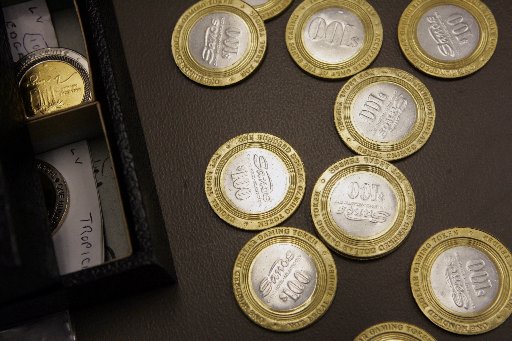
In the late 90s law enforcement agencies from various states, the FBI, Secret Service, and others, descended upon the home of Louis Colavecchio. There, and at his orthotics business, they found thousands of manufactured slot tokens from dozens of casinos throughout North America.
What sets Colavecchio apart from other counterfeiters is that he was able to duplicate just about anything made out of precious metals or stones. The slot coins found weren’t just counterfeits, they were precisely the same as the real things in every way; they essentially WERE the same thing.
In order to pull this off, “The Coin” needed some seriously specialized equipment. These hard-to-obtain things included: precious metals such as copper, nickel, and zinc, laser-cutting tools to cut, shape, and create dies to stamp out the coins, and a 150-ton press from Italy.
He was so good, that when coins were brought by officials to one of the casinos Colavecchio had hit, security experts there did not even believe they were counterfeit. He was able to decimate casinos in Las Vegas before law enforcement had any perception of his crimes. They finally became aware when large surpluses of coins showed up on casinos’ inventory in other parts of the continent and Colavecchio was suspiciously cashing in large sums of coins.
It took weeks to sort out just how much “The Coin” stole from the dozens of casinos he had made coins for. It was impossible to ascertain a definite amount since those in Las Vegas refused to even acknowledge that they had been cheated. Estimates range from $100,000 to $500,000, and it was clear he had no intentions to slow down. The government had to rent two storage facilities just to store all of the loot they found in Colavecchio’s possession.
A plea deal was reached when he promised to show law enforcement exactly how his operation had worked in order to help in the prevention of future, similar assaults on casinos.
3
MIT Blackjack Team

This entry is perhaps the most famous of all here. Books have been written about it and a major movie chronicling the story was released in 2008.
Beginning as an after-school club meeting in campus classrooms at The Massachusetts Institute of Technology in the mid 90s, this team came into inception when these brilliant students decided to use statistic-based systems to beat the game of blackjack. They would subsequently assail casinos for years following.
The initial core of students and accepted associates then went on a recruiting campaign and even put up flyers around campus. Applicants were given tests so only the most suitable ones were chosen in the end, then they were thoroughly trained in the system. The system was card counting which, if done correctly, can give the player a slight yet substantial edge. The idea was not new, and thousands had tried their hand at it previously, but the MIT team really took it to a new level.
They created casino mock-ups and environments and took a team-based approach. This complex arrangement of having a team minimized the chance of being caught, maximized opportunities, and disguised the betting patterns that are inherent to all card counters. Casinos were experienced in identifying counters and making their time there miserable, but it would be extremely difficult for them to do so if the team masked their activity well enough. Hours upon grueling hours were spent perfecting the system and each member had to pass a tedious and demanding battery of tests before they were allowed to enter live casino play.
They began in underground card games to reassure themselves that their calculations and methods would transfer to real-life conditions. When they were sure, they acquired financial backing from anonymous investors and created their own corporation named Strategic Investments. With a bankroll of hundreds of thousands of dollars they then invaded Vegas casinos. Their impact was even greater than expected with returns far exceeding their goals. In one weekend alone they accrued $400,000 in winnings.
Heat in time began to hamper the team and they were forced to move to smaller, sometimes unsavory casinos. Eventually they travelled to European countries but their reputation followed them there as well. After more than one brush with the law the original members quit the team. New students joined but casinos all over the globe knew about MIT students and yearbook photos from the school were downloaded to a shared database. This effectively ended the team’s reign.
In all, it was reported that over the span of just a few years the team amassed a profit of over $5 million, and has also become a legendary entity in pop culture.
2
Richard Marcus
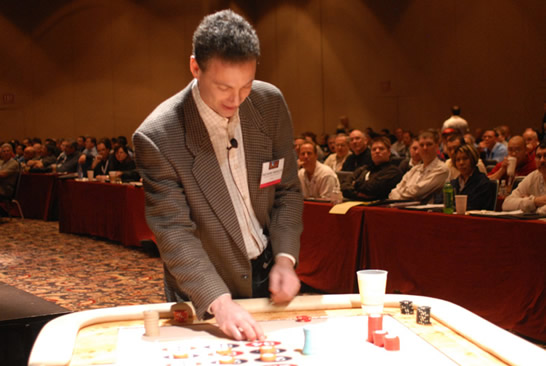
Marcus may be the best full-blown cheater in the history of casino gambling. In the beginning he tried to support himself solely on gambling but soon enough he found himself living under a bridge. He got his act together and became a blackjack and baccarat dealer, but while he was on the other side of the gaming table sinister ideas percolated in his head. These ideas would come to fruition and in turn would wreak havoc on the casinos.
One simple, but extremely difficult-to-pull-off, move made Marcus such an elite cheat. He dubbed it “The Savannah” and it involved betting a low denomination of chips, such as three $5 ones at the roulette table – nothing at all that would draw any attention. If he won, he would become very excited, screaming and yelling while throwing his hands up in the air. However, the dealer would be perplexed as to why a player was so elated over winning such a modest sum. Marcus would then alert him to the fact that there was a brown $500 chip underneath the three $5 chips, and when the dealer lifted the top three, he would in fact see himself that there was a $500 chip resting there.
On the other hand, if Marcus’ bet lost he would quickly and surreptitiously remove the $500 chip from the bottom of the stack as the dealer was turned toward the wheel and he would only be out $15. It was only a rudimentary optical illusion, yet a brilliant one. The smaller denomination chips were pushed just slightly forward to cover up the larger one; the dealer never saw the brown chip – unless the player wanted him to. The idea of switching out chips, or past posting as it’s known, was not new, but what made Marcus’ method so innovative was that he performed it backwards. Past posters would bet small, and if they won would stealthily add more chips to their original bet. Marcus started with a large bet then changed it to a small one if he lost. It may not seem like it was a drastic change, but casinos had never seen this before and were not looking for it because security was trained to only look at wins, and his wins were completely legitimate, it was his losses that weren’t! At the pinnacle of their game, he and accomplices were dropping $5,000 chips under $100 ones.
Richard Marcus was eventually caught and prosecuted but not after he bilked an estimated $5 million from casinos around the world. He currently sells gambling books and claims on his website that he is still involved in casino cheating but in a way law enforcement officials can never catch.
1
Edward Thorp
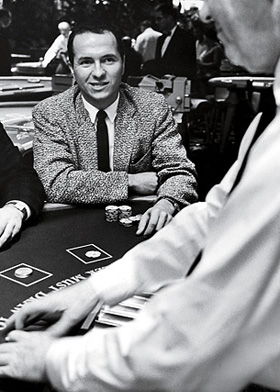
Thorp is the father of card counting. Not only was he successful using it in real-world situations, he was the one who invented the original system. A mathematics professor who possessed a master’s degree in physics and a doctorate degree in mathematics, he clearly had above-average intelligence.
As an adult in the early 60s, Thorp knew next to nothing about casino games and the world of gambling. But when a friend, Claude Shannon, brought him and his wife to Las Vegas he became interested in blackjack, and after playing the game a number of times became convinced that there was a mathematical way in which the player could gain an advantage.
He studied the game in a systematic method and exhaustively examined every facet of the game. Using a computer owned by the university he taught at, he simulated billions of blackjack hands to delve even further into the mathematics of the game. This computer was so massive it filled an entire room, yet it was less powerful than today’s laptops. Through his calculations and observations he created his system which “accounted for the variations in those (cards) that remained after certain hands were dealt”. Basically, he realized that smaller cards were more advantageous for the dealer and when they left the deck, advantage shifted in the player’s favor so they should bet more. Concurrently, larger cards were more advantageous to the player and when they left the deck the advantage shifted to the house, or dealer, so less money should be bet. Using this method Thorp calculated that the player could own a 1% to 5% advantage over the house.
Thorp and Shannon hit the casinos and would return with their pockets filled with cash. One typical weekend would net $70,000 in today’s money. The gambling industry was no match for Thorp’s flawless execution of his card counting method. After all, card counting did not yet exist to them so they had no idea what was happening. Thorp drew the attention of casino bosses when he began winning unusually high sums and most were convinced he was cheating. They intensely watched him play and studied videotapes of his play, but they could see nothing nefarious occurring. Before long, some casinos asked Thorp to leave because he was simply winning too much, yet they still did not know how he was doing so.
In 1962 Thorp wrote his book “Beat the Dealer” which detailed his card counting “ten count system” and became an instant hit as well as a modern-day classic. With its sales he amassed a pretty handsome fortune. In 1966 he wrote a second edition which expanded on the intricacies of the system. It’s interesting to note that the sudden explosion in card counting worked in favor of the casinos since many people attempting to do it just couldn’t pull it off as effectively as Thorp did. However, his findings and methods have been the basis for every card counting system following, including that of the aforementioned MIT team’s.
Following his gambling exploits, Thorp applied his mathematical genius to the stock market and made a huge fortune in securities and hedge funds. Due to his dominance over the casinos and revolutionary thinking, Thorp was one of the first seven inducted into the Blackjack Hall of Fame.
More Great Lists


fact checked by
Alex Hanton
More Great Lists