
 History
History
History  Weird Stuff
 10 Wacky Conspiracy Theories You Will Need to Sit Down For
 Movies and TV
 10 Weird Ways That TV Shows Were Censored
 Our World
 10 Places with Geological Features That Shouldn’t Exist
 Crime
Crime 10 Dark Details of the “Bodies in the Barrels” Murders
 Animals
 The Animal Kingdom’s 10 Greatest Dance Moves
 Movies and TV
 10 Box Office Bombs That We Should Have Predicted in 2025
 History
 10 Extreme Laws That Tried to Engineer Society
 History
 10 “Modern” Problems with Surprising Historical Analogs
 Health
 10 Everyday Activities That Secretly Alter Consciousness
History 10 Dirty Government Secrets Revealed by Declassified Files
Weird Stuff 10 Wacky Conspiracy Theories You Will Need to Sit Down For
Movies and TV 10 Weird Ways That TV Shows Were Censored
Who's Behind Listverse?

Jamie Frater
Head Editor
Jamie founded Listverse due to an insatiable desire to share fascinating, obscure, and bizarre facts. He has been a guest speaker on numerous national radio and television stations and is a five time published author.
More About Us
Our World 10 Places with Geological Features That Shouldn’t Exist
Crime 10 Dark Details of the “Bodies in the Barrels” Murders
Animals The Animal Kingdom’s 10 Greatest Dance Moves
Movies and TV 10 Box Office Bombs That We Should Have Predicted in 2025
History 10 Extreme Laws That Tried to Engineer Society
History 10 “Modern” Problems with Surprising Historical Analogs
Health 10 Everyday Activities That Secretly Alter Consciousness
10 Common Misconceptions About the Victorian Era
There are many widely believed misconceptions about the Victorian Era, which began with Queen Victoria being crowned in 1837 and ended with her death in 1901. Public perception has it that the Victorians were a sexually repressed and humorless bunch. And then there are the more specific myths about famous people of the era—from Charles Dickens to Charles Darwin. Here’s the truth behind 10 of the most common misconceptions about the Victorians.
Related: Top 10 Things in the Victorian Home That Could Kill You
10 The Victorians Were Sexually Repressed Prudes
Did the Victorians Think Ankles Were Too Scandalous?
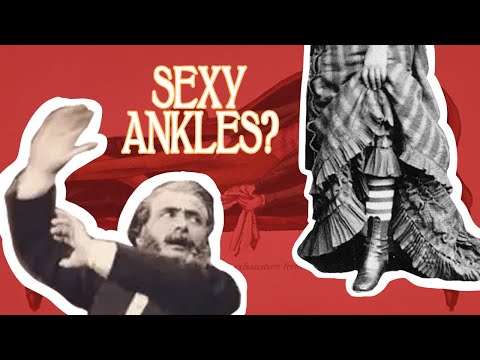
It’s often thought that Victorians were prudes about sex and, as a result, got turned on by the sight of an ankle or even a piano leg. While it is true that Victorians were usually coy about sex in public, they certainly weren’t sexually repressed in private. Pornography was banned under the Obscene Publications Act of 1857, but that just pushed the popular material into underground markets. Prostitution was also a booming industry, with London being home to an estimated 80,000 sex workers by the end of the century. And in the 1890s, people got fed up with public moralizing and began to openly discuss sex, with the decade now being known as the Naughty Nineties.
As for the idea that Victorians covered their piano legs because the shape was considered sexually arousing, that started as a joke—one aimed at Americans. In A Diary in America (1839), Captain Frederick Marryat of the British Navy noted that he visited an American seminary where the piano had “modest little trousers with frills at the bottom of them.” He then jokingly said that the material was there to uphold the “purity of the young ladies.” Victorians over in Britain did sometimes add frills to their piano legs, but only because they liked embellishments, not because they were scandalized by furniture.
The widely held prudish perception of the Victorians started with the Modernists of the early 20th century. Writers such as Virginia Woolf and Lytton Strachey wanted to be seen as progressive and liberal, so they painted the previous generation as uptight and puritanical.[1]
9 Prince Albert Had a Prince Albert
HIDDEN ADORNMENTS | BODY PIERCING IN THE VICTORIAN ERA | PRINCE ALBERT ANYONE? | VICTORIAN HISTORY
You may have heard that Prince Albert, Queen Victoria’s husband, had a penis piercing known, fittingly, as a Prince Albert. The story goes that the shape of his penis ruined the line of his trousers, so he had the piercing done so that it could be hooked to the side and kept in place. But this is highly likely to be a myth.
“Prince Albert himself almost certainly didn’t have a genital piercing, or any other piercing of any kind at all,” Matt Lodder, a body modification expert and academic at the University of Essex, told Mel Magazine. The story probably got off the ground thanks to a piercer known as Doug Malloy, who “created a lot of pseudo-historical tales about the origins of various piercings back in the 1960s and 1970s.”
Not only is there no evidence of Prince Albert having such a piercing, but it would likely have been a dangerous procedure in the Victorian Era, with a high risk of infection. And if Albert did want to keep his penis out of the way, he simply could have worn different underwear rather than risk a painful injury.[2]
8 Jack the Ripper Was the First Serial Killer
Jack the Ripper: The Real Story

First, it should be noted that the Victorians themselves never called Jack the Ripper a serial killer. That label wasn’t popularized until the 1970s thanks to FBI agent Robert Ressler. Jack the Ripper most definitely fits the bill, though, having killed at least five women in 1888.
Jack the Ripper is occasionally described as the world’s first serial killer, including in a 2006 documentary. But there are many serial killers whose murderous activities predate Saucy Jack’s. For instance, William Burke and William Hare started out as grave robbers—supplying cadavers for surgeon Robert Knox’s anatomy classes—but eventually took to murder as an easier method of sourcing bodies. They killed at least 15 people before being caught in 1828; Burke was executed the following year.
Other serial killers predate Jack the Ripper—from the Harpe brothers, who murdered their way through the American West in the late 1790s, to Mary Ann Cotton, who is believed to have poisoned many of her own children and three of her husbands during the mid-1800s.[3]
7 The Victorians Didn’t Have a Sense of Humor
Victorian Humor (1884 Joke Book)
The most famous quote from Queen Victoria is “We are not amused,” allegedly uttered in response to a scandalous story. However, it’s unlikely that she ever actually said this. While she could be fairly straitlaced in public—as was expected of a monarch—her diaries show that she was fun-loving, warm, and sometimes even mischievous in private.
And it’s not just Victoria who is accused of not enjoying a joke, with the perception being that pretty much all Victorians were humorless. The actual evidence proves otherwise: books and newspapers from the period are full of jokes about all sorts of things, including politics, family, and celebrities. There’s even at least one Victorian “yo mama” joke: “Why didn’t you put on a clean collar before you left home? ‘Cause your mother hadn’t sent home my washing.” Victorians also created the Christmas cracker—a holiday staple best known today for its groan-worthy jokes.[4]
6 Charles Dickens Wrote Such Long Books Because He Was Paid by the Word
Why should you read Charles Dickens? – Iseult Gillespie
There’s no escaping the fact that Charles Dickens’s novels tend to be lengthy. Standard adult books these days sit within the range of 80,000 to 100,000 words, while Great Expectations comes in at 187,596 words and David Copperfield is a staggering 360,231 words. These high word counts have given rise to the idea that Dickens was paid by the word and so he stretched his stories out to make more money.
There’s no truth to this, however. Dickens was actually paid per installment of the story, with the chapters being serialized in magazines. The majority of his books were first published via twenty 32-page installments. Dickens was paid £20 per installment, and readers paid a shilling—far cheaper than buying a full book outright. Serialization also added suspense, keeping readers on the edge of their seats as they waited for the next part.[5]
5 Queen Victoria Was the First Bride to Wear White
What a Victorian wedding would look like in the Victorian era?
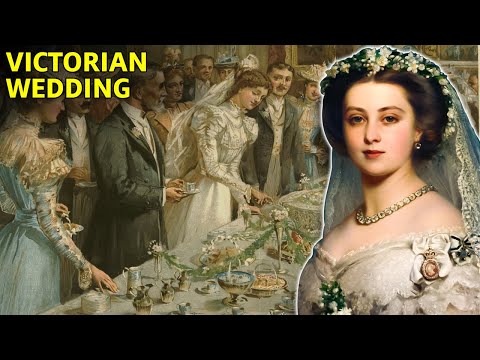
On February 10, 1840, Queen Victoria married Prince Albert while wearing, in her own words, “a white satin gown with a very deep flounce of Honiton lace, imitation of old.” She’s sometimes credited with being the first bride to wear white, but in reality, she wasn’t even the first queen to opt for the color (or, rather, lack thereof). Back in 1558, Mary, Queen of Scots, wore white for her wedding to Francis, Dauphin of France.
But although she wasn’t the first, Victoria’s choice of wedding dress did popularize the practice of brides wearing white. According to historian Julia Baird, Victoria chose white partly to showcase British-made lace and partly because white, before modern bleaching techniques, was costly and thus a symbol of wealth. The wedding portrait and engravings circulated widely, helping cement white as the bridal color of choice.[6]
4 Charles Darwin Coined the Phrase “Survival of the Fittest”
Survival Of The Fittest — Stated Clearly
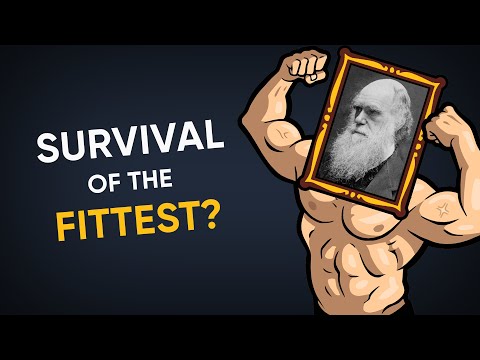
Charles Darwin is best known for developing the theory of evolution, which involves natural selection occurring via survival of the fittest. However, the phrase “survival of the fittest” wasn’t coined by Darwin and doesn’t appear in the original edition of On the Origin of Species (1859).
The iconic words were actually first used by philosopher Herbert Spencer, writing in response to Darwin’s theory in his Principles of Biology (1864). Alfred Russel Wallace, who concurrently developed a theory of evolution, later wrote to Darwin to criticize the phrase “natural selection” because it implied an intelligent selector. He thought the issue could be resolved “without difficulty & very effectually by adopting Spencer’s term… viz. ‘Survival of the fittest.’”
Although Darwin didn’t stop using “natural selection,” he acknowledged the usefulness of Spencer’s phrase and began using it in The Variation of Animals and Plants under Domestication (1868) and from the fifth edition of On the Origin of Species onward.[7]
3 Corsets Were So Tight That They Made Women Faint
How the Victorians Faked Tiny Waists (without fainting!)
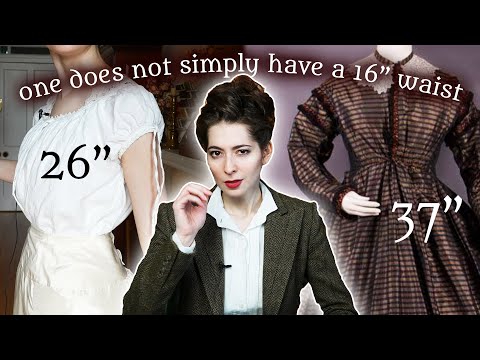
During the Victorian Era, it was typical for women to wear corsets, and it’s often said that they were so tight that women would pass out—hence why they supposedly had fainting couches. It’s sometimes even reported that women had ribs surgically removed so their corsets could be laced even tighter to achieve a tiny waist.
But the reality is that, if worn properly, corsets weren’t that unpleasant to wear and were intended to provide support rather than shrink a woman’s waist. While the fashion was for women to have small waists, this look was usually achieved via visual contrast—large sleeves, voluminous skirts, and structured bodices. Tightlacing—tightly binding a corset to achieve a smaller waist—was sometimes practiced, but it wasn’t the norm.
There are also no documented cases of women removing their ribs to achieve a slimmer torso, and the idea of “fainting couches” is a modern invention. Victorians called these pieces of furniture day beds, and they certainly didn’t have them around just in case they swooned.[8]
2 Oscar Wilde Died of Syphilis
The Secret Scandal That Destroyed Oscar Wilde

On November 30, 1900, writer Oscar Wilde died in Paris. For many years, it was thought that he had died of syphilis, which he believed he contracted in 1878 after having sex with a prostitute known as Old Jess. For decades afterward, his cause of death was attributed to his syphilis worsening and causing a brain infection.
However, it isn’t certain that Wilde ever even had syphilis. He was examined by seven different doctors, and none of them found evidence of the disease. It is possible that he was asymptomatic, but his wife and two sons also never contracted it.
Around a century after Wilde’s death, three doctors—MacDonald Critchley, Ashley H. Robins, and Sean L. Sellars—looked over his medical records to search for a more probable cause of death. They agreed that a severe infection in the middle ear—Wilde was a longtime sufferer of ear infections, deafness, and chronic discharge—likely spread to his brain. Although Wilde underwent surgery, probably a mastoidectomy, he continued to deteriorate and eventually fell into a coma.[9]
1 The Vibrator Was Invented to Treat Hysterical Women
Good Vibrations: a medical and sexual history | Here’s the Thing about… Vibrators.
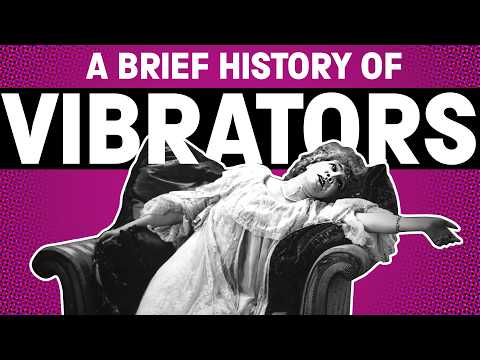
You may have heard that the vibrator was originally created so that doctors could give their fingers a break when bringing women to orgasm as a treatment for hysteria. This catch-all medical condition is no longer recognized and was used to cover a whole host of symptoms, from anxiety and fainting to insomnia and irritability. The idea that vibrators were used to relieve these symptoms comes from Rachel Maines’s The Technology of Orgasm: “Hysteria,” the Vibrator, and Women’s Sexual Satisfaction (1999).
However, in more recent years, there’s been pushback against this theory. Historian Hallie Lieberman points out that while electric vibrators were on the market during the 1800s, they were typically used to relieve back and neck pain. “For massaging women to orgasm, there is no evidence that ever happened in the doctor’s office,” Lieberman told the BBC.
Lieberman doesn’t rule out the possibility that a few rogue doctors used vibrators in a sexual way on patients, but the device certainly wasn’t created or prescribed with this purpose in mind.[10]
More Great Lists
 10 Common Myths and Misconceptions About Our Universe
 10 Common Misconceptions About the Renaissance
 10 Things You Never Knew About Hollywood's Blacklist Era
 The Ten Best Grunge-Era Rock Songs
 10 Bleak Facts about Victorian Workhouses
 Top 10 Things in the Victorian Home That Could Kill You
 10 Unsettling Unsolved Victorian Slayings
 10 Biggest Misconceptions about Artificial Intelligence
 10 Misconceptions About Martial Arts That Hollywood Fed Us
fact checked by
Darci Heikkinen
More Great Lists