
 Mysteries
Mysteries
Mysteries  Our World
 10 Countries Where Water Scarcity Gets Seriously Weird
 Weird Stuff
 10 of the Most Bizarre Buildings Around the World
 Creepy
 10 American Urban Legends Far Stranger Than Bigfoot
 Movies and TV
 10 Radical Reimaginings of Frankenstein
 Facts
Facts 10 Explosive Facts You Probably Don’t Know About Volcanoes
 Pop Culture
 0 Things That Became Massive Hits the Second Time Around
 Humans
 History’s 10 Little-Remembered Acts of Charity
 The Arts
 10 Iconic Masterpieces Attacked by Pure Pettiness
 History
 History’s Ten Most Lopsided Battles Ever
Mysteries 10 People Who Infamously Appeared out of Nowhere
Our World 10 Countries Where Water Scarcity Gets Seriously Weird
Weird Stuff 10 of the Most Bizarre Buildings Around the World
Who's Behind Listverse?

Jamie Frater
Head Editor
Jamie founded Listverse due to an insatiable desire to share fascinating, obscure, and bizarre facts. He has been a guest speaker on numerous national radio and television stations and is a five time published author.
More About Us
Creepy 10 American Urban Legends Far Stranger Than Bigfoot
Movies and TV 10 Radical Reimaginings of Frankenstein
Facts 10 Explosive Facts You Probably Don’t Know About Volcanoes
Pop Culture 0 Things That Became Massive Hits the Second Time Around
Humans History’s 10 Little-Remembered Acts of Charity
The Arts 10 Iconic Masterpieces Attacked by Pure Pettiness
History History’s Ten Most Lopsided Battles Ever
10 Less Than Jolly Events That Occurred on December 25
Many people associate December 25 with Christmas, Santa Claus, gift exchanges, and—some years—Hanukkah. It’s also linked to snowmen, gingerbread, and, for many, a rare pause from work and daily routines.
It’s often assumed that December 25 marks the beginning of a slow stretch for serious news. But history suggests otherwise. The ten events below show that Christmas Day has frequently coincided with disasters, political upheaval, scientific breakthroughs, and moments that reshaped nations—proving the date has never been as quiet as its festive reputation suggests.
Related: 10 World Events That Made the News a Century Ago in 1925
10 Santa Maria Runs Aground Somewhere in the Caribbean Sea, 1492
Christopher Columbus Ships: A Vessel that Discovered “America” | Santa Maria

Christopher Columbus’s flagship, the Santa Maria, was the largest of the three ships that crossed the Atlantic in 1492. While the expedition is often remembered for its landfall in the Caribbean, a lesser-known disaster struck on December 25 of that same year, when the Santa Maria ran aground on a reef and was abandoned. The crew salvaged what they could, stripping the vessel of usable timber and supplies.
The precise location of the wreck remains disputed. In 2014, researchers claimed to have identified remains off the coast of Haiti based on size, position, and nearby artifacts. However, subsequent analysis suggested that some recovered materials were made from copper alloys not used until centuries later. Other experts believe the ship has either eroded entirely or lies buried beneath layers of sediment, ensuring the mystery endures.[1]
9 Christmas Is Banned in the Massachusetts Bay Colony, 1659
The 22-Year Ban on Christmas in Massachusetts
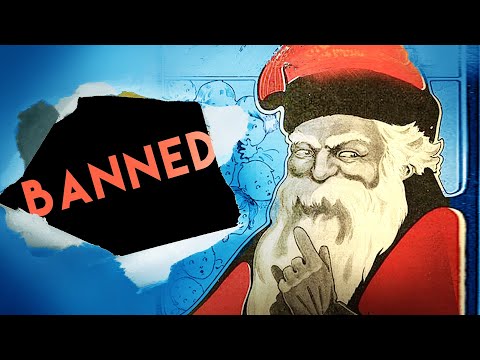
Seventeenth-century New England settlers brought Christmas traditions from England that emphasized feasting, drinking, and revelry. To the region’s Puritan leaders, these customs violated their strict biblical interpretations and promoted moral disorder rather than religious devotion.
On December 25, 1659, the Massachusetts Bay Colony enacted a law fining anyone caught celebrating Christmas five shillings. Though enforcement waxed and waned over the years, the ban symbolized deep cultural divisions within the colony. The prohibition finally faded as political power shifted in the mid-19th century, culminating in Christmas being declared a legal holiday in Massachusetts in 1856.[2]
8 London’s St. Paul’s Cathedral Declared Officially Complete, 1711
St Paul’s Cathedral Explained

The Great Fire of London in 1666 destroyed much of the city, including the medieval St. Paul’s Cathedral that had stood atop Ludgate Hill for centuries. The devastation created an opportunity for architectural reinvention, led by famed architect Sir Christopher Wren.
After decades of construction using Portland limestone and classical design principles, the new St. Paul’s Cathedral was officially declared complete by Parliament on December 25, 1711. Its massive dome reshaped London’s skyline and remains one of the most iconic structures in British history, symbolizing both recovery and resilience after catastrophe.[3]
7 Deadly Flood Strikes Parts of Europe, 1717
The Christmas Flood of 1717: A Holiday Apocalypse

Warnings from Dutch engineer Thomas van Seeratt about deteriorating dykes went largely ignored—until nature delivered a brutal reckoning. On December 25, 1717, a powerful North Atlantic storm generated a massive surge that overwhelmed more than 40 dykes along the North Sea coast.
The resulting floods devastated regions of the Netherlands and Germany, killing an estimated 14,000 people. Entire villages vanished overnight, and survivors were left clinging to rooftops and trees in freezing temperatures. Though van Seeratt later oversaw dyke reconstruction, similar disasters would strike again, underscoring the enduring battle between engineering and the sea.[4]
6 Continental Army Surprises Hessians in New Jersey, 1776
Washington’s Crossing of the Delaware River: The Revolutionary War in Four Minutes

By December 1776, the American Revolution was faltering. George Washington’s Continental Army was demoralized, undersupplied, and hemorrhaging soldiers whose enlistments were about to expire. Facing collapse, Washington devised a bold gamble.
On Christmas night, his troops crossed the icy Delaware River and launched a surprise attack on Hessian forces stationed in Trenton, New Jersey. The victory the following day reinvigorated the revolutionary cause and convinced both Americans and British commanders that the rebellion was far from finished—a turning point that reshaped the war’s trajectory.[5]
5 First of Its Kind Ovary Surgery Takes Place in Kentucky, 1809
The Pioneer Woman Who Braved History’s First Abdominal Surgery in 1809

Many looked at Kentucky resident Jane Todd Crawford’s swollen abdomen and assumed the 45-year-old woman was pregnant. When what should have been her due date came and went, Dr. Ephraim McDowell diagnosed a massive ovarian tumor and proposed a radical solution—surgery. On December 25, 1809, Crawford agreed to undergo the operation without anesthesia or antiseptics, fully aware that no such procedure had ever been successfully attempted before.
McDowell removed a 22.5-pound cystic ovary during what became the world’s first successful ovariotomy. Against all expectations, Crawford survived and went on to live more than three decades after the operation. The surgery permanently altered the future of abdominal medicine and established McDowell as a pioneer of modern surgical practice.[6]
4 German U-Boat Sinks off North Wales Coast, 1917
The story of the AGBERI and the U 87

At the start of World War I, Germany’s submarine fleet was relatively small, but U-boats quickly became one of its most feared weapons. By 1917, Allied forces had begun developing more effective countermeasures, including escort vessels trained to hunt submarines.
On December 25, 1917, the German U-boat U-87 was rammed by the British escort ship HMS Buttercup off the coast of North Wales. Witnesses later reported that the submarine broke apart before sinking, killing all 40 crew members onboard. The wreck was rediscovered a century later, offering a sobering reminder that even Christmas provided no reprieve from wartime violence.[7]
3 Britain’s Prime Minister Makes Surprise Trip to Greece, 1944
Churchill visits Greece – 1944 | Movietone Moment | 27 December 2024

While Germany’s bombing campaign against Britain dominated headlines earlier in World War II, tensions in Greece posed a different kind of threat by late 1944. After liberation from Axis occupation, the country plunged into political turmoil, with rival factions vying for control of the postwar government.
On December 25, 1944, Prime Minister Winston Churchill made an unannounced visit to Athens in an effort to stabilize the situation. His presence helped broker a fragile political compromise, including the appointment of a regent until Greece’s future governance could be determined. The visit underscored Britain’s determination to prevent Communist control of the strategically important nation.[8]
2 Florida Activists Killed by Alleged Ku Klux Klan Members, 1951
Harry and Harriette Moore:The First Martyrs of the Modern Civil Rights Movement

Harry and Harriette Moore were prominent civil rights activists and educators in Florida, deeply involved in expanding Black voter registration through the NAACP. Their work made them powerful advocates—and dangerous targets—during the Jim Crow era.
On December 25, 1951, a bomb detonated beneath the Moores’ bedroom, killing Harry instantly and Harriette days later. The attack occurred on their 25th wedding anniversary and shocked the nation. Though several Ku Klux Klan members were identified as suspects, no one was ever convicted. The murders are now widely regarded as among the earliest assassinations of modern civil rights leaders in the United States.[9]
1 Fire Destroys Legendary Hotel in Tennessee, 1961
CSI Knoxville: The Maxwell House Hotel

The Maxwell House Hotel in Nashville was once one of the South’s most celebrated landmarks, hosting presidents, musicians, and dignitaries. It even gave rise to the famous coffee slogan “good to the last drop,” reportedly uttered by President Theodore Roosevelt during a 1907 visit.
On December 25, 1961, a devastating fire broke out on the hotel’s fourth floor and rapidly engulfed the building. Though all guests and staff escaped, the damage was irreparable. Despite being insured, the owners chose not to rebuild, marking the end of a historic institution. The fire’s cause was never definitively determined, closing the book on one of Nashville’s most storied hotels.[10]
More Great Lists
 10 Notable Events That Also Occurred on September 11
 10 Momentous Events That Also Occurred on July 4th
 10 Rushed Royals Who Reigned for Less Than a Day
 10 Of The Strangest Deaths That Occurred During…
 10 Weirdest May-December Movie Romances
 10 Curious Things That Are Older Than You Think
 10 Reasons Why We're Afraid of AI Now More Than Ever
 10 Futuristic Technologies That Are More Cool Than Useful
 10 Ways Your Cat Is Weirder Than You Think
fact checked by
Darci Heikkinen
More Great Lists