
 Movies and TV
Movies and TV
Movies and TV  Misconceptions
 10 Dinosaur Myths That Refuse to Go Extinct
 Weird Stuff
 10 Ridiculous Flat-Earth Arguments That Fail Simple Tests
 Technology
 10 Bizarre Places Electricity Is Hiding in Plain Sight
 History
 10 Nail-Biting Espionage Operations of the Cold War
 History
 10 Groundbreaking Innovations That Prove the “Dark Ages” Weren’t Dark
 Weird Stuff
 10 Bizarre Queen Ant Dramas That Belong in a Soap Opera
 Food
Food 10 Caribbean Foods with Dark and Unexpected Histories
 Movies and TV
 10 Controversial Documentaries That Shaped Public Perception
 Miscellaneous
 10 Times Big Business Turned People into Test Subjects
Movies and TV 10 Tough-Guy Actors Who Unexpectedly Broke into Song
Misconceptions 10 Dinosaur Myths That Refuse to Go Extinct
Weird Stuff 10 Ridiculous Flat-Earth Arguments That Fail Simple Tests
Who's Behind Listverse?

Jamie Frater
Head Editor
Jamie founded Listverse due to an insatiable desire to share fascinating, obscure, and bizarre facts. He has been a guest speaker on numerous national radio and television stations and is a five time published author.
More About Us
Technology 10 Bizarre Places Electricity Is Hiding in Plain Sight
History 10 Nail-Biting Espionage Operations of the Cold War
History 10 Groundbreaking Innovations That Prove the “Dark Ages” Weren’t Dark
Weird Stuff 10 Bizarre Queen Ant Dramas That Belong in a Soap Opera
Food 10 Caribbean Foods with Dark and Unexpected Histories
Movies and TV 10 Controversial Documentaries That Shaped Public Perception
Miscellaneous 10 Times Big Business Turned People into Test Subjects
10 Most Influential Fictional Objects in Cinema History
Cinema has a long history of objects that do more than sit on shelves—they shape stories, define characters, and sometimes even change the way audiences think about movies. From glowing briefcases to legendary swords, these fictional artifacts aren’t just props; they are storytelling engines, symbols, and cultural icons all rolled into one. Some motivate entire plots, while others silently observe, forcing characters to act, react, or transform.
The influence of these objects extends beyond the screen. They spark debates, inspire fan theories, and even enter everyday language. Think of the red pill from The Matrix or the One Ring from The Lord of the Rings—their meanings resonate far beyond their films, affecting how viewers understand choice, power, and morality.
In this countdown, we explore ten objects that have left indelible marks on cinema, ranked from Number 10 down to Number 1:
Related: 10 Best Cold Opens in Cinematic History
10 The Mysterious Briefcase (Pulp Fiction)
What’s in the BRIEFCASE? Pulp Fiction Explained
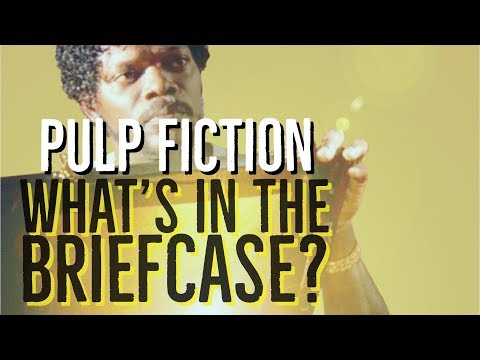
Few fictional objects have influenced modern cinema as quietly—and as powerfully—as the glowing briefcase in Pulp Fiction. On paper, it’s just a suitcase. In practice, it became a masterclass in how not showing something can be more effective than showing everything. The briefcase belongs to gangster boss Marsellus Wallace, and everyone who opens it reacts the same way: stunned silence, wide eyes, instant reverence. We never see what’s inside. We’re never told what’s inside. Yet the object commands absolute authority over the story.
That ambiguity wasn’t a flaw—it was the entire point. Characters betray, kill, and risk their lives for the briefcase without a single explanation offered to the audience. Quentin Tarantino used it as a deliberate rejection of traditional Hollywood storytelling, where mysteries are meant to be solved and objects explained. Instead, the briefcase exists purely to motivate action. It doesn’t matter what it is; what matters is that everyone believes it matters.
The influence was immediate and long-lasting. After Pulp Fiction, filmmakers became far more comfortable leaving narrative gaps, trusting audiences to sit with uncertainty rather than demanding closure. Countless films and TV shows borrowed this approach, introducing objects that were central to the plot but deliberately underexplained.
The briefcase also sparked endless cultural conversation. Fans debated its contents for decades—gold, diamonds, Marsellus’ soul—turning the object into a participatory experience. Viewers weren’t just watching the movie anymore; they were arguing with it.
Most importantly, the briefcase redefined what influence looks like. It didn’t launch a franchise or sell merchandise. Instead, it quietly rewired how stories could work. By proving that mystery itself could be the payload, the briefcase changed the rules for fictional objects in cinema. It glows. It never explains itself. And because of that, it still hasn’t let go of the audience—nearly three decades later.[1]
9 The One Ring (The Lord of the Rings)
How Powerful is The One Ring?
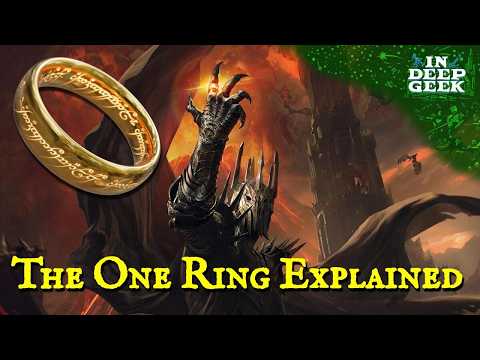
No fictional object has demonstrated the gravitational pull of power quite like the One Ring in The Lord of the Rings. It isn’t flashy or complex. It’s a small band of gold—and it completely bends the world around it.
From the moment the Ring appears, the story stops being about heroes and villains and becomes about corruption. Anyone can wield a sword or claim a throne, but the Ring doesn’t test strength. It exposes weakness. Unlike earlier powerful artifacts, it offers no clean advantages. Every benefit comes with decay attached.
The Ring whispers, tempts, isolates, and destroys its bearer from the inside out. It is psychologically active, not just narratively important. When Peter Jackson adapted J. R. R. Tolkien’s work for the screen, the Ring became cinema’s definitive example of an object as a moral force. Close-ups linger on it. Sound design hums when it’s near. Characters change simply by being in its presence.
Its influence on later films is impossible to miss. Powerful objects were no longer neutral tools—they became emotional burdens. Filmmakers began treating objects as internal conflicts made physical, something characters struggle against rather than use. Entire franchises now revolve around a single item whose destruction or protection defines everything else.
Perhaps most impressively, the Ring made refusal heroic. Victory doesn’t come from mastering it, but from letting it go. Small, silent, and merciless, the One Ring didn’t just influence cinema. It taught movies how to fear their own creations.[2]
8 The Lightsaber (Star Wars)
The 36,000 Year History Of The Lightsaber!

Before Star Wars, cinematic weapons were mostly functional. Guns fired. Swords slashed. Then the lightsaber appeared, and suddenly a weapon could mean something far beyond violence.
At its core, the lightsaber is deceptively simple: a glowing blade of energy controlled by a hilt. But its influence comes from what it represents. It isn’t just a tool—it’s a symbol of discipline, identity, and moral alignment. In one elegant design choice, cinema gained an object that visually communicates philosophy.
The lightsaber demands mastery. Unlike guns, which flatten skill gaps, it requires training, patience, and emotional control. This allowed films to externalize inner conflict. When a character ignites a lightsaber, the audience instantly understands where they stand—hero, villain, or something in between.
George Lucas modeled the weapon after samurai swords and mythic artifacts, blending Eastern philosophy with Western space fantasy. That fusion reshaped how science fiction approached world-building. Technology no longer had to feel cold or mechanical—it could feel spiritual.
Lightsaber color coding further changed visual storytelling. Blue and green became shorthand for balance and restraint, while red signaled corruption and aggression. Without exposition, audiences could read character alignment in a single frame. The lightsaber also transformed combat itself. Duels became emotional confrontations—tests of belief rather than brute force.
Decades later, the lightsaber remains instantly recognizable, even to people who’ve never seen the films. It didn’t just change science fiction. It taught cinema that an object could carry ideology, history, and destiny—all in a single beam of light.[3]
7 The Rosebud Sled (Citizen Kane)
Citizen Kane – Rosebud Scene (10/10) | Movieclips

Long before plot twists became marketing hooks, a simple wooden sled quietly redefined cinematic storytelling in Citizen Kane. The sled known as “Rosebud” didn’t just anchor a narrative—it taught movies how to build meaning around absence, memory, and loss.
The film orbits a single unanswered question: what did Kane mean when he whispered “Rosebud” as he died? The object itself doesn’t appear until the very end, and even then, it’s revealed without fanfare. No music cue. No character revelation. Just a truth uncovered too late to matter.
Directed by Orson Welles, the film used the sled to show that understanding a person doesn’t come from cataloging achievements, but from identifying what they lost and never replaced. Rosebud isn’t powerful or valuable. It doesn’t drive the plot forward in a traditional sense. Instead, it reframes everything that came before it.
This was one of the earliest examples of cinema using an object as emotional punctuation. The audience learns the truth, but the characters never do—a choice that broke from conventional storytelling. After Citizen Kane, props were no longer just MacGuffins. They could symbolize inner lives, regret, innocence, or longing.
Perhaps most importantly, Rosebud proved that influence doesn’t require spectacle. Just a forgotten childhood object burned away without ceremony—its meaning realized only when it’s already gone. In teaching cinema how to end a story quietly, the Rosebud sled became one of the medium’s loudest influences.[4]
6 The Monolith (2001: A Space Odyssey)
2001 A Space Odyssey – The Monolith #2001aspaceodyssey #stanleykubrick

No fictional object in cinema is more silent—or more resistant to explanation—than the black monolith in 2001: A Space Odyssey. It doesn’t speak, move, or clarify its purpose, yet it fundamentally altered how movies handle mystery and scale.
The monolith appears at key turning points in human evolution, marking leaps forward rather than offering rewards. It isn’t a weapon or a prize; it’s a catalyst. Directed by Stanley Kubrick, the object challenged audiences in an era dominated by exposition-heavy science fiction.
Kubrick refused to explain it. No mythology dumps. No instructions. Viewers were forced to interpret rather than consume. Visually, its minimalist design rejected ornate sci-fi aesthetics, influencing decades of production design. Simplicity became a sign of intelligence rather than limitation.
Narratively, the monolith doesn’t belong to anyone. No one controls it. This detached presence introduced objects as cosmic forces—entities operating beyond human motivation. Its appearances slow the film instead of accelerating it, teaching cinema that tension can come from stillness.
Even now, the monolith resists definitive interpretation. In legitimizing ambiguity as an artistic endpoint, it taught cinema that not knowing can be the most powerful feeling of all.[5]
5 The DeLorean Time Machine (Back to the Future)
The Science of Time Travel in Back to the Future

Some objects don’t just influence characters—they reshape storytelling itself. The DeLorean Time Machine in Back to the Future did exactly that, turning a car into a vehicle for narrative invention and audience imagination.
With a flux capacitor and 1.21 gigawatts of energy, the DeLorean allows Marty McFly and Doc Brown to travel through time, altering events and creating paradoxes. The car isn’t just a plot device—it’s the story’s engine, literally and figuratively.
Directed by Robert Zemeckis, the film showed that an object could anchor an entire narrative universe. The DeLorean’s consistent rules created unpredictable consequences, teaching filmmakers that objects could be fun, functional, and narratively flexible.
Its iconic design amplified its influence. Gull-wing doors, glowing instrumentation, and chrome aesthetics turned the DeLorean into a cultural icon. It proved that objects could carry aesthetic and narrative weight simultaneously.
Most importantly, the DeLorean showed that an object could drive a story. Every major moment in the trilogy revolves around it. By turning a car into a character, a device, and a symbol of possibility, the DeLorean set a new standard for cinematic objects: inventive, versatile, and unforgettable.[6]
4 The Red Pill (The Matrix)
The Red Pill & Blue Pill Finally Explained! | MATRIX EXPLAINED

Few fictional objects have entered everyday language as fully as the red pill from The Matrix. It lasts only seconds on screen, performs no visible action, and yet permanently altered how cinema talks about reality and choice.
The pill doesn’t grant power—it offers truth. Take it, and comfort is gone forever. Written and directed by the Wachowskis, the red pill reframed how objects could function thematically. Instead of driving the plot through physical stakes, it triggered internal transformation.
After The Matrix, films increasingly used single, decisive objects to represent existential turning points. A button pressed. A door opened. A truth revealed. The red pill proved audiences would engage with abstract ideas if grounded in a simple visual choice.
Culturally, “taking the red pill” escaped the film entirely, becoming shorthand for rejecting surface reality. The object stopped belonging to the movie and started belonging to the audience.
What makes it especially influential is its neutrality. The film never claims enlightenment leads to happiness. It leads to struggle and responsibility. By refusing to romanticize awakening, the red pill taught cinema that knowledge can be costly—and irreversible.[7]
3 The Tesseract (Marvel Cinematic Universe)
Explaining the Confusing Tesseract Timeline

The Tesseract demonstrated how a single object could bind an entire franchise together. First introduced in Captain America: The First Avenger, the glowing blue cube became the connective tissue of the Marvel Cinematic Universe.
Rather than resolving plots, the Tesseract extended them. Each appearance escalated its importance, teaching audiences to track objects across films rather than scenes. This normalized long-form object storytelling and rewarded patience.
Visually, the Tesseract blurred the line between science and mythology. Clean and geometric, it looked scientific but behaved like a god. Characters never mastered it—they reacted to it. The object revealed ambition rather than rewarding it.
Most importantly, the Tesseract proved audiences would emotionally invest in an object whose meaning unfolded over years. By turning artifacts into promises of future stories, it permanently altered how modern franchises are structured.[8]
2 The Infinity Stones (Marvel Cinematic Universe)
Every Infinity Stone Explained in 18 Minutes

If the Tesseract connected stories, the Infinity Stones sustained obsession. Introduced gradually across the MCU, they transformed fictional objects into long-term narrative anchors, redefining scale, patience, and payoff.
Each Stone embodied a fundamental aspect of existence—space, time, power, reality, mind, and soul—elevating them beyond typical artifacts. Fragmented ownership created tension without resolution, teaching audiences to track objects across years.
Under Marvel Studios, the Stones redefined escalation. Power accumulated rather than exploded. By the time all six were united, the audience understood the stakes without explanation.
The Stones also reshaped villains. Thanos pursued completion, not revenge. His goal was abstract, system-driven, and inevitable. Culturally, the Stones trained audiences to theorize collectively, turning objects into shared memory.
By transforming artifacts into promises stretched across time, the Infinity Stones taught cinema that patience itself could be spectacular—and that long-term payoff could redefine audience investment.[9]
1 Excalibur (Various Arthurian Adaptations)
What did Excalibur REALLY look like? (The sword of King Arthur)

No fictional object in cinema carries more mythic weight than Excalibur. Across decades of adaptations, the sword has become the ultimate symbol of destiny, authority, and the burden of leadership.
Excalibur doesn’t merely empower—it judges. Arthur must be worthy to wield it. This dual role redefined how objects function in storytelling, allowing artifacts to embody virtue and moral testing rather than raw power.
John Boorman’s Excalibur cemented the sword’s cinematic legacy through reverent framing and visual grandeur. The object became a character in its own right, commanding presence equal to any actor.
Excalibur’s influence stretches beyond fantasy. Its core idea—that an object can externalize internal conflict—echoes through The Lord of the Rings, Star Wars, and The Matrix. It taught filmmakers that props could guide emotional journeys and define heroism.
Ultimately, Excalibur remains the archetype. Across centuries of legend and decades of film, it stands as the standard by which all influential fictional objects are measured.[10]
More Great Lists
 Top Ten Most Ruthless Fictional Gangsters in Movie History
 10 Most Influential Protests in Modern History
 The Top Ten Most Valuable Signed Objects
 The 10 Most Commonly Used Household Objects People…
 10 Most Spectacular Objects Pulled from the Thames
 The Ten Most Badass Fictional Weapons
 10 Korean Movies That Prove South Korea Is a Cinema…
 10 Objects, Legends, and Locations That Share The…
 10 Strangest Objects People Have "Fallen" On
fact checked by Darci Heikkinen
More Great Lists