
 Our World
 Weird Stuff
10 Bizarre Immortality Legends and the Dark Truth Behind Them
 Creepy
10 Appalachian Legends to Haunt Your Halloween
 Humans
10 Mathematical Geniuses Who Quietly Built the Modern World
 Movies and TV
10 Movie Antagonists Who Deserved More Sympathy
 Weird Stuff
10 Lakes Where Nature Gets Seriously Weird
 Music
10 of the Biggest Music Careers Launched by Sitcoms
 Movies and TV
10 Period-Drama Details That Look Fake but Are Historically Accurate
 Weird Stuff
10 Wild Facts You Might Not Know About Bears
 Mysteries
10 Terrifying Medical Mysteries That Turned Out to Be Poisoning
Our World 10 Real Places with Histories Too Wild to Be Fiction
Weird Stuff 10 Bizarre Immortality Legends and the Dark Truth Behind Them
Creepy 10 Appalachian Legends to Haunt Your Halloween
Who's Behind Listverse?

Jamie Frater
Head Editor
Jamie founded Listverse due to an insatiable desire to share fascinating, obscure, and bizarre facts. He has been a guest speaker on numerous national radio and television stations and is a five time published author.
More About Us
Humans 10 Mathematical Geniuses Who Quietly Built the Modern World
Movies and TV 10 Movie Antagonists Who Deserved More Sympathy
Weird Stuff 10 Lakes Where Nature Gets Seriously Weird
Music 10 of the Biggest Music Careers Launched by Sitcoms
Movies and TV 10 Period-Drama Details That Look Fake but Are Historically Accurate
Weird Stuff 10 Wild Facts You Might Not Know About Bears
Mysteries 10 Terrifying Medical Mysteries That Turned Out to Be Poisoning
10 Real Places with Histories Too Wild to Be Fiction
Real history often outdoes the stories we make up. Around the world, towns grew around staircases and mines; ancient engineers found ways to store water in dry landscapes; and communities built floating islands. The histories behind these places may sound like fantasy, but every one is real—and people can still visit many of them today.
Related: 10 Places Where Folklore Is Alive and Well
10 Sewell, Chile: The Town Built on Staircases
Sewell The Ghost Town in Chile

More than 7,200 feet (2,200 meters) above sea level in the Chilean Andes sits Sewell, a ghost town built into a steep mountainside. Red, yellow, green, and blue buildings line the slope. Between them is a maze of staircases winding in every direction. In this town, those stairs weren’t just shortcuts. They were literally the streets.
Sewell began in 1905 as a settlement for workers at the El Teniente copper mine. The mountain was too steep for conventional roads. Stairs and pedestrian paths connected the community, including a massive central staircase rising from the train station. The remote mining camp grew into a bustling town. By 1968, about 15,000 people lived there, climbing those steps to reach school, the movies, or friends. But as transportation improved, the mining company decided it made more sense for workers to live in nearby Rancagua. Families gradually relocated, and by the 1970s, much of Sewell had been abandoned.
Today, Sewell is uninhabited and protected as a UNESCO World Heritage Site. It’s the kind of town you’d have to see to believe, but yes, Sewell really does exist.[1]
9 Sukur, Nigeria: The Kingdom Built on Iron
Discovering Sukur Cultural Landscape: Nigeria’s Hidden Gem

In northeastern Nigeria, Sukur’s hilltop palace and stone pathways are only part of the story. For centuries, it served as a center of iron production, supplying neighboring communities with iron for farming tools and trade. By the 17th century, Sukur had developed into a powerful iron-producing kingdom. Its ruler, known as the Hidi, held both political and spiritual authority. The Hidi also oversaw the iron trade, secured materials for production, and protected the market where iron was exchanged. Below his palace, workers operated furnaces near their homes, while farmers cultivated terraces built into the hillsides.
Sukur’s iron wealth eventually faded. Between 1912 and 1922, a neighboring ruler named Hamman Yaje launched brutal raids against the kingdom. Iron production declined and stopped around 1960. Many residents then moved to the surrounding plains.
What interests me is how much of its past remains part of everyday life today. The original stone walkways, farming terraces, and traditional buildings are still in use. Even after attacks damaged the area in 2014, the community worked hard to rebuild and keep their traditions going. Its history reads like an epic fantasy novel, complete with a powerful king, valuable resources, and dramatic battles. The difference is that Sukur’s story actually happened.[2]
8 Banská Štiavnica, Slovakia: The Town That Turned Water into Power
Banská Štiavnica, Slovakia (Tour & History)
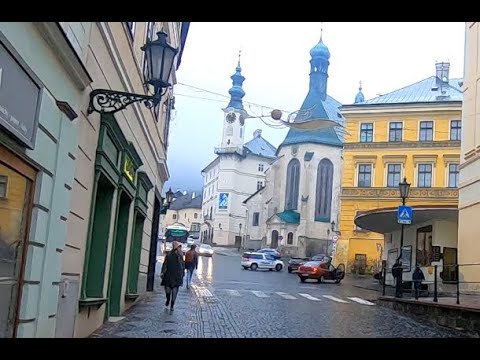
What would you do if the very thing stopping you from finding gold and silver was also the thing that could help you get it? That’s the problem miners faced in Banská Štiavnica, a Slovak mountain town. As miners dug deeper, groundwater threatened to flood their mines, forcing engineers to find a solution.
They built artificial reservoirs called tajchy to collect rainwater and melting snow, connecting them through channels and tunnels. The stored water powered machinery that pumped groundwater out of the mines. The obstacle became part of the solution.
During the 18th century, the system expanded, keeping the mines operating. Think about that for a minute. They started with a flooding problem and ended up building an entire network of reservoirs to help solve it. The town also became known for mining education, establishing a mining academy in 1762. Although mining eventually declined, parts of the historic water system survived, and UNESCO recognized Banská Štiavnica as a World Heritage Site in 1993. A town surrounded by gold and silver mines, with an elaborate network of waterways running through the mountains, sounds like fiction. But tell that to the engineers who lived it.[3]
7 Orvieto, Italy: The Well with Two Staircases
ROCKY’S ITALY: Orvieto – St. Patrick’s Well (Il Pozzo di San Patrizio)

Imagine fleeing a city that’s just been attacked, finding refuge in another city, and then deciding your next priority is to dig a giant hole in the ground. That’s pretty much where Pope Clement VII found himself in 1527. After imperial troops attacked and looted Rome, the pope took refuge in Orvieto, a city perched high on volcanic rock. Another attack was a real concern. If Orvieto came under siege, the people inside its walls would need access to water. His solution was to commission a well, but architect Antonio da Sangallo the Younger had another idea.
Instead of an ordinary well, Sangallo designed a massive shaft that reached about 175 feet (53 meters) deep. Inside were two separate spiral staircases, each with 248 steps, that never crossed. One staircase allowed people and pack animals to descend for water, while the other brought them back up. No traffic jams, no animals squeezing past each other, and no turning around halfway up. Seventy-two windows let daylight reach the staircases.
Construction took ten years and finished in 1537. Originally called the Well of the Fortress, it became St. Patrick’s Well because of an Irish legend about a cave that supposedly led toward Purgatory. So now we have a pope escaping an attack, a giant underground structure, and a connection to a legendary entrance to the afterlife. Who thinks this sounds like make-believe?
Today, visitors can still descend the staircases and look down into the enormous circular shaft. Nearly 500 years later, the engineering remains impressive, but what stays with me are the circumstances behind its creation. Italy is already on my bucket list, and now this is, too. Orvieto didn’t need a fantasy writer to give it an interesting history.[4]
6 Matera, Italy: The City Carved into Stone
Modern living in the ancient caves of Matera, Italy

For thousands of years, people in Matera, Italy, lived in caves carved into the rock. These weren’t temporary shelters. Known as the Sassi, they formed entire neighborhoods with homes, churches, and passageways carved directly into the landscape. The settlement dates back to prehistoric times, and families lived there for centuries.
But living in a place like this doesn’t necessarily mean life there was magical. By the 20th century, families lived in overcrowded conditions without proper sanitation. Some shared their living spaces with animals. In 1952, the Italian government began relocating residents to newer housing, gradually emptying much of the Sassi.
Then the story took another turn. Those once-abandoned neighborhoods gained recognition for their historical importance. Restoration efforts brought residents and businesses back, and in 1993, UNESCO designated the Sassi and the surrounding rock churches a World Heritage Site.
It’s really something to see how these old cave homes have become trendy hotels and restaurants that people travel from around the world to visit. A place that was once nearly deserted should be at the top of everyone’s travel list. But honestly? It’s also a little bittersweet. It hits hardest when you look past the modern decor and remember these weren’t just historical landmarks. They were homes where people lived their everyday lives.[5]
5 Fatehpur Sikri, India: The Emperor’s Abandoned Capital
Fatehpur Sikri:The Abandoned Mughal City That Still Amazes the World | Complete History#youtubevideo

Some people celebrate the birth of a child with a party. Emperor Akbar decided to build an entire capital city. Granted, there was a prophecy involved, but that’s still taking things to another level. In the 1560s, Akbar was hoping for a son and heir. He visited a respected spiritual teacher named Salim Chishti, who, tradition says, predicted he would have a son. In 1569, that prediction came true when Prince Salim was born. Akbar chose the area near Chishti’s home for his capital.
Construction began in 1571, and Fatehpur Sikri soon became a city filled with palaces, courtyards, mosques, and grand gateways. Built largely of red sandstone, it was designed for an emperor and his court. He was establishing a new imperial center.
Then, in 1585, Akbar moved his court to Lahore. His new capital lost its government. Some accounts blame water shortages, while others point to military concerns along the empire’s northwestern frontier. Historians still debate how much each factor contributed to the move.
Fatehpur Sikri wasn’t completely forgotten. Its remarkable buildings survived, and UNESCO recognized it as a World Heritage Site in 1986. Visitors can still walk through the courtyards and palaces of a city built centuries ago because an emperor believed in a prophecy. And to think, most parents settle for a baby shower.[6]
4 Uros Floating Islands, Peru: The People Who Built Their Own Land
No Land, No Road, Just Reeds: Life on a Reed Island | Habitats of the World: Peru | Free Documentary

Most people buy land when they want somewhere to build a home. The Uros people of Lake Titicaca in Peru took a completely different approach. They made their own land, and it floats. For generations, Uros communities have built islands using totora reeds growing in the lake. They layer the reeds over floating blocks of roots to create platforms for their homes. Because the reeds gradually rot, they must regularly add fresh layers. Tradition holds that living on the water helped the Uros resist powerful mainland groups.
Today, families still live on these floating islands, continuing the work that keeps them afloat. Visitors can travel across Lake Titicaca to see the islands and learn about the communities who call them home. And I have to give them credit. I’ve had trouble keeping a houseplant alive. These people have kept an entire floating community going for generations.[7]
3 Ghadamès, Libya: The Desert City with Two Worlds
Through war and decay, Libya’s ‘desert pearl’ tries to hold on

Somewhere between the pages of a storybook that begins with “Once upon a time,” you might find a desert city with secret passageways, streets hidden beneath buildings, and another world above the rooftops. Except this city isn’t imaginary. It’s called Ghadamès, and it’s tucked away in an oasis on the edge of the Sahara Desert in Libya. Known as the Pearl of the Desert, Ghadamès was built to survive the intense heat. Closely packed houses created shaded passageways. Above those streets was another network altogether. While men and children gathered in the passages below, women used their own network of connected rooftop terraces to move between homes, visit neighbors, and spend time together.
For centuries, Ghadamès was also an important stop along trade routes crossing the Sahara. Merchants passed through the oasis. Eventually, residents moved into newer homes outside the old town. No one lives there permanently today, but residents still gather and use the old town’s houses and spaces. It earned UNESCO World Heritage status in 1986.
An oasis in the desert, two different levels of streets, and a city designed around an entirely different way of living. If I came across Ghadamès in a storybook, I’d probably want the author to spend another chapter there. The best part is that you can actually visit it.[8]
2 Tierradentro, Colombia: The Tombs Beneath the Mountains
Colombia: The underground archaeological site of Tierradentro | SLICE

What looks like an ordinary hillside in southwestern Colombia hides something extraordinary beneath the ground. At Tierradentro, ancient communities carved enormous burial chambers into volcanic rock, complete with staircases, columns, and walls covered in red, black, and white designs.
These weren’t ordinary graves. Built roughly between the 6th and 10th centuries, some chambers were nearly 40 feet (12 meters) across. Carved pillars and decorated walls made them resemble homes. Their builders created places for the dead that reflected the living world.
Some of these underground chambers were used for collective burials, with human remains placed inside after an earlier burial. For the communities that built them, death wasn’t simply the end of someone’s story. The tombs suggest a deep connection between the living and their ancestors. Over time, many of the tombs were forgotten, damaged, or looted. Today, 162 underground tombs are protected within the archaeological park, which UNESCO recognized in 1995.
An entire collection of decorated chambers lies hidden beneath the mountains. You could walk across the landscape without realizing what lies underneath. Makes you wonder how many other secrets are still buried right beneath our feet.[9]
1 Dholavira, India: The Ancient City That Planned for the Impossible
India: Marvels & Mysteries | Mystery of Dholavira

Thousands of years before modern plumbing, the people of Dholavira were already figuring out how to keep an entire city supplied with water in a place where rain couldn’t be counted on. They weren’t working with modern machinery. They had stone, careful planning, and a problem that wasn’t going away. Located on an arid island in what is now Gujarat, India, Dholavira was part of the ancient Harappan civilization. Residents built a fortified city with streets, homes, and reservoirs collecting water from seasonal streams and rainfall. Channels and reservoirs stored water for dry periods. People did this as far back as the third millennium BC.
Survival wasn’t the only thing on the residents’ minds. Archaeologists have uncovered jewelry, workshops, and evidence of trade with distant regions, including Mesopotamia. For roughly 1,500 years, people built a community where even water was a challenge.
The city eventually declined, leaving its walls, reservoirs, and other structures buried for centuries. Modern excavations revealed the planning that helped it survive. In 2021, UNESCO designated Dholavira a World Heritage Site.
We spend so much time imagining what ancient civilizations might have been capable of. Then a place like Dholavira reminds us that some of their greatest achievements were real. No magic required. Just people who refused to let a difficult landscape decide what they could build.[10]
More Great Lists
 10 Deserted Islands With Bizarre and Forgotten Histories
 10 Caribbean Foods with Dark and Unexpected Histories
 10 Real-Life Crimes Inspired by Fiction
 10 Real Intelligence Operations That Sound Like…
 10 Operas Inspired by Wild Real-World Events
 10 Rare Hybrids with Wild Backstories
 10 Catholic Histories That Reveal Acceptance of…
 10 Unique Places with Crazy Claims to Fame
 10 Places with Geological Features That Shouldn't Exist
fact checked by Darci Heikkinen
More Great Lists