
 Music
10 Hit Songs That Took a Different Turn in the Studio
 Weird Stuff
10 Facts About Imagination That Sound Like Fantasy
 History
10 Bizarre Things That Happened During the Siege of Paris
 Weird Stuff
10 Times Nature Gave Plants an Unbelievable Plot Twist
 Our World
10 Examples of Molecular Genetics Hiding in Plain Sight
 Weird Stuff
10 Machines and Everyday Objects Given Surprisingly Formal Farewells
 Space
10 Times Space Junk Made a Fiery Return to Earth
 Weird Stuff
10 Real Species That Look Absolutely Fake
 History
10 Overlooked World War II Stories That Deserve More Attention
10 Movies with Bizarre Behind-the-Scenes Stories
Music 10 Hit Songs That Took a Different Turn in the Studio
Weird Stuff 10 Facts About Imagination That Sound Like Fantasy
Who's Behind Listverse?

Jamie Frater
Head Editor
Jamie founded Listverse due to an insatiable desire to share fascinating, obscure, and bizarre facts. He has been a guest speaker on numerous national radio and television stations and is a five time published author.
More About Us
History 10 Bizarre Things That Happened During the Siege of Paris
Weird Stuff 10 Times Nature Gave Plants an Unbelievable Plot Twist
Our World 10 Examples of Molecular Genetics Hiding in Plain Sight
Weird Stuff 10 Machines and Everyday Objects Given Surprisingly Formal Farewells
Space 10 Times Space Junk Made a Fiery Return to Earth
Weird Stuff 10 Real Species That Look Absolutely Fake
History 10 Overlooked World War II Stories That Deserve More Attention
10 Movies with Bizarre Behind-the-Scenes Stories
Most films that fail do so quietly, through bad luck, bad timing, or bad decisions made with the best of intentions. But some movies are shaped by the people and forces surrounding them: studio battles, disappearing money, political pressure, and feuds that spill into public view. The results range from lost footage to films that never reached audiences at all.
These stories are strange, sometimes tragic, and often nearly as fascinating as the movies themselves.
Related: Movie Franchises That Changed Studios and Actually Got Better
10 Jerry Lewis’s The Day the Clown Cried Had a Secret Afterlife
The Day The Clown Cried (1972) Unreleased Film – 27 Min Reconstruction

Jerry Lewis’s unreleased 1972 Holocaust drama became one of cinema’s most famous unseen films. For decades, it seemed to have vanished. Then, in 2025, Swedish actor Hans Crispin revealed that he had stolen a reel while working at a film studio in 1980 and made a copy. He kept it hidden for 45 years.
Crispin invited Swedish public broadcaster SVT to view the copy, which he said was the only known complete version. He later sold it to an undisclosed buyer. The movie still hasn’t received a public release, and the rights remain murky. So Lewis’s long-withheld film now has another mystery: Who owns the copy, and will anyone else ever get to see it?[1]
9 Orson Welles Lost Nearly an Hour of The Magnificent Ambersons
The Magnificent Ambersons (1942) Trailer | Tim Holt | Joseph Cotten

While Orson Welles was in South America working on a wartime project, RKO took control of The Magnificent Ambersons (1942). The studio cut roughly 45 minutes, reshaped the film, and shot a more cheerful ending after preview audiences reacted poorly to Welles’s melancholy story.
Welles wasn’t silent during the process. He stayed in contact with editor Robert Wise, sending instructions by cable and phone. But RKO ultimately released its own version, and the removed footage was later destroyed. Scripts, stills, and continuity documents remain, but the missing scenes themselves are gone. The story is less about Welles abandoning his film than about a studio deciding it knew better—and making that decision permanent.[2]
8 Richard Stanley Returned to The Island of Dr. Moreau in Disguise
The Island of Dr. Moreau (1996). The Story of Failure and Production Hell
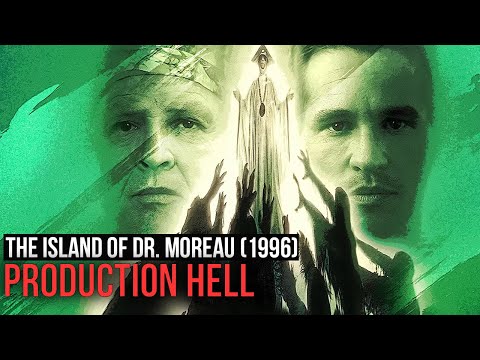
Richard Stanley was fired just four days into filming his long-awaited adaptation of The Island of Dr. Moreau (996). The studio replaced him with John Frankenheimer, but Stanley didn’t immediately disappear from the production. He stayed nearby and secretly returned to the set wearing a creature mask, appearing as one of the film’s animal-human extras.
That story is strange enough without adding the unsupported claim that Stanley then encouraged chaos or secretly influenced Marlon Brando’s behavior. The production’s troubles continued after Stanley’s departure, with Brando and Val Kilmer among the cast members at the center of the turmoil. Stanley’s masked cameo remains one of the more surreal footnotes in a famously troubled shoot.[3]
7 Nailed Ran Out of Money Before It Could Be Finished
Nailed! – Official Trailer HD

David O. Russell’s political comedy Nailed began filming in 2008, but repeated production setbacks and shaky financing kept stopping the shoot. At one point, production shut down for the 14th time after the financier failed to pay the cast and crew on schedule. The film’s pivotal nail-gun scene had not yet been filmed, leaving the project without a key piece of its story.
Russell hoped the movie could still be completed to his satisfaction, but he finally gave up in 2010. Years later, producer Kia Jam assembled the available footage and released it as Accidental Love, with Russell credited as “Stephen Greene.” The result was unfinished—and a reminder that sometimes a film’s greatest obstacle is simply getting the money to make it.[4]
6 Charlton Heston Put His Salary on the Line for Major Dundee
1965 Celluloid Catastrophe: How Columbia’s War With Peckinpah Ruined ‘Major Dundee’

Sam Peckinpah’s Major Dundee (1965) became a battleground between the director and Columbia Pictures. Peckinpah clashed with the studio over the production and, later, over cuts to the film. When the studio threatened to remove him, star Charlton Heston backed his director, eventually returning his $100,000 salary to help secure more shooting time.
Peckinpah was still fired during postproduction after objecting to the studio’s edits. The version released in 1965 was substantially shorter than he had intended. In 2005, Sony released an extended version with 12 minutes of additional footage—but called it an “Extended Version,” not a director’s cut, since it still wasn’t a complete restoration of Peckinpah’s vision. Heston’s gesture helped the production continue; it couldn’t settle the fight over what audiences would see.[5]
5 Arthur Hiller Became an Alan Smithee in An Alan Smithee Film
The Story Of Burn Hollywood Burn: An Alan Smithee Film

In a twist almost too neat for a Hollywood satire, director Arthur Hiller removed his name from An Alan Smithee Film: Burn Hollywood Burn (1998) after a dispute with writer-producer Joe Eszterhas over the final edit. Under Directors Guild rules, that meant the film received the pseudonym “Alan Smithee”—the very name at the center of the comedy.
The joke didn’t save the movie, which flopped, but Hiller’s move wasn’t the sole reason the Guild retired the Smithee name. By 2000, the pseudonym had become too recognizable to serve its original purpose, and the Guild began allowing directors to use individual pseudonyms in qualifying cases. Hiller’s film had turned an industry in-joke into a very public punchline.[6]
4 Tony Kaye Took His Fight over American History X to the Trades
Making American History X was as dark as the film itself

Tony Kaye disowned American History X (1998) after New Line Cinema sided with Edward Norton during a bitter dispute over the final cut. Kaye tried to have his name removed and asked to be credited as “Humpty Dumpty,” but the Directors Guild did not grant the request.
He also brought a priest, a rabbi, and a Tibetan monk to a meeting with studio executives, then spent about $100,000 on trade-paper ads attacking the studio and Norton. The released movie went on to earn Norton an Oscar nomination, while Kaye’s public campaign badly damaged his standing in Hollywood. He didn’t destroy the film, but he made sure the fight over it became part of its legacy.[7]
3 MGM Cut Erich von Stroheim’s Greed from Nine Hours to Two
Erich von Stroheim — The 9-Hour Film Hollywood Destroyed

Erich von Stroheim’s original cut of Greed (1924) ran for roughly nine hours. He later reduced it himself to about four hours, but MGM still considered it too long. The studio took over the editing and cut the film to roughly two hours, removing much of the story Stroheim had filmed.
The excised footage was reportedly destroyed so the silver could be recovered from the nitrate film stock. Stroheim had not secretly destroyed it himself, as some versions of the story suggest; the lost material was a casualty of the studio’s editing process. A later reconstruction used surviving footage and still photographs to suggest what his much longer version might have looked like, but no complete cut has been found.[8]
2 Michael Cimino’s Five-Hour Cut of Heaven’s Gate Sparked a Studio Crisis
Production Hell – Heaven’s Gate
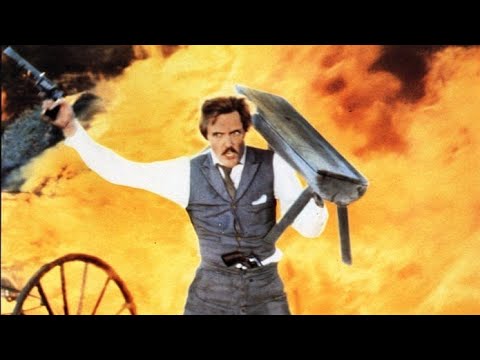
After The Deer Hunter won the Academy Award for Best Picture, Michael Cimino received extraordinary freedom to make Heaven’s Gate (1980). That freedom came at a cost: the production ran far over budget, and Cimino’s first cut reportedly lasted five hours and 25 minutes.
United Artists pushed for a shorter version. After an initial release was pulled, Cimino worked on a recut, which opened more widely in 1981. The film’s failure became a symbol of the end of director-driven Hollywood, and United Artists was sold to MGM months later. But saying Cimino deliberately released an incoherent cut or that one film single-handedly sank the studio gives the story a simpler ending than it had in real life.[9]
1 The Devil Is a Woman Disappeared After a Spanish Protest
Bande-annonce (trailer) La Femme et le Pantin (The Devil Is A Woman) – VOSTFR / HD

Josef von Sternberg’s The Devil Is a Woman (1935) was his final film with Marlene Dietrich. Paramount withdrew it after the Spanish government objected to its depiction of the Guardia Civil, and the studio destroyed an original print. The film was then out of circulation for years, helping it acquire a reputation as a lost work.
But Sternberg didn’t push Paramount to bury his movie, and Dietrich’s personal copy wasn’t the only reason it survived. A print resurfaced at the 1959 Venice Film Festival, bringing the film back into view. The story is a case of political pressure and studio action—not a director deliberately sabotaging his own work.[10]
More Great Lists
 10 Behind the Scenes Facts about Iconic Kisses in Movies
 10 Behind-the-Scenes Facts about Iconic Deaths in…
 Ten Movies Overshadowed by Behind-the-Scenes Controversies
 The Crazy Stories Behind Ten of the Longest Movies Ever
 10 Eerie Tales From Behind The Scenes Of Rosemary's Baby
 10 True Stories Behind Bizarre Historical Mysteries
 The Crazy Stories Behind 10 Legendary Spite Houses
 10 Surprising Stories Behind Famous Songs
 10 Origin Stories Behind Iconic Old-School Horror…
fact checked by Darci Heikkinen
More Great Lists