
 History
 Weird Stuff
Top 10 Strange Side Quests of the U.S. Census
 History
10 Daring Deceptions That Helped Save Lives in World War II
 Crime
10 Times Eyewitness Descriptions Changed the Course of Criminal Investigations
 Animals
10 Animal Attacks on the People Who Cared for Them
 History
10 Cities Devastated by World War II
 Movies and TV
10 Must-Watch Patrick Stewart Performances Beyond Picard and X
 Weird Stuff
10 Halloween Facts with a Dark Side
 History
10 True Tales from the Tower of London’s 1,000-Year History
 Animals
10 Animals Discovered in the Most Unexpected Places
History 10 Overlooked World War II Stories That Deserve More Attention
Weird Stuff Top 10 Strange Side Quests of the U.S. Census
History 10 Daring Deceptions That Helped Save Lives in World War II
Who's Behind Listverse?

Jamie Frater
Head Editor
Jamie founded Listverse due to an insatiable desire to share fascinating, obscure, and bizarre facts. He has been a guest speaker on numerous national radio and television stations and is a five time published author.
More About Us
Crime 10 Times Eyewitness Descriptions Changed the Course of Criminal Investigations
Animals 10 Animal Attacks on the People Who Cared for Them
History 10 Cities Devastated by World War II
Movies and TV 10 Must-Watch Patrick Stewart Performances Beyond Picard and X
Weird Stuff 10 Halloween Facts with a Dark Side
History 10 True Tales from the Tower of London’s 1,000-Year History
Animals 10 Animals Discovered in the Most Unexpected Places
10 Overlooked World War II Stories That Deserve More Attention
World War II is remembered for its major battles, famous commanders, and turning points. But the war also produced stories that rarely make the usual summaries: a troopship sunk by a guided bomb, a secret raid in neutral waters, a rescue operation behind enemy lines, and a battle fought in the freezing Aleutians.
Some of these events were deliberately kept quiet; others faded from public memory as larger developments took over. Together, they show the war’s strange, dangerous, and often overlooked human side.
Related: 10 Unsolved Mysteries from the Cold War
10 The Sinking of HMT Rohna
The HMT Rohna Documentary Preview – Rohna: Classified

On November 26, 1943, the British troopship HMT Rohna was carrying Allied soldiers across the Mediterranean when a German Hs 293 guided glide bomb struck it. The attack killed 1,015 U.S. Army troops aboard. Another 35 American soldiers later died from their wounds.
The sinking remains the greatest loss of U.S. military lives at sea from enemy action. Survivors faced darkness, rough water, and rapidly spreading hypothermia as Allied ships tried to rescue them. The U.S. government kept details of the disaster secret to prevent Germany from learning how effective its new weapon had been. The story remained obscure for decades, and some survivors struggled to prove their injuries were connected to an event that had barely been acknowledged publicly.[1]
9 Operation Postmaster
The Incredible TRUE Story of The Ministry of Ungentlemanly Warfare

In January 1942, British raiders entered the harbor at Santa Isabel, on the Spanish-controlled island of Fernando Po, now part of Equatorial Guinea. Their targets were three Axis merchant ships: two German vessels and one Italian ship. Because Spain was neutral, a raid on its territory could spark a diplomatic crisis.
The operation’s planners used a small force from the Special Operations Executive’s Maid Honor group. Agent Richard Lippett helped draw the ships’ officers ashore, while the raiders slipped into the harbor, cut the vessels’ anchor chains, and towed them away. The operation took about 30 minutes, and the raiders suffered no casualties. Britain concealed its role, claiming the ships had been intercepted at sea.[2]
8 Operation Halyard
The Greatest Rescue Mission of American Airmen in History
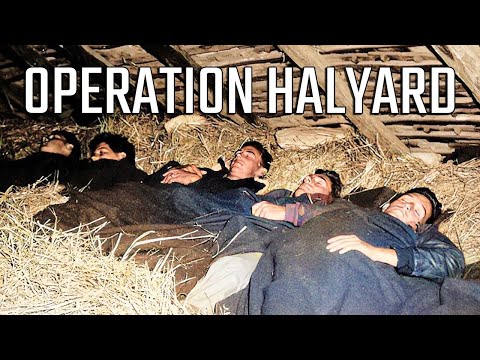
In 1944, more than 500 Allied airmen were stranded behind German lines in Serbia after their aircraft were shot down. Serbian villagers and members of the Yugoslav Army in the Homeland sheltered them, knowing that German forces could punish anyone caught helping the airmen.
The U.S. Office of Strategic Services organized a secret evacuation from an improvised airstrip near Pranjani. Local residents helped build and protect the runway while hiding the airmen in homes and barns. C-47 transport aircraft began flying them to Allied territory in August 1944, and evacuations continued into February 1945. Operation Halyard became the largest rescue of downed airmen in the war, but it remains little known outside Serbia and the communities connected to the mission.[3]
7 The Battle of Castle Itter
The Battle of Castle Itter – US & German Troops Join Forces to Fight the SS

On May 5, 1945, as Germany’s defeat became inevitable, Waffen-SS troops threatened prisoners held at Castle Itter in Austria. The captives included prominent French figures, among them former prime ministers Paul Reynaud and Édouard Daladier.
An American rescue force led by Lieutenant John C. Lee Jr. joined German Wehrmacht soldiers under Major Josef Gangl, who had turned against the Nazi leadership. Together, they defended the castle against the SS. Gangl was killed by a sniper while protecting the prisoners, and the defenders held out until American reinforcements arrived. It remains one of the few battles in which American and German soldiers fought on the same side against the SS.[4]
6 The Cowra Breakout
The Prison Breakout at Cowra, Australia. Revised Edition.

In the early hours of August 5, 1944, more than 1,000 Japanese prisoners of war attempted a mass escape from a camp near Cowra, New South Wales, Australia. A bugle sounded shortly after 2:00 a.m., and prisoners rushed the camp’s barbed-wire fences with improvised weapons. Australian guards opened fire as some prisoners broke through the perimeter and others set fire to their barracks.
The breakout was doomed. In the fighting and its aftermath, 231 Japanese prisoners died, and another 108 were wounded. Four Australian guards were also killed. The escape reflected the desperation of captivity and the severe stigma attached to surrender in wartime Japan. It remains one of the largest prisoner-of-war breakouts of World War II.[5]
5 Exercise Tiger’s Costly Rehearsal
Exercise Tiger: How the top secret D-Day rehearsal went tragically wrong

In April 1944, Allied troops practiced the D-Day landing at Slapton Sands in Devon, England. The exercise, codenamed Tiger, was meant to prepare American forces for the assault on Utah Beach. It became a disaster when German torpedo boats attacked the training convoy in the English Channel.
The attack sank two landing ships and badly damaged another. A later count put the number of American soldiers and sailors killed at 749. Some of the dead were officers who knew the planned invasion beaches, raising fears that the Germans might have captured sensitive information. The Allies ordered strict secrecy, though a public announcement followed in July 1944. The tragedy received little attention afterward, overshadowed by the successful invasion of Normandy weeks later.[6]
4 Japan’s Balloon Bomb Campaign
Japanese Balloon BOMBS! – WW2 Fu-Go Campaign

From late 1944 into 1945, Japan launched about 9,000 hydrogen-filled balloons carrying incendiary and antipersonnel bombs. The devices were designed to ride high-altitude winds across the Pacific and start fires or cause panic in North America. Hundreds reached the continent, with debris found as far east as Michigan.
On May 5, 1945, a pregnant woman and five children encountered a balloon bomb near Bly, Oregon. The explosion killed all six, the only known civilians killed by enemy action in the continental United States during the war. American authorities censored reports of balloon sightings to keep Japan from learning whether the campaign was working. Most balloons caused little damage, but the deaths near Bly revealed the danger of a weapon that could cross an ocean without a pilot.[7]
3 The Cephalonia Massacre
8,000 Italian Soldiers Trusted Wehrmacht in 1943—And Never Came Home

After Italy’s armistice with the Allies in September 1943, German forces demanded that the Italian Acqui Division surrender its weapons on the Greek island of Cephalonia. The division refused and fought the Germans for seven days before being overwhelmed.
German troops then executed thousands of Italian prisoners, including officers who had taken part in the resistance. The death toll varies by estimate, and many survivors were sent to labor camps on the mainland. Others died when ships carrying prisoners struck mines or were attacked. The massacre was one of the largest German atrocities against former Italian allies, yet it remains less familiar than many better-known wartime crimes.[8]
2 The Bari Air Raid’s Secret Mustard Gas Disaster
Air Raid on Bari: the “Little Pearl Harbor.”

On December 2, 1943, German bombers launched a surprise attack on the Allied port of Bari, Italy. The raid destroyed or damaged dozens of ships. One, the American SS John Harvey, was secretly carrying mustard gas bombs intended for use if Germany began chemical warfare. The ship exploded, releasing the agent into the harbor.
The gas mixed with oil on the water, and many victims were not diagnosed correctly at first. At least 628 military and merchant marine personnel developed symptoms of mustard gas exposure, and at least 83 died by the end of the month. The United States initially kept the gas’s presence secret, fearing Germany might learn that the Allies had brought chemical weapons into the theater. Records were not fully declassified until 1959.[9]
1 The Battle of Attu
Frozen Terror: The Forgotten WWII Battle in Alaska

In June 1942, Japanese forces invaded Alaska’s Aleutian Islands and took the Unangax̂ residents of Attu captive. Of the 40 people taken to Japan, 16 died from disease and starvation. Nearly a year later, U.S. troops landed on Attu to drive the Japanese from American territory.
The battle lasted 18 days. American soldiers faced freezing rain, fog, strong winds, and inadequate equipment; weather-related injuries took more troops out of action than Japanese fire. On May 29, Japanese forces launched a final, desperate attack. By the next day, only 28 of roughly 1,400 Japanese troops in the area remained alive. The Battle of Attu was one of the deadliest battles of the Pacific campaign, yet it remains one of the least remembered.[10]
More Great Lists
 10 Underrated Giallo Movies That Deserve Your Attention
 Ten Historic Women Who Deserve Way More Credit Than They Got
 Ten Historic Men Who Deserve Way More Credit Than They Got
 10 Overlooked People Who Accidentally Changed the World
 10 Fictional Films within Actual Films That Deserve…
 10 Ancient Prosthetics That Deserve a Hand
 Unsung Heroes: 10 Important Professions That Deserve…
 10 Insane War Stories That Turned Out to Be Myths
 10 Overlooked Inventors of the Gilded Age
fact checked by Darci Heikkinen
More Great Lists