There can be a major difference between the best authors of a genre, my favorite authors of a genre, and the most influential authors of a genre. While any top ten list like this will be somewhat controversial, here is a list of authors who have had a great and lasting influence on the science fiction genre.

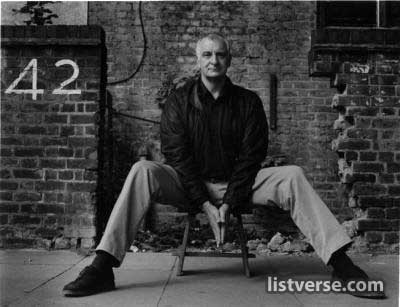
Douglas Adams may be one of the most popular authors on this list, and when his works first came out, they were very unique. Adams is best known for his “Hitchhiker’s Guide to the Galaxy” series, which was ground breaking. These works introduced a comedic and strange (maybe almost surreal) element to science fiction writing that is still adored by fans even today.

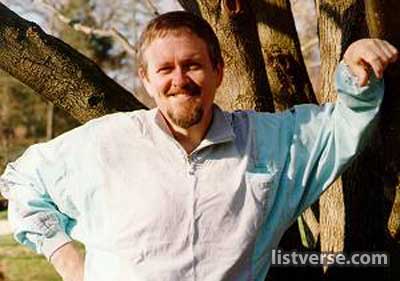
Orson Scott Card is the author of one of the most popular science fiction series in history. The Ender’s Game sagas rate right up there with Dune as one of the most popular series of books of all time, and certainly the most popular of modern times. If William Gibson is the father of Cyber-punk science fiction, then Orson Scott Card is the modern voice that set the direction of modern science fiction.

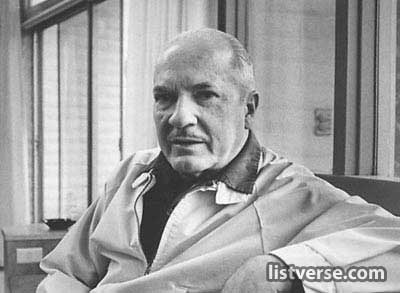
Robert Heinlein was an extremely influential science fiction writer who may have been overshadowed in the long run by Isaac Asimov, but Heinlein is well known and loved among science fiction fans. He was both popular and controversial and he concentrated on “hard” science fiction — science fiction that took its science very seriously. He won four Hugo Awards for his novels, and along with Asimov and Clarke was known as one of “The Big Three of Science Fiction.” Talk about influence!

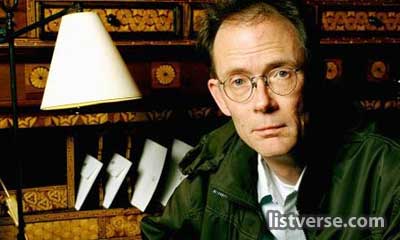
William Gibson is an extremely popular and controversial science fiction writer who is known as the father of the modern “Cyber Punk” novel. While people and fans still argue over what kind of an influence Gibson has had on the science fiction genre, there’s no doubt his mark has been made. As one anonymous critic put it: “Whether he’s saved the genre or destroyed it, only time will tell.” A little bit overboard, but it gives an idea of the influence this author of “Johnny Mnemonic” and “Neuromancers” has had.

While most famous for writing his smash hit novel “Fahrenheit 451,” one of (if not the) greatest dystopian science fiction novel of all time, Bradbury wrote a lot of science fiction and fantasy and was a major influence to literally thousands of future science fiction writers. Not only was “Fahrenheit 451″ one of the best science fiction novels of all time, but “Something Wicked This Way Comes,” “Dandelion Wine,” and “The Martian Chronicles” are all works that each were amazing enough to make an author’s career, and Bradbury was the author of all of them. It’s amazing he’s only #6, but this is a genre that has amazing number of giants.

Even before the “Dune” series was made into a mini-series for the Sci-Fi channel, this series of books had a huge and devout following that rivaled that of “The Lord of the Rings.” This great series took place over 1,000s of years, and originally consisted of the novel “Dune” and five sequels, although other related novels have been published by his son since then. This series is amazingly wide ranging, often dealing with themes like human survival, evolution, ecology, and the intersection of religion, politics, and power. “Dune” is thought to be the single best-selling sci-fi novel of all time.

Considered one of “The Big Three of Science Fiction,” Arthur C. Clarke is known for his Space Odyssey series, particularly the novel “2001: A Space Odyssey,” which has become one of the most influential science fiction novels ever written, and was also a wildly popular movie, helping to bring the genre into the mainstream. There were several other books in the series, and Clarke is also known for his short stories and his work in encouraging emerging science fiction writers. He is also a long time member of the H.G. Wells society.

Asimov is perhaps the most famous of “The Big Three of Science Fiction” and is one of the most prolific writers in sci-fi history. He published or edited over 500 books, and an estimated 90,000+ letters and postcards. He has published non-fiction as well as fiction, with books under every section of the Dewey decimal system except for philosophy. He is best known as a science and science fiction writer, whose Robot series and Foundation series laid the groundwork for most modern science fiction and are still widely read today.

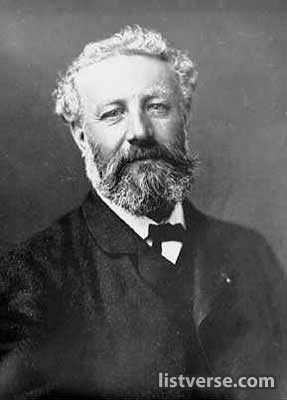
Verne’s writings made him the pioneer of science fiction, and one of its finest writers. He, in fact, published his first science fiction novels around the time H.G. Wells was born. “Journey to the Center of the Earth,” “20,000 Leagues Under the Sea,” and “Around the World in 80 Days,” are classics that changed fictional literature and gave birth to what would become the science fiction genre. Verne wrote incredibly detailed stories about space travel and submarines before any such travel on a large scale was practical, and he laid the foundation for arguably the greatest science fiction writer ever.

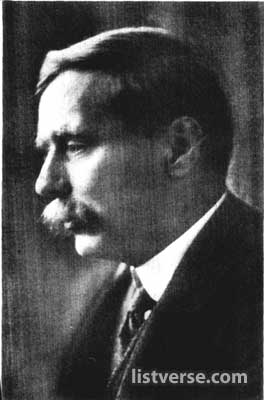
He might be both the best and the most influential science fiction writer ever. H.G. Wells’ classic books are still read and loved today. “The Time Machine,” is considered by many to be the best science fiction novel ever written, and “The War of the Worlds,” and “The Invisible Man” are hardly slouches, either. Over a century after they are written, these books are still fresh and strong enough to be made into Hollywood films. Wells set the bar for everyone else, and laid the foundation to ensure that science fiction would be very alive and well into the 20th century and beyond.
Contributor: Shane Dayton


Mom:
I don’t want anyone getting carried away about it–I didn’t know Rod personally, myself… I was 10 years old when he died.
…….NO Kurt Vonnegut….thats sad
Thanks for including Douglas Adams! I love his Hitchhiker’s and his Dirks Gently series!
Ugh@all the people who believe Elron should’ve been included. -_-
Thanks for that, Randall. I like the way it was worded. Although I always thought of science fiction and fantasy being like the old geometry postulate about squares and rectangles: fantasy is always science fiction, but science fiction doesn’t have to be fantasy. Mankind seems to be trying vigilantly to “prove” miracles through facts and science, so if you know enough and get into it, anything in fantasy can be proven with science. I suppose
Serling was a genious, although I don’t feel that being known as “the Twilight Zone guy” is really a bad thing. Some of his episodes BLEW MY MIND.
Where is L. Ron Hubbard? He is an infamous *science-fiction* writer. He has influenced millions of people to pay a lot of money to get into a church. Pretty impressive in my opinion.
I understand Why, but it still sucks to see THE D.A. at #10
wow, jfrater, what’s with the “comment posting requirements”? whatever happen to free speech? are you censoring your comments now? tsk… tsk…
anyways, i simply cannot believe nobody has mentioned Piers Anthony! C’mon! i spent a good part of 1994 resding many of his books… some of them multiple times! “The Isle of Woman” was my fave book up to my 20′s, and I even named my dog “Ember” after the main heroine of the story…
Ray Bradbury not only wrote sci-fi, he was also a horro writer, much like Lovecraft.
just my 2 cents.
please don’t censor the stupid comments… it can often be entertaining to see how… uhm… ignorant people can be… at least they might learn a thing or two from these fine lists!
Ringtailroxy: Cute name. Anyway before you think Jamie’s getting all thought police on us think about some of the posts. Most recently “Mike Giggly” a.b.c.d.e.f… Each different posts. Trolling slows down the posts and is just totally unneccisary(I can never spell that right on the first try). AND IF THAT ISN”T BAD ENOUGH, you get guys who apparently don’t know what the shift key is for or have some sort of attention problem. n l33t sux! the rest i’n sure you can figure out.
-Post responsibly!
Any list of The Greats of SF without Phil Dick is not complete………….
ringtailroxy: They are not to stop “stupid” responses – they are to help with problems like one person the other day who wrote 51 comments which were one letter each. As well as posting 60 stanzas of a poem. That is vandalism, not free speech, and the hour it took me to clean it up so you don’t have to scroll through pages of junk is an hour I wasn’t able to spend on a list.
I am glad to see a few more people are mentioning Ursela Le Quin and quoting her
. Intellectually, she provided a new dimension to science fiction that expanded possibilities not only technologically, but also included gender, politics and social structure.
However, some very simple number crunching puts her in the forefront. I noticed in post 71 jfrater mentioned merit, and some skewed ridiculous notion that it would be *****ist to include women in the list. So the numbers: Nebula Awards: 1)Ursela Le Quin,three Nebulas: Left Hand of Darkness, 1970, The Dispossed, 1975, Tehanu:The Last Book of Earthsea, 1991.2) Joe Haldeman, three Nebulas:The Forever War, 1976,Forever Peace, 1999, Camouflage, 2006 Runnerups: 3)Frederick Pohl, two Nebulas: Man Plus, 1977, and Gateway, 1978.4)S.R. Delaney, Babel, 1966, The Einstein Intersection, 1968; 5) Arthur C. Clark, two Nebulas: Rendevous with Rama, 1974, The Fountains of Paradise, 1980, 6) Lois McMaster Bujold, two Nebulas: Falling Free, 1989, Paladin of Souls, 2005;7) Vonda N. McIntyre, two Nebulas: Dreamsnake, 1979, The Moon and the Sun, 1998 8)Orson Scott Card, two Nebulas: Enders Game, 1986, Speak for the Dead,1987. (noted by year awarded: http://www.locusmag.com/SFAwards/Db/Nebula.html).
Since these are the professionals voting on themselves, it seems fairly clear who the writers respect. And doesn’t that denote influence? But I have to check out Joe Haldeman. Somehow, he passed right under my bookstore forays in the 70′s and since. Originally I was going to crunch the Hugo numbers too, for this post. But I am curious about this Haldeman guy. Suffice it to say that Heinlein comes in at 4 Hugos, with Le Quin, Zelany, Arthur Clark, Orson Scott Card, C.J. Cheryth, Lois McMaster Bujold, Asimov, Fritz Luber , and Zelany all coming in with two.
I like the rectangle and square *****ogy, Cedestra. Coming from a back ground of a BA in psych, BS and masters in Chemistry, and BA and Masters in nursing, plus ten years in pharmacology, and numerous women studies courses, including deconstruction and anaysis of science, I firmly believe the conclusions from a lot of “soft” science, and some “hard” science is predetermined by the parameters as they are defined. Science fiction became my preferred reading in the 60′s, 70′s and 80′s because it dared to redefine parameters. Unfortunately, once I got my masters in chemistry and started working on a ph.d, scientific papers were all I had time for. SO happening on this post has rekindled my interest.
jfrater: i did not see the posts of the alphabet or anything like that! the worst i had seen where the “first!” or maybe a horrifically spelled post…
i truly do not consider being so bored as to post the alphabet one letter at a time a worthwhile endeavor… most likely was done by a juvenile…
and i still think not enough people have mentioned Piers Anthony!!!
ringtailroxy: It was almost certainly a juvenile – I agree. Luckily he is now gone from our midst
ringtailroxy:
Read the posts more thoroughly. I mentioned Piers Anthony at least once.
anonyspirt:
good point, but then “respect of one’s peers” is not the same as “being influential.” The former denotes only recognition for achievement. The latter denotes actually inspiring others to follow one’s lead, where they either imitate you or populate with you a new sub-genre (or an old one that’s revived).
What about that Ron Hubbard or something (guy who founded scientology)
RaymondHarris: Please see post #99. And try to keep up with the conversation.
Randall:
I don’t think we necessarily totally disagree, as you are obviously familiar enough with Ursela Le Quin to quote her. I suspect you just enjoy a good verbal debate.
So. From the Merriam-Webster Dictionary: Influence= 1 a: an ethereal fluid held to flow from the stars and to affect the actions of humans. 4)the power or capacity of causing an effect in indirect or intangible ways. There are several other definitions, as well, but I found the first one amusing.
In Doris Lessing’s Canopus series (one of my other favorite science fiction writers) she writes about the substance of WE, that provided a sense of community among the inhabitants of some of her worlds. I think among women science fiction fans in the 70′s, Le Quin provided exactly that. When I was one of one or two women in my undergraduate chemistry classes of thirty (i.e courses that were chemistry courses, not pre-reqs for some other major)the simple idea of a woman as scientist was somewhat of an anomaly. But Le Quin was a writer who assumed women could do anything and were multidimensional. She also explored the idea that gender roles are a cultural phenomena in a unique manner that as far as I know had not been done before. In many ways, as part of the second wave of feminism she set the tone for the many women science fiction writers that have followed in her foot steps. While reading some background material on the web I ran across this quote by Jean Gomoll “From 1953 through 1967 there had not been one single woman to win a Hugo award for fiction. Between 1968 and 1984 there were eleven, and the increase of popular SF writers who were women was an exciting event of the 1970s. Anthologies of SF by women were published not only for the novelty of their authorship, but for the significantly different way that women were writing SF. Their emphasis on character development and human interaction completely changed our expectations of the genre”.
Keeping that in mind, Le Quin and other writers such as Vonda McIntyre indeed did inspire an entire subgenre now known as feminist science fiction. Enough said.
anonyspirt:
Okay, you have me pegged, I DO enjoy a good verbal debate.
But you’ve made, here, an excellent case as to why there should be a woman on this list, because there’s a whole trail of female sci-fi writers who’ve followed suit on the heels of LeGuin and Judith Merrill and so on.
So you have my vote backing you up… I guess then the question would be, which woman sci-fi writer was the MOST influential and/or who belongs on this list?
Randall:
My vote, obviously, is for Ursela Le Quin. She was the first in so many ways, the first woman Nebula winner, the first to find a wide audience of both women and men, one of the first to totally change the the context of science fiction, bringing in gender, technology, and politics, etc. However, Mary Shelley’s Frankenstein is often cited as one a the first science fiction novels by a woman. I consider it more horror than science fiction. Charlotte Perkins Gillman’s HerLand is also cited as a first, but I consider that more fantasy. As you mentioned, Judith Merill was one of the first to write post WWII science fiction. But I think it was Le Quin who actually changed the concept and context of science fiction. Other notable women include Joanna Russ, Marion Zimmer Bradley, James Triptree (aka Alice Sheldon), Marge Piercy, Anne McCaffrey, Vonda McIntyre,C.J. Cheryth and Margaret Atwood. But as checked out various feminist science fiction web pages Ursela Le Quin’s name is always on the short list of top writers.
I almost forgot, but certainly Doris Lessing should be on any short list of significant female science fiction writers. Her Canopus series literally blew me away when I first read it. Her complex multilayered worlds mirroring our society with all its foiables was ground breaking. And she has won a Nobel Prize. The only problem is, science fiction is only part of her repertoire. While she is brilliant, she probably has not been all that influential.
only ten is hard enough, but i would suggest another couple of lists, “the greatest hardcore science fiction writters” here’s where you put the thinkers and also those who take science very serious, such as Wells and Asimov. and a list named “the best not-so-science fiction writters” here’s where you put those that put more fiction into science and are more of a sort of Entertainers, such as scalzi.
comments annyone?
anonyspirt: I have not read anything by Doris Lessing but I have certainly meant to – what would you recommend as a first book?
Marie Artonette Martonette: I think that is an excellent idea – and Wells and Asimov both deserve a place on the serious list – I would probably put Heinlein there too. What do you think of Doc Smith? Which category would you put him in? He is a personal favorite from way back.
All of a sudden, I realize NO one here has mentioned one of the absolute grand masters of science fiction. In fact, writers 3, 4, 6 ,7, 8, 9, and even 10 would heartily agree with me: Theodore Sturgeon. (And anyone who just said “Who?” now has a month-long homework assignment: dust off the old card, take sufficient food and water, go to your nearest public library, and DO NOT leave until you’ve read all the Sturgeon on its shelves. You know, I think I’ll go do that myself!)
randall
“Can people PLEASE stop suggesting L. Ron Hubbard? It’s like he’s the only sci-fi author some people know.
If you’d read any of his work, you wouldn’t suggest him for this list, regardless of Scientology. And if you don’t know anything about sci-fi, then don’t make suggestions.
And also note all the previous posters (including myself) who have spoken AGAINST including Hubbard, before you go suggesting he be included.
Cripes.”
i agree. but opinions are opinions. nobody asks you not to write anything
Another name that is missing… and happens to be female… is that of Andre’ Norton. Anyone ever heard of her? She is admittedly more fantasy, but enough sci-fi to qualify I think, and is an extraordinary writer.
anonyspirt:
Good list. Clearly, given that this is a list of *influential* writers…. it should be Ursula K. LeGuin then.
You know, the thing is, I stopped reading sci-fi about… oh…. 25 years ago. But I remember all these names… and I read James Tiptree’s “Up the Walls of the World” (what a fantastic title, I always thought) and many of LeGuin’s books (Lathe of Heaven, Left Hand of Darkness, The Word for World is Forest) and knew Judith Merrill via the “England Swings SF” collection…
Marion Zimmer Bradley…. I see her as being more influential over the Fantasy genre. Same for Anne McCaffrey… I actually never much cared for either of these… and I never liked Margaret Atwood… thought she was pretentious and arch.
CJ Cherryh is another good one… but yes, I agree with you… the more I think about it…. it’s gotta be Ursula K. LeGuin. Also, she’s the most charming.
Interesting list, of course trying to pare it down to only 10 authors is bound to leave out a LOT of good and influential authors.
Kudos on giving ‘older’ sci-fi authors the top spots: wells and Verne are perhaps some of the MOST influential even outside literature, especially Verne, who arguably sparked real-life technological developments.
Also kudos on including Gibson: A lot of people might see it as controversial, but as Bruce Sterling put it, his description of cyberspace as “a consensual hallucination,” became “an instant, freeze-dried cliche” (from Sterling’s Cheap Truth critique ‘samizdata’), not to mention the fact he invented the word “cyberspace,” that alone is massive, given how influential the idea of the web as a nonphysical location has become.
Herbert was really well-selling, but I’m not sure that he had as big an impact on the literary canon of Sci/fi, not compared to contemporaries like Asimov.
All in all a solid list, an an ambitious attempt at a list that no matter what will have to leave off some great and powerful writers. Good job!
Marie Artonette Martonette:
Interesting name ;-0 I agree its hard to narrow it down to 10 influential sf writers and that more lists would be useful, including perhaps best science fiction novel, etc, although I guess the Nebulas and Hugos have mostly done that task. But I don’t think “Hard core science fiction” and thinkers are necessarily synonymous. I think Le Quin and Lessing are both some of the most intelligent writers out there, but neither are really hard core science fiction writers. Maybe there should be another list of the most intelligent science fiction per, as in thinking in different ways and using new concepts in science fiction. I like the idea of Entertaining science fiction, and Doouglas Adams would surely be on that list. I am not familiar with Scalzi, but his web site looked interesting.
jfrater: In science fiction Doris Lessing’s Canopus series is her best, including 1)Shikasta 2)The Marriages Between Zone 3,4, and 5 3) The Sirian Experiment, 4) The Making of the Representative for Planet 8, and 5) The Sentimental Agents. My favorites of the series are 2) The Marriages.. and 4) the Making…, but its probably best to start with Shikasta. For something entirely different, and probably the novel that started her on the path to the Nobel Prize is “The Golden Notebook”. Its the story of a woman in radical politics, trying to become a “free” woman, about male-female relationships, with a partial descent into madness, told using five different literary techniques. Interestingly, the Nobel Prize committee in part selected her because she challenged a lot of norms, and was willing to make social commentary.
Stone65:
Indeed, Andre Norton is a contender. Although I also consider her more fantasy. Norton, Ursela Le Guin, and Anne Mccaffery are also the only 3 Nebula Grand Masters, in a field of 22 thus far. I also consider McCaffery more fantasy, but found an odd point of interest this morning while looking up things. Apparently the Pern dragons were originally bioengineered to resist some viral invasion. Either I missed that originally, or have forgotten it. I feel like I did when I first found out all Jose Phillip Farmers reincarnated River people were stored technologically between re-incarnations. Makes me wish all my books weren’t still in boxes in my garage after buying a house a year ago.
Soory about all my typos. I meant to type Stone 2065. The computer I am using still uses Windows 98, since my XP model crashed, and there seems to be a lot of glitches.
Randall:
I agree, Marilyn Zimmer Bradley was definately more fantasy as well. Although I did like McCafferty and Atwood. I also haven’t read a lot of science fiction in the past 20-25 years while being a professional student and supporting a son, but I do pull out Left Hand of Darkness every decade or so for sheer fun. I also loved Gordon R. Dickson’s “Soldier Ask Not” and “Dorsai” and others of the Childe series. I would also vote for him as one of the top ten writers, although I don’t know how influential he was. Just noticed on Wikepedia he graduated from one of my alma matters and lived in Minneapolis, almost a neighbor.
Perhaps the most difficult part of the list when it is limited to 10 is not finding contenders, but in limiting them to 10. If only Letterman had a top 20 list this might be easier
You should have added Karel Capek the father of the robots.
No E. E. “Doc” Smith?
Many consider him to be the father of the space opera, and with out his writings (more specifically, his Lensmen series) there certainly wouldn’t be any Star Wars or Star Trek.
The entire Sci-Fi genre wouldn’t exist without Gulliver’s Travels, but Swift isn’t typically thought of as a Sci-fi writer.
What about Orwell?
Love that list. I’m a huge Douglas Adams fan, and not just from the Hitchhiker books. His other novels are top-class as well, if not better. I’ve encountered no other modern writer that gives me more laughs per page. He didn’t waste anything.
What about Robin Cook. I love him.
Heinlein is THE #1 SciFi author. His ability to weave a compelling tale while educating the individual without boring you to tears is wonderful. He provided insights & provokes thought about social issues that no other writer I’ve found has addressed without boring you to tears. A close 2nd for me is G. Orwell who predicted the Bush administration with astounding accuracy in Animal Farm (and the sheep bought the farm not once but twice.)
RIP Arthur C. Clarke
masdom: ditto.
Okay, I’ve been reading sf for nearly 50 years. I love all the authors on the list, have read them all extensively, and don’t begrudge them their place on the list. However, you and everybody else have missed the absolute number one influence on sf in the 20th century, and that is Edgar Rice Burroughs.
I’m not going to adress his Edwardian writing style. Other than to say it doesn’t play well today. But in terms of influence, may I present the Barsoom series, Pellucidar, Carson of Venus series, the Moon maid, numerous other sf novels, and the Tarzan novels, wherein Tarzan is presented as an immortal being who fights dinosaurs and foot high warriors riding ants as well as other, more prosaic foes such as ape men in lost cities, Romans in lost cities, Knights in lost cities, Hebrew warriors in lost cities, and more normal types like mau mau, Germans, etc.
How many Tarzan movies have there been? More than all the movies by all the authors on the list.
Burroughs was incredibly popular in his time, wrote more books than anyone on the list except Dr Asimov, and arguably invented and certainly popularised sword and sorcery.
Burroughs work was extensively reprinted in the early sixties and provided a bridge for my friends and me from Marvel Comics to sf. Of course, in 1967 Harlan Ellison published A Boy and His Dog, and that was it for Burroughs. Well, and we had been reading the Heinlein juveniles, and Poul Anderson and other beginners sf.
I’m not going to suggest anyone go out and buy and read any of his books, but I think I have made the case that he was the most influential sf author of all.
Any reason why Octavia Butler isn’t mentioned even in the comments?
Indeed, Butler’s Xenogenesis Series should certainly be listed!
Douglas Adams is not now nor was he ever a sci fi wwriter – sci fantasy maybe but the is NO science in his books might as well include Tolkien if Adams is in the list
After reading and/or scanning the posts, I am sad to see only one mentioning Andre Norton or Mary Norton (her real name). If she wouldn’t make the top ten she should be close. She is my favorite author. Anyone remember the “Time Traders” series? Those were the best! Also the “Zero Stone” Novels (2 books) I believe. And of course her memorable Witch World series howbeit leaned more toward the fantasy side. Anyway no list should be without her at least an honorable mention.
Thanks Masdom. I also felt sad by the loss of energy in the universe with Arthur C. Clarke’s death. A supernova has transmuted to another plane.
Where the heck is PKD?
Douglas Adams does not belong on this list, IMHO. He was stuck on one story FAR too long. Sure, he was a great writer, but, like Lucas, could let his baby go without constant tweaking. Philip K. Dick could easily supplant him on this list.
IMHO, one of the greatest SF books written was “The Stars My Destination”, by Alfred Bester. He was a Golden Age author and screenwriter and, a bit of trivia, the author of the Green Lantern’s oath! (“By brightest day, by darkest night…”). He was extremely prolific, and was certainly influential, if less well remembered.
This list has one (too) glaring omission:
the INVENTOR of science-fiction as a literary form,
Mary Shelley.
Plus Herbert and Card do not belong here. P.K. Dick and Le Guin should be here.
Also Neal Stephenson, and Bruce Sterling and Larry Niven…
so many giants and only 10 places…..
Good list, but Heinlein belongs in the top three of the 20th-century SF writers. He was at least as good as Asimov and Clark–and, in my opinion, better.
uh gene wolfe.
Very good list and good chose on #1 H.G Wells is inspiring on a minor note I would have put Octavia Butler on the list her books change the way i read Science Fiction. Even then Job Well Done!!!
I’m surprised that C.J. Cherryh, Tanith Lee, and Anne McCaffrey weren’t mentioned, since they are very prolific writers and have inspired God only knows how many others. Spark, I agree with you about Octavia Butler, she’s very thought provoking.
What, no Gordon Dickson either? Or Keith Laumer?
Sheri Tepper!
What makes a great sci-fi writer great or influential? I wish to place a few factors in for consideration. Consider the science known to the public at the time of the writing, and step into the authors mind, travel with him into the future, and follow his/her story. Is it fantastic, but somehow seemingly plausable? Clarke, Asimov, and Vern, are all justifiably on the list as they each in their own way have influenced the technology of the future or at least hit on the direction that we have followed. Heinlein, Card and Wells seem to have taken greater leaps in the fiction part of the genre, but are awesome in spite of the liberties they took. Herbert was fatastic in the dune saga (he should have been it was his whole life) as was Heinlein with the Lazarus Long Saga. Card belongs on a different list along with Stephen R. Donaldson and Piers Anthony, each have dabbled in sci fi, (pitched a tent so to speak.. but never built a home), each of them have written wonderful stories but i group them as a flash in the pan (one hit wonders so to speak) i keep looking for more from them but find myself not finding anything.
Never heard of Dick before today.. lol… and only because my 21 y/o son said in passing that he was “only the greatest sci-fi writer of all time” sorry i dont get it, if Blade runner and running man are credited above as some of his best works… i can afford to pass on him completely. There have been many great writers in the sci fi arena, but only a few truly stand out. Keep in Mind SCI-fi is SCIENCE FICTION.. not fantasy.. so rule out Cherryh, McCaffrey, Card, Anthony, Donaldson and even Jean M Auel (all fantastic writers predominately in the Fantasy fiction arena) each have produced a masterful work or two in the science fiction arena … but where is their staying power? Niven’s “Ringworld” was great but it doesnt put him on the list in my opinionandy more than many of Jack L Chalker’s works. The person who put together this web page did a wonderful service to 10 of the greatest sci fi writers of our modern and recent times. DId he leave others out? Yes, but as proven above by the 178 comments before me.. he hit the nail on the head with the opnes he picked. Kudos to him on a well written observation.
I love the list. I gotta say that, simply for the brilliant invention of the Babel fish (which neatly takes care of the stupid notion that all aliens speak English) earned Douglas Adams’ place on the list. I do think Phillip K. Dick, Madeleine L’Engle, and Piers Anthony deserved an honourable mention. By the way, would there be any chance of working up a list of influential crime/caper writers? Just a thought.