Having already covered controversy in movies, it is time to move on to controversy in literature. I have intentionally left off books that have been dealt with in other lists. Links are included for the purchase of any of the books on this list courtesy of Amazon.com. This list also includes a competition. The details can be read at the bottom of the list.
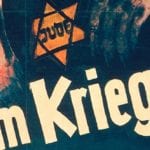
“The Hoax of the 20th Century: The Case Against the Presumed Extermination of European Jewry” is considered to be the book that started the holocaust denial movement. It claims that the Germans did not try to exterminate the Jews during the Second World War. Many attempts have been made to have the book banned from libraries and other attempts have been made to make it illegal to import in to Canada. The book was first published in 1975 and it has enjoyed many re-publications since that date. Dr Butz is an associate professor of electrical engineering at Northwestern University and he recently caused controversy by publicly approving Iranian President Mahmoud Ahmadinejad’s statements denying the holocaust.
This 1968 book predicted disaster for man due to population explosion. The book has been included as number 11 in Human Events most harmful books of the 19th and 20th century, as well as making the Intercollegiate Studies Institute’s “50 Worst Books of the Twentieth Century”. The most shocking prediction made in the book was that the world would suffer the death of millions through starvation in the 1970s and 1980s. The author claimed that “radical action” was needed to prevent this from taking place. The radical action? Ehrlich recommended starving entire nations if they refused to implement policies to reduce or suspend population growth.
In The Holy Blood and the Holy Grail, the authors claim that Jesus had offspring with Mary Magdalene, and that a secret society (the Priory of Sion) was formed that ultimately created the Knights Templar and tried to protect the offspring of Jesus. They also included (as fact) sections of the Protocol of the Elders of Zion (an anti-semitic tract written in Russia). Unfortunately for them, it turned out that the entire book was based on a hoax by a Frenchman in 1961. This book was widely believed to be factual (by the authors and readers) until the hoax was uncovered. Dan Brown copied the basic ideas from this book for his “The Da Vinci Code” which he still claims to be based on fact. Historians and professionals in the field consider The Holy Blood and the Holy Grail to be an example of “counterknowledge” (misinformation packaged to look like fact).
This book is often cited by creationists as proof against evolution – and that was the intent of the author (a prominent promoter of intelligent design). Wells attempts to overthrow the idea of evolution by critiquing the manner in which it is taught. The author contends that the 10 case studies used to illustrate and teach evolution are flawed. The science behind this topic is very fascinating and it is worth reading the Wikipedia article on the arguments presented for and against. You can read the article here.
Lomborg, in this highly controversial book, states that various environmental issues (such as global warming, overpopulation, species loss, and water shortages) are not supported by analysis of the appropriate data. Lomborg claims that the excess attention being given to this “insignificant” events is used politically to distract people from real and more important issues facing the world today. When word got out that this book was to be published by Cambridge University Press, efforts were launched by supporters of the theories he disputes to prevent it from being published – or subsequently banned if it was.
This book posits that ordinary Germans knew about, and supported, Hitler’s plans for genocide. One critic says of the book: “[It is] totally wrong about everything. Totally wrong. Exceptionally wrong.” Goldhagen claimed that a German “anti-semitism” had grown up over the centuries – starting from a religious basis and eventually becoming secularized – to a point that the Germans eventually became “eliminationist”.
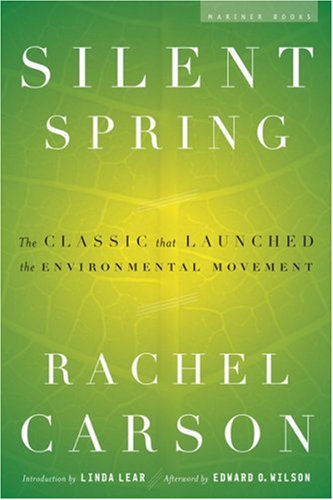
This book is credited with helping launch the environmental movement. Unfortunately it is also credited with the widespread ban of DDT (which was commonly used as a defense against malaria carrying mosquitos) which some believe is the reason that malaria has become rampant – leading to the deaths of millions. One critic is quoted as saying: “If man were to follow the teachings of Miss Carson, we would return to the Dark Ages, and the insects and diseases and vermin would once again inherit the earth.”
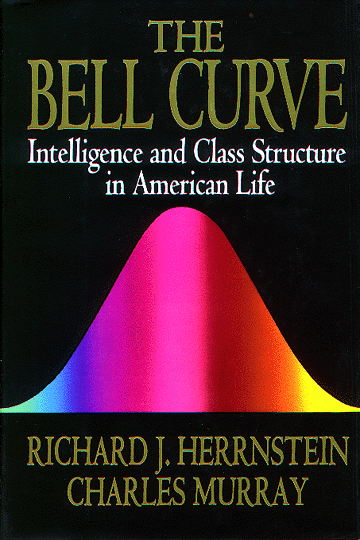
In this book, the authors contend that intelligence is a better predictor of crime, income, unwed pregnancy, and job performance than parent’s socio-economic background. It also made some claims regarding racial difference in intelligence. Consequently, critics said that the book promotes “scientific racism”. Many people rallied in support of the book, while many others rallied against it. The authors also recommended policy for the US government which completely ended all welfare assistance to poor unwed mothers as it “encourages” low IQ women rather than high IQ women to have children [more information].
Hitler’s Pope is a book written by John Cornwell (an English journalist and an ex-Catholic Seminarian) which claims that Pope Pius XII contributed to the demise of the Jews in the second world war by bowing down to Hitler. The book caused a huge controversy due to the fact that many Jews had spoken out in defense of Pius XII (during and after the war) and there was little evidence to corroborate the views in the book. Cornwell has since stated that he no longer believes the negative conclusions he came to in his book. Interestingly, Cornwell has also publicly criticized Richard Dawkins and his book The God Delusion, calling it “extremist and dogmatic”.
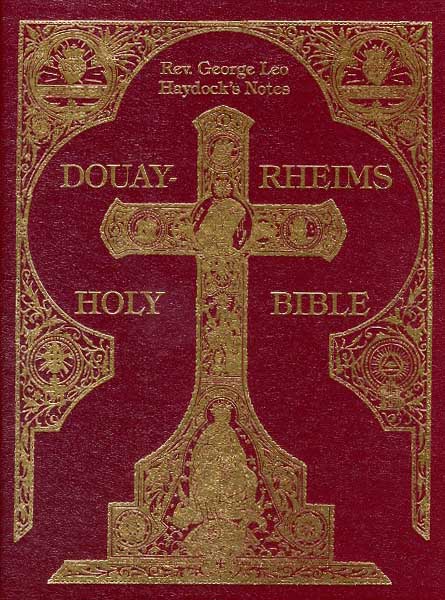
It would be wrong not to include the Holy Bible on this list. It is probably the most debated book in existence and has been for a very long time. From controversy over what books to include (and what books to remove in the case of Martin Luther in the 16th century), to controversy over what it actually means, the Bible has been a source of constant difficulty for many people. Despite this, it is still one of the most popular sources of moral direction in the world today and it can not be denied that this book gave more to the growth of the West than any other.
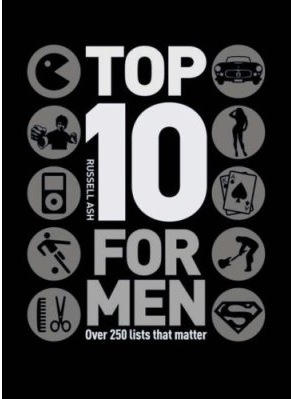
At 1pm GMT tomorrow, I will select one commenter from this list to win a prize of the great recently published book Top 10 For Men – a book of over 250 lists of interest to men (though women will no doubt love it also). Topics include What’s the most common murder weapon? What is the hottest variety of chilli? Who is the most searched for woman on the internet? To read an official excerpt of the book, go here.
The prize winner will be one randomly selected commenter – as usual you can enter more than one comment to improve your chances, but your comments must add value to this list – that means no comments designed just to have a better chance at winning. The winner must be a registered user of the List Universe. You can click here to register.
Finally, many thanks to Octopus Books for donating the prize for this competition.
WINNER ANNOUNCEMENT: The winner of the prize is Logar – for randomly selected comment number 353. Congratulations Logar!


Great List; In all fairness you probably should have put the Koran up there with the Bible. It all depends which half of the world you live in.
Great list! I’m tempted to read “The Hoax of the Twentieth Century” just to see how incredibly deluded it must be.
As far as “Silent Spring” and DDT goes, the ban has been relaxed to allow for use in specified areas:
“About 1,000 tonnes of DDT per year is still used today in countries where mosquito-borne malaria is a serious health problem.[27] Use of DDT in public health to control mosquitoes is primarily done inside buildings and through inclusion in household products and selective spraying; this greatly reduces environmental damage compared to the earlier widespread use of DDT in agriculture. It also reduces the risk of resistance to DDT” from Wikipedia Callaway,
Ewen (May 7, 2008), “Melting glaciers release toxic chemical cocktail”, New Scientist, .
Mom- good point! The various interpretations of the Qur’an among believers, plus the widespread apprehension and lack of understanding on the part of nonbelievers makes it quite the controversy!
Hehe, one could say that the Bible is actually fiction. Well, that is the very thing that makes it controversial.
Why the hell do you gotta be a registered user?
I can’t take all that trouble to register.
Just as all the other book lists in this site, this is fantastic stuff.
I do remember great brouhaha over William Manchester’s JFK biography back in the day. As I recall it was authorized, then de-authorized, temporarily suppressed, etc. When I read it, I never could figure out what all the to-do was about.
I’d say “The God Delusion” is pretty controversial. Nice list though.
Even though I think the Bible is fictional.
Wow, very interesting list. I was a bit surprised to see Silent Spring up there, it has never been presented to me in my course of study as an environmental science major as controversial, but I am glad I know that now, perhaps I will actually read it and decide for myself! =p
I did raise my eyebrows when I saw the Bible on there, but you’re totally right about it being controversial!
I agree with mom. Even though I still think they’re both fictional
warning- even if the Bible is fictional, it is put forward as fact. The accuracy of all of these books could be called into question- they could all be considered fiction by one group or another
Ah, warning brings up a good point: Much of these books contain false information, right? So what is fiction and what is not? I guess the intent is the only difference.
Ahmadinejad is like the Iranian Bush, he’s an idiot and looks like a monkey. I’m ashamed to call him my prez.
Careful with the bible, the Christian bibles are all vastly different from the Jewish Torah.
Make sure to never call the Torah the “Old Testament” in front of a Jew, unless you are specifically referring to the Christian’s version of the Jewish books, they’re dissimilar in tone and context. Plus it’s kind of insulting to tell someone their beliefs are old, it somewhat invaluates them compared to the “new beliefs”.
Is it bad of me to want to rush out to my library and pick up ALL these books now (if they’re even available in my podunk library)? I’ve read just one – “Holy Blood, Holy Grail” – but for some reason I want to at least check out “Hitler’s Willing Executioners”. I’m of some serious German ancestry and though my Great-Grandpa immigrated her and then fought on our side in WWII against his native country I bet it’d be an interesting read.
Great list, by the way
I know some people think its fiction and others fact. I just wanted to say that I think its fiction and I’m sure many other listversers do to.
homegrown- How was “Holy Blood”? I’ve never heard of it before! It seems like it could be a good story, as long as you take it as fiction, not fact.
seems lots of those books have to do with anti-semitism, what about all the books against other groups of people, i’m sure there were books on that topic, not that i don’t think anti-semitism is wrong, just seems to focus on it.
Fantastic list, as usual. I love a good controversy. It’s hard to believe there are still people who doubt the holocaust. I wonder if they deny all genocide or just that one.
I’ve heard a lot about Silent Spring lately. There’s a new book out I can’t wait to get called The Really Inconvenient Truths by Iain Murray. It’s seven environmental catastophies liberals don’t want you to know about…because they helped cause them. How Al Gore’s hero Rachel Carson cost the lives of millions of Africans through her efforts to ban DDT is one of them.
Great list!!
It’s good to some recognition that the bible really is a controversial book.
Rushfan, thanks for the info on the new book. I am very environmentally-conscious, but I always like to read about things from a different perspective. I’ll be checking it out from the library
Wow. You may very well be the first open minded environmentalist I’ve ever encountered. I’m glad to know there are people like you out there.
I myself am extremely concerned about the destruction of rain forests, abuse of animals in factory farms, pollution, for example, but I feel the “climate change” issue is used to frequently as a political tool to intimidate people with opposing viewpoints.
I am intrigued by the Skeptical Environmentalist. I see that Mark Ridley author of the great layman’s classic “Genome” calls it “a brilliant and powerful book” maybe the quote was taken out of context but it makes me want to read it now.
green: I read the first few pages of “Holy blood, holy grail” in my obsessed with the da vinci code period. It sucked.
I meant chapters*
How about “The Anarchist’s Cookbook” as a notable ommission?
Great point on comment #2 green, like rushfan I have never met an open minded “humans first damn the environment type” yet. To blame Rachel Carson for the deaths of millions of Africans is silly. Very soon mosquitoes develop resistance to DDT, widespread use would have only delayed and intensified the problems of malaria.
Meanwhile reducing the inevitable and current problems of global warming to a political tool is a great excuse to keep burning fossil fuels and avoid pursuing (green)alternative energy sources.
I think that jfrater is right about the bible because it has been discussed ever since it was written and some passages are comletely ridiculous
Hehe, I got really exasperated when I saw the Bible in this list. “WTF? Since when is the Bible NON-FICTION???” I said to myself. But then I realized that most of the books (if not all) are based on fictional and untrue “facts” pretending to be non-fiction!
Maybe it would have been clearer if the title was:
Top 10 most controversial “Non-fiction” books (notice the quotes
)
but then it would make the list a little bit biased. Anyways, nice one.
I would also highly recommend The End of Faith by Sam Harris. It points out things like the fact that if we lived by the literal word of the bible the way some live by the literal Koran, we’d be just as violent as some Islamic nations.
I agree that Global Warming is a political tool that is being manipulated. What concerns me most is our lack of respect for the planet that we evolved from, the planet that allows us to exist when no other planet in our solar system can support life.
I find it very ironic about how many people keep comment on how the Bible is fictional when there is a book on the list that states the HOLOCAUST NEVER EXISTED. Just goes to show how much people get freaked out by religion
Robeywan ~ Using climate change as a political tool works against your intentions. It confuses the issue, turns people off because it becomes “controversial” and complicates what is actually a legit topic for discussion. Unfortunately, it hardly gets the “serious” debate it deserves. And maybe you should look around, you’ll see a lot of research on alternative forms of energy. It is, again, the politicians who have politicized things like nuclear energy and drilling off the Gulf of Mexico and builing refineries.
I had not heard of many of these books. I was also surprised to see the Bible up on the list. It seemed you had been avoiding adding religious texts as they were the obvious choices. I will have to go and look for some of these. Some I am not so interested in. Did you realize 3 out of 10 were about the holocaust? I like that you put up two opposing views of the environment.
Nice list. Interesting choice of book to be added to the competition too. Yay to Octopus Books.
In the case of “Hitler’s willing Executioners” I can only agree. However, not with the book. Not only am I German, but my great-grandfather was an active member of the NSDAP (National-Sozialistische Deutsche Arbeiterpartei/National-Socialist German Workers Party, known as the Nazis). I freely admit it for I know that my great-grandfather was a great man. I never had the pleasure of meeting him since he died of cancer in an American camp for political prisoners in the 50ths. However, it is well recorded(locally) that even though he was the local mayor and as a member of the NSDAP had orders to put Jews into “protective custody”, he helped several jewish families with their flight to England, France, and Russia.
Green: Most people realize that you’d be an ass to think the holocaust never happend.
Okay… the STRAIGHT DOPE on DDT. Last word. I still maintain that DDT killed my father. But the answer below vindicates *both* sides of this question, more or less… so kiwiboi, we’re even… kinda. You have more weight on your side of the argument, for sure. And then again, too… maybe DDT *did* kill my father… but then we know that cancer is freakin’ *weird* and, like a tornado, can kill the guy next to you while leaving you largely untouched. So maybe…. maybe… my dad was just unlucky.
I’m eating crow, here kiwi… I don’t like the taste, and don’t think you’ll see it happen often.
Oh, and I know I should just post this comment as a link, sorry. Jamie or the admin can feel free to remove it, if they like. I just thought it made great reading, as Cecil always does.
Dear Cecil:
Was Rachel Carson a fraud and is DDT actually safe for humans? According to Marjorie Mazel Hecht and [San Jose State University] professor J. Gordon Edwards at http://www.21stcenturysciencetech.com, DDT is safe and indeed saved and can save human lives, and Rachel Carson’s Silent Spring is full of lies. According to them, the banning of DDT was politically motivated and went against the majority of scientific opinion. Yet I consistently hear how dangerous DDT is. What’s the truth here? –Craig Sheldon
Cecil replies:
Claiming Silent Spring (1962) is full of lies is a bit harsh. Let’s say it contains certain statements at variance with the facts as we now understand them. I’m willing to believe this was a natural result of the fledgling state of environmental science at the time, whereas right-wing conspiracy theorists (who apparently include the parties you mention–Hecht supports crank-for-all-seasons Lyndon LaRouche) see it as evidence of a campaign of deceit by the liberal cabal. We could spend pages debating the details, but the bottom line is this: Soaking the biota in DDT like it was bubble bath, standard practice at the time Silent Spring was written, was a bad thing and Carson was right to condemn it. But refusing to use DDT because of exaggerated fears of environmental damage is, in some circumstances, far worse.
Rachel Carson, a biologist and writer who worked for many years for the U.S. Fish and Wildlife Service, is widely credited with catalyzing the modern environmental movement. Silent Spring was the first popular book to call attention to the dangers of indiscriminate introduction of pesticides and other chemicals into the environment. Carson’s principal target was DDT (if you really want to impress the ladies, Craig, tell them it stands for dichlorodiphenyltrichloroethane), a cheap and effective insecticide first employed on a large scale during World War II to control typhus and malaria. After the war DDT was widely used in the United States in agriculture and in mosquito abatement programs.
Part of what made DDT appealing was its broad spectrum–it can kill not just one or two but hundreds of insect species (not to mention various other types of wildlife, especially fish, if you aren’t careful about overspraying or runoff into streams). Carson took this fact and ran with it, rhetorically speaking–she claimed that DDT and other pesticides would destroy all living things, and that they should properly be termed “biocides.” In the chapter from which Silent Spring takes its title, she paints an apocalyptic picture of an environment bereft of life due to chemical pollution, in which “no birds sing.” Among other things, the book claims that DDT interferes with bird reproduction and causes cancer in humans; after its publication the chemical was linked to the thinning of eggshells in some avian species. The Environmental Protection Agency was created in 1970, in no small part due to Silent Spring, and two years later DDT became the first chemical it banned. Most other industrialized nations followed suit, and pressured third world countries to do the same.
Many of Carson’s claims were overblown. While DDT is highly toxic to insects and fish and can poison other animals in large enough doses, in moderate amounts it’s not especially harmful to birds and mammals, including humans. (Ironically, the EPA’s own judge agreed, but was overruled by its chief administrator.) No one has conclusively proved that DDT can give you cancer. The cause of eggshell thinning is likewise poorly understood.
On the other hand, DDT is demonstrably effective at controlling the mosquitoes and other insects that transmit malaria and typhus. Thanks principally to DDT, in the years after World War II malaria was eradicated in the U.S. and sharply curtailed in many tropical countries. Venezuela recorded eight million cases of malaria in 1943; by 1958 that number was down to eight hundred. The World Health Organization estimates that DDT saved 50 to 100 million lives during this period, and that’s just counting malaria prevention. In recent years, however, the disease has staged a comeback. Globally it quadrupled during the 1990s, and it’s even reappeared sporadically in the United States. The resurgence of malaria is due to a variety of factors, including changes in land use and possibly climate, and some experts say the phasing out of DDT is one of them.
I don’t mean to suggest that DDT is benign. On the contrary, it’s a potent contact toxin, and though it breaks down quickly in sunlight, it’s much more persistent in soil and water and accumulates in plants and fatty animal tissues with long-term exposure. But its drawbacks have to be weighed against its benefits. Malaria currently infects 300 to 500 million people annually, mostly in Africa, and causes as many as 2.7 million deaths. Alternative methods of mosquito control cost more and are less effective. Some 400 scientists and doctors have signed a petition opposing the inclusion of DDT among the 12 persistent organic pollutants (POPs) to be banned under a United Nations treaty now up for ratification, and a few public health experts are campaigning to bring DDT back. DDT isn’t a panacea; India, which still uses it, suffered nasty outbreaks of malaria in the 90s, and insects in many parts of that country have become resistant to the chemical. But it remains an important tool, and in a time of rising global pestilence we shun it at our peril.
CECIL ADAMS
thought it was good to put the bible at no1
no7 would be an nteresting read too
doesn’t change the fact that the book was put on a “nonfiction” book list. As was the Holy Grail book. My only point is that they are all not factually sound, therefore could all be argued as fiction. People just feel they have to point out the Bible as fiction
great list jfrater! I love that the bible is on there. (And yes, I am still lurking around!)
New member. First comment. Great list.
green: I think the point is that these books are presented as (and/or embraced as) non-fiction, whether they may actually be totally fiction or not.
That’s why they’re so controversial, and that’s why they’re on this list.
rushfan, well I guess my definition of “politicize” would be to garner public support through methods other than complete honesty. When you consider how little federal money and grants are awarded to pursuit of alternative energy then I have to say the political clout that global warming carries is pretty small. At least this is the case in my country where many of us are more concerned with today’s cost of gas than the “big picture”. My government aids and abets oil companies and grain farmers while fruit and vegetable farmers and wind and solar energy get little or no assistance. Not to mention public transportation etc.I am amazed and humbled by the foresight and maturity of so many of my fellow humans around the world.
Good list. I’ve seen the Bjorn Lomberg book used by virtually all conservative commentators opposed to climate change. Its a conservative blow-hard bible on this topic even though its been pretty well debunked along with Lomberg. But conservatives needed one published source they could cite and they got it in that book.
A few years ago 60 minutes did a pretty revealing peace on Lomberg that I’m sure you could find on youtube.
Kreachure, we agree, then. If you read all my posts you’ll realize I was only pointing out the fact that people felt compelled to point out the Bible as fiction, not one of the other books was called out as such.
I’m not sure but I think I read it right here on listverse that Rachel Carson’s Silent Springs was one of the most influential books ever(and it was written in a positive note).Why the sudden change of heart!? Anyway I had Silent Springs as part of my school syllabus and it is boring as hell yet insightful. Also, JF you are very wrong about the DDT effect.If it was still continued it would have created even more problems than it has now.
The Bible is not a non-fiction book. Period.
Harsha, please see comment #37 above. I know it’s lengthy, but it’s extremely informative regarding DDT.
Rush- I think it is great that you and Randall can disagree on somethings but still respect each other for different things.
Randall- this applies to you, as well, and your compliments on Rush’s amazing list
Great list. I have only read one of these books but several of them sound interesting enough to glance through. I almost hate reading the comments on lists like these because people tend to get rude and disrespectful when it comes to controversial topics. I believe controversy can be a good thing if done right. We should never try to force our beliefs down other people’s throats but an intelligent debate helps to fire up our brain cells and promotes education and hopefully tolerance of other views. So, debate folks. Share your opinions. Just be respectful if someone else doesn’t believe what you believe. I shall step down from my soapbox now. Carry on.
all of the sudden it’s a love-fest.
seriously, tho, it is possible to have a constructive discussion even if you have differing opinions.
The problem with debating on the internet instead of in person is that tone and body language are gone.
If at any time my comments seem combative or disrespectful- please know that it is all meant in the friendliest spirit.
In fact, Rushfan, its a great way to grow and expand your mind is to have constructive discussions with those whose opinions and experiences differ from your own
Awesome list, one of the best book lists I have ever seen on here! I agree with the Bible being #1, not surprised Dianetics isn’t on here. NON-fiction books please
I agree. And I also hope to not offend. I have apparently inadvertently offended in past comments, but it’s never been my intention.
I’m going to keep an eye out for The Bell Curve and The Population Bomb now – they both sound kinda interesting. Interesting in the same way that that guy (Thomas Watson? 1940s?) basically said there was no future for computers. I think that quote got debunked though…
The Skeptical Environmentalist and Silent Spring were recommended reading at uni, so I’ve read them. In defence of Lomberg’s book – I found his writing quite compelling, though I’m not so sure about the validity of his arguments.
Oh and I’ve read the entire Bible too… hah
Hey Jamie,I was just about to write a comment when I realised that rushfan’s name and e-mail were filled into the boxes, just to give you a heads up.
Great list though, but the bible in a Non-fiction list? :p
“love fest” ?
*passes out magic brownies and tosses flowers about while queing up some Mamas and Papas tunes*
it is entirely possible to engage in adult and critical debate w/out resorting to name calling and obscenities. really. i love ‘love fest’.
Ah yes, i’ve read The Holy Blood and the Holy Grail, i thought of it as incoherent dribble, to be honest
Great list must say though
Temp ~ I’ve tried to read the Bible, but it’s just so boring. But I’ve found this cool website with the whole thing online and I find it easier to read a chapter at a time that way.
http://etext.lib.virginia.edu/kjv.browse.html
Lewis -
refresh your page should clear it. or might need to clear cache too.